

P0521 on 2013-2020 Chevrolet Equinox: Oil Pressure Sensor Causes and Fixes
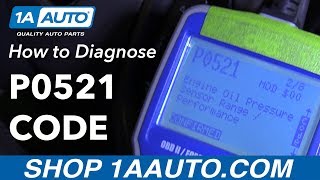
Code P0521 on a Chevy Equinox usually means the engine oil pressure sensor is failing or the engine oil is simply low. First, check your oil level, then suspect the sensor. A new sensor is about $25-$60 and is a common DIY fix for this issue. On 2.4L engines, also suspect the small filter screen underneath the sensor, which is notorious for clogging.
- P0521 is a serious code. Your first action should always be to stop the vehicle safely and check the engine oil level.
- On 2013-2017 models with the 2.4L engine, this code is very often a direct result of the engine's tendency to consume oil.
- A faulty oil pressure sensor is a highly common and relatively inexpensive fix. However, you must confirm the oil level is correct first.
- On 2018-2020 models, this code is often linked to P06DE and can be caused by fuel diluting the engine oil due to many short drives. An oil change can often resolve the issue.
- Never assume the worst. Always verify actual oil pressure with a mechanical gauge before condemning the engine or oil pump.
What's Unique About the 2013-2020 Chevrolet EQUINOX

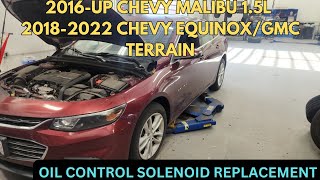
The 2013-2020 Equinox spans two generations with different engine concerns. Second-generation models (2013-2017) with the 2.4L Ecotec engine are known for excessive oil consumption due to piston ring wear, which can lead to a low oil level and trigger a P0521 code. These engines also have a small filter screen under the oil pressure sensor that is notorious for getting clogged with sludge, causing a false low-pressure reading. Third-generation models (2018-2020) with turbocharged engines have TSBs that link P0521 with codes like P06DE (Engine Oil Pressure Control Solenoid Valve Stuck On), pointing to issues with the more complex variable-flow oiling systems. 🎬 Watch: How to fix oil pressure solenoid issues on 1.5L engines. In these later models, fuel dilution of the oil from frequent short trips is a documented cause, as it degrades oil viscosity and performance.
Diagnostic Flowchart

Tap your situation to follow the diagnostic path that matches what you're seeing on this vehicle.
Generation note: This range covers the second generation (2013-2017) and the start of the third generation (2018-2020). The 2nd gen primarily featured the 2.4L I4 and 3.6L V6. The 2.4L engine is particularly noted for oil consumption issues that can lead to P0521, as well as a special coverage program (14882) for a plugged PCV orifice that can cause crankcase pressure issues and oil leaks. The 3rd gen introduced 1.5L and 2.0L turbo engines, which have different oiling systems and associated TSBs (like #22-NA-056 and #18-NA-246) that point to causes like fuel-contaminated oil from short-trip driving.
Symptoms You May Notice

- Check Engine Light is on
- Oil pressure warning light on the dashboard
- Oil pressure gauge reading erratically, too high, or too low
- "Oil Pressure Low - Stop Engine" message on the driver information center
- In severe cases of actual low pressure, engine ticking, clattering, or knocking noises
- Engine power is reduced, also known as "limp mode"
- Replacing the oil pressure sensor without first checking the engine oil level and quality. Always verify the basics before buying parts.
- Assuming the engine is failing without verifying actual oil pressure with a mechanical gauge. A faulty sensor or clogged screen is far more common than a failed oil pump.
- Replacing the oil pressure sensor but not the small filter screen underneath it on applicable engines. A clogged screen will cause the new sensor to read incorrectly and the code will return.
Most Likely Causes

- Low Engine Oil Level 🔴 High Probability The 2.4L engine used in 2013-2017 models is widely known for issues with excessive oil consumption due to piston ring wear, which can lead to a low oil level. This is a primary and simple first check.
How to confirm: Check the engine oil dipstick with the engine off and on a level surface. The level should be between the 'add' and 'full' marks.
Typical fix: Top up the oil to the correct level using the manufacturer-specified grade (dexos-approved). Monitor oil levels frequently, as often as every fuel fill-up.
Est. part cost: $10-$40 - Faulty Engine Oil Pressure Sensor (Sending Unit) 🔴 High Probability The sensor is a common failure point across many GM vehicles. It can fail internally, sending incorrect voltage signals to the ECM, or develop leaks. Using non-OEM sensors can sometimes lead to the code returning.
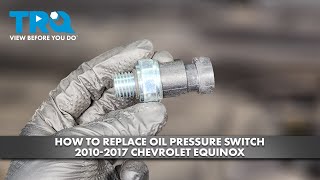
How to confirm: After confirming the oil level is correct, the best method is to compare the sensor's reading on a scan tool to a reading from a mechanical oil pressure gauge. If the mechanical gauge shows good pressure but the scan tool shows an erratic or incorrect reading, the sensor is bad. The sensor on the 2.4L is on the front, right side of the engine, below the oil filter housing. 🎬 See this step-by-step oil pressure sensor replacement walkthrough.
Typical fix: Replace the engine oil pressure sensor. It's strongly recommended to replace the small filter screen underneath the sensor at the same time, as a clogged screen is also a very common cause.
Est. part cost: $25-$60 - Clogged Oil Pressure Sensor Filter Screen 🔴 High Probability On the 2.4L and other GM engines, a small, thimble-shaped filter is located in the block directly underneath the oil pressure sensor. This screen is notorious for getting clogged with oil sludge and debris, restricting oil flow to the sensor and causing it to report low pressure even when the main system pressure is fine.
How to confirm: The screen can only be inspected upon removal of the oil pressure sensor. If it is full of dark, sludgy material, it is clogged. Often, people replace only the sensor, and the code returns because the underlying clogged screen was the real issue.
Typical fix: Remove the old screen (a bolt can be threaded into it to pull it out) and install a new one along with the new sensor. This part is inexpensive and should always be replaced with the sensor.
Est. part cost: $5-$15 - Incorrect or Degraded Engine Oil / Filter 🟡 Medium Probability Using oil that doesn't meet GM's dexos specification or using a low-quality/incorrect oil filter can lead to pressure issues. TSB #22-NA-056 also notes that on 2020 models, frequent short trips can cause fuel to contaminate the oil, degrading its viscosity and triggering P0521.
How to confirm: Check service records for the last oil change. Inspect the oil on the dipstick for a strong fuel smell or if it appears overly dirty or thin. Some owners on forums have reported that switching to a specific high-quality filter (like Mobil 1 M1-113A or an ACDelco PF series) resolved their recurring P0521 code.
Typical fix: Perform an engine oil and filter change using a high-quality, dexos-approved oil of the correct viscosity (e.g., SAE 0W-20 for many newer models) and a reputable filter brand like ACDelco.
Est. part cost: $40-$90 - Wiring or Connector Issue ⚪ Low Probability The sensor's location can expose its wiring to heat and oil, which can degrade the connection over time. The connector itself can become contaminated with oil or corrosion, causing a poor signal.
How to confirm: Visually inspect the wiring harness and connector for the oil pressure sensor. Look for signs of corrosion (green crust), damage, or oil contamination inside the connector. Wiggle the connector while monitoring the pressure reading on a scan tool to see if it changes.
Typical fix: Clean the connector with electrical contact cleaner or repair/replace the damaged pigtail connector.
Est. part cost: $5-$50
Rare But Worth Checking
- Failing Oil Pump or Internal Engine Wear: This is the worst-case scenario. If a mechanical gauge confirms that oil pressure is genuinely low (e.g., below ~22-24 PSI at 1000 RPM when warm), it points to a serious internal problem like a failing oil pump, a stuck pressure relief valve, or worn engine bearings. This requires immediate professional diagnosis.
- Plugged PCV Orifice: On 2.4L engines, GM Special Coverage 14882 addresses a condition where a plugged PCV orifice in the intake manifold can increase crankcase pressure, leading to oil leaks and potentially affecting oil pressure readings. This is more likely in cold weather.
Diagnosis Steps
- Check the engine oil level and condition using the dipstick. If it's low, top it off, clear the code, and see if it returns.
- If the oil level is correct, connect an OBD-II scanner to view live data for the Engine Oil Pressure PID. Note the reading at idle and at 2000 RPM. For the 2.4L, pressure should be around 25-30 PSI at warm idle and increase with RPM.
- Crucially, verify the actual engine oil pressure. Remove the oil pressure sensor and connect a mechanical oil pressure gauge in its place.
- Start the engine and compare the mechanical gauge reading to the manufacturer's specifications. A healthy 2.4L engine should show around 38 PSI at warm idle.
- If the mechanical gauge shows good pressure but the scan tool showed a faulty reading, the problem is the sensor, its filter screen, or its wiring.
- If the mechanical gauge confirms low oil pressure, the vehicle should not be driven. The issue is internal (e.g., oil pump, clogged passages, worn bearings)
Parts You'll Likely Need
- Engine Oil Pressure Sensor
(OEM #12673134 (supersedes 12596951, 12621234))— This sensor is the most common part to fail, causing incorrect pressure readings to be sent to the ECM. Using a genuine GM/ACDelco part is often recommended for reliability.
Trusted brands: ACDelco (GM Genuine), Delphi, Standard Motor Products
OEM price range: $45-$65
Aftermarket price range: $25-$50 - Engine Oil Pressure Sensor Filter Screen
(OEM #12585328 (check specific application))— This small filter, located under the sensor on many GM engines including the 2.4L, is a very common point of failure due to clogging with sludge. It should be considered a mandatory replacement when changing the sensor.
Trusted brands: ACDelco (GM Genuine), Dorman
OEM price range: $5-$10
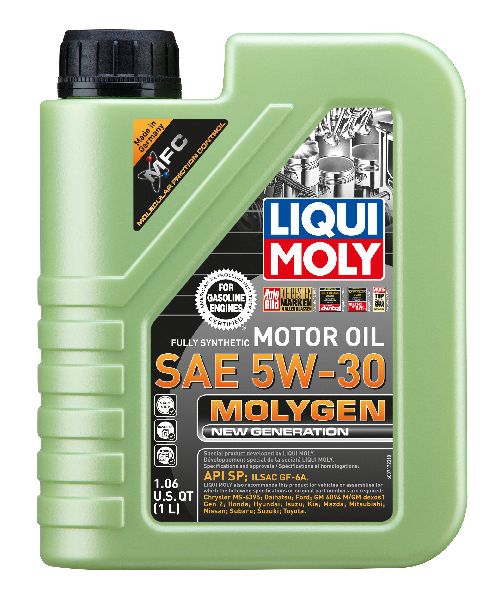
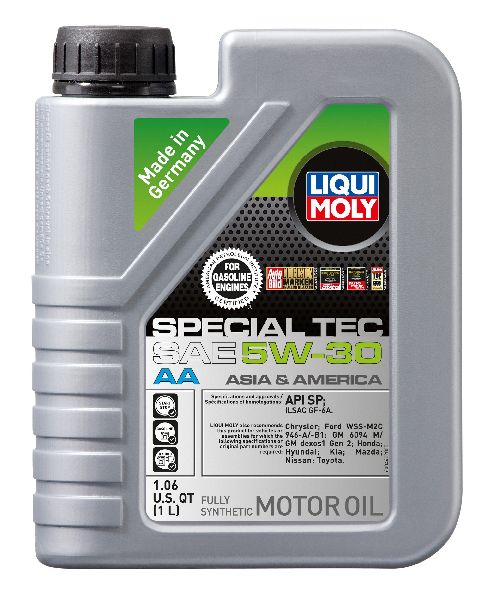
Aftermarket price range: $3-$8 - Engine Oil and Filter — Low, old, or fuel-contaminated oil is a primary cause. An oil change is a fundamental first step and is required by TSB #22-NA-056 for certain conditions. Use of a high-quality filter and dexos-approved oil is critical.
Trusted brands: ACDelco (filter), Mobil 1, Pennzoil
OEM price range: $50-$90
Aftermarket price range: $40-$80
Related Codes That Often Appear With This One
- P06DE — This code for 'Engine Oil Pressure Control Circuit Stuck On' often appears with P0521 on newer (2018+) Equinox models with variable displacement oil pumps. TSBs #22-NA-056 and #18-NA-246 indicate they can be set together, often related to oil quality or issues with the oil control solenoid. One owner on Reddit noted that an oil change cleared P0521 but P06DE remained, pointing to the solenoid.
- P0172 — TSB #22-NA-056 for 2020 models notes that 'Fuel Trim System Rich' can be set alongside P0521. This is caused by excessive fuel collecting in the crankcase from frequent short trips, which degrades the oil and affects its pressure properties. The fix is an oil change and advising the customer to ensure the vehicle is driven long enough to fully warm up.
- P0522 — This code for 'Engine Oil Pressure Sensor/Switch Circuit Low Voltage' points more specifically to an electrical issue, such as a short to ground or a failed sensor, whereas P0521 is a 'performance' code. They can appear together if the sensor has failed electrically.
Technical Service Bulletins (TSBs) & Recalls
- 22-NA-056
- 18-NA-246
- PIP4786C
- 14882 (Special Coverage)
Platform-Specific Known Issues
- TSB #PIP4786C: Low Oil Pressure Message on 2013 Models: Addresses low oil pressure messages and P0521 on 2013 models, directing technicians to follow standard diagnostic procedures, including verifying actual pressure with a mechanical gauge.
- TSBs #22-NA-056 & #18-NA-246: Fuel Contamination on 2018-2020 Models: Cover 2018-2020 models where P0521 can appear with P06DE and P0172. The cause is identified as fuel-contaminated engine oil from frequent short-trip driving, which degrades oil viscosity. The prescribed fix is simply an oil and filter change and advising the owner on driving habits.
- Special Coverage 14882: Plugged PCV Orifice on 2.4L Engines: For 2010-2014 Equinox models, this covers a condition where a frozen or plugged PCV orifice increases crankcase pressure, which can cause the rear main seal to leak and may illuminate the engine oil pressure light.
- Owner Experience: Sensor and Screen Replacement: On a Chevrolet forum, a user with a 2013 Suburban (similar V8 engine design principles) with P0521 found the fix was replacing the oil pressure sensor and noted the screen underneath was about 5% obstructed. This highlights the commonality of the sensor/screen issue across GM platforms.
Mechanic-Grade Diagnostic Values
- Minimum Engine Oil Pressure (Mechanical Gauge) — expected: At least 22-24 PSI @ 1,000 RPM, 30-35 PSI @ 2,000 RPM, and 33-38 PSI @ 3,000 RPM (engine at operating temperature).. Failure: Pressure below these minimums indicates a mechanical issue like a weak oil pump, worn bearings, or internal blockage.
- Engine Oil Pressure (EOP) Sensor Signal Voltage — expected: Approx. 1.0V to 4.0V with the engine running, varying with RPM.. Failure: A voltage that is stuck, does not change with RPM, or does not correspond to a mechanical gauge reading.
- EOP Sensor 5-Volt Reference Circuit — expected: 5.0V +/- 0.5V with key-on, engine-off.. Failure: Voltage significantly lower than 5.0V (e.g., 0V) suggests a short to ground in the sensor or wiring. Voltage significantly higher is unlikely but indicates a major electrical fault.
- PCM Ground Circuit Resistance — expected: Less than 1.0 Ohm.. Failure: Higher resistance indicates a poor ground connection at G112 or corrosion in the wiring, which can cause erratic sensor readings.
Scan Tool Commands That Help
- GDS2 (GM Dealer Scan Tool): Engine Oil Pump Failure Screening Test Cycle — To diagnose intermittent P0521, P06DD, or P06DE codes. The tech runs the engine for 15+ minutes, then cycles between 2,000 RPM (30s), 4,000 RPM (15s), and idle (15s) ten times while monitoring the 'Engine Mechanical Data' display. If the code sets during this stress test, GM documentation points towards replacing the oil pump.
Wiring & Ground Locations
- Engine Oil Pressure Sensor Connector — On the 2.4L engine, it is located on the front side of the engine block, near the alternator, sometimes requiring alternator removal for access. The harness wire is typically a Tan/Black wire going to pin 9 of the black ECM connector.. This is the primary connection point. Oil contamination, heat damage, or a loose connection here will directly cause P0521.
- G112 — Primary engine/PCM ground point, typically located on the engine block or cylinder head.. The PCM relies on this ground for accurate sensor readings. A video for a 2013 2.4L Equinox shows two large black/white wires at the ECM connector leading to this ground. High resistance here can cause incorrect voltage readings from the oil pressure sensor.
- G103 / G105 — Common engine compartment ground points. G103 is often on the left side of the engine compartment, and G105 at the lower right rear of the engine.. While not the direct PCM ground, other modules rely on these grounds. A poor engine-to-chassis ground can create voltage offsets and electrical noise that may affect sensitive sensor circuits.
Real Owner Repair Stories
- Reddit user on r/ChevyTrucks (Chevy Truck (likely Silverado/Sierra with similar engine architecture)) — Recurring P0521 code.
❌ Tried (didn't work) Replacing the oil pressure sensor., Noting the sensor filter screen had already been removed by a previous owner.
✅ What actually fixed it The user switched to a high-quality Mobil 1 M1-113A oil filter, which resolved the recurring code. This suggests the previous filters were causing pressure fluctuations that triggered the sensor. - YouTube comment cited by Go-Parts (Chevrolet Truck) — Recurring P0521 code.
❌ Tried (didn't work) Replacing the oil pressure sensor twice in two years.
✅ What actually fixed it After finding information on a forum, the user switched to the updated recommended ACDelco UPF48R oil filter, which permanently resolved the problem. - Chevrolet Forum user (2013 Silverado 1500 5.3L V8, 93k miles) — P0521 code, engine runs fine.
❌ Tried (didn't work) Initial diagnosis at dealer resulted in a recommendation to replace the entire engine after a pressure test showed a 10 PSI difference top-to-bottom.
✅ What actually fixed it A new oil pump fixed the problem, confirming a mechanical pressure issue that was not severe enough to require a full engine replacement.
"I Checked Everything" — The Actual Cause
- The equivalent for P0521 is when a mechanical oil pressure gauge shows good, stable pressure, but the P0521 code persists or returns. In these cases, the root cause is often not the sensor's basic function but its sensitivity to minor fluctuations. Multiple owner reports indicate that switching to a specific high-quality OEM or premium aftermarket oil filter (e.g., Mobil 1 M1-113A, ACDelco UPF48R) solved the problem when a new sensor did not. This suggests the bypass valves or flow characteristics of certain aftermarket filters can create pressure readings that the ECM flags as a performance issue, even when overall pressure is safe.
OEM Part Supersession History
12621234, 12596951→12673134 (GM Genuine)— Standard part evolution, likely for improved reliability or manufacturing process.
Heads up: While aftermarket sensors are available, some owner reports suggest that using only the genuine GM/ACDelco sensor (12673134) or the ACDelco Professional Grade (D1846A) was necessary to prevent the code from returning.
Model Year Variations Within This Range
- 2013-2017 (2.4L Engine): Primary causes are excessive oil consumption, a faulty oil pressure sensor, and a clogged filter screen under the sensor. Accessing the sensor is difficult, often requiring removal of the alternator.
- 2018-2020 (1.5L/2.0L Turbo Engines): P0521 is more frequently associated with other codes like P06DE and P0172, as noted in TSBs #22-NA-056 and #18-NA-246. Causes are often linked to the variable-flow oiling system and oil degradation from fuel contamination due to short-trip driving.
Helpful Videos


Used OEM Parts in Stock


New Aftermarket Parts Available


The information in this article is provided for general reference and educational purposes only. Vehicle specifications, procedures, and part compatibility can vary by production date, trim level, and region. Always consult your vehicle's factory service manual and verify part numbers before purchasing or performing repairs. Safety-critical components such as airbags, seat belts, and braking systems should be installed by a qualified professional.
- Chevrolet EQUINOX:
- 🎬 Helpful Videos
- 🛍️ Shop This Part
- What's Unique About the 2013-2020 Chevrolet EQUINOX
- Diagnostic Flowchart
- Symptoms You May Notice
- Most Likely Causes
- Rare But Worth Checking
- Diagnosis Steps
- Parts You'll Likely Need
- Related Codes That Often Appear With This One
- Technical Service Bulletins (TSBs) & Recalls
- Platform-Specific Known Issues
- Mechanic-Grade Diagnostic Values
- Scan Tool Commands That Help
- Wiring & Ground Locations
- Real Owner Repair Stories
- "I Checked Everything" — The Actual Cause
- OEM Part Supersession History
- Model Year Variations Within This Range
- 🎟️ Get 5% Off