

P0507 on 2002-2005 Audi A4 1.8T: Causes for High Idle and Fixes
On the 2002-2005 Audi A4 1.8T, code P0507 is almost always caused by a vacuum leak from the brittle PCV system hoses or a failed PCV valve itself. Expect to spend $50-$150 on a DIY PCV system refresh, which is the most common fix. The combination of P0507 and a lean code like P0171 is a definitive sign of a vacuum leak.
- P0507 on a 2002-2005 Audi A4 1.8T means the idle is too high, and the number one cause is a vacuum leak.
- Thoroughly inspect the entire PCV system, including all hoses and the PCV valve itself. A smoke test is the best way to find leaks.
- If no vacuum leaks are found, the next step is to clean the throttle body and perform a throttle body adaptation.
- This code is often seen with P0171 (System Too Lean), which strongly supports the vacuum leak theory.
- Replacing the entire PCV breather hose system with a kit is often the most effective long-term repair.
What's Unique About the 2002-2005 Audi A4
The 1.8T engine in the B6 generation A4 is notorious for vacuum leaks. Its complex network of plastic and rubber hoses for the Positive Crankcase Ventilation (PCV) system becomes extremely brittle with age and heat cycles. These hoses, particularly those under the intake manifold, crack and break, creating vacuum leaks that the ECM cannot account for, directly leading to the high idle condition that triggers P0507. While a dirty throttle body can be a cause, vacuum leaks from the PCV system are overwhelmingly the primary culprit on this specific platform.
Symptoms You May Notice
- Check Engine Light is on
- Engine idle speed is higher than normal (e.g., 1000-1500 RPM)
- Idle speed fluctuates or 'hunts' up and down, especially when coming to a stop
- Rough or unstable idle, engine may shake
- A whistling, squealing, or hissing sound from the engine bay at idle
- Engine may hesitate or stall when coming to a stop
- Excessive vacuum when trying to remove the oil filler cap at idle
- Replacing the Mass Airflow (MAF) sensor. A MAF sensor issue would typically cause other codes and drivability problems under load, not just a high idle.
- Replacing the O2 sensors. While a vacuum leak can cause a lean condition (and a P0171 code), the O2 sensor is reporting the problem, it is not the cause of it.
Most Likely Causes
- Cracked or Broken Vacuum/PCV Hoses 🔴 High Probability The 1.8T engine bay has high heat, which causes the numerous plastic and rubber PCV and vacuum hoses to become brittle and fail over time. Many are located under the intake manifold and are difficult to see. The 'T' hose (06A103247) and the L-shaped hose (06B133783BC) are common failure points.
How to confirm: Perform a smoke test. Introduce smoke into the intake system 🎬 See how to perform a boost and vacuum leak test. with the engine off and look for smoke escaping from cracked hoses or connections. This is the most definitive method. Alternatively, carefully spray short bursts of a non-flammable substance like soapy water on suspect hoses with the engine running and listen for a change in idle.
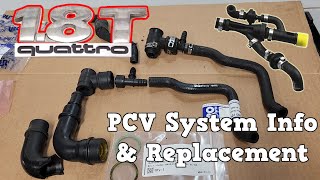
Typical fix: Replace the failed hoses. It is highly recommended to replace all the PCV system hoses at once using a complete kit, as they tend to fail around the same time. 🎬 Watch: Full PCV system replacement walkthrough for the 1.8T engine. Upgraded silicone hose kits are available from brands like 034Motorsport for improved durability.
Est. part cost: $75-$150 for a complete PCV hose kit - Failed PCV Valve 🔴 High Probability The diaphragm inside the PCV valve (often a round valve on the intake hose or a block-mounted breather) can tear, causing a large internal vacuum leak. It is a very common failure item on the 1.8T engine.
How to confirm: With the engine idling, try to remove the oil filler cap. If there is a very strong suction holding the cap down, or if the engine stumbles badly or stalls when the cap is removed, the PCV valve has likely failed. You may also hear a distinct whistling or honking sound.
Typical fix: Replace the PCV valve. This is often done at the same time as the PCV hoses. The OEM part number is often a variation of 06A129101.
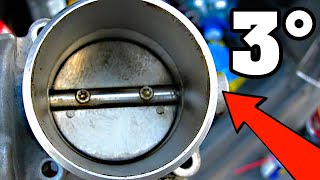
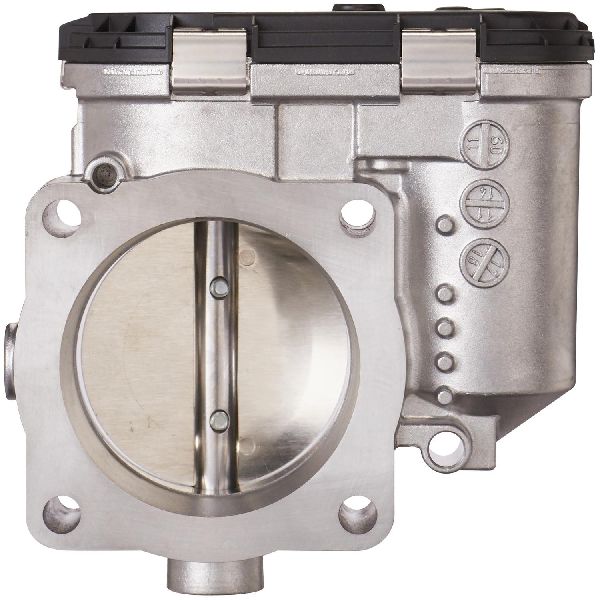
Est. part cost: $20-$50 - Dirty Throttle Body 🟡 Medium Probability Oil vapor from the PCV system can deposit on the inside of the throttle body and around the throttle plate, causing it to not close completely at idle, letting in extra air.
How to confirm: Remove the intake hose from the throttle body and visually inspect for a thick layer of black carbon buildup around the throttle plate and bore.
Typical fix: Clean the throttle body using a dedicated throttle body cleaner and a soft cloth. After cleaning, a 'Throttle Body Adaptation' (TBA) must be performed with a VAG-COM/VCDS or other compatible diagnostic tool to reset the idle position. Failure to perform the TBA can result 🎬 Watch: How to perform a throttle body alignment. in the high idle persisting even after cleaning.
Est. part cost: $10 for cleaner
Rare But Worth Checking
- Leaking Brake Booster or Check Valve: A leak in the brake booster diaphragm or the check valve in its vacuum line can create a significant vacuum leak. If your brake pedal feels hard or you notice idle changes when applying the brakes, this is a possibility. This can sometimes trigger a P1479 code alongside P0507.
- Faulty Electronic Throttle Body: While less common than a dirty throttle body, the internal electronics or motor of the throttle body itself can fail. This is usually diagnosed after all vacuum leaks and cleaning have failed to resolve the issue.
- Leaking Intake Manifold Gasket: The gasket between the intake manifold and the cylinder head can fail, causing an unmetered air leak. This is less common than PCV hose failures but should be considered if a smoke test reveals smoke leaking from the side of the engine head.
Diagnosis Steps
- Read all fault codes from the ECM. Note if P0171, P1136, or misfire codes are present, as this strongly points to a vacuum leak.
- With the engine running, listen carefully for any audible hissing or whistling noises from the engine bay. A squeal can point directly to a failed PCV valve diaphragm.
- Perform a check of the PCV valve by attempting to remove the oil cap at idle. Note if there is strong suction holding it down; if so, the PCV valve has failed.
- Perform a smoke test on the intake and PCV system to definitively locate any leaks. Pay close attention to the hoses under the intake manifold, the 'T' fitting, and the valve cover breather hoses.
- If no leaks are found, remove the intake boot and inspect the throttle body for carbon buildup.
- If the throttle body is dirty, clean it thoroughly with appropriate cleaner. Do not spray cleaner directly into the electronics.
- After any repairs (especially throttle body cleaning or replacement), clear the codes and perform a Throttle Body Adaptation (TBA) using a suitable scan tool (like VCDS/VAG-COM).
- Drive the vehicle to confirm the fix and ensure the code does not return.
Parts You'll Likely Need
- PCV Breather Hose Kit
(OEM #058198753D (example kit number))— This is the most frequent cause of P0507 on the 1.8T. The original plastic and rubber hoses become brittle and crack, causing vacuum leaks. A full kit replaces all common failure points.
Trusted brands: Vaico, Rein, URO Parts, 034Motorsport (Silicone)
OEM price range: $150-$200
Aftermarket price range: $75-$125 - Positive Crankcase Ventilation (PCV) Valve
(OEM #06A129101D (or 06A129101A))— The internal diaphragm fails, creating a large vacuum leak. It's a primary suspect for this code.
Trusted brands: Bosch, Topran, Vaico
OEM price range: $40-$60
Aftermarket price range: $20-$40 - PCV 'T' Hose
(OEM #06A103247)— This specific T-shaped hose in the PCV system is a very common failure point, often crumbling upon inspection.
Trusted brands: Genuine VW/Audi, Vaico
OEM price range: $15-$25
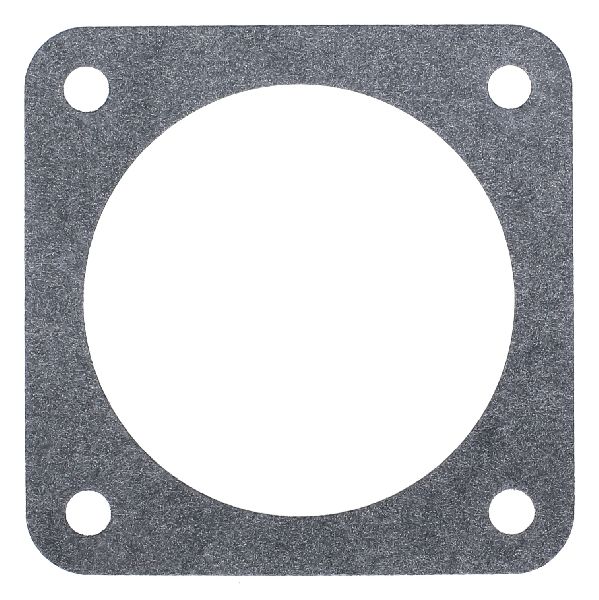
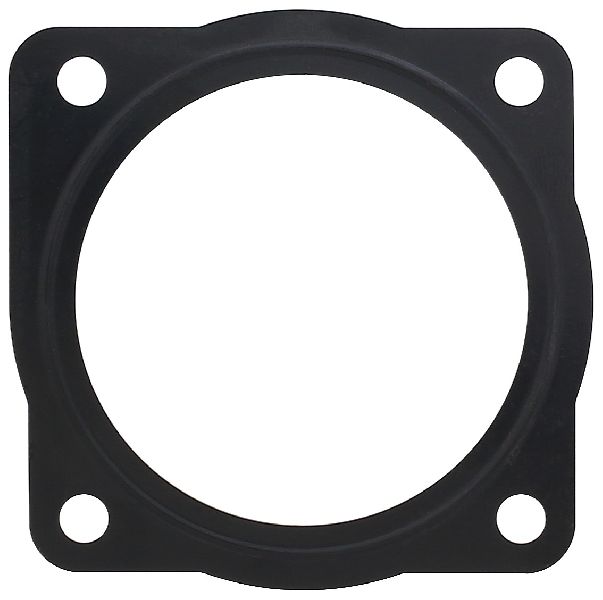
Aftermarket price range: $10-$20 - Throttle Body Gasket
(OEM #06B133073H)— Required if you remove the throttle body for cleaning to prevent an intake leak at the mounting flange.
Trusted brands: Victor Reinz, Elring
OEM price range: $5-$10
Aftermarket price range: $2-$5
Related Codes That Often Appear With This One
- P0171 — Stands for 'System Too Lean (Bank 1)'. A vacuum leak introduces extra, unmetered air, causing a lean air/fuel mixture. This code is a direct symptom of the same root cause as P0507. Seeing them together strongly indicates a vacuum leak.
- P1136 — An Audi-specific code for 'Long Term Fuel Trim Additive Fuel, Bank 1 System Too Lean'. This is another indicator that the ECM is trying to compensate for a vacuum leak at idle.
- P1297 — Stands for 'Pressure Drop between Turbo and Throttle Valve'. This code often appears with major PCV system failures, as the torn components disrupt the entire crankcase pressure regulation system.
- P0300, P0301, P0302, P0303, P0304 — Stands for 'Random/Multiple Cylinder Misfire Detected'. A significant vacuum leak can cause the air/fuel mixture to become so lean that it fails to ignite properly, leading to misfires at idle.
Platform-Specific Known Issues
- Hidden Hoses Under Intake Manifold: Many of the most problematic PCV hoses are located under the intake manifold, making them difficult to see and inspect without a mirror and nearly impossible to replace without removing the manifold.
- Oil Sludge Complication: The 1.8T engine is known for potential oil sludge issues, which can clog the narrow passages of the PCV breather system, exacerbating pressure and vacuum leak problems. Frequent oil changes with high-quality synthetic oil are critical.
Mechanic-Grade Diagnostic Values
- Mass Airflow (MAF) Sensor Reading at Idle — expected: 2.0 - 7.0 g/s (grams per second) at normal operating temperature with no load. A common value for a healthy 1.8T is around 2.5-4.0 g/s.. Failure: A reading significantly lower than 2.0 g/s can indicate a vacuum leak (unmetered air is entering after the MAF). A reading that is stuck or does not increase smoothly with RPM suggests a faulty MAF sensor.
- Long Term Fuel Trim (LTFT) at Idle - VCDS Block 032 — expected: Within +/- 5%. Ideally as close to 0% as possible.. Failure: A large positive value (e.g., +10% to +25%) indicates the ECM is adding a significant amount of fuel to compensate for extra, unmetered air. This is a classic sign of a vacuum leak and will often be seen with code P0171.
- Throttle Valve Angle at Idle - VCDS Block 003 — expected: Typically between 1.0% and 5.0% on a warm engine at idle.. Failure: A value of 0% or a value that seems abnormally high may indicate a problem with the throttle body itself or its adaptation. This value should be stable at idle.
Scan Tool Commands That Help
- VCDS (VAG-COM): Throttle Body Adaptation (TBA) — This is a mandatory step after cleaning or replacing the throttle body. It allows the ECM to relearn the closed, part-throttle, and full-throttle positions. Failure to perform a TBA is a very common reason for a persistent P0507 code after a repair. The procedure is done with the key on, engine off.
- VCDS (VAG-COM): [01 - Engine] -> [Basic Settings - 04] -> Group 060 -> [Go!] — This is the specific command sequence for performing a Throttle Body Adaptation on drive-by-wire vehicles like the B6 A4 1.8T. The screen will show 'ADP RUN' as the throttle motor cycles, and then 'ADP OK' when complete.
Wiring & Ground Locations
- Main Engine to Chassis Ground — On the passenger side, the main ground cable connects from the engine mount area to the front frame rail, located behind the secondary air injection pump.. A poor engine ground can cause a host of electrical issues, including erratic sensor readings and incorrect actuator behavior. While not a primary cause of P0507, ensuring this connection is clean and tight is a fundamental step in any electrical diagnosis.
- G12 - ECM Ground — Located at the center of the firewall in the engine bay.. This point grounds the Engine Control Module (ECM). A corroded or loose connection here can directly affect the ECM's ability to properly read sensors and control actuators like the electronic throttle body, potentially leading to idle control faults.
- Throttle Body Connector (J338) Pins — 6-pin connector at the electronic throttle body.. For advanced diagnosis, you can test for continuity between the throttle body connector and the ECU. For a 2004-2005 A4 1.8T, a key wire is Pin 2 (Brown) which is a sensor ground. Checking for proper voltage and ground at the connector can rule out wiring issues.
Real Owner Repair Stories
- AudiForums.com user 'Damaniac311' (2006 Audi A4 2.0T (B7, but same principle as B6 1.8T)) — P0507 code, idle bouncing between normal and 2,000 RPM, multiple cylinder misfire codes.
❌ Tried (didn't work) The user was asking for advice before trying fixes.
✅ What actually fixed it The user identified the cause on their car as a cap on the intake manifold that had popped off, causing a major vacuum leak. They advised the original poster to check the PCV valve and all related vacuum lines.
"I Checked Everything" — The Actual Cause
- A common scenario is a smoke test that appears clean, but the P0507 code persists. The actual cause is often an internally failed PCV valve. The diaphragm can tear in a way that it only creates a massive internal vacuum leak when the engine is running, pulling air directly from the crankcase. A smoke test performed with the engine off may not reveal this specific failure mode. The definitive test in this case is checking for excessive vacuum at the oil filler cap with the engine idling.
OEM Part Supersession History
06A129101A (PCV Valve)→06A129101D, 06A129101F— Revisions to improve diaphragm durability and resistance to failure.
Heads up: Later revisions are generally backwards compatible and preferred. Always use the latest revision available from the dealer or a quality OEM supplier.
Model Year Variations Within This Range
- 2000 and earlier vs. 2000+: The 1.8T engine came in two main block designs: '058' and '06A'. The B6 A4 uses the later '06A' block. This design features an internal water pump driven by the timing belt and a chain-driven oil pump. This is important to know when ordering parts like water pumps or oil pumps, as parts for the older '058' block (found in B5 Passats/A4s) are not compatible.
- 2002-2005 (B6): All B6 A4 1.8T models (AMB engine code) use a drive-by-wire electronic throttle body and the Bosch ME7.5 engine management system. This is consistent across the 2002-2005 range, meaning the causes and diagnostic procedures for P0507 are uniform for this specific vehicle platform.
Diagnostic Flowchart
Real Owner Stories
Aggregated from forums and TSBs cited above. Mileages and costs reflect what owners reported in those sources.
Audi A4 1.8T
Symptoms: Idle speed fluctuating, multiple misfire codes, and a P1297 code. A local garage failed to diagnose the issue.
What fixed it: Identified and replaced a faulty crankcase breather valve hidden under the intake manifold.
Source hint: Audi-Sport.net thread titled 'A4 1.8T idle speed fluctuating and camshaft position sensor fault'
VW Passat 1.8T
Symptoms: Presented with codes P0507 and P1136 (lean at idle).
What fixed it: Checked and replaced the PCV system hoses to resolve the unmetered air leak.
Source hint: Ross-Tech Forums thread titled 'P0507 + P1136 = Vacuum Leak'
Audi A4 1.8T
Symptoms: Idle too high and system too lean, triggering codes P0507 and P0171.
What fixed it: Performed a complete overhaul of the PCV system, including the pressure control valve and all associated breather hoses.
Source hint: Audizine thread titled 'P0507 and P0171 Idle too high and System too lean'
Audi A4 (B6 Platform)
Symptoms: P0507 code with idle air control RPM higher than expected.
What fixed it: Performed the 'suction test' on the oil cap, found it hard to pull off, confirming the PCV system was the culprit and required replacement.
Source hint: AudiWorld thread titled 'P0507 idle air control sys rpm higher than expected'
Related OBD-II Codes
Frequently Asked Questions
Why is my 1.8T engine making a loud squealing or whistling noise along with the P0507 code?
How can I quickly test if the PCV valve is the cause of my high idle on my B6 A4?
I cleaned the throttle body on my 2003 A4 1.8T, but the P0507 code and high idle are still there. What did I miss?
Are there specific vacuum hoses I should check first on the 1.8T engine?
Can oil sludge cause the P0507 code on my 2004 Audi A4?
Should I upgrade my PCV hoses when fixing this code?
Helpful Videos
Used OEM Parts in Stock


New Aftermarket Parts Available


The information in this article is provided for general reference and educational purposes only. Vehicle specifications, procedures, and part compatibility can vary by production date, trim level, and region. Always consult your vehicle's factory service manual and verify part numbers before purchasing or performing repairs. Safety-critical components such as airbags, seat belts, and braking systems should be installed by a qualified professional.
- Audi A4:
- 🎬 Helpful Videos
- 🛍️ Shop This Part
- What's Unique About the 2002-2005 Audi A4
- Symptoms You May Notice
- Most Likely Causes
- Rare But Worth Checking
- Diagnosis Steps
- Parts You'll Likely Need
- Related Codes That Often Appear With This One
- Platform-Specific Known Issues
- Mechanic-Grade Diagnostic Values
- Scan Tool Commands That Help
- Wiring & Ground Locations
- Real Owner Repair Stories
- "I Checked Everything" — The Actual Cause
- OEM Part Supersession History
- Model Year Variations Within This Range
- Diagnostic Flowchart
- Real Owner Stories
- Audi A4 1.8T
- VW Passat 1.8T
- Audi A4 1.8T
- Audi A4 (B6 Platform)
- Related OBD-II Codes
- Frequently Asked Questions
- 🎟️ Get 5% Off