

OBD-II Code P1136: Comprehensive Diagnosis & Repair Guide
What P1136 Means for Your VW, Audi, BMW, Nissan, and More
- P1136 means 'Lean at Idle' for VW/Audi, 'O2 Heater Circuit' for BMW, and 'VVT Solenoid' for Nissan—always verify your specific manufacturer's definition first.
- On VW and Audi vehicles, 80% of P1136 codes are caused by cracked plastic PCV hoses or a failing Mass Airflow (MAF) sensor.
- Do not replace the O2 sensor immediately; perform a smoke test first, as the sensor is usually just accurately reporting a vacuum leak.
- Driving with an active P1136 code for more than 200 miles risks melting your catalytic converter, turning a $150 hose repair into a $2,000 exhaust replacement.
- For Nissan and Infiniti owners, check your dipstick immediately; low or dirty engine oil clogs the IVT solenoid and triggers this exact code.
What Does P1136 Mean?

P1136 is a manufacturer-specific code, meaning its definition changes by brand. For Volkswagen and Audi, the engine control module (ECM) reached its maximum limit trying to adjust the air-fuel mixture at idle. This indicates a severe vacuum leak or a bad sensor causing the engine to run too lean (too much air) specifically during idle.
Technical definition: For Volkswagen/Audi, P1136 is defined as 'Long Term Fuel Trim Additive Fuel, Bank 1 System Too Lean'. The ECM reached its +25% corrective limit while trying to add fuel to compensate for unmetered air entering the engine at idle on the first bank of cylinders.
Can I Drive With P1136?
Yes, But With Caution. You can drive, but limit trips to under 50 miles. You will experience poor fuel mileage, a rough idle, and hesitation. Ignoring P1136 for more than a few hundred miles destroys your catalytic converter due to excessive heat from a lean condition, adding $800-$2,500 to your repair bill.
Common Causes


- Vacuum Leaks (Very Common) — Cracked, disconnected, or broken vacuum hoses are the most frequent cause on VW/Audi. 🎬 Watch: Professional techniques for detecting hidden vacuum leaks. The PCV (Positive Crankcase Ventilation) valve and its complex network of brittle plastic and rubber hoses fail constantly, letting unmetered air into the engine and causing a lean condition.
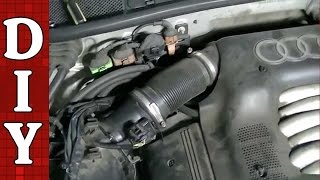
- Faulty Mass Airflow (MAF) Sensor (Very Common) — The MAF sensor tells the computer how much air is entering the engine. A dirty or failing sensor under-reports airflow, causing the computer to command less fuel than needed, leading to a lean mixture.
- Dirty or Low Engine Oil (Nissan/Infiniti) (Very Common) — On Nissan and Infiniti vehicles, P1136 relates to the Intake Valve Timing (IVT) control solenoid. Low or dirty engine oil clogs the solenoid or prevents it from operating correctly, triggering this code. 🎬 See how to test a variable valve timing solenoid.
- Faulty Front Oxygen (O2) Sensor (Common) — On BMWs, this code indicates a failed O2 sensor heater circuit. On VW/Audi, a slow or failing front O2 sensor sends incorrect signals, tricking the computer into making the wrong fuel adjustments. However, it is often mistakenly replaced when accurately reporting a vacuum leak.
- Leaking or Clogged Fuel Injectors (Common) — Hard, brittle seals at the base of a fuel injector create a small vacuum leak directly into the intake port. Alternatively, an injector clogged with deposits fails to deliver the commanded fuel volume, causing a lean condition.
- Low Fuel Pressure or Faulty Regulator (Less Common) — A weak fuel pump, clogged fuel filter, or failing fuel pressure regulator prevents enough fuel from reaching the engine. The computer tries to compensate by holding the injectors open longer, but eventually hits its limit.
- Cracked Exhaust Manifold or Exhaust Leak Before O2 Sensor (Uncommon) — A crack or leak in the exhaust system before the first O2 sensor sucks fresh air into the exhaust stream. This outside air makes the O2 sensor read a false lean condition, causing the ECM to dump extra fuel.
Symptoms

- Check Engine Light is On — The ECM illuminates the check engine light (CEL) or malfunction indicator lamp (MIL) to alert you to the fault.
- Rough or Surging Idle — The engine runs unevenly, shakes, or has fluctuating RPMs when stopped. This is the most direct symptom, as P1136 on VW/Audi specifically relates to idle fuel trim.
- Poor Fuel Economy — Fuel economy drops by 10-20% because the ECM dumps excess fuel into the cylinders to compensate for the perceived lean condition.
- Hesitation or Stumbling on Acceleration — The vehicle hesitates or stumbles when accelerating from a stop as the fuel mixture struggles to adjust from idle to load conditions.
- Failed Emissions Test — The incorrect air-fuel ratio causes high levels of NOx (from a lean condition) or hydrocarbons and carbon monoxide (from a rich condition), resulting in an automatic emissions failure.
Diagnostic Flowchart
Tap your situation to follow the diagnostic path that matches what you're seeing on this code.
Common Fixes & Costs
- Replacing Cracked Vacuum or PCV Hoses
— Parts: $20-$150, Labor: $100-$500, ~2.5 hr book time
(Intermediate)
VW/Audi 1.8T (AWP, AWW, AMB): OEM PCV T-Hose: 06A103247, PCV Valve: 035103245A (Alt: 034Motorsport Silicone Kit, RKX) - Replacing the Mass Airflow (MAF) Sensor
— Parts: $100-$300, Labor: $50-$150, ~0.5 hr book time
(DIY)
VW/Audi 1.8T (AWM, AMB, AWP): OEM 06A906461L (Alt: Bosch: 0280218063) - Replacing the Intake Valve Timing (IVT) Control Solenoid (Nissan/Infiniti)
— Parts: $80-$200, Labor: $100-$250, ~1.0 hr book time
(DIY)
Nissan Altima/Maxima (VQ35DE): OEM 23796-EA20A (Bank 1) (Alt: Dorman, SKP, Hitachi) - Replacing the Front Oxygen (O2) Sensor
— Parts: $50-$200, Labor: $100-$300, ~1.2 hr book time
(Intermediate)
BMW E46 325i/330i (M54): OEM 11787514926 (Alt: Bosch: 15680) - Replacing Leaking or Clogged Fuel Injectors — Parts: $10-$500, Labor: $200-$600, ~2.8 hr book time (Advanced)
Used vs. New Parts: Buying Guide
When a used part is worth it: For electronic parts like a MAF sensor or VVT solenoid, a used OEM part from a reputable salvage yard with a warranty is often better than a cheap, new aftermarket part. Avoid used rubber/plastic parts like PCV hoses, as they possess the same age-related brittleness.
Donor-vehicle mileage cap: roughly under 80000 miles for the part to have meaningful remaining life.
Donor quality checklist:
- Verify the part number exactly, as many sensors look identical but are not interchangeable.
- For VVT solenoids, Hitachi is often the OEM supplier for Nissan, making it a reliable choice when new.
- Ask for the donor vehicle's mileage and reason for being salvaged (accident damage is better than engine failure).
Decision logic:
- If The part is a simple wear item like a rubber hose or seal. → Always buy new; the cost savings for a used part are negligible compared to the risk of premature failure.
- If The part is an electronic sensor (MAF, VVT Solenoid) and the OEM new price is very high. → A low-mileage used OEM part or a new part from the OEM supplier (e.g., Bosch, Hitachi) is a good compromise.
- If The part is a cheap, no-name brand from an online marketplace. → Avoid for critical sensors. Poor quality control leads to incorrect readings, causing new problems and making diagnosis more difficult.
Warranty tradeoff: Used parts from salvage yards typically offer a 30-90 day warranty. New aftermarket parts range from 1 year to a limited lifetime warranty. New OEM parts carry a 1-2 year warranty.
Worst-case if a used part fails: 300-800. If a used or cheap new sensor fails, you pay for the diagnostic time and labor to replace it again, in addition to the cost of another part.
What Happens If You Wait — Timeline
- 0-2 weeks: Check Engine Light (MIL) is on. You notice a slightly rough or surging idle, especially on cold starts. No other major symptoms are perceived. (MPG impact: 0-5%% · Added cost: $0-25 in wasted fuel)
- 2 weeks - 4 months: Rough idle becomes consistent. You notice a definite drop in fuel economy and experience hesitation when accelerating from a stop. The car automatically fails an emissions test. (MPG impact: 5-15%% · Added cost: $50-200 in wasted fuel. Risk of catalytic converter damage begins.)
- 4-8 months: A sustained lean condition significantly increases combustion and exhaust temperatures. The internal substrate of the catalytic converter begins to overheat, crack, and potentially melt. Misfires become frequent. (MPG impact: 10-20%% · Added cost: $800-$2,500. The catalytic converter is now likely damaged and requires replacement to pass emissions.)
- 8+ months: Complete catalytic converter failure is almost certain. In extreme cases, excessive heat from a prolonged lean condition causes burnt exhaust valves or damage to piston crowns, requiring major engine repair. (MPG impact: 15-25%+% · Added cost: $3,000-$7,000+. This includes catalytic converter replacement plus potential top-end engine work.)
Cost of Not Fixing It

- 0-2 months: Noticeable drop in fuel economy (5-15%), rough idle, and hesitation. Failed emissions test is guaranteed. (Added cost: 50-150)
- 2-8 months: A persistent lean condition causes excessive heat in the combustion chamber and exhaust, leading to overheating and potential damage to the catalytic converter substrate. You experience more frequent misfires. (Added cost: 1200-2800)
- 8+ months: Complete failure of the catalytic converter is highly likely. In severe cases, engine damage due to prolonged lean operation (burned valves, damaged pistons) occurs, requiring an engine rebuild or replacement. (Added cost: 3000-7000+)
Diagnosis Steps
- Check for Other Codes
Use an OBD-II scanner to check for misfires (P030x), second engine bank codes (P1138), or O2 sensor circuit codes. Address these other codes first, as they often pinpoint the root cause.
Tools: OBD-II Scanner (Beginner) - Visual Inspection of Hoses
Carefully inspect all vacuum lines, the large air intake boot, and especially the PCV system hoses. Look for obvious cracks, loose connections, or soft spots. Many hard plastic lines under the intake manifold become brittle and crack.
Tools: Flashlight, Inspection Mirror (Beginner) - Check Live Fuel Trim Data (VAG-COM/VCDS)
View live data for 'Long Term Fuel Trim' (LTFT) for Bank 1 at idle (Measuring Value Block 032 on VW/Audi). A high positive number in the first field (+10% to +25%) confirms the computer is adding fuel to correct a lean condition at idle, directly causing P1136.
Tools: Advanced OBD-II Scanner (VCDS preferred for VW/Audi) (Intermediate) - Perform a Smoke Test
A smoke machine forces low-pressure smoke into the intake system. Any leaks from cracked hoses, bad gaskets, or injector seals become instantly visible as smoke escapes. Pay special attention to the intake manifold gaskets and PCV system.
Tools: Automotive Smoke Machine (Advanced) - Clean and Test the MAF Sensor
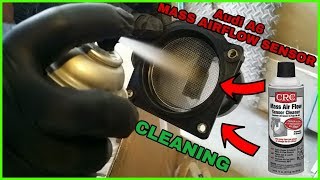
Remove the MAF sensor and spray it with dedicated MAF cleaner. Observe MAF readings on your scan tool at idle; a healthy 1.8T sensor reads 2.0-4.0 grams/second (g/s). Readings below 2.0 g/s suggest the sensor is under-reporting airflow.
Tools: Screwdriver/Torx bits, MAF Sensor Cleaner, Advanced OBD-II Scanner (Intermediate) - Resistance Test of Components (BMW/Nissan)
For BMW (O2 heater) or Nissan (IVT solenoid), disconnect the component and use a multimeter set to Ohms (Ω). A Nissan IVT solenoid typically reads 5-20 Ohms. An 'OL' reading means an open circuit, while near-zero indicates a short.
Tools: Multimeter, Service Manual (Advanced) - Test O2 Sensor Voltage
Monitor the voltage of the Bank 1 Sensor 1 O2 sensor. A traditional zirconia sensor fluctuates rapidly between 0.1V (lean) and 0.9V (rich). If stuck below 0.2V, it confirms a lean condition (likely a vacuum leak). A slow or fixed voltage indicates a faulty sensor.
Tools: Multimeter, Advanced OBD-II Scanner (Advanced) - Test Fuel Pressure
Connect a fuel pressure gauge to the fuel rail's test port. Verify pressure is within the manufacturer's specified range at idle (around 58 PSI for many VW/Audis). Low pressure indicates a failing fuel pump, clogged filter, or bad regulator.
Tools: Fuel Pressure Gauge, Service Manual (Advanced)
When This Code Triggers (Freeze-Frame Conditions)
- Engine Coolant Temp: 175-210°F (80-99°C) (The code sets when the engine is fully warmed up and operating in closed loop.)
- RPM: 680-900 RPM (For VW/Audi, P1136 is an additive (idle) trim code, setting exclusively when the engine is idling.)
- Engine Load: 15-35% (Indicates a low-load state, consistent with idling in gear or in neutral with accessories on.)
- Battery Voltage: > 11.5V (The system requires stable voltage to run diagnostics; low voltage causes erroneous codes.)
Related Codes
- P0171 — This is the generic OBD-II code for 'System Too Lean (Bank 1)'. P1136 on a VW/Audi is more specific, pointing to the 'additive' fuel trim at idle being out of range. If you have P1136 but your off-idle ('multiplicative') trims are normal, you almost certainly have a vacuum leak.
- P1138 — This is the identical code but for Bank 2 of the engine. If your car has a V6 or V8 and you see both P1136 and P1138, the cause is a component common to both banks. Start by looking for leaks in the main intake boot, a faulty MAF sensor, or a fuel pressure issue.
- P0300, P0301, P0302... — These are misfire codes. A severe lean or rich air-fuel mixture prevents the fuel from burning properly, leading to misfires. The P1136 code indicates the underlying fuel trim problem that is the cause of the misfire effect. Fix the P1136 first, and the misfire codes resolve.
- P1128 — On VW/Audi, this is 'Long Term Fuel Trim B1 System Too Rich'. It is the direct opposite of P1136 and indicates the ECM is removing fuel to compensate for a rich condition, possibly from a leaking fuel injector or faulty fuel pressure regulator.
Climate & Environmental Factors
- Cold Weather: This is a major contributor for VW/Audi vehicles. Cold temperatures cause the plastic and rubber hoses of the PCV system to become extremely brittle. Starting the engine in freezing weather cracks these fragile hoses instantly, creating a significant vacuum leak.
- High Altitude: High altitude naturally causes engines to run richer due to the lower air density. While this typically counteracts a lean condition, it confuses the ECM's fuel trim calculations and contributes to setting a fuel trim code if other borderline issues are present.
- Heat Cycles: Years of heat cycles from the engine and turbocharger degrade the plastic and rubber components of the vacuum system, making them prone to cracking and failure regardless of the ambient climate. This is the underlying cause that cold weather exposes.
How to Talk to a Mechanic About This Code
Say this: "I have a P1136 code on my [Make, Model]. For my car, this points to [a lean condition at idle / an O2 sensor heater circuit fault / an IVT solenoid issue]. I'd like to schedule a diagnostic appointment. Can you please start by [performing a smoke test to check for vacuum leaks / testing the O2 sensor heater circuit / checking oil condition and testing the IVT solenoid] before replacing any parts?"
This signals you understand the code's specific meaning for your vehicle. It directs the mechanic toward the most likely cause, preventing them from jumping to an expensive, incorrect conclusion like replacing a good O2 sensor on a VW with a vacuum leak.
Avoid saying:
- 'My check engine light is on, can you look at it?' (This is too vague and invites a costly, broad diagnostic process).
- 'Just fix whatever's wrong.' (This gives the shop a blank check to replace parts without your approval).
- 'A friend told me it's the O2 sensor.' (This leads to confirmation bias, where the mechanic replaces the part you mentioned without proper diagnosis).
Questions to ask before authorizing the repair:
- Can you show me the failed part or a photo of the smoke leak?
- What were the long-term fuel trim readings at idle from the scan tool? (For VW/Audi)
- Did you test the component, and what were the results (e.g., resistance in ohms, voltage)?
- Is this part OEM or aftermarket, and what is the warranty on the part and the labor?
Where to Take It: Dealer vs Independent vs Chain
- Dealer:
Best for: Vehicles still under a factory or extended warranty., Complex, manufacturer-specific electrical issues or software updates., When a safety recall is active for the component in question.
Downsides: Significantly higher labor rates, often 1.5x to 2x more than independent shops., May replace an entire assembly when only a small component has failed. (Typical cost: +50% vs. baseline) - Independent Shop:
Best fit, especially a specialist. Since P1136 has very different meanings by brand, a specialist (e.g., Euro-spec for VW/BMW, or a trusted local shop for Nissan) is the ideal choice. They are familiar with common failure points and have the right diagnostic tools without the full dealer markup.
Best for: Out-of-warranty vehicles where cost is a major factor., Common diagnostic problems like vacuum leaks and sensor failures., Finding a shop that specializes in your car's brand (e.g., a 'European Auto Repair' shop for a VW/Audi/BMW) provides dealer-level expertise at a lower cost.
Downsides: Quality and expertise vary widely; vetting the shop through reviews and certifications (like ASE) is crucial., May not have the latest, most expensive manufacturer-specific diagnostic tools. (Typical cost: +0% vs. baseline) - Chain Shop:
Acceptable for a simple, confirmed fix like a MAF sensor replacement, but AVOID for the initial diagnosis. Their generalist approach is highly likely to misdiagnose the nuanced causes of P1136.
Best for: Simple, routine maintenance like oil changes, tires, and brake pads.
Downsides: Technicians lack the specialized knowledge for manufacturer-specific codes like P1136., High pressure to upsell services leads to misdiagnosis and unnecessary repairs (e.g., selling an O2 sensor for a vacuum leak). (Typical cost: -10% vs. baseline)
When to Walk Away From the Repair
If the estimated repair cost exceeds 40-50% of the car's current private-party value, it's generally not worth fixing. For older cars (10+ years or >150,000 miles), consider lowering this threshold to 30-40%.
- Car worth $4000, fix is $2000: Borderline. The repair is 50% of the car's value. Get a second opinion before authorizing, and consider if the car has other pending maintenance needs.
- Car worth $12000, fix is $1800: Fix it. The repair cost is only 15% of the car's value, which is well below the threshold.
- Car worth $2500, fix is $1500: Walk away. The repair cost is 60% of the car's value. It is not a sound financial decision.
What Scan Tool You Need for This Code
Minimum: A scanner that reads manufacturer-specific codes and displays live data streams for fuel trims (LTFT/STFT) and sensor voltages.
A basic $20 code reader only shows the P1136 code but won't provide the live data needed to diagnose the root cause. You won't be able to see if fuel trims are high (indicating a VW vacuum leak) or test a BMW's O2 heater circuit, leading you to guess and replace the wrong parts.
Budget: OBDeleven Standard (VAG) / ANCEL VD700 (VAG) (~$80) — Specifically for VW/Audi, these tools read manufacturer-specific codes and access live data in Measuring Value Blocks (like Block 032 for fuel trims), which is essential for diagnosing P1136 correctly on these cars.
Mid-range: Foxwell NT510 Elite / NT710 (with brand-specific software) (~$200) — Offers deep, dealer-level diagnostics for a specific brand (e.g., VAG, BMW, Nissan). It reads fuel trims, graphs sensor data, and performs adaptations and resets, providing professional-level data for an advanced DIYer.
Professional: Autel MaxiCOM MK808 / VCDS by Ross-Tech (VAG only) (~$450-750) — VCDS is the gold standard for VW/Audi, offering unparalleled access to all modules and coding. The Autel MK808 is a powerful multi-brand tool with full bidirectional control, comprehensive live data, and service functions, making it a versatile choice for diagnosing P1136 on any affected vehicle.
Rent vs buy: You can borrow a basic OBD-II scanner from stores like AutoZone for free with a refundable deposit. However, these loaner tools typically cannot read the manufacturer-specific data needed for a proper P1136 diagnosis. For this code, buying a brand-specific tool like OBDeleven or a Foxwell is a better investment.
How to Clear the Code After You Fix It
- Use an OBD-II scan tool to clear the diagnostic trouble codes.
- Ensure the fuel tank is between 30% and 70% full.
- Perform the specific drive cycle for your vehicle to allow readiness monitors to run.
Drive cycle (~20 minutes): A typical VW/Audi drive cycle involves: 1) Cold start and idle for 2-3 minutes. 2) Drive at a steady 45-55 mph for 7 minutes. 3) Accelerate to 60-65 mph and hold for 5 minutes. 4) Decelerate and idle for another 3 minutes. This process helps run the O2 sensor, catalyst, and fuel trim monitors.
Readiness monitors affected: Oxygen (O2) Sensor Monitor, Catalyst Monitor, Fuel System Monitor
Before emissions retest: drive at least 50 miles to fully set monitors.
Watch out for:
- Disconnecting the battery clears the code, but it also resets all emissions readiness monitors, causing an automatic emissions test failure.
- The code returns within a few drive cycles if the underlying mechanical or electrical fault has not been properly repaired.
- Failing to meet specific conditions (like a cold start or steady speed) prevents readiness monitors from completing.
Will This Fail Emissions / State Inspection?
Yes — this code typically fails an OBD-II emissions inspection.
- California: An active Check Engine Light for P1136 is an automatic failure for a smog check. After repairs, a full drive cycle must be completed to set all readiness monitors before a re-test is possible.
- New York: The NYS DMV inspection includes an OBD-II scan. Any emissions-related trouble code, including P1136, results in an immediate inspection failure.
- Texas: In counties requiring an emissions test, an illuminated Check Engine Light results in an automatic fail. After clearing the code, most vehicles are allowed one 'Not Ready' monitor to pass.
Most Commonly Affected Vehicles
- Audi A4 (especially 1.8T) (1997-2005) — Very prone to vacuum leaks in the complex PCV hose system and MAF sensor failures. The PCV system was updated multiple times; using the latest revision parts is recommended for a lasting repair.
- Volkswagen Passat (especially 1.8T) (1998-2005) — Shares the same engine (AEB, ATW, AUG) and failure-prone vacuum system components as the Audi A4, making it equally susceptible to this code. Brittle plastic breather hoses are a primary cause.
- Volkswagen Jetta / Golf (especially 1.8T) (1999-2005) — Both the 1.8T and VR6 engines in this model are known to trigger P1136 due to vacuum leaks and failing MAF sensors.
- Audi A6 / Allroad (2.7T V6) (1998-2004) — The twin-turbo V6 engine has extensive vacuum and boost piping that leaks, causing fuel trim issues on one or both banks (P1136 & P1138). The 'spider hose' assembly is a common failure point.
- BMW Various (E46, E39, etc.) (1999-2006) — On these vehicles, P1136 points to 'O2 Sensor Heater Circuit High Voltage (Bank 1 Sensor 1)'. This is an electrical fault with the sensor's internal heater, not a fuel mixture problem. Often caused by a failed sensor or damaged wiring.
- Chevrolet / GM S-10, Blazer, various with 2.2L, 4.3L (1998-2004) — For GM vehicles, P1136 means 'Heated Oxygen Sensor (HO2S) Rich Mean Bank 1 Sensor 1'. The ECM sees the sensor's average reading as too rich, caused by a leaking injector or faulty fuel pressure regulator.
- Subaru Legacy, Outback, Impreza (1999-2004) — On many Subarus, P1136 indicates 'Front Left Oxygen Sensor Circuit Shorted'. This is an electrical fault within the sensor or its wiring harness, requiring electrical diagnosis.
- Nissan / Infiniti Various (Altima, Maxima, G35) (2002-2008) — On these vehicles, P1136 points to a problem with the intake valve timing (IVT) control solenoid, not the fuel mixture. This is frequently caused by low or dirty engine oil. Always check oil level and condition first.
Manufacturer-Specific Notes
- Volkswagen / Audi: Indicates the long-term fuel trim at idle ('additive') for Bank 1 is at its lean limit. An extended warranty was issued for the PCV valve on some 2.0T BPY engines (10 years/120,000 miles), showing a history of issues with these systems.
- Nissan / Infiniti: Refers to a malfunction in the Intake Valve Timing Control Solenoid Valve circuit, often for Bank 2. This is frequently caused by a low engine oil level or dirty oil, so check the dipstick before replacing parts.
- GM (Chevrolet, GMC): Means the Heated Oxygen Sensor (HO2S) for Bank 1 Sensor 1 is reporting a rich condition on average.
- Ford / Peugeot / Citroen: Often points to a malfunction in the engine's cooling fan control circuit, which is unrelated to fuel mixture.
- BMW: Indicates high voltage in the heater circuit for the Bank 1, Sensor 1 oxygen sensor, an electrical fault.
- Kia / Hyundai: On Kia, can mean 'Control Box Fan Circuit'. On Hyundai, P11xx codes are often for fuel trim, but may also relate to O2 sensor heater circuits. Always verify the definition for your specific model and year.
- Volvo (Trucks): On some 2024 models, this code appears due to a software glitch related to NOx sensor correlation and does not indicate a real problem. A software update from the dealer is required.
Real Owner Stories
2005 Audi A4 1.8T with emissions failure
Car failed its MOT emissions test with a high lambda value of 1.6 (indicating a lean mixture). The check engine light was on with code P1136, and the engine was surging at idle.
What they tried:
- A diagnostic check confirmed P1136 (Long term fuel trim/lean mixture).
- Spraying a naphtha-based solution around induction components did not reveal an external air leak.
- Checking the oil filler cap revealed a strong vacuum inside the valve cover, pointing to a breather system issue.
Outcome: The technician identified and replaced a defective one-way valve in the closed-circuit breather system. After replacement and resetting adaptations, the engine ran smoothly and passed its emissions test.
Lesson: A strong vacuum under the oil cap is a definitive indicator of a failed PCV valve or breather hose, which is a primary cause of P1136 on VW/Audi vehicles.
2000 VW Passat 1.8T with 192K miles and P1136
Check engine light was on for P1136, indicating a lean condition. The owner wanted to find the vacuum leak causing the code.
What they tried:
- The owner used a $29 Halloween fog machine connected to the intake system with a radiator hose to perform a DIY smoke test.
Outcome: The smoke test quickly revealed a visible leak from the intake manifold gasket at the cylinder #2 runner. The owner confirmed the leak by spraying Windex on the area and blowing into a vacuum line, creating bubbles.
Lesson: You don't always need an expensive professional smoke machine. A cheap fog machine is highly effective for finding intake vacuum leaks if safely adapted to the intake boot.
1998 VW Passat 1.8T with recurring P1136
The car came in with P1136. The shop performed tests and replaced parts, but the code returned after a month.
What they tried:
- Initial tests for induction and exhaust leaks were performed.
- A gas analyzer showed the car was running rich at idle (0.30% CO), despite the lean code.
- The shop replaced the Mass Airflow (MAF) sensor and the front oxygen sensor.
Outcome: The code returned. The combination of a lean code (P1136) and a rich reading on a gas analyzer is a classic symptom of an exhaust leak before the O2 sensor, which allows unmetered air to hit the sensor and trick the ECU into adding too much fuel.
Lesson: Don't blindly trust the code's definition. A 'lean' code is sometimes caused by a condition that makes the engine run rich. A 5-gas exhaust analysis provides crucial data that a code reader cannot.
2000 Audi A4 1.8T with multiple lean codes (P1136, P0171)
Car had a steady check engine light, severe vibration at idle, and was lethargic. Codes were P1136 and P0171.
What they tried:
- The owner suspected a vacuum leak after ruling out the MAF and O2 sensor based on symptoms.
- A visual inspection revealed a cracked hose coming from the intake manifold.
Outcome: The owner replaced the cracked breather hose (sometimes called the 'crack pipe' by VW/Audi dealers) and the problem was solved in under 10 minutes for a $20 part.
Lesson: Always start with a thorough visual inspection of all accessible vacuum and breather hoses. On older VW/Audi 1.8T engines, these plastic and rubber parts become extremely brittle and are a primary failure point.
How to Prevent This Code From Triggering
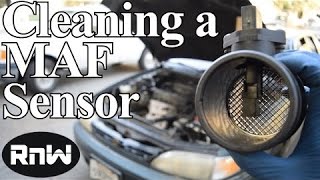
- Clean the Mass Airflow (MAF) Sensor (Every time you change your air filter (15,000-30,000 miles).) — Dust and oil vapor coat the delicate sensor elements, causing inaccurate airflow readings. Regular cleaning restores accuracy and prevents the computer from creating a lean or rich mixture based on bad data.
- Replace the Fuel Filter (Every 50,000-60,000 miles for VW/Audi models.) — A clogged fuel filter restricts fuel flow, forcing the fuel pump to work harder and starving the engine of fuel. This leads to a lean condition, hesitation, and premature fuel pump failure.
- Proactively Replace PCV System Hoses (Once per 80,000-100,000 miles on VW/Audi 1.8T engines.) — The plastic and rubber hoses in the PCV system are guaranteed to become brittle and fail from heat and age. Replacing them with a durable silicone hose kit prevents a future P1136 code.
- Use High-Quality Engine Oil and Change it On Time (Per manufacturer's schedule.) — For Nissan/Infiniti vehicles, clean oil is critical. Old or dirty oil clogs the fine passages in the IVT solenoid, preventing it from functioning correctly and affecting valve timing.
- Inspect Air Intake Ducts During Other Maintenance (During every oil or air filter change.) — Check that all clamps on the air intake boot are tight and that the air filter box is sealed. A loose clamp allows unmetered air to enter the engine after the MAF sensor, causing lean codes.
Frequently Asked Questions
What are the most common misdiagnosis mistakes for P1136?
The most common mistake is immediately replacing the front O2 sensor. The O2 sensor is usually just the messenger, accurately reporting a lean condition. The actual cause is far more likely to be a vacuum leak.
What's the difference between 'additive' and 'multiplicative' fuel trims?
On VW/Audi, 'additive' trim refers to fuel adjustments made at idle, while 'multiplicative' trim refers to adjustments made off-idle. P1136 is an additive trim code, which strongly points to a vacuum leak. Vacuum leaks have a massive effect at idle but a negligible effect when the throttle is open.
What does 'Bank 1' mean?
Bank 1 is the side of the engine containing cylinder #1. On a 4-cylinder engine, there is only one bank. Finding which side is Bank 1 is essential for diagnosing codes specific to V6 or V8 engines.
Can I fix P1136 myself?
Yes, if the cause is a dirty MAF sensor or an obvious, accessible vacuum leak. However, diagnosing hidden leaks requires an automotive smoke machine. Stop DIY and take the car to a European specialist if a smoke test reveals no leaks and fuel trims remain high.
Why does my scanner say P1136 for my Toyota, but your guide says P1135?
For many Toyota vehicles, the common code for the front oxygen sensor heater circuit is actually P1135. While some scanners misreport it as P1136, P1135 is the code you should research. It indicates a problem with the sensor's internal heater, not a fuel mixture issue.
Will P1136 clear itself?
No, the underlying mechanical or electrical problem must be fixed first. After the repair, clear the code with an OBD-II scanner. The ECM then runs its self-tests, and if the fix was successful, the code will not return.
Can a bad battery or alternator cause P1136?
Yes, a low battery voltage (below 11.5V) causes electronic modules and sensors to behave erratically. This leads to incorrect readings and triggers a P1136 code, especially on sensitive German vehicles. Always ensure your charging system is healthy before diving into complex diagnostics.
Key Takeaways
- P1136 means 'Lean at Idle' for VW/Audi, 'O2 Heater Circuit' for BMW, and 'VVT Solenoid' for Nissan—always verify your specific manufacturer's definition first.
- On VW and Audi vehicles, 80% of P1136 codes are caused by cracked plastic PCV hoses or a failing Mass Airflow (MAF) sensor.
- Do not replace the O2 sensor immediately; perform a smoke test first, as the sensor is usually just accurately reporting a vacuum leak.
- Driving with an active P1136 code for more than 200 miles risks melting your catalytic converter, turning a $150 hose repair into a $2,000 exhaust replacement.
- For Nissan and Infiniti owners, check your dipstick immediately; low or dirty engine oil clogs the IVT solenoid and triggers this exact code.
Helpful Videos


The information in this article is provided for general reference and educational purposes only. Vehicle specifications, procedures, and part compatibility can vary by production date, trim level, and region. Always consult your vehicle's factory service manual and verify part numbers before purchasing or performing repairs. Safety-critical components such as airbags, seat belts, and braking systems should be installed by a qualified professional.
- 🎬 Helpful Videos
- What Does P1136 Mean?
- Can I Drive With P1136?
- Common Causes
- Symptoms
- Diagnostic Flowchart
- Common Fixes & Costs
- Used vs. New Parts: Buying Guide
- What Happens If You Wait — Timeline
- Cost of Not Fixing It
- Diagnosis Steps
- When This Code Triggers (Freeze-Frame Conditions)
- Related Codes
- Climate & Environmental Factors
- How to Talk to a Mechanic About This Code
- Where to Take It: Dealer vs Independent vs Chain
- When to Walk Away From the Repair
- What Scan Tool You Need for This Code
- How to Clear the Code After You Fix It
- Will This Fail Emissions / State Inspection?
- Most Commonly Affected Vehicles
- Manufacturer-Specific Notes
- Real Owner Stories
- 2005 Audi A4 1.8T with emissions failure
- 2000 VW Passat 1.8T with 192K miles and P1136
- 1998 VW Passat 1.8T with recurring P1136
- 2000 Audi A4 1.8T with multiple lean codes (P1136, P0171)
- How to Prevent This Code From Triggering
- Frequently Asked Questions
- What are the most common misdiagnosis mistakes for P1136?
- What's the difference between 'additive' and 'multiplicative' fuel trims?
- What does 'Bank 1' mean?
- Can I fix P1136 myself?
- Why does my scanner say P1136 for my Toyota, but your guide says P1135?
- Will P1136 clear itself?
- Can a bad battery or alternator cause P1136?
- Key Takeaways
- 🎟️ Get 5% Off