

OBD-II Code P1297: Turbocharger Pressure Loss & Other Meanings
The ultimate guide to what P1297 means, why it triggers, and how to fix it on any vehicle.
- On VW and Audi vehicles, P1297 indicates a boost leak, with 80% of cases caused by a ruptured PCV valve or cracked plastic breather hoses.
- For Dodge and Chrysler owners, P1297 points directly to a faulty MAP sensor, which costs roughly $150 to replace and takes 30 minutes to fix.
- Diagnose VW/Audi boost leaks by performing a $50-$100 automotive smoke test rather than blindly replacing expensive turbo components.
- Driving with an active P1297 boost leak forces the turbocharger to over-speed, risking a catastrophic $2,500+ turbo failure within 6 to 8 months.
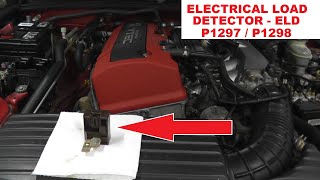
- Honda and Acura vehicles trigger P1297 for a low voltage Electrical Load Detector (ELD) circuit, requiring a $40 fuse box module replacement, not a boost leak repair.
What Does P1297 Mean?

P1297 is a manufacturer-specific code. For Volkswagen and Audi, the engine control unit (ECU) detects a pressure drop between the turbocharger and the throttle body. Pressurized air (boost) is leaking out before entering the engine. This robs power, forces the turbo to over-speed, and ruins the air-fuel mixture. For Dodge/Chrysler, it means a MAP sensor fault. For Honda/Acura, it indicates an electrical load detector issue.
Technical definition: For VW/Audi: '17705/P1297 - Pressure Drop between Turbo and Throttle Valve', indicating a physical charge air leak. For Dodge/Chrysler: 'No Change In MAP Sensor From Start To Run'. For Honda/Acura: 'Electric Load Detector (ELD) Circuit Low Voltage'.
Can I Drive With P1297?
Yes, But With Caution. Yes, but performance is severely compromised. Continuing to drive forces the turbocharger to over-speed to compensate for lost pressure, risking premature failure (a $2,600+ repair). It also causes a rich fuel mixture that destroys the catalytic converter over time, adding $2,500+ to the bill. Address the issue within 100 miles.
Common Causes

- Failed PCV Valve or Cracked Breather Hoses (Very Common) — The plastic and rubber hoses in the PCV system become brittle from heat and crack. Additionally, the PCV valve's internal diaphragm tears. Both create massive vacuum leaks that the ECU interprets as pressure loss. This is the #1 cause on VW/Audi vehicles. 🎬 Watch: Step-by-step PCV valve replacement for VW and Audi engines.
- Torn Turbocharger Diverter Valve (DV) (Common) — This valve recirculates boost pressure. If its rubber diaphragm tears or it gets stuck open, it creates a constant boost leak directly at the turbocharger.
- Failed Boost Pressure (MAP) Sensor (Common) — The sensor measuring boost pressure fails, clogs with soot, or suffers wiring damage, sending incorrect readings to the ECU. This is the primary cause for Dodge/Chrysler vehicles.
- Loose or Cracked Intercooler Pipes (Common) — The large pipes connecting the turbo to the intercooler and throttle body pop loose at their connections or develop cracks, allowing boost pressure to escape.
- Faulty N75 Boost Control Valve (Less Common) — The N75 solenoid controls the turbocharger's wastegate. If it fails electrically or its vacuum lines crack, it causes improper boost regulation.
- Cracked Intake Manifold or Dipstick Tube (Rare) — The plastic intake manifold develops hairline cracks, or the plastic dipstick guide tube breaks at its base, creating an unmetered air leak.
Symptoms

- Check Engine Light illuminated — The ECU triggers the Malfunction Indicator Lamp (MIL) immediately upon detecting the pressure drop or sensor fault.
- Significant power loss and hesitation — The car feels sluggish, unresponsive, and stumbles during acceleration because the engine lacks the expected boosted air.
- Audible hissing or whistling noise — A high-pitched hissing sound from the engine bay that increases with engine RPM indicates pressurized air escaping through a crack.
- Rough, hunting, or high idle — Unmetered air entering the system causes the engine to idle too high, fluctuate erratically, or stall when stopping.
- Decreased fuel economy — The ECU dumps excess fuel into the engine to compensate for the perceived lean condition caused by the air leak, dropping MPG by 10-20%.
Diagnostic Flowchart

Tap your situation to follow the diagnostic path that matches what you're seeing on this code.
Common Fixes & Costs
- Replace PCV Valve and Breather Hoses — Parts: $40-$150, Labor: $100-$250, ~1.5 hr book time (DIY)
- Replace Turbocharger Diverter Valve (DV) — Parts: $60-$140, Labor: $100-$200, ~1.0 hr book time (DIY)
- Replace Boost Pressure (MAP) Sensor — Parts: $50-$150, Labor: $50-$150, ~0.5 hr book time (DIY)
- Re-secure or Replace Intercooler Pipes — Parts: $100-$400, Labor: $150-$250, ~1.5 hr book time (Intermediate)
- Replace N75 Boost Control Solenoid — Parts: $40-$110, Labor: $50-$100, ~0.5 hr book time (DIY)
DIY vs Professional
- Replace PCV Valve and Breather Hoses — Beginner: Yes, for accessible top-mounted parts.
Tools: Pliers, Torx set, flashlight. - Replace Turbocharger Diverter Valve (DV) — Beginner: Yes, but requires patience.
Tools: Jack and stands, 5mm Allen or T30 Torx, small ratchet. - Replace Boost Pressure (MAP) Sensor — Beginner: Yes.
Tools: Basic socket or Torx set. - Re-secure or Replace Intercooler Pipes — Beginner: Yes.
Tools: Screwdrivers, socket set, jack and stands. - Replace N75 Boost Control Solenoid — Beginner: Yes.
Tools: Pliers, flathead screwdriver.
Used vs. New Parts: Buying Guide
When a used part is worth it: Never buy used PCV valves, breather hoses, or diverter valves; they are cheap wear items. A used OEM MAP sensor for a Dodge is acceptable if budget is tight.
Donor-vehicle mileage cap: roughly under 60000 miles for the part to have meaningful remaining life.
Donor quality checklist:
- Ensure exact part number matching for electronic sensors.
- Verify the donor vehicle was not scrapped due to engine fire or flood.
Decision logic:
- If Part is a plastic/rubber hose or valve diaphragm (PCV, DV) → Always buy new. Used rubber has no reliable lifespan.
- If Part is an electronic MAP sensor → A used OEM part is often more reliable than a cheap $20 aftermarket knockoff.
- If Part is a turbocharger → Buy new or professionally remanufactured. Used turbos are a massive gamble.
Warranty tradeoff: Salvage yards offer 30-day warranties. New OEM parts carry 1-2 year warranties.
Worst-case if a used part fails: A failed used turbocharger sends metal shrapnel into the engine, causing $5,000+ in catastrophic damage.
What Happens If You Wait — Timeline
- 0-1 month: Check Engine Light illuminates. Noticeable hissing, rough idle, and sluggish acceleration. Turbo spins faster to meet requested boost. (MPG impact: 5-10%% · Added cost: $25-75 in wasted fuel.)
- 1-4 months: Turbocharger consistently over-speeds, accelerating bearing wear. The ECU runs a rich fuel mixture, fouling spark plugs. (MPG impact: 10-15%% · Added cost: $100-300 for wasted fuel and new spark plugs.)
- 4-8 months: Sustained rich mixtures melt the catalytic converter's internal honeycomb. Turbocharger bearing wear becomes critical. (MPG impact: 15-20%% · Added cost: $1,000-1,500 for catalytic converter replacement.)
- 8+ months: Catastrophic turbocharger failure occurs. The catalytic converter clogs completely, causing severe backpressure and engine stalling. (MPG impact: >20%% · Added cost: $2,500-6,000+ for turbocharger and catalytic converter replacement.)
Cost of Not Fixing It
- 0-1 month: Loss of power, 10% drop in fuel economy, and annoying hissing noises. (Added cost: 50-100)
- 1-6 months: Turbocharger over-speeds constantly, wearing out bearings. Rich fuel mixtures foul spark plugs and stress the catalytic converter. (Added cost: 300-800)
- 6+ months: Catastrophic turbocharger failure and a melted catalytic converter. (Added cost: 2500-6000)
Diagnosis Steps
- PCV Valve Oil Cap Test (VW/Audi)
With the engine idling, try to remove the oil filler cap. If there is strong suction holding the cap down, and removing it causes the engine to stumble or stall, the PCV valve diaphragm is ruptured and must be replaced.
Tools: None (Beginner) - Visual and Audio Inspection
Inspect all plastic and rubber hoses connected to the valve cover, intake manifold, and turbocharger for cracks or disconnected ends. With the engine running, use a length of rubber tubing as a stethoscope to pinpoint hissing noises.
Tools: Flashlight, rubber tubing (Beginner) - Perform a Smoke Test
This is the definitive way to find hidden leaks. Connect an automotive smoke machine to the intake system. Visible vapor will pour out of any cracked hose, bad seal, or ruptured diaphragm.
Tools: Automotive smoke machine (Intermediate) - Inspect MAP Sensor for Soot (Dodge/Chrysler)
Remove the MAP sensor from the intake manifold. If it is heavily caked with soot or oil (common on EcoDiesel engines), clean it thoroughly with electronics cleaner and reinstall.
Tools: Socket set, Electronics Cleaner (Beginner) - Analyze Scan Tool Live Data
Use a VAG-specific scanner (like VCDS) to monitor Long Term Fuel Trims (Group 032). A highly positive LTFT at idle (>+10%) confirms a vacuum leak. Monitor requested vs. actual boost (Group 115); actual boost significantly lower than requested confirms a boost leak.
Tools: Advanced OBD-II Scan Tool (VCDS) (Advanced) - Inspect Diverter Valve (DV) Diaphragm
Remove the diverter valve from the turbocharger. Inspect the rubber diaphragm for tears. Test it by applying vacuum to the control port with a hand pump to verify it holds pressure.
Tools: Torx/Allen set, hand vacuum pump (Intermediate) - Test MAP Sensor Voltage
Back-probe the MAP sensor connector. With the key ON (engine OFF), the signal wire should read 4.5-5V. Start the engine; at idle, voltage should drop to 1-2V. If voltage does not change, the sensor is dead.
Tools: Multimeter, back-probe pins (Advanced) - Test N75 Valve Electrical Integrity
Unplug the N75 valve and measure resistance across its pins. A healthy VW/Audi N75 reads 25-35 Ohms. Check the harness connector with the key ON; one pin must show ~12V battery voltage.
Tools: Multimeter (Advanced) - Test Honda ELD Circuit Voltage
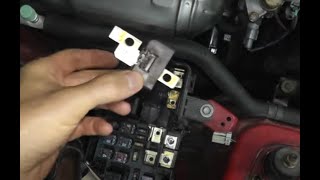
For Honda/Acura, locate the ELD in the fuse box. Back-probe the 3-pin connector. Signal voltage should be 2.5-3.5V with accessories off, and drop below 2.0V with headlights and A/C on. If voltage is static, replace the ELD.
Tools: Multimeter, back-probe pins (Advanced)
When This Code Triggers (Freeze-Frame Conditions)
- Engine Coolant Temp: 185-210°F (85-99°C) (The engine must reach full operating temperature for the ECU to run the boost pressure diagnostic monitor.)
- Engine Load: 40-70% (Triggered during steady cruising or light acceleration when the ECU requests boost but detects actual pressure is too low.)
- Vehicle Speed: 45-65 mph (Highway speeds provide the stable environment required for the ECU to compare requested versus actual boost pressure.)
Related Codes
- P0171 — System Too Lean (Bank 1). A boost/vacuum leak allows unmetered air into the engine. This is the most common code paired with P1297 on VW/Audi.
- P2188 — System Too Rich at Idle. A massive vacuum leak causes a high idle, prompting the ECU to dump fuel to bring RPMs down.
- P0300 — Random Cylinder Misfire. The lean air-fuel mixture caused by the boost leak prevents proper combustion.
- P0236 — Turbocharger Boost Sensor 'A' Circuit Performance. Triggered if the boost sensor's readings are erratic due to the leak.
Climate & Environmental Factors
- Extreme Temperature Cycles: Harsh winters and hot summers accelerate the degradation of plastic and rubber PCV components, causing them to turn brittle and crack prematurely.
- High Altitude: Lower ambient air pressure forces the turbocharger to spin faster to hit target boost. This increased workload exacerbates tiny leaks, triggering P1297 sooner than at sea level.
How to Talk to a Mechanic About This Code
Say this: "I have a P1297 code on my VW/Audi. I'd like to schedule a diagnostic appointment that includes a smoke test of the intake and PCV system to pinpoint the boost leak."
This proves you know the common causes and prevents the shop from blindly replacing expensive turbo components before finding the actual $5 cracked hose.
Avoid saying:
- 'My turbo is broken, can you fix it?'
- 'Just replace whatever the code says.'
Questions to ask before authorizing the repair:
- Did the smoke test show the exact location of the leak?
- If replacing the PCV valve, are the connected plastic breather hoses also being replaced?
- Can you show me the torn diaphragm or cracked hose on the old part?
Where to Take It: Dealer vs Independent vs Chain
- Dealer:
Best for: Vehicles under powertrain warranty.
Downsides: Highest labor rates (often $200+/hr)., Tendency to replace entire assemblies rather than individual failed valves. (Typical cost: +50% vs. baseline) - Independent Shop:
Best fit. A European auto specialist has the required smoke machine and VCDS scanner to diagnose P1297 accurately at a fair price.
Best for: Out-of-warranty VW/Audi vehicles.
Downsides: Requires finding a shop specifically experienced with European cars. (Typical cost: +0% vs. baseline) - Chain Shop:
Avoid for VW/Audi. High risk of misdiagnosis and unnecessary parts replacement.
Best for: Simple MAP sensor replacements on Dodge vehicles.
Downsides: Technicians lack the specialized knowledge and VAG-specific scan tools to diagnose complex German vacuum systems. (Typical cost: -10% vs. baseline)
When to Walk Away From the Repair
If the estimated repair cost exceeds 40-50% of the car's private-party value, consider selling it.
- Car worth $5000, fix is $300: Fix it. Replacing a PCV valve and hoses is standard maintenance.
- Car worth $4000, fix is $3500: Walk away. If ignoring the leak has destroyed the turbocharger and catalytic converter, the repair exceeds the car's worth.
What Scan Tool You Need for This Code
Minimum: For VW/Audi, a scanner that reads manufacturer-specific codes and displays live data for 'Requested vs. Actual Boost' and 'Fuel Trims'.
A $20 code reader only shows 'P1297'. It cannot show live data to determine if the leak occurs at idle or under boost, leaving you guessing which parts to replace.
Budget: OBDeleven Standard (~$60) — Smartphone-based tool for VAG cars. Reads live data and performs adaptations. Excellent for DIYers.
Mid-range: Ross-Tech VCDS (HEX-V2) (~$200) — The gold standard for VW/Audi. Offers dealer-level live data logging and graphing to pinpoint exact boost leak conditions.
Professional: Autel MaxiCOM MK808 (~$500) — Professional all-make tablet scanner with full bidirectional control and OEM-level diagnostics.
Rent vs buy: AutoZone's free code reading service will confirm P1297, but lacks the live data needed for diagnosis. Buying OBDeleven or VCDS is mandatory for serious VW/Audi DIYers.
How to Clear the Code After You Fix It
- Use an OBD-II scan tool to clear the P1297 code.
- Perform a complete drive cycle to reset readiness monitors.
- Re-scan to ensure P1297 and lean/rich codes have not returned.
Drive cycle (~20 minutes): Cold start and idle for 3 minutes. Drive at a steady 45-55 mph for 7 minutes. Accelerate smoothly to 65 mph and hold for 5 minutes. Decelerate to a stop and idle for 3 minutes.
Readiness monitors affected: Catalyst (CAT) monitor, Oxygen (O2) Sensor monitor, Fuel System monitor
Before emissions retest: drive at least 50 miles to fully set monitors.
Watch out for:
- Clearing the code without fixing the physical leak causes the code to return immediately under load.
- Disconnecting the battery clears the code but resets all monitors, guaranteeing an emissions test failure until a drive cycle is completed.
Will This Fail Emissions / State Inspection?
Yes — this code typically fails an OBD-II emissions inspection.
- California: An illuminated Check Engine Light is an automatic failure. Clearing the code requires 50-100 miles of driving to reset readiness monitors before retesting.
- New York: NYS DMV inspections include an OBD-II scan. Active P1297 codes result in automatic failure.
- Texas: In emissions-testing counties, you cannot pass inspection until the underlying fault is repaired and monitors are set to 'Ready'.
Most Commonly Affected Vehicles
- Volkswagen Jetta / GTI / GLI (1999-2014) — Extremely common on 1.8T and 2.0T engines due to failing plastic PCV components. TSB 01-09-03 addresses an updated crankcase breather valve.
- Audi A4 / S4 / A5 (1998-2013) — Shares the vulnerable PCV and vacuum systems with VW. B7 generation (2005-2008) 2.0T models are highly susceptible.
- Volkswagen Passat (1998-2010) — The B5/B5.5 Passat 1.8T frequently triggers this code due to a failed PCV 'bleeder valve' (Part # 06B-103-245).
- Honda / Acura Civic, Accord, CR-V (1999-2015) — P1297 means 'Electric Load Detector (ELD) Circuit Low Voltage'. It is an electrical fuse box issue, completely unrelated to boost leaks.
- Dodge / Chrysler Ram 1500, Dakota, Durango (1997-2018) — P1297 means 'No Change In MAP Sensor From Start To Run'. It points directly to a faulty or soot-clogged MAP sensor.
Manufacturer-Specific Notes
- Volkswagen / Audi: P1297 almost exclusively means a physical leak in the charge air or vacuum system. TSB TT 24-08-01 specifically points to the crankcase breather system on 1.8T engines.
- Chrysler / Dodge: P1297 indicates a problem with the MAP sensor or its wiring, not a pressure leak. TSB 18-031-03 addresses this issue for early 2000s models via a PCM software update.
- Honda / Acura: This code is completely unrelated to turbochargers. It indicates an 'Electric Load Detector (ELD) Circuit Low Voltage' issue located in the under-hood fuse box.
Real Owner Stories
2003 VW Jetta 1.8T with 150K miles
Check Engine Light with codes P1297 and P2188 (System Too Rich at Idle). The car had a hunting idle and an audible hissing sound.
What they tried:
- Visual inspection revealed nothing. Diverter valve tested fine with a vacuum pump.
- A smoke test revealed a split in a small vacuum line going to the N249 solenoid under the intake manifold.
Outcome: Replacing the $5 cracked vacuum hose resolved the leak, clearing both codes and smoothing the idle.
Lesson: A smoke test is mandatory. Tiny, hidden vacuum hoses cause confusing codes. Don't replace major components without testing.
2002 Acura RSX Type-S
Car died while driving due to low battery voltage (11.3V). The car had an active P1297 'ELD low voltage' code for months.
What they tried:
- Assuming a bad alternator, the owner replaced it.
- Charging voltage jumped to 14.5V, but the battery light stayed on, and the code changed to P1298 (ELD High Voltage).
Outcome: The failing ELD module was the root cause of the charging malfunction. Replacing the $40 ELD fixed the issue.
Lesson: On Hondas, P1297 points to the Electrical Load Detector. Diagnosing the ELD circuit first saves the cost of an unnecessary alternator replacement.
2015 Ram 1500 EcoDiesel at 50K miles
P1297 appeared during a road trip while towing. No noticeable performance issues.
What they tried:
- Checked wiring harness for a tuning module, found no issues.
- Removed the MAP sensor and found it heavily caked with diesel soot.
Outcome: Cleaning the MAP sensor with electronic parts cleaner resolved the code permanently.
Lesson: On Dodge diesels, P1297 points directly to the MAP sensor. Cleaning a soot-covered sensor is a free fix that often prevents a $150 replacement.
2007 VW GTI (BPY) with 214K miles
Car threw P1297 on cold starts only, accompanied by a severe rough idle until warmed up.
What they tried:
- Replaced N75, N249, intake manifold, MAF, MAP, and PCV valve.
- Two separate shops performed smoke tests and found no leaks.
Outcome: The issue was a mechanical wastegate fault that only malfunctioned when cold, evading standard smoke tests.
Lesson: If you replace all common culprits and smoke tests are negative, investigate temperature-sensitive mechanical components like the turbo wastegate.
How to Prevent This Code From Triggering
- Replace PCV valve proactively. (Every 60,000-80,000 miles.) — The PCV diaphragm on VW/Audi engines is a guaranteed failure point. Replacing it prevents massive vacuum leaks and blown rear main oil seals.
- Perform regular, high-quality oil changes. (Every 5,000-7,500 miles using synthetic oil.) — Clean oil lubricates the turbocharger bearings. Degraded oil causes bearing wear, leading to turbo failure and boost leaks.
- Allow for turbo cool-down. (After every spirited or highway drive.) — Idling for 30-60 seconds before shutdown allows oil to cool the turbo bearings. Instant shutdown cokes the oil, destroying the turbo.
Key Takeaways
- On VW and Audi vehicles, P1297 indicates a boost leak, with 80% of cases caused by a ruptured PCV valve or cracked plastic breather hoses.
- For Dodge and Chrysler owners, P1297 points directly to a faulty MAP sensor, which costs roughly $150 to replace and takes 30 minutes to fix.
- Diagnose VW/Audi boost leaks by performing a $50-$100 automotive smoke test rather than blindly replacing expensive turbo components.
- Driving with an active P1297 boost leak forces the turbocharger to over-speed, risking a catastrophic $2,500+ turbo failure within 6 to 8 months.
- Honda and Acura vehicles trigger P1297 for a low voltage Electrical Load Detector (ELD) circuit, requiring a $40 fuse box module replacement, not a boost leak repair.
Helpful Videos


The information in this article is provided for general reference and educational purposes only. Vehicle specifications, procedures, and part compatibility can vary by production date, trim level, and region. Always consult your vehicle's factory service manual and verify part numbers before purchasing or performing repairs. Safety-critical components such as airbags, seat belts, and braking systems should be installed by a qualified professional.
- 🎬 Helpful Videos
- What Does P1297 Mean?
- Can I Drive With P1297?
- Common Causes
- Symptoms
- Diagnostic Flowchart
- Common Fixes & Costs
- DIY vs Professional
- Used vs. New Parts: Buying Guide
- What Happens If You Wait — Timeline
- Cost of Not Fixing It
- Diagnosis Steps
- When This Code Triggers (Freeze-Frame Conditions)
- Related Codes
- Climate & Environmental Factors
- How to Talk to a Mechanic About This Code
- Where to Take It: Dealer vs Independent vs Chain
- When to Walk Away From the Repair
- What Scan Tool You Need for This Code
- How to Clear the Code After You Fix It
- Will This Fail Emissions / State Inspection?
- Most Commonly Affected Vehicles
- Manufacturer-Specific Notes
- Real Owner Stories
- 2003 VW Jetta 1.8T with 150K miles
- 2002 Acura RSX Type-S
- 2015 Ram 1500 EcoDiesel at 50K miles
- 2007 VW GTI (BPY) with 214K miles
- How to Prevent This Code From Triggering
- Key Takeaways
- 🎟️ Get 5% Off