

P0506 on 2011-2015 Kia Sorento: Causes and Fixes for Low Idle Speed
On the 2011-2015 Kia Sorento, code P0506 is most often caused by a dirty electronic throttle body. A thorough cleaning with specialized cleaner for about $10-15 is the most common fix and a good first step. If that doesn't work, suspect a vacuum leak, particularly from a faulty PCV valve or its hose. An idle relearn procedure may be necessary after cleaning or replacement.
- P0506 means the engine is idling lower than the computer expects.
- The most likely cause is a dirty electronic throttle body, which you can clean yourself for a low cost.
- Always check for other codes first. On this Sorento, P0506 is often a symptom of a vacuum leak (causing a lean code P2096) or a fuel pressure issue (P0087).
- If cleaning the throttle body doesn't fix it, check for vacuum leaks next, especially the PCV hose and intake manifold area.
- Stalling at stops is a key symptom and a safety concern that should be addressed promptly.
What's Unique About the 2011-2015 Kia Sorento
While a dirty throttle body is a common cause on many cars, on the 2011-2015 Sorento, P0506 often appears with other trouble codes. Real-world owner complaints filed with the NHTSA show this code frequently accompanies fuel pressure codes (P0087) and lean condition codes (P2096). [ODI #11513767, ODI #11499800] This suggests that P0506 may not be the root problem, but rather a symptom of a larger issue like a major vacuum leak or a fuel delivery problem that is causing the engine to struggle and idle too low. The PCV valve, in particular, is a known failure point that can cause a vacuum leak and lead to this code.
Generation note: The 2011-2015 Kia Sorento is all part of the second generation (XM). However, the specified 3.5L V6 engine (Lambda II G6DC) was primarily used in 2011-2013 models, while the 2014-2015 models switched to a 3.3L V6 (Lambda II G6DH). The causes and diagnostic principles for P0506 are nearly identical for both V6 engines as they both use similar electronic throttle control systems and share common parts like the throttle body and PCV valve.
Symptoms You May Notice
- Engine idle is lower than normal (typically below 600 RPM).
- Rough or vibrating idle.
- Engine stalls when coming to a stop or when the A/C is turned on.
- Illuminated Check Engine Light 🎬 Watch: Diagnosing P0506 and P0507 codes on your Kia..
- Engine may be hard to start.
- In some cases, a whistling sound from the engine bay if a vacuum leak is present.
- Replacing the throttle body when it only needed cleaning.
- Replacing spark plugs or ignition coils, which would typically cause misfire codes (P030x) in addition to a rough idle.
- Replacing O2 sensors, which might be triggered by a lean condition caused by a vacuum leak, but are not the root cause themselves.
Most Likely Causes
- Dirty or Carbon-Fouled Electronic Throttle Body 🔴 High Probability Over time, oil vapors from the PCV system and other contaminants build up in the throttle body bore and on the throttle plate. This buildup can restrict the very small amount of air needed to pass the plate for a stable idle, causing the RPMs to drop below the target.
How to confirm: Remove the air intake duct from the throttle body and visually inspect for a dark, sticky layer of carbon buildup around the throttle plate and bore. The side facing the intake manifold is often the dirtiest.
Typical fix: Clean the throttle body thoroughly with a dedicated throttle body cleaner and a soft brush or microfiber towel. A new throttle body gasket should be used upon reinstallation. After cleaning, an idle relearn procedure may be required.
Est. part cost: $10-$25 for cleaner and a new gasket. - Vacuum Leak 🟡 Medium Probability Rubber and plastic vacuum lines, intake gaskets, and especially the PCV hose can become brittle and crack with age and heat cycles, allowing unmetered air to enter the engine. A faulty PCV valve stuck open is a very common source of a vacuum leak on this platform.
How to confirm: Visually inspect all vacuum hoses connected to the intake manifold for cracks or disconnections. A professional can perform a smoke test to find leaks that are difficult to see. Pay close attention to the PCV valve and its connecting hose.
Typical fix: Replace the cracked hose or leaking gasket. If the PCV valve is the cause, replace it.
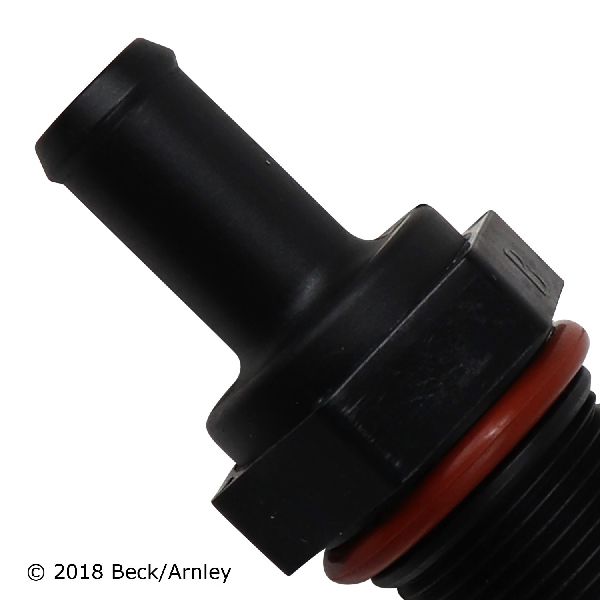
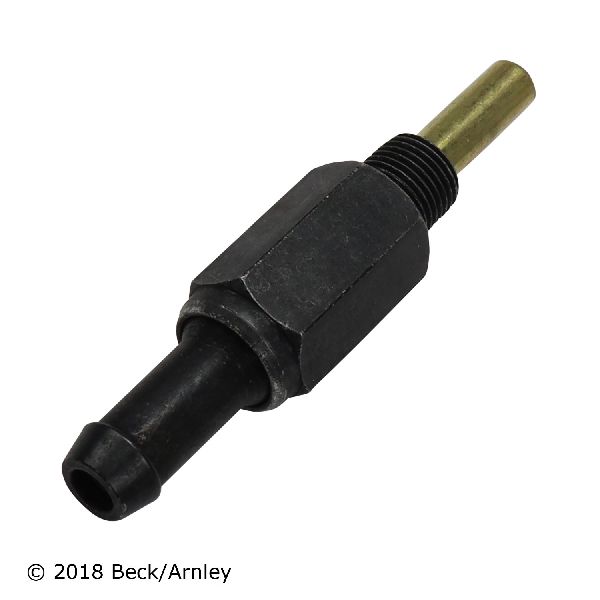
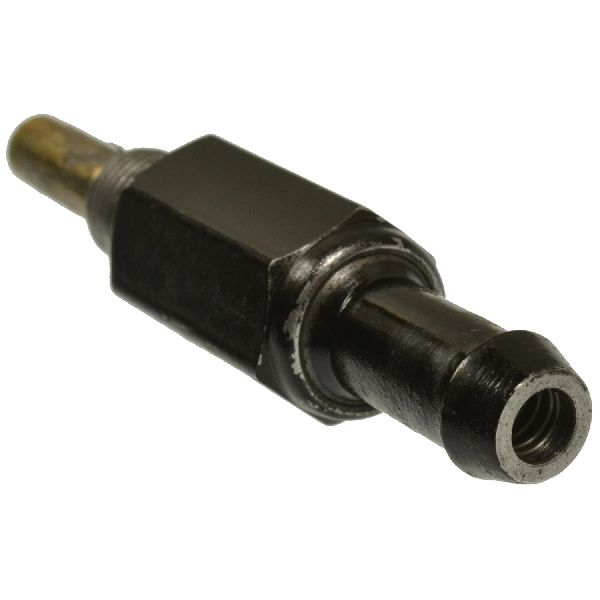
Est. part cost: $5-$50 depending on the specific hose or gasket. - Faulty Positive Crankcase Ventilation (PCV) Valve 🟡 Medium Probability The PCV valve can get stuck open or closed. If stuck open, it acts as a significant vacuum leak, disrupting the air-fuel mixture and causing the idle to be unstable or too low. If stuck closed, it can cause pressure buildup, leading to oil leaks. A faulty PCV valve is a frequent cause of P0506 on these vehicles.
How to confirm: Remove the PCV valve and shake it. If it doesn't rattle, it is likely stuck and needs replacement. Check the hose for cracks or softness at the same time. You can also test for suction at the hose end with the engine running.
Typical fix: Replace the PCV valve and any damaged hoses. This is an inexpensive and often effective repair.
Est. part cost: $15-$40
Rare But Worth Checking
- Failing Electronic Throttle Body: While cleaning often solves the issue, the electronic motor or position sensor within the throttle body can fail. If cleaning doesn't help and there are no vacuum leaks, the throttle body itself may be the problem.
- Powertrain Control Module (PCM) Issue: In very rare cases, a software glitch or hardware failure in the PCM can cause incorrect idle control. This should only be considered after all other possibilities have been exhausted. A dealer would need to check for any available software updates.
Diagnosis Steps
- Scan for any other trouble codes. If codes like P0087, P2096, or P0507 are present, investigate those first as they may be the root cause.
- Visually inspect the air intake system, including the air filter and the intake tube leading to the throttle body, for any restrictions, cracks, or loose connections. A severely clogged air filter can contribute to low idle.
- Inspect all accessible vacuum lines and the PCV hose for cracks, brittleness, or loose connections. Pay special attention to the PCV valve and its hose.
- Remove the air intake tube from the throttle body. With the engine off, inspect the throttle plate and bore for carbon buildup.
- If dirty, clean the throttle body using a dedicated cleaner and a soft cloth/brush. Be careful not to damage the throttle plate or let debris fall into the intake manifold. Replace the throttle body gasket.
- After cleaning the throttle body or replacing components, perform an idle relearn procedure. This can sometimes be done by disconnecting the battery for 15-30 minutes, reconnecting it, starting the engine, and letting it idle for 10-15 minutes to allow the PCM to adjust.
- If cleaning does not resolve the issue, perform a smoke test to check for hard-to-find vacuum leaks in the intake manifold gaskets or other sealed areas.
- Test the PCV valve by removing and shaking it (it should rattle). Check for vacuum at the hose end with the engine running. Replace if suspect.
- If no vacuum leaks are found and the issue persists, the electronic throttle body assembly may be faulty and require replacement.
Parts You'll Likely Need
- Electronic Throttle Body Cleaner — This is the most common first step and often the only thing needed to fix a sticking throttle plate causing the low idle.
Trusted brands: CRC, Permatex, Berryman
Aftermarket price range: $10-$15 - Electronic Throttle Body Assembly
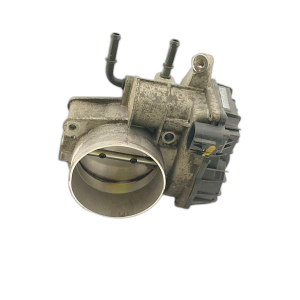
(OEM #35100-3CAA0 (verify by VIN))— If cleaning doesn't work and the internal motor or sensor has failed, the entire assembly must be replaced. This part is shared with the 3.3L V6 as well.
Trusted brands: Genuine Kia/Hyundai, Bosch, Hitachi, Standard Motor Products
OEM price range: $300-$450
Aftermarket price range: $150-$300 - PCV Valve
(OEM #26740-2G000 (verify by VIN))— A cheap and easy-to-replace part that can cause a significant vacuum leak and idle issues if it gets stuck open.
Trusted brands: Genuine Kia/Hyundai, Standard Motor Products
OEM price range: $15-$25
Aftermarket price range: $10-$20
Related Codes That Often Appear With This One
- P0507 — This code for 'Idle RPM Higher Than Expected' can sometimes alternate with P0506 if the throttle body is sticking intermittently or the PCM is struggling to maintain a stable idle by over-correcting.
- P0087 — As seen in NHTSA complaints, 'Fuel Rail/System Pressure - Too Low' can appear with P0506. [ODI #11513767, ODI #11499800] Insufficient fuel pressure can cause the engine to struggle and stall, leading to a low idle condition.
- P2096 — Also seen in NHTSA complaints, 'Post Catalyst Fuel Trim System Too Lean Bank 1' indicates the engine is running lean. [ODI #11513767, ODI #11499800] A large vacuum leak is a common cause for both a lean condition and a low, unstable idle (P0506).
- P0300-P0306 — Misfire codes can accompany P0506 if the underlying cause (like a massive vacuum leak or fuel pressure issue) is severe enough to cause incomplete combustion in one or more cylinders. [ODI #11513767, ODI #11499800]
Platform-Specific Known Issues
- NHTSA complaint ODI #11513767 for a 2014 model mentions P0506 appearing with a long list of other codes including P0087 (fuel pressure low), P2096 (lean condition), and multiple cylinder misfires, pointing to a complex underlying problem.
- NHTSA complaint ODI #11499800, also for a 2014 model, reports a nearly identical cluster of codes appearing with P0506, reinforcing the idea that P0506 is often a symptom of a larger issue.
Mechanic-Grade Diagnostic Values
- Throttle Position Sensor (TPS) Voltage at Closed Throttle — expected: 300 - 900 millivolts (0.3V - 0.9V). Failure: Voltage outside this range indicates a need for adjustment or replacement.
- Throttle Position Sensor (TPS) Total Resistance — expected: 3.5 - 6.5 kOhms. Failure: Resistance outside this range suggests the internal resistive track is failing.
- Low-Pressure Fuel Pump (In-Tank) — expected: At least 480 kPa (approx. 70 PSI). Failure: Pressure below this threshold can cause stalling and trigger P0087 alongside P0506, indicating a weak in-tank pump.
Scan Tool Commands That Help
- Kia GDS (Global Diagnostic System): ETC (Electronic Throttle Control) Active Test — To command the throttle plate to open and close, verifying the motor's operation and checking for any sticking or skipping without manual intervention.
- Kia GDS (Global Diagnostic System): Resetting Adaptive Values — This function, found under 'Special Function' in the engine control module menu, erases the learned idle and fuel trim values. It is the factory-specified method to force the ECU to relearn idle strategy after replacing or cleaning the throttle body.
- High-end generic OBD-II Scanner: Throttle Body Relearn / Idle Relearn — Many professional-grade scanners have a dedicated function in the service/special functions menu to initiate the idle relearn process, which is more reliable than manual methods.
Wiring & Ground Locations
- Main Powertrain Ground — A primary ground strap connecting the engine block/transmission assembly to the vehicle's chassis/battery negative terminal.. A poor or corroded main powertrain ground can cause a host of intermittent electronic issues, including incorrect sensor readings and erratic idle control. A Kia TSB advises checking this ground integrity when diagnosing any powertrain DTCs that are hard to trace.
- Fuse Panel Ground Bolt — Typically a 10mm or 12mm bolt near the interior fuse panel (under the driver's side dash) where multiple ground wires converge.. This is a common grounding point for various interior electronics and control modules. While less likely to be the primary cause, ensuring it's clean and tight is good practice for any electrical diagnosis.
- Engine Ground Wiring Assembly (91860-1U020) — This specific part number corresponds to an engine ground wire assembly for 2009-2012 Sorento models.. If the original ground strap is frayed, corroded, or broken, replacing it with the correct OEM part ensures a solid connection for the engine's electrical systems, including the ECU and throttle control.
OEM Part Supersession History
26740-2G000→26740-2G000 (current)— This part number has remained stable but has been used across a vast range of Kia and Hyundai vehicles from 2009 to as recent as 2026 models, indicating a reliable and standardized design.
Heads up: While the part number is consistent, always verify fitment by VIN as minor revisions could exist for specific applications, though widespread compatibility is common.
Model Year Variations Within This Range
- 2011-2013: These model years primarily used the 3.5L Lambda II V6 engine.
- 2014-2015: These model years transitioned to the smaller 3.3L Lambda II GDI V6. While the electronic throttle control concept is the same, some specific part numbers and diagnostic values (like fuel pressure) may differ due to the GDI system. The frequent co-occurrence of P0506 with the fuel pressure code P0087 in NHTSA complaints for 2014 models points towards issues potentially related to the high-pressure fuel system on the GDI engine.
Diagnostic Flowchart
Other Known Issues on This Vehicle
Issues unrelated to this code that are worth knowing about as an owner of this generation:
- Brake Light Switch Failure 🟠 Medium — Very common across many Kia/Hyundai models of this era, leading to multiple recalls. Can cause brake lights to fail or stay on, and may prevent shifting out of Park. (Ref: NHTSA Recall #13V114000)
- HECU (Hydraulic Electronic Control Unit) Fire Risk 🔴 High — Subject of a major recall. An electrical short within the HECU can cause an engine compartment fire, even while the vehicle is parked. (Ref: NHTSA Recall #20V502000)
- Brake-Shift Interlock Mechanism Failure 🟡 Low — A recall was issued because the mechanism could chip or crack, allowing the transmission to be shifted out of Park without depressing the brake pedal. (Ref: NHTSA Recall #13V053000)
- Head Gasket Failure / Overheating 🔴 High — While more reliable than the 4-cylinder Theta II engines, some Lambda V6 engines have experienced head gasket failures leading to overheating and mixing of oil and coolant.
- Carbon Buildup on Intake Valves (GDI models) 🟠 Medium — The later 3.3L GDI V6 is prone to carbon buildup on the intake valves, which is a common issue for direct-injection engines. This can cause performance issues over time. The 3.5L is port-injected (MPI) and is not affected.
Used vs. New Parts: Buying Guide for This Vehicle
When a used part is the smart pick: A used Electronic Throttle Body assembly from a reputable salvage yard can be a cost-effective option, as the failure mode is often electronic rather than mechanical wear. Given the high cost of a new OEM unit, a used part is a reasonable gamble, especially if it comes with a short warranty.
Donor-vehicle mileage cap: roughly under 80000 miles for the part to have meaningful remaining life.
What to inspect on the donor part:
- Check for a clean throttle plate and bore; excessive carbon may suggest the donor vehicle had other engine issues.
- Ensure the electrical connector is free of corrosion or damage.
- Ask for the donor vehicle's VIN to check for any outstanding recalls or TSBs related to the throttle body.
OEM-only on this vehicle (don't cheap out):
- PCV Valve: Given the low cost of a new OEM valve (around $15-$25), it is not worth the risk of using a used one which may be clogged or failing.
Aftermarket brands forum-validated for this vehicle:
- Bosch (Often an OEM supplier for throttle bodies)
- Standard Motor Products (SMP)
- NTK (For sensors if replaced separately)
Brands owners have reported issues with on this vehicle:
- Unbranded, no-name electronic throttle bodies from online marketplaces should be avoided, as they often have high failure rates and can cause compatibility issues with the vehicle's ECU.
Real Owner Stories
Aggregated from forums and TSBs cited above. Mileages and costs reflect what owners reported in those sources.
2014 Kia Sorento V6
Symptoms: The vehicle displayed a P0506 code along with a long list of other codes including P0087 (fuel pressure low), P2096 (lean condition), and multiple cylinder misfires.
What fixed it: The report indicates P0506 was a symptom of a complex underlying problem involving fuel pressure and lean conditions, though a single specific part fix was not isolated in the complaint.
Source hint: NHTSA complaint ODI #11513767
2014 Kia Sorento V6
Symptoms: The owner reported a cluster of codes appearing simultaneously, specifically P0506 alongside P0087 and P2096.
What fixed it: The diagnostic path suggested P0506 was a symptom of a larger systemic issue rather than a standalone throttle failure.
Source hint: NHTSA complaint ODI #11499800
Related OBD-II Codes
Frequently Asked Questions
Can I use a used throttle body for my 2011-2015 Kia Sorento to fix P0506?
Is there a specific part number for the throttle body if I need to replace it on my Sorento?
Does my 2011-2015 Sorento 3.5L V6 suffer from the same carbon buildup issues as the newer GDI engines?
Are there any recalls for the 2011-2015 Sorento that might be related to engine or electrical issues?
How do I perform an idle relearn on my Kia after cleaning the throttle body?
Could a whistling sound in my Sorento's engine bay be related to P0506?
Helpful Videos
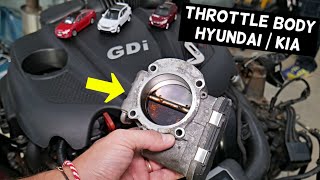

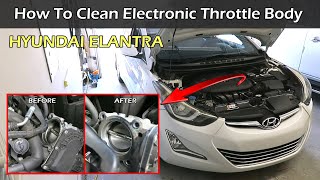

Used OEM Parts in Stock
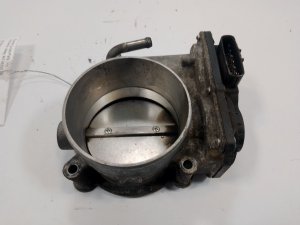
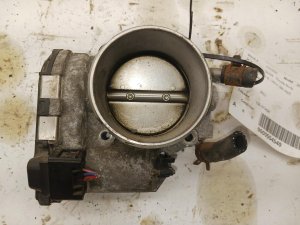

New Aftermarket Parts Available



The information in this article is provided for general reference and educational purposes only. Vehicle specifications, procedures, and part compatibility can vary by production date, trim level, and region. Always consult your vehicle's factory service manual and verify part numbers before purchasing or performing repairs. Safety-critical components such as airbags, seat belts, and braking systems should be installed by a qualified professional.
- Kia Sorento:
- 🎬 Helpful Videos
- 🛍️ Shop This Part
- What's Unique About the 2011-2015 Kia Sorento
- Symptoms You May Notice
- Most Likely Causes
- Rare But Worth Checking
- Diagnosis Steps
- Parts You'll Likely Need
- Related Codes That Often Appear With This One
- Platform-Specific Known Issues
- Mechanic-Grade Diagnostic Values
- Scan Tool Commands That Help
- Wiring & Ground Locations
- OEM Part Supersession History
- Model Year Variations Within This Range
- Diagnostic Flowchart
- Other Known Issues on This Vehicle
- Used vs. New Parts: Buying Guide for This Vehicle
- Real Owner Stories
- 2014 Kia Sorento V6
- 2014 Kia Sorento V6
- Related OBD-II Codes
- Frequently Asked Questions
- 🎟️ Get 5% Off