

P0506 on 2004-2011 Audi A6 3.2L FSI: Low Idle Causes and Fixes
On the Audi A6 3.2L FSI, code P0506 is most often caused by a dirty throttle body or significant carbon buildup on the intake valves, a common issue for this direct-injection engine. Start by cleaning the throttle body (~$15 for cleaner, DIY 2/5). If that doesn't work, a failed PCV valve or a full intake valve carbon cleaning service is likely needed. These are the three most prevalent causes for this specific platform.
- P0506 on this Audi is almost always an airflow problem, not an electrical one.
- Start your diagnosis with the easiest and cheapest fixes: check for obvious vacuum leaks and clean the throttle body.
- A strong vacuum at the oil cap is a tell-tale sign of a failed PCV valve, a common issue on this engine.
- Due to the direct-injection design, severe carbon buildup on the intake valves is not a rare 'if' but a common 'when', and is a very likely cause of this code.
- After cleaning or replacing the throttle body, a throttle body alignment with a proper scan tool is highly recommended.
What's Unique About the 2004-2011 Audi A6
The Audi 3.2L FSI is a direct-injection engine. This design is inherently prone to heavy carbon buildup on the intake valves because fuel is sprayed directly into the cylinder, meaning the valves are never washed clean by fuel detergents. This carbon accumulation chokes airflow and is a primary cause of idle control problems like P0506. A failed PCV (oil separator) valve is also a very common source of a large vacuum leak on this engine platform, leading to the same code.
Symptoms You May Notice
- Rough, stumbling, or shaky idle
- Engine idle speed is noticeably lower than normal, often below 600 RPM
- Engine stalling when coming to a stop or during idle
- Hesitation during light acceleration
- Illuminated Check Engine Light
- A high-pitched whistling or sucking noise from the engine bay at idle
- Replacing the mass airflow (MAF) sensor. A low idle is more often caused by unmetered air (vacuum leaks) or airflow restriction (carbon buildup) than a faulty MAF sensor.
- Replacing spark plugs and ignition coils. While these can cause a rough idle, they typically trigger misfire codes (P030x) rather than an idle speed control code.
Most Likely Causes
- Severe Carbon Buildup on Intake Valves 🔴 High Probability The 3.2L FSI is a direct-injection engine. Oil vapor from the PCV system and combustion byproducts bake onto the intake valves, as they are never cleaned by fuel spray. This is a well-documented, common maintenance issue, often requiring attention every 40,000-60,000 miles.
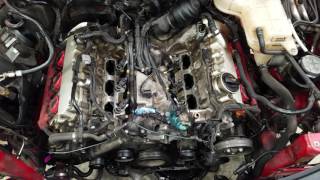
How to confirm: Requires removing the intake manifold to visually inspect the intake ports and valves for thick, black carbon deposits. An owner with a 2006 A6 at 212,000 miles documented 🎬 Watch: See how heavy carbon buildup looks at 212k miles. extremely heavy buildup.
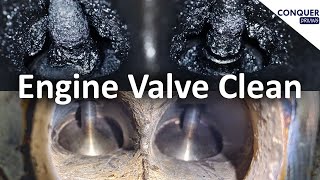
Typical fix: A professional 'walnut blasting' service is required to safely clean the valves. This involves blasting crushed walnut shells into the intake ports to scrub away deposits without damaging engine components. 🎬 Watch: How a professional walnut blasting service is performed. Some DIY guides exist but it is a labor-intensive process.
Est. part cost: $50-$100 for intake gaskets - Dirty or Sticking Throttle Body 🔴 High Probability The PCV system routes oily crankcase vapors back into the intake, which can condense and mix with carbon to form sludge around the throttle plate, restricting its movement at idle.
How to confirm: Remove the air intake hose connected to the throttle body and visually inspect the throttle plate and bore for black, gummy residue.
Typical fix: Remove the throttle body and clean it thoroughly with a dedicated throttle body cleaner and a soft brush. A new gasket should be used upon reinstallation. A throttle body alignment procedure with a diagnostic tool (like VCDS) is required afterward to reset 🎬 See this walkthrough for throttle body cleaning and adaptation. learned values.
Est. part cost: $10-$25 for cleaner and a new gasket - Failed PCV Valve (Oil Separator) 🟡 Medium Probability The diaphragm inside the PCV valve is known to tear, creating a significant unmetered vacuum leak in the intake system. This is a very common failure on many Audi engines from this era.
How to confirm: With the engine running, try to remove the oil filler cap. If there is very strong suction holding it down, making it difficult to remove, or if you hear a loud hissing/whistling noise from the PCV area, the valve has likely failed. A smoke test of the intake system will also confirm the leak.
Typical fix: Replace the PCV valve assembly. On the 3.2L engine, it is located under the intake manifold, making replacement moderately difficult. It is often replaced during a carbon cleaning service.
Est. part cost: $60-$180 - Vacuum Leak (Other) ⚪ Low Probability
How to confirm: Perform a smoke test on the intake system to identify leaks from cracked hoses, bad gaskets (like the intake manifold gaskets), or loose connections.
Typical fix: Replace the specific hose or gasket that is found to be leaking.
Est. part cost: $20-$100
Rare But Worth Checking
- Failing Timing Chain System: The 3.2L FSI is known for premature timing chain tensioner and guide failure, often signaled by a rattling noise on cold starts. While this typically sets timing-specific codes (like P0016), the resulting rough running and unstable engine operation could potentially trigger an idle control fault like P0506 as a secondary symptom. This is an extremely expensive repair that requires engine removal as the chains are on the rear of the engine.
Diagnosis Steps
- Scan for any other accompanying fault codes. Codes for misfires (P030x) or lean conditions (P2187) can help pinpoint the cause.
- With the engine running, carefully listen for hissing or whistling sounds around the engine bay that would indicate a vacuum leak, paying close attention to the PCV valve area.
- Perform a quick PCV valve test: With the engine idling, attempt to remove the oil filler cap. Extreme suction or a loud whistle strongly suggests a failed PCV valve.
- Remove the main air intake duct and inspect the electronic throttle body for heavy carbon and oil residue.
- If the throttle body is dirty, remove and clean it thoroughly. Reinstall with a new gasket and perform a throttle body alignment using a compatible scan tool (e.g., VCDS). This step is critical.
- If symptoms persist, perform a smoke test on the entire intake system to find any hidden vacuum leaks from hoses or gaskets.
- If no vacuum leaks are found, the next step is to inspect for carbon buildup. This requires removing the upper intake manifold to view the intake ports and valves.
- If heavy carbon is present, a walnut blasting service is the correct procedure for cleaning the intake valves.
Parts You'll Likely Need
- PCV Valve / Oil Separator
(OEM #06E103547P)— The internal diaphragm is a common failure point, causing a large vacuum leak that the ECM cannot compensate for, resulting in a low idle.
Trusted brands: Audi (OEM), VAICO, Elring
OEM price range: $150-$200
Aftermarket price range: $60-$120 - Throttle Body
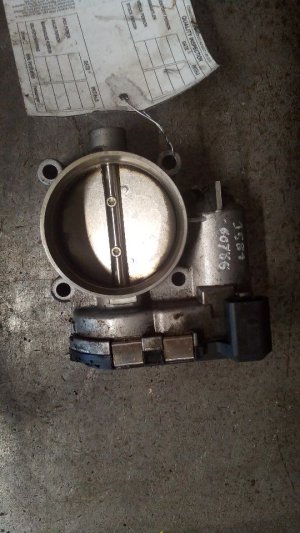
(OEM #079133062C)— While often just needing a clean, the electronic components can fail. The part number can vary, so confirming with VIN is essential. Other possible part numbers include 078133062C.
Trusted brands: Bosch (OEM), VDO
OEM price range: $400-$600
Aftermarket price range: $150-$300 - Throttle Body Gasket — Required whenever the throttle body is removed for cleaning to ensure a proper seal and prevent vacuum leaks.
Trusted brands: Victor Reinz, Elring, Bosch
OEM price range: $15-$25
Aftermarket price range: $5-$15 - Intake Manifold Gaskets
(OEM #06E129717B)— Must be replaced when the intake manifold is removed for a carbon cleaning service.
Trusted brands: Victor Reinz, Mahle, Elring
OEM price range: $60-$100 (set)
Aftermarket price range: $30-$70 (set)
Related Codes That Often Appear With This One
- P0300, P0301-P0306 — Random or specific cylinder misfires can occur due to the unstable idle and poor airflow caused by carbon buildup or vacuum leaks.
- P2187 — System Too Lean at Idle. This code is often a companion to P0506 when the cause is a vacuum leak (like a bad PCV valve), as the extra, unmetered air creates a lean fuel mixture.
- P2279 — Intake Air System Leak. This is another common companion code that directly points to a vacuum leak, which is a primary cause of P0506 on this engine.
Platform-Specific Known Issues
- The 3.2L FSI engine is known to require intake valve carbon cleaning every 40,000 to 60,000 miles to prevent performance issues, including rough and low idle.
- A user on AudiWorld forums provided a detailed DIY guide for intake manifold removal and carbon inspection/cleaning specifically for the 3.2L FSI engine, confirming the complexity but also the necessity of the job.
Mechanic-Grade Diagnostic Values
- Low-Pressure Fuel System — expected: Approximately 5.0 bar (72.5 PSI) with key on, engine off. May drop slightly to ~4.8 bar at 3000 RPM.. Failure: Significantly lower pressure indicates a weak in-tank fuel pump or clogged filter.
- High-Pressure Fuel System (at idle) — expected: Specified pressure should be between 30 and 120 bar, with a target of around 33 bar at idle.. Failure: If the actual pressure reading matches the low-pressure reading (e.g., ~6.7 bar), it strongly suggests a malfunctioning High-Pressure Fuel Pump (HPFP).
- Battery Voltage (Engine Running) — expected: ~12.0V to 14.5V. Failure: Low voltage can affect the operation of the electronic throttle control and other modules, potentially contributing to idle issues.
- Throttle Body Adaptation Conditions — expected: Coolant temperature between 5°C and 95°C, battery voltage at least 11.5V, no engine fault codes present.. Failure: The adaptation procedure may fail or not run if these conditions are not met.
Scan Tool Commands That Help
- VCDS (VAG-COM): [Engine - 01] -> [Basic Settings - 04] -> Group 060 — This is the Throttle Body Alignment (TBA) procedure. It must be performed after cleaning or replacing the throttle body, or after disconnecting the battery. With the key on and engine off, activating this group causes the ECU to relearn the throttle plate's full range of motion. The process takes about 30 seconds.
- VCDS (VAG-COM): [Engine - 01] -> [Meas. Blocks - 08] -> Group 140 — To monitor high-pressure fuel rail values. The screen will show specified vs. actual pressure. This is critical for diagnosing a failing High-Pressure Fuel Pump (HPFP), which can cause stalling and idle issues.
Wiring & Ground Locations
- Engine Ground Point — A small ground wire is attached to one of the bolts on the oil filter housing. There may be two ground wires on a single stud.. An unattached or corroded engine ground can cause a variety of electrical issues, including erratic sensor readings and poor module performance, which could affect idle stability. This is often missed after major engine work.
Real Owner Repair Stories
- AudiWorld Forums (2005 Audi A6 3.2L AUK engine) — Unstable idle RPM, surging when cruising at low speeds, and surging forward when braking.
❌ Tried (didn't work) Cleaning the original throttle body, Replacing the purge valve, Replacing the MAP sensor for testing purposes
✅ What actually fixed it Replacing the throttle body with a used unit from a wrecked vehicle completely resolved the surging and unstable idle. - AudiWorld Forums (2006 Audi A6 3.2L) — Rough idle and a 'too rich' code (P1139) on Bank 2 after extensive maintenance.
❌ Tried (didn't work) Swapping spark plugs and ignition coils between banks, Swapping O2 sensors between banks
✅ What actually fixed it The diagnosis pointed towards incorrect camshaft timing on Bank 2, which was causing lower compression (155-160 psi vs 175-180 psi on the good bank). This mechanical timing issue was the root cause of the rich condition and rough idle, not a typical fuel or air component failure.
OEM Part Supersession History
06E103547, 06E103547E→06E103547P— Updated design for the PCV valve (oil separator) to improve durability and performance.
Heads up: The PCV system design changed during the 2006 model year. The newer part 06E103547P is for vehicles from VIN 4F-6-192001 onwards. Pre-facelift cars may use a different system.
Model Year Variations Within This Range
- 2006: The PCV system underwent a design change mid-model year in 2006. Vehicles built from VIN #4F-6-192001 use the updated oil separator (PCV) part number 06E103547P, which is located under the intake manifold. Earlier 2005-2006 models may have a different setup. It is critical to confirm by VIN.
Diagnostic Flowchart
Other Known Issues on This Vehicle
Issues unrelated to this code that are worth knowing about as an owner of this generation:
- Timing Chain System Failure 🔴 High — Widespread issue, often appearing after 60,000 miles. Symptoms start with a 'rattle' on cold starts. Failure is catastrophic and repair is extremely expensive due to the engine-out procedure required.
- Intake Valve Carbon Buildup 🟠 Medium — Considered a routine maintenance item. Noticeable performance degradation can occur every 40,000-60,000 miles.
- MMI System Failure (Black Screen) 🟠 Medium — Common electronic failure. The Multi Media Interface (MMI) screen goes black and controls become unresponsive. Often caused by a failure in the fiber optic loop, a dead control module, or water damage to components in the trunk or under the passenger seat.
- Plenum and Sunroof Drain Clogging 🟠 Medium — Very common, especially for cars parked outdoors. Drains in the plenum chamber under the windshield get clogged with leaves/debris, causing water to overflow into the passenger footwell, potentially damaging electronic modules.
- High Oil Consumption 🟠 Medium — Frequently reported as the engine ages. Worn piston rings and valve seals can lead to higher-than-normal oil consumption.
Used vs. New Parts: Buying Guide for This Vehicle
When a used part is the smart pick: A used throttle body from a reputable salvage yard can be a cost-effective solution, as demonstrated by a documented repair story. Since it is an electronic and mechanical part, it carries some risk, but can be a viable option if the donor vehicle has reasonable mileage and no signs of front-end damage.
Donor-vehicle mileage cap: roughly under 100000 miles for the part to have meaningful remaining life.
What to inspect on the donor part:
- Check for a clean throttle plate and bore, with minimal carbon or oil residue.
- Ensure the electrical connector is free of corrosion or damage.
- Ask for the VIN of the donor car to verify compatibility and check its history if possible.
- Prefer parts from vehicles that were not in a major front-end collision.
OEM-only on this vehicle (don't cheap out):
- PCV Valve / Oil Separator: While aftermarket versions exist, the OEM part is often recommended due to the high failure rate of diaphragms in cheaper units. The labor to replace this part is significant, so using a high-quality part to avoid repeat repairs is wise.
Aftermarket brands forum-validated for this vehicle:
- Bosch (OEM for throttle body)
- Victor Reinz, Elring, Mahle (Gaskets)
Brands owners have reported issues with on this vehicle:
- Unbranded, no-name electronic parts like throttle bodies and PCV valves from online marketplaces are generally not recommended due to high failure rates and potential for causing further diagnostic issues.
Real Owner Stories
Aggregated from forums and TSBs cited above. Mileages and costs reflect what owners reported in those sources.
2006 Audi A6 3.2L FSI — 212000 miles
Symptoms: Extremely heavy carbon buildup on the intake valves and ports.
What fixed it: Intake manifold removal and manual inspection/cleaning of carbon deposits.
Source hint: AudiWorld Forums - A specific thread by user 'jcs' titled '3.2L FSI, How to inspect carbon deposit on intake valves and clean it'
2006 Audi A6 3.2L FSI
Symptoms: Rough idle after a carbon clean and timing chain adjuster replacement.
What fixed it: Correcting the timing on one bank which was causing lower compression and a rich condition.
Source hint: Ross-Tech Forums - A technician documented a case of a rough idle on a 2006 A6 3.2L
2011 Audi A6
Symptoms: No-start condition.
What fixed it: Replacement of the throttle body after cleaning failed to resolve the issue.
Source hint: AudiWorld Forums - A user with a 2011 A6 experienced a no-start condition that was ultimately traced to a failed throttle body
2005 Audi A6 3.2L FSI — 30000 miles
Symptoms: Issues requiring timing chain replacement at very low mileage.
What fixed it: Timing chain replacement.
Source hint: PistonHeads Forums - A 2010 thread discusses a 2005 A6 3.2 FSI with only 30k miles
Related OBD-II Codes
Frequently Asked Questions
How can I tell if my 3.2L FSI's low idle is caused by the PCV valve or carbon buildup?
Is it true that I need a special tool to fix the idle after cleaning the throttle body on my A6?
How often should I expect to perform carbon cleaning on the 2004-2011 Audi A6 3.2L?
Can a timing chain issue cause the rough idle symptoms associated with P0506?
Where is the PCV valve located on the 3.2L FSI engine if I need to replace it?
Helpful Videos

Used OEM Parts in Stock




New Aftermarket Parts Available



The information in this article is provided for general reference and educational purposes only. Vehicle specifications, procedures, and part compatibility can vary by production date, trim level, and region. Always consult your vehicle's factory service manual and verify part numbers before purchasing or performing repairs. Safety-critical components such as airbags, seat belts, and braking systems should be installed by a qualified professional.
- Audi A6:
- 🎬 Helpful Videos
- 🛍️ Shop This Part
- What's Unique About the 2004-2011 Audi A6
- Symptoms You May Notice
- Most Likely Causes
- Rare But Worth Checking
- Diagnosis Steps
- Parts You'll Likely Need
- Related Codes That Often Appear With This One
- Platform-Specific Known Issues
- Mechanic-Grade Diagnostic Values
- Scan Tool Commands That Help
- Wiring & Ground Locations
- Real Owner Repair Stories
- OEM Part Supersession History
- Model Year Variations Within This Range
- Diagnostic Flowchart
- Other Known Issues on This Vehicle
- Used vs. New Parts: Buying Guide for This Vehicle
- Real Owner Stories
- 2006 Audi A6 3.2L FSI — 212000 miles
- 2006 Audi A6 3.2L FSI
- 2011 Audi A6
- 2005 Audi A6 3.2L FSI — 30000 miles
- Related OBD-II Codes
- Frequently Asked Questions
- 🎟️ Get 5% Off