

P0505 on 2006-2011 Honda Civic: Idle Control System Malfunction Causes and Fixes
For a 2006-2011 Honda Civic, code P0505 almost always points to a dirty or faulty Idle Air Control (IAC) valve. A thorough cleaning of the IAC valve and throttle body, followed by an idle relearn procedure, often fixes the issue for under $20. If the valve is faulty, a replacement is the next step.
- P0505 on your 2006-2011 Civic means the computer can't control the idle speed.
- The most likely cause by far is a dirty Idle Air Control (IAC) valve clogged with carbon.
- Before buying any parts, remove and thoroughly clean the IAC valve and throttle body ports. This often solves the problem.
- Always use a new gasket when reinstalling the IAC valve to prevent leaks.
- After any repair, you must perform an ECU reset and an idle relearn procedure for the fix to be effective.
What's Unique About the 2006-2011 Honda Civic
The 8th generation Honda Civic (2006-2011), particularly models with the R18A1 engine, uses an Idle Air Control (IAC) valve that is prone to carbon buildup. This gunk restricts the valve's movement, preventing the PCM from accurately controlling idle speed. While many modern cars integrate idle control into an electronic throttle body, this Civic generation retains a separate, serviceable IAC valve mounted to the throttle body, making cleaning or replacement a very common and effective fix that owners frequently perform themselves.
Symptoms You May Notice
- Check Engine Light is on
- Erratic idle speed (fluctuating or 'hunting' between 1000-2000 RPM)
- Idle speed is too high (e.g., stuck at 1500 RPM)
- Idle speed is too low
- Engine stalls at stops or when letting off the gas
- Rough or jolty performance at low speeds
- Replacing the IAC valve without cleaning the throttle body ports. The clog is often in the passages leading to the valve, not just the valve itself.
- Replacing the IAC valve when the actual problem is a vacuum leak or air in the cooling system.
- Mistaking a faulty ECT (Engine Coolant Temperature) sensor for an IAC valve issue, as a bad ECT sensor can also cause idle problems.
Most Likely Causes
- Dirty or Clogged Idle Air Control (IAC) Valve 🔴 High Probability The IAC valve design on this platform is susceptible to carbon and gunk buildup from the PCV system, which restricts the internal rotary shutter's movement. The passages inside the throttle body leading to the valve are also a common choke point.
How to confirm: Remove the IAC valve from the back of the throttle body. Visually inspect the air passages and the screen for heavy, black carbon deposits.
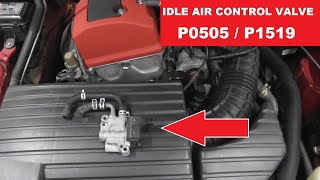
Typical fix: Thoroughly clean the IAC valve and the corresponding ports on the throttle body with throttle body cleaner and a small brush. Be sure to clean the port inside the throttle body opening as well. 🎬 Watch: Step-by-step throttle body cleaning and relearn guide. Replace the gasket upon reinstallation.
Est. part cost: $5-$15 for cleaner and a new gasket. - Faulty Idle Air Control (IAC) Valve 🟡 Medium Probability The internal electric motor of the valve can fail over time, separate from being dirty. Aftermarket replacements are known to have a high failure rate, so OEM (Honda) or reputable brands like Denso or Hitachi are strongly recommended.
How to confirm: After cleaning, if the problem persists, test the valve. You can check the resistance between the terminals with a multimeter. A more definitive test is to apply 12V power directly to the terminals to see if the internal valve audibly clicks or actuates.
Typical fix: Replace the Idle Air Control Valve and its gasket. 🎬 Watch this walkthrough for replacing the IAC valve. Perform an ECU reset and idle relearn procedure afterward.
Est. part cost: $150-$250 for an OEM part, $30-$80 for an aftermarket part. - Vacuum Leak ⚪ Low Probability
How to confirm: Visually inspect all vacuum hoses connected to the intake manifold for cracks or disconnections. A common, though less precise, method is to spray brake cleaner or a propane torch (unlit) around suspected leak areas with the engine running; a change in idle indicates a leak. A smoke tester is the most reliable method. One owner found an uncapped vacuum port on the lower side of the intake manifold was the culprit.
Typical fix: Replace the cracked or broken vacuum hose or leaking gasket.
Est. part cost: $5-$30 - Low Coolant or Air in Coolant System ⚪ Low Probability The IAC valve on these Civics has coolant lines running through it to regulate its temperature and prevent icing. Air trapped in these lines, often after a coolant service, can cause erratic IAC operation and idle issues.
How to confirm: Check the coolant level in the radiator (when cool) and reservoir. If low, or if service was recently performed, there may be air in the system. A surging idle that occurs as the car warms up is a classic symptom.
Typical fix: Properly bleed the cooling system to remove all trapped air. A spill-free funnel kit that attaches to the radiator neck makes this process much easier and cleaner.
Est. part cost: $0-$25
Rare But Worth Checking
- Incorrect Base Idle Adjustment: A previous owner or mechanic may have incorrectly adjusted the throttle body's stop screw to compensate for a dirty IAC valve. Honda service literature explicitly warns against adjusting this screw. After cleaning or replacing the valve, this incorrect adjustment can cause P0505. The fix involves correctly setting the throttle plate to be fully closed at rest.
- Wiring or Connector Issue: The wiring harness to the IAC valve can become damaged, or the connector pins can corrode, leading to a poor electrical connection. Check for power and ground at the connector with a multimeter.
- Faulty Powertrain Control Module (PCM): This is extremely rare. The internal driver circuit for the IAC valve in the PCM can fail, but all other possibilities should be exhausted before considering PCM replacement.
Diagnosis Steps
- Check for any other stored trouble codes. Codes related to the TPS or ECT sensor should be addressed first.
- Inspect the engine bay for obvious vacuum leaks, such as cracked, disconnected, or collapsed hoses. Pay close attention to the PCV hose.
- Check the coolant level in the radiator (when cool) and the overflow reservoir. If low, top it off and bleed the system to remove any trapped air. A spill-free funnel is highly recommended for this.
- Remove the air intake assembly to access the throttle body.
- Remove the Idle Air Control (IAC) valve from the rear of the throttle body. It is typically held by two Phillips head or 8mm bolts. Be prepared for minor coolant spillage from the two small hoses attached.
- Thoroughly clean the IAC valve's screen and internal passages with throttle body cleaner and a small brush. Also, clean the carbon buildup from the IAC port on the throttle body itself.
- Reinstall the IAC valve with a new gasket. Reconnect the coolant lines and electrical connector.
- Perform an ECU reset by disconnecting the negative battery terminal for at least 15-20 minutes to clear learned memory.
- Perform an idle relearn procedure: Start the engine and hold the RPM at 3,000 with no load (in Park or Neutral) until the radiator fan comes on (or engine temp reaches ~195°F/90°C), then let it idle for 5-10 minutes with no accessories on. 🎬 See how to correctly perform the Honda idle learn procedure.
- If the code returns, test the old IAC valve's motor by applying 12V power or replace it with a new, high-quality unit and repeat the idle relearn procedure.
Parts You'll Likely Need
- Idle Air Control (IAC) Valve
(OEM #16022-RNA-A02)— This is the most common part to fail or become clogged, directly causing the P0505 code.
Trusted brands: Honda (OEM), Denso, Hitachi
OEM price range: $180-$250
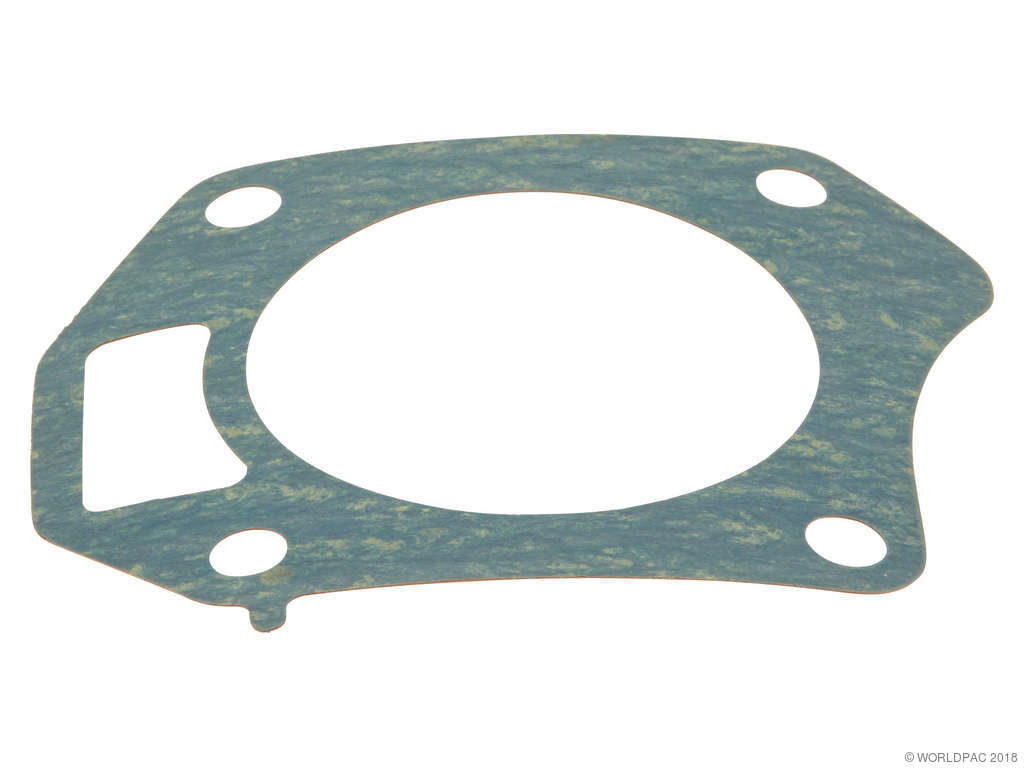
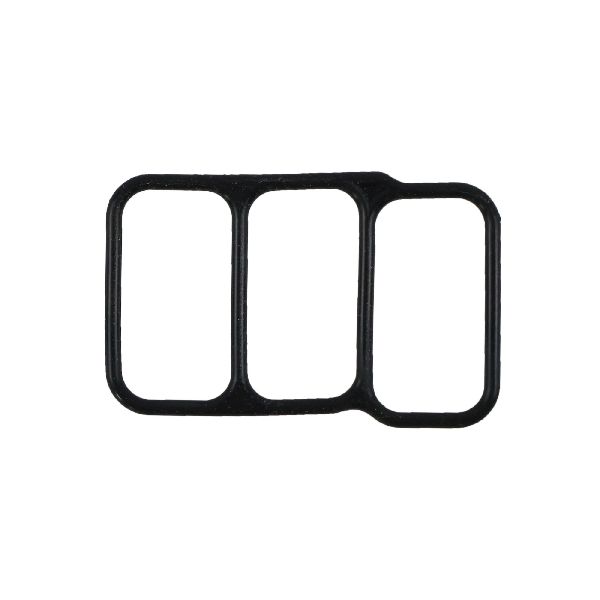
Aftermarket price range: $40-$90 - Idle Air Control Valve Gasket
(OEM #16023-RNA-A01)— The gasket should always be replaced when the IAC valve is removed to prevent vacuum or coolant leaks.
Trusted brands: Honda (OEM), Fel-Pro
OEM price range: $5-$10
Aftermarket price range: $2-$5 - Throttle Body Cleaner — Required for cleaning the carbon buildup from the IAC valve and throttle body ports, which is the most common fix.
Trusted brands: CRC, WD-40, Gumout
Aftermarket price range: $5-$10
Related Codes That Often Appear With This One
- P0506 — This code indicates 'Idle Air Control System RPM Lower Than Expected,' which can be caused by a stuck-closed or clogged IAC valve.
- P0507 — This code indicates 'Idle Air Control System RPM Higher Than Expected,' often caused by a stuck-open IAC valve or a significant vacuum leak.
- P1519 — This Honda-specific code points directly to an electrical circuit failure in the IAC valve, whereas P0505 is a performance-related code.
Platform-Specific Known Issues
- source — On hondacivicforum.com, a user described fixing a P0505 code on a 2000 Civic after an engine swap. The idle was jumping from 750 to 1500 RPM. By following diagnostic steps, they blocked the lower port on the throttle body and the idle stabilized, confirming excess air. The cause was found to be a small, unplugged vacuum port on the lower side of the intake manifold. Capping this port resolved the P0505 code completely.
- Owner Experience: Importance of OEM Parts: Multiple threads on 8thcivic.com and honda-tech.com emphasize the high failure rate of aftermarket IAC valves. Owners report that cheap aftermarket valves often fail out of the box or within a few months, causing the P0505 code to return. It is strongly recommended to use an OEM Honda part or a reputable OEM supplier like Denso or Hitachi for a lasting repair.
Mechanic-Grade Diagnostic Values
- IAC Valve Connector Voltage (Key ON, Engine OFF) — expected: Approximately 12V (battery voltage) between Terminal 2 (YEL/BLK wire) and body ground.. Failure: No voltage at Terminal 2 indicates a power supply issue (fuse, relay, or wiring). Voltage at Terminal 1 or 3 indicates a short.
- IAC Valve Resistance (on older, comparable models) — expected: Approximately 8-15 Ohms between the center pin and each of the outer pins. Note: This value is from older 3-pin rotary valves and may differ slightly for the R18A1's valve, but serves as a general guide.. Failure: An open circuit (infinite resistance) or a short (zero resistance) indicates a failed internal coil.
- Engine Coolant Temperature (ECT) Sensor Resistance (at operating temp) — expected: 200-400 Ohms when the engine is fully warmed up.. Failure: A reading far outside this range can cause the PCM to command an incorrect idle speed, mimicking an IAC fault.
Scan Tool Commands That Help
- Honda Diagnostic System (HDS): IAC Test — After confirming basic wiring and cleaning, the HDS can be used to command the IAC valve to specific duty cycles or positions. This allows a technician to verify if the PCM is sending the correct signal and if the valve is responding mechanically, helping to isolate a faulty valve from a PCM or wiring issue.
Wiring & Ground Locations
- IAC Valve Connector (3-Pin) — Connected to the Idle Air Control Valve on the rear of the throttle body.. This is the direct electrical interface for the valve. Pin-specific tests are required to diagnose circuit faults. The pinout is: Pin 1: BLK (Ground via G101), Pin 2: YEL/BLK (12V Power), Pin 3: BLK/BLU (Control signal from PCM).
- G101 — On the left side of the engine, typically bolted to the thermostat housing.. This is a primary engine ground, including the ground for the IAC valve (via Pin 1 of its connector). A corroded or loose G101 connection can cause erratic behavior or failure of multiple sensors, including the IAC valve, leading to P0505 and other codes.
- Engine Harness to Chassis Ground — A braided stainless steel cable running from the radiator support to the engine block.. A poor main engine ground can create voltage offsets and noise on sensor circuits, potentially confusing the PCM and leading to incorrect idle calculations and the P0505 code.
Real Owner Repair Stories
- Reddit user on r/Honda (1999 Honda Civic LX (Note: older model, but demonstrates a relevant edge case)) — Persistent P0505 code that even a Honda dealer with 7 technicians could not solve.
❌ Tried (didn't work) Standard diagnostics by a Honda dealer.
✅ What actually fixed it The main culprit was an incorrectly adjusted throttle body stop-screw. A previous owner had likely adjusted it to compensate for another issue. After cleaning the throttle body, this misadjustment created a permanent air gap the IACV couldn't overcome. Readjusting the screw so the throttle plate closed completely resolved the code. A faulty PCV valve was also a contributing factor. - Honda-Tech forum user (1998 Honda Civic EX Automatic) — P0505 code returned two days after replacing the IAC valve and cleaning the throttle body.
❌ Tried (didn't work) Replacing the IAC valve with a new part., Cleaning the throttle body.
✅ What actually fixed it The user was advised that P0505 means a system malfunction, not just a bad part. The resolution path involved further diagnostics that were not completed in the thread, but highlights the common pitfall of replacing the IAC valve when the root cause is a vacuum leak, incorrect base idle, or a wiring issue that wasn't addressed. - Owner report for a similar Honda model — NHTSA ODI #10533782 describes an instance where the check engine indicator lit up with codes P0730 and P0505, nearly causing a crash because the vehicle was unable to maintain speed while going uphill.
- Owner report for a similar Honda model — According to NHTSA ODI #10195472, an owner experienced a failure at 97,596 miles where a technician issued codes P0420, P0505, and P1456.
Model Year Variations Within This Range
- 2006-early 2009: Some early R18A1 engines were prone to developing cracks in the engine block, leading to coolant loss. While this is a major engine issue, it is unrelated to the P0505 code's direct causes but is a known variation in this generation. The IAC valve, throttle body, and related idle control components remained consistent across the 2006-2011 model years.
Diagnostic Flowchart
Other Known Issues on This Vehicle
Issues unrelated to this code that are worth knowing about as an owner of this generation:
- Cracked Engine Block (R18A1) 🔴 High — Affects 2006-early 2009 models. A manufacturing defect could cause a crack to form, leading to a coolant leak and potential engine failure. Honda issued a warranty extension (TSB 10-048) to 10 years/unlimited mileage, which has now expired. (Ref: TSB 10-048)
- Defective Rear Upper Control Arms 🟠 Medium — Affects 2006-2008 models. The original control arms had improper geometry, causing rapid and uneven inner rear tire wear. Honda issued TSB 08-001 with a redesigned part (stamped with a 'C') to correct the negative camber. (Ref: TSB 08-001)
- Failing Sun Visors 🟡 Low — Common across 2006-2011 models. The visor's plastic housing cracks at the seam, causing it to split open and droop, impairing visibility. A class-action lawsuit resulted in a warranty extension to 7 years/100,000 miles, which has now expired. (Ref: Class Action Settlement (Cooper v. American Honda Motor Co., Inc.))
- Takata Airbag Inflator Recalls 🔴 High — Affects all model years from 2006-2011. Part of the massive global Takata airbag recall. The inflators can rupture during deployment, projecting metal fragments. This is a critical safety recall that should be addressed immediately. (Ref: Multiple NHTSA Recalls (e.g., 19V-182, 17V-029))
- Failing A/C Compressor Clutch Relay 🟡 Low — Common issue where a faulty relay can cause the A/C to blow warm air or not engage. It can also lead to a parasitic battery drain. The fix is a simple and inexpensive relay replacement.
Used vs. New Parts: Buying Guide for This Vehicle
When a used part is the smart pick: A used OEM IAC valve from a low-mileage donor vehicle is often a smarter choice than a new aftermarket part. Given the high failure rate of non-OEM valves for this specific application, a tested, working junkyard part can be a reliable and cost-effective solution.
Donor-vehicle mileage cap: roughly under 100000 miles for the part to have meaningful remaining life.
What to inspect on the donor part:
- Check for a clean screen on the valve; heavy carbon may indicate a hard life.
- Ensure the electrical connector is not cracked or damaged.
- If possible, ask the salvage yard if the donor car was running before being dismantled.
- Look for markings from previous part-pullers; if many other sensors are gone, it might be a sign of electrical issues in the donor car.
OEM-only on this vehicle (don't cheap out):
- Idle Air Control (IAC) Valve
Aftermarket brands forum-validated for this vehicle:
- Denso (often the OEM supplier)
- Hitachi (often the OEM supplier)
Brands owners have reported issues with on this vehicle:
- Generic, unbranded parts from online marketplaces (e.g., eBay, Amazon).
- Store brands like Duralast (AutoZone) have been reported by users to fail quickly or be dead-on-arrival for this specific application.
Real Owner Stories
Aggregated from forums and TSBs cited above. Mileages and costs reflect what owners reported in those sources.
2000 Honda Civic
Symptoms: The idle was jumping from 750 to 1500 RPM. By blocking the lower port on the throttle body, the idle stabilized, confirming excess air was entering the system.
What fixed it: Found a small, unplugged vacuum port on the lower side of the intake manifold and capped it.
Source hint: hondacivicforum.com thread titled 'Code P0505 - Idle Jumps - How to Fix'
2006-2011 Honda Civic
Symptoms: P0505 code returned shortly after replacing the IAC valve with a cheap non-OEM unit.
What fixed it: Replacing the failed aftermarket valve with an OEM Honda or reputable supplier part like Denso or Hitachi.
Source hint: 8thcivic.com and honda-tech.com forum threads
2006-2011 Honda Civic
Symptoms: Erratic idle speed and P0505 code caused by carbon and gunk buildup from the PCV system restricting the internal rotary shutter.
What fixed it: Thoroughly cleaned the IAC valve and throttle body ports with cleaner and a small brush, then replaced the gasket.
Cost: $5-$15
Source hint: 8thcivic.com forum citations
Related OBD-II Codes
Frequently Asked Questions
Can I use an aftermarket Idle Air Control Valve to fix the P0505 code on my Civic?
Why is my 2006-2011 Civic's idle surging after I performed a coolant flush?
Does the R18A1 engine block crack issue (TSB 10-048) relate to my P0505 code?
What is the recommended idle relearn procedure for a 2006-2011 Honda Civic?
Are there any other common TSBs for the 2006-2011 Civic I should be aware of while fixing this?
Helpful Videos


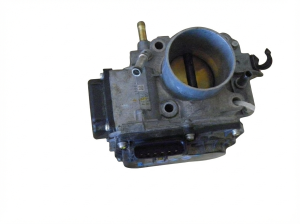
Used OEM Parts in Stock


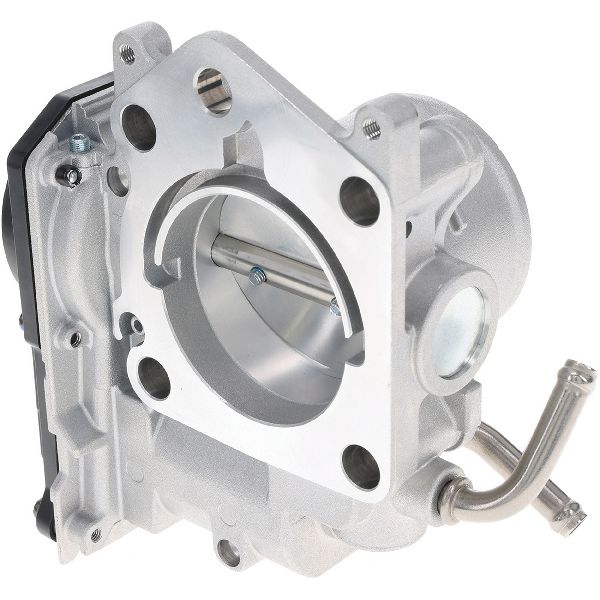
New Aftermarket Parts Available

The information in this article is provided for general reference and educational purposes only. Vehicle specifications, procedures, and part compatibility can vary by production date, trim level, and region. Always consult your vehicle's factory service manual and verify part numbers before purchasing or performing repairs. Safety-critical components such as airbags, seat belts, and braking systems should be installed by a qualified professional.
- Honda Civic:
- 🎬 Helpful Videos
- 🛍️ Shop This Part
- What's Unique About the 2006-2011 Honda Civic
- Symptoms You May Notice
- Most Likely Causes
- Rare But Worth Checking
- Diagnosis Steps
- Parts You'll Likely Need
- Related Codes That Often Appear With This One
- Platform-Specific Known Issues
- Mechanic-Grade Diagnostic Values
- Scan Tool Commands That Help
- Wiring & Ground Locations
- Real Owner Repair Stories
- Model Year Variations Within This Range
- Diagnostic Flowchart
- Other Known Issues on This Vehicle
- Used vs. New Parts: Buying Guide for This Vehicle
- Real Owner Stories
- 2000 Honda Civic
- 2006-2011 Honda Civic
- 2006-2011 Honda Civic
- Related OBD-II Codes
- Frequently Asked Questions
- 🎟️ Get 5% Off