

P0502 on 1999-2007 Chevrolet Silverado: Vehicle Speed Sensor Circuit Low Input Causes and Fixes
P0502 on a GMT800 Silverado almost always means the Vehicle Speed Sensor (VSS) on the transmission or transfer case has failed or its wiring is damaged. This will cause a dead speedometer and harsh shifting. A new sensor is the most common fix and is an affordable, easy DIY job.
- P0502 on a GMT800 Silverado means the speedometer will stop working and the transmission will shift poorly.
- The most likely cause is a failed Vehicle Speed Sensor (VSS) located on the transmission (2WD) or transfer case (4WD).
- Before replacing the sensor, always check its wiring and connector for damage, as this is also a common point of failure.
- Replacing the VSS is a very easy and affordable DIY repair that requires basic hand tools and can be done in under 30 minutes.
- Ensure you are working on the main VSS, not one of the four ABS wheel speed sensors.
What's Unique About the 1999-2007 Chevrolet Silverado

On the 1999-2007 (GMT800 platform) Silverado, vehicle speed is measured by a single, traditional Vehicle Speed Sensor (VSS) mounted on the transmission (2WD) or transfer case (4WD). This is different from many newer vehicles that primarily use ABS wheel speed sensors for this data. This single point of failure makes diagnosis straightforward, as the issue is almost always localized to the VSS, its connector, or the wiring leading to it. The 2007 model year is a transition period, so it's crucial to identify if you have a 'Classic' (GMT800) or the new body style (GMT900), as the speed sensing systems can differ.
Generation note: The 1999-2007 year range covers the first generation Silverado (GMT800 platform), which was sold from 1999-2006 and as the 'Classic' in 2007. A new generation (GMT900) was also introduced in 2007. This guide specifically addresses the GMT800 platform, where a transmission or transfer case-mounted VSS is used.
Symptoms You May Notice

- Speedometer reads 0 MPH or is erratic.
- Harsh, late, or erratic automatic transmission shifting.
- Cruise control will not engage.
- Check Engine Light is illuminated.
- ABS or Brake warning light may be illuminated.
- Odometer may not advance or works intermittently.
- Intermittent inability to shift into Reverse (as noted in manufacturer bulletins regarding VSS circuit faults).
- Replacing ABS wheel speed sensors. While they also measure speed, the P0502 code on this platform specifically points to the main VSS on the transmission/transfer case, not the ABS sensors at the wheels.
Most Likely Causes

- Faulty Vehicle Speed Sensor (VSS) 🔴 High Probability The sensor is a common failure item due to age, heat cycles, and internal electronic failure. Even relatively new OEM sensors can fail by producing a weak AC voltage signal that drops below the PCM's threshold. Manufacturer Bulletin #PI11489B notes that water intrusion into the output speed sensor can also cause these intermittent failures.
How to confirm: After checking wiring, replacing the sensor is the most direct way to confirm. A more advanced method is to use a scan tool to monitor VSS output or back-probe the sensor with a multimeter set to AC volts; the voltage should increase steadily with wheel speed. A healthy sensor should produce over 5-6V AC at highway speeds.
Typical fix: Replace the Vehicle Speed Sensor. This is a simple repair involving one bolt and one electrical connector.
Est. part cost: $20-$60 - Damaged Wiring or Connector 🟡 Medium Probability The wiring harness runs underneath the truck and is exposed to road debris, moisture, and heat from the exhaust, which can cause wires to break, fray, or corrode inside the insulation. Manufacturer Bulletin #PIP4409F highlights that circuits can be broken inside the insulation even if the exterior looks intact. The connector pigtail can also become brittle and fail. The two wires are typically Purple/White and Light Green/Black.
How to confirm: Visually inspect the wiring harness leading to the VSS for any signs of damage, chafing, or corrosion. Check for a solid connection at the sensor. Perform a continuity test on the signal and ground wires from the sensor connector to the PCM.
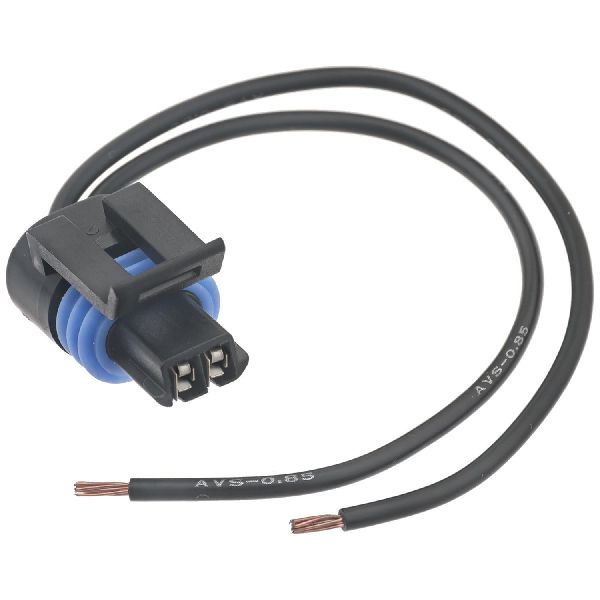
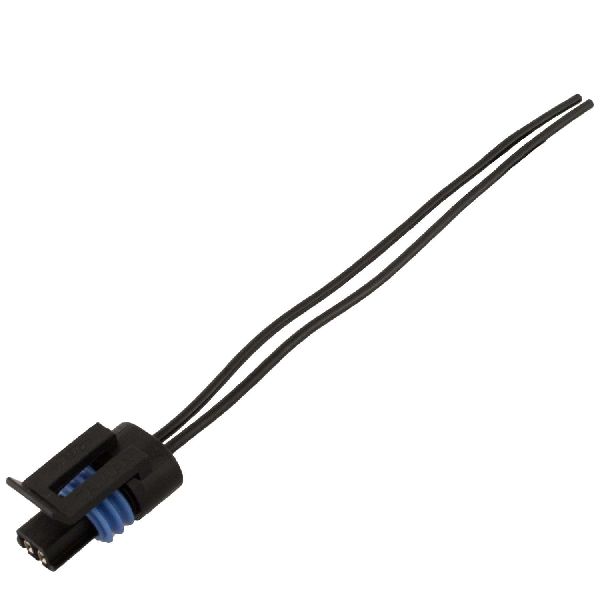
Typical fix: Repair the damaged section of wire or replace the VSS connector pigtail. The Dorman 645-209 is a commonly used replacement pigtail.
Est. part cost: $10-$30 - Metal Debris on VSS Tip ⚪ Low Probability The VSS is magnetic and can attract fine metallic particles from normal transmission or transfer case wear. A significant accumulation can disrupt the sensor's ability to read the reluctor ring.
How to confirm: Remove the VSS and inspect its magnetic tip. If it is covered in a paste-like layer of metal shavings, this is the likely cause.
Typical fix: Wipe the sensor tip clean and reinstall. Note that excessive metal may indicate a more serious internal transmission or transfer case problem.
Est. part cost: $0
Rare But Worth Checking
- Faulty Instrument Cluster: On some GM trucks of this era, the VSS signal is routed through the instrument cluster. A fault within the cluster's circuit board, often related to failing stepper motors or bad solder joints, can interrupt the signal, causing a P0502 code even if the sensor and wiring are good. This is a known issue on GMT800 trucks, sometimes causing the speedometer to fail while other gauges work.
- Damaged VSS Reluctor Ring: The toothed ring inside the transmission or transfer case that the VSS reads can become damaged, break, or come loose, though this is uncommon. This is a major internal repair.
- Faulty Powertrain Control Module (PCM): In rare cases, the input circuit within the PCM itself can fail, preventing it from reading a good signal from the sensor. This should be the last item to consider after all other possibilities are eliminated.
Diagnosis Steps
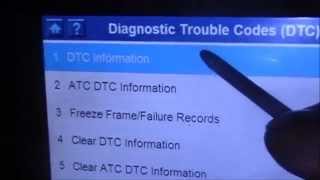
- Scan for Codes: Use an OBD-II scanner to confirm P0502 is the primary code. Note any other codes, especially ABS or transmission-related codes. Use the live data function to observe 'Vehicle Speed' while driving; if it stays at 0, the signal is lost.
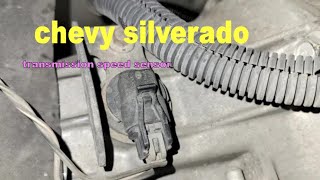
- Visual Inspection: Safely raise the vehicle and locate the VSS on the rear of the transmission (2WD) or transfer case (4WD). 🎬 Watch this quick video to help locate your speed sensor. Inspect the electrical connector and the Purple/White and Light Green/Black wires for obvious damage, corrosion, or loose connections.
- Check for Debris: Remove the single retaining bolt (typically 10mm head) and pull the VSS out. Inspect the magnetic tip for a buildup of metal shavings and clean if necessary.
- Test the Sensor (Optional): With the sensor plugged in and the key on, you can back-probe the two wires with a multimeter set to AC voltage. As you spin the driveshaft/rear wheels, you should see a voltage that increases with speed. A reading of 0V or a fixed voltage indicates a bad sensor. A healthy sensor should be capable of producing over 6V AC at highway speeds.
- Test the Wiring: Disconnect the sensor and the PCM. Check for continuity on both wires between the sensor connector and the PCM connector to rule out an open circuit. Check each wire for a short to ground and a short to each other.
- Replace the VSS: If the wiring tests good and the sensor is the prime suspect, replace it. This is the most common fix. Ensure the new sensor is fully seated.
- Clear Code and Test Drive: After repairs, clear the code with a scanner and perform a test drive to ensure the speedometer works, the transmission shifts correctly, and the code does not return.
Parts You'll Likely Need
- Vehicle Speed Sensor (VSS)
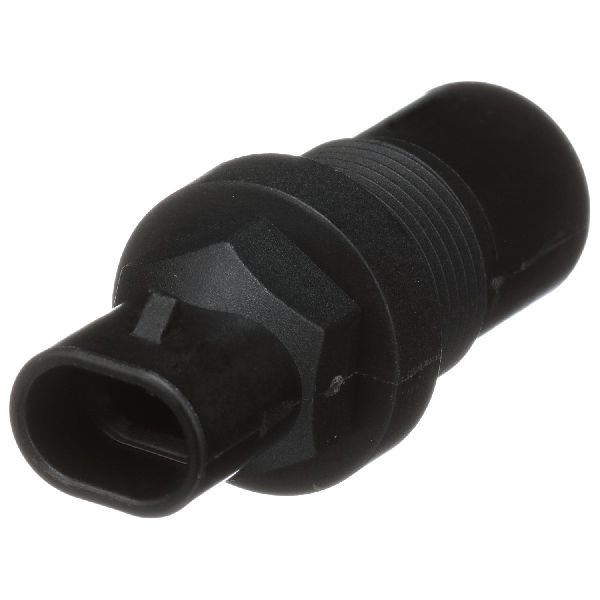
(OEM #213-1701)— This sensor is the most common failure point for the P0502 code on this platform, causing a loss of signal to the PCM.
Trusted brands: ACDelco, Delphi, Standard Motor Products, Dorman
OEM price range: $40-$70
Aftermarket price range: $20-$50 - VSS Connector Pigtail
(OEM #Dorman 645-209)— The factory connector can become brittle from heat and exposure, leading to a poor connection or broken wires at the sensor.
Trusted brands: Dorman, ACDelco
OEM price range: $20-$35
Aftermarket price range: $10-$25
Platform-Specific Known Issues
- Incorrect Connector Hookup After Transmission Service: In a documented case, a shop that replaced a transmission plugged the wrong harness into the VSS socket, leading to a P0502 code and no-shift condition. The correct VSS harness has a Purple/White and Light Green/Black wire, while the incorrect harness plugged in had a Yellow and Purple wire.
- Intermittent Failure of Aftermarket/OEM Sensors: Owners have reported that even new OEM sensors can fail intermittently, producing a voltage that is too low (e.g., 2.8-3.4V AC) at highway speed, which is sufficient to trigger the P0502 code. 🎬 See a real-world case study diagnosing this specific shifting issue. A replacement aftermarket sensor resolved the issue by producing a stronger signal (over 6V AC).
- Manufacturer Technical Bulletins: Bulletin #PI1489 and Bulletin #PI1489A identify P0502 as a "Vehicle Speed Sensor (VSS) Circuit Low Voltage" fault that can cause the Malfunction Indicator Lamp to illuminate and may result in the vehicle being intermittently unable to shift into Reverse.
Mechanic-Grade Diagnostic Values
- Vehicle Speed Sensor (VSS) internal resistance — expected: 976 to 2354 Ohms (for 4WD models). Failure: A reading outside this range, or an open/infinite reading, indicates a faulty sensor.
- Vehicle Speed Sensor (VSS) AC Voltage Output (Wheels spinning) — expected: Should start at a minimum of 0.5V AC and increase steadily with speed. A healthy sensor should exceed 6V AC at highway speeds.. Failure: A reading of 0V, or a voltage that is consistently low (e.g., under 3.5V at highway speed), indicates a weak or failed sensor, even if it produces some signal.
Wiring & Ground Locations

- PCM Connector C1 (Blue) - 1999-2002 — Under the hood, typically on the driver's side fender well.. The VSS signal wires terminate here. Pin 20 (LT GRN/BLK) is the VSS Reference Low, and Pin 21 (PPL/WHT) is the VSS Signal. Testing for continuity and shorts from the sensor connector to these pins is a definitive wiring test.
- PCM Connector C2 (Green) - 2003-2007 — Under the hood, on the driver's side.. For later models with the updated PCM, the VSS wires are located here. Pin 50 (PPL/WHT) is the VSS Signal, and Pin 49 (LT GRN/BLK) is the VSS Low Reference. This is the endpoint for wiring checks on these model years.
- Main PCM Ground — A black wire with a ring terminal bolted to the rear of the cylinder head on the passenger side of the engine.. This is the most critical ground for the entire PCM and all its sensors. A loose or corroded connection here can cause erratic behavior and low voltage codes for multiple sensors, including the VSS.
- Frame/Battery Grounds — Multiple locations, including a primary ground from the battery negative terminal to the frame rail near the driver's side tire, and another to the radiator support.. Poor main grounds can create floating voltages and unstable sensor readings throughout the vehicle. Ensuring these are clean and tight is a crucial step when diagnosing any electrical fault.
Real Owner Repair Stories
- Reddit user in r/GMT800 (2006 Suburban (GMT800 platform)) — Twitchy speedometer, erratic shifting (hunting between gears, revving high), cruise control disabling itself. Confirmed with an OBD2 live data display that the speed signal was erratic.
❌ Tried (didn't work) Replaced the Vehicle Speed Sensor (VSS) on the transfer case, which only fixed the problem for about 20 miles., Considered checking all ground points.
✅ What actually fixed it Another user with an identical issue reported that wiggling the VSS wiring harness could make the problem better or worse. The final fix was to abandon finding the break in the factory harness and instead run new, dedicated bypass wires from the VSS connector directly to the PCM. - Chevrolet Forum user (1999.5 Silverado 5.3L 4x4) — P0502 code, speedometer not working, harsh 1-2 shift at high RPM, would not shift into 4th gear at all.
❌ Tried (didn't work) Swapped the VSS with a known-good sensor from the old transfer case.
✅ What actually fixed it The issue occurred immediately after a used transmission and transfer case were installed. The user was advised to test the VSS resistance (spec: 976-2354 ohms for 4WD) and AC voltage output. The problem was related to the recent installation, pointing towards either damaged wiring during the swap or an internal issue with the replacement transfer case's reluctor ring. The thread emphasizes that the PCM needs the VSS signal for proper shifting, directly linking the code to the transmission symptoms.
OEM Part Supersession History
GM 24225896→ACDelco 213-1701— Standard part number consolidation and branding update from GM Genuine Parts to ACDelco.
Heads up: These part numbers are generally interchangeable for the specified application. However, always verify fitment for the specific drivetrain (2WD vs 4WD) as there can be variations.
Model Year Variations Within This Range
- 1999-2002: These models use an earlier PCM (often identified by the Blue/Red or Blue/Green connectors). The VSS signal wires are located at Pins 20 (LT GRN/BLK) and 21 (PPL/WHT) of the Blue C1 connector.
- 2003-2007 Classic: These models received a facelift and an updated PCM (often with Green/Blue connectors). The VSS signal wires are located at Pins 49 (LT GRN/BLK) and 50 (PPL/WHT) of the Green C2 connector. The interior, steering wheel, and some HVAC controls were also updated.
- 2005-2007 Classic: In 2005, GM switched from 4-wheel disc brakes back to rear drum brakes on many 1500 models due to reported issues with the rear disc parking brake system. This does not affect the P0502 diagnosis but is a significant platform variation to be aware of.
Diagnostic Flowchart
Other Known Issues on This Vehicle
Issues unrelated to this code that are worth knowing about as an owner of this generation:
- Instrument Cluster Gauge Stepper Motor Failure 🟠 Medium — Extremely common, typically occurs after 80,000 miles. Affects speedometer, tachometer, fuel, and temp gauges, causing them to stick, read incorrectly, or fail completely. (Ref: A special coverage TSB was issued for some 2003-2005 models, but it was limited by mileage.)
- Rusted/Corroded Brake Lines 🔴 High — Very common, especially in regions that use road salt. The factory steel lines are prone to rusting through, which can lead to a sudden loss of braking fluid and brake failure. (Ref: NHTSA opened investigations (e.g., PE10008) but no full recall was issued; GM has considered it a maintenance item.)
- Intermediate Steering Shaft Clunk 🟡 Low — Very common. The shaft's slip joint wears out or loses lubrication, causing a noticeable clunk or rattle in the steering wheel and pedals when turning or going over bumps. (Ref: GM released redesigned shafts, but the problem can still recur. Greasing the shaft is a temporary fix.)
- 4WD Transfer Case Position Sensor/Encoder Motor Failure 🟠 Medium — Common issue on 4x4 models. The position sensor on the transfer case or the encoder motor can fail, leading to a 'Service 4WD' message and inability to switch between 2WD and 4WD.
- Fuel Level Sensor Failure 🟡 Low — Common. The fuel level sensor (part of the fuel pump module in the tank) fails, causing an erratic or inaccurate fuel gauge reading.
- Cracked Cylinder Heads (Castech) 🔴 High — Affects a specific subset of 5.3L and 4.8L Vortec engines with cylinder heads made by Castech (casting numbers 706 or 862), which can develop cracks leading to coolant loss and overheating.
Used vs. New Parts: Buying Guide for This Vehicle
When a used part is the smart pick: A used VSS wiring harness pigtail or a section of the harness from a junkyard is a very practical choice, especially if only the connector is broken or a small section of wire is damaged. It provides OEM-grade wire colors and quality for a minimal cost.
Donor-vehicle mileage cap: roughly under 150000 miles for the part to have meaningful remaining life.
What to inspect on the donor part:
- For a wiring harness/pigtail, inspect for brittle plastic on the connector lock tab.
- Check for any signs of corrosion (green crust) inside the connector pins.
- Flex the wires near the connector to ensure the insulation isn't cracked or hardened.
- Avoid harnesses from vehicles in heavy salt-belt regions if possible.
OEM-only on this vehicle (don't cheap out):
- Powertrain Control Module (PCM) - Due to VIN programming and specific calibrations, a used PCM is complex to integrate and should only be considered as a last resort by a professional.
Aftermarket brands forum-validated for this vehicle:
- ACDelco (OEM)
- Delphi
- Standard Motor Products (SMP)
Brands owners have reported issues with on this vehicle:
- While some unbranded, low-cost aftermarket sensors from online marketplaces may work, at least one case has shown a new OEM sensor failing by producing a weak signal, which was resolved by a different (aftermarket) sensor. Quality can be inconsistent, so sticking to known brands is safer.
Real Owner Stories
Aggregated from forums and TSBs cited above. Mileages and costs reflect what owners reported in those sources.
2001 Chevrolet Silverado
Symptoms: After a transmission replacement, the truck had a P0502 code and a no-shift condition.
What fixed it: The repair shop had mistakenly plugged the wrong wiring harness (with yellow and purple wires) into the VSS. Finding and connecting the correct harness (with purple/white and light green/black wires) resolved the issue.
Source hint: YouTube - chevy silverado shifting problem: P0502 case study A part 2
2004 Chevrolet Silverado
Symptoms: An intermittent P0502 code was being set. Testing showed that a relatively new OEM VSS was only producing a weak signal of around 3V AC at highway speeds, which was below the PCM's threshold.
What fixed it: Replacing the weak OEM sensor with a new aftermarket VSS fixed the problem. The new sensor produced a much stronger signal of over 6V AC at highway speeds.
Source hint: ScannerDanner Forum - P0502 code with bad attitude
Chevrolet Owner Report
Symptoms: An owner reported a sudden failure where the vehicle would not start initially. After waiting 45 minutes, the vehicle started, but a diagnostic check revealed codes P0502, P0513, P0606, and P0700.
What fixed it: This case highlights how a VSS circuit fault (P0502) can be part of a larger electrical or control module failure, often requiring a professional diagnostic check to clear the multiple codes and restore operation.
Source hint: NHTSA ODI #10648516
Documented NHTSA Reports
Manufacturer service bulletins have extensively documented the P0502 code across the Chevrolet lineup. Bulletin #PI1489 and #PI1489A describe the condition as a VSS Circuit Low Voltage fault that illuminates the Malfunction Indicator Lamp. Furthermore, Bulletin #PI11489B notes that water intrusion into the transmission output speed sensor is a known cause for these intermittent signal failures and shifting difficulties.
Related OBD-II Codes
Frequently Asked Questions
Where is the Vehicle Speed Sensor (VSS) located on my 1999-2007 Silverado?
What color are the wires for the VSS on my truck?
Can I just clean the VSS sensor instead of replacing it to fix P0502?
I replaced the VSS but my speedometer is still erratic and the code came back. What else should I check?
My speedometer is stuck at zero but I don't have a P0502 code. What could be the problem?
Does this P0502 information also apply to my 2005 GMC Sierra?
Helpful Videos
We Have This Part in Stock


The information in this article is provided for general reference and educational purposes only. Vehicle specifications, procedures, and part compatibility can vary by production date, trim level, and region. Always consult your vehicle's factory service manual and verify part numbers before purchasing or performing repairs. Safety-critical components such as airbags, seat belts, and braking systems should be installed by a qualified professional.
- Chevrolet Silverado:
- 🎬 Helpful Videos
- 🛍️ Shop This Part
- What's Unique About the 1999-2007 Chevrolet Silverado
- Symptoms You May Notice
- Most Likely Causes
- Rare But Worth Checking
- Diagnosis Steps
- Parts You'll Likely Need
- Platform-Specific Known Issues
- Mechanic-Grade Diagnostic Values
- Wiring & Ground Locations
- Real Owner Repair Stories
- OEM Part Supersession History
- Model Year Variations Within This Range
- Diagnostic Flowchart
- Other Known Issues on This Vehicle
- Used vs. New Parts: Buying Guide for This Vehicle
- Real Owner Stories
- 2001 Chevrolet Silverado
- 2004 Chevrolet Silverado
- Chevrolet Owner Report
- Documented NHTSA Reports
- Related OBD-II Codes
- Frequently Asked Questions
- 🎟️ Get 5% Off