

P0502 on 2005-2013 Chevrolet Corvette: VSS Circuit Low Causes and Fixes
On a 2005-2013 (C6) Corvette, code P0502 almost always points to a faulty Vehicle Speed Sensor (VSS) or its wiring. This can cause an erratic speedometer and prevent manual transmission cars from shifting into reverse. The sensor is located on top of the differential and can be a tight but manageable DIY replacement, often requiring only a 10mm wrench and patience.
- P0502 on a C6 Corvette indicates a low voltage signal from the Vehicle Speed Sensor (VSS).
- Key symptoms are an erratic or dead speedometer and, on manual cars, being locked out of reverse.
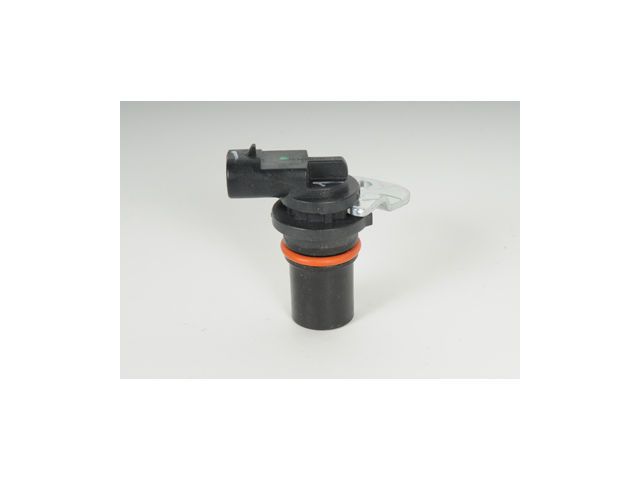
- The most common cause is a failed VSS (GM 89047611 / ACDelco 213-4539) located on top of the rear differential.
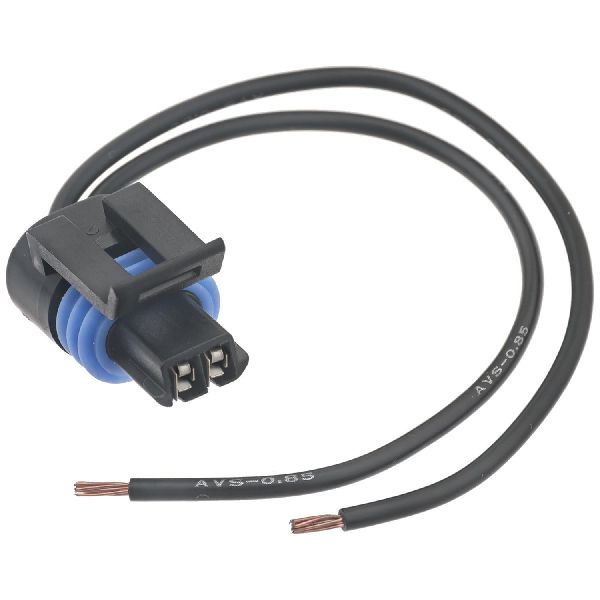
- Check the sensor's wiring and connector for damage or corrosion before replacing the sensor.
- Replacing the sensor is a feasible DIY job, but access is very tight and may require patience. A 10mm ratcheting wrench is a key tool for the job.
What's Unique About the 2005-2013 Chevrolet Corvette
For the C6 Corvette, this code is frequently linked to specific, documented issues. On manual transmission models, a failing VSS will activate the reverse lockout solenoid, making it impossible to shift into reverse because the car's computer can't confirm the vehicle is stationary. Some owners report being able to 'brute force' the shifter past the lockout, but this is not recommended. Additionally, manufacturer bulletins for the subsequent C7 generation highlight a vulnerability to water intrusion in the VSS connector, a problem that can also affect the C6, leading to the low voltage condition that triggers the code. [Bulletin #PI11489B]
Symptoms You May Notice
- Check Engine Light is on
- Speedometer is erratic, reads zero, or bounces wildly.
- "Service Traction System" or "Service Active Handling" message on the driver information center.
- Inability to shift into reverse (on manual transmission models).
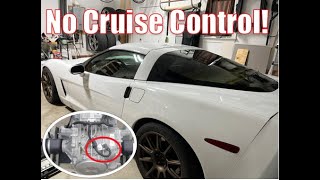
- Cruise control is inoperative.
- ABS or Traction Control light may illuminate.
- Transmission may exhibit irregular shift patterns (on automatic models).
- Replacing the instrument cluster. If a scan tool also shows no speed reading, the problem is with the sensor or its circuit, not the gauge itself.
- Replacing the reverse lockout solenoid. The solenoid is usually functioning correctly; it engages because it is not receiving the 'vehicle stopped' signal from the faulty VSS circuit.
Most Likely Causes
- Faulty Vehicle Speed Sensor (VSS) 🔴 High Probability The sensor is located on top of the differential, where it can be exposed to heat and road debris. While generally reliable, failures are the most common cause for this code on the C6 platform, as confirmed by numerous owner experiences.
How to confirm: Use a scan tool to monitor VSS output while driving. If the reading is zero or erratic while the car is moving, the sensor is likely bad. You can also test the sensor's resistance; a healthy sensor should read between 1,300-1,500 ohms. If the reading is outside this range, the sensor has failed.
Typical fix: Replace the Vehicle Speed Sensor. The most common OEM part number is GM 89047611, which cross-references to ACDelco 213-4539.
Est. part cost: $25-$60 - Damaged Wiring or Connector 🟡 Medium Probability The wiring to the VSS runs over the top of the differential and can be susceptible to damage from heat, chafing, or corrosion. TSBs on the similar C7 platform point to water intrusion as a potential cause of low voltage signals. [Bulletin #PI11489B] Owners sometimes find the connector has come loose or the pins are corroded.
How to confirm: Visually inspect the VSS connector and harness for any signs of corrosion, frayed wires, or loose connections. Perform a continuity test on the wiring between the sensor connector and the ECM. A forum user detailed testing by checking for resistance between pins 71 and 72 on the ECM's X1 connector.
Typical fix: Clean the connector pins with electrical contact cleaner or repair/replace the damaged section of the wiring harness.
Est. part cost: $5-$50
Rare But Worth Checking
- Faulty Engine Control Module (ECM): This is very rare. Before condemning the ECM, you must exhaustively rule out any issues with the sensor and its entire circuit. An ECM fault would typically be accompanied by other, unrelated trouble codes.
- Metal Debris on Sensor: The VSS is magnetic and can attract metallic particles from normal differential wear. A heavy accumulation can interfere with the sensor's ability to read the reluctor wheel, causing a low or erratic signal. Cleaning the tip of the sensor during inspection is a good preventative measure.
Diagnosis Steps
- Read the codes with an OBD-II scanner to confirm P0502 is present and note any other codes.
- Use the scanner's live data function to monitor 'Vehicle Speed'. If it reads 0 mph while driving, the issue is likely the sensor or its circuit.
- Raise the vehicle safely on a lift or jack stands. The VSS is located on the top, passenger side of the differential case, held in by a single 10mm bolt.
- Inspect the VSS connector and wiring harness for visible damage, corrosion, or loose connections. Clean any corrosion found. Ensure the connector is fully seated.
- If the wiring looks good, disconnect the sensor. Using a multimeter, test the resistance across the two pins of the sensor. A reading between 1,300-1,500 ohms is expected. If it's outside this range, the sensor is faulty.
- If the sensor tests good, check the wiring harness. Test for continuity between the VSS connector and the corresponding pins at the ECM (typically pins 71 and 72 on the X1 connector for the C6). Check for shorts to ground on both wires.
- If the wiring and sensor both test good, the fault may lie within the ECM, but this is extremely unlikely and should be the last consideration.
Parts You'll Likely Need
- Vehicle Speed Sensor
(OEM #GM 89047611)— This is the most frequent failure point for the P0502 code on the C6 Corvette.
Trusted brands: ACDelco (213-4539), Dorman
OEM price range: $40-$70
Aftermarket price range: $25-$45
Technical Service Bulletins (TSBs) & Recalls
- PI11489B: Mentions water intrusion into the manual transmission output speed sensor as a cause for P0502 on 2014 models, which is relevant context.
- PI1489A: Links P0502 to an illuminated MIL and inability to shift into reverse on 2014 models.
- PI1489: Defines the code as Vehicle Speed Sensor (VSS) Circuit Low Voltage for 2014 models.
Platform-Specific Known Issues
- On manual transmission cars, a P0502 code will often engage the reverse lockout, preventing the driver from shifting into reverse. This is a safety feature, as the ECM cannot verify the car is stopped.
- Accessing the VSS on top of the differential is notoriously tight. It is a 'blind' repair for most. Owners report success by jacking up the driver's side of the car, lying with their feet pointing forward, and reaching over the differential with their right arm from the passenger side. A 10mm ratcheting wrench is highly recommended. Dropping the small retaining bolt is a common frustration, so having a magnet tool handy is wise.
Mechanic-Grade Diagnostic Values
- Vehicle Speed Sensor (VSS) internal resistance — expected: 1,300-1,500 ohms at 77°F (25°C). Failure: A value greater than 1,500 ohms indicates an open/high resistance in the sensor. A value less than 1,300 ohms could indicate a short.
- VSS circuit resistance to ground — expected: More than 10 ohms. Failure: A value less than 10 ohms indicates a short to ground in either the VSS high signal circuit (Pin 71) or low signal circuit (Pin 72).
- VSS AC Voltage Output (dynamic test) — expected: ≥ 0.5 VAC while spinning the drive wheels by hand. Failure: No or very low AC voltage indicates a failed sensor.
Scan Tool Commands That Help
- Tech2 / GDS2: Reverse Lockout Solenoid Command — This bidirectional control can be used to manually cycle the reverse lockout solenoid. If the solenoid clicks when commanded by the scanner but still doesn't function correctly, it helps isolate the problem to either the solenoid's mechanical function or the signal it's receiving from the PCM based on VSS data.
Wiring & Ground Locations
- ECM Connector X1 (or C1) — Behind the right front fender, between the wheelhouse and the dash panel.. This is the main ECM connector where the VSS signals terminate. It's the primary location for testing the VSS circuit from the control module side.
- ECM Pin X1-71 (VSS High Signal) — Pin 71 on the X1 connector at the ECM.. This is the VSS high signal circuit. It should be tested for continuity back to the sensor and for shorts to ground.
- ECM Pin X1-72 (VSS Low Signal) — Pin 72 on the X1 connector at the ECM.. This is the VSS low signal circuit (ground reference). It should be tested for continuity back to the sensor and for shorts to ground.
- VSS Output Signal Wire (to Instrument Cluster) — A Dark Green/White wire that runs from the ECM (Pin 21 on Connector C1 in some diagrams) to the instrument cluster, HUD, and Navigation radio.. This is the processed speed signal sent out by the ECM. If there is no signal on this wire but the VSS input to the ECM is good, it could indicate an ECM fault. A break in this wire would cause the speedometer to fail but might not set a P0502 code, which relates to the input circuit.
- Splice S-211 — In the harness where the VSS output signal from the ECM splits to go to the instrument cluster, HUD, and radio.. Corrosion or a break at this splice could cause the speedometer and other systems to lose the speed signal, even if the ECM is receiving it correctly from the VSS.
Real Owner Repair Stories
- CorvetteForum user 'zaye' (C7 Z06/Z07 M7 (Similar system behavior to C6)) — Check engine light on, unable to shift into reverse.
❌ Tried (didn't work) Letting the car roll to engage gear, Checking fuses
✅ What actually fixed it The dealer towed the car and replaced the vehicle speed sensor. An OnStar diagnostic confirmed code P0502 before the tow. The issue did not return after the sensor was replaced. - CorvetteForum user 'jfray' (C6 Z06) — "Service Traction Control" message and P0502 code after a track day, resulting in a reverse lockout.
❌ Tried (didn't work) Inspecting wheel speed sensors
✅ What actually fixed it Temporarily, clearing the P0502 code with a scanner restored the ability to shift into reverse. This confirms the intermittent electronic nature of the fault and that the lockout is directly tied to the active code, not a mechanical failure. The underlying cause is still likely a failing sensor or wiring. - CorvetteForum user 'Dano523' (2008 C6 Base, 6-speed manual) — "SERVICE TRACTION SYSTEM" message, reverse gear lockout, and code P0502.
✅ What actually fixed it The user was provided with detailed diagnostic steps, including checking resistance at ECM pins X1-71 and X1-72. The accepted solution was to replace the VSS or clean its connector, confirming this as the standard, effective fix.
Model Year Variations Within This Range
- 2005-2007 vs 2008-2013: The primary engine changed from the LS2 (6.0L) in 2005-2007 to the LS3 (6.2L) in 2008-2013. While the VSS sensor and its function remained the same, the ECM and some wiring details were updated. The 2005 model used a 4-speed automatic (4L65E), while 2006+ models received a 6-speed automatic with paddle shifters, which relies more heavily on accurate VSS data for proper shifting.
- 2005-2008 vs 2009-2013: The Electronic Brake Control Module (EBCM) for the ABS/Traction Control system changed. 2005-2008 models use a Delphi system, while 2009-2013 models use a Bosch system. Forum discussions suggest the Delphi units may be slightly more prone to issues. Since the VSS signal is integral to the traction control system, a fault in the EBCM could present similar symptoms.
Diagnostic Flowchart
Other Known Issues on This Vehicle
Issues unrelated to this code that are worth knowing about as an owner of this generation:
- Harmonic Balancer Wobble 🔴 High — Common across all LS2 and LS3 engines in the C6. The rubber elastomer bonding the inner and outer rings fails, causing a visible wobble. Often presents with a 'chirping' sound from the belt. (Ref: TSB #05-06-01-001A (for early 2005 models with a loose bolt), but the delamination issue affects all years.)
- Fuel Sending Unit Failure 🟠 Medium — Very common. Sulfur buildup on the sensors in the dual fuel tanks causes an inaccurate or empty fuel gauge reading, often triggering codes like P0463 or P2068. Repair is labor-intensive as it requires dropping the tanks.
- Steering Column Lock Failure (2005 models) 🔴 High — Primarily affects 2005 models. A failure in the electronic column lock module can prevent the car from starting, displaying a 'Service Column Lock' message. Later models had the feature eliminated from the factory. (Ref: Multiple TSBs exist, and aftermarket bypass modules are a common fix.)
- Delaminating Roof Panel (Targa Top) 🔴 High — Common on early C6 models (2005-2007). The adhesive holding the roof skin to the frame fails, causing noises and, in worst cases, the panel flying off while driving. (Ref: NHTSA Action Number: EA07011 (Recall))
- Weak Battery Causing Electrical Gremlins 🟡 Low — Extremely common. The C6's sensitive electronics will cause numerous random error messages (including 'Service Column Lock' or 'Service Active Handling') when the battery voltage is even slightly low. This is often the first thing to check for any electrical issue.
Used vs. New Parts: Buying Guide for This Vehicle
When a used part is the smart pick: A used Vehicle Speed Sensor (VSS) from a reputable salvage yard can be a cost-effective option, as it is a simple magnetic sensor with no complex electronics. It is a viable choice if you can verify the donor car's mileage and it is significantly lower than your own.
Donor-vehicle mileage cap: roughly under 80000 miles for the part to have meaningful remaining life.
What to inspect on the donor part:
- Check for a clean connector with no corrosion on the pins.
- Ensure the plastic housing is not cracked or showing signs of extreme heat stress.
- If possible, test the resistance with a multimeter before purchase; it should be between 1,300-1,500 ohms.
- Ask for the VIN of the donor car to confirm it's from a compatible C6 Corvette model and year.
OEM-only on this vehicle (don't cheap out):
- Engine Control Module (ECM) - Used ECMs can be problematic due to VIN locking and programming requirements. A new or professionally refurbished and programmed unit is the safest bet if the ECM is condemned.
Aftermarket brands forum-validated for this vehicle:
- ACDelco (GM Original Equipment)
- Standard Motor Products (SMP)
- Dorman
Brands owners have reported issues with on this vehicle:
- No-name, unbranded sensors from online marketplaces have a higher reported failure rate. Sticking to known brands is recommended for this part.
Real Owner Stories
Aggregated from forums and TSBs cited above. Mileages and costs reflect what owners reported in those sources.
2008 Chevrolet Corvette
Symptoms: Check Engine Light (CEL) on, 'Service Traction System' message appearing, and a reverse lockout preventing the car from shifting into reverse.
What fixed it: Replacement of the Vehicle Speed Sensor (VSS) on the differential.
Source hint: CorvetteForum - 'Variable Speed Sensor issue and no Reverse' (https://www.corvetteforum.com/forums/c6-tech-performance/4255018-variable-speed-sensor-issue-and-no-reverse.html)
2005-2013 Chevrolet Corvette (General C6)
Symptoms: Speedometer is erratic, reads zero, or bounces wildly. The owner noted the difficulty of the 'blind' repair.
What fixed it: Replacing the VSS by reaching over the transmission/differential from the passenger side with the right arm while lying under the driver's side.
Source hint: CorvetteForum - 'Vehicle speed sensor (VSS) replacement?' (https://www.corvetteforum.com/forums/c6-tech-performance/2990117-vehicle-speed-sensor-vss-replacement.html)
Chevrolet Corvette Z06
Symptoms: DTC P0502 and inability to shift into reverse following a track day.
What fixed it: The issue was temporarily resolved by clearing the code, though it confirmed an intermittent electronic fault in the VSS circuit.
Source hint: CorvetteForum - 'Z06 DTC P0502 and no reverse' (https://www.corvetteforum.com/forums/c6-z06-discussion/3277123-z06-dtc-p0502-and-no-reverse.html)
Related OBD-II Codes
Frequently Asked Questions
Why can't I shift my manual C6 Corvette into reverse when the P0502 code is active?
Where is the Vehicle Speed Sensor located on the 2005-2013 Corvette, and is it hard to reach?
What is the specific resistance range for a healthy VSS on a C6 Corvette?
Could my 'Service Active Handling' message be related to P0502?
Which replacement part should I buy for a P0502 fix on my C6?
Does TSB PI11489B apply to my 2005-2013 Corvette?
Helpful Videos
We Have This Part in Stock


The information in this article is provided for general reference and educational purposes only. Vehicle specifications, procedures, and part compatibility can vary by production date, trim level, and region. Always consult your vehicle's factory service manual and verify part numbers before purchasing or performing repairs. Safety-critical components such as airbags, seat belts, and braking systems should be installed by a qualified professional.
- Chevrolet Corvette:
- 🎬 Helpful Videos
- 🛍️ Shop This Part
- What's Unique About the 2005-2013 Chevrolet Corvette
- Symptoms You May Notice
- Most Likely Causes
- Rare But Worth Checking
- Diagnosis Steps
- Parts You'll Likely Need
- Technical Service Bulletins (TSBs) & Recalls
- Platform-Specific Known Issues
- Mechanic-Grade Diagnostic Values
- Scan Tool Commands That Help
- Wiring & Ground Locations
- Real Owner Repair Stories
- Model Year Variations Within This Range
- Diagnostic Flowchart
- Other Known Issues on This Vehicle
- Used vs. New Parts: Buying Guide for This Vehicle
- Real Owner Stories
- 2008 Chevrolet Corvette
- 2005-2013 Chevrolet Corvette (General C6)
- Chevrolet Corvette Z06
- Related OBD-II Codes
- Frequently Asked Questions
- 🎟️ Get 5% Off