

P0501 on 2007-2018 GMC Sierra 1500: VSS Range/Performance Causes and Fixes
On a 2007-2018 GMC Sierra, P0501 almost always points to a faulty wheel speed sensor or its wiring. The truck uses the ABS wheel speed sensors to determine vehicle speed, not a traditional transmission sensor. Expect to pay $25-$60 for a single aftermarket sensor, with a DIY difficulty of 2/5.
- P0501 on a 2007-2018 Sierra means there is a problem with a wheel speed sensor signal, not a transmission sensor.
- The most common symptoms are an illuminated ABS light and harsh transmission shifting.
- Diagnosis is most effective with a scan tool that can read live data from the four wheel speed sensors to identify the faulty one.
- The most probable fix is replacing a single failed wheel speed sensor or repairing its wiring.
- This is a DIY-friendly repair for those comfortable with removing a wheel and basic hand tools.
What's Unique About the 2007-2018 GMC Sierra 1500
For the 2007-2018 GMC Sierra, the key thing to understand is that the vehicle's speed is calculated from the four ABS wheel speed sensors, not a single sensor on the transmission or transfer case. This is true for both the GMT900 (2007-2013) and K2XX (2014-2018) generations. Therefore, a P0501 code is directly linked to the ABS system. The problem is almost always one of the wheel speed sensors or the wiring leading to it, rather than a transmission or driveline component. A P0501 is often a generic powertrain code triggered by a more specific ABS code (e.g., C0035-C0050) that the EBCM has detected.
Generation note: This guide covers two generations of the GMC Sierra 1500: the GMT900 (2007-2013) and the K2XX (2014-2018/2019 Limited). The underlying cause and diagnostic process for P0501 are nearly identical for both generations, as they both rely on wheel speed sensors for the vehicle speed signal. Part numbers for the sensors themselves will differ between the two generations, and the K2XX generation may be more sensitive to wiring issues near the EBCM.
Symptoms You May Notice
- Check Engine Light illuminated
- ABS warning light illuminated
- Traction Control/StabiliTrak warning light illuminated (often says "Service StabiliTrak")
- Erratic or harsh transmission shifting
- Inoperative or inaccurate speedometer
- Cruise control will not engage
- Park assist may be disabled
- Replacing the transmission output speed sensor. On these trucks, the transmission sensor is used for internal transmission functions but is not the primary source for the vehicle speed signal sent to the speedometer and PCM. P0501 points to the wheel speed sensor inputs.
Most Likely Causes
- Faulty Wheel Speed Sensor 🔴 High Probability The sensors are exposed to harsh conditions at the wheel hubs, including water, dirt, and road salt. A common failure mode on these trucks is 'rust jacking,' where corrosion builds up on the hub underneath the sensor's mounting point. This pushes the sensor slightly away from the magnetic reluctor ring, increasing the air gap and causing an erratic or lost signal.
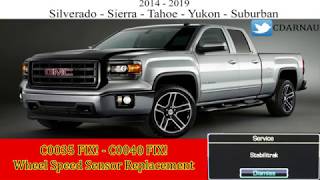
How to confirm: Use an OBD-II scanner with ABS/CAN bus capability to read live data from all four wheel speed sensors while driving. 🎬 Watch: How to properly diagnose GM ABS codes using live data. The faulty sensor will show an erratic, zero, or mismatched MPH reading compared to the others. Often, a specific ABS code like C0035 (Left Front) will point directly to the bad sensor.
Typical fix: Replace the failed wheel speed sensor. It is critical to thoroughly clean the hub mounting surface of all rust and corrosion before installing the new sensor to prevent a repeat failure.
Est. part cost: $25-$80 - Damaged Wheel Speed Sensor Wiring or Connector 🟡 Medium Probability The wiring harness runs down the suspension and can be damaged by road debris, improper servicing, or become brittle with age. A common point of failure is near the frame by the spare tire for the rear sensors, or where the harness flexes with steering for the front sensors. Owners who have installed leveling or lift kits are particularly susceptible to stretched or damaged front sensor wires.
How to confirm: Visually inspect the wiring from the back of the wheel hub up into the frame rail. Look for chafing, breaks, corrosion in the connector, or stretched wires. A multimeter can be used to check for continuity from the sensor connector to the EBCM connector.
Typical fix: Repair the damaged section of wire or replace the pigtail connector. In severe cases, the entire wheel speed sensor harness may need replacement.
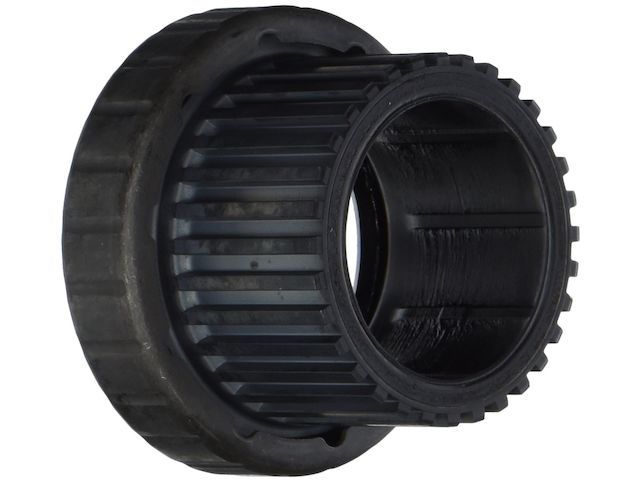
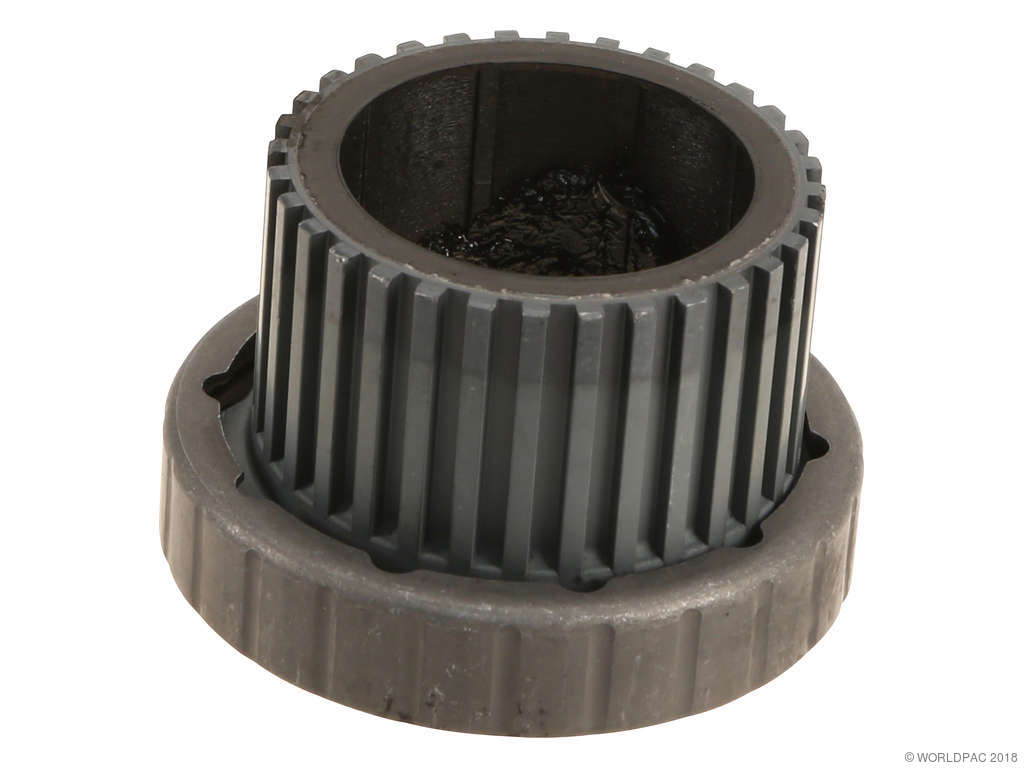
Est. part cost: $15-$50 - Debris on Magnetic Encoder Ring (Wheel Hub) ⚪ Low Probability The wheel speed sensor reads a magnetic ring integrated into the wheel hub bearing assembly. Metal shavings from brake wear or other magnetic debris can stick to this ring and disrupt the sensor's reading.
How to confirm: After removing the wheel speed sensor, inspect the surface of the wheel hub where the sensor reads. Clean the area thoroughly with a rag and brake cleaner. If the problem persists, the issue is likely the sensor or wiring.
Typical fix: Clean the mounting surface of the wheel hub bearing. If the encoder ring inside the hub is damaged, the entire wheel hub bearing assembly must be replaced.
Est. part cost: $0 (for cleaning) or $150-$300 (for hub assembly)
Rare But Worth Checking
- Faulty Electronic Brake Control Module (EBCM): The EBCM (or ABS module) processes the signals from all four wheel speed sensors before sending the vehicle speed data to the PCM. While module failure is less common than sensor or wiring failure, it can happen, sometimes due to water intrusion or internal electronic faults. This is usually suspected only after all four sensors and their wiring have been confirmed to be good.
- Incorrect Tire Size Programmed: If significantly different sized tires have been installed without recalibrating the PCM, the computer may see a conflict between wheel speed and expected vehicle speed based on engine RPM and gear, potentially triggering a P0501. This is more likely after a recent tire change and is usually correctable with a programming tool.
Diagnosis Steps
- Connect an OBD-II scanner capable of reading ABS codes. Check for any 'C' codes (e.g., C0035, C0040, etc.) that would identify a specific faulty wheel speed sensor circuit. If a specific sensor is flagged, proceed to inspect that sensor and its wiring.
- If no 'C' codes are present, use the scanner to monitor live data from all four wheel speed sensors while driving the vehicle.
- Identify any sensor that reads differently from the others, drops out, or shows an erratic signal. This is the faulty sensor.
- Raise the vehicle securely on jack stands and remove the wheel corresponding to the faulty sensor.
- Visually inspect the sensor and its wiring harness for any obvious damage, corrosion, or loose connections. Pay close attention to the harness routing and any potential chafe points.
- Remove the sensor (typically held by a single 5mm Allen or Torx bolt). Inspect the sensor tip and the wheel hub's magnetic encoder ring for debris or damage.
- Thoroughly clean the sensor mounting pad on the hub assembly. Use a wire brush or sandpaper to remove all rust and ensure the new sensor sits flush. 🎬 See this walkthrough on replacing and cleaning wheel speed sensors.
- If no visual faults are found with wiring or debris, the most likely cause is a failed sensor. Replace the sensor with a new one.
- Clear the codes with the scanner and perform a test drive to ensure the speedometer is working correctly and the warning lights do not return.
Parts You'll Likely Need
- Front Wheel Speed Sensor
(OEM #84356647 (supercedes 15229012, 22870821 for GMT900); 23483149 (K2XX))— This is the most common part to fail and cause a P0501 code. The front sensors are often specific to 2WD or 4WD models.
Trusted brands: ACDelco, Delphi, Dorman, Standard Motor Products (SMP), NTK
OEM price range: $60-$90
Aftermarket price range: $25-$50 - Rear Wheel Speed Sensor
(OEM #15233108 (GMT900); 23299335 (supercedes 22775301 for K2XX))— Rear sensors also fail, though sometimes less frequently than fronts. They are typically the same part for the left and right sides.
Trusted brands: ACDelco, Standard Motor Products (SMP), Dorman, Walker
OEM price range: $50-$75
Aftermarket price range: $20-$45 - Wheel Speed Sensor Connector Pigtail
(OEM #ACDelco PT2160 (example for K2XX))— If the wiring is damaged right at the connector, replacing the pigtail is the standard repair. This is common on the front wheels where wires flex.
Trusted brands: ACDelco, Dorman, Standard Motor Products (SMP)
OEM price range: $25-$40
Aftermarket price range: $12-$25
Related Codes That Often Appear With This One
- C0035-C0050 — These are ABS-specific codes that pinpoint a fault in a specific wheel speed sensor circuit (e.g., C0035 for Left Front, C0040 for Right Front). A P0501 is often accompanied by one of these 'C' codes, which makes diagnosis much easier by telling you exactly which wheel to inspect.
Platform-Specific Known Issues
- Rust Jacking: A very common issue on trucks in the rust belt. Corrosion builds up under the flat mounting surface of the wheel speed sensor, pushing it away from the hub's reluctor ring. This increases the air gap, leading to a weak or erratic signal. The fix requires removing the sensor and aggressively cleaning the mounting pad down to bare metal before installing the new part.
- Harness Damage Near Spare Tire: For rear wheel speed sensor faults, a common chafe point for the wiring harness is above the spare tire, where it can rub against the frame or other components.
Mechanic-Grade Diagnostic Values
- Passive Wheel Speed Sensor Resistance — expected: Typically 800 - 2,500 Ohms. The most reliable test is comparing the reading to a known-good sensor on the opposite side; they should be nearly identical.. Failure: A reading of OL (Open Loop/infinite resistance) or near 0 Ohms (short circuit) indicates a failed sensor. A significant deviation from the value of a known-good sensor also indicates failure.
- Passive Wheel Speed Sensor AC Voltage Output — expected: At least 100-200 mV (0.1-0.2V) AC when spinning the wheel by hand at approximately one revolution per two seconds. Voltage should increase with wheel speed.. Failure: No AC voltage generation, or a very weak/erratic voltage that doesn't correspond to wheel speed, indicates a failed sensor or an excessive air gap.
Hidden / Shadow Codes Worth Checking
- C0035 through C0051 with various sub-codes: While not truly 'hidden', these chassis codes are the root cause of the generic P0501. They specify the exact wheel (e.g., C0040 for Right Front Wheel Speed Sensor Circuit) and the nature of the fault. A basic engine code reader will only show P0501. (see via An OBD-II scanner with the ability to read ABS/EBCM (Chassis) codes is required. This is a step above the most basic code readers.)
Scan Tool Commands That Help
- GDS2 (K2XX) / Tech2Win (GMT900) or equivalent professional scanner: Live Data > EBCM > Wheel Speed Sensor Data — This is the primary diagnostic step. It allows you to view the speed reading from all four sensors in real-time while driving to identify which sensor is dropping out, reading erratically, or not matching the others.
- GDS2/Tech2Win with GM SPS/SPS2 Subscription: Programming > Replace/Reprogram EBCM — This is mandatory if the Electronic Brake Control Module (EBCM) is replaced. A new or used module must be programmed with the vehicle's VIN and specific configuration before it will function correctly.
Wiring & Ground Locations
- G110 — On the outside of the frame rail, underneath the driver's side door.. This is the primary ground for the EBCM on GMT900 trucks. A TSB was issued because poor contact at this location causes corrosion, leading to intermittent ABS/StabiliTrak lights and codes like P0501. The fix is to disassemble, clean the frame to bare metal, and re-secure the ground connection.
- EBCM Connector — On the EBCM module itself, which is attached to the ABS hydraulic block on the driver's side frame rail.. This 38-pin connector is the central point for all wheel speed sensor inputs. When diagnosing a persistent fault, a technician will check for continuity and voltage at the specific pins corresponding to the faulty wheel speed sensor, testing the integrity of the harness from the wheel to the module.
- G101, G102, etc. (2017 models) — Various locations on the body and chassis, such as near the front lights (G101) or rear of the engine (G102).. A GM Preliminary Information bulletin (PIT5562) noted that a small batch of 2017 trucks were built with improperly hardened ground bolts. This can cause a poor ground connection to develop over time, leading to a wide range of electrical issues, including ABS faults.
Real Owner Repair Stories
- Reddit user post in r/MechanicAdvice (Vehicle unspecified, but common to any vehicle with press-in bearings and ABS.) — ABS light, brake light, power steering light, and Check Engine Light all came on immediately after replacing wheel bearings, rotors, and a control arm.
❌ Tried (didn't work) The mechanic was initially perplexed, suggesting the problem was not obvious.
✅ What actually fixed it The new press-in wheel bearings, which contain the magnetic encoder for the ABS sensor, were installed backward. The bearing has a magnetic side that must face the sensor; installing it the wrong way provides no signal. - GM-Trucks.com forum user (2000-2007 GM Truck (GMT800, but TSB and ground location are relevant to GMT900)) — Persistent ABS light, DTC C0265 (EBCM Relay Circuit), and loss of communication with the brake module.
❌ Tried (didn't work) Unspecified, but the common path is to suspect the EBCM module itself.
✅ What actually fixed it Following GM TSB #04-05-25-002D, the user located the EBCM ground (G110) on the frame under the driver's door, removed it, cleaned the mounting surface to bare metal, and reinstalled it. This restored a solid ground connection and resolved the codes.
OEM Part Supersession History
15229012, 22870821→84356647— Part consolidation and design updates for the front wheel speed sensor on GMT900 models.
Heads up: While superseded, always confirm the correct part number for your specific VIN and 2WD/4WD option, as harnesses and connectors can vary.
Model Year Variations Within This Range
- 2007-2013 (GMT900): The diagnostic software used by dealers is the Tech2 or its laptop-based version, Tech2Win. The EBCM ground fault at location G110 is a well-documented issue for this platform.
- 2014-2018 (K2XX): This platform uses the newer GDS2 diagnostic software. The electrical architecture is more complex. Replacing the EBCM absolutely requires online programming with GM's SPS2 system; it is not plug-and-play. A specific batch of 2017 models may have defective ground bolts from the factory.
Diagnostic Flowchart
Other Known Issues on This Vehicle
Issues unrelated to this code that are worth knowing about as an owner of this generation:
- Active Fuel Management (AFM) Lifter Failure 🔴 High — Common on 5.3L and 6.2L V8 engines, particularly after 80,000 miles. Can lead to misfires (P0300), engine noise, and eventually camshaft damage requiring extensive repair. (Ref: Multiple TSBs exist, including 15-06-01-002K and others, addressing diagnosis and repair.)
- Cracked Dashboard (GMT900) 🟡 Low — Extremely common on 2007-2013 models. Cracks typically form on the driver's side corner near the instrument panel and over the passenger airbag. (Ref: No recall was ever issued, but it was the subject of multiple class-action lawsuits.)
- Transmission Shifting Concerns (6L80/8L90) 🟠 Medium — Owners of both generations report issues. GMT900s with the 6L80 can have torque converter or solenoid issues causing harsh shifts. K2XX trucks with the 8L90 are known for a 'shudder' or harsh shifting, sometimes addressed with a fluid flush to a newer fluid spec (TSB 18-NA-355). (Ref: TSB 18-NA-355 (for 8-speed shudder))
- A/C Condenser Failure (K2XX) 🟠 Medium — On 2014-2018 models, the A/C condenser is prone to developing leaks, leading to a loss of cooling. It is a very common failure point.
- Brake Vacuum Pump Failure (K2XX) 🔴 High — The belt-driven vacuum pump on 2014+ models can fail, leading to a hard brake pedal and significantly increased stopping distances. This was subject to a major recall. (Ref: NHTSA Recall 19V761000)
Used vs. New Parts: Buying Guide for This Vehicle
When a used part is the smart pick: A used OEM wiring harness pigtail or a complete wheel speed sensor harness from a junkyard is a good option if the original is damaged. A used EBCM is a viable cost-saving measure, but ONLY if you have confirmed a local shop or dealer can and will program a used module to your VIN.
Donor-vehicle mileage cap: roughly under 150000 miles for the part to have meaningful remaining life.
What to inspect on the donor part:
- For wiring: Check for flexible, non-brittle insulation. Ensure connector tabs are not broken and pins are not corroded.
- For an EBCM: Verify the part number matches exactly. Inspect for any signs of water damage or corrosion on the case and connector pins.
OEM-only on this vehicle (don't cheap out):
- Electronic Brake Control Module (EBCM). While repair services exist, replacing with a new or used OEM unit is the most reliable path. Aftermarket EBCMs are rare and risky.
Aftermarket brands forum-validated for this vehicle:
- For Wheel Speed Sensors: ACDelco (Original GM), Delphi, Standard Motor Products (SMP), NTK.
Brands owners have reported issues with on this vehicle:
- Unbranded 'white-box' wheel hub assemblies. These are a frequent cause of immediate post-repair ABS faults due to poor quality internal magnetic reluctor rings.
Related OBD-II Codes
Frequently Asked Questions
My 2014 Sierra is showing a 'Service StabiliTrak' message and the ABS light is on. Is this related to code P0501?
I live in a snowy climate. Is there a specific P0501 failure I should look for on my GMC Sierra?
I just installed a leveling kit on my truck and now I have a P0501 code. Could the two be related?
My scanner pulled an ABS code, C0035, along with P0501. What does that mean?
Besides the warning lights, what other issues can P0501 cause on my Sierra?
Is this P0501 wheel speed sensor issue also common on the Chevy Silverado or Yukon?
Is there a common spot for the wiring to fail for a rear wheel speed sensor on these trucks?
Helpful Videos
We Have This Part in Stock

The information in this article is provided for general reference and educational purposes only. Vehicle specifications, procedures, and part compatibility can vary by production date, trim level, and region. Always consult your vehicle's factory service manual and verify part numbers before purchasing or performing repairs. Safety-critical components such as airbags, seat belts, and braking systems should be installed by a qualified professional.
- GMC Sierra 1500:
- 🎬 Helpful Videos
- 🛍️ Shop This Part
- What's Unique About the 2007-2018 GMC Sierra 1500
- Symptoms You May Notice
- Most Likely Causes
- Rare But Worth Checking
- Diagnosis Steps
- Parts You'll Likely Need
- Related Codes That Often Appear With This One
- Platform-Specific Known Issues
- Mechanic-Grade Diagnostic Values
- Hidden / Shadow Codes Worth Checking
- Scan Tool Commands That Help
- Wiring & Ground Locations
- Real Owner Repair Stories
- OEM Part Supersession History
- Model Year Variations Within This Range
- Diagnostic Flowchart
- Other Known Issues on This Vehicle
- Used vs. New Parts: Buying Guide for This Vehicle
- Related OBD-II Codes
- Frequently Asked Questions
- 🎟️ Get 5% Off