

P0500 on 1997-2006 Jeep Wrangler: Vehicle Speed Sensor Causes and Fixes
On a 1997-2006 Jeep Wrangler (TJ), code P0500 is almost always caused by a failed Vehicle Speed Sensor (VSS) or its plastic drive gear. Both are located on the NP231 transfer case, and replacement is a very common DIY job costing between $30 and $75. The issue is often the gear itself, which strips, not the sensor.
- P0500 on a Jeep TJ almost always points to the Vehicle Speed Sensor (VSS) assembly on the transfer case.
- Before buying a new sensor, remove the old one and inspect the plastic drive gear on its tip; it's a common failure point and a cheaper part to replace.
- This is a very beginner-friendly DIY repair that requires basic hand tools and less than an hour.
- If you have changed your tire size or axle gears, you MUST install the correct speedometer gear to make your speedometer accurate, even if the sensor is working perfectly.
- Always check the wiring and connector for corrosion or damage, as the sensor's location makes it vulnerable.
What's Unique About the 1997-2006 Jeep Wrangler
The Jeep Wrangler TJ is unique because its primary Vehicle Speed Sensor, located on the NP231 transfer case, is mechanically driven by a small, plastic gear. This plastic gear is a known weak point that can strip or break, especially if the Jeep has been modified with larger tires which increases stress on the drivetrain. Often, the sensor itself is fine, but the gear that spins it has failed. The sensor's location on the outside of the transfer case also makes it and its wiring highly susceptible to damage from mud, water, and off-road debris.
Symptoms You May Notice
- Check Engine Light is on
- Speedometer is dead, reads 0 mph, or jumps around erratically.
- Odometer is not working
- Cruise control will not engage.
- For automatic transmissions: harsh shifting, delayed shifts, or the transmission seems to 'hunt' for the correct gear.
- With a manual transmission, the engine may stall or RPMs may drop suddenly when clutching in to slow down.
- ABS and Traction Control lights may illuminate or systems may become inactive.
- Replacing the transmission speed sensors (on automatic models) when the problem is the transfer case VSS. Automatic TJs have input and output speed sensors on the transmission itself, but the P0500 code and speedometer signal are generated by the sensor on the transfer case.
- Assuming the VSS is bad when the plastic drive gear is the actual point of failure. Always inspect the gear when you remove the sensor. A user on a Jeep forum suggested re-seating the gear assembly to ensure it was properly clocked and engaging.
Most Likely Causes
- Failed Vehicle Speed Sensor (VSS) 🔴 High Probability The sensor is an electronic part that can fail with age and exposure to heat and moisture. Its location on the transfer case makes it vulnerable. The internal electronics can fail, leading to no signal output.
How to confirm: Use a scan tool to monitor vehicle speed data while driving. If the reading stays at zero while the vehicle is moving, the VSS is a likely culprit. You can also test the sensor's wiring connector with a multimeter: with the key on, you should have approximately 5 volts on one pin (supply), continuity to ground on another, and the third is the signal wire.
Typical fix: Replace the Vehicle Speed Sensor. This is a simple process of removing one bolt and a connector.
Est. part cost: $25-$60 - Damaged or Stripped Speedometer Drive Gear 🔴 High Probability This plastic gear is the mechanical link between the transfer case and the VSS. It is notoriously prone to stripping its teeth, especially on Jeeps with larger-than-stock tires which put more stress on it. The plastic becomes brittle with age and can easily break.
How to confirm: Remove the VSS assembly from the transfer case (one bolt). The plastic gear is on the end of the sensor shaft. Visually inspect the teeth for wear, stripping, or breakage. Sometimes the gear looks fine but is not engaging the worm gear on the transfer case output shaft.
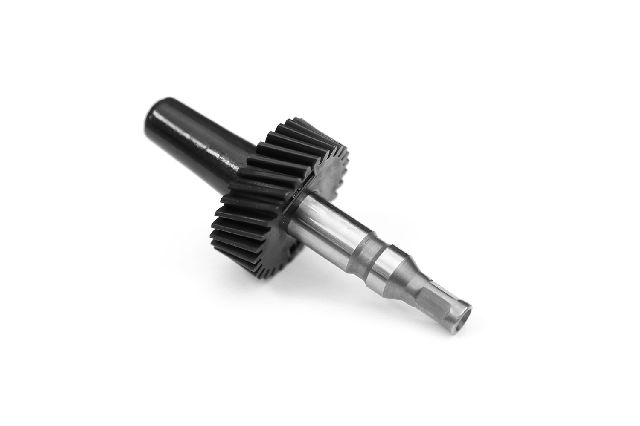
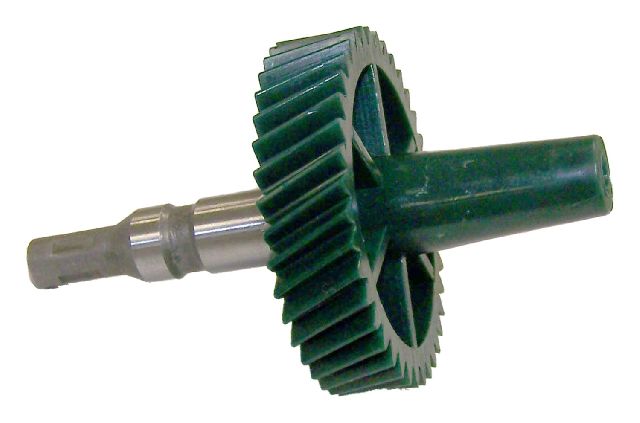
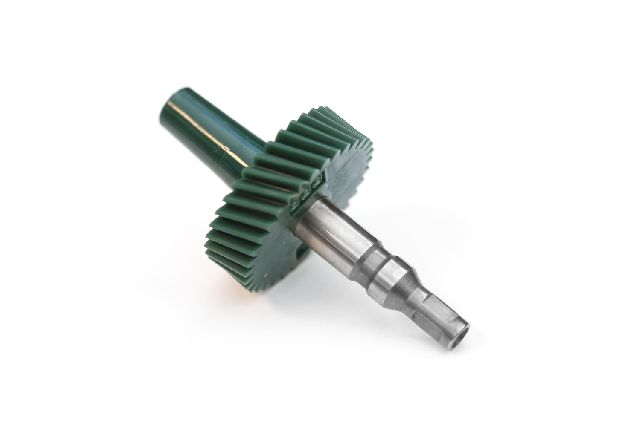
Typical fix: Replace the plastic speedometer gear. It simply pulls off the sensor shaft. It is critical to buy the correct gear tooth count for your Jeep's axle ratio and tire size to ensure an accurate speedometer reading. Charts are widely available online from sources like Quadratec and Extreme Terrain.
Est. part cost: $10-$25 - Damaged Wiring or Connector 🟡 Medium Probability The VSS wiring is located under the vehicle and is exposed to mud, water, rocks, and road salt, which can cause corrosion in the connector or physical damage to the wires. The 1997 model year in particular used a connector prone to fluid leaking through the pins.
How to confirm: Visually inspect the wiring harness and connector leading to the VSS. Look for frayed wires, corrosion on the pins, or a loose connection. The connector lock tab is often brittle and can break. Wiggle the harness while monitoring live data on a scan tool to see if the signal returns intermittently.
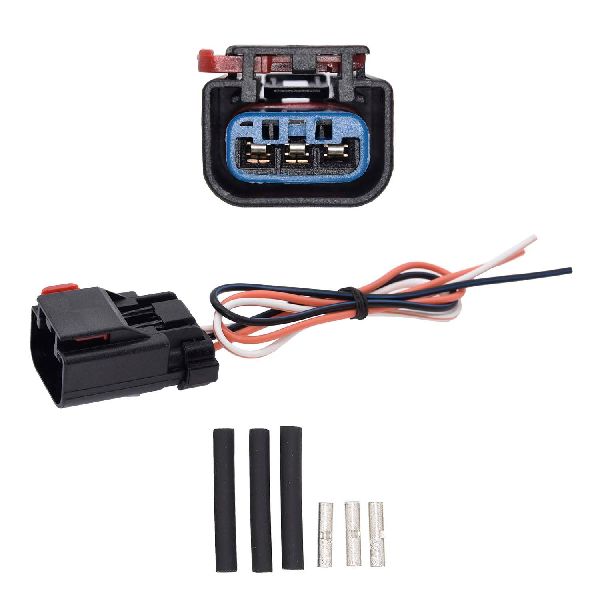
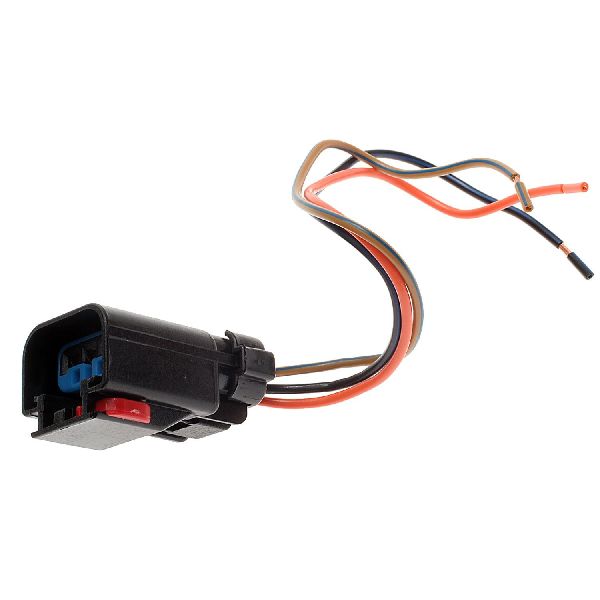
Typical fix: Clean the connector terminals with electrical contact cleaner. If the connector or wiring is damaged, splice in a new pigtail connector. For 1997 models, an updated pigtail is a common repair.
Est. part cost: $15-$30
Rare But Worth Checking
- Faulty Instrument Cluster: In some cases, a failure within the instrument cluster itself can cause erratic readings or a dead speedometer. One owner on Reddit reported ongoing cluster issues and a P0500 code even after having the cluster rebuilt twice, suggesting a complex electrical fault. On some vehicles, the VSS signal passes through the cluster on its way to the PCM; a bad circuit board in the cluster can interrupt this signal.
- Faulty Powertrain Control Module (PCM): This is very rare, but the PCM can fail internally and be unable to process the signal from the VSS. This should only be considered after all other possibilities have been exhausted. One owner of two separate TJ automatics fixed harsh 1-2 shifting issues by replacing the PCM, demonstrating the PCM's vulnerability to heat and moisture in the engine bay.
Diagnosis Steps
- Read the code with an OBD-II scanner to confirm P0500.
- Visually inspect the Vehicle Speed Sensor, its connector, and nearby wiring. The VSS is located on the rear output housing of the NP231 transfer case on the driver's side. Check for obvious damage, corrosion, or loose connections.
- Using a scan tool with live data, monitor the 'Vehicle Speed' PID while driving. If the speed reads 0 MPH while the Jeep is moving, the signal is lost.
- If you have a multimeter, you can test the connector. Disconnect it and turn the ignition to 'ON'. Check for ~5V power on one pin and a good ground on another.
- Safely support the vehicle on jack stands. Disconnect the electrical connector from the VSS.
- Remove the single bolt holding the VSS retainer clip. This is typically an 11mm or 1/2" (13mm) bolt.
- Gently pull and twist the VSS assembly to remove it from the transfer case. Some ATF+4 transmission fluid may drip out.
- Inspect the plastic gear on the end of the sensor. Check for broken, worn, or stripped teeth. The gear should be firmly attached to the sensor shaft.
- If the gear is damaged, replace it. The part number is typically based on a root like
520676plus the tooth count (e.g.,52067634for a 34-tooth gear). Use a gear chart to find the correct tooth count for your axle ratio and tire size. - If the gear is intact, the VSS itself is the most likely problem. Replace the sensor.
- When reinstalling, it's highly recommended to use a new O-ring to prevent leaks.
- Reinstall the assembly, ensuring the gear housing is properly 'clocked' or aligned to engage the drive worm gear inside the transfer case. Reconnect the electrical plug, clear the code, and test drive to confirm the speedometer is working and the Check Engine Light does not return.
Parts You'll Likely Need
- Vehicle Speed Sensor (VSS)
(OEM #56028183AB (or 56028183). Older P/N 0509310AA is discontinued.)— This is the electronic sensor that reads the rotation of the drive gear and is the most common electronic component to fail for this code.
Trusted brands: Mopar, Standard Motor Products (SMP), NTK, TRQ
OEM price range: $50-$70
Aftermarket price range: $25-$60 - Speedometer Drive Gear
(OEM #Varies by tooth count, e.g., 520676XX where XX is tooth count.)— This plastic gear is a known weak point that mechanically drives the VSS. It often fails before the sensor does, especially on modified Jeeps. It must be matched to the vehicle's tire size and axle ratio.
Trusted brands: Mopar, Crown Automotive, Omix-ADA
OEM price range: $15-$25
Aftermarket price range: $10-$20 - VSS Connector Pigtail
(OEM #Aftermarket examples: Standard Motor Products S-738.)— The factory connector is exposed and prone to corrosion or physical damage. The locking tab often breaks. A new pigtail is the proper fix for a damaged connector.
Trusted brands: Standard Motor Products, Dorman, Michigan Motorsports
OEM price range: N/A
Aftermarket price range: $15-$30 - Speed Sensor O-Ring
(OEM #04799662)— This small rubber O-ring seals the VSS housing against the transfer case. It's a common source of leaks and should be replaced whenever the sensor is removed.
Trusted brands: Mopar
OEM price range: $5-$10
Aftermarket price range: $2-$5
Platform-Specific Known Issues
- The plastic speedometer drive gear is a very common failure point, and its tooth count must be matched to the Jeep's tire size and axle ratio for an accurate reading. Charts are widely available
Mechanic-Grade Diagnostic Values
- VSS Connector - Supply Voltage — expected: ~5 Volts DC (with key on, engine off). Failure: Significantly lower or no voltage indicates a wiring or PCM issue.
- VSS Connector - Ground Pin — expected: Continuity to chassis ground (near 0 ohms). Failure: High resistance or an open circuit indicates a bad ground wire.
- VSS Connector - Signal Wire Voltage — expected: Voltage should fluctuate or generate an intermittent signal as the wheel is turned slowly.. Failure: No change in voltage indicates a failed sensor or a break in the signal wire.
Scan Tool Commands That Help
- Chrysler DRB III: Pinion Factor Adjustment — This function is used to calibrate the speedometer by telling the Powertrain Control Module (PCM) or Transmission Control Module (TCM) the specific tire size and axle ratio configuration. While not a direct fix for a P0500 caused by a failed part, it's a necessary step after changing tire sizes to ensure the VSS signal is interpreted correctly by the PCM and prevent codes.
- On-Board Diagnostics (Key Cycle): Instrument Cluster Gauge Test — By holding the trip meter reset button while turning the key to the 'ON' position, the instrument cluster will enter a self-diagnostic mode. It will sweep all gauges, including the speedometer, to their full range and back. This helps determine if the speedometer gauge itself is physically stuck or non-functional, which can be a symptom alongside a P0500, helping to differentiate a sensor issue from a cluster issue.
Wiring & Ground Locations
- VSS Connector Pins — On the driver's side, at the rear of the NP231 transfer case.. The 3-pin connector provides power, ground, and signal path for the VSS. Pin 1 is typically the 5V supply from the PCM, Pin 2 is the signal return to the PCM, and Pin 3 is the sensor ground. Verifying voltage and ground at this connector is the primary electrical diagnostic step.
- G108 — On the passenger side of the engine bay, near the power distribution block (fuse box).. This is a critical ground point that serves multiple components, including the Transmission Control Module (TCM) and the PCM on some configurations. A corroded or loose G108 ground can cause a host of erratic electronic issues, including incorrect sensor readings and seemingly unrelated module communication errors that could potentially manifest as a P0500.
- Main Engine/Body Grounds — Typically a strap from the engine block (often a head bolt) to the firewall, and from the battery negative terminal to the chassis.. The entire sensor circuit relies on a stable system-wide ground. If the primary engine-to-body or battery-to-chassis grounds are weak or corroded, the PCM and sensors may not have a reliable ground reference, leading to floating voltages and incorrect readings that can trigger fault codes like P0500.
Real Owner Repair Stories
- Reddit user on r/WranglerTJ (Jeep Wrangler TJ Sahara 4.0L with 5-speed manual) — P0500 code, speedometer inoperative, engine stalls or RPMs drop low when clutching in to slow down.
❌ Tried (didn't work) Replaced the Vehicle Speed Sensor (VSS), Replaced the VSS wiring harness/pigtail
✅ What actually fixed it The user was advised to remove and re-inspect the speedometer drive gear. The final fix was properly re-seating the VSS and gear assembly, ensuring it was 'clocked' correctly to engage with the worm gear inside the transfer case. - Reddit user on r/JeepTJ (Jeep Wrangler TJ after installing a Slip Yoke Eliminator (SYE) kit.) — Speedometer not working immediately after SYE installation, causing erratic idle and high cruising RPMs.
❌ Tried (didn't work) Using a new O-ring which was too tight, Clocking the sensor to the marked position
✅ What actually fixed it The problem was that the speedometer gear on the sensor was not engaging with the new speedo collar from the SYE kit. The fix was to back the sensor out slightly and rotate (re-clock) it until the gears properly meshed, even if the final position didn't perfectly align with the original markings for that tooth count. - Tacoma World forum user (similar VSS-to-Cluster-to-ECM logic) (Toyota Tacoma (different vehicle, but illustrates a relevant failure mode)) — P0500 code, but speedometer worked perfectly. No other symptoms.
❌ Tried (didn't work) Checking wheel sensors, Cleaning and swapping transmission speed sensors
✅ What actually fixed it A faulty circuit board within the instrument cluster. The cluster was receiving the speed signal and displaying it correctly on the speedometer, but it was failing to forward that signal to the Engine Control Module (ECM), causing the ECM to log the P0500 code.
OEM Part Supersession History
56028183→56028183AB— Standard part revision by Mopar. The 'AB' version is the current replacement.
Heads up: The 1997 model year uses a physically similar sensor but has a unique round-pin electrical connector that is prone to leaking. When replacing a sensor on a 1997, it is highly recommended to buy a kit that includes the updated sensor and a new pigtail connector to splice in, converting it to the more reliable flat-pin style used from 1998-2006.
Model Year Variations Within This Range
- 1997 only: The 1997 TJ uses a unique VSS with a round-pin style electrical connector. This connector design is known to fail by allowing fluid to wick up through the pins, causing corrosion and a bad connection. Later models (1998-2006) use a more reliable, weatherproof, flat-pin style connector. The standard fix for a '97 is to replace the sensor and splice in the updated pigtail.
- 2003-2006 (Rubicon): Rubicon models feature an NV241OR transfer case. While the VSS sensor and gear concept is the same as the NP231 in other models, the speedometer drive gear and housing part numbers may differ. Diagnosis remains the same, but part cross-compatibility should be verified for Rubicon-specific applications.
Diagnostic Flowchart
Used vs. New Parts: Buying Guide for This Vehicle
When a used part is the smart pick: A used VSS housing (the part the sensor bolts into and holds the gear) is a perfectly acceptable part to source from a junkyard if yours is cracked or damaged, as it is just a piece of cast metal or plastic with no electronic components. The plastic speedometer gear can also be sourced used, provided the teeth are in perfect condition.
Donor-vehicle mileage cap: roughly under 150000 miles for the part to have meaningful remaining life.
What to inspect on the donor part:
- For the housing, check for any cracks, especially around the bolt hole.
- For a used speedometer gear, inspect the teeth meticulously for any signs of stripping, sharp edges, or wear. Compare it side-by-side with a new one if possible.
- Avoid pulling parts from vehicles that show signs of heavy water/mud contamination in the transfer case fluid, as this can accelerate wear.
OEM-only on this vehicle (don't cheap out):
- Vehicle Speed Sensor (VSS)
Aftermarket brands forum-validated for this vehicle:
- Mopar (OEM)
- NTK
- Standard Motor Products (SMP)
Brands owners have reported issues with on this vehicle:
- Generic, no-name sensors from online marketplaces are frequently reported on forums as being dead-on-arrival or failing within a few months. Given the low cost of a quality part, it is not worth the risk or labor to use an unbranded sensor.
Real Owner Stories
Aggregated from forums and TSBs cited above. Mileages and costs reflect what owners reported in those sources.
1999 Jeep Wrangler
Symptoms: Instrument cluster is often dead or will suddenly come to life with the speedometer maxed out. Experiences occasional surging or bucking in 2nd or 3rd gear under hard acceleration, and has a P0500 code.
What fixed it: The owner had not yet found a fix. Sending the instrument cluster for a rebuild twice did not solve the problem, and they were considering a complete rewiring of the vehicle.
Source hint: Reddit r/WranglerTJ thread titled 'P0500 Code (Speed Sensor) and Electrical Gremlins : r/WranglerTJ'
Jeep Wrangler TJ
Symptoms: The P0500 code returned even after replacing the vehicle speed sensor and the wiring harness.
What fixed it: The owner was advised to check that the plastic speedometer drive gear was properly seated and aligned ('clocked') within the transfer case, as improper installation can cause a no-signal condition.
Source hint: reddit.com/r/WranglerTJ thread titled 'P0500 code'
Related OBD-II Codes
Frequently Asked Questions
I have bigger tires on my Wrangler. Could that be related to my P0500 code?
Where is the Vehicle Speed Sensor (VSS) located on my 1997-2006 Wrangler?
My speedometer is dead. Is it more likely the sensor or the plastic gear?
How do I know which speedometer gear to buy for my Jeep?
My ABS light is on along with the Check Engine Light. Is that related to P0500?
I have a 1997 Wrangler specifically. Is there anything I should know about the wiring?
Could a P0500 code cause my automatic transmission to shift harshly?
Used OEM Parts in Stock

New Aftermarket Parts Available


The information in this article is provided for general reference and educational purposes only. Vehicle specifications, procedures, and part compatibility can vary by production date, trim level, and region. Always consult your vehicle's factory service manual and verify part numbers before purchasing or performing repairs. Safety-critical components such as airbags, seat belts, and braking systems should be installed by a qualified professional.
- Jeep Wrangler:
- 🛍️ Shop This Part
- What's Unique About the 1997-2006 Jeep Wrangler
- Symptoms You May Notice
- Most Likely Causes
- Rare But Worth Checking
- Diagnosis Steps
- Parts You'll Likely Need
- Platform-Specific Known Issues
- Mechanic-Grade Diagnostic Values
- Scan Tool Commands That Help
- Wiring & Ground Locations
- Real Owner Repair Stories
- OEM Part Supersession History
- Model Year Variations Within This Range
- Diagnostic Flowchart
- Used vs. New Parts: Buying Guide for This Vehicle
- Real Owner Stories
- 1999 Jeep Wrangler
- Jeep Wrangler TJ
- Related OBD-II Codes
- Frequently Asked Questions
- 🎟️ Get 5% Off