

P0500 on 2009-2017 Chevrolet Traverse: Vehicle Speed Sensor Fault Causes and Fixes
On a 2009-2017 Traverse, code P0500 usually points to a faulty ABS wheel speed sensor or its wiring, most commonly a broken wire in the front harness. The vehicle uses these sensors, not a single transmission sensor, to determine speed. A new sensor is about $25-$60 for an aftermarket part and is a common DIY fix.
- P0500 on a 2009-2017 Traverse points to an issue with the ABS wheel speed sensing system, not a traditional transmission speed sensor.
- The most common fix is replacing a single faulty ABS wheel speed sensor.
- A scan tool that can read live ABS data is essential for accurate diagnosis to avoid replacing the wrong parts.
- Always inspect the wiring and connector for the suspect sensor before replacing it, as damage is common.
- Driving with this code can be unsafe due to the potential for erratic shifting and disabled ABS/StabiliTrak systems.
What's Unique About the 2009-2017 Chevrolet Traverse
The first-generation Chevrolet Traverse, and its GM Lambda platform mates (Buick Enclave, GMC Acadia, Saturn Outlook), do not use a traditional, single vehicle speed sensor (VSS) mounted on the transmission. Instead, it relies on the individual ABS wheel speed sensors to determine how fast the vehicle is moving. The EBCM processes these four signals and broadcasts the vehicle speed over the CAN bus to the ECM, TCM, and instrument cluster. Therefore, a P0500 code is almost always related to a problem in the ABS system, not the transmission itself. The diagnostic process must focus on identifying which of the four wheel speed sensors or their circuits is failing.
Symptoms You May Notice
- Check Engine Light is on
- ABS and/or StabiliTrak/Traction Control warning lights are on
- "Service Stabilitrak" message on Driver Information Center (DIC)
- Speedometer is erratic or reads 0 MPH
- Cruise control does not work
- Harsh or erratic transmission shifting
- Possible hesitation during acceleration
- ABS may activate incorrectly at low speeds, causing a pulsing brake pedal
- Replacing the transmission output speed sensor. On this vehicle, the P0500 code is related to the ABS wheel speed sensors, not a sensor on the transmission.
- Replacing the wrong wheel speed sensor. Diagnosis with a proper scan tool to identify the specific failing sensor is crucial to avoid replacing good parts.
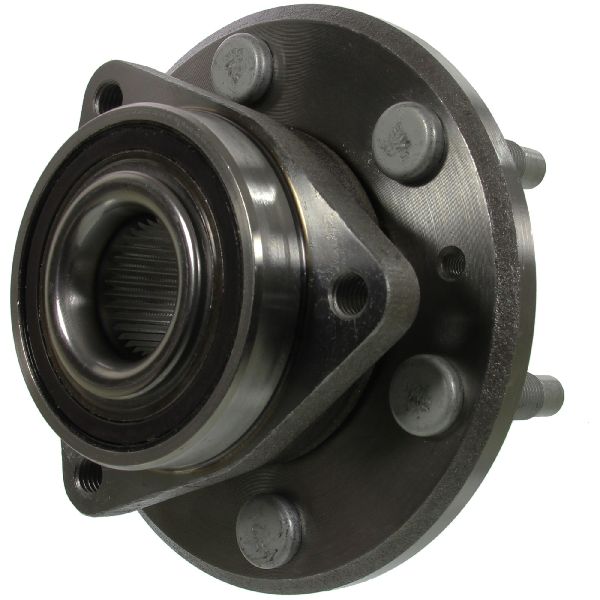
- Replacing the wheel hub/bearing when only the sensor or wiring is bad. The hub should only be replaced if the magnetic reluctor ring is confirmed to be damaged.
Most Likely Causes
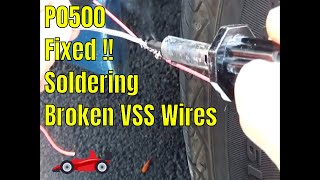
- Damaged Wheel Speed Sensor Wiring or Connector 🔴 High Probability The wiring harness leading to the front wheel hubs is a very common failure point. The harness can be too short or improperly routed, causing stress and breakage from steering and suspension movement. Wires often break inside the insulation right behind the connector, making the damage invisible.
How to confirm: After identifying the suspect wheel with a scan tool, carefully inspect and wiggle the wiring harness near the sensor connector while monitoring live data. A broken wire will often make intermittent contact. Perform a continuity test on the wiring between the sensor and the EBCM.
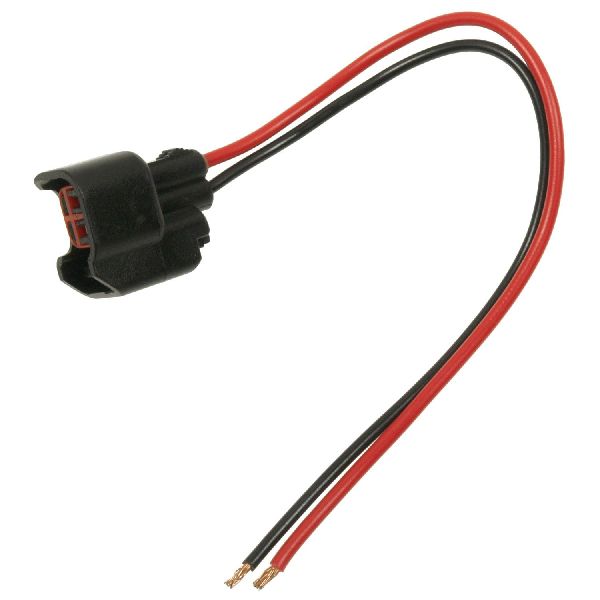
Typical fix: Repair the damaged section of wire or replace the pigtail connector. The connector is often sold as a kit with a short length of wire. Common pigtail part numbers include ACDelco PT2160 and Standard Motor Products S-824.
Est. part cost: $15-$40 - Faulty ABS Wheel Speed Sensor 🟡 Medium Probability Wheel speed sensors are exposed to harsh conditions (water, dirt, heat, vibration) which leads to failure over time. They are a common wear item.
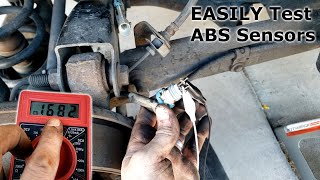
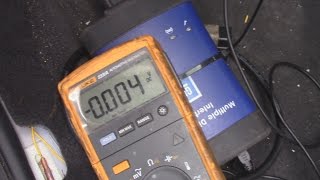
How to confirm: Use a scan tool capable of reading ABS live data to monitor the speed of all four wheels while driving. The sensor that provides an erratic, incorrect, or zero reading is the faulty one. You can also test the sensor's output by connecting a multimeter set to AC volts and spinning the wheel; it should generate a small voltage (e.g., >100mV AC).
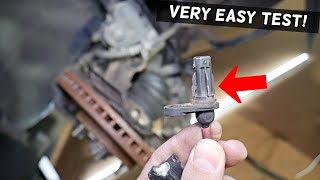
Typical fix: Replace the faulty wheel speed sensor. They are held in by a single 10mm bolt and are typically sold as individual units for each wheel.
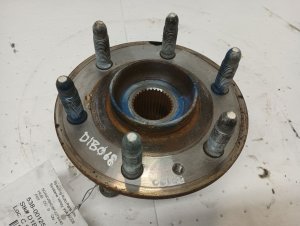
Est. part cost: $25-$60 - Damaged or Debris-Contaminated Wheel Bearing Magnetic Reluctor Ring ⚪ Low Probability The wheel speed sensor reads a magnetic ring (reluctor) built into the wheel hub/bearing assembly. In rust-prone areas, rust can form under the ring ('rust jacking'), causing it to crack or swell, which disrupts the signal. GM Technical Service Bulletin PIC5428G also addresses issues with metallic debris sticking to the ring.
How to confirm: Remove the wheel speed sensor and visually inspect the magnetic ring inside the hub for cracks, damage, or a buildup of metallic debris. A cracked or delaminated ring is a definitive sign of failure.
Typical fix: If the ring is just dirty, it can be cleaned. If the ring is cracked or damaged, the entire wheel hub and bearing assembly must be replaced as the ring is integrated into it.
Est. part cost: $100-$250
Rare But Worth Checking
- Faulty Electronic Brake Control Module (EBCM/ABS Module): This is rare and should only be considered after all sensors and wiring have been thoroughly tested. A faulty EBCM will often be accompanied by other communication-related trouble codes (U-codes) or multiple wheel speed sensor codes simultaneously.
- Faulty Powertrain Control Module (PCM): This is extremely unlikely. The PCM is the last component to suspect as it only receives the speed signal from the EBCM. All other possibilities must be exhausted before considering PCM failure.
Diagnosis Steps
- Connect an OBD-II scanner that can read ABS codes and live data.
- Check for any other codes in the ECM, TCM, and EBCM (ABS) modules. Specific wheel speed sensor codes (C0035, etc.) will point you directly to the problem area.
- Access the live data stream for the ABS module.
- Monitor the vehicle speed readings from all four wheel speed sensors while driving the vehicle.
- Identify the sensor that is reading 0, is erratic, or does not match the other sensors' readings.
- Raise the vehicle and visually inspect the identified sensor, its connector, and the wiring harness. Pay close attention to the harness section right behind the connector for hidden breaks by wiggling the wire.
- If the wiring appears intact, remove the sensor (one 10mm bolt) and inspect the magnetic reluctor ring on the wheel hub for debris or cracks.
- If no visual faults are found, test the sensor's circuit. With the wheel raised, connect a multimeter set to AC Volts to the sensor's two pins and spin the wheel. A good sensor will generate a small AC voltage, typically over 100mV.
- If the sensor and hub are good, perform a continuity test on the wiring harness from the sensor connector to the main EBCM connector.
- After replacing the faulty part (harness pigtail, sensor, or hub), clear all codes and perform a test drive to ensure the speedometer, ABS, and cruise control function correctly and the P0500 code does not return.
Parts You'll Likely Need
- ABS Wheel Speed Sensor
(OEM #Front: 22883337 (ACDelco FW411) | Rear: 20883442 (ACDelco FW412))— This is a very common component to fail, either internally or due to its wiring, causing the P0500 code on a Traverse.
Trusted brands: ACDelco, Delphi, Bosch, NTK
OEM price range: $70-$120
Aftermarket price range: $25-$60 - ABS Wheel Speed Sensor Connector Pigtail
(OEM #ACDelco PT2160)— The wiring harness is a frequent point of failure, often breaking near the connector. Replacing the pigtail is a common repair.
Trusted brands: ACDelco, Standard Motor Products (S-824), Dorman
OEM price range: $25-$40
Aftermarket price range: $15-$25 - Wheel Hub and Bearing Assembly
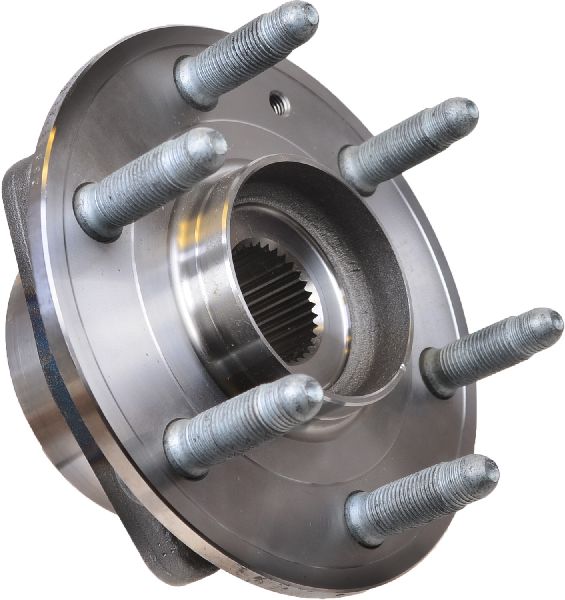
(OEM #Front: 513277 (e.g., Timken, MOOG) | Rear: 512398 (e.g., Timken, MOOG))— Required if the integrated magnetic reluctor ring is cracked or damaged, which is a less common but possible cause.
Trusted brands: ACDelco, Timken, MOOG, SKF
OEM price range: $250-$400
Aftermarket price range: $100-$250
Related Codes That Often Appear With This One
- C0035 - C0051 — These are chassis codes specific to the ABS wheel speed sensors (e.g., C0035 for Left Front, C0040 for Right Front). The presence of one of these codes makes diagnosis much easier by pinpointing the exact sensor or circuit that is failing.
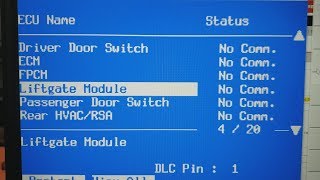
- U0121 — This code indicates a loss of communication with the ABS module (EBCM). If you see this with P0500, it could point to a problem with the EBCM itself or its power/ground connections, rather than an individual sensor.
Platform-Specific Known Issues
- A well-documented issue on the Traverse and its platform mates is the failure of the front wheel speed sensor wiring harness. Owners and technicians report that the wire can break internally, often a few inches from the sensor connector, due to repeated stress from steering and suspension movement. A visual inspection may not reveal the fault. Wiggling the harness while watching live scan tool data is a common diagnostic trick to confirm this specific failure.
Mechanic-Grade Diagnostic Values
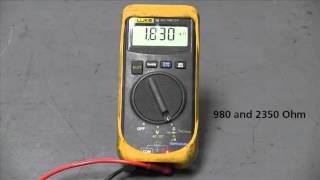
- Wheel Speed Sensor Resistance — expected: 800 - 2000 Ohms (typical range, compare readings between sensors). Failure: A reading of infinite resistance (open circuit), zero resistance (short circuit), or a value significantly different from the other sensors on the vehicle.
- Wheel Speed Sensor AC Voltage Output — expected: Greater than 100-200 millivolts (0.1-0.2V AC) when spinning the wheel by hand (approx. 1 revolution per second).. Failure: No AC voltage produced, or a very low/erratic voltage compared to a known-good sensor under the same conditions.
Hidden / Shadow Codes Worth Checking
- Symptom Bytes (e.g., 0F, 18, 5A): These are sub-codes attached to the main chassis code (e.g., C0040 0F) that provide more specific fault information. '0F' indicates an erratic signal, '18' indicates low signal amplitude, and '5A' indicates the signal is not plausible. (see via A professional-grade scan tool like the GM GDS2/Tech2 or an advanced aftermarket scanner that can read manufacturer-specific codes and data.)
Scan Tool Commands That Help
- GM GDS2 / Tech2 or equivalent: Live Data > ABS/EBCM > Wheel Speed Sensors — This is the primary diagnostic step. It allows you to view the speed reading from all four sensors simultaneously while driving to identify which one is dropping out, reading incorrectly, or not reading at all.
Wiring & Ground Locations
- Electronic Brake Control Module (EBCM) — Located on the left side of the engine compartment, attached to the ABS hydraulic pump assembly, near the brake master cylinder.. This module receives all wheel speed sensor signals, processes them, and sends the vehicle speed data to the ECM. All sensor wiring terminates here, making its connector a key test point.
- G115 — On the left side of the engine compartment, on the left inner fender panel.. This is a primary ground point for the EBCM. A poor connection here can cause communication issues or erratic behavior from the ABS module, potentially triggering a P0500 or various U-codes.
- G103 — On the left side of the engine compartment, on the inner fender panel. Some diagrams show it on the cowl above the brake booster. Its exact location can vary slightly by year and model.. This is another major engine compartment ground. While G115 is the direct EBCM ground, poor grounding at any major point can introduce electrical noise that may affect sensitive sensor signals.
- G302 / G303 — Located near the base of the right 'B' pillar (G302) and left 'B' pillar (G303).. These are interior body grounds. While not directly related to the engine bay sensors, a bad ground here (G302 specifically) has been shown to cause bizarre electrical issues across the vehicle, including affecting modules on the CAN bus network.
Real Owner Repair Stories
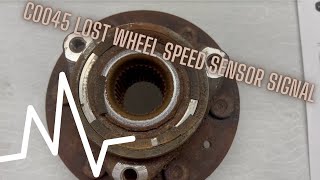
- YouTube video by 'Givmoore's Shop' (2014 Chevrolet Traverse) — ABS and Stabilitrak lights on, false ABS activation, code C0045 (Left Rear Wheel Speed Sensor Circuit Not Plausible).
❌ Tried (didn't work) The video focuses directly on the diagnosis, not on previously failed repairs.
✅ What actually fixed it The magnetic encoder ring integrated into the wheel hub bearing assembly had broken apart and delaminated. Replacing the entire left rear wheel hub assembly resolved the issue.
Model Year Variations Within This Range
- 2012-2017: The EBCM (ABS Module) part number differs depending on whether the vehicle is equipped with variable assist power steering (RPO code NV7). The correct module must be selected, and it requires VIN programming after installation.
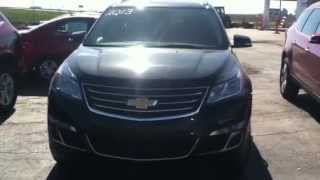
- 2013 (Facelift): The 2013 model year introduced a significant facelift with new front and rear-end styling, a redesigned dashboard with a new touchscreen radio, and different wheel designs. While the underlying ABS system architecture remained the same, some wiring harness routing and connector locations may differ slightly from the 2009-2012 models.
Diagnostic Flowchart
Other Known Issues on This Vehicle
Issues unrelated to this code that are worth knowing about as an owner of this generation:
- 3.6L V6 (LLT) Timing Chain Stretch 🔴 High — Very common, especially on 2009-2012 models, often appearing between 70,000 and 120,000 miles. Triggers codes like P0008, P0016, P0017. (Ref: GM Special Coverage Adjustment #11340C extended warranty to 10 years/120,000 miles for 2009 models (now expired).)
- 6T75 Transmission 3-5-R Wave Plate Failure 🔴 High — Common on 2009-2012 models, leading to loss of 3rd, 5th, and Reverse gears and often requiring a transmission rebuild. (Ref: GM Special Coverage #14404B covered this failure for 10 years/120,000 miles on 2009 models (now expired).)
- Power Steering Pump/Gear Failure 🟠 Medium — Widespread on earlier models (2009-2011), causing whining noises and sudden loss of power assist, especially at low speeds. (Ref: GM Special Coverage #14329 provided an extended warranty of 10 years/150,000 miles for affected models.)
- Excessive Oil Consumption 🟠 Medium — Some 3.6L engines may consume more than 1 quart of oil per 2,000 miles due to PCV system issues or piston ring wear. (Ref: TSB 10-06-01-008H addresses oil consumption issues on some GM V6/V8 engines, though not exclusively for the Traverse.)
- Water Leaks into Cabin 🟡 Low — Leaks from the sunroof drains, windshield seal, or A-pillars can lead to wet carpets and potential electrical issues under the dash.
Used vs. New Parts: Buying Guide for This Vehicle
When a used part is the smart pick: A used wiring harness pigtail from a junkyard is a perfectly acceptable repair if the wires are in good condition with sufficient length. A complete used EBCM (ABS module) can also be a cost-effective option, but it is CRITICAL to match the part number and RPO code (NV7) and understand that it will require professional programming to your vehicle's VIN.
Donor-vehicle mileage cap: roughly under 100000 miles for the part to have meaningful remaining life.
What to inspect on the donor part:
- For wiring pigtails: Inspect for any signs of brittleness, cracking in the insulation, or previous repairs. Ensure the locking tab on the connector is intact.
- For EBCM/ABS modules: Check for corrosion on the aluminum housing and pins. Ensure the donor vehicle was not in a major front-end collision. Get the VIN of the donor car if possible to help with programming questions.
- For wheel hub assemblies: Avoid. The magnetic reluctor ring is a known failure point and a wear item. The risk of getting a part that will fail soon is too high.
Aftermarket brands forum-validated for this vehicle:
- For Sensors: ACDelco, Delphi, NTK, Bosch are reputable brands with a history of supplying OEM parts.
- For Hub Assemblies: Timken, MOOG, SKF, and ACDelco are considered top-tier choices for wheel bearings.
- For Wiring Pigtails: ACDelco, Standard Motor Products (SMP), Dorman.
Brands owners have reported issues with on this vehicle:
- Be cautious with unbranded, 'white-box' sensors and hub assemblies from online marketplaces. While cheap, they have a higher reported failure rate and can cause compatibility issues, leading to the code returning.
Real Owner Stories
Aggregated from forums and TSBs cited above. Mileages and costs reflect what owners reported in those sources.
2009-2017 Chevrolet Traverse
Symptoms: Stabilitrak, ABS, and Traction Control lights on; code C0040 (Right Front Wheel Speed Sensor Circuit) present.
What fixed it: Repairing a broken wire in the harness near the sensor connector, rather than replacing the sensor itself.
Source hint: traverseforum.com thread titled 'Stabilitrak/ABS/TC lights on, Code C0040'
2009-2017 Chevrolet Traverse
Symptoms: The speedometer is erratic or reads 0 MPH, and the 'Service Stabilitrak' message appears on the Driver Information Center (DIC).
What fixed it: Replacing the front wheel speed sensor wiring harness pigtail because the wires broke inside the insulation due to steering and suspension movement.
Source hint: vehicle_specific_issues section regarding front wheel speed sensor wiring harness failure
Related OBD-II Codes
Frequently Asked Questions
My 2009 Traverse has the Service Stabilitrak message and the speedometer is at 0. Is this related to the timing chain issues I've heard about?
I suspect a bad front wheel speed sensor on my Traverse. Are there specific replacement parts recommended?
Can I just clean the sensor to fix the P0500 code on my 2012 Traverse?
Does the P0500 code affect my Traverse's transmission shifting?
Is the wheel speed sensor wiring issue unique to the Chevrolet Traverse?
Helpful Videos
Used OEM Parts in Stock
New Aftermarket Parts Available


The information in this article is provided for general reference and educational purposes only. Vehicle specifications, procedures, and part compatibility can vary by production date, trim level, and region. Always consult your vehicle's factory service manual and verify part numbers before purchasing or performing repairs. Safety-critical components such as airbags, seat belts, and braking systems should be installed by a qualified professional.
- Chevrolet Traverse:
- 🎬 Helpful Videos
- 🛍️ Shop This Part
- What's Unique About the 2009-2017 Chevrolet Traverse
- Symptoms You May Notice
- Most Likely Causes
- Rare But Worth Checking
- Diagnosis Steps
- Parts You'll Likely Need
- Related Codes That Often Appear With This One
- Platform-Specific Known Issues
- Mechanic-Grade Diagnostic Values
- Hidden / Shadow Codes Worth Checking
- Scan Tool Commands That Help
- Wiring & Ground Locations
- Real Owner Repair Stories
- Model Year Variations Within This Range
- Diagnostic Flowchart
- Other Known Issues on This Vehicle
- Used vs. New Parts: Buying Guide for This Vehicle
- Real Owner Stories
- 2009-2017 Chevrolet Traverse
- 2009-2017 Chevrolet Traverse
- Related OBD-II Codes
- Frequently Asked Questions
- 🎟️ Get 5% Off