

P0496 on 2021-2024 Lincoln Nautilus: EVAP High Purge Flow Causes and Fixes
For a 2021-2024 Lincoln Nautilus, code P0496 is most often caused by a faulty canister purge valve that is stuck open. A common symptom is difficulty starting the engine right after refueling. However, a disconnected vapor line inside the fuel tank is also a known issue on its platform-mate, the Ford Edge, and should be considered. Expect to pay around $75 for the part and $160-$200 total at a shop for this common repair.
- P0496 on your Nautilus means fuel vapor is entering the engine when it shouldn't, usually due to a stuck-open canister purge valve.
- A classic symptom is the engine struggling to start or stalling right after you get gas.
- Before you buy a new purge valve, test it. With the engine running, there should be no vacuum on the line coming from the charcoal canister. If there is, the valve is bad.
- A Ford/Lincoln TSB (SSM 50306) specifically warns that this purge valve is often replaced when it's not the problem, so a proper diagnosis is key to avoiding wasted money.
- Be aware that a disconnected vapor line inside the fuel tank is a known issue on the identical Ford Edge platform and could be the true cause of the code.
What's Unique About the 2021-2024 Lincoln Nautilus

While a faulty canister purge valve is a common cause for P0496 on many vehicles, Lincoln/Ford has issued a specific Technical Service Bulletin (TSB SSM 50306) for the 2021 Nautilus and other models. This bulletin warns that many purge valves are replaced unnecessarily, as returned parts often test fully functional. It strongly advises performing a full EVAP system leak test and a specific purge valve leak test using the Ford Diagnosis and Repair System (FDRS) Scan Tool before replacing the valve. Furthermore, TSBs for the identical Ford Edge platform point to a disconnected vapor line inside the fuel tank as a potential cause for this code, which may not be found by a standard smoke test.
Symptoms You May Notice
- Check Engine Light is on
- Difficulty starting the engine, especially right after filling the gas tank.
- Rough or unstable idle
- Slight decrease in fuel economy
- Engine may stall immediately after refueling
- Replacing the canister purge valve without first testing it. As per TSB SSM 50306, many valves are replaced when they are not the actual cause of the problem. Technicians are advised to use the FDRS scan tool to perform a 'Full System EVAP Leak Test' and 'CPV Check' before ordering parts.
- Replacing the purge valve when the actual fault is a disconnected vapor line inside the fuel tank, a known issue on the platform.
Most Likely Causes

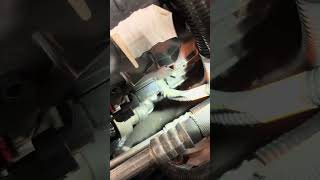
- Faulty Canister Purge Valve (Solenoid) 🔴 High Probability This is the most common component to fail and cause this code across most vehicles. The valve can get stuck open or fail to seal properly, allowing engine vacuum to constantly pull fuel vapors. 🎬 Watch: A helpful breakdown of P0496 causes and fixes. Despite TSB warnings about misdiagnosis, it remains the most likely failure point.
How to confirm: With the engine off, disconnect the vapor line leading from the purge valve to the charcoal canister. Connect a handheld vacuum pump to the valve's inlet port (from the canister side). It should hold vacuum. If it doesn't, the valve is stuck open and has failed. Alternatively, a mechanic can command the valve closed with a scan tool and check for flow using the 'CPV Check' function in the FDRS scan tool as recommended by Ford.
Typical fix: Replace the canister purge valve.
Est. part cost: $60-$80 - Disconnected Fuel Vapor Line (In-Tank) 🟡 Medium Probability Ford TSB 24-2199 for the platform-mate Ford Edge identifies a disconnected fuel vapor line inside the fuel tank as a primary cause for P0496, often accompanied by stalling after refueling. Given the shared platform and powertrain, this is a strong possibility for the Nautilus as well.
How to confirm: This is difficult to confirm without accessing the fuel tank. Diagnosis is typically made by ruling out other causes first. If the purge valve tests good and a smoke test reveals no external leaks, but symptoms like stalling after refueling persist, this becomes the primary suspect. Accessing the top of the fuel tank is required for visual inspection.
Typical fix: Access the fuel tank sending unit and securely reconnect the vapor line. This is a more labor-intensive repair than replacing the purge valve.
Est. part cost: $0 (if only re-connecting), or cost of new clips/hoses if damaged. - Wiring or Electrical Connection Issue ⚪ Low Probability TSB SSM 50306 implies that issues other than the valve itself are common. On the related Lincoln Aviator platform, a specific frame rail harness connector (C1198) is a known failure point for this code, highlighting that wiring should not be overlooked.
How to confirm: Visually inspect the wiring harness and connector going to the purge valve for any damage, corrosion, or loose pins. A technician can check for proper voltage and ground at the connector when the valve is commanded on and off by a scan tool.
Typical fix: Repair the damaged section of the wiring harness or clean/replace the faulty connector.
Est. part cost: $5-$50 - Faulty Fuel Tank Pressure (FTP) Sensor ⚪ Low Probability
How to confirm: The FTP sensor's voltage can be monitored with a capable scan tool. If the sensor shows a vacuum being pulled when the purge valve is known to be closed and sealed, the sensor itself may be faulty. This is an indirect diagnosis and should be performed after checking the purge valve and looking for leaks.
Typical fix: Replace the Fuel Tank Pressure sensor.
Est. part cost: $50-$100
Rare But Worth Checking
- Cracked or Saturated Charcoal Canister: If you frequently 'top off' your gas tank after the pump clicks off, you can force liquid fuel into the charcoal canister. This can damage the canister and lead to various EVAP codes, including P0496.
- Leaking EVAP System Hoses: A crack or split in one of the vapor lines can sometimes cause the system to pull a vacuum when it shouldn't. A smoke test is the most effective way to find these small leaks.
Diagnosis Steps

- Read the code with an OBD-II scanner to confirm P0496 is present.
- Check for the most common symptom: Ask if the vehicle is hard to start or stalls after refueling. If yes, this strongly points to a purge issue, but could be the valve or an in-tank line.
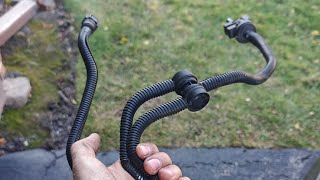
- Locate the canister purge valve in the engine bay. On the 2.0L and 2.7L engines, it is typically mounted near the top of the engine with accessible electrical and vapor line connections. 🎬 Watch: How to replace the valve without breaking the clips.
- Perform a functional test on the purge valve. Disconnect the electrical connector and the vapor line coming from the charcoal canister. Start the engine briefly. There should be NO vacuum felt at the valve's inlet port. If vacuum is present, the valve is stuck open and must be replaced.
- If the valve passes the vacuum test, inspect the wiring and connector to the valve for any visible damage or corrosion.
- If no issues are found, the next step is a professional smoke test to check the entire EVAP system for external leaks in hoses or the charcoal canister.
- If no external leaks are found and symptoms persist (especially stalling after fueling), suspect the disconnected in-tank vapor line as described in TSB 24-2199 for the Ford Edge. This requires accessing the fuel tank for confirmation.
- If all else fails, the Fuel Tank Pressure (FTP) sensor becomes a suspect and should be tested by monitoring its readings with an advanced scan tool.
Parts You'll Likely Need
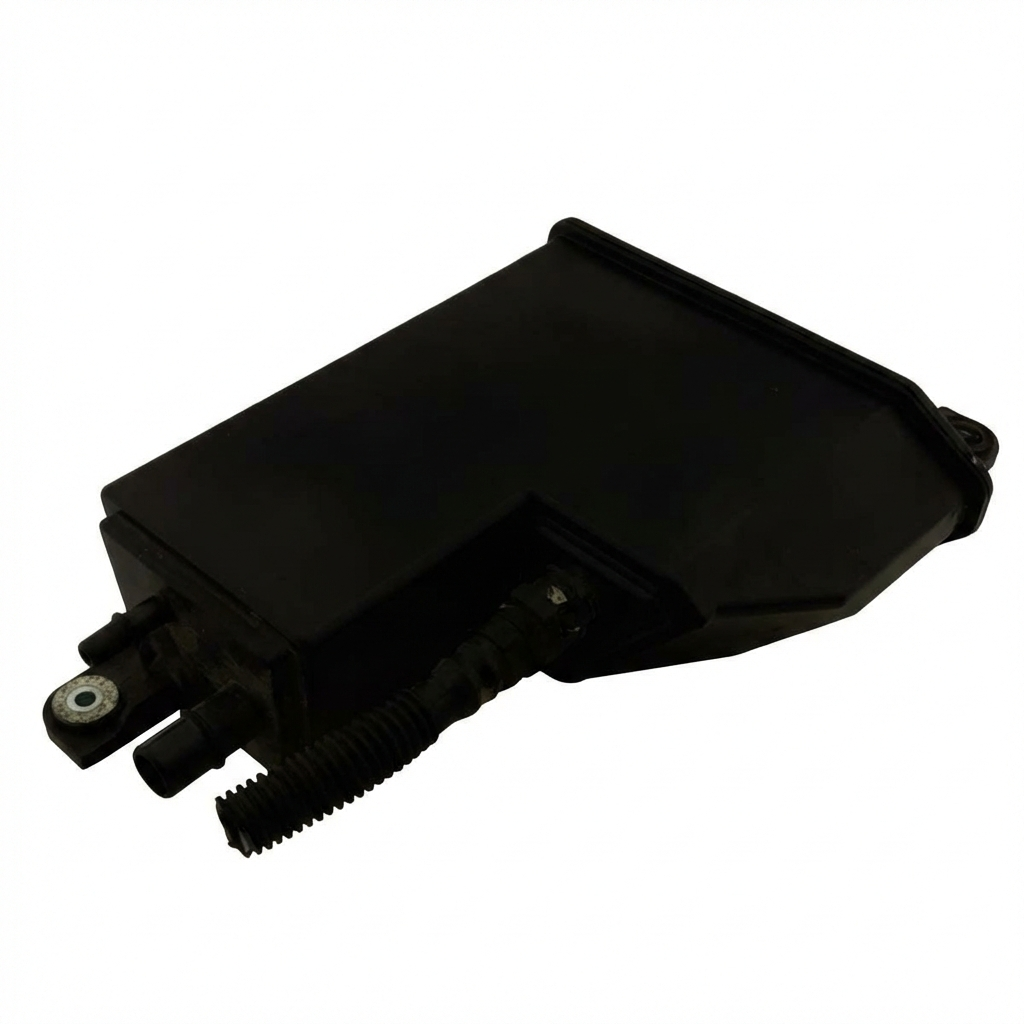
- Canister Purge Valve / Solenoid
(OEM #CU5Z-9F945-D)— This is the most common component to fail and cause the P0496 code by sticking open. This single part number fits both the 2.0L and 2.7L engines for this vehicle generation.
Trusted brands: Motorcraft (OEM), Standard Motor Products, Dorman
OEM price range: $60-$80
Aftermarket price range: $40-$60
Related Codes That Often Appear With This One
- P0456 — A small EVAP leak code. A faulty purge valve that isn't sealing correctly can be interpreted by the system as a small leak.
- P0455 — A large EVAP leak code. Similar to P0456, a purge valve stuck wide open can sometimes be flagged as a large system leak.
- P0172/P0175 — System Too Rich (Bank 1 / Bank 2). If the purge valve is stuck open, it allows un-metered fuel vapor into the engine, which can create a rich running condition.
Technical Service Bulletins (TSBs) & Recalls
- SSM 50306: Warns against unnecessarily replacing the EVAP canister purge valve for P0496 without performing proper scan tool diagnostics first (specifically, the 'Full System EVAP Leak Test' and 'CPV Check' in FDRS), as returned parts often test as fully functional.
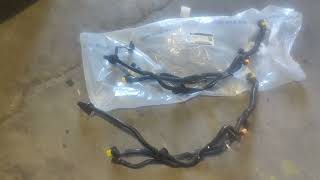
- TSB 24-2199 (for Ford Edge): While not directly for the Nautilus, this TSB for its identical platform mate is highly relevant. It identifies a disconnected fuel vapor line inside the fuel tank as a primary cause for P0496, especially when stalling after refueling occurs. 🎬 See why your Nautilus might not start after pumping gas.
Platform-Specific Known Issues

- Owner Experience on 2.7L Engine: An owner of a 2019 Ford Edge ST with the 2.7L EcoBoost engine (shared with the Nautilus) received a P0496 code at 117k miles. Another forum member confirmed that replacing the purge valve on the 2.7L engine is a quick, 10-minute job. This suggests a straightforward DIY repair for this engine variant.
Mechanic-Grade Diagnostic Values
- Canister Purge Valve Solenoid Resistance — expected: 30 to 38 ohms. Failure: A reading of zero ohms indicates a short, while an infinite or open-circuit reading indicates a broken internal coil. Readings outside the specified range suggest the valve is faulty.
- Fuel Tank Pressure (FTP) Sensor Voltage (KOEO or at idle with purge commanded off) — expected: 2.40 to 2.80 volts. Failure: With the purge valve commanded off (EVAPPDC PID = 0), a voltage reading outside this range can indicate a faulty or miscalibrated FTP sensor, which could falsely trigger a P0496 code.
- EVAP System Test Target Vacuum — expected: Approximately -8.0 in-H2O. Failure: If the system cannot achieve this target vacuum during a self-test, it may indicate a large leak (P0455). If it exceeds this vacuum, it can indicate a blockage or a stuck-open purge valve (P1450).
Scan Tool Commands That Help
- Ford Diagnosis and Repair System (FDRS) or equivalent bidirectional scanner: EVAP Purge Valve Duty Cycle / Active Test — This command allows a technician to manually open and close the purge valve by a specific percentage (e.g., 10%, 50%). It is used to verify if the valve is responding electrically (audible clicking) and mechanically (allowing vacuum to pass) without removing it from the vehicle.
- Ford Diagnosis and Repair System (FDRS): Full System EVAP Leak Test — This is the comprehensive, automated test recommended by Ford in TSB SSM 50306. It commands the entire EVAP system through a test cycle to check for leaks and proper component function, providing a more reliable diagnosis than just replacing the purge valve.
Wiring & Ground Locations

- Engine Compartment Fuse Box - Fuse 8 — Located in the fuse box in the engine bay.. This 20A MICRO2 fuse provides power to the 'Canister vent' and 'Vapor blocking value' circuit. A blown fuse here would cause a loss of power to the EVAP system components, leading to fault codes. It should be one of the first electrical checks.
- Chassis Ground Point — A common and accessible ground point in the engine bay is the bolt on top of the strut tower.. When performing electrical tests on the purge valve connector (checking for voltage or ground), a known-good ground reference is required. While not a designated diagnostic point, the strut tower bolt is a reliable chassis ground.
Real Owner Repair Stories
- Ford Technical Service Bulletin (TSB) 24-2199 (2024 Ford Edge 2.0L AWD (platform mate to Nautilus)) — Check Engine Light with P0496, often accompanied by stalling or hard starting after refueling.
❌ Tried (didn't work) Replacing the canister purge valve., Performing a standard EVAP smoke test, which would not show a leak.
✅ What actually fixed it The fuel tank was removed to access the fuel pump module. A disconnected fuel vapor line inside the tank was found and re-secured. Per the TSB, the procedure also requires replacing the EVAP canister. - YouTube video by Techn' Moto (2020 Ford Mustang 2.3L EcoBoost) — Check Engine Light with code P0496.
❌ Tried (didn't work) Directly proceeded to part replacement based on code.
✅ What actually fixed it Replaced the vapor canister purge valve/solenoid located on top of the engine. The code was cleared and did not return.
"I Checked Everything" — The Actual Cause
- The most significant 'smoke test clean' scenario for this platform is a disconnected fuel vapor line *inside* the fuel tank, as documented in TSB 24-2199 for the Ford Edge. An external smoke test will show the system is sealed, but the disconnected internal line allows fuel vapor to be drawn directly into the purge system when it shouldn't be, triggering P0496 and often causing stalling after refueling. The only way to find this is to drop the tank and visually inspect the lines on the fuel pump module.
- A less common cause is a faulty Fuel Tank Pressure (FTP) sensor that is electrically skewed. The system may be perfectly sealed, but the sensor sends incorrect data to the PCM, making it believe there is vacuum flow when there is none. This is a data problem, not a physical leak, so a smoke test would pass.
OEM Part Supersession History
CU5Z-9F945-D→N/A— This is the current, correct part number for the canister purge valve on both the 2.0L and 2.7L engines for the 2021-2024 Nautilus.
Heads up: Be aware that auto parts catalogs can be confusing. A different part, CU5Z-9F945-A (superseded by HU5Z-9F945-A), is for other Ford models and may be incorrectly suggested. Another part, GL3Z-9B325-B, has been used in a 2020 model. Always verify the part number with the vehicle's VIN at a dealership to ensure correctness.
Model Year Variations Within This Range
- 2021-2023: The 2.7L Twin-Turbo V6 engine option was available, alongside the standard 2.0L I4.
- 2024: The 2.7L V6 engine was discontinued. Also, a TSB for the platform-mate Ford Edge (TSB 24-2199) specifically calls out 2024 models for the potential of a disconnected in-tank vapor line, suggesting this issue may be more prevalent in the later part of the generation.
Diagnostic Flowchart
Other Known Issues on This Vehicle
Issues unrelated to this code that are worth knowing about as an owner of this generation:
- Fractured Intake Valves (2.7L/3.0L EcoBoost) 🔴 High — Affects 2021-2022 models. Can lead to sudden loss of power and complete engine failure. (Ref: NHTSA Recall 24V-635 / Ford Recall 22S47)
- Coolant Intrusion into Cylinders (2.0L EcoBoost) 🔴 High — A known issue with this engine family. Coolant leaks into cylinders, causing misfires, white smoke, and eventual engine damage if not addressed. (Ref: Multiple TSBs exist for this issue on various Ford models with the 2.0L EcoBoost engine.)
- Leaking Plastic Oil Pan (2.7L EcoBoost) 🟠 Medium — More common on earlier (pre-2018) versions of the 2.7L engine but can still occur. The plastic pan's sealant can degrade, causing oil leaks. (Ref: TSB 19-2205 was issued for this problem on F-150s with the same engine.)
Used vs. New Parts: Buying Guide for This Vehicle
When a used part is the smart pick: For the most common failure, the canister purge valve, a used part from a reputable salvage yard is a reasonable option to save money. It is a relatively simple solenoid that is not a high-wear item.
Donor-vehicle mileage cap: roughly under 60000 miles for the part to have meaningful remaining life.
What to inspect on the donor part:
- Check the donor vehicle's mileage; lower is always better.
- Inspect the plastic housing for any cracks or signs of heat damage.
- Ensure the electrical connector pins are clean, straight, and free of corrosion.
- Perform a simple bench test: apply 9V or 12V to the terminals and listen for a solid 'click'.
- With no power applied, try to blow through the valve. It should be sealed and allow no air to pass.
OEM-only on this vehicle (don't cheap out):
- Fuel Filler Neck / Capless Assembly: If the capless system is suspected of leaking, it is highly recommended to use an OEM Motorcraft replacement. Aftermarket versions can have sealing issues that lead to persistent EVAP codes.
- Fuel Tank Pressure (FTP) Sensor: For critical sensors that provide data to the PCM, OEM is strongly recommended to avoid issues with incorrect calibration that can cause false codes.
Aftermarket brands forum-validated for this vehicle:
- Motorcraft (OEM)
- Standard Motor Products (SMP)
- Dorman
Brands owners have reported issues with on this vehicle:
- Unbranded, 'white-box' parts from online marketplaces should be avoided, as their quality control and longevity are highly questionable.
Real Owner Stories
Aggregated from forums and TSBs cited above. Mileages and costs reflect what owners reported in those sources.
2019 Ford Edge ST 2.7L EcoBoost — 117000 miles
Symptoms: Received a P0496 code; vehicle shares the same engine variant as the Nautilus.
What fixed it: Replacing the canister purge valve (described as a 10-minute job).
Source hint: Reddit r/FordEdge - 2019 ST P0496
2019 Ford Edge Titanium 2.0L EcoBoost
Symptoms: Difficulty finding the correct replacement part due to incorrect online catalog listings for the 2.0L engine.
What fixed it: Identifying and sourcing the correct purge valve part number specifically for the 2019+ 2.0L EcoBoost.
Source hint: Ford Edge Forum - Can't find purge valve for 2019 Ford Edge
Related OBD-II Codes
Frequently Asked Questions
Does TSB 24-2199 apply to my Lincoln Nautilus if I'm experiencing stalling after refueling?
My mechanic wants to replace the purge valve immediately. Is there a specific diagnostic step for the Nautilus to avoid unnecessary parts replacement?
I have a 2.7L EcoBoost Nautilus; is the purge valve replacement a difficult repair?
Could a wiring issue cause P0496 on my Lincoln, or is it always the valve?
Is there a specific part number issue I should be aware of for the 2.0L EcoBoost engine?
Helpful Videos


We Have This Part in Stock

The information in this article is provided for general reference and educational purposes only. Vehicle specifications, procedures, and part compatibility can vary by production date, trim level, and region. Always consult your vehicle's factory service manual and verify part numbers before purchasing or performing repairs. Safety-critical components such as airbags, seat belts, and braking systems should be installed by a qualified professional.
- Lincoln Nautilus:
- 🎬 Helpful Videos
- 🛍️ Shop This Part
- What's Unique About the 2021-2024 Lincoln Nautilus
- Symptoms You May Notice
- Most Likely Causes
- Rare But Worth Checking
- Diagnosis Steps
- Parts You'll Likely Need
- Related Codes That Often Appear With This One
- Technical Service Bulletins (TSBs) & Recalls
- Platform-Specific Known Issues
- Mechanic-Grade Diagnostic Values
- Scan Tool Commands That Help
- Wiring & Ground Locations
- Real Owner Repair Stories
- "I Checked Everything" — The Actual Cause
- OEM Part Supersession History
- Model Year Variations Within This Range
- Diagnostic Flowchart
- Other Known Issues on This Vehicle
- Used vs. New Parts: Buying Guide for This Vehicle
- Real Owner Stories
- 2019 Ford Edge ST 2.7L EcoBoost — 117000 miles
- 2019 Ford Edge Titanium 2.0L EcoBoost
- Related OBD-II Codes
- Frequently Asked Questions
- 🎟️ Get 5% Off