

P0496 on 2013-2017 Honda Accord: Causes and Fixes for EVAP High Purge Flow
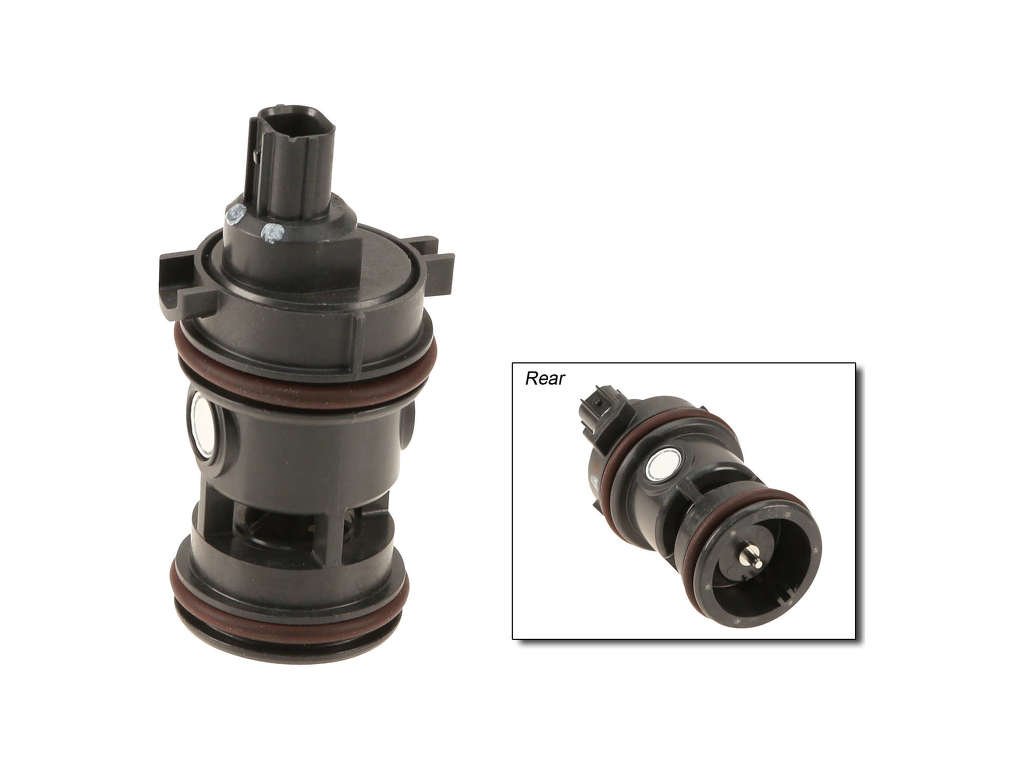
For a 2013-2017 Honda Accord, code P0496 is almost always caused by a faulty canister purge valve that is stuck open. This allows fuel vapors to be drawn into the engine at the wrong time. It is a relatively easy and inexpensive DIY fix, with the OEM part costing between $60 and $90 and aftermarket options available for less.
- P0496 on a 2013-2017 Accord means fuel vapor is entering the engine when it shouldn't, usually due to a stuck-open purge valve.
- The most likely fix is replacing the canister purge valve, a simple and affordable DIY job.
- Symptoms can include a check engine light, rough idle, and difficulty starting after refueling.
- Before buying parts, perform a simple test by trying to blow through the disconnected purge valve; if air passes, it's faulty.
- Driving with this code is safe in the short term, but it should be fixed to pass emissions and prevent potential long-term issues.
What's Unique About the 2013-2017 Honda Accord

On Honda vehicles, including the 9th generation Accord, the P0496 code is overwhelmingly caused by a failed canister purge valve solenoid. While other causes are possible, the purge valve is a very common failure point for this platform. The diagnostic procedure in the Honda service manual for this code even points directly to replacing the purge valve if a basic function test fails. This is a well-documented issue across many Honda models sharing the same engine platforms.
Symptoms You May Notice
- Check Engine Light is on
- Difficulty starting the engine, especially after filling the gas tank 🎬 Watch: Diagnosing a hard start after refueling and fixing P0496.
- Rough or unstable idle
- Slight decrease in fuel economy
- Possible fuel smell
- Humming noise from the engine bay in some cases
- Replacing the gas cap when the purge valve is the actual problem.
- Replacing the entire EVAP canister when only the purge valve is faulty.
- Replacing the Fuel Tank Pressure (FTP) sensor before testing the purge valve.
Most Likely Causes

- Faulty Canister Purge Valve (Solenoid) 🔴 High Probability This component cycles frequently and can wear out or get stuck open from fuel vapor deposits or internal failure. It is the most cited cause for P0496 on Honda platforms and is considered a common maintenance item.
How to confirm: Disconnect the vacuum hoses from the purge valve. With the engine off, try to blow through the valve or apply a hand vacuum pump. If air passes through or it doesn't hold a vacuum, it is stuck open and needs to be replaced. The valve should be completely sealed when no power is applied. A technician would apply a vacuum of approximately 15 mmHg (6 inHg) to the valve; if it fails to hold this vacuum, it is faulty.
Typical fix: Replace the canister purge valve. On the 2.4L 4-cylinder, it is located on the engine bay firewall. On the 3.5L V6, it is located behind the throttle body. It is an easy part to access and replace with basic hand tools.
Est. part cost: $35-$90
Rare But Worth Checking
- Faulty Fuel Tank Pressure (FTP) Sensor: A bad FTP sensor can send incorrect vacuum readings to the ECU, making it think there is a purge flow issue when there isn't one. This is much less common than the purge valve itself failing.
- Leaking or Clogged EVAP Canister: The charcoal canister itself can become saturated with fuel (often from overfilling the gas tank) or develop a crack, though this is much less frequent than a purge valve failure.
- Damaged EVAP Hoses: Cracked, disconnected, or brittle vacuum hoses between the purge valve, intake manifold, and EVAP canister can cause a vacuum leak that triggers the code. A visual inspection or smoke test can identify these leaks.
- Loose or Damaged Gas Cap: While more commonly associated with small leak codes (like P0456), a gas cap that doesn't seal properly can sometimes contribute to EVAP system pressure issues that may trigger a P0496. Always check that the cap is tight and the seal is intact as a first step.
- Faulty Powertrain Control Module (PCM): In very rare instances, the PCM itself can be faulty, incorrectly commanding the purge valve to stay open or misinterpreting sensor data. This should only be considered after all other possibilities, including wiring, have been exhaustively ruled out.
Diagnosis Steps

- Verify the code with an OBD-II scanner.
- Check that the gas cap is tight and the seal is not cracked or worn.
- Locate the canister purge valve. For the 2.4L engine, it's typically on the firewall. For the 3.5L V6, it's behind the throttle body.
- With the engine off, disconnect the vacuum hoses from the purge valve.
- Attempt to blow air through the valve. If air passes through, the valve is stuck open and is faulty.
- Alternatively, connect a hand vacuum pump to the valve and see if it holds a vacuum. If it does not, it needs to be replaced.
- If the purge valve tests good, inspect all visible EVAP hoses for cracks, brittleness, or loose connections.
- If no issues are found, the next step would be to perform a smoke test on the EVAP system to check for hard-to-see leaks.
- If no leaks are present, further testing of the Fuel Tank Pressure (FTP) sensor and canister vent valve may be required, which might necessitate professional help or advanced diagnostic tools.
Parts You'll Likely Need

- Canister Purge Valve / Solenoid
(OEM #36162-5A2-A01)— This is the most common failure point for code P0496 on this vehicle. It gets stuck open, causing the 'flow during non-purge' condition. This part number is for the 2.4L engine.
Trusted brands: Honda (OEM), Standard Motor Products (CP797 for V6), Dorman (994-076 for 2.4L), Wells (2M1610 for 2.4L)
OEM price range: $60-$90
Aftermarket price range: $25-$60
Related Codes That Often Appear With This One
- P0507 — Idle Control System RPM Higher Than Expected. A stuck-open purge valve can create a vacuum leak, allowing unmetered air into the intake manifold and causing the idle speed to be higher than normal.
- P0456 — EVAP System Very Small Leak Detected. While P0496 is a flow issue, sometimes a related component failure can trigger other EVAP codes.
Platform-Specific Known Issues
- Purge Valve Location - 2.4L I4 Engine: On the 4-cylinder 'Earth Dreams' engine, the purge valve (36162-5A2-A01) is typically mounted on the engine bay firewall, making it very easy to access and replace 🎬 Watch: Step-by-step replacement guide for the 2.4L engine. with basic tools.
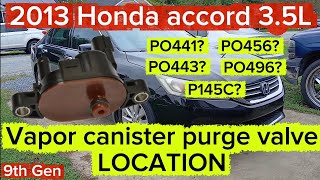
- Purge Valve Location - 3.5L V6 Engine: On the V6 engine, the purge valve is located behind the throttle body, mounted with two 10mm bolts. 🎬 See this video for the exact V6 purge valve location. Access is slightly more constrained than on the 4-cylinder but is still a straightforward DIY job.
Mechanic-Grade Diagnostic Values
- Canister Purge Valve Solenoid Coil Resistance — expected: 20 - 40 Ω (vehicle-specific, but this is a typical range). Failure: An open circuit (infinite resistance) or a short (near zero resistance) indicates a failed coil.
- Canister Purge Valve Connector Voltage (KOEO) — expected: Approximately 12V (Battery Voltage) on the power supply pin.. Failure: No voltage indicates a wiring or fuse issue upstream of the valve.
- Canister Purge Valve Vacuum Test (Engine Off) — expected: The valve should hold a vacuum of ~15 mmHg / 6 inHg.. Failure: If the valve cannot hold the applied vacuum, it is leaking internally and is faulty.
- Fuel Tank Pressure (FTP) Sensor Reading for P0496 Trigger — expected: The PCM sets the code when it detects a vacuum of more than 10 inches of H2O when the purge valve is commanded closed.. Failure: This vacuum reading during a non-purge condition is the direct trigger for the code.
Scan Tool Commands That Help
- Honda Diagnostic System (HDS): EVAP TEST > FUNCTION TEST — This is the official manufacturer procedure to command the EVAP system through a self-test. It will operate the purge and vent valves and monitor the FTP sensor to confirm system integrity. A failure here will often point directly to the faulty component.
- Advanced Bidirectional Scan Tool (e.g., Autel, FOXWELL): EVAP Purge Solenoid Test — This command allows the technician to manually cycle the purge valve on and off while monitoring live data (like FTP sensor voltage or short/long term fuel trims) to see if the valve is physically responding and if its operation affects the engine as expected.
Wiring & Ground Locations
- G101 — On the intake manifold plenum, on the driver's side of the engine bay.. While not directly for the purge valve, G101 is a critical engine management ground. A poor connection here can cause a variety of erratic sensor readings and drivability issues, and should be checked if multiple, seemingly unrelated codes are present with P0496.
- EVAP Canister Purge Valve Connector — On the purge valve solenoid itself, which is on the firewall (2.4L) or behind the throttle body (3.5L).. This 2-pin connector is where all electrical tests for the valve are performed. One pin should have battery voltage with the key on, and the other is the control wire (ground signal) from the PCM. Checking for power and a clean connection here is a key step before replacing the valve.
Real Owner Repair Stories
- CarKiller Forum User (2005 Honda Accord 2.4L (Note: 7th gen, but diagnosis is identical for 9th gen)) — Codes P0496 and P0507 (Idle RPM higher than expected). Hard to start after refueling (required 2-3 tries). Car stalled once when exiting a freeway ramp.
❌ Tried (didn't work) Cleaned throttle body and MAF sensor. Manually tested purge valve by blowing through it (it seemed closed).
✅ What actually fixed it The user was in the process of diagnosing. However, the combination of P0496 and P0507 is a classic symptom pattern for a stuck-open purge valve. The valve creates a vacuum leak, causing the high idle code, and the flow issue causes the P0496. The hard start after fueling is the definitive symptom. The final fix, though not posted, is overwhelmingly likely to be the purge valve replacement.
OEM Part Supersession History
N/A→36162-5A2-A01— This is the current, widely used part number for the 2.4L engine across many Honda models from 2013-2024.
Heads up: While physically similar, the purge valve for the 8th generation Accord (e.g., 36162-R1A-A01) may have different flow or electrical characteristics. It is critical to use the part number specified for the 9th generation (2013-2017).
Model Year Variations Within This Range
- 2013: Certain 2013 Accord models were subject to Safety Recall 13-054 (NHTSA 13V288000) for a potential fuel tank leak at the fuel pump module. This could trigger EVAP codes like P0455 or P0456, and while less likely, could be a contributing factor to general EVAP system faults.
Diagnostic Flowchart
Other Known Issues on This Vehicle
Issues unrelated to this code that are worth knowing about as an owner of this generation:
- Starter Motor Failure / Grinding Noise 🔴 High — Very common, especially on 2013-2015 V6 models, often occurring around 50,000 miles. Can result in a no-start condition. (Ref: TSB 16-002 (for V6 models) addresses poor clearance between the starter and torque converter, requiring starter replacement and torque converter rotation.)
- VTC Actuator Rattle on Cold Start 🟠 Medium — Common on the 2.4L 4-cylinder engine. A loud grinding or rattling noise for a few seconds on a cold start is the primary symptom. (Ref: Honda TSB 09-010 (for earlier models, but the issue persists) identifies a defective VTC actuator. Ignoring it can lead to timing chain issues.)
- CVT Transmission Judder / Hesitation 🟠 Medium — Widespread on early 9th-gen models (2013-2015) with the CVT. Owners report shuddering or juddering when accelerating from a stop. (Ref: Honda extended the warranty for the CVT on 2013-2015 models due to start clutch issues. Regular fluid changes with Honda HCF-2 fluid are critical.)
- Excessive Oil Consumption 🟠 Medium — Some owners of the 2.4L 'Earth Dreams' engine report higher than normal oil consumption, partially attributed to the use of thin 0W-20 oil.
- Weak/Undersized Battery 🟡 Low — The stock battery in 4-cylinder models is noted for having a short lifespan and being undersized, which can exacerbate starting issues. (Ref: A recall was issued for a related battery sensor, but the underlying issue is often the battery capacity itself.)
Used vs. New Parts: Buying Guide for This Vehicle
When a used part is the smart pick: A used OEM purge valve from a reputable salvage yard is a reasonable choice for this repair. The part is not a high-wear item in the traditional sense and is easy to test before installation. Given the low failure rate of other components for this code, a used valve is a smart way to save money.
Donor-vehicle mileage cap: roughly under 100000 miles for the part to have meaningful remaining life.
What to inspect on the donor part:
- Test the part before purchase if possible. Bring a 9V battery and leads to see if it clicks, or simply try to blow through it; no air should pass.
- Inspect the plastic housing for cracks or damage.
- Ensure the electrical connector pins are clean and not corroded.
- Verify the part number on the used component matches the required OEM number (36162-5A2-A01 for 2.4L).
OEM-only on this vehicle (don't cheap out):
- Gas Cap - While not the primary cause for P0496, if you need to replace the gas cap for any reason, use a genuine Honda cap. Aftermarket caps are a well-known source of EVAP leaks and codes on Honda vehicles.
Aftermarket brands forum-validated for this vehicle:
- Standard Motor Products (SMP)
- Dorman
- Wells
Brands owners have reported issues with on this vehicle:
- No-name, unbranded parts from online marketplaces should be avoided, as their quality control and flow characteristics may not match OEM specifications, potentially causing the code to return.
Real Owner Stories
Aggregated from forums and TSBs cited above. Mileages and costs reflect what owners reported in those sources.
2013-2017 Honda Accord (9th Generation)
Symptoms: Hard starting after refueling the vehicle.
What fixed it: Replacing the purge valve solenoid.
Source hint: driveaccord.net: Multiple threads in the 9th generation (2013-2017) sub-forum
2007 Honda Accord V6
Symptoms: Hard starts after fueling and a humming noise from the engine bay.
What fixed it: Initial diagnosis pointed to the purge valve as the primary suspect, though this specific case eventually involved a rare ECM fault.
Source hint: Reddit r/MechanicAdvice & r/Honda
Related OBD-II Codes
Frequently Asked Questions
Where is the purge valve located on my 2014 Honda Accord with the 2.4L Earth Dreams engine?
I have a 2016 Accord V6; is the purge valve in the same spot as the 4-cylinder?
Why does my Accord struggle to start only after I fill up the gas tank?
Does TSB 16-002 relate to my P0496 check engine light?
Can I use an aftermarket gas cap to fix this EVAP issue?
Is there a specific test I can do to see if the purge valve is bad?
Helpful Videos



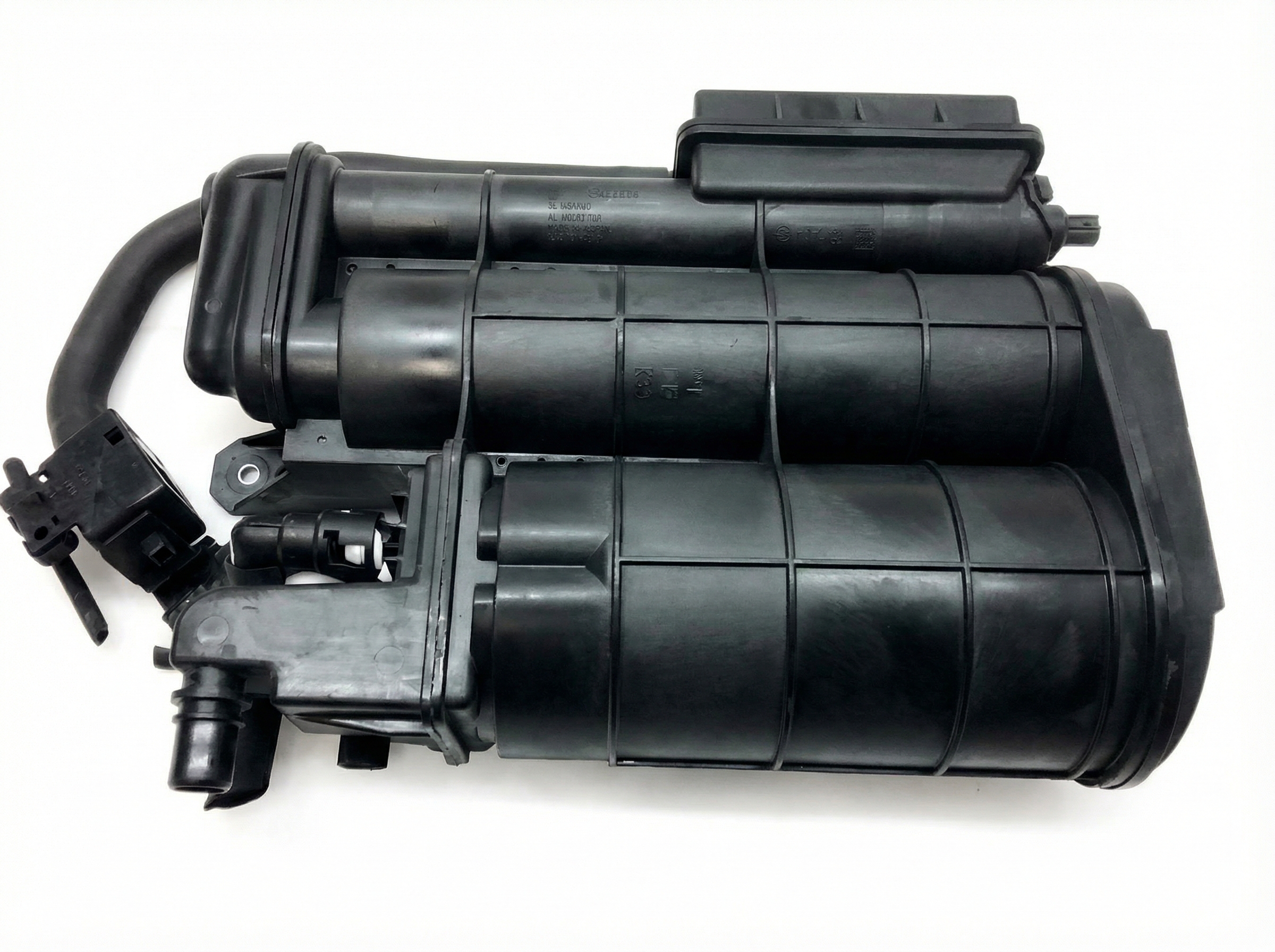
Used OEM Parts in Stock

New Aftermarket Parts Available


The information in this article is provided for general reference and educational purposes only. Vehicle specifications, procedures, and part compatibility can vary by production date, trim level, and region. Always consult your vehicle's factory service manual and verify part numbers before purchasing or performing repairs. Safety-critical components such as airbags, seat belts, and braking systems should be installed by a qualified professional.
- Honda Accord:
- 🎬 Helpful Videos
- 🛍️ Shop This Part
- What's Unique About the 2013-2017 Honda Accord
- Symptoms You May Notice
- Most Likely Causes
- Rare But Worth Checking
- Diagnosis Steps
- Parts You'll Likely Need
- Related Codes That Often Appear With This One
- Platform-Specific Known Issues
- Mechanic-Grade Diagnostic Values
- Scan Tool Commands That Help
- Wiring & Ground Locations
- Real Owner Repair Stories
- OEM Part Supersession History
- Model Year Variations Within This Range
- Diagnostic Flowchart
- Other Known Issues on This Vehicle
- Used vs. New Parts: Buying Guide for This Vehicle
- Real Owner Stories
- 2013-2017 Honda Accord (9th Generation)
- 2007 Honda Accord V6
- Related OBD-II Codes
- Frequently Asked Questions
- 🎟️ Get 5% Off