

P0496 on 2007-2017 GMC Acadia 3.6L: EVAP High Purge Flow Causes and Fixes
On a 2007-2017 GMC Acadia, code P0496 almost always means the vapor canister purge valve (solenoid) on the engine has failed and is stuck open. This allows fuel vapors to be pulled into the engine at all times, causing a check engine light and often a hard-to-start condition after refueling. This is a very common, inexpensive, and easy DIY repair, typically costing $25-$70 for the part.
- P0496 on a GMC Acadia almost always points to a failed vapor canister purge valve located on top of the engine.
- The most telling symptom is difficulty starting the engine (long crank, stumbling) right after getting gas.
- The diagnosis is simple: with the engine running and the valve unplugged, check for suction on the valve's inlet port. If there's suction, it's bad.
- It's a very common, inexpensive, and easy DIY repair for most owners.
- Check for GM Special Coverage 18029 if you own a 2015 model, as the repair may be covered.
What's Unique About the 2007-2017 GMC Acadia

The 3.6L V6 engine used across the first-generation Acadia and its platform mates (Buick Enclave, Chevy Traverse, and Saturn Outlook) has a well-documented high failure rate for the vapor canister purge valve. This specific part, located conveniently on top of the engine for most model years, frequently gets stuck open, making P0496 one of the most common trouble codes for this vehicle. The symptoms, particularly a long crank or rough start after refueling, 🎬 See why your Acadia won't start after getting gas. are a classic indicator of this specific failure on this platform because the open valve allows the engine to be flooded with fuel vapors.
Generation note: The specified year range covers two generations. The first generation ran from 2007-2016 and was also sold as the 'Acadia Limited' in 2017. The second generation began in 2017. The P0496 code and its common cause (a failed purge valve) are prevalent across both generations that use the 3.6L V6 engine. However, the part's location and replacement procedure differ; on 2018+ models, the valve is located at the back of the engine near the firewall and requires removing the intake boot for access, making it a slightly more involved job.
Symptoms You May Notice
- Check Engine Light is on
- Difficulty starting the engine immediately after refueling (long crank time, stumbling, or stalling).
- Rough or unstable idle, sometimes stalling at stops.
- Reduced fuel economy
- A faint fuel odor from the engine bay.
- Audible ticking noise from the engine bay, which is the sound of the solenoid operating.
- Replacing the gas cap. While a loose gas cap can cause other EVAP codes like P0455 (large leak) or P0442 (small leak), it is very unlikely to be the cause of a P0496 code, which indicates improper flow, not a leak.
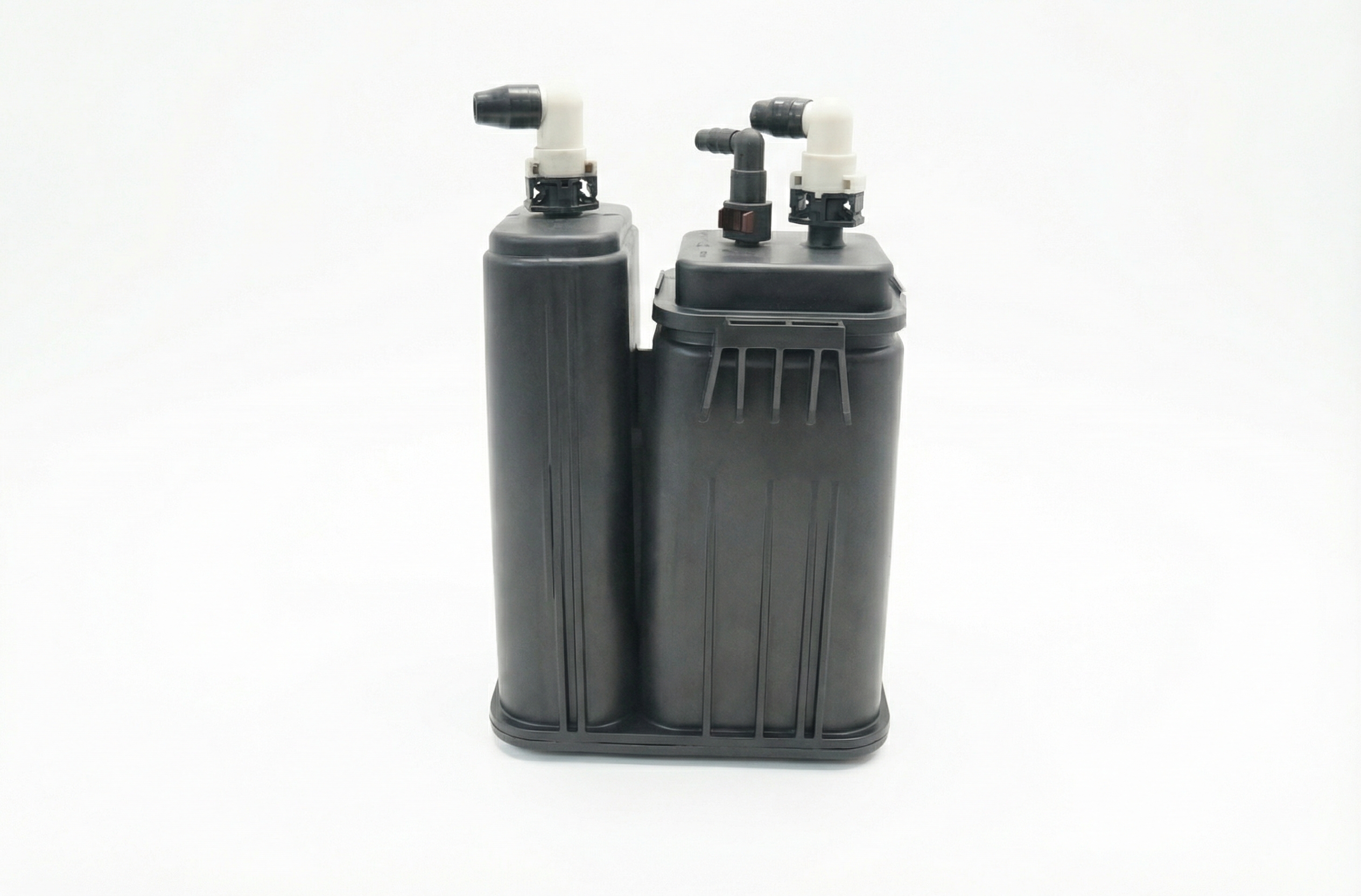
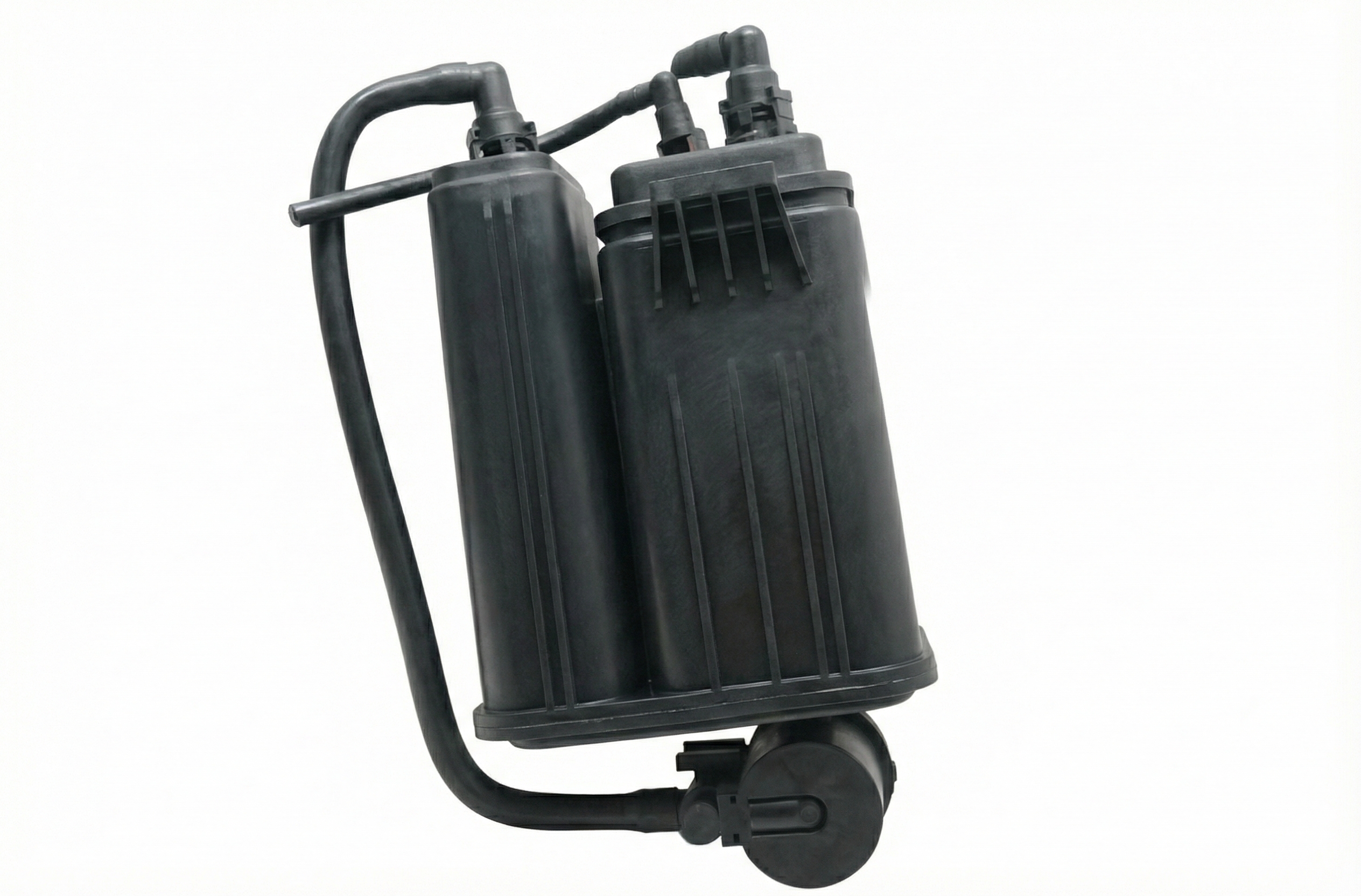
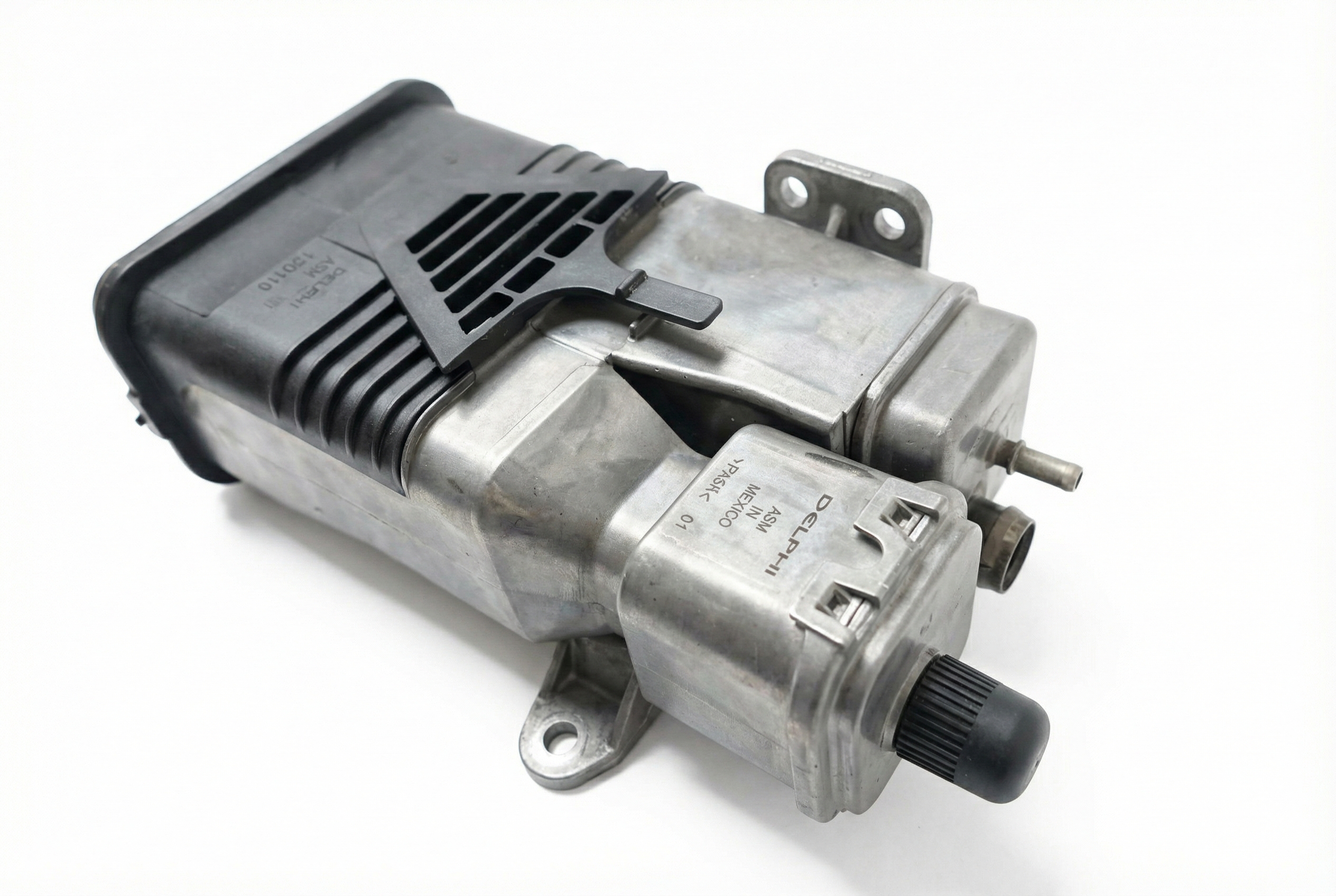
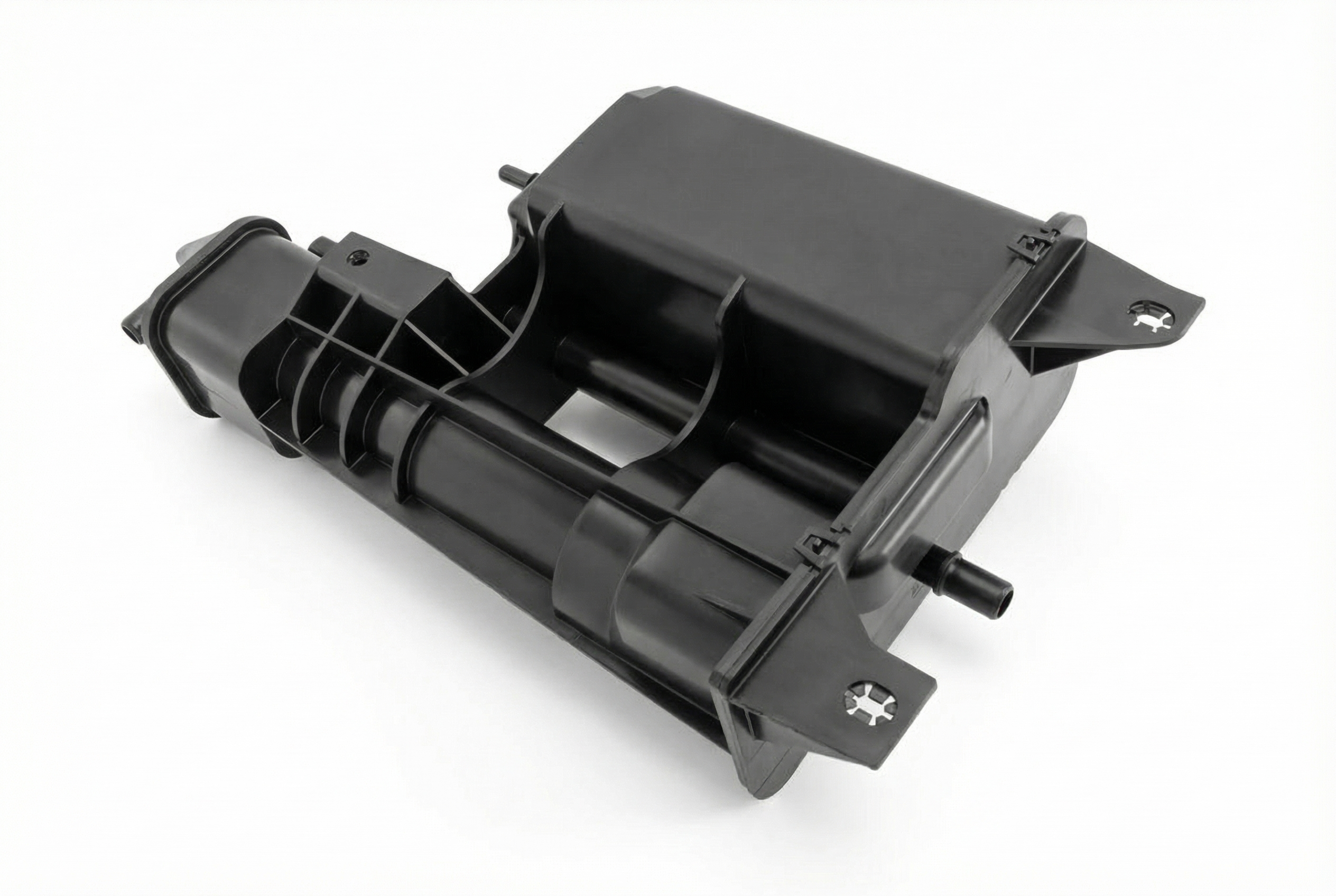
- Replacing the EVAP charcoal canister. The canister itself rarely fails in a way that causes this specific code. Canister issues are more often related to being saturated with fuel from overfilling the tank or a bad vent valve, leading to different codes (like P0449) or fueling problems (gas pump clicks off).
Most Likely Causes

- Faulty Vapor Canister Purge Valve/Solenoid 🔴 High Probability This is a very common failure item on the GM 3.6L V6 engine. The valve gets stuck internally, allowing engine vacuum to constantly pull fuel vapors from the EVAP canister, creating what is essentially a constant vacuum leak.
How to confirm: With the engine off, disconnect the electrical connector and the vapor line from the purge valve on the engine. Try to blow through the valve; if any air passes through, it is stuck open and faulty. Alternatively, with the engine running and the valve's electrical connector unplugged, check for vacuum at the inlet port with your finger or a vacuum gauge; there should be no vacuum. If you feel suction, the valve is bad. A scan tool can also confirm this by monitoring the Fuel Tank Pressure sensor; with the system sealed and engine running, if a vacuum builds, the purge valve is leaking.
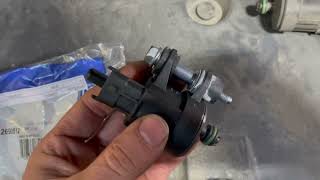
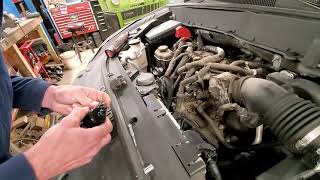
Typical fix: Replace the vapor canister purge valve. This is a simple repair on most 2007-2017 models, involving one 10mm bolt and two connections 🎬 Watch this simple step-by-step purge valve replacement walkthrough. (one electrical, one hose).
Est. part cost: $25 - $70
Rare But Worth Checking
- Faulty Fuel Tank Pressure (FTP) Sensor: A malfunctioning FTP sensor can send incorrect vacuum readings to the ECM, causing it to set a P0496 code even if the purge valve is functioning correctly. This is much less common than a failed purge valve.
- Leaking EVAP System Hose: A cracked or disconnected hose between the purge valve and the intake manifold could potentially cause a vacuum leak that might trigger this code, though it's less likely than a valve failure.
- Faulty Canister Vent Solenoid: While P0496 almost always points to the purge valve on the engine, a vent solenoid (near the fuel tank) that is stuck open could, in some scenarios, contribute to an improper flow condition. This is more commonly associated with other EVAP codes like P0449.
- Outdated ECM Software: On some vehicles, outdated Engine Control Module (ECM) software can have incorrect parameters for monitoring the EVAP system, leading to false P0496 codes. Checking for available software updates can be a final diagnostic step if all hardware tests pass.
Diagnosis Steps

- Confirm the code with an OBD-II scanner. 🎬 Watch: How to diagnose P0496 and test the purge valve. Check for other related EVAP codes.
- Check for the most common symptom: Ask if the vehicle is hard to start after filling the gas tank. If yes, the purge valve is the prime suspect.
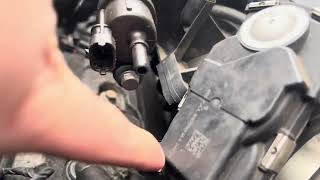
- Locate the vapor canister purge valve on top of the engine, under the plastic engine cover.
- With the engine off, disconnect the electrical connector from the purge valve.
- Disconnect the vapor line that runs from the canister to the valve by pressing the green tabs.
- Attempt to blow air through the valve. If air passes, the valve is stuck open and must be replaced. It should be sealed when de-energized.
- Alternatively, start the engine with the valve unplugged and the hose removed. Place your finger over the port on the valve. If you feel any suction, the valve is faulty and must be replaced.
- If the valve tests good, use a scan tool with live data to monitor the Fuel Tank Pressure (FTP) sensor. Command the EVAP system to seal and watch the pressure reading. If it shows a vacuum building, it re-confirms the purge valve is leaking internally. If the readings are erratic or do not change, the FTP sensor itself may be faulty.
- If other components test good, a smoke test of the EVAP system may be necessary to check for unusual leaks between the purge valve and the intake manifold.
Parts You'll Likely Need
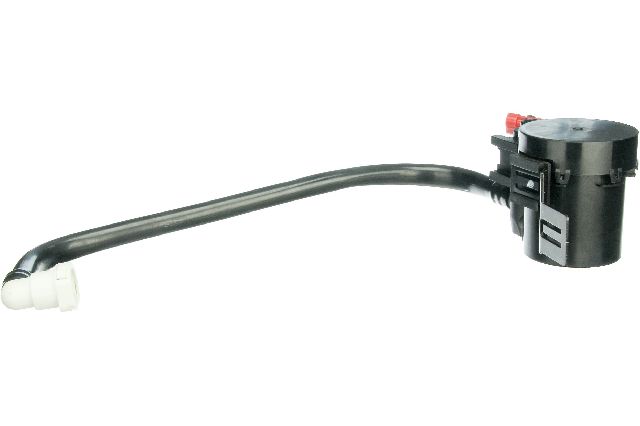
- Vapor Canister Purge Valve / Solenoid
(OEM #12690512, 12610560, 214-2137)— This is the overwhelming cause of code P0496 on this platform. It fails by sticking open, allowing un-commanded fuel vapor flow.
Trusted brands: ACDelco (GM OE), Bosch, Standard Motor Products (SMP), Dorman
OEM price range: $40-$70
Aftermarket price range: $25-$50
Related Codes That Often Appear With This One
- P0442 — A purge valve that is slightly stuck open can be interpreted by the system as both a non-commanded purge flow (P0496) and a small leak (P0442).
- P0443 — This code indicates an electrical circuit fault for the purge solenoid. It can appear alongside P0496 if the solenoid has an internal electrical failure, not just a mechanical one.
Technical Service Bulletins (TSBs) & Recalls
- GM Special Coverage 18029: Titled 'Inoperative Purge Solenoid', this covers certain 2015 model year Acadia, Enclave, Traverse, and other GM vehicles. It addresses a condition where an inoperative purge solenoid causes excessive fuel vapors in the combustion chamber, leading to no-start, idle stall, hesitation, and a check engine light, particularly after refueling. The coverage extends for 10 years or 120,000 miles from the in-service date.
Platform-Specific Known Issues
- There was a GM Special Coverage program (18029) for some 2015 models that may have covered the replacement of the purge solenoid for 10 years or 120,000 miles. The condition described includes a no-start or stall after refueling, and a check engine light. Owners of 2015 models can check with a GM dealer for eligibility.
Mechanic-Grade Diagnostic Values
- Vapor Canister Purge Solenoid Coil Resistance — expected: 10 - 15 Ohms. Failure: A reading significantly outside this range, such as 2 ohms, indicates an internal short, while an infinite reading indicates an open circuit.
- Purge Solenoid Control Wire Voltage — expected: Pulsing ground signal when active; should show near battery voltage when inactive (key-on, engine-off).. Failure: No voltage or a constant ground could indicate a wiring issue or a problem with the ECM driver circuit.
- Fuel Tank Pressure (FTP) Sensor Voltage (Atmospheric) — expected: ~2.5V with the gas cap off (pressure equal to atmosphere).. Failure: Voltage that is stuck high (e.g., 5V) or low (e.g., 0V), or does not change when vacuum is applied, points to a faulty sensor or wiring.
Hidden / Shadow Codes Worth Checking
- Mode $06, Test ID $3C: This non-continuous monitor test checks the EVAP system for very small leaks. While P0496 is a flow issue, a failing purge valve can sometimes cause anomalies in leak test results. Advanced scan tools can view this data to see if the system is passing or failing its internal self-tests before a full-blown DTC is set. (see via A scan tool capable of displaying Mode $06 data.)
Scan Tool Commands That Help

- GDS2 / Tech2 (or equivalent professional scanner): EVAP Service Bay Test — This is an automated test that commands the vent and purge solenoids through a sequence to quickly verify the entire system's integrity, including checking for a leaky purge valve. It provides a clear pass/fail result, making it a definitive diagnostic step.
- GDS2 / Tech2 (or equivalent professional scanner): Purge/Seal — This function allows a technician to manually command the vent solenoid closed to seal the system and then observe the Fuel Tank Pressure (FTP) sensor. If vacuum builds with the purge valve commanded OFF, it confirms the purge valve is leaking internally.
- GDS2 / Tech2 (or equivalent professional scanner): EVAP Purge Solenoid Control — This allows manual control of the purge solenoid duty cycle (e.g., 0% to 100%). A technician can command the valve open and verify that vacuum is being pulled on the FTP sensor, confirming the rest of the system is working. Commanding it to 0% should result in zero vacuum pull.
Wiring & Ground Locations
- G110 — On the right front of the engine, mounted to the cylinder head.. This is a primary engine ground. While not directly for the purge solenoid, a poor connection here can cause erratic voltage and unpredictable behavior in various engine sensors and actuators controlled by the ECM, potentially leading to incorrect diagnostics.
- G105 — On the bulkhead at the rear of the engine compartment, on the left middle side.. This is another critical ground point for components in the engine bay. GM ground points, particularly on the body, are known to corrode. A voltage drop test at this location is a wise step in a complex electrical diagnosis.
- ECM Connector (e.g., X1) — The Engine Control Module is located in the left front corner of the engine compartment.. The purge solenoid is controlled directly by the ECM. Any diagnosis that goes beyond a failed valve requires checking for a 12V supply and the pulsed ground signal at the ECM connector pins to rule out a broken wire or a failed ECM driver.
Real Owner Repair Stories
- Reddit user on r/MechanicAdvice (2014 GMC Acadia SLT) — Rough start after filling with gas, P0496 code present.
❌ Tried (didn't work) Replaced the vapor canister purge valve., Cleaned the gas cap.
✅ What actually fixed it The user's issue persisted after replacing the most common part. The community advised that the new replacement part could be faulty out of the box (a common occurrence with aftermarket electronics) or that the Fuel Tank Pressure (FTP) sensor itself was failing and giving false readings. This highlights the need to test the new part or consider secondary causes if the first fix fails. - AcadiaForum.net user report (paraphrased from common scenarios) (2012 GMC Acadia) — P0496 code returned a few months after replacing the purge valve. Hard starting after fueling also returned.
❌ Tried (didn't work) Replacing the purge valve a second time.
✅ What actually fixed it The root cause was a fuel-saturated charcoal canister. Years of topping off the fuel tank after the pump clicked off had forced liquid gasoline into the EVAP canister, which is designed only for vapor. The saturated canister was sending fuel droplets and contaminated vapor up the purge line, causing the new purge valves to fail prematurely. Replacing both the purge valve and the charcoal canister finally resolved the issue for good. - NHTSA ODI #11091609 — In a related report for a similar GMC model, a dealer found that P0496 appeared alongside P0171 and P0174, indicating pressure in the evaporative system that required further diagnostic testing.
"I Checked Everything" — The Actual Cause
- A smoke test on the EVAP system may show no leaks to the atmosphere, yet the P0496 code persists. This can happen if the charcoal canister has failed internally, breaking apart. Small charcoal pellets can be drawn into the purge line, physically jamming the purge solenoid valve open. The system is technically sealed from the outside (passing a smoke test), but the flow condition is caused by internal contamination holding the valve open. The fix requires replacing both the contaminated purge valve and the failed charcoal canister.
OEM Part Supersession History
12610560→12690512, then 12737252— The original part had a high failure rate. Successive revisions aimed to improve the durability and sealing of the internal valve components.
Heads up: All parts are physically interchangeable, but it is strongly advised to use the latest available revision (e.g., 12737252 or an aftermarket equivalent) and avoid New Old Stock (NOS) or used parts with the original 12610560 number.
Model Year Variations Within This Range
- 2007-2011 vs 2012-2017: The 3.6L V6 engine was updated around 2012 from the LLT version to the LFX version. While both are 3.6L, the LFX featured changes like a new composite intake manifold and integrated exhaust manifolds. While the purge valve's function and failure mode are identical, the specific part number and mounting may have subtle differences. Always confirm the part by VIN, but know that the diagnosis for P0496 is the same for both engine versions.
Diagnostic Flowchart
Used vs. New Parts: Buying Guide for This Vehicle
When a used part is the smart pick: For the primary cause of P0496—the vapor canister purge valve—a used part should NEVER be considered. The part is low-cost and has an extremely high failure rate. A used part from a salvage yard is highly likely to be already faulty or will fail in a very short time.
What to inspect on the donor part:
- Not applicable, do not buy this part used.
OEM-only on this vehicle (don't cheap out):
- While not strictly OEM-only, using a reputable brand for the purge valve is critical. For the charcoal canister, if it requires replacement, OEM (ACDelco) is strongly recommended as aftermarket versions can have issues with media quality and longevity.
Aftermarket brands forum-validated for this vehicle:
- Bosch
- Standard Motor Products (SMP)
Brands owners have reported issues with on this vehicle:
- Unbranded 'white-box' parts from online marketplaces should be avoided as they often use inferior materials and have a high rate of out-of-box failure.
Real Owner Stories
Aggregated from forums and TSBs cited above. Mileages and costs reflect what owners reported in those sources.
2014 GMC Acadia SLT
Symptoms: The vehicle was starting rough after filling it with gas and was throwing the P0496 code.
What fixed it: The owner first replaced the purge valve and checked the gas cap with no success. A commenter suggested the new purge valve could be faulty or that the Fuel Tank Pressure sensor could be the cause.
Source hint: Reddit r/MechanicAdvice thread titled '2014 GMC Acadia has a code P0496'
GMC Acadia
Symptoms: The check engine light was on with code P0496. The car would run very rough and sometimes stall after stopping for gas, and then it would be very hard to start again after filling up.
What fixed it: The owner replaced the vapor canister purge valve/solenoid, which they described as an easy fix.
Cost: $21-$50
Source hint: YouTube comment from 'SquareBody Shelley' on video 'PROBLEM SOLVED!!! P0496 GMC ACADIA CODE, VAPOR CANISTER PURGE VALVE REPAIR'
2016 GMC Acadia — 167000 miles
Symptoms: Displayed 'Service StabiliTrak' and 'Service Traction Control' messages along with code P0496. The engine would 'kick hard' between 2000-4000 RPMs.
What fixed it: The owner tried replacing the purge valve with two different new parts, but the issue persisted, with the engine still 'sucking air' through the valve port at idle.
Source hint: Reddit r/AskAMechanic
Related OBD-II Codes
Frequently Asked Questions
Is the P0496 code on my 2015 GMC Acadia covered by any special warranty or recall?
Why is my Acadia so difficult to start right after I put gas in it?
Where is the vapor canister purge valve located on the 3.6L V6 engine?
How can I test the purge valve on my Acadia myself without special tools?
I replaced the purge valve on my Acadia, but the P0496 code came back. What else could be wrong?
Do other GM SUVs like the Chevy Traverse or Buick Enclave have this same P0496 problem?
Helpful Videos
Used OEM Parts in Stock

New Aftermarket Parts Available



The information in this article is provided for general reference and educational purposes only. Vehicle specifications, procedures, and part compatibility can vary by production date, trim level, and region. Always consult your vehicle's factory service manual and verify part numbers before purchasing or performing repairs. Safety-critical components such as airbags, seat belts, and braking systems should be installed by a qualified professional.
- GMC Acadia:
- 🎬 Helpful Videos
- 🛍️ Shop This Part
- What's Unique About the 2007-2017 GMC Acadia
- Symptoms You May Notice
- Most Likely Causes
- Rare But Worth Checking
- Diagnosis Steps
- Parts You'll Likely Need
- Related Codes That Often Appear With This One
- Technical Service Bulletins (TSBs) & Recalls
- Platform-Specific Known Issues
- Mechanic-Grade Diagnostic Values
- Hidden / Shadow Codes Worth Checking
- Scan Tool Commands That Help
- Wiring & Ground Locations
- Real Owner Repair Stories
- "I Checked Everything" — The Actual Cause
- OEM Part Supersession History
- Model Year Variations Within This Range
- Diagnostic Flowchart
- Used vs. New Parts: Buying Guide for This Vehicle
- Real Owner Stories
- 2014 GMC Acadia SLT
- GMC Acadia
- 2016 GMC Acadia — 167000 miles
- Related OBD-II Codes
- Frequently Asked Questions
- 🎟️ Get 5% Off