

P0480 on 2015-2023 Ford Mustang 5.0L: Cooling Fan Circuit Malfunction Causes and Fixes
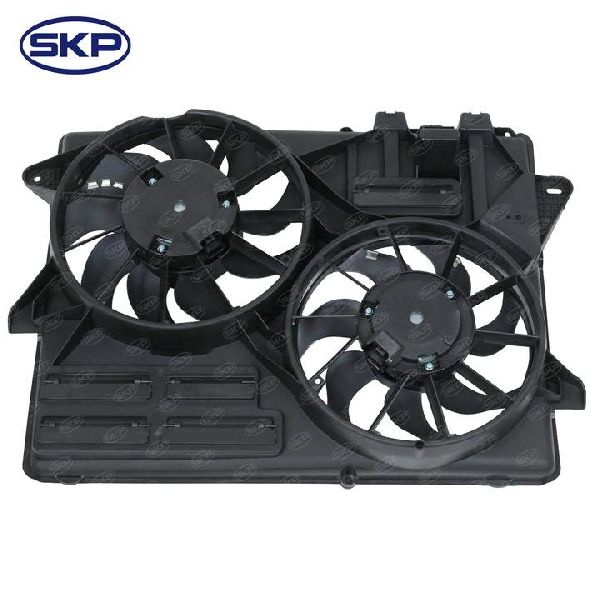
On a 2015-2023 Mustang GT, code P0480 is most often caused by a failure of the entire cooling fan assembly (OEM Part No. FR3Z-8C607-A), which includes the integrated motor and control module. Before replacing the assembly ($270-$450), thoroughly check the cooling fan relays (positions 89 and 91) and fuses (e.g., F29, F31) in the under-hood fuse box, as these are simpler, cheaper fixes.
- P0480 indicates an electrical fault in the cooling fan circuit; the fan is not operating as commanded by the vehicle's computer.
- The most likely cause on a 2015-2023 Mustang GT is a failed cooling fan assembly (Part No. FR3Z-8C607-A), which must be replaced as a single unit.
- Before buying an expensive fan assembly, always check the simple and cheap parts first: the cooling fan fuses and relays in the under-hood fuse box.
- Driving with this code is risky, as the engine can overheat in traffic or at idle, leading to costly engine damage.
What's Unique About the 2015-2023 Ford Mustang
The S550 generation Mustang with the 5.0L V8 uses a large, single cooling fan assembly that integrates the fan motor, shroud, and the electronic fan control module into one unit. Unlike systems with separate, easily replaceable components, a failure of the internal module or motor often requires replacing the entire assembly. While relays and fuses are separate, the integrated assembly is the most common point of failure for this code on this platform, a trend seen across many modern Ford vehicles.
Symptoms You May Notice
- Engine temperature rising above normal, especially in stop-and-go traffic or at idle
- Cooling fan does not turn on when the engine is hot or when the A/C is activated
- A/C system blows warm air at low vehicle speeds or when stopped
- Check Engine Light is on
- Audible clicking from relays in the fuse box with no fan activation
- Replacing the Coolant Temperature Sensor (CTS). A faulty CTS typically sets its own specific codes (like P0117/P0118) and is less likely to be the sole cause of a P0480 circuit code. While a bad CTS can prevent the fan from being commanded on, the P0480 code specifically points to a fault detected within the fan's control circuit itself.
Most Likely Causes
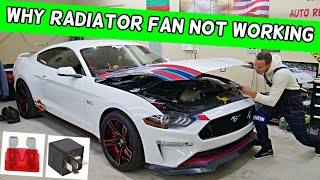
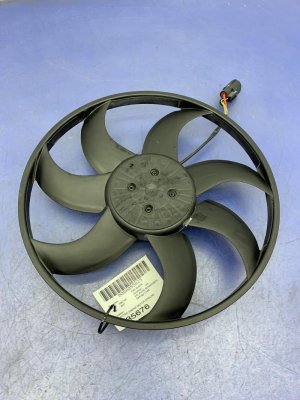
- Failed Cooling Fan Assembly 🔴 High Probability The fan control module is integrated into the fan assembly. Heat and vibration can lead to the failure of this electronic module or the fan motor itself over time, which is a documented issue on modern Fords. 🎬 Watch: Diagnose why your Mustang's radiator fan isn't working The entire unit is sold as one part (FR3Z-8C607-A) and is not designed to be serviced separately.
How to confirm: After confirming fuses and relays are good, use a multimeter to check for power and ground at the fan connector. If 12V power is present when the fan should be on (e.g., A/C activated), but the fan doesn't spin, the assembly is faulty. You can also try to spin the fan blades by hand (with engine off); if they feel seized, the motor has failed.
Typical fix: Replace the entire cooling fan assembly, which includes the fan, motor, and shroud.
Est. part cost: $270-$450 - Faulty Cooling Fan Relay 🟡 Medium Probability Relays are electromechanical switches that can wear out or fail from heat cycles and the high current draw of the fan motor. They are a common failure point in many automotive electrical circuits.
How to confirm: Locate the cooling fan relays in the under-hood fuse box (Battery Junction Box). For the S550 Mustang, these are typically in positions 89 (Electronic fan 1 relay) and 91 (Electronic fan 3 relay), with some diagrams also referencing relay 77. You can swap a suspect relay with an identical one from a non-critical circuit (like the horn) to see if the fan starts working.
Typical fix: Replace the faulty relay with a new one.
Est. part cost: $15-$30 - Blown Fuse ⚪ Low Probability
How to confirm: Visually inspect the high-amperage fuses related to the cooling fan circuit in the under-hood fuse box. A forum post for a 2017 GT identified fuses F29 (30A), F31 (40A), F42 (15A), and F55 (25A) as being related to the fan circuit. Use a multimeter to test for continuity if a visual inspection is inconclusive. Manufacturer service bulletin #SSM 48895 notes that some Ford vehicles may exhibit an open fuse (F34) in conjunction with P0480 and P0481.
Typical fix: Replace the blown fuse. Note that a blown fuse often indicates an underlying problem, such as a seized fan motor drawing too much current or a short in the wiring.
Est. part cost: $5-$10 - Damaged Wiring or Connector ⚪ Low Probability
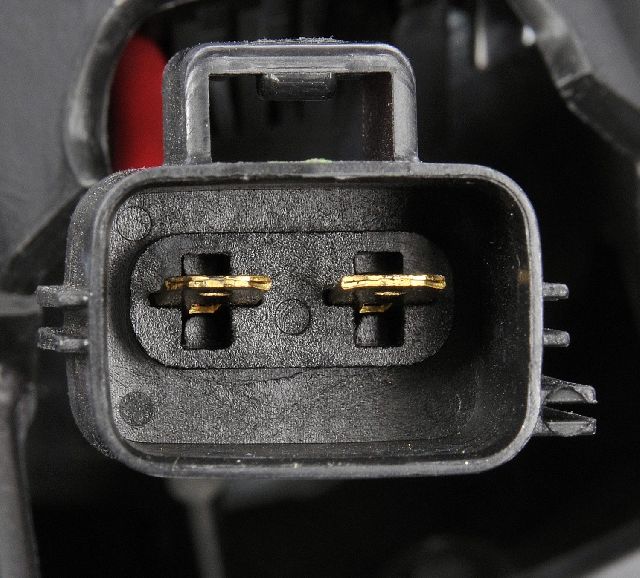
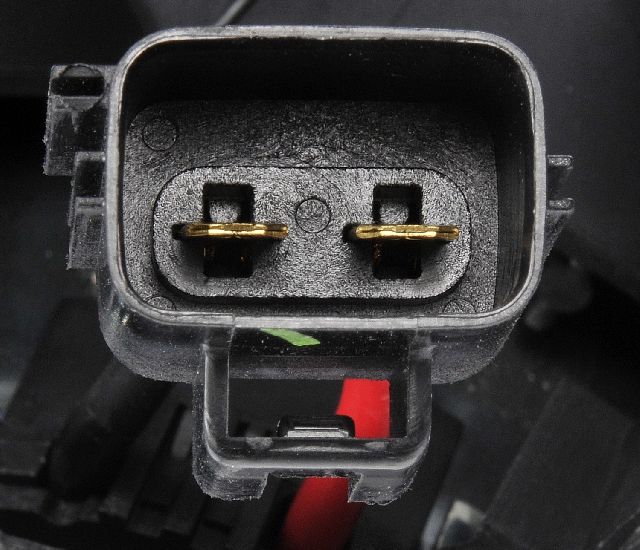
How to confirm: Visually inspect the wiring harness leading to the cooling fan assembly. Pay close attention to the main electrical connector for signs of melting, corrosion, or backed-out pins. A melted connector is a known issue on some Ford platforms, often caused by high resistance from a poor connection or a failing fan motor drawing excessive current.
Typical fix: Repair the damaged section of the harness or replace the connector pigtail. In severe cases of melting at the fuse box, a salvaged connector or fuse box repair may be necessary.
Est. part cost: $20-$60
Rare But Worth Checking
- Faulty Powertrain Control Module (PCM): This is extremely rare. The PCM should only be considered after all other possibilities, including the fan assembly and its entire circuit, have been exhaustively tested and ruled out. NHTSA ODI #10561056 describes a Ford vehicle that would not accelerate above 1,000 RPM while throwing a large cluster of codes including P0480 and various PCM-related throttle codes.
Diagnosis Steps
- Check for other stored DTCs. Address any other codes first, especially those related to temperature sensors or the PCM.
- Visually inspect the cooling fan for any physical obstructions that could prevent it from spinning. With the engine off, try to spin the blades by hand; they should move freely.
- Locate the under-hood fuse box (Battery Junction Box). Inspect the high-amperage fuses for the cooling fan circuit (e.g., F29, F31, F42, F55). Replace if blown.
- Identify the cooling fan relays in positions 89 and 91. Swap the main fan relay with an identical, known-good relay from a different system (e.g., horn) and see if the fan activates when commanded (turn A/C on). If it works, the original relay is bad.
- If fuses and relays are good, inspect the main electrical connector at the cooling fan assembly. Look for any signs of melting, charring, corrosion, or loose pins, which indicate a high-resistance failure.
- With the engine running and A/C on full blast (which should command the fan on), carefully use a multimeter to check for 12V power and a good ground at the fan assembly connector. A Mustang6G.com forum thread provides a detailed wiring diagram and testing procedure.
- If 12V power and a solid ground are present at the connector but the fan is not running, the cooling fan assembly has failed and must be replaced.
Parts You'll Likely Need
- Engine Cooling Fan Assembly
(OEM #FR3Z-8C607-A)— This is the most common failure for code P0480 on this vehicle. The assembly includes the fan motor, shroud, and the non-serviceable electronic control module, which is often the root cause.
Trusted brands: Motorcraft, Dorman, Four Seasons
OEM price range: $270-$450
Aftermarket price range: $150-$300 - Cooling Fan Relay
(OEM #8T2T-14B192-AA (or similar multi-purpose relay))— A relay is a common and inexpensive failure point that can prevent power from reaching the fan assembly. Located in the under-hood fuse box at positions 89 and 91.
Trusted brands: Motorcraft, Standard Motor Products
OEM price range: $15-$30
Aftermarket price range: $10-$20 - Cooling Fan Connector Pigtail
(OEM #WPT-764 (Note: may be discontinued, check aftermarket))— In cases where high resistance has melted the connector at the fan assembly, this pigtail is required to make a safe repair.
Trusted brands: Motorcraft, Dorman, Standard Motor Products
OEM price range: $25-$50
Aftermarket price range: $15-$35
Platform-Specific Known Issues
- A detailed diagnostic thread on Mustang6G.com for a 2017 GT with a non-functional fan provides specific fuse numbers (F29, F31, F42, F55) and relay locations (FC1/89, FC3/91) to check in the Battery Junction Box, along with a wiring diagram and step-by-step electrical testing advice.
- While more common on the previous S197 generation, melting of the fuse box terminals or the fan connector itself due to high current draw is a known Ford issue that can occur on the S550 as well. If a fuse or relay is good but there's no power, inspect the underside of the fuse box for heat damage.
- Manufacturer service bulletin #SSM 47999 notes that some Ford vehicles may exhibit a concern where the engine cooling fan stays on at all times or is inoperative, with P0480 and P0691 among the stored codes.
Mechanic-Grade Diagnostic Values
- Cooling Fan Relay Coil Resistance — expected: 90 - 120 Ohms. Failure: A reading of OL (Open Loop) or significantly outside this range indicates a faulty relay coil.
- Cooling Fan Motor Winding Resistance — expected: 0.2 - 5.0 Ohms. Failure: A reading of OL indicates an open winding, while a reading near zero could indicate a short. This is a general value; a high-current motor will have low resistance.
- Voltage at Fan Connector — expected: Approximately battery voltage (11V - 14.5V). Failure: No voltage when the fan is commanded ON (e.g., A/C active) points to a problem upstream in the relays, fuses, or wiring.
- Alternator AC Ripple Voltage — expected: Less than 50 millivolts (0.050V AC). Failure: Significantly higher AC voltage indicates failing diodes in the alternator, which can cause numerous, difficult-to-diagnose electrical faults across the vehicle, potentially including a P0480.
Scan Tool Commands That Help
- Ford IDS or FORScan: Active Commands / Bidirectional Control for Cooling Fan — Use this to directly command the cooling fan ON and OFF, or to a specific duty cycle (e.g., 50%). This bypasses temperature sensors and allows you to isolate the problem. If the fan runs with the scan tool command, the issue is likely with the sensor inputs to the PCM. If it does not run, the fault lies in the circuit, control module, or fan motor itself.
- Ford IDS or FORScan: Monitor PIDs: FAN_SPEED, FANDC, FAN_DES — Monitor the 'Desired Fan Speed' (FAN_DES) or 'Commanded Duty Cycle' (FANDC) PID and compare it to the 'Actual Fan Speed' (FAN_SPEED) PID. A large discrepancy between the commanded state and the actual reported speed confirms a fault in the fan system.
Wiring & Ground Locations
- C146 — The main in-line electrical connector that joins the engine wiring harness to the cooling fan assembly harness.. This is the primary connection point for power and control signals to the fan assembly. It is a critical point to check for voltage, ground, and signs of physical damage like melting or corrosion.
- Battery Negative Terminal & Associated Grounds — The main battery ground cable connection at the battery post, and where it bolts to the chassis.. A loose or corroded main ground can cause widespread electrical havoc, including intermittent power loss to modules and components. In one documented case, a loose negative battery terminal caused symptoms that mimicked a failed fuse box. Always ensure this connection is clean and tight before diagnosing complex electrical faults.
- Engine Block / Firewall Grounds — Key ground straps are typically located from the engine block to the chassis/firewall.. The cooling fan is a high-current device, and a poor engine or chassis ground can create resistance, leading to heat, voltage drop, and control circuit malfunctions. Ensuring all major grounds are secure is a foundational step.
Real Owner Repair Stories
- Mustang6G.com user 'Todd93' (2016 Mustang GT, ~23k miles) — Intermittent no-start (just a click), which then escalated to a complete loss of all electrical power. Tapping the under-hood fuse box would temporarily restore power.
❌ Tried (didn't work) Replaced starter, Replaced battery, Replaced starter relay
✅ What actually fixed it The negative battery terminal clamp was loose. Tightening the clamp on the battery post resolved all symptoms of complete power loss. - S197Forum.com user 'mineralgoogt' (S197 Mustang (older generation, but relevant failure mode)) — Cooling fan would stop working after driving for a while, leading to overheating.
❌ Tried (didn't work) Initial theories about tune settings being the cause were dismissed.
✅ What actually fixed it The user discovered the Battery Junction Box (fuse box) terminal socket for the high-speed fan relay was melted. The fix involved repairing the terminal in the fuse box. It was noted that the relay still became very hot, indicating the root cause is high current draw from the fan, which damages the connection point over time. - NHTSA ODI #11531903 — An owner reported that the vehicle would randomly shut off and then turn back on. Upon inspection, they found oil in the spark plugs and OBD II error codes P0480 and P0481.
OEM Part Supersession History
FR3Z-8C607-A→None found— This part number appears to be consistent for the entire 2015-2023 generation for applicable engines (3.7L, 5.0L, 5.2L).
Heads up: This assembly will NOT fit the 2.3L EcoBoost or the GT500 models.
Model Year Variations Within This Range
- 2015-2023: While a significant refresh occurred in 2018 with new front fascia, lights, and optional digital instrumentation, the core cooling system components related to code P0480, including the fan assembly (FR3Z-8C607-A) and the under-hood fuse box layout for fan relays/fuses, remained consistent. Diagnosis for P0480 is the same across the entire generation.
Diagnostic Flowchart
Other Known Issues on This Vehicle
Issues unrelated to this code that are worth knowing about as an owner of this generation:
- Engine 'BBQ Tick' or 'Typewriter Tick' 🟠 Medium — Commonly reported across 2011+ Coyote engines, especially prominent on 2018+ models. The noise is intermittent and may or may not indicate a serious problem. Theories range from normal direct injection noise to piston slap or bearing issues. (Ref: No specific TSB, but some owners have received new short blocks under warranty for related issues like cylinder scoring.)
- MT82 Manual Transmission Problems 🔴 High — Widespread complaints on 2011-2019 models, including high-RPM lockout, grinding shifts (especially 2-3), and premature wear. A class-action lawsuit was filed regarding these issues. The 2018+ MT82-D4 version had some improvements but also its own issues. (Ref: Multiple TSBs have been issued over the years to address shift quality, but no federal recall was mandated.)
- 10R80 Automatic Transmission Harsh Shifting 🟠 Medium — Some owners of 2018+ Mustangs with the 10-speed automatic report harsh or delayed shifts, or a buck/jerk sensation at certain speeds. (Ref: TSB 23-2123 (supersedes 22-2139) and others exist, often involving PCM reprogramming or inspection of the valve body.)
- Oil Consumption / 'BBQ Tick' leading to Piston Slap 🔴 High — A more severe variant of the 'tick' where it is caused by excessive oil consumption and leads to scored cylinder walls and piston slap. This is less common but can result in the need for a new engine short block.
Used vs. New Parts: Buying Guide for This Vehicle
When a used part is the smart pick: A used OEM (Motorcraft) fan assembly can be a viable cost-saving measure if sourced from a verified low-mileage donor vehicle, particularly one with front-end damage that did not impact the radiator or fan. The primary risk is the unknown remaining lifespan of the integrated fan motor and control module.
Donor-vehicle mileage cap: roughly under 50000 miles for the part to have meaningful remaining life.
What to inspect on the donor part:
- Spin the fan blades by hand; they should move freely with no grinding or excessive resistance.
- Inspect the plastic shroud for any cracks or broken mounting tabs.
- Critically, examine the electrical connector. Do not purchase if there are any signs of melting, charring, green corrosion, or backed-out pins.
- Confirm the OEM part number on the unit matches FR3Z-8C607-A.
OEM-only on this vehicle (don't cheap out):
- Engine Cooling Fan Assembly: While not strictly 'OEM-only', forum users often report aftermarket fans can be noisier than the original. For guaranteed fit, function, and noise level, Motorcraft is the safest choice.
Aftermarket brands forum-validated for this vehicle:
- TYC: Sometimes regarded as a decent alternative.
- Dorman: Widely available and often the most affordable, but reviews can be mixed regarding long-term durability and connector fitment.
Brands owners have reported issues with on this vehicle:
- No specific brands are consistently cited as 'avoid at all costs', but general advice suggests being wary of the cheapest no-name options, as fan motor quality and noise levels are common complaints with lower-tier aftermarket assemblies.
Real Owner Stories
Aggregated from forums and TSBs cited above. Mileages and costs reflect what owners reported in those sources.
2017 Ford Mustang GT 5.0L
Symptoms: The radiator fan was not turning on, leading to potential overheating concerns. The owner sought specific wiring diagrams and fuse locations to troubleshoot the dead fan.
What fixed it: The owner followed a step-by-step electrical testing procedure using a multimeter to check for power and ground at the fan connector after verifying fuses and relays.
Source hint: Mustang6G.com - Thread: 'Radiator Fan Not Turning On'
2015-2023 Ford Mustang (S550 Platform)
Symptoms: Symptoms of total power loss that initially appeared to be a major electrical failure or a bad fuse box.
What fixed it: The issue was resolved by tightening a loose negative battery terminal.
Source hint: Mustang6G.com - Thread: 'Electrical issue **SOLVED**'
Ford Mustang (S197/S550 transition context)
Symptoms: Cooling fan high speed relay socket in the Battery Junction Box (BEC) melted due to high current draw.
What fixed it: Inspection of the underside of the fuse box for heat damage and repair of the melted relay socket/fuse box terminals.
Source hint: S197Forum.com - Thread: 'Cooling Fan High Speed Relay BEC melted'
Related OBD-II Codes
Frequently Asked Questions
Can I just replace the fan motor on my 2015-2023 Mustang GT?
Which specific fuses should I check for a P0480 on my 2017 Mustang GT?
Where are the cooling fan relays located on the S550 Mustang?
My A/C is blowing warm air when I'm stopped, but the car doesn't overheat on the highway. Is this related to P0480?
I hear a clicking sound from the fuse box but the fan won't start. What does this mean?
Is a melted fan connector a common issue for this generation of Mustang?
Helpful Videos
Used OEM Parts in Stock
New Aftermarket Parts Available

The information in this article is provided for general reference and educational purposes only. Vehicle specifications, procedures, and part compatibility can vary by production date, trim level, and region. Always consult your vehicle's factory service manual and verify part numbers before purchasing or performing repairs. Safety-critical components such as airbags, seat belts, and braking systems should be installed by a qualified professional.
- Ford Mustang:
- 🎬 Helpful Videos
- 🛍️ Shop This Part
- What's Unique About the 2015-2023 Ford Mustang
- Symptoms You May Notice
- Most Likely Causes
- Rare But Worth Checking
- Diagnosis Steps
- Parts You'll Likely Need
- Platform-Specific Known Issues
- Mechanic-Grade Diagnostic Values
- Scan Tool Commands That Help
- Wiring & Ground Locations
- Real Owner Repair Stories
- OEM Part Supersession History
- Model Year Variations Within This Range
- Diagnostic Flowchart
- Other Known Issues on This Vehicle
- Used vs. New Parts: Buying Guide for This Vehicle
- Real Owner Stories
- 2017 Ford Mustang GT 5.0L
- 2015-2023 Ford Mustang (S550 Platform)
- Ford Mustang (S197/S550 transition context)
- Related OBD-II Codes
- Frequently Asked Questions
- 🎟️ Get 5% Off