

P0462 on 2006-2016 BMW X3: Fuel Level Sensor 'A' Circuit Low Causes and Fixes
This code almost always means one of the two fuel level sending units in the saddle tank has failed. The fuel gauge will be erratic or stuck on empty. Expect to replace the faulty sending unit, which is accessed from under the rear seat. Diagnosis with a BMW-specific scan tool is key to identifying which of the two sensors is at fault.
- P0462 on a BMW X3 points to a fault in the fuel level measurement system, most often a failed sending unit.
- Your X3 has two fuel level sending units; you must diagnose which one has failed before buying parts.
- The most common symptoms are a Check Engine Light and a fuel gauge that is stuck on empty or behaves erratically.
- Access to the sending units is under the rear seat, making this a manageable DIY repair for those comfortable working around the fuel tank.
- Always disconnect the battery and take proper safety precautions before working on the fuel system.
What's Unique About the 2006-2016 BMW X3
The BMW X3's all-wheel-drive system necessitates a saddle-style fuel tank that straddles the driveshaft. This design requires two fuel level sending units—one on the passenger side (often integrated with the fuel pump) and one on the driver's side. The vehicle's computer, typically the JBE module, receives separate resistance readings from each sensor and sends a combined fuel level message to the instrument cluster (KOMBI) over the CAN bus. When one sensor fails and sends a low voltage (or very low resistance) signal, it can cause the entire system to report an incorrect fuel level, often leading to a gauge that reads empty or fluctuates wildly. This dual-sender setup is the primary reason for fuel gauge issues on this platform.
Generation note: This guide covers two generations of the BMW X3: - E83 (2006-2010): On these models, the standalone driver's side (left-hand) sending unit is a frequent failure point. Corroded wiring at the top of the fuel tank access panels is also a known issue due to potential moisture exposure under the rear seat. The N52 engine was common in these models. 🎬 Watch: Complete E83 fuel tank repair and sensor replacement guide. - F25 (2011-2016): These models also suffer from sending unit failures. The issue is common across the N20, N52, and N55 engines used in this generation. The fuel tank capacity is approximately 67 liters, split between the two halves of the saddle tank. A critical issue on some F25 models is that the left-hand (driver's side) fuel level sensor may be permanently integrated into the fuel tank and is not serviceable separately, requiring a complete fuel tank replacement to fix.
Symptoms You May Notice
- Fuel gauge reads empty or is stuck at a certain level (e.g., half a tank).
- Fuel gauge fluctuates erratically.
- Check Engine Light is on.
- Low fuel warning light stays on even with a full tank.
- Distance-to-empty calculation is incorrect or shows '---'.
- In rare cases, if the failure is related to the main fuel pump module, the engine may stall or hesitate.
- The fuel level reading in the BMW ConnectedDrive app will also be incorrect.
- Replacing the wrong sending unit. The X3 has two, and proper diagnosis is needed to identify which one is sending the low voltage signal. Using a BMW-specific scan tool is the best way to do this.
- Replacing the fuel pump when only the separate, driver's-side sending unit has failed.
- Assuming the sensor is bad when the real issue is a corroded connector or a wire shorted to ground under the seat. 🎬 See how to fix a rotted fuel level sending unit harness.
Most Likely Causes
- Faulty Fuel Level Sending Unit 🔴 High Probability The variable resistor contacts on the sending unit wear out over time from the float arm's constant movement. Fuel contaminants can also degrade the resistor, leading to dead spots or short circuits that result in a low voltage signal.
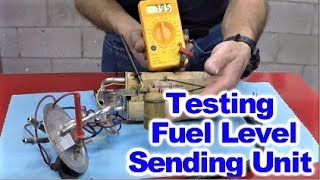
How to confirm: Access the sending units under the rear seat. Disconnect the suspect unit and measure its resistance with a multimeter while manually moving the float arm. The resistance should change smoothly. 🎬 Watch: How to test a fuel level sensor with a multimeter. For many BMWs, the range is approximately 50 Ohms (empty) to 990 Ohms (full). A reading near zero or an open circuit (infinite ohms) indicates a failed sensor.
Typical fix: Replace the faulty fuel level sending unit. The X3 has two; one on the driver's side (left) and one on the passenger side (right, usually part of the fuel pump assembly). Diagnosis is required to determine which one has failed. Note: On some F25 models, the left-side sensor is integrated into the tank and requires tank replacement.
Est. part cost: $150-$300 - Wiring Harness or Connector Issue 🟡 Medium Probability The connectors on top of the fuel tank are located under the rear seat cushions. Spills or moisture can lead to corrosion of the connector pins. Wires can also chafe against the chassis or seat frame, causing a short to ground.
How to confirm: Visually inspect the wiring harness and connector going to the fuel level sensor for corrosion (green/white powder), damage, or pinched wires. Perform a continuity test on the signal wire between the sensor and the JBE module to check for a short to ground. Resistance between the signal wire and chassis ground should be very high (over 10,000 ohms).
Typical fix: Clean the corroded connector terminals with a contact cleaner and apply dielectric grease. Repair the damaged section of the wiring harness, ensuring proper insulation.
Est. part cost: $10-$50 - Failing Fuel Pump Module ⚪ Low Probability The passenger-side (right) sending unit is typically integrated into the main fuel pump assembly. A failure within the assembly's internal wiring or housing can affect the sensor circuit.
How to confirm: This is usually the cause if you also experience engine stalling, hesitation, a whining noise from the rear seat, or a no-start condition in addition to the P0462 code. A fuel pressure test would confirm a weak or dead fuel pump.
Typical fix: Replace the entire fuel pump module assembly.
Est. part cost: $300-$600
Rare But Worth Checking
- Instrument Cluster Malfunction: While rare, the instrument cluster (KOMBI) itself can fail, causing incorrect gauge readings. This is usually diagnosed by running a self-test on the cluster via a hidden menu or scan tool. If the gauge sweeps correctly during the test, the cluster is likely not the problem.
- Control Module Fault (JBE): A fault in the Junction Box Electronics (JBE) module that processes the fuel level signals is possible but highly unlikely. This should only be considered after all other possibilities have been exhausted and confirmed with advanced diagnostics.
Diagnosis Steps
- Scan for codes and confirm P0462 is present. Note whether the fault points to sensor 1 (left) or sensor 2 (right).
- Use a BMW-capable scan tool (like INPA/ISTA) to view live data for both the left and right fuel level sensors. The data is often displayed in both Ohms and Liters. The sensor reading a very low, fixed value (e.g., near 0 Ohms) is the culprit.
- Access the hidden menu in the instrument cluster to view raw fuel level readings from each tank sensor. This can help confirm the scan tool data without requiring a tool.
- If you cannot read live data, gain access to the top of the fuel tank by removing the rear seat bottom cushion and the circular metal access panels on both the driver's and passenger's sides.
- Visually inspect the wiring and connectors for both sending units. Look for green/white corrosion, frayed wires, or loose connections.
- Disconnect the connector for the suspected faulty sensor. Measure the resistance (Ohms) across the sensor's pins while manually moving the float arm up and down. The resistance should change smoothly from ~50 to ~990 Ohms. If it reads near 0, is erratic, or doesn't change, the sensor has failed.
- If the sensor tests good, check the signal wire in the harness for a short to ground. With the sensor and control module disconnected, check for continuity between the signal wire and a known good ground. There should be no continuity (infinite resistance).
- If wiring and sensors are good, the issue may lie with the instrument cluster or JBE module, which may require professional diagnosis.
Parts You'll Likely Need
- Fuel Level Sending Unit (Left/Driver's Side)
(OEM #E83: 16146766165, F25: 16117285450)— This is the standalone sensor on the driver's side and a very common failure point on both generations.
Trusted brands: Genuine BMW, VDO
OEM price range: $200-$250
Aftermarket price range: $150-$200 - Fuel Pump Assembly (Right/Passenger's Side)
(OEM #E83: 16147180044, F25: 16117285452 (example, verify by VIN))— This assembly includes the main fuel pump and the right-side fuel level sensor. It's replaced if the pump is failing or if diagnosis points specifically to the right-side sensor.
Trusted brands: Genuine BMW, VDO, Bosch
OEM price range: $400-$500
Aftermarket price range: $250-$350 - Fuel Tank Sender Lock Ring and Seal
(OEM #16116762417 (Lock Ring), 16141184022 (Seal))— The seal is a single-use item and should always be replaced when accessing the fuel tank to prevent fuel leaks and fumes. The plastic lock ring can become brittle and may break during removal.
Trusted brands: Genuine BMW
OEM price range: $15-$30
Aftermarket price range: $10-$20
Related Codes That Often Appear With This One
- P0463 — P0463 is 'Fuel Level Sensor 'A' Circuit High'. It's possible to see this code if the wiring is intermittently shorting and opening, causing both high and low voltage faults.
Platform-Specific Known Issues
- Real Owner Experience: DIY on E83: A detailed DIY video for the E83 X3 shows the complete process of replacing both sending units, including part numbers for the sensors, lock rings, and even the specific solder and heat shrink tubing used to repair wiring. This highlights the accessibility of the repair for a skilled DIYer.
Mechanic-Grade Diagnostic Values
- Fuel Level Sensor Signal Voltage — expected: 0.5V (empty) to 4.5V (full). Failure: A sustained reading below 0.5V will trigger P0462.
- Fuel Level Sensor Resistance (General BMW) — expected: Approx. 50 Ω (empty) to 990 Ω (full), with smooth transition.. Failure: A reading near 0 Ω indicates a short. An infinite/open reading or erratic jumps indicate a failed resistor track.
- Fuel Level Sensor Ground Circuit Resistance — expected: Less than 5.0 Ω. Failure: Resistance higher than 5.0 Ω indicates a poor ground connection, which can cause incorrect readings.
Hidden / Shadow Codes Worth Checking
- B7F70B: Instrument cluster: fuel level sensor implausible. This code indicates a software error in the instrument cluster (KOMBI) can cause the fuel gauge to read low after refueling, even with a functional sensor. (see via This is a BMW-specific hex code visible with advanced scan tools like ISTA. It is stored in the instrument cluster's fault memory.)
Scan Tool Commands That Help
- ISTA (Rheingold): Call Up ECU Functions > JBE (or KOMBI) > Diagnosis Scan / Live Data — This is the primary diagnostic step to read the individual resistance (Ohms) and calculated volume (Liters) from both the left and right fuel level sensors separately. This definitively identifies which of the two sensors is providing the faulty 'low' signal without disassembly.
- ISTA (Rheingold): Vehicle Management > Service Functions > Program/Encode Vehicle — Used to correct software-related fuel gauge errors, such as those that trigger fault code B7F70B. This reprograms the instrument cluster and other modules to the latest software level. This should only be done after confirming the hardware (sensors, wiring) is functional.
- ISTA (Rheingold): Calculate Test Plan — After reading fault codes, ISTA can generate a guided diagnostic procedure ('test plan') that provides step-by-step instructions for checking components, wiring, and running functional tests to isolate the root cause of the P0462 code.
Wiring & Ground Locations
- JBE Connector X14271 (54-pin, Black) — The Junction Box Electronics (JBE) module is located behind the glove box.. This connector carries the direct inputs from the fuel level sensors. Pin 7 is the signal from fuel-level sensor 1 (Right/Pump side), and Pin 9 is the signal from fuel-level sensor 2 (Left side). Probing these pins can verify if the signal is reaching the JBE, helping to isolate a wiring vs. module fault.
- Chassis Ground Points — Main chassis ground points are typically located in the passenger footwell area behind trim panels or on the engine mount brackets connecting the engine block to the frame.. The fuel level sensor circuit relies on a clean ground connection. A corroded or loose ground strap can cause a voltage drop and trigger a P0462 code. The specific ground point for the fuel senders should be visually inspected for corrosion (green/white powder) if sensor and signal wire tests pass.
Real Owner Repair Stories
- Mechanic.com.au Technical Article (2011 BMW X3 (F25)) — Vehicle stalled and would not restart. Fuel gauge showed half-full, but the tank was actually empty.
❌ Tried (didn't work) Initially misdiagnosed as a failed fuel pump because the car stalled. The replacement of the right-side fuel pump/sender assembly did not fix the inaccurate gauge reading.
✅ What actually fixed it Diagnosis revealed the left-hand (driver's side) fuel level sensor was faulty. However, on this specific F25 model, the sensor was found to be permanently integrated into the fuel tank during manufacturing and was not available as a separate part. The official (and extremely expensive) BMW repair was to replace the entire fuel tank assembly. - Bimmerpost Forum User (2014 BMW X3 xDrive28i (F25)) — Speedometer worked, but other gauges (fuel, RPM, temp) were dead.
❌ Tried (didn't work) Initial assumption was a failed instrument cluster.
✅ What actually fixed it Using ISTA, the user was able to 'Call up ECU functions' and see that the ECU was correctly receiving the fuel level value from the sensors. This proved the sensors and wiring to the ECU were good, and the fault was isolated to the instrument cluster (KOMBI) itself not displaying the data it was receiving. The final fix was cluster repair or replacement.
OEM Part Supersession History
16-14-6-766-160→16146766165— Part revision or manufacturer change.
Heads up: These parts are for the E83 (2004-2010) left-side sending unit and are generally interchangeable.
Model Year Variations Within This Range
- 2011-2016 (F25 Generation): On some F25 models, the left-side (driver's side) fuel level sensor is integrated into the fuel tank and is not a separately replaceable part. This is a major departure from the E83 generation, where both sensors are individually serviceable. Confirming part availability before beginning the repair is critical for the F25.
Diagnostic Flowchart
Other Known Issues on This Vehicle
Issues unrelated to this code that are worth knowing about as an owner of this generation:
- E83: Transfer Case Actuator Gear Failure 🔴 High — Very common, especially on 2004-2007 models. The plastic gear inside the actuator motor wears out, causing 4x4, ABS, and Brake warning lights.
- F25 (N20 Engine): Timing Chain Guide Failure 🔴 High — Common on 2011-2015 models with the N20 engine. Plastic guides break, leading to a whining noise and potentially catastrophic engine failure if ignored. (Ref: BMW issued extended warranties and service actions for this issue.)
- E83 & F25: Panoramic Sunroof Rattle/Malfunction 🟠 Medium — Widespread across both generations. The mechanism can fail, causing rattles, jamming, or water leaks from clogged drain tubes.
- E83 & F25: Oil Leaks (Valve Cover & Oil Filter Housing Gasket) 🟠 Medium — Extremely common on N52, N55, and N20 engines after 60,000 miles. Gaskets become brittle and leak oil onto the engine block or exhaust.
- F25 (N55 Engine): Electric Water Pump & Thermostat Failure 🔴 High — Common failure item between 60,000-100,000 miles. The pump can fail without warning, leading to rapid engine overheating.
- E83 & E9x Platform: ELV Steering Lock Malfunction 🔴 High — A common issue, often triggered by a weak battery, where the electronic steering lock counter exceeds its limit, preventing the car from starting and displaying a red steering wheel icon. (Ref: SI B61 29 06 (though this TSB is for related no-start issues, the ELV fault is widely known))
Used vs. New Parts: Buying Guide for This Vehicle
When a used part is the smart pick: For the F25 model with a non-serviceable integrated left-side sensor, sourcing a complete, used fuel tank from a verified low-mileage donor vehicle can be a cost-effective alternative to buying a new tank from BMW, which is prohibitively expensive. For the E83, or the right-side F25 assembly, used parts are generally not recommended.
Donor-vehicle mileage cap: roughly under 60000 miles for the part to have meaningful remaining life.
What to inspect on the donor part:
- Verify the donor vehicle's VIN to ensure compatibility.
- Obtain mileage documentation for the donor vehicle.
- Inspect the used tank for any external damage, cracks, or signs of previous repairs.
- Ensure all connectors and lines on the tank are intact and not brittle or damaged during removal.
OEM-only on this vehicle (don't cheap out):
- Fuel Tank Seal / Gasket: This is a critical single-use item that must be purchased new to prevent fuel leaks and vapor smells.
- Fuel Tank Lock Ring: The original plastic ring often becomes brittle and can break on removal. It is inexpensive and should be replaced with a new OEM part.
Aftermarket brands forum-validated for this vehicle:
- VDO: VDO is the original equipment manufacturer (OEM) for many BMW fuel system components, including the sending units and fuel pump. A VDO-branded part is often identical to the Genuine BMW part without the BMW logo and at a lower cost.
Brands owners have reported issues with on this vehicle:
- Unbranded, no-name sending units from online marketplaces. These often have poor quality resistors that fail prematurely or provide inaccurate readings out of the box.
Real Owner Stories
Aggregated from forums and TSBs cited above. Mileages and costs reflect what owners reported in those sources.
2007 BMW X3 (E83)
Symptoms: Incorrect fuel level reading that prompted a DIY repair.
What fixed it: The owner performed a complete replacement of both fuel level sending units and also repaired some of the associated wiring using solder and heat shrink tubing.
Source hint: vehicle_specific_issues: Real Owner Experience: DIY on E83
Related OBD-II Codes
Frequently Asked Questions
My 2011 X3's fuel gauge is stuck on empty. How do I know which of the two sending units has failed?
I heard the fuel level sensor repair on some F25 X3 models is extremely expensive. Why is that?
Where are the fuel level sensors physically located on my X3 if I want to inspect them myself?
What resistance values should I see when testing a working fuel level sensor on my BMW?
Can the P0462 code and a faulty fuel gauge cause my X3 to stall or hesitate?
Is this fuel gauge problem common on other BMW models from the same era?
My fuel gauge is fluctuating, but the Check Engine Light isn't on yet. What should I do?
Helpful Videos
![BMW X3 [E83] 2004-2010 complete fuel tank Repair DIY!](https://img.youtube.com/vi/EFPMOtBGCTA/mqdefault.jpg)

Used OEM Parts in Stock


New Aftermarket Parts Available


The information in this article is provided for general reference and educational purposes only. Vehicle specifications, procedures, and part compatibility can vary by production date, trim level, and region. Always consult your vehicle's factory service manual and verify part numbers before purchasing or performing repairs. Safety-critical components such as airbags, seat belts, and braking systems should be installed by a qualified professional.
- BMW X3:
- 🎬 Helpful Videos
- 🛍️ Shop This Part
- What's Unique About the 2006-2016 BMW X3
- Symptoms You May Notice
- Most Likely Causes
- Rare But Worth Checking
- Diagnosis Steps
- Parts You'll Likely Need
- Related Codes That Often Appear With This One
- Platform-Specific Known Issues
- Mechanic-Grade Diagnostic Values
- Hidden / Shadow Codes Worth Checking
- Scan Tool Commands That Help
- Wiring & Ground Locations
- Real Owner Repair Stories
- OEM Part Supersession History
- Model Year Variations Within This Range
- Diagnostic Flowchart
- Other Known Issues on This Vehicle
- Used vs. New Parts: Buying Guide for This Vehicle
- Real Owner Stories
- 2007 BMW X3 (E83)
- Related OBD-II Codes
- Frequently Asked Questions
- 🎟️ Get 5% Off