

P0462 on 2006-2016 BMW 5 Series: Fuel Level Sensor Circuit Low Causes and Fixes
This code means the fuel gauge is getting an abnormally low voltage reading from a fuel level sensor. On these BMWs, it's usually a failed fuel level sensor in the tank or corroded wiring under the rear seat. Expect to pay $150-$300 for a new sensor, with DIY being possible for those comfortable working with fuel system components.
- P0462 on a BMW 5 Series points to a problem with one of the two fuel level sensors, or their wiring.
- The most common causes are a failed sensor or corroded/disconnected wiring under the rear seat.
- Diagnosis should start with a BMW-specific scan tool to identify which of the two sensors is at fault.
- On F10 models, be skeptical of claims that the entire fuel tank needs to be replaced; the issue is often a serviceable part or a simple wiring connection.
What's Unique About the 2006-2016 BMW 5 Series
The 2006-2016 BMW 5 Series uses a saddle-shaped fuel tank that straddles the driveshaft, requiring two separate fuel level sensors to get an accurate reading—one on the right (passenger) side and one on the left (driver) side. The 'A' circuit in the code usually refers to the primary sensor, which is often the right-side unit integrated with the fuel pump. A failure on either side can disrupt the combined reading calculated by the control module and trigger this code. Diagnosis involves checking both sensors and their respective wiring, which are accessed from under the rear seat cushions.
Generation note: This range covers two generations: the E60/E61 (2006-2010) and the F10/F11/F07 (2010-2016). The fundamental design of a saddle tank with two sensors is similar, but part numbers and specific procedures differ. On the E60, both sensors are readily available and replaceable. On the F10, some owners have been told by dealers that a faulty driver's side sensor requires complete fuel tank replacement because it is considered inaccessible. However, other owners and independent shops have successfully replaced just the sensor or found the issue to be a simple disconnected wire inside the tank.
Symptoms You May Notice
- Fuel gauge reads empty or is stuck at a certain level
- Low fuel warning light is always on
- Check Engine Light is illuminated
- Distance-to-empty display is inaccurate or shows '---'
- Fuel gauge fluctuates erratically
- Car may not start if the control module believes the tank is empty (rare)
- Replacing the fuel pump when only the integrated level sensor has failed. Sometimes the sensor can be replaced separately from the pump.
- Replacing the wrong side fuel level sensor. It's crucial to use a diagnostic tool to determine which of the two sensors is sending the faulty signal before ordering parts.
- Replacing the entire fuel tank on an F10 model based on dealer advice, when the issue may be a serviceable sensor, a wiring problem, or a simple disconnected plug inside the tank.
Most Likely Causes
- Failed Fuel Level Sensor 🔴 High Probability The sensor's variable resistor can wear out over time, or the float arm can get stuck or damaged. With two sensors in the tank, there is double the chance of one failing compared to a single-sensor system. Sometimes the internal mechanism can get stuck, and cleaning it may resolve the issue without replacement. 🎬 Learn how to clean a fuel level sensor to restore function.
How to confirm: Access the sensor under the rear seat. Disconnect it and measure the resistance with a multimeter while moving the float arm. The resistance should change smoothly. For many BMWs, the range is approximately 75 ohms when empty and close to 0-10 ohms when full. An open circuit (infinite resistance) or a short (zero resistance at all float positions) indicates a failed sensor. A BMW-specific scan tool can also read the raw data in liters or ohms from each sensor independently to pinpoint the faulty one.
Typical fix: Replace the faulty fuel level sensor. On many models, the right-side sensor is integrated with the fuel pump assembly, while the left-side sensor is a separate unit. Always replace the rubber sealing gasket when opening the tank.
Est. part cost: $100-$300 - Wiring or Connector Issue 🟡 Medium Probability The connectors for the fuel level senders are located under the rear seat cushions. Spilled liquids, moisture, or simple age can cause corrosion on the connector pins, leading to a low voltage or short-to-ground condition. In some F10 models, the wiring connector inside the tank has been found to simply become disconnected from the sensor.
How to confirm: Visually inspect the connectors under the rear seat access panels for any green or white corrosion, pushed-out pins, or damaged wires. For an F10, check that the blue 2-pin connector is securely attached to the sensor assembly inside the tank. Perform a voltage drop test on the signal and ground wires between the sensor and the control module.
Typical fix: Clean corroded connectors using an electrical contact cleaner. If corrosion is severe, the connector pigtail may need replacement. If the internal connector is detached, simply reconnecting it will solve the problem.
Est. part cost: $20-$80
Rare But Worth Checking
- Faulty Instrument Cluster (KOMBI) or Junction Box Electronics (JBE): While rare, the module responsible for interpreting the sensor's signal can fail. This is usually due to an internal fault, like a bad solder joint. This should only be considered after both sensors and all wiring have been thoroughly tested and confirmed to be good.
Diagnosis Steps
- Read the fault codes with a BMW-capable scan tool to confirm P0462 is present and see if any other relevant codes (like P0463) are stored.
- Use the scan tool to view live data for both the right and left fuel level sensors. The readings are often in liters or ohms. This will quickly identify which sensor is providing an illogical reading (e.g., stuck at 0 or a very high number).
- Based on the scan tool data, access the suspect sensor by removing the rear seat bottom cushion and the metal access panel held by 10mm nuts.
- Visually inspect the electrical connector and wiring for any signs of corrosion, moisture, or damage. On F10 models, check if the internal sensor connector has become unplugged.
- If the wiring looks good, disconnect the sensor and use a multimeter to test its resistance. Manually move the float arm up and down; the resistance should change smoothly throughout its range of motion. Compare the readings to the manufacturer's specifications (typically ~0-10 Ohms full, ~75 Ohms empty).
- If the sensor tests good, check the wiring between the sensor connector and the control module (JBE or Instrument Cluster) for a short to ground or an open circuit.
- If both the sensor and wiring are confirmed to be good, the issue may lie with the control module itself, which would require more advanced diagnostics.
Parts You'll Likely Need
- Fuel Level Sensor (Left/Driver Side)
(OEM #16117373457 (F10), 16146765825 (E60))— This is the standalone sensor on the driver's side of the tank. It is a common failure point. Part numbers vary by generation.
Trusted brands: Bosch, VDO, Genuine BMW
OEM price range: $150-$200
Aftermarket price range: $90-$140 - Fuel Pump Assembly with Level Sensor (Right/Passenger Side)
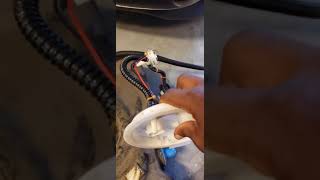
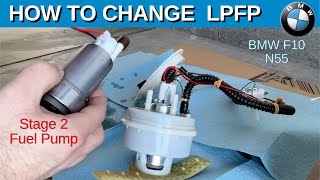
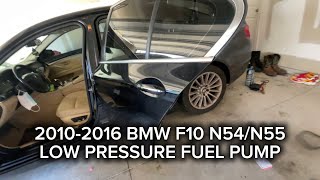
(OEM #16117217261 (F10), 16147194207 (E60))— This sensor is typically integrated with the fuel pump on the passenger side of the tank. The entire assembly is often replaced. 🎬 See this walkthrough for replacing the F10 fuel pump assembly. Part numbers vary significantly.
Trusted brands: Bosch, VDO, Genuine BMW
OEM price range: $250-$400
Aftermarket price range: $150-$250 - Fuel Tank Seal/Gasket
(OEM #16111184084)— This rubber gasket must be replaced any time the fuel tank access lid is removed to ensure a proper seal and prevent fuel vapor leaks.
Trusted brands: Genuine BMW, Elring
OEM price range: $15-$25
Aftermarket price range: $10-$20
Related Codes That Often Appear With This One
- P0463 — This code means 'Fuel Level Sensor 'A' Circuit High'. It can appear intermittently along with P0462 if the wiring has a loose connection, causing the voltage to swing from one extreme to the other.
Platform-Specific Known Issues
- F10 Driver's Side Sensor Inaccessibility Claim: A recurring theme in forums is the dealer stating the driver's side (left) fuel level sensor is non-serviceable, requiring a full tank replacement for several thousand dollars. However, DIY videos and independent shop experiences show this is often not true. The sensor can be replaced, or the fault is merely a disconnected wire inside the tank that can be re-secured.
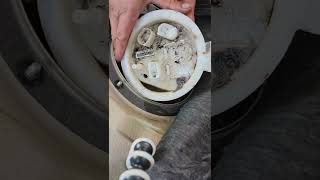
- Sticking Float Mechanism on F10 Sensor: A user on YouTube documented a case where the P0462 code was caused by a sticking internal mechanism on the right-side sensor. Instead of replacing it, they were able to inject WD-40 into small openings on the sealed unit, freeing the mechanism and restoring normal function. This suggests that replacement is not always necessary if the sensor is just mechanically stuck.
Mechanic-Grade Diagnostic Values
- Fuel Level Sensor Resistance — expected: Approx. 0-10 Ohms (Full) to 75 Ohms (Empty). The resistance should change smoothly as the float arm is moved.. Failure: A reading of infinite resistance (open circuit), zero ohms regardless of float position (short circuit), or a very high reading (e.g., 500+ Ohms) indicates a faulty sensor.
- Fuel Level Sensor Signal Voltage — expected: Normal operating range is typically between 0.5V and 4.5V.. Failure: A voltage signal below 0.5V will trigger the P0462 code. This indicates a short to ground in the signal wire or an internally shorted sensor.
Hidden / Shadow Codes Worth Checking
- B7F70B: Instrument cluster (KOMBI) fault for 'fuel level sensor implausible'. This can be triggered by a software error where the gauge reads low after refueling. (see via BMW-specific scan tool like ISTA. Mentioned in TSB B62 06 18 for G-series, but logic applies to F-series software glitches.)
- E12C03: A hidden menu error code pointing to a fuel level sensor issue on an F10 model. (see via Accessing the instrument cluster's hidden service menu.)
- 193208: DME code for 'tank level, plausibility: deviation between consumption and level change'. This indicates the DME sees a mismatch between calculated fuel use and the change reported by the sensors. (see via BMW-specific scan tool like BimmerLink.)
Scan Tool Commands That Help
- ISTA: Calculate Test Plan — After reading fault codes, ISTA can generate a guided diagnostic procedure ('test plan') that walks the technician through checking components, wiring, and expected values to pinpoint the fault.
- ISTA / INPA: Live Data / Status Read — To view the raw fuel level readings from both the left and right sensors simultaneously. The values are typically displayed in liters and/or ohms, making it easy to identify which of the two sensors is providing an illogical reading.
- ISTA: Vehicle Programming / Encoding — If diagnosis points to a software issue (like TSB B62 06 18), the instrument cluster (KOMBI) or other modules may need to be reprogrammed to the latest software (I-Level) to correct the fault. This is also required when replacing certain control modules.
Wiring & Ground Locations
- Junction Box Electronics (JBE) — Located behind the glove box on E60 and F10 models.. The JBE is the control unit that receives the voltage signals from both fuel level sensors, processes the data, and sends it to the instrument cluster. A fault in the JBE or its wiring connections can cause P0462.
- Fuel Pump Control Module (EKP/FPKM) — Located in the trunk, on the right (passenger) side behind the upholstery liner.. While primarily for controlling the fuel pump, this module is part of the overall fuel delivery system. On E60 models, the power and ground for the pump assembly (which includes the right-side sensor) run through here.
- Sensor Connectors — Under the rear seat cushions, beneath two separate black metal access panels.. These are the primary points of failure for wiring issues. Corrosion from moisture or spilled liquids on the connector pins is a common cause of the 'circuit low' condition.
Real Owner Repair Stories
- YouTube user 'bmw f10' (2012 BMW 528i F10) — Check engine light on, fuel gauge reading empty.
❌ Tried (didn't work) Was told by one person to replace the fuel tank., Replaced the fuel pump assembly.
✅ What actually fixed it The blue 2-pin connector that attaches the level sensor wiring to the fuel pump assembly inside the tank had become disconnected. The fix was to simply open the passenger side access panel and plug the connector back in securely. No parts were needed. - Bimmerpost user 'ahleong' (BMW F10 5-series) — Fuel gauge showing lower fuel level than actual, sometimes full when it's not.
❌ Tried (didn't work) Initial observation of sensor values seemed plausible.
✅ What actually fixed it After filling the tank completely, the user checked the hidden menu resistance values. The left tank sensor read a normal 52 ohms, but the right tank sensor read over 500 ohms. This confirmed the right-side fuel level sensor (part of the pump assembly) was faulty and needed replacement.
OEM Part Supersession History
Varies significantly→Varies significantly— BMW frequently updates part numbers for design improvements, supplier changes, or to consolidate parts.
Heads up: It is critical to use a VIN decoder (like RealOEM) to find the exact part number for your specific vehicle's production date and options. Ordering a sensor for the wrong model year or chassis (E60 vs. F10) will result in a part that does not fit or function correctly.
Model Year Variations Within This Range
- 2006-2013 (approx.): On E60 and early F10 models, the fuel level sensor signals are primarily processed by the Junction Box Electronics (JBE) located behind the glove compartment.
- 2013-2016 (and later): In later F-chassis models (and G-chassis), this function was moved to other control units. For example, in an F30 3-series it is the Rear Electronic Module (REM), and in a G12 7-series it is the Body Domain Controller (BDC). While this article focuses on the 5-series, it's a key system architecture change to be aware of when diagnosing.
Diagnostic Flowchart
Other Known Issues on This Vehicle
Issues unrelated to this code that are worth knowing about as an owner of this generation:
- Electric Water Pump & Thermostat Failure 🔴 High — Common failure item on N52, N54, and N55 engines, often occurring between 60,000-100,000 miles with little warning.
- Oil Leaks (Valve Cover & Oil Filter Housing Gaskets) 🟠 Medium — Extremely common across all engines (N52, N54, N55). Gaskets harden and leak oil, typically after 60,000 miles. An OFHG leak can drip oil onto the serpentine belt, causing it to slip and potentially get ingested by the engine, leading to catastrophic failure.
- N20 Engine Timing Chain Guide Failure 🔴 High — Affects 4-cylinder N20 engines (e.g., 528i) from 2012-2015. The plastic timing chain guides break apart, causing the chain to lose tension, which can lead to catastrophic engine damage. A distinct whining noise is an early symptom. (Ref: A class-action lawsuit settlement provided extended warranty coverage for this issue in some regions.)
- N54 High-Pressure Fuel Pump (HPFP) Failure 🔴 High — A notorious issue on the twin-turbo N54 engine (e.g., E60 535i). Failure causes long cranks, engine hesitation, and reduced power. (Ref: BMW issued recalls and extended warranties (10 years/120,000 miles) for the HPFP.)
- N55 Plastic Charge Pipe Failure 🟠 Medium — The stock plastic charge pipe on the N55 engine (e.g., F10 535i) becomes brittle and can crack under boost, causing a sudden loss of power. This is more common on tuned vehicles but can happen on stock cars as well.
- N54/N55 VANOS Solenoid Failure 🟡 Low — Solenoids can get clogged or fail, leading to rough idle, poor performance, and check engine lights. This is a common and relatively easy part to replace.
Used vs. New Parts: Buying Guide for This Vehicle
When a used part is the smart pick: A used part is generally not recommended for the fuel level sensor itself, as it is a wear item with a finite lifespan. However, obtaining a used wiring pigtail, connector, or fuel tank access cover from a junkyard is a perfectly viable and cost-effective option if only the connector is damaged.
Donor-vehicle mileage cap: roughly under 70000 miles for the part to have meaningful remaining life.
What to inspect on the donor part:
- For a wiring connector: Check for any signs of green or white corrosion on the pins.
- Ensure the plastic isn't brittle and the locking tabs are intact.
- Verify there is no evidence of heat damage or melted plastic, which would indicate a more serious electrical issue on the donor car.
OEM-only on this vehicle (don't cheap out):
- While not strictly 'OEM-only', it is highly recommended to use either Genuine BMW parts or parts from the original OEM supplier (like VDO or Bosch). The fuel level sensors are calibrated specifically for the complex saddle tank shape and control module logic.
Aftermarket brands forum-validated for this vehicle:
- VDO (often the original supplier to BMW)
- Bosch
- Genuine BMW
Brands owners have reported issues with on this vehicle:
- Unnamed or 'white-box' brands from online marketplaces. These often have poor quality control, leading to inaccurate readings, premature failure, and the code returning shortly after repair.
Real Owner Stories
Aggregated from forums and TSBs cited above. Mileages and costs reflect what owners reported in those sources.
F10 5 Series
Symptoms: Owner was told by a dealership that a bad driver's side fuel level sensor was a non-serviceable part, requiring a full fuel tank replacement costing several thousand dollars.
What fixed it: The issue was found to be a simple disconnected wire inside the tank that could be re-secured. The sensor itself is also independently replaceable, contrary to the initial diagnosis.
Source hint: Vehicle Specific Issue: F10 Driver's Side Sensor Inaccessibility Claim
F10 5 Series
Symptoms: A P0462 code was present due to a sticking internal mechanism on the right-side (passenger) fuel level sensor.
What fixed it: Instead of replacing the part, the owner injected WD-40 into small openings on the sealed sensor unit, which successfully freed the sticking mechanism and restored normal operation.
Source hint: Vehicle Specific Issue: Sticking Float Mechanism on F10 Sensor
Related OBD-II Codes
Frequently Asked Questions
My BMW dealer said the driver's side fuel level sensor on my F10 5 Series is part of the tank and I need a full tank replacement. Is this correct?
How can I test the fuel level sensor myself on my 2006-2016 5 Series to confirm it's bad?
Besides a bad sensor, what else commonly causes a P0462 code on these BMW 5 Series models?
What is the most efficient way to determine which of the two fuel sensors has failed in my BMW's saddle tank?
My fuel gauge is stuck and I have a P0462 code on my F10. Is it possible to fix the sensor without replacing it?
Are there any other parts I should replace when changing a fuel level sensor on my 5 Series?
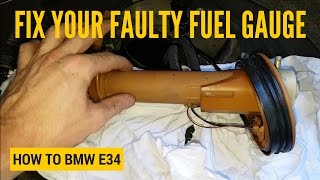
Helpful Videos
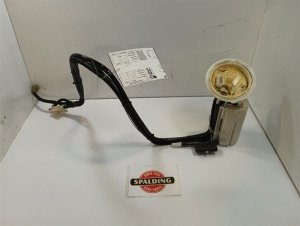
Used OEM Parts in Stock


New Aftermarket Parts Available


The information in this article is provided for general reference and educational purposes only. Vehicle specifications, procedures, and part compatibility can vary by production date, trim level, and region. Always consult your vehicle's factory service manual and verify part numbers before purchasing or performing repairs. Safety-critical components such as airbags, seat belts, and braking systems should be installed by a qualified professional.
- BMW 5 Series:
- 🎬 Helpful Videos
- 🛍️ Shop This Part
- What's Unique About the 2006-2016 BMW 5 Series
- Symptoms You May Notice
- Most Likely Causes
- Rare But Worth Checking
- Diagnosis Steps
- Parts You'll Likely Need
- Related Codes That Often Appear With This One
- Platform-Specific Known Issues
- Mechanic-Grade Diagnostic Values
- Hidden / Shadow Codes Worth Checking
- Scan Tool Commands That Help
- Wiring & Ground Locations
- Real Owner Repair Stories
- OEM Part Supersession History
- Model Year Variations Within This Range
- Diagnostic Flowchart
- Other Known Issues on This Vehicle
- Used vs. New Parts: Buying Guide for This Vehicle
- Real Owner Stories
- F10 5 Series
- F10 5 Series
- Related OBD-II Codes
- Frequently Asked Questions
- 🎟️ Get 5% Off