

P0462 on 2006-2016 BMW 3 Series: Fuel Level Sensor 'A' Circuit Low Causes and Fixes
P0462 on a 2006-2016 BMW 3 Series almost always means a faulty fuel level sensor (sender unit) in the gas tank. This causes an incorrect or empty fuel gauge reading. The 'A' circuit refers to the right (passenger side) sensor, which is integrated with the fuel pump. Expect to pay $150-$400 for a replacement sensor assembly. Diagnosis with BMW-specific software (ISTA/INPA) is recommended to confirm which of the two sensors has failed.
- P0462 on your BMW 3 Series points directly to a problem with the fuel level reading system, most likely a failed sensor on the passenger side of the fuel tank.
- You can still drive the car, but you must use your trip odometer to track fuel consumption to avoid running out of gas.
- Due to the fire hazard associated with working on the fuel system, this repair is recommended for experienced DIYers or a professional shop.
- Before buying parts, confirm whether your car is an E9x or F3x generation, as the parts and repair complexity (especially for the left-side sensor) can differ significantly.
What's Unique About the 2006-2016 BMW 3 Series
BMW 3 Series models from this era use a 'saddle' style fuel tank that straddles the driveshaft, requiring two separate fuel level sensors—one on each side. The 'A' circuit (P0462) refers to the sensor on the right (passenger) side, which is integrated with the main low-pressure fuel pump. The left (driver) side has its own sensor and fuel filter assembly, which would trigger a different code if it failed. This dual-sensor setup is crucial for accurate readings but also introduces more potential failure points. A 'suction jet pump' uses pressure from the main fuel pump to transfer fuel from the passive left side of the tank to the right side where the pump resides, ensuring the pump doesn't starve for fuel when the tank level is below half.
Generation note: This guide covers the E90/E91/E92/E93 (approx. 2006-2013) and F30/F31/F34 (approx. 2012-2016) generations. While the P0462 code's meaning is the same, the specific parts and repair procedures differ. On E90 models, both the left and right sensors are generally serviceable and replaceable. However, on many F30 models, the left-side fuel level sensor is integrated into the fuel tank and is not separately replaceable, requiring a full tank replacement for a left-side sensor failure. This makes correct diagnosis of which sensor has failed absolutely critical.
Symptoms You May Notice
- Check Engine Light is on.
- Fuel gauge reads empty or is stuck in one position, regardless of the actual fuel level.
- Fuel gauge fluctuates erratically, especially during acceleration or cornering.
- Low fuel warning light stays on even with a full tank.
- The 'distance to empty' calculation on the trip computer is inaccurate or shows '---'.
- Vehicle runs out of fuel even though the gauge indicates there is fuel left.
- Replacing the wrong side fuel level sensor. BMWs have two; P0462 points to the right side. Using a diagnostic tool like INPA or ISTA to read live data from both sensors is the best way to confirm which one is faulty before ordering parts.
- Replacing the fuel pump when only the sensor is bad. The sensor and pump are an integrated unit on the right side, so this is less of a misdiagnosis and more of a required parts assembly replacement.
- Assuming the sensor is bad when it's a software issue. For F-series models, TSB B62 18 17 notes that a software error can cause the gauge to read incorrectly, requiring a vehicle software update.
Most Likely Causes
- Faulty Fuel Level Sensor (Sending Unit) 🔴 High Probability The variable resistor contacts on the sensor wear out over time or get contaminated by fuel additives or debris, leading to an internal short or incorrect reading. This is a common failure item after 100,000 miles.
How to confirm: Use a BMW-specific scan tool (like ISTA) to read the raw resistance values from each of the two sensors independently. If the right-side sensor reads an abnormally low or fixed value while the left reads correctly, the right-side sensor is bad. Alternatively, access the sensor and measure its resistance with a multimeter while moving the float arm; the resistance should change smoothly.
Typical fix: Replace the faulty fuel level sensor. On these BMWs, the 'A' sensor is part of the right-side fuel pump assembly.
Est. part cost: $150-$400 - Shorted Wiring or Damaged Connector 🟡 Medium Probability The wiring harness connector on top of the fuel pump assembly is under the rear seat and can be exposed to moisture or physical damage. Corrosion on the connector pins can cause a short to ground.
How to confirm: Visually inspect the wiring harness and connector at the top of the right-side fuel tank access panel for any signs of melting, corrosion, or damage. Check for a short to ground in the signal wire using a multimeter.
Typical fix: Repair the damaged section of the wiring harness or clean/replace the connector.
Est. part cost: $20-$100 - Stuck or Damaged Float Arm ⚪ Low Probability Physical impact to the bottom of the fuel tank can bend the float arm or dislodge it. More commonly, a hose or wire inside the tank can obstruct the float's movement after a previous repair.
How to confirm: After accessing the fuel tank, visually inspect the float arm for damage or obstruction. Manually move the arm to see if it moves freely through its full range of motion.
Typical fix: Free the stuck float. If the arm is bent or the sensor is damaged, the entire sending unit will need to be replaced.
Est. part cost: $0-$400
Rare But Worth Checking
- Faulty Instrument Cluster (KOMBI): In rare cases, the instrument cluster itself can fail, causing it to misinterpret a correct signal from the JBE module. This is unlikely and should only be considered after all other possibilities have been exhausted. A software error in the cluster can also cause incorrect readings, as noted in BMW SIB B62 18 17 for F-series models.
- Faulty Junction Box Electronics (JBE) Module: The JBE is the module that directly receives and interprets the analog resistance signals from the two fuel level sensors before sending a digital message to the cluster. A failure of the JBE's input circuit is very rare but possible.
Diagnosis Steps
- Verify the P0462 code with an OBD-II scanner.
- Use a BMW-specific scan tool (INPA/ISTA) to access the JBE module (E9x) or FEM/REM (F3x). Observe the live data for both the left and right fuel level sensors. The readings are typically in Ohms or Liters. 🎬 Watch: How to use a scan tool to check fuel gauge functionality. Confirm that the right sensor ('A') is providing an illogical, fixed low reading while the left sensor responds correctly to changes in fuel level.
- Gain access to the top of the fuel tank by removing the rear seat bottom cushion and the right-side (passenger) metal access panel, which is held by four 10mm nuts.
- Disconnect the electrical connector for the right-side fuel pump/sensor assembly. Inspect the connector and pins for any visible signs of corrosion, melting, or damage.
- With the connector unplugged, use a multimeter to test the resistance of the sensor itself at the pins on the pump assembly. While an assistant moves the car to slosh fuel, or if the unit is removed, while you move the float arm, the resistance should change smoothly. A reading of near-zero ohms indicates a shorted sensor.
- If the sensor tests good, the fault likely lies in the wiring harness between the pump and the JBE/FEM module, or, rarely, the module itself.
- For F-Series models, check vehicle service history to see if the software update from SIB B62 18 17 has been performed.
Parts You'll Likely Need
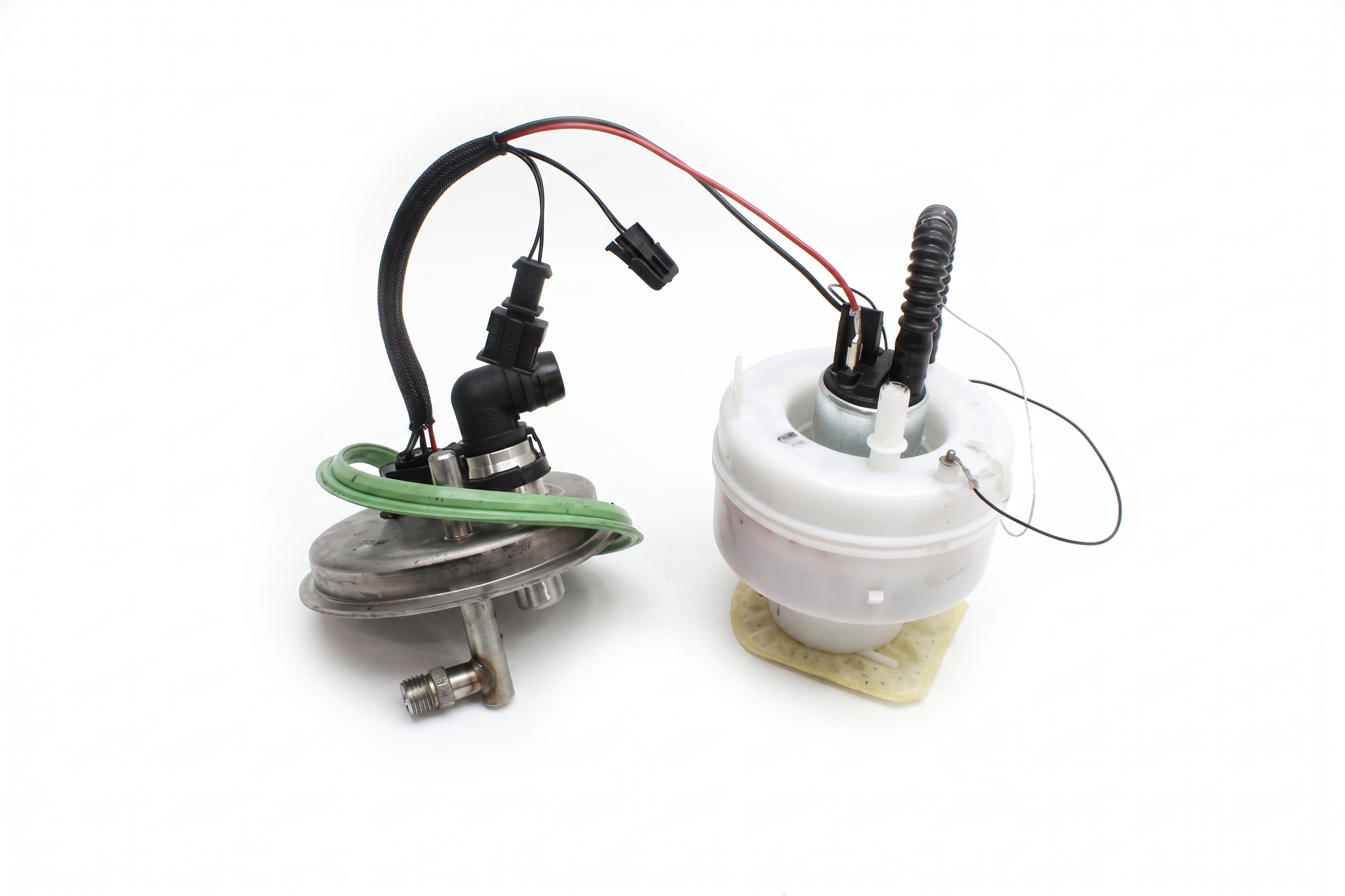
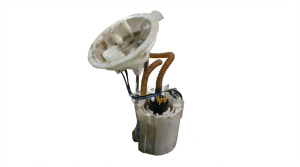
- Fuel Pump Assembly with Level Sensor (Right Side)
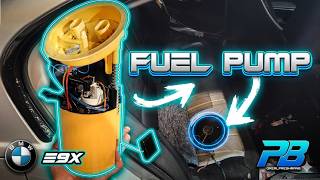
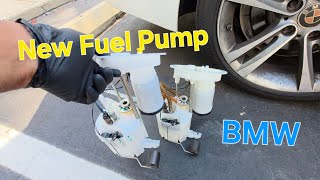
(OEM #Varies significantly. Example E90: 16117197076 (petrol) 🎬 Watch: Step-by-step fuel pump and sensor replacement for E90 models., 16117197077 (diesel). Example F30: 16117248294. 🎬 See this walkthrough for installing a new fuel pump on F30 series. Always verify with VIN.)— This is the most common failure point for a P0462 code. The sensor wears out or fails, and it is integrated with the right-side low-pressure fuel pump.
Trusted brands: Genuine BMW, VDO (often the OEM supplier), Bosch
OEM price range: $250-$400
Aftermarket price range: $150-$250 - Fuel Tank Lid Gasket / Seal
(OEM #e.g., 16117162168)— The large rubber gasket that seals the fuel pump assembly to the tank should always be replaced when the pump is removed to prevent fuel leaks and odors. It is often sold separately.
Trusted brands: Genuine BMW, Elring
OEM price range: $20-$30
Aftermarket price range: $10-$20
Related Codes That Often Appear With This One
- P0463 — Fuel Level Sensor 'A' Circuit High. If you see both P0462 and P0463, it strongly points to an intermittent wiring issue or a completely failed sensor that is fluctuating between an open and short circuit.
- A0B4 — This is a BMW-specific code from the CAS (Car Access System) module for 'starter operation'. While not directly related to the fuel level circuit, it can appear during no-start conditions that might be misattributed to running out of fuel due to the P0462 code. It typically points to a starter, battery, or wiring issue.
Technical Service Bulletins (TSBs) & Recalls
- SIB B62 18 17: For certain 2017-2018 F-chassis models (including F3x 3/4 Series), addresses a situation where the vehicle runs out of fuel while the gauge still shows fuel remaining. The cause is a software error in the instrument cluster, and the fix is to reprogram the vehicle with updated software (ISTA 4.09.1x or higher).
Platform-Specific Known Issues
- On F30 generation cars, the left-side (driver's side) fuel level sensor is often molded into the fuel tank. If that sensor fails (not a P0462 issue), the entire fuel tank may need to be replaced, which is a very expensive repair.
Mechanic-Grade Diagnostic Values
- E90 Right-Side Fuel Level Sensor Resistance — expected: Approximately 51 Ohms at Empty, 652 Ohms at Full. The resistance should change smoothly as the float moves.. Failure: A reading near 0 Ohms indicates a short (P0462). An open circuit (infinite resistance) would trigger P0463. Readings that are stuck or jump erratically indicate a failed sensor.
- Fuel Level Sensor Signal Voltage at JBE/FEM — expected: Normal operating range is typically 0.5V to 4.5V.. Failure: A voltage signal consistently below 0.5V will trigger the P0462 code.
Scan Tool Commands That Help
- ISTA/INPA: Read Fuel Tank Sensor Live Data (Ohms/Liters) — This is the primary diagnostic step to definitively identify which of the two fuel level sensors has failed. Navigate to the JBE (E90) or FEM/REM (F30) control unit, select live data, and observe the values for 'Fuel level sensor 1 (left)' and 'Fuel level sensor 2 (right)'. This avoids replacing the wrong part.
- ISTA: Component Actuation - Fuel Pump (EKPS) — While not directly for the level sensor, this test can be run to confirm the fuel pump itself is operational, helping to isolate the fault to the sensor or its wiring if the pump runs but the level is still incorrect.
Wiring & Ground Locations
- JBE (Junction Box Electronics) — On E90 models, the JBE is located behind the glove compartment. It serves as the central hub for many body electronics, including processing the inputs from both fuel level sensors.. The analog resistance signals from both the left and right fuel level sensors are sent directly to the JBE. The JBE interprets these signals, calculates the total fuel volume, and sends the information to the instrument cluster (KOMBI) via the K-CAN bus. A fault in the JBE's input pins or internal processing is a rare but possible cause.
- FEM (Front Electronic Module) / REM (Rear Electronic Module) — On F30 models, these modules replace the JBE. The FEM is in the passenger footwell, and the REM is in the right side of the trunk.. Similar to the JBE on the E90, these modules receive and process the fuel level sensor signals before sending the data to the instrument cluster. Diagnosis involves checking the inputs at these modules.
- Fuel Pump Assembly Ground Wire — The ground wire for the fuel pump and sensor assembly is typically a brown wire in the harness connector on top of the fuel tank access panel under the rear seat.. A poor or corroded ground connection can cause a voltage drop or erratic signals, potentially leading to a P0462 code. Verifying a clean, tight ground is a key step in diagnosing circuit faults.
Real Owner Repair Stories
- MHH Auto forum user (2013 F30 335xi) — Fuel gauge showed half when the tank was full. Scan tool showed left tank sensor at 597 ohms and right tank at 51 ohms when full.
❌ Tried (didn't work) Initial diagnosis pointed to the left sensor being bad based on an abnormally high resistance reading (a forum suggested >450 ohms is bad).
✅ What actually fixed it The left-side fuel level sensor was confirmed to be faulty. Because this sensor is integrated into the fuel tank on the F30 and not separately serviceable, the entire fuel tank had to be replaced to fix the issue. - F30POST forum user (F30 3 Series) — Erratic fuel gauge readings. The left sensor would read full (0L) for over 200 miles, then the gauge would drop rapidly, sometimes going back up. The left sensor reading would jump between 0L and 39.5L.
❌ Tried (didn't work) Living with the inaccurate gauge and tracking mileage.
✅ What actually fixed it As a workaround to avoid replacing the entire fuel tank for the faulty non-serviceable left sensor, the owner installed a 500-ohm resistor on the left fuel sensor circuit. This tricks the system into thinking that side is always empty, forcing reliance on the right-side sensor. The gauge now provides a somewhat reliable low-fuel warning, though the owner still primarily uses the trip odometer.
Model Year Variations Within This Range
- 2006-2013 (E9x Generation): Uses the Junction Box Electronics (JBE) module, located behind the glovebox, to process sensor signals. Both left and right fuel level sensors are typically available as separate, serviceable parts.
- 2012-2016 (F3x Generation): Uses the Front Electronic Module (FEM) and Rear Electronic Module (REM) for signal processing. Crucially, on many F30 models, the left-side fuel level sensor is integrated into the fuel tank and is NOT a separately replaceable part, requiring a full tank replacement if it fails.
Diagnostic Flowchart
Other Known Issues on This Vehicle
Issues unrelated to this code that are worth knowing about as an owner of this generation:
- N20/N26 Engine Timing Chain Guide Failure 🔴 High — Common on 2012-2015 models, often manifesting as a distinct whining noise from the front of the engine. Failure can be catastrophic, leading to engine destruction. (Ref: BMW issued a limited warranty extension (7 years/70,000 miles) under SIB 11 03 17, and a class-action lawsuit followed.)
- N52/N51 Engine Oil Leaks (OFHG & VCG) 🟠 Medium — Extremely common. The Oil Filter Housing Gasket (OFHG) and Valve Cover Gasket (VCG) become brittle with heat and age, causing significant oil leaks. The OFHG leak can drip onto the serpentine belt, causing it to slip off and potentially get ingested by the main crank seal, leading to engine failure.
- N54/N55 High-Pressure Fuel Pump (HPFP) Failure 🔴 High — A well-known issue, especially on early N54 engines. Symptoms include long crank times, engine sputtering, reduced power, and limp mode. BMW extended the warranty on this part for many vehicles. (Ref: Warranty extensions were issued for the HPFP on affected models.)
- Electric Water Pump and Thermostat Failure 🔴 High — Common across many E9x/F3x engines (N52, N54, N55). The electric water pump can fail without warning, typically between 60,000 and 100,000 miles, causing rapid overheating and leaving you stranded.
- E9x Cracked Left-Side Fuel Level Sensor Cap 🟡 Low — The plastic cap on the left-side fuel level sensor/filter unit can develop hairline cracks, leading to a strong fuel smell outside the car, especially after filling the tank.
Used vs. New Parts: Buying Guide for This Vehicle
When a used part is the smart pick: For this specific repair, buying a used fuel pump assembly is generally not recommended. The fuel level sensor is a primary failure point due to wear on its resistor contacts, and a used part has unknown remaining life.
Donor-vehicle mileage cap: roughly under 50000 miles for the part to have meaningful remaining life.
What to inspect on the donor part:
- Verify the part came from a vehicle that was not in a major collision, especially one that could have damaged the tank.
- Inspect the electrical connector pins for any signs of corrosion, melting, or damage.
- If possible, ask for the donor vehicle's mileage. A lower mileage part is preferable.
- Ensure the plastic housing is not cracked or brittle.
OEM-only on this vehicle (don't cheap out):
- Fuel Pump Assembly with Level Sensor
Aftermarket brands forum-validated for this vehicle:
- VDO (often the original OEM supplier, may have BMW logo ground off).
- Bosch
Brands owners have reported issues with on this vehicle:
- Unbranded, low-cost 'white-box' parts from online marketplaces. Forum users frequently report premature failure, incorrect readings, or louder-than-stock pump operation with these units.
Real Owner Stories
Aggregated from forums and TSBs cited above. Mileages and costs reflect what owners reported in those sources.
E92 335is
Symptoms: A wildly fluctuating fuel gauge during acceleration, but with no specific fault code present.
What fixed it: The diagnostic advice was to check the JBE connector for a wiring issue, as a sensor failure was considered less likely without a specific fault code.
Source hint: E90POST / Bimmerpost - 'E92 335is - fuel gauge/sensor freaking out' (2026)
E90
Symptoms: The fuel gauge never reads full.
What fixed it: The recommended diagnostic step was to use BMW's ISTA software to read the individual sensor values to pinpoint the exact fault and avoid replacing the wrong part.
Source hint: E90POST / Bimmerpost - 'Fuel Gauge not reading correctly' (2021)
E90
Symptoms: The fuel tank would not equalize, leaving the driver's side empty while the passenger side remained full after replacing both fuel pump modules.
What fixed it: The problem was identified as a failure or priming issue with the suction jet pump system, which is responsible for transferring fuel between the two halves of the saddle tank.
Source hint: Reddit r/E90 - 'Fuel tank issues' (2023)
Related OBD-II Codes
Frequently Asked Questions
How can I tell which of the two fuel level sensors is bad on my BMW 3 Series without just guessing?
I have an F30 3 Series. Is it true that replacing a fuel level sensor can require replacing the whole tank?
My 2017 3 Series ran out of gas even though the gauge showed fuel remaining. Is this a P0462 sensor issue?
What is the most common reason for a P0462 code on a 2006-2016 3 Series?
Where is the P0462 sensor located and how do I access it?
Besides the sensor itself, what else commonly causes P0462?
Helpful Videos
Used OEM Parts in Stock



New Aftermarket Parts Available


The information in this article is provided for general reference and educational purposes only. Vehicle specifications, procedures, and part compatibility can vary by production date, trim level, and region. Always consult your vehicle's factory service manual and verify part numbers before purchasing or performing repairs. Safety-critical components such as airbags, seat belts, and braking systems should be installed by a qualified professional.
- BMW 3 Series:
- 🎬 Helpful Videos
- 🛍️ Shop This Part
- What's Unique About the 2006-2016 BMW 3 Series
- Symptoms You May Notice
- Most Likely Causes
- Rare But Worth Checking
- Diagnosis Steps
- Parts You'll Likely Need
- Related Codes That Often Appear With This One
- Technical Service Bulletins (TSBs) & Recalls
- Platform-Specific Known Issues
- Mechanic-Grade Diagnostic Values
- Scan Tool Commands That Help
- Wiring & Ground Locations
- Real Owner Repair Stories
- Model Year Variations Within This Range
- Diagnostic Flowchart
- Other Known Issues on This Vehicle
- Used vs. New Parts: Buying Guide for This Vehicle
- Real Owner Stories
- E92 335is
- E90
- E90
- Related OBD-II Codes
- Frequently Asked Questions
- 🎟️ Get 5% Off