

P0461 on 2014-2024 Ram ProMaster 1500: Fuel Level Sensor Causes and Fixes
This code means your van's computer is getting an erratic signal from the fuel level sensor. The most common fix is replacing the entire fuel pump module inside the gas tank. Expect to pay $600-$950 for an OEM part and several hours of labor. Before replacing parts, inspect the wiring harness and ground strap near the tank, as corrosion is a known issue.
- P0461 on a ProMaster means the fuel gauge is unreliable due to a faulty signal from the fuel level sensor.
- The most likely cause is a failed fuel level sending unit, which is part of the fuel pump module inside the gas tank.
- You can still drive the van, but you must track your mileage manually to avoid running out of gas.
- Repair requires replacing the entire fuel pump module, a job that involves dropping the fuel tank and is best left to a professional.
- Always check wiring and connectors, especially the main connector on the tank and the chassis ground strap, for corrosion before replacing the expensive fuel pump module.
What's Unique About the 2014-2024 Ram ProMaster 1500
On the Ram ProMaster with the 3.6L engine, the fuel level sensor (also called a sending unit) is not sold as a separate part by Mopar. It is integrated into the fuel pump module assembly. This means that a failure of the small sensor component requires the replacement of the entire in-tank module. A significant advantage on the ProMaster is the presence of a fuel pump access panel on the floor between the front seats, which allows for replacement without dropping the fuel tank. While some other Ram trucks have TSBs related to software needing recalibration for different tank sizes, the issue on the ProMaster is almost always a hardware failure of the sending unit itself or its associated wiring.
Symptoms You May Notice
- Check Engine Light is on
- Fuel gauge behaves erratically, jumping between full, empty, or other readings
- Fuel gauge is stuck on empty or full, sometimes pegging full as soon as the key is turned.
- Low fuel warning light may stay on or flash, even with a full tank
- Inaccurate "Distance to Empty" reading on the instrument cluster
- On some Ram vehicles, a faulty fuel level sensor can prevent the remote start from working, as the system believes the tank is empty.
- Replacing the instrument cluster. While a faulty gauge is possible, it's much less common than a sending unit failure. A technician can perform a gauge sweep test with a scan tool to verify the cluster is working correctly.
Most Likely Causes
- Faulty Fuel Level Sending Unit 🔴 High Probability The sending unit uses a float and a variable resistor, which is a mechanical wear item. The resistor strip can wear out over time, causing dead spots or erratic signals. In some cases, the physical structure of the sender assembly inside the module can break apart, causing the float to swing around freely in the tank.
How to confirm: Use a scan tool to monitor the fuel level sensor voltage/resistance. If it's erratic or doesn't change when rocking the vehicle or adding fuel, the sensor is likely bad. The definitive test is to remove the unit and measure its resistance sweep 🎬 Watch: How to test the sensor without removing the pump. with a multimeter. A good sensor should show a smooth change from approximately 20 Ω (full) to 250 Ω (empty).
Typical fix: Replace the entire fuel pump module, as the sending unit is integrated. This requires accessing the fuel tank via the panel in the cabin floor. 🎬 See how to use the access panel for easy replacement.
Est. part cost: $620-$940 for OEM, $100-$300 for aftermarket - Wiring or Connector Issues 🟡 Medium Probability As a commercial vehicle, the ProMaster's underbody wiring is exposed to the elements. The main 4-pin gray connector on top of the fuel tank and the fuel tank ground strap are common points for corrosion and damage, which can disrupt the sensor's signal.
How to confirm: Visually inspect the wiring harness running to the fuel tank for any signs of damage, chafing, or corrosion. Disconnect the connector at the fuel pump module and check for corroded or loose pins, specifically Pin 2 (Ground) and Pin 3 (Signal). Clean and secure the chassis ground strap as a primary diagnostic step.
Typical fix: Repair the damaged section of the harness or clean/replace the faulty connector pigtail. Clean the ground strap connection point to bare metal and secure it tightly.
Est. part cost: $10-$100 for wiring repair supplies
Rare But Worth Checking
- Faulty Powertrain Control Module (PCM): This is very rare. Before condemning the PCM, all other possibilities, including the sending unit and wiring, must be exhaustively ruled out. A PCM fault can misinterpret a perfectly good signal from the sensor.
- Stuck or Damaged Float Arm: Debris in the fuel tank or physical damage to the tank could cause the float arm of the sending unit to get stuck, preventing it from reading the fuel level correctly. This is less common than electrical failure of the sensor itself.
Diagnosis Steps
- Read the code with an OBD-II scanner and confirm P0461 is active. 🎬 Watch this step-by-step repair for fuel level sensor codes. Note any other codes.
- Use the scanner's live data function to observe the 'Fuel Level Sensor A Voltage' or 'Fuel Level Percentage'. Normal voltage is typically ~0.5V (empty) to ~4.5V (full). Note if the reading is erratic, stuck, or clearly incorrect for the estimated fuel in the tank.
- Gently rock the vehicle side-to-side to slosh fuel in the tank. Watch the live data to see if the reading changes smoothly. A lack of change or erratic jumps suggest a sensor issue.
- Locate and visually inspect the wiring harness and the 4-pin gray connector on top of the fuel tank. Look for any obvious signs of damage, corrosion, or loose connections. Pay close attention to the fuel tank ground strap and its connection to the chassis.
- If wiring appears okay, disconnect the connector at the fuel pump module. Test the signal circuit (Pin 3, Dark Blue/White wire) and ground circuit (Pin 2, Black wire) for continuity and resistance back to the PCM, following the service manual procedure.
- If the wiring and grounds test good, the sending unit is the primary suspect. The most definitive test is to remove the fuel pump module and test the sending unit's resistance with a multimeter while manually moving the float arm. The resistance should change smoothly from ~20Ω to ~250Ω.
- If the sending unit tests good, a more complex intermittent wiring issue or a rare PCM fault is likely.
Parts You'll Likely Need
- Fuel Pump Module Assembly
(OEM #68210305AF)— This is the most common cause of failure. The fuel level sending unit is integrated into this module and is not available separately from Mopar for the ProMaster. Part number 68210305AF is the latest revision and supersedes previous versions ending in AA, AB, AC, AD, and AE. Always confirm the correct part for your specific VIN.
Trusted brands: Mopar, Delphi, Bosch, Spectra Premium
OEM price range: $620-$940
Aftermarket price range: $100-$300
Technical Service Bulletins (TSBs) & Recalls
- TSB 14-002-20: While for Ram HD trucks, this TSB is relevant as it describes how specific fueling habits (repeatedly adding small amounts of fuel while the tank is very low) can cause the PCM to log a P0461 code. This is a useful diagnostic consideration before replacing parts.
- TSB Bulletin #1800824: This manufacturer bulletin identifies P0461 (Fuel Level Sensor 1 Performance) as a potential diagnostic code alongside other performance-related faults such as fuel rail pressure sensor circuit performance.
- TSB Bulletin #1800724: A manufacturer service bulletin that lists P0461 as a relevant performance code for the fuel level sensor, often appearing in conjunction with other powertrain and equipment performance issues.
Mechanic-Grade Diagnostic Values
- Fuel Level Sensor Voltage (Live Data) — expected: ~0.5V (Empty) to ~4.5V (Full). Failure: Voltage is stuck, erratic, jumps, or is consistently outside this range.
- Fuel Level Sending Unit Resistance (General Spec) — expected: Smooth sweep from ~20 Ω (Full) to ~250 Ω (Empty). Failure: Sudden jumps, open circuit (infinite resistance), or values outside the expected range.
- Fuel Level Sending Unit Resistance (Aftermarket Spec) — expected: Smooth sweep from ~20 Ω (Full) to ~300 Ω (Empty). Failure: Readings that deviate from a smooth sweep within this range.
- Voltage Drop Test (Sensor Circuit) — expected: Less than 0.2V difference between sensor connector and PCM connector. Failure: A voltage difference greater than 0.2V indicates excessive resistance in the wiring or a poor ground connection.
Scan Tool Commands That Help
- Mopar wiTECH or equivalent professional scanner: BCM Reset / Proxy Alignment — Required after replacing the Body Control Module (BCM). Also used to reset certain integrated functions like the fuel cutoff on some models, which aftermarket scanners may be unable to access due to a secure gateway.
- Mopar wiTECH or equivalent J2534 device: PCM Reprogramming / Flash — If a Technical Service Bulletin (TSB) indicates a software update is available to correct erroneous P0461 codes, this function is used to flash the PCM with the new calibration file.
- Professional OBD-II Scanner: Instrument Cluster Gauge Sweep Test — To rule out a faulty instrument cluster. This command forces all gauges to sweep through their full range of motion, confirming the gauge itself is mechanically and electrically sound.
Wiring & Ground Locations
- Fuel Pump Access Panel — On the cabin floor, between the driver and passenger seats. It is a metal plate secured by screws, located under the floor covering.. This is the primary access point for the fuel pump module and its electrical connector. Knowing its location is critical as it eliminates the need to drop the entire fuel tank for diagnosis or replacement.
- Body Control Module (BCM) — Inside the cabin, under the dashboard on the driver's side, near the steering column.. The BCM is a central computer for body electronics and communicates with the PCM. In rare cases, an internal BCM fault could contribute to electrical issues, and on some newer models, it integrates functions like the fuel cutoff reset.
- Fuel Tank Ground Strap — A wire or strap connecting the fuel tank or fuel pump assembly to the vehicle's chassis/frame.. A corroded or loose ground strap can cause erratic voltage readings from the fuel level sensor, directly leading to a P0461 code. It is a critical and common point of failure to inspect.
Real Owner Repair Stories
- YouTube - 'RAM PROMASTER CODE P0463 REPAIR' (2020 Ram ProMaster 1500 3.6L) — Persistent Check Engine Light with code P0463 (Fuel Level Sensor Circuit High), but the fuel gauge on the dashboard was working perfectly and accurately reflected the fuel level.
❌ Tried (didn't work) Initially suspected a wiring issue due to the gauge working correctly.
✅ What actually fixed it The technician tested the resistance of the sending unit itself and found the readings were unstable and jumping, confirming it was faulty despite the gauge appearing to work. Replacing just the fuel level sensor (which was separable from the pump on this particular assembly) resolved the code.
OEM Part Supersession History
68210305AA, 68210305AB, 68210305AC, 68210305AD, 68210305AE→68210305AF— Progressive updates by the manufacturer to improve reliability or address failure modes.
Heads up: The latest part number (68210305AF) is the correct service replacement for all previous versions. Using an older, superseded part is not recommended.
Model Year Variations Within This Range
- 2014-current (Varies): The emergency fuel cutoff (inertia switch) reset procedure. On earlier models, there may be a physical reset button located on the passenger side B-pillar. On newer models, this function is often integrated into the Body Control Module (BCM) and requires a dealer-level scan tool (like wiTECH) to reset after it has been triggered.
Diagnostic Flowchart
Other Known Issues on This Vehicle
Issues unrelated to this code that are worth knowing about as an owner of this generation:
- 62TE Transmission Failure 🔴 High — Widespread issue, especially in vehicles used for heavy hauling. The transmission, originally from Chrysler minivans, is considered undersized for the ProMaster's weight and duty cycle. Torque converter failure is a primary symptom. (Ref: Recall 44A (NHTSA ID 23V-339) for 2019-2021 models where debris can prevent the park pawl from engaging, leading to rollaway risk.)
- 3.6L Pentastar Oil Cooler/Filter Housing Leaks 🔴 High — Extremely common across all vehicles with the 3.6L Pentastar. The plastic housing, located in the engine valley, cracks and warps from heat cycles, causing significant oil and/or coolant leaks. Often misdiagnosed as a rear main seal leak.
- Sliding Door Component Failures 🟠 Medium — Common on work vans with high usage. Issues include broken exterior handles, failed upper/lower/rear rollers, and problems with the electrical contact pads that power the door locks.
- Electrical System Glitches 🟠 Medium — Various electrical issues are reported, including problems with the Uconnect infotainment system, faulty window switches, blend door actuator failures (clicking from dash), and ignition switch/key fob communication errors. (Ref: Multiple TSBs exist for software updates and specific electrical component fixes, such as TSB 08-194-22 for radio issues.)
- Premature CV Axle Boot Tearing 🟡 Low — The boots on the front CV axles are known to tear at relatively low mileage, allowing grease to escape and dirt to enter, which will eventually lead to CV joint failure if not addressed.
Used vs. New Parts: Buying Guide for This Vehicle
When a used part is the smart pick: A used OEM fuel pump module can be a better choice than a cheap, new aftermarket unit, but it's a gamble as the sending unit is a wear item. A used connector pigtail, fuel pump access cover, or locking ring are safe and cost-effective used parts.
Donor-vehicle mileage cap: roughly under 50000 miles for the part to have meaningful remaining life.
What to inspect on the donor part:
- Verify the OEM Mopar part number on the unit matches the required part for your VIN.
- Thoroughly inspect the main electrical connector pins for any signs of melting, browning, or corrosion, which indicates heat damage and a failing component.
- If possible, ask for the mileage of the donor vehicle.
OEM-only on this vehicle (don't cheap out):
- Fuel Pump Module Assembly: Due to the sensitivity of the integrated level sensor and potential for software communication issues, the OEM Mopar unit is the most reliable, albeit expensive, option.
Aftermarket brands forum-validated for this vehicle:
- Delphi: Frequently cited as a global OE manufacturer whose parts are built to meet or exceed original specifications.
- Bosch: A reputable brand often listed as a reliable alternative.
Brands owners have reported issues with on this vehicle:
- Unbranded/generic 'white-box' parts: These have a higher reported incidence of premature failure, incorrect electrical connectors, or inaccurate fuel level readings right out of the box.
Real Owner Stories
Aggregated from forums and TSBs cited above. Mileages and costs reflect what owners reported in those sources.
2017 Ram ProMaster 1500
Symptoms: The fuel gauge would stop working correctly when the tank was around the halfway mark.
What fixed it: The dealer replaced the entire fuel pump module to resolve the issue.
Source hint: RamForum.com thread titled 'Fuel gauge issues?'
2018 Ram ProMaster 1500
Symptoms: The fuel gauge would peg to full as soon as the key was turned on, and the vehicle threw a P0461 code.
What fixed it: The owner suspected a short circuit was the cause of the failure, which is a different failure mode than the more common 'stuck on empty' symptom.
Source hint: RamForum.com thread titled 'Fuel Gauge Full'
2014 Ram ProMaster 1500
Symptoms: The P0461 trouble code would only appear when the fuel tank was getting low.
What fixed it: This symptom points to a classic failure mode of a worn spot on the sensor's resistor strip, which requires replacing the sending unit.
Source hint: RamForum.com thread titled 'P0461 Trouble Code'
Related OBD-II Codes
Frequently Asked Questions
My remote start stopped working at the same time my fuel gauge went haywire. Are these two issues related on my ProMaster?
I have a habit of only adding $20 of gas at a time. Could this cause the P0461 code?
To fix my erratic fuel gauge, do I have to replace the entire expensive fuel pump assembly?
Before I drop the tank, what's the first thing I should check for a P0461?
What resistance values should I see when testing the ProMaster's fuel level sensor with a multimeter?
Is this fuel gauge problem also common on the Fiat Ducato or Peugeot Boxer vans?
My scanner shows the fuel level sensor voltage is stuck. What is the normal voltage range?
Helpful Videos

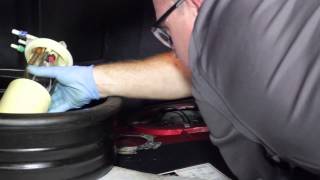


Used OEM Parts in Stock


New Aftermarket Parts Available


The information in this article is provided for general reference and educational purposes only. Vehicle specifications, procedures, and part compatibility can vary by production date, trim level, and region. Always consult your vehicle's factory service manual and verify part numbers before purchasing or performing repairs. Safety-critical components such as airbags, seat belts, and braking systems should be installed by a qualified professional.
- Ram ProMaster 1500:
- 🎬 Helpful Videos
- 🛍️ Shop This Part
- What's Unique About the 2014-2024 Ram ProMaster 1500
- Symptoms You May Notice
- Most Likely Causes
- Rare But Worth Checking
- Diagnosis Steps
- Parts You'll Likely Need
- Technical Service Bulletins (TSBs) & Recalls
- Mechanic-Grade Diagnostic Values
- Scan Tool Commands That Help
- Wiring & Ground Locations
- Real Owner Repair Stories
- OEM Part Supersession History
- Model Year Variations Within This Range
- Diagnostic Flowchart
- Other Known Issues on This Vehicle
- Used vs. New Parts: Buying Guide for This Vehicle
- Real Owner Stories
- 2017 Ram ProMaster 1500
- 2018 Ram ProMaster 1500
- 2014 Ram ProMaster 1500
- Related OBD-II Codes
- Frequently Asked Questions
- 🎟️ Get 5% Off