

P0460 on 2011-2016 Hyundai Elantra: Fuel Level Sensor Circuit Causes and Fixes
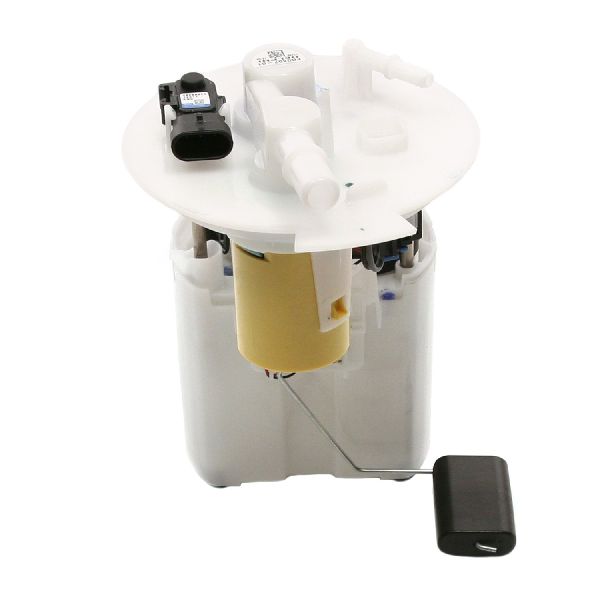
On a 2011-2016 Hyundai Elantra, code P0460 is almost always caused by a failed fuel level sending unit. This part is located inside the fuel tank as part of the fuel pump module. Expect to pay around $80-$150 for the part and 1-2 hours of labor if done at a shop.
- P0460 on a 2011-2016 Elantra almost always points to a bad fuel level sending unit in the gas tank.
- The main symptom will be a Check Engine Light accompanied by an unreliable fuel gauge.
- You can still drive the car, but you must keep track of your fuel level manually to avoid running out of gas.
- The repair involves removing the rear seat to access the fuel pump module and replacing the sender.
What's Unique About the 2011-2016 Hyundai Elantra
For the fifth-generation Hyundai Elantra (MD/UD), this issue is a straightforward component failure of the fuel level sender. While there are no specific recalls for P0460, Hyundai has issued TSBs for other fuel system codes like P0461 on related models, sometimes involving a software update. However, for P0460 on the Elantra, the sender unit itself is the most frequent point of failure. Diagnosis is direct, but replacement requires accessing the fuel tank, which is located under the rear seat. It is critical to verify the correct part number with the vehicle's VIN, as different numbers exist for US-built vs. Korea-built models and for different model years.
Symptoms You May Notice
- Inaccurate or erratic fuel gauge that may be stuck on full, empty, or jump around.
- Check Engine Light is illuminated.
- Low fuel warning light may come on intermittently, even with a full tank.
- Unexpectedly running out of fuel.
- Replacing the entire fuel pump assembly when only the sending unit has failed. While they are housed together, sometimes the sender can be replaced separately, saving money.
- Replacing the instrument cluster gauge without first testing the sending unit and wiring.
Most Likely Causes
- Faulty Fuel Level Sending Unit 🔴 High Probability The variable resistor on the sender arm can wear out or become contaminated over time, leading to dead spots or an open circuit. This is a very common failure point on this platform as it ages.
How to confirm: Access the fuel pump module under the rear seat. Disconnect the sender and measure its resistance with a multimeter while moving the float arm. The resistance should change smoothly. An open circuit (infinite resistance) or a reading that jumps or doesn't change indicates a bad sender. For this Elantra, the specific resistance should be approximately 10 Ohms when full and 200 Ohms when empty. 🎬 Watch: How to test and replace the fuel level sensor
Typical fix: Replace the fuel level sending unit. It is often sold as part of the complete fuel pump module, but can sometimes be purchased separately. The repair is considered surprisingly easy by some DIYers.
Est. part cost: $80-$150 - Damaged Wiring or Connectors ⚪ Low Probability The wiring harness runs from the fuel tank to the instrument cluster. While less common than sender failure, wires can be damaged or connectors can corrode, especially at the plug on top of the fuel pump module which is exposed to some moisture and dirt under the access cover.
How to confirm: Visually inspect the wiring harness for any signs of damage, chafing, or corrosion, particularly at the connector on top of the fuel tank. Perform a continuity test on the signal and ground wires between the sender connector and the PCM or instrument cluster.
Typical fix: Repair the damaged section of wire or clean/replace the corroded connector.
Est. part cost: $5-$50
Rare But Worth Checking
- Faulty Instrument Cluster: While rare, the gauge cluster itself can fail internally, preventing it from displaying the correct fuel level even with a good signal from the sender. This is usually diagnosed by using a scan tool to observe the raw fuel level data from the PCM; if the data is correct but the gauge is not, the cluster is suspect.
- Powertrain Control Module (PCM) Fault: This is extremely rare. The PCM's internal circuit for reading the fuel level sensor could fail. This should only be considered after all other possibilities, including the sensor, wiring, and instrument cluster, have been definitively ruled out.
Diagnosis Steps
- Read the code with an OBD-II scanner to confirm P0460 is the primary code present.
- Check the fuel gauge's behavior. Note if it is stuck, erratic, or completely dead.
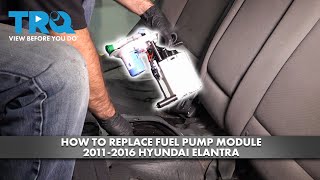
- Gain access to the fuel pump module by removing the rear seat bottom cushion. There is an access panel underneath. A Reddit user noted this involves removing about 6 bolts. 🎬 See this step-by-step fuel pump module replacement walkthrough
- Disconnect the battery.
- Disconnect the electrical connector on top of the fuel pump module. Inspect it for any signs of corrosion, bent pins, or damage.
- Using a wiring diagram, identify the pins for the fuel level sender signal and ground.
- With the key on, you can check for a reference voltage on the signal wire from the PCM, which is typically around 5V.
- Remove the fuel pump module from the tank. Be careful as there will be fuel present. It's best to do this when the tank is low on fuel.
- Measure the resistance across the sender's terminals with a multimeter while manually moving the float arm up and down. The resistance should change smoothly from approximately 200 Ohms at Empty to 10 Ohms at Full. If it's erratic, shows an open circuit (infinite resistance), or is out of spec, the sender is bad.
- If the sender tests good, the problem lies in the wiring or, rarely, the instrument cluster or PCM.
Parts You'll Likely Need
- Fuel Level Sending Unit (Fuel Gauge Sender)
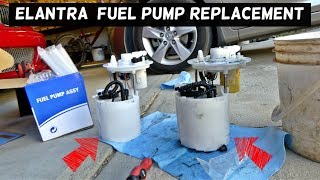
(OEM #94460-3X520 (2014-16 Korea-built), 94460-3X500 (US-built), 94460-2V000 (2012))— This is the most common part to fail, causing the P0460 code. The internal resistor wears out over time. It is critical to verify the correct part number with your VIN. 🎬 Watch: How to replace the fuel pump assembly
Trusted brands: Hyundai (OEM), Delphi, Spectra Premium
OEM price range: $100-$150
Aftermarket price range: $70-$120
Technical Service Bulletins (TSBs) & Recalls
- While no TSB directly addresses P0460 for the Elantra, Hyundai has issued related bulletins. TSB 13-FL-012 addresses code P0461 (Fuel Level Sensor 'A' Circuit Range/Performance) for the 2007-2011 Accent, involving an ECM update. This indicates that for some fuel level issues on other Hyundai models, a software logic update was the solution, though for the Elantra P0460, hardware failure is the common cause.
Mechanic-Grade Diagnostic Values
- Fuel Level Sensor Resistance — expected: ~10 Ohms (Full) to ~200 Ohms (Empty). Failure: An open loop ('OL' on multimeter), infinite resistance, or readings that do not change smoothly when moving the float arm indicates a failed sensor.
- Fuel Level Sensor Circuit Reference Voltage — expected: ~5V. Failure: A significant deviation from 5V on the signal wire (with sensor disconnected, key on) could indicate a wiring or PCM issue.
- In-Tank Fuel Pump Operating Pressure (Low Pressure) — expected: 45-55 PSI. Failure: Pressure outside this range indicates a failing fuel pump motor, which is part of the same assembly as the sender. This is a separate issue from P0460 but is worth checking if the module is removed.
Scan Tool Commands That Help
- Hyundai GDS (Global Diagnostic System): Live Data Analysis (DTC Analysis) — Use this to view the raw fuel level sensor data (resistance or voltage) as seen by the PCM. Rocking the vehicle to slosh fuel should cause this value to change. If the value is stuck or erratic while the gauge is malfunctioning, it strongly points to a sender or wiring issue.
- Hyundai GDS (Global Diagnostic System): Actuation Test — While there isn't a direct test for the level sensor, a technician can use actuation tests to command other related components, like the fuel pump relay, to verify their function and rule out parts of the circuit.
- Hyundai GDS (Global Diagnostic System): Vehicle S/W Management (Special Function) — This menu contains functions like 'Resetting adaptive values'. While not typically required for a fuel sender replacement, it can be used to clear any learned values in the PCM or instrument cluster after a repair is completed to ensure a clean slate.
Wiring & Ground Locations
- Fuel Pump Relay — Integrated into the Engine Management System (EMS) box, which is the under-hood fuse and relay box. It is not a separate, plug-in relay.. While not a common cause for P0460, a failure of the internal relay requires replacement of the entire EMS box. Technicians looking for a standard relay to swap will not find one.
- GM01 (Ground) — Located at the top left side of the dash panel.. This is a primary grounding point for components in the dashboard area. A poor connection here could potentially affect the instrument cluster's operation, including the fuel gauge, making it a place to check if the sender and wiring test good.
- Fuel Pump Control Wire — Gray with black stripe wire at terminal 12 of the EMS box connector.. This wire is the control signal from the ECM that grounds the relay to turn the pump on. While related to the pump motor, not the sender, it's a key test point for diagnosing the entire fuel pump module circuit.
Real Owner Repair Stories
- Carly Forum User 'sinaschmidt1' (2016 Hyundai Elantra diesel) — Check engine light with code P0460, engine stalled twice at idle.
❌ Tried (didn't work) Checked fuses.
✅ What actually fixed it The shop diagnosed and replaced the faulty fuel level sensor. The total cost was 52€, and the repair cleared the code and resolved the stalling issue. - Reddit user 'Toyotamanthesequal' (Hyundai (model not specified, but symptoms match Elantra)) — Fuel gauge shows empty after filling up, intermittent check engine light.
✅ What actually fixed it The user, a technician, states the fix is to replace the fuel level sensor. They describe it as a quick job, involving removing the rear seat, using a locking ring tool to pull the pump assembly, and swapping the sensor (the part with the metal rod and float).
Model Year Variations Within This Range
- 2014-2016: Korea-built sedans with the 1.8L engine specifically call for fuel gauge sending unit part number 94460-3X520.
- 2011-2016: US-built models use a different part number, 94460-3X500. It is critical to verify the correct part number using the vehicle's VIN before ordering, as the components are not interchangeable.
Diagnostic Flowchart
Other Known Issues on This Vehicle
Issues unrelated to this code that are worth knowing about as an owner of this generation:
- Engine Ticking / Piston Slap (1.8L Nu) 🔴 High — Widespread issue, often noticeable on cold starts. Can lead to excessive oil consumption and eventual engine failure. A class-action lawsuit was settled regarding this issue for 2011-2016 models. (Ref: A warranty extension to 10 years/120,000 miles for the engine short block was part of the lawsuit settlement.)
- Flexible Steering Coupler Wear 🟠 Medium — Very common after 60,000 miles. Causes a noticeable 'clicking' or 'notchy' feeling in the steering wheel when turning. (Ref: No recall, but it's a well-documented and common repair. The rubber coupler part is inexpensive, but labor can be significant.)
- Brake Pedal Stopper Pad Failure 🟡 Low — The small plastic pad on the brake pedal arm becomes brittle and disintegrates. This prevents the brake light switch from being depressed, which can cause the brake lights to stay on (draining the battery) or prevent the car from being shifted out of Park. A recall was issued. (Ref: NHTSA Recall 17V769000)
- Timing Chain Guide Wear / Jumped Timing 🔴 High — Less common than engine ticking, but can occur. The plastic timing chain guides can crack, leading to chain slap noise and potentially causing the chain to jump teeth, resulting in a no-start condition and possible engine damage.
- ABS Module Internal Short 🔴 High — An internal leak in the Anti-Lock Brake System (ABS) module can cause an electrical short, posing a fire risk while parked or driving. (Ref: NHTSA Recall 20V061000 (part of a larger Hyundai/Kia recall))
Used vs. New Parts: Buying Guide for This Vehicle
When a used part is the smart pick: For this specific repair, a used part is not recommended. The fuel level sender is a wear item with a mechanical float and a variable resistor that degrades over time and with exposure to fuel. The risk of a used part failing soon after installation is high.
What to inspect on the donor part:
- Not applicable as a used part is not advised.
OEM-only on this vehicle (don't cheap out):
- While not strictly OEM-only, using a complete, new fuel pump module assembly from a reputable brand is the most reliable repair. Replacing only the sender with a cheap, unbranded part can lead to premature failure.
Aftermarket brands forum-validated for this vehicle:
- Bosch
- Delphi
Brands owners have reported issues with on this vehicle:
- No specific brands were consistently cited as problematic, but ultra-low-cost, unbranded assemblies from online marketplaces carry a higher risk of early failure or inaccurate readings.
Real Owner Stories
Aggregated from forums and TSBs cited above. Mileages and costs reflect what owners reported in those sources.
2014 Hyundai Elantra
Symptoms: The owner described the repair for the fuel pump assembly as 'surprisingly easy' after encountering the issue.
What fixed it: Removed the back seat (held by ~6 bolts) to access and replace the fuel pump assembly.
Source hint: Reddit (r/Elantra)
2012-2018 Kia Forte (YD)
Symptoms: Owners report P0460/P0463 codes and erratic fuel gauge symptoms similar to the Elantra.
What fixed it: Replacement of the fuel level sensor, which is part of the in-tank fuel pump module.
Source hint: Platform mate comparison
Hyundai Santa Fe (Cross-Model Reference)
Symptoms: An owner reported that the empty light and check engine light came on simultaneously. A diagnosis revealed code P0460, which the owner noted appears to be a frequent problem for the manufacturer (NHTSA ODI #10761978).
What fixed it: While the specific fix was not documented in the complaint, the owner expressed frustration that the recurring sensor failure had not resulted in a recall.
Source hint: NHTSA ODI #10761978
Related OBD-II Codes
Frequently Asked Questions
Does TSB 13-FL-012 apply to my 2011-2016 Hyundai Elantra for code P0460?
Is there a recall for the fuel level sensor on the 2011-2016 Elantra?
Can I replace just the fuel level sending unit, or do I need the whole fuel pump module?
How do I access the fuel sender on this Elantra model?
What resistance readings should I see when testing the Elantra's fuel sender?
Is the P0460 code related to the engine ticking/piston slap issue on the 1.8L Nu engine?
Helpful Videos

We Have This Part in Stock


The information in this article is provided for general reference and educational purposes only. Vehicle specifications, procedures, and part compatibility can vary by production date, trim level, and region. Always consult your vehicle's factory service manual and verify part numbers before purchasing or performing repairs. Safety-critical components such as airbags, seat belts, and braking systems should be installed by a qualified professional.
- Hyundai Elantra:
- 🎬 Helpful Videos
- 🛍️ Shop This Part
- What's Unique About the 2011-2016 Hyundai Elantra
- Symptoms You May Notice
- Most Likely Causes
- Rare But Worth Checking
- Diagnosis Steps
- Parts You'll Likely Need
- Technical Service Bulletins (TSBs) & Recalls
- Mechanic-Grade Diagnostic Values
- Scan Tool Commands That Help
- Wiring & Ground Locations
- Real Owner Repair Stories
- Model Year Variations Within This Range
- Diagnostic Flowchart
- Other Known Issues on This Vehicle
- Used vs. New Parts: Buying Guide for This Vehicle
- Real Owner Stories
- 2014 Hyundai Elantra
- 2012-2018 Kia Forte (YD)
- Hyundai Santa Fe (Cross-Model Reference)
- Related OBD-II Codes
- Frequently Asked Questions
- 🎟️ Get 5% Off