

P0457 on 2011-2019 Ford Explorer: EVAP Leak (Fuel Cap Loose/Off) Causes and Fixes
On a 2011-2019 Ford Explorer, this code is almost always caused by a dirty or faulty capless fuel filler neck. Before buying any parts, use the emergency funnel to clean the filler neck's internal seal. If that doesn't work, the next most likely cause is a failed canister purge valve on the engine, a very common failure item on this platform.
- P0457 on a 2011-2019 Explorer is almost certainly an issue with the capless fuel filler neck seal, not a missing gas cap.
- The first and easiest diagnostic step is to thoroughly clean the fuel filler inlet with the emergency funnel and a lubricant.
- If cleaning the inlet doesn't fix the code, the second most likely cause is a failed canister purge valve, which is an inexpensive and easy part to replace.
- Do not immediately suspect more complex components like the charcoal canister or vent solenoid until the two primary causes have been ruled out.
What's Unique About the 2011-2019 Ford Explorer

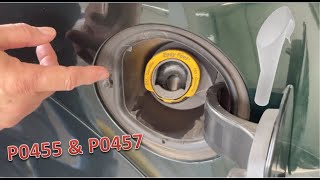
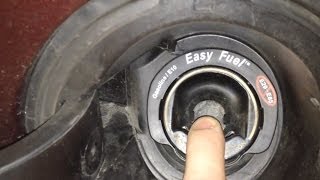
The 2011-2019 Ford Explorer features a capless "Easy Fuel" system, so there is no traditional gas cap to forget or leave loose. The P0457 code on this vehicle almost always points to a problem with the seal on the spring-loaded flap inside the fuel filler neck. Dirt, debris, or corrosion can prevent this flap from sealing properly, which the system interprets as a 'cap off' condition. This is a very common and well-documented issue for this platform and its relatives like the Ford Flex.
Symptoms You May Notice
- Check Engine Light is on
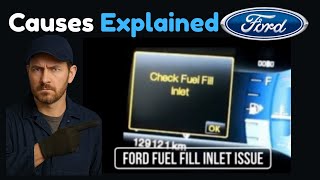
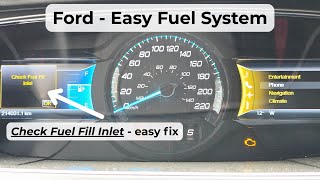
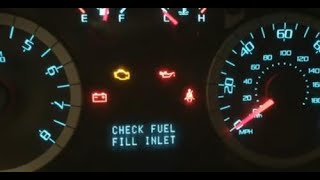
- A 'Check Fuel Fill Inlet' message may appear on the dashboard
- Possible faint fuel smell
- Remote start may be disabled
- Hard starting or rough idle immediately after refueling (this is a strong indicator of a faulty canister purge valve)
- Replacing the gas cap. The 2011-2019 Explorer does not have one.
- Assuming the EVAP charcoal canister is bad. While possible, it's much less likely than the filler neck or purge valve.
- Replacing the vent solenoid near the tank before checking the much more accessible and more common failure points in the engine bay and fuel filler neck.
Most Likely Causes


- Dirty or Faulty Capless Fuel Filler Neck 🔴 High Probability The capless design is susceptible to dirt, dust, and road grime accumulating on the internal seal, preventing it from closing tightly. This is the most common reason for a P0457 code on these vehicles.
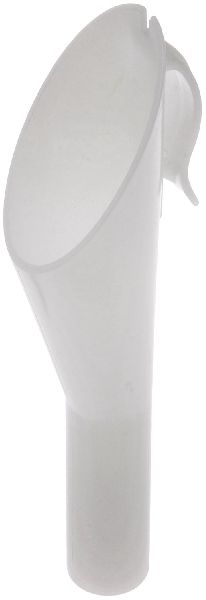
How to confirm: Visually inspect the fuel filler inlet for debris. Use the emergency funnel (located with the spare tire tools) to work the flap open and closed to feel for smooth operation and proper sealing.
Typical fix: Clean the sealing surface of the flap. Insert the emergency funnel, spray WD-40 or a similar lubricant on a clean rag, and wipe the internal sealing area. 🎬 Watch: How to properly clean and maintain the capless filler. Work the funnel in and out 10-15 times to dislodge debris and lubricate the seal.
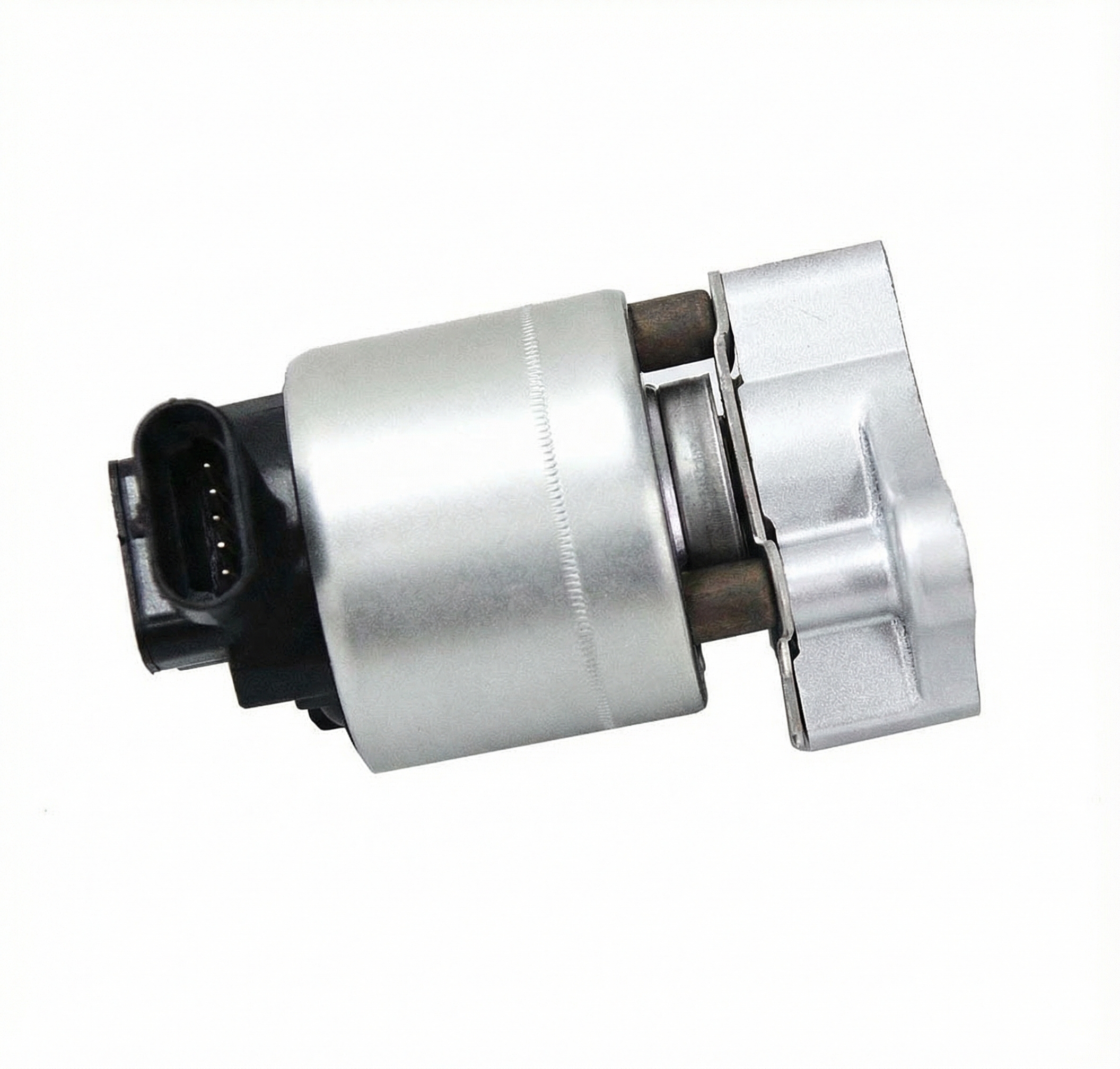
Est. part cost: $0 - $10 for cleaning supplies. If the neck is damaged or worn, a replacement assembly can cost $100-$200. - Faulty Canister Purge Valve 🟡 Medium Probability The canister purge valve (or solenoid) on this platform has a high failure rate, often getting stuck open. This is a very common cause for all EVAP leak codes (P0455, P0456, P0457, P1450) on this Explorer.
How to confirm: A key symptom is a rough idle or difficulty starting the engine immediately after refueling. To test, remove the valve from the top of the engine. With no power applied, it should be closed. If you can blow air through it, it has failed and is stuck open.
Typical fix: Replace the canister purge valve. It is typically located on top of the engine and held by two bolts, making it a straightforward DIY replacement. 🎬 See this step-by-step guide to replacing the purge valve.
Est. part cost: $35 - $60 for an OEM Motorcraft part. - Leaking or Disconnected EVAP Hose ⚪ Low Probability Hoses can become brittle over time or be accidentally disconnected during other service. While less common than the top two causes, it's still a possibility.
How to confirm: Visually inspect all accessible EVAP hoses in the engine bay, particularly those connected to the purge valve, for cracks, damage, or loose connections. A smoke test is the definitive way to find a hose leak.
Typical fix: Reconnect any loose hoses or replace the damaged section of the hose.
Est. part cost: $5 - $25
Rare But Worth Checking
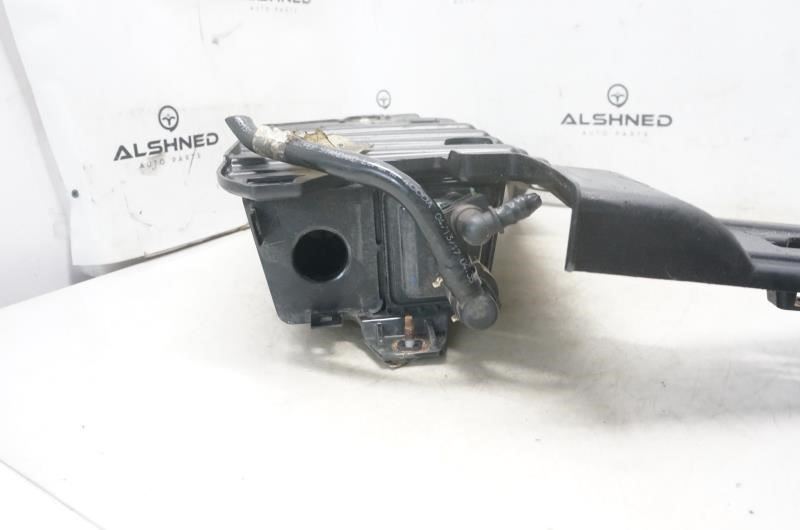
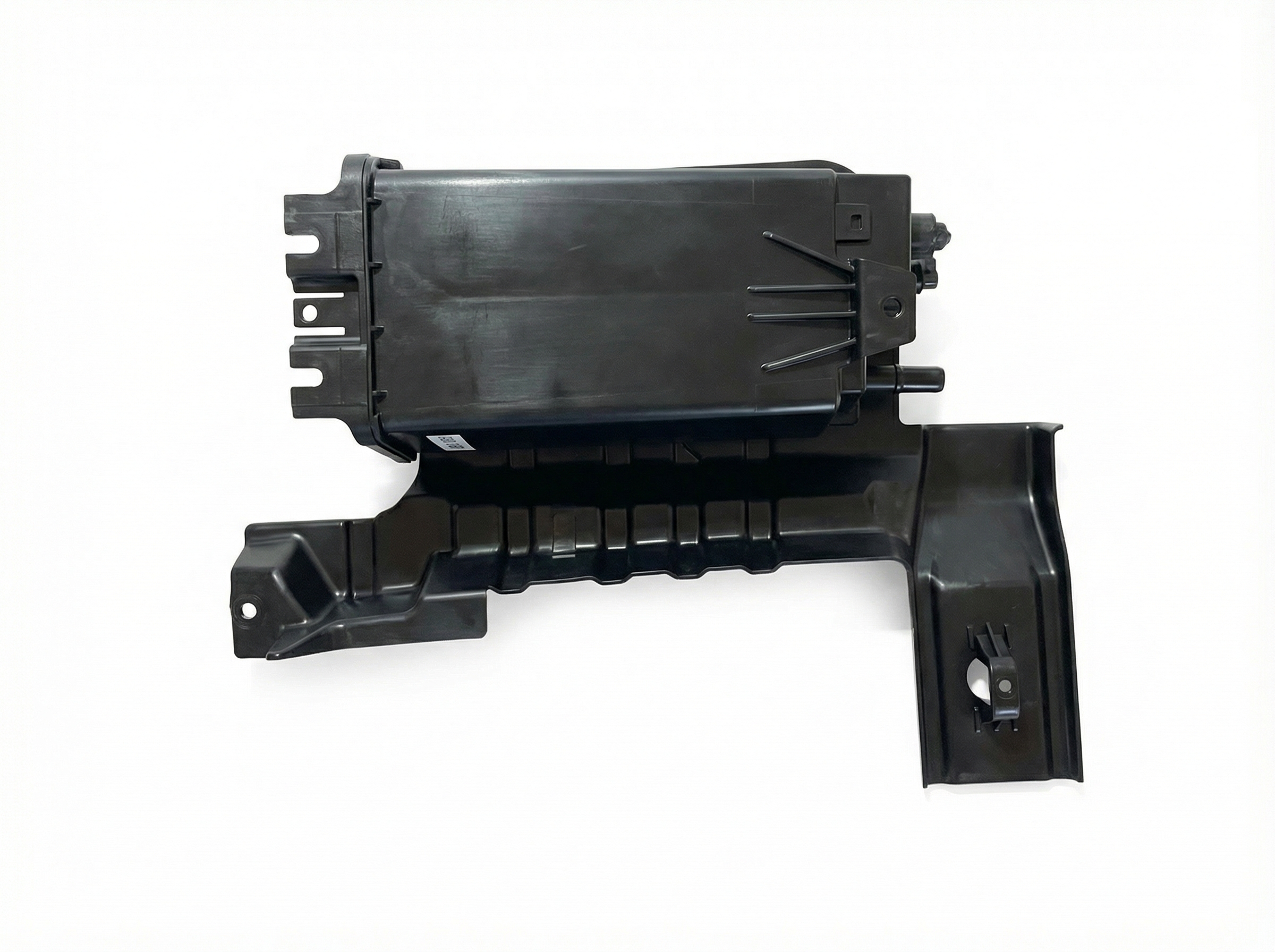
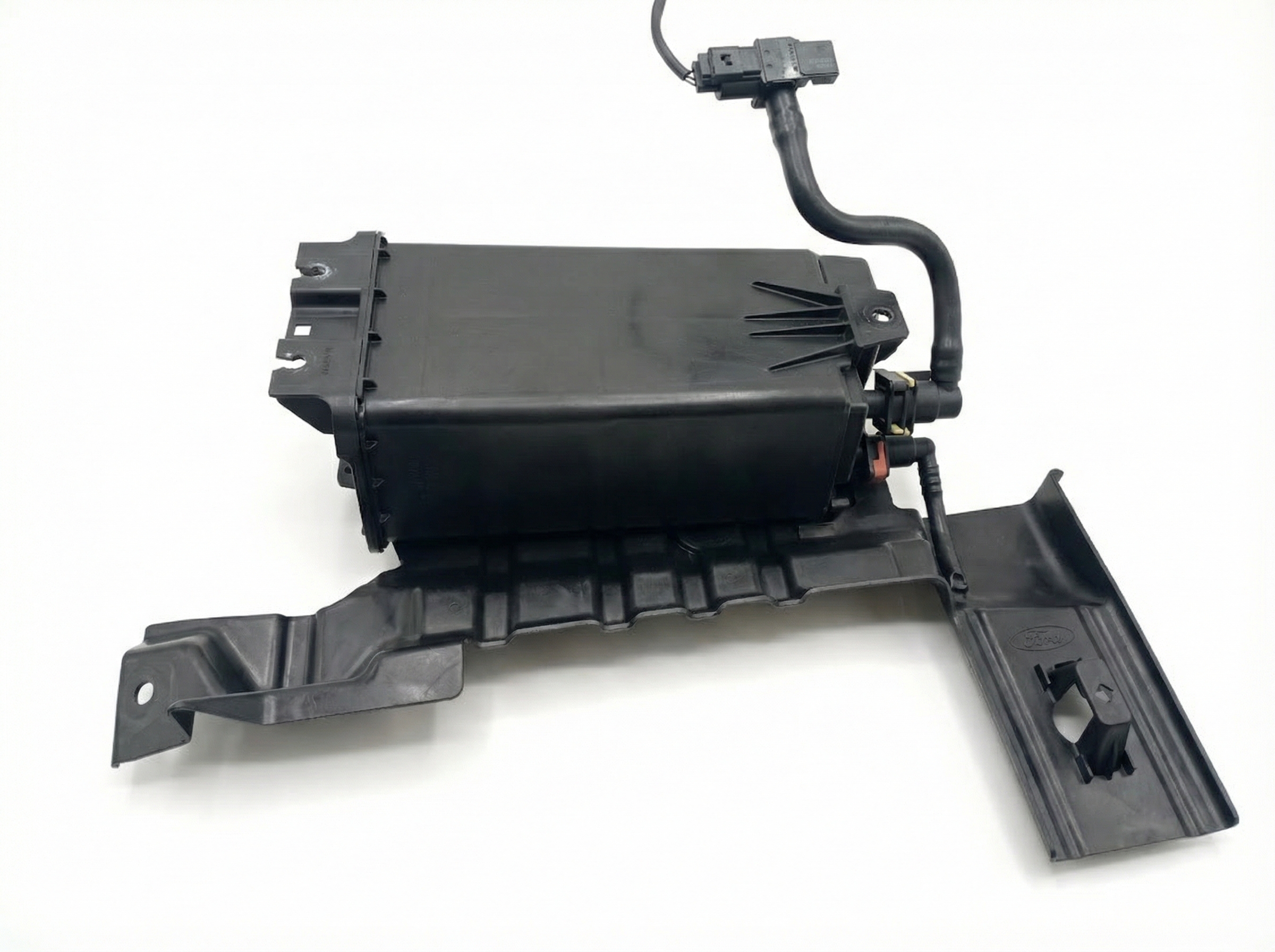
- Faulty EVAP Canister Vent Solenoid: Located near the fuel tank on the charcoal canister, this valve can also stick open and cause a large leak. While a common EVAP failure point in general, it is less frequently the cause for this specific code on this vehicle compared to the purge valve or filler neck.
Diagnosis Steps

- Read the code with an OBD-II scanner to confirm P0457.
- Check the dashboard for a 'Check Fuel Fill Inlet' message.
- Obtain the emergency fuel funnel from the trunk/spare tire area.
- Thoroughly clean the internal seal of the capless fuel filler neck using the funnel and a clean cloth with a lubricant like WD-40. Cycle the funnel in and out multiple times.
- Clear the code with the scanner. Drive the vehicle for a few days to see if the code returns. Note that the EVAP monitor only runs under specific conditions (fuel level between 15-85%, ambient temperature, etc.).
- If the code returns, locate the canister purge valve on top of the engine.
- Check if the engine runs rough or stalls after refueling, which strongly suggests a bad purge valve.
- Remove the purge valve (unpowered) and attempt to blow through it. If air passes, it is faulty and must be replaced.
- If the purge valve is good, visually inspect all EVAP hoses for cracks or disconnections.
- If the leak source is still not found, the next step is to perform a smoke test on the EVAP system to find the source of the large leak. This may require professional assistance.
Parts You'll Likely Need
- Canister Purge Valve
(OEM #AU5Z-9C915-B (also seen as engineering # CX-2409 or older # 9U5Z-9C915-H))— This is a very high-failure-rate item on this platform and is a common cause for multiple EVAP codes. It often gets stuck open.
Trusted brands: Motorcraft, Dorman
OEM price range: $45-$70
Aftermarket price range: $30-$50 - Capless Fuel Filler Neck Assembly
(OEM #BB5Z-9034-G (supercedes earlier parts like BB5Z7827936A for 2011-2016 models))— If cleaning the original filler neck does not solve the sealing issue due to wear or damage, the entire assembly must be replaced.
Trusted brands: Motorcraft, Dorman, SKP
OEM price range: $100-$200
Aftermarket price range: $70-$150
Related Codes That Often Appear With This One
- P0455 — P0455 indicates a 'Gross EVAP Leak'. P0457 is a more specific version that the PCM sets when it suspects the leak is from the fuel cap area after refueling. The root cause is often the same, and both codes can appear together.
- P1450 — This code indicates an 'Inability of EVAP System to Bleed Up Fuel Tank Vacuum'. On Fords, this code appearing with an EVAP leak code strongly points to a stuck-open canister purge valve, as the system cannot hold a vacuum.
Technical Service Bulletins (TSBs) & Recalls
- TSB 14-0011: While not for P0457, this TSB addresses a 'Door Ajar' light that stays on in 2011-2013 Explorers and platform mates (Edge, Flex, MKT). It is indicative of sensor and switch issues common to the vehicle's electronics.
- SSM 50306 & 51247 (for newer 2020+ models): These bulletins for the next-generation Explorer are relevant contextually. They warn technicians that many returned canister purge valves test good, and that wiring issues are often the actual cause. This reinforces the importance of testing the purge valve before replacement.
- TSB Bulletin #SSM 51719: A manufacturer service bulletin notes that vehicles may exhibit an illuminated malfunction indicator lamp with DTC P0457 and/or P0455 stored in the PCM, which may be due to improper fuel filler cap installation or outside contamination.
Platform-Specific Known Issues
- The 'Easy Fuel' capless system is a known weak point for the EVAP system on many Ford models of this era, frequently causing codes like P0457, P0455, and P0456 due to sealing issues.
Mechanic-Grade Diagnostic Values
- Canister Purge Valve (CPV) resistance — expected: 30 to 38 ohms (when engine is cool). Failure: A reading significantly outside this range indicates a faulty solenoid coil.
- Canister Vent Solenoid (CVS) resistance — expected: 48 to 65 ohms. Failure: A reading outside this range suggests the vent solenoid is electrically faulty.
- Fuel Tank Pressure (FTP) Sensor - Purge Flow Check — expected: -2.0 to -4.0 in-H2O. Failure: With the engine running and purge valve commanded open, the FTP sensor should show a slight vacuum. A reading greater than -8.0 in-H2O could indicate a restriction. No change in vacuum could indicate a stuck-closed purge valve.
- Fuel Tank Pressure (FTP) Sensor - Sealed System Vacuum Test — expected: System holds steady vacuum near -7.0 to -10.0 in-H2O. Failure: If the vacuum reading bleeds off quickly after commanding the purge valve and vent valve closed, it confirms a leak is present in the system.
Scan Tool Commands That Help
- FORScan / Ford IDS / Autel: EVAP System Test — This is a PCM-initiated self-test that seals the system (closes the vent solenoid) and opens the purge valve to draw a vacuum. It monitors the Fuel Tank Pressure (FTP) sensor to verify the system can seal and hold a vacuum, which can quickly confirm or deny a leak's presence.
- FORScan / Ford IDS / Autel: Canister Purge Valve (CPV) Duty Cycle Control — Allows a technician to manually command the purge valve open to a specific percentage (e.g., 0%, 50%, 100%) while monitoring vacuum on the FTP sensor or with a separate gauge. This is used to verify the purge valve is physically opening and closing as commanded by the PCM.
- FORScan / Ford IDS / Autel: Canister Vent Solenoid (CVS) On/Off Command — Allows manual closing (commanding ON) of the vent solenoid. This is critical for sealing the system to perform a smoke test or a vacuum decay test. If the system won't seal with the CVS commanded on, the CVS itself is likely stuck open or has a bad seal.
Wiring & Ground Locations
- C3053 — Under the vehicle, below the 2nd-row seats.. This is a major inline connector for the rear of the vehicle. The control and power wires for the Canister Vent Solenoid pass through it. Due to its location, it is susceptible to corrosion from the elements, which can cause an open or short in the vent solenoid circuit, leading to EVAP codes.
- C175B, Pin 20 — At the Powertrain Control Module (PCM).. This is the specific pin at the PCM that sends the ground signal to control the Canister Vent Solenoid. A technician can test for 12V here (key on, solenoid inactive) or a ground signal (when commanded on) to verify the PCM driver and wiring integrity from the PCM to the solenoid.
Real Owner Repair Stories
- Ford-Forums.com user 'grk_b747' (2006 Explorer (Note: pre-dates specified range but demonstrates a relevant failure pattern)) — Check fuel cap light, then Check Engine Light with code P0457. Also had difficulty refueling (slow filling).
❌ Tried (didn't work) Initially planned to replace the gas cap.
✅ What actually fixed it A smoke test performed by a shop for $40 revealed the leak source. The final repair was replacing the canister vent solenoid located near the fuel tank. The part cost about $80 (OEM) and took 10 minutes to replace. - BobIsTheOilGuy.com user 'buck91' (2014 Explorer 3.5L EcoBoost) — Instrument panel warning 'check the fuel cap', followed by CEL with code P0457.
❌ Tried (didn't work) Replaced the charcoal canister vent solenoid; performed the thorough funnel-cleaning procedure on the capless filler neck.
✅ What actually fixed it The user did not post a final resolution, but the thread documents the failure of the two most common fixes (cleaning the filler neck and replacing the vent solenoid), indicating the next logical step was a smoke test to find a leak in a hose or the filler neck assembly itself. - NHTSA ODI #10395615 — An owner reported spending thousands of dollars in repairs for a vehicle showing trouble codes P0455 or P0457, or both simultaneously, noting it as a clear default of the company.
- NHTSA ODI #10995039 — An owner reported receiving a "Check Fuel Fill Inlet" warning followed by a check engine light with code P0457, stating the system does not work properly.
- NHTSA ODI #11404099 — A report describes a recurring evaporative emission system leak with code P0457 that appeared four times even after attempts to fix the problem.
- NHTSA ODI #10876672 — An owner discovered stored codes P0455, P0457, and P2119 after the cruise control would not set.
OEM Part Supersession History
AU5Z-9C915-B→AU5Z-9C915-E— Standard part revision by Ford. The new part number is the current replacement for the original.9U5Z-9C915-H→AU5Z-9C915-B— Older part number that was replaced by the -B version, which was later superseded by the -E version.
Model Year Variations Within This Range
- 2011-2015 vs 2016-2019: The Ford Explorer received a significant facelift for the 2016 model year, which included changes to the available engines (2.3L EcoBoost replaced the 2.0L). While the primary EVAP components like the purge valve and capless filler neck concept remained the same, some hose routing and specific part numbers for items like the charcoal canister may differ between pre-facelift and post-facelift models.
Diagnostic Flowchart
Other Known Issues on This Vehicle
Issues unrelated to this code that are worth knowing about as an owner of this generation:
- Internal Water Pump Failure (3.5L V6) 🔴 High — Common around 100,000 miles. Failure can cause coolant to mix with engine oil, leading to catastrophic engine damage. Repair is extremely labor-intensive and expensive ($2,000-$5,000).
- Power Transfer Unit (PTU) Overheating and Failure (AWD Models) 🔴 High — Widespread issue. Ford specified 'lifetime' fluid, which breaks down from heat, causing PTU failure. Owners recommend proactive fluid changes every 30,000 miles to prevent failure. A leaking PTU vent is a sign of overheating and impending failure.
- Exterior A-Pillar Trim Detachment 🟠 Medium — The exterior trim panels on both sides of the windshield can loosen and detach from the vehicle at speed, creating a road hazard. Affects all 2011-2019 models. (Ref: Ford Recall 24S02)
- Exhaust Fumes / Carbon Monoxide Smell in Cabin 🟠 Medium — A very common complaint, especially under hard acceleration, leading to a multi-year NHTSA investigation. While no general recall was issued, Ford released multiple TSBs (e.g., TSB 16-0166) for dealers to seal body seams and reprogram the HVAC system. (Ref: TSB 16-0166)
- Throttle Body Failure 🟠 Medium — Can fail unexpectedly, causing the vehicle to enter a reduced-power 'limp mode'. This was more common on earlier models in the generation.
Used vs. New Parts: Buying Guide for This Vehicle
When a used part is the smart pick: A used capless fuel filler neck assembly from a junkyard can be a cost-effective option, especially if the failure is due to physical damage rather than a worn-out seal. It is a largely mechanical part with low failure rates outside of the seal itself.
Donor-vehicle mileage cap: roughly under 80000 miles for the part to have meaningful remaining life.
What to inspect on the donor part:
- For a fuel filler neck, inspect the internal spring-loaded flap for smooth operation and a clean, pliable, crack-free seal.
- Check the plastic housing for any cracks or signs of impact.
- Ensure all hose connection points are intact and not brittle.
OEM-only on this vehicle (don't cheap out):
- While not strictly 'OEM-only', sensors like the Fuel Tank Pressure (FTP) sensor are best replaced with OEM/Motorcraft parts to ensure accurate readings, as the EVAP system is sensitive to very small pressure changes.
Aftermarket brands forum-validated for this vehicle:
- Dorman is a widely available aftermarket brand for both the purge valve and the fuel filler neck assembly.
- AA Ignition is another aftermarket supplier for the purge valve.
Brands owners have reported issues with on this vehicle:
- No specific brands are consistently reported as problematic, but for electronic solenoids like the purge valve, ultra-cheap, unbranded parts from online marketplaces carry a higher risk of premature failure.
Related OBD-II Codes
Frequently Asked Questions
My dashboard says 'Check Fuel Fill Inlet'. Is this related to the P0457 code?
My remote start stopped working when the Check Engine Light for P0457 came on. Is that normal?
My Explorer is hard to start and idles rough right after I get gas. Could this cause the P0457 code?
What is the first and most common fix for a P0457 code on these Explorers?
How can I test the canister purge valve myself before buying a new one?
Does the P0457 issue from the capless fuel system affect other Ford models?
Helpful Videos
Used OEM Parts in Stock

New Aftermarket Parts Available


The information in this article is provided for general reference and educational purposes only. Vehicle specifications, procedures, and part compatibility can vary by production date, trim level, and region. Always consult your vehicle's factory service manual and verify part numbers before purchasing or performing repairs. Safety-critical components such as airbags, seat belts, and braking systems should be installed by a qualified professional.
- Ford Explorer:
- 🎬 Helpful Videos
- 🛍️ Shop This Part
- What's Unique About the 2011-2019 Ford Explorer
- Symptoms You May Notice
- Most Likely Causes
- Rare But Worth Checking
- Diagnosis Steps
- Parts You'll Likely Need
- Related Codes That Often Appear With This One
- Technical Service Bulletins (TSBs) & Recalls
- Platform-Specific Known Issues
- Mechanic-Grade Diagnostic Values
- Scan Tool Commands That Help
- Wiring & Ground Locations
- Real Owner Repair Stories
- OEM Part Supersession History
- Model Year Variations Within This Range
- Diagnostic Flowchart
- Other Known Issues on This Vehicle
- Used vs. New Parts: Buying Guide for This Vehicle
- Related OBD-II Codes
- Frequently Asked Questions
- 🎟️ Get 5% Off