

P0456 on 2013-2018 Toyota RAV4: Causes and Fixes for a Small EVAP Leak
On a 2013-2018 Toyota RAV4, code P0456 is most often caused by a loose or faulty gas cap. Always check this first. If a new OEM gas cap doesn't fix it, the problem is likely a cracked EVAP hose in the engine bay or a failing charcoal canister assembly, which is a known weak point on this model.
- Always start by inspecting and tightening the gas cap. If it's old, replace it with a genuine Toyota OEM part (part no. 77300-06040).
- If a new gas cap doesn't fix the issue, carefully inspect the small rubber EVAP hoses in the engine bay for cracks, especially around the purge valve.
- Be aware that on AWD models, this code will likely disable your AWD system until the fault is cleared.
- If the simple fixes don't work, the problem is likely a failing charcoal canister or a hard-to-see leak that requires a professional smoke test to locate.
What's Unique About the 2013-2018 Toyota RAV4

For the 2013-2018 (XA40 generation) RAV4, the P0456 code is a common issue that can be frustrating to diagnose. While the causes are standard for most Toyotas, this platform has a known issue where the charcoal vapor canister can fail. This failure is considered one of the top five problems for this RAV4 generation. This breakdown can release charcoal pellets that clog other parts of the EVAP system, leading to persistent codes. Additionally, 🎬 Watch: Diagnosing a RAV4 P0456 leak that only happens when cold. on AWD models, this emissions-related code can unexpectedly disable the All-Wheel Drive system as a precaution, a significant symptom confirmed by multiple owner reports. In one documented instance, NHTSA ODI #11419086 describes a situation where an owner had to visit a dealership for inspection specifically after the vehicle triggered this small leak code.
Symptoms You May Notice
- Check Engine Light is on.
- On All-Wheel Drive (AWD) models, the AWD system may be disabled and an "AWD Malfunction" message may appear on the dash.
- A faint smell of gasoline, particularly around the rear of the vehicle.
- The vehicle will fail an emissions test.
- Immediately replacing expensive parts like the charcoal canister without performing a smoke test. The issue is often a much cheaper and simpler fix, like the gas cap or a small hose.
- Replacing the gas cap but failing to inspect and clean rust off the fuel filler neck, leading to a continued bad seal.
Most Likely Causes

- Loose, Worn, or Incorrect Gas Cap 🔴 High Probability This is the most common cause for any EVAP leak code on any vehicle. The rubber seal on the cap can dry out and crack over time, or the cap may not have been tightened properly after refueling. Using a non-OEM cap is a frequent cause of this code; it's best to use a genuine Toyota part.
How to confirm: Inspect the gas cap for cracks in the seal. Ensure it is tightened until it clicks at least once. Also, inspect the metal lip of the fuel filler neck for rust or corrosion, which can prevent a good seal even with a new cap. If the cap is old or looks worn, replacement is a cheap and easy first step.
Typical fix: Tighten the existing cap. If that fails, clean any rust off the filler neck lip. Finally, replace it with a new OEM gas cap.
Est. part cost: $20-$40 - Cracked or Brittle EVAP Vacuum Hose 🟡 Medium Probability The rubber hoses, especially those in the engine bay exposed to heat, become brittle and crack over time. A 2013-2018 vehicle is old enough for this to be a common failure point. A tiny crack, often near a clamp or connection point, is enough to trigger P0456.
How to confirm: Visually inspect all accessible EVAP hoses, particularly the ones connected to the purge solenoid in the engine bay. Look for small cracks, especially near connection points and clamps. A smoke test is the definitive way to find a leak in a hose.
Typical fix: Replace the cracked section of the hose. It's often possible to buy bulk vacuum hose and cut it to length.
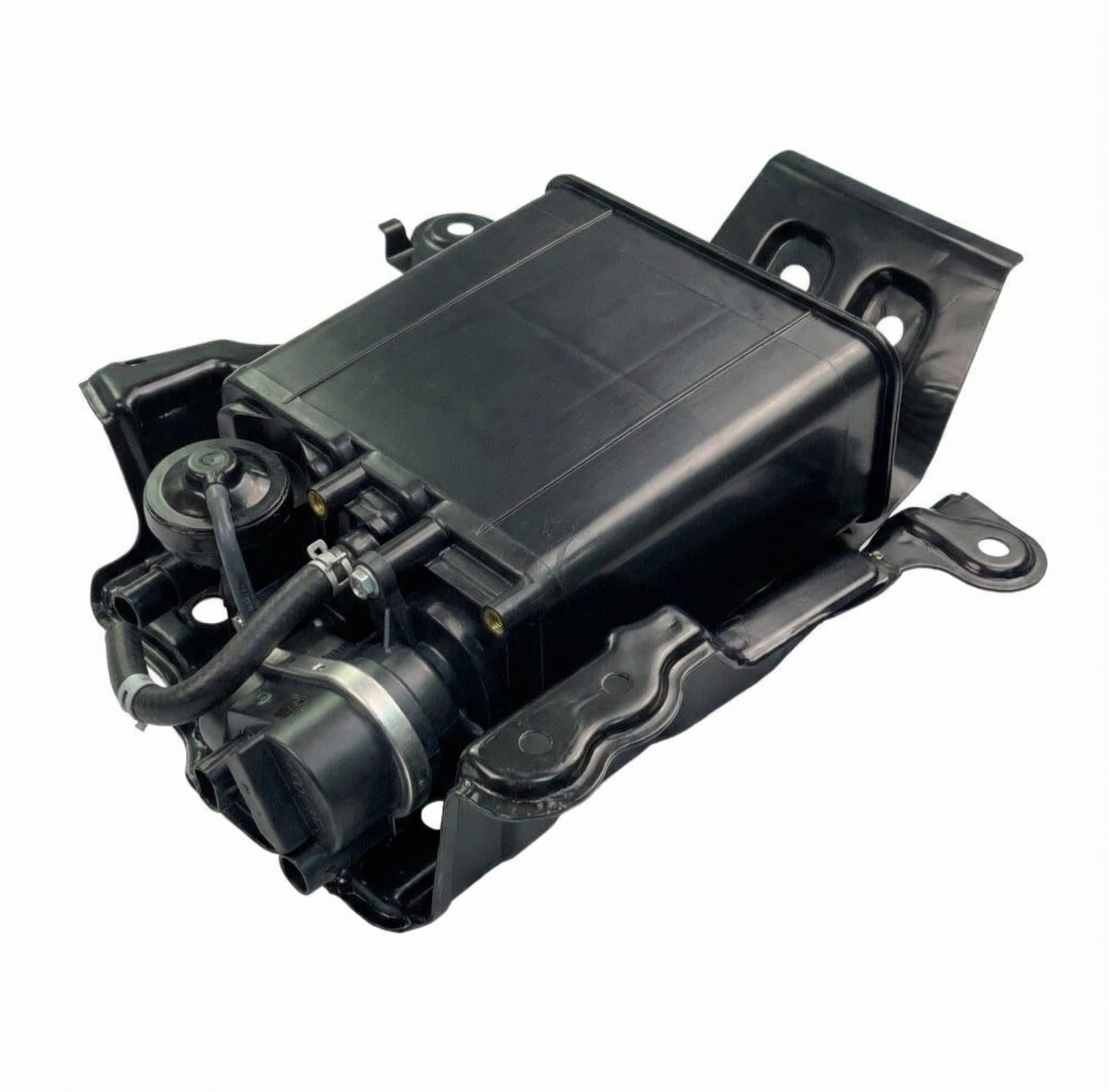
Est. part cost: $5-$25 - Failing Charcoal Canister Assembly 🟡 Medium Probability The EVAP canister is listed as one of the top 5 most common problems for the 4th generation RAV4. The canister can develop cracks or the internal charcoal can break down, clogging other components like the vent valve. Onset is often around 100,000-110,000 miles.
How to confirm: Diagnosis is difficult without a smoke machine and a bi-directional scan tool. A technician would use a smoke machine to check the canister for leaks and a scan tool to command the vent valve closed to see if it seals properly. If other EVAP codes like P0441 are present, suspicion for the canister increases.
Typical fix: Replacement of the entire charcoal canister assembly, which is located near the fuel tank, under a plastic shield.
Est. part cost: $350-$450 - Faulty Purge Valve (VSV) ⚪ Low Probability The purge valve (or Vapor Switching Valve - VSV, in Toyota terms) can get stuck slightly open, creating a small leak. While less common than a bad gas cap, it's a mechanical part that can fail.
How to confirm: The purge valve is normally closed. Remove the valve (located in the engine bay) and try to blow through it. If air passes through, it has failed. A technician can also use a scan tool to command it open and closed while monitoring system pressure or vacuum.
Typical fix: Replace the purge valve.
Est. part cost: $50-$100
Rare But Worth Checking
- Cracked Fuel Filler Neck: Rust or damage can cause a small crack in the metal tube leading to the gas tank. This will show up on a smoke test as smoke escaping from around the gas cap area, even with a good cap. Manufacturer Bulletin #T-SB-0086-16 notes that in some vehicles, the fuel filler neck may be out of position, leading to a condition where the fuel cap does not click or provide a spring return when seated.
- Faulty Fuel Tank Pressure Sensor: It's possible for the sensor that detects the leak to fail, causing it to report a leak that isn't there. This is rare and should only be considered after all other possibilities, especially a smoke test, have been exhausted.
- Leaking Fuel Tank Seal/Gasket: On a platform-mate Lexus NX, a persistent P0456 was traced to a loose circular lid/seal on the top of the fuel tank itself, which was allowing vapor to escape. This is a very difficult leak to find.
Diagnosis Steps
- Check the Gas Cap: Remove and inspect the gas cap's seal for cracks or damage. Reinstall it and ensure it clicks at least once. Also, check the fuel filler neck for any rust or debris that could prevent a seal. Clear the code and drive for a few days to see if it returns.
- Consider Replacing the Gas Cap: If the cap is old or the seal looks questionable, replace it with a new OEM part from Toyota. Aftermarket caps are a frequent source of EVAP codes.
- Visual Inspection: Carefully inspect the EVAP hoses in the engine bay, especially the ones connected to the purge valve. Look for any visible cracks, brittleness, or loose connections. Pay close attention to the areas under hose clamps.
- Professional Smoke Test: If the simple steps don't work, the next step is a professional smoke test. A mechanic will inject vaporized smoke into the EVAP system. Wherever the smoke escapes is the source of the leak. This is the most effective way to find tiny leaks in hoses, the canister, or the fuel filler neck.
- Test Components: Based on the smoke test results, a technician can test individual components like the purge valve or vent solenoid using a scan tool to confirm their operation. The purge valve can also be removed and manually tested by attempting to blow air through it (it should be closed when unpowered).
Parts You'll Likely Need
- Fuel Tank Cap
(OEM #77300-06040)— This is the most frequent cause of a P0456 code. The seal wears out over time, and it's the easiest and cheapest part to replace first. This part number is shared with many other Toyota models.
Trusted brands: Toyota (OEM)
OEM price range: $20-$40
Aftermarket price range: $15-$30 - Charcoal Canister Assembly
(OEM #77740-0R020)— This part is a known top-5 failure item on this generation of RAV4, either by cracking or by degrading internally and clogging the system. It's a common cause if the gas cap replacement does not solve the issue. Fitment notes indicate it's for models built up to 01/2016.
Trusted brands: Toyota (OEM), Aisin
OEM price range: $350-$450
Aftermarket price range: $200-$350 - Purge Valve / Vacuum Switching Valve (VSV)
(OEM #90910-12276)— This valve controls the flow of fuel vapors to the engine and can get stuck, causing a leak. It's a common failure point in the engine bay. This part may be superseded by 90910-TC001.
Trusted brands: Toyota (OEM), Denso
OEM price range: $70-$100
Aftermarket price range: $40-$80
Related Codes That Often Appear With This One
- P0441 — P0441 (Incorrect Purge Flow) can appear with P0456 if the issue is related to a faulty purge valve or a clogged charcoal canister that affects the flow of vapors.
- P0455 — P0455 indicates a large EVAP leak. While less common to see together, a problem that starts as a small leak (P0456) can worsen over time and eventually trigger a large leak code. Sometimes both appear if the leak is intermittent or on the borderline between small and large.
Platform-Specific Known Issues

- On AWD models, the ECM may disable the All-Wheel Drive system as a fail-safe when the P0456 code is active. Multiple owners have confirmed this behavior, which is not present on all vehicle makes.
- The charcoal canister assembly is a known weak point on this platform, being cited as one of the top 5 most common problems. Failures of the canister itself or its integrated valves are a common cause for persistent EVAP codes, especially on vehicles over 100,000 miles.
Mechanic-Grade Diagnostic Values
- EVAP Purge Valve (VSV) internal resistance — expected: 15 to 30 Ohms. Failure: A reading outside this range (e.g., open circuit or short) indicates a failed valve coil.
- Techstream EVAP System Check - Vacuum Decay Rate — expected: Approx. 0.07 to 0.10 mmHg/sec. Failure: A significantly higher decay rate indicates a leak. One documented case of a P0456 showed a decay rate of 0.34 mmHg/sec.
Hidden / Shadow Codes Worth Checking
- Mode 6, Test ID $81: While not a hidden code, professional scan tools like Toyota's Techstream can access detailed EVAP monitor test results that go beyond the simple P-code. This includes specific vacuum decay rates measured in mmHg/sec, which pinpoint the severity of a leak. (see via Using the 'Evaporative System Check' utility within Toyota Techstream software or a comparable high-end scan tool. The results are saved to an event file for analysis.)
Scan Tool Commands That Help
- Toyota Techstream: Utility -> Evaporative System Check — This is the definitive, dealer-level diagnostic test. It automatically commands the various VSVs (purge and vent) to seal the system, pulls a vacuum, and then records the rate of vacuum decay to confirm the presence and size of a leak. It can be used to verify a leak exists before a smoke test and to confirm a repair was successful after replacing a part.
- Professional Scan Tool (e.g., Launch, Autel): EVAP System Test / Bidirectional Control — Used to manually command the purge valve and vent valve/solenoid open or closed. This is critical for diagnosis. For example, a technician will command the vent valve closed before introducing smoke to the system to ensure it's sealed.
Wiring & Ground Locations
- Component Locations — Purge Valve (VSV): In the engine bay, connected to the intake manifold. Charcoal Canister/Leak Detection Pump Assembly: Under the vehicle, near the fuel tank, typically on the driver's side.. Knowing the physical location is the first step to visual inspection of hoses and testing connectors for power and ground.
- Connector Naming Convention — Vehicle-wide. In Toyota wiring diagrams, the first letter of a connector's code indicates its location: 'E' for Engine Compartment, 'I' for Instrument Panel area, and 'B' for the main Body. This helps locate the correct connector when tracing wires for the purge valve or fuel tank pressure sensor.
Real Owner Repair Stories
- YouTube channel 'Dr. Marcus Hale' (2013-2018 Toyota RAV4) — Intermittent P0456 code that would only appear when the weather was cold. The onboard EVAP test would pass on warm days.
❌ Tried (didn't work) Standard smoke test in a warm shop did not reveal any leaks.
✅ What actually fixed it The technician dropped the fuel tank and found a hairline crack in a plastic nipple on the fuel tank assembly itself. A metal retaining bracket had rusted and was putting pressure on the plastic, causing it to crack. The crack would only open and leak when the plastic contracted in cold temperatures. The fix was to replace the fuel tank assembly or repair the nipple. - NHTSA ODI #11586715 — An owner reported a persistent P0456 error stating the gas cap was faulty. Despite replacing the cap multiple times, the issue remained unresolved, illustrating how this code can persist even after standard repairs.
- NHTSA ODI #10350227 — In a cross-manufacturer report, an owner was told by a dealer that an animal had created a small pinhole in the gas return line, triggering the P0456 code.
"I Checked Everything" — The Actual Cause
- A hairline crack in a plastic component (like a fuel tank nipple) that only opens and leaks when cold. The plastic contracts in the cold, opening the crack, but it seals up when warm inside a service bay, causing the smoke test to pass.
- An overly sensitive Engine Control Module (ECM) logic. On some Toyota models, a Technical Service Bulletin (TSB) was issued because the ECM would set a P0456 with no physical leak present. The fix was to reprogram the ECM with an updated calibration file.
- Severe performance issues: NHTSA ODI #11235367 describes a case where P0456 appeared alongside other codes, resulting in a vehicle that would not go above 40mph on city streets or highways.
OEM Part Supersession History
25860-36090→25860-0V140— Updated part for the engine bay-mounted Vapor Canister Purge Solenoid.N/A→90910-TC001— Listed as a valid interchange/supersession for the common VSV part number 90910-12276.
Heads up: While listed as an interchange, always verify fitment by VIN as VSV applications can vary widely.
Model Year Variations Within This Range
- 2013 - Early 2016: These models use charcoal canister assembly part number 77740-0R020. The part notes specify it is for vehicles built up to January 2016.
- Late 2016 - 2018: These models, built after January 2016, use a different part number for the charcoal canister assembly. This corresponds with the mid-cycle refresh of the RAV4. The exact superseding part number should be verified by VIN.
- Pre/Post Oct. 2015: Wiring diagrams for the XA40 generation show changes for vehicles produced before and after October 2015, which aligns with the 2016 model year facelift. This could affect connector pinouts and wire colors for EVAP components.
Diagnostic Flowchart

Other Known Issues on This Vehicle
Issues unrelated to this code that are worth knowing about as an owner of this generation:
- Torque Converter Shudder/Judder 🟠 Medium — Common between 60,000-100,000 miles. Feels like driving over rumble strips at low speeds (25-50 mph). (Ref: T-SB-0026-19)
- Power Liftgate Failure 🟠 Medium — Struts can weaken, causing the gate to struggle, stop mid-travel, or not open/close correctly. A class action lawsuit was filed alleging defective hinges. Sometimes caused by dirty sensors or misaligned gaskets.
- Infotainment System Glitches 🟡 Low — The Toyota Touch 2 system is known to be slow, laggy, and prone to random reboots or freezing.
- No-Start Condition (Starter Appears Faulty) 🟠 Medium — A common issue where the vehicle won't start is often misdiagnosed as a bad starter. The actual root cause is frequently a failing transmission mount that allows for excess movement.
- Battery Hold-Down Short Circuit Risk 🔴 High — Affects all 2013-2018 models. Certain replacement 12V batteries have a top design that can contact the hold-down bracket, causing a short circuit and fire risk. (Ref: Recall 23TA13 (NHTSA 23V-723))
Used vs. New Parts: Buying Guide for This Vehicle
When a used part is the smart pick: Simple mechanical or electrical parts like the purge valve (VSV) can be a good candidate from a low-mileage, non-corroded donor vehicle. A complete fuel tank assembly could also be sourced used to resolve rare issues like a cracked nipple, as this part is very expensive new.
Donor-vehicle mileage cap: roughly under 80000 miles for the part to have meaningful remaining life.
What to inspect on the donor part:
- Check for rust on any metal components, especially mounting brackets or the fuel filler neck.
- Inspect plastic components for chalkiness, discoloration, or visible cracking.
- Ensure all hose connection points on used parts are intact and not brittle.
- Source parts from vehicles in dry, non-salt-belt climates if possible to avoid corrosion-related failures.
OEM-only on this vehicle (don't cheap out):
- Gas Cap: Strongly recommended to use a genuine Toyota (OEM) gas cap. Aftermarket caps are notoriously unreliable and a common cause of persistent P0456 codes.
- Charcoal Canister Assembly: Given this is a known high-failure part on this platform, an OEM or OEM-supplier (e.g., Aisin) part is recommended for longevity. A used part is a significant gamble.
Aftermarket brands forum-validated for this vehicle:
- Denso: Denso is an OEM supplier for many Toyota electrical components, and their purge valves (VSV) are considered a reliable alternative to dealer parts.
- Standard Motor Products (SMP): Often cited as a quality aftermarket brand for sensors and valves.
Brands owners have reported issues with on this vehicle:
- Unbranded/white-box gas caps from online marketplaces.
- No-name charcoal canister assemblies, as the internal construction and charcoal quality are critical and often poor in cheap copies.
Real Owner Stories
Aggregated from forums and TSBs cited above. Mileages and costs reflect what owners reported in those sources.
2018 RAV4
Symptoms: Check Engine Light popped on. The light triggers an 'AWD Malfunction' which disables the AWD system. A faint smell of gasoline was noted around the rear.
What fixed it: The owner replaced the gas cap, though the code persisted after two negative smoke tests, highlighting the difficulty of diagnosing tiny leaks on this platform.
Source hint: Reddit: 2018 RAV4 - Persistent P0456 (Small EVAP Leak)
Related OBD-II Codes
Frequently Asked Questions
Why is my 'AWD Malfunction' light on at the same time as the Check Engine Light for P0456?
Is there a specific gas cap I should buy for my 2013-2018 RAV4 to fix this?
My RAV4 has over 100,000 miles; is there a specific part prone to failing now?
Can I just clean the fuel filler neck instead of replacing parts?
Does the battery recall on my 2013-2018 RAV4 have anything to do with EVAP codes?
Helpful Videos
Used OEM Parts in Stock
New Aftermarket Parts Available


The information in this article is provided for general reference and educational purposes only. Vehicle specifications, procedures, and part compatibility can vary by production date, trim level, and region. Always consult your vehicle's factory service manual and verify part numbers before purchasing or performing repairs. Safety-critical components such as airbags, seat belts, and braking systems should be installed by a qualified professional.
- Toyota RAV4:
- 🎬 Helpful Videos
- 🛍️ Shop This Part
- What's Unique About the 2013-2018 Toyota RAV4
- Symptoms You May Notice
- Most Likely Causes
- Rare But Worth Checking
- Diagnosis Steps
- Parts You'll Likely Need
- Related Codes That Often Appear With This One
- Platform-Specific Known Issues
- Mechanic-Grade Diagnostic Values
- Hidden / Shadow Codes Worth Checking
- Scan Tool Commands That Help
- Wiring & Ground Locations
- Real Owner Repair Stories
- "I Checked Everything" — The Actual Cause
- OEM Part Supersession History
- Model Year Variations Within This Range
- Diagnostic Flowchart
- Other Known Issues on This Vehicle
- Used vs. New Parts: Buying Guide for This Vehicle
- Real Owner Stories
- 2018 RAV4
- Related OBD-II Codes
- Frequently Asked Questions
- 🎟️ Get 5% Off