

P0456 on 2005-2009 Subaru Outback: EVAP Very Small Leak Causes and Fixes
On a 2005-2009 Subaru Outback, code P0456 is most often caused by a simple loose gas cap or a failing gas cap seal. The second most likely cause, specific to this vehicle, is a rusted fuel filler neck. Always check the gas cap first before moving to more complex diagnostics.
- P0456 on a 2005-2009 Outback means a 'very small leak' was found in the emissions system.
- Always start with the simplest fix: check that your gas cap is tight and its seal is intact. An OEM replacement cap is a cheap and effective first step.
- The most likely cause after the gas cap is a rusted-out fuel filler neck, a known weak point on this vehicle.
- Do not replace expensive parts like the purge solenoid or charcoal canister until you have visually inspected the filler neck and/or performed a smoke test to confirm the leak's location.
- The vehicle is safe to drive with this code, but it needs to be fixed to pass any state emissions test.
What's Unique About the 2005-2009 Subaru Outback
While the causes for P0456 are similar across many cars, the 2005-2009 (third-generation) Outback and its platform-mate, the Legacy, are particularly known for their fuel filler necks rusting through. This issue is especially common in regions that use road salt, as moisture and debris get trapped behind the wheel well liner. The rust creates tiny pinhole leaks or a rough surface that prevents the gas cap from sealing correctly, making it a top suspect right after the gas cap itself. Many owners have traced their P0456 code directly to this specific component failure.
Symptoms You May Notice
- Check Engine Light is on
- A faint fuel smell near the gas cap area (less common for a very small leak, but possible).
- Difficulty starting after refueling (less common, but can indicate a faulty purge valve).
- Replacing the purge or vent valve without first checking the gas cap and thoroughly inspecting the fuel filler neck for rust. Many owners replace expensive electronic parts when the root cause is a simple mechanical leak.
- Replacing the gas cap but not cleaning or inspecting the filler neck surface it seals against. If the neck is rusted, a new cap won't fix the leak.
Most Likely Causes
- Loose or Faulty Gas Cap 🔴 High Probability This is the most common cause on any vehicle. The cap's rubber O-ring can dry out and crack with age, or the cap may simply not have been tightened correctly after refueling. Aftermarket caps are also a frequent source of problems as they may not seal as well as the OEM part.
How to confirm: Ensure the gas cap is tightened until it clicks at least once (three clicks is recommended). Inspect the rubber seal on the cap for cracks, stiffness, or damage. If the seal is compromised, replace the cap. Some owners report the light returning only in cold weather (under ~25°F), which can point to a seal that is hardening and failing. NHTSA ODI #10490077 describes a case where a gas cap seal failed after only two years, causing a P0456 code to trigger 4 out of 5 times the owner filled the gas tank.
Typical fix: Tighten or replace the gas cap. Using an OEM (Original Equipment Manufacturer) cap is strongly recommended for a perfect seal. A temporary test can be done by cleaning the filler neck rim and applying a light coat of petroleum jelly to the cap's O-ring to improve the seal.
Est. part cost: $15-$40 - Rusted Fuel Filler Neck 🔴 High Probability Subarus from this era are known for fuel filler neck corrosion, especially in the salt belt. The metal pipe that connects the gas cap to the fuel tank rusts, creating pinholes or a poor sealing surface for the cap. The area is often hidden behind a plastic guard in the wheel well, which traps moisture and accelerates rust.
How to confirm: Remove the right-rear wheel and the plastic splash guard in the wheel well to visually inspect the entire length of the filler neck for rust, flaking, or wet spots. Pay close attention to the lip where the gas cap seals and any mounting brackets. Even small blisters in the paint can hide pinhole leaks.
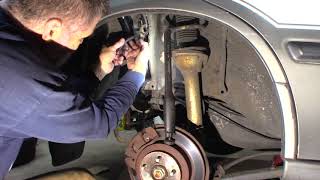
Typical fix: The rusted filler neck must be replaced. Some owners attempt a temporary repair with fuel-safe epoxy like JB Weld or Quick Steel, but replacement is the only permanent solution. This is a common DIY job. 🎬 Watch: Step-by-step guide to replacing a rusted fuel filler neck.
Est. part cost: $100-$250 - Cracked or Disconnected EVAP Hoses 🟡 Medium Probability The rubber and plastic hoses in the EVAP system become brittle over time due to heat and exposure, leading to small cracks, especially at connection points to the charcoal canister or valves. Manufacturer TSB Bulletin #11-152-14 specifically addresses P0456 by adding clamps to the canister purge control solenoid valve hose to ensure a proper seal.
How to confirm: Visually inspect all accessible EVAP lines, from the engine bay back to the charcoal canister near the fuel tank. A smoke test is the most effective way to find a hairline crack that isn't visible. Pay special attention to the small hoses connected to the purge valve in the engine bay.
Typical fix: Replace the cracked section of hose. Ensure all connections are secure. Sometimes just adding spring clamps to a hose that has slightly expanded can solve the leak.
Est. part cost: $10-$50 - Faulty EVAP Purge or Vent Solenoid ⚪ Low Probability These electronically controlled valves can fail by getting stuck slightly open, creating a leak path that the ECU detects during its self-test. The vent valve (also called a drain valve on some Subaru diagrams) is located near the charcoal canister at the rear of the car, while the purge valve is in the engine bay.
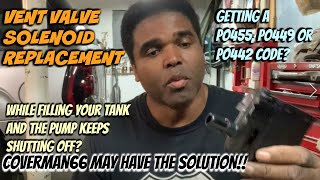
How to confirm: The purge valve (in the engine bay) should be closed with no power. You can remove it and try to blow through it; if air passes, it's faulty. The vent valve (near the canister) is normally open and closes when powered. A scan tool can command them to cycle for testing, or you can test them with a 12V source.
Typical fix: Replace the faulty valve. The vent valve near the canister is more exposed to the elements and can be a failure point.
Est. part cost: $40-$120
Rare But Worth Checking
- Cracked Charcoal Canister: The plastic body of the charcoal canister can develop hairline cracks from age or impact from road debris, creating a leak. This is usually found with a smoke test. Over-filling the fuel tank can also saturate the canister with liquid fuel, damaging it and causing fueling issues.
- Leaking Fuel Tank Pressure Sensor: The sensor itself or its seal can fail, creating a small leak. This is uncommon but possible, and may be accompanied by other codes.
- Leaking Fuel Tank or Fuel Pump Gasket: Less common for a 'very small' leak, but rust can also perforate the top of the fuel tank or the fuel pump/sender unit's metal locking ring, causing a leak that can trigger P0456.
- Faulty Roll Over Valve: As noted in NHTSA ODI #10524491, an owner reported a recurring P0456 code where a technician suggested replacing the roll over valve as a potential solution.
Diagnosis Steps
- Check the Gas Cap: Ensure it is tight and clicks. Inspect the seal for damage. If in doubt, a new OEM cap is an inexpensive first step. Clear the code and see if it returns.
- Clear the Code: Use an OBD-II scanner to clear the code. Drive the vehicle for several days to see if the light returns. The EVAP monitor runs only under specific conditions (often with the fuel tank between 1/4 and 3/4 full, during a cool-down period), so it may take time.
- Visual Inspection (Fuel Filler Neck): If the light returns, perform a thorough visual inspection. The top priority is the fuel filler neck. Remove the right rear wheel and the plastic inner fender liner to get a clear view of the entire pipe. Look for rust, paint bubbling, or wetness.
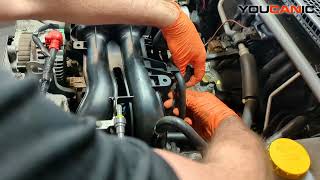
- Perform a Smoke Test: This is the most reliable way to find a very small leak. A smoke machine forces low-pressure, UV-dyed smoke into the EVAP system via the service port. Smoke will exit from any crack or leak point, making it easy to spot. 🎬 See how to use a smoke machine to find small leaks. This is the definitive method for finding cracked hoses or a leaky canister.
- Test Solenoids: If no leak is found with a smoke test, test the purge and vent solenoids to ensure they are sealing correctly when commanded closed. The purge solenoid is in the engine bay; the vent solenoid is near the charcoal canister at the rear of the car.
- Inspect Charcoal Canister: While performing the smoke test, check the canister body and its hose connections for any escaping smoke.
Parts You'll Likely Need
- Gas Cap
(OEM #42038AG00A)— This is the most frequent cause of a P0456 code due to a worn seal or improper tightening.
Trusted brands: Subaru (OEM), Stant
OEM price range: $25-$40
Aftermarket price range: $15-$25 - Fuel Filler Neck
(OEM #42066AG04A)— A very common failure point on this specific generation of Outback, which rusts and causes a leak that the gas cap cannot seal.
Trusted brands: Subaru (OEM), Spectra Premium (FN905)
OEM price range: $95-$150
Aftermarket price range: $100-$180 - EVAP Purge Control Solenoid Valve
(OEM #16102AA380)— Can get stuck partially open, creating a constant small leak path. Located in the engine bay.
Trusted brands: Denso, Subaru (OEM)
OEM price range: $80-$120
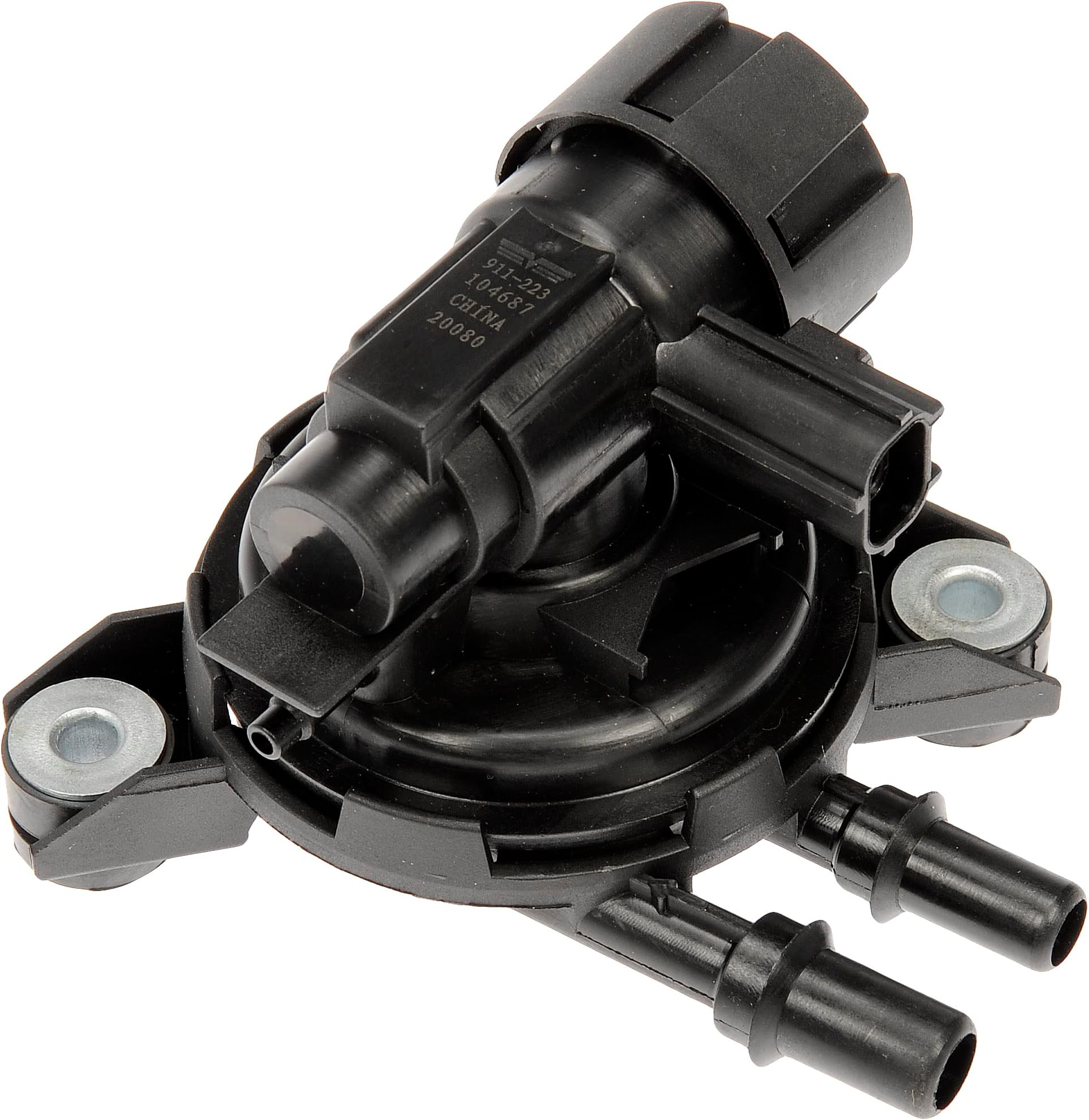
Aftermarket price range: $40-$70 - EVAP Vent Valve / Drain Valve — Located near the charcoal canister, this valve can get stuck or fail due to exposure to road debris and moisture, preventing the system from sealing during its self-test.
Trusted brands: Subaru (OEM), Dorman
OEM price range: $70-$110
Aftermarket price range: $35-$60
Related Codes That Often Appear With This One
- P0442 — P0442 indicates a 'small leak,' while P0456 indicates a 'very small leak.' They point to the same type of failure, just of a different magnitude. A leak may worsen over time, causing the code to change from P0456 to P0442.
- P0455 — This indicates a 'gross leak,' often caused by the gas cap being left off entirely. If you see this with P0456, it could point to an intermittent, large leak or a failing component in the system.
- P0457 — Indicates a leak detected, often specifically interpreted as a loose or missing fuel cap. It is functionally very similar to P0455 and P0456 and points to the same set of potential failures.
Technical Service Bulletins (TSBs) & Recalls
- While no TSBs directly address P0456 for the 2005-2009 model years, Subaru has issued TSBs for later models that show a pattern of addressing this code. TSB Bulletin #11-126-12 provides reprogramming files to update ECU logic for P0456 sensitivity, indicating a history of the code being triggered by borderline conditions. Additionally, TSB Bulletin #11-152-14 details how adding clamps to the canister purge control solenoid valve hose can resolve the P0456 code, a fix that could potentially be relevant to older models experiencing similar issues.
Platform-Specific Known Issues
- The fuel filler neck on 2005-2009 Outbacks is highly susceptible to rusting through, particularly where it is obscured by the wheel well liner. This traps moisture and road salt, accelerating corrosion and leading directly to EVAP leaks that trigger code P0456. Many owners on forums like LegacyGT.com and UltimateSubaru.com have documented this failure extensively.
Mechanic-Grade Diagnostic Values
- EVAP Canister Purge Valve Solenoid Resistance — expected: 20 - 50 Ohms (general), with some Subaru-specific sources citing 10-100 Ohms or 30-38 Ohms.. Failure: A reading of 0 Ohms (short) or infinite/OL (open circuit) indicates a failed solenoid coil.
- EVAP Canister Vent (Drain) Valve Solenoid Resistance — expected: 30 - 50 Ohms.. Failure: A reading significantly outside this range (e.g., 26 Ohms as noted in one case) or an open/shorted circuit indicates the solenoid is out of spec or has failed.
- Fuel Tank Pressure (FTP) Sensor Voltage — expected: Should operate within a 0.5 - 4.5 Volt range during the EVAP self-test.. Failure: Voltage that is stuck high, low, or does not change when the system is under vacuum/pressure can indicate a faulty sensor or wiring issue.
Scan Tool Commands That Help
- Subaru Factory Method (No Scan Tool): Diagnostic Test Mode Connector — Under the driver's side dash, there is a pair of green, single-pin connectors. Connecting these two connectors together and turning the ignition to 'ON' (engine off) puts the car into a diagnostic test mode. This mode cycles all relays and solenoids, including the EVAP purge and vent valves, at approximately one-second intervals. This allows a technician to physically listen for or feel the valves clicking to confirm they are mechanically activating without needing a bidirectional scan tool.
Wiring & Ground Locations
- Engine Control Module (ECM) Ground — The ECU gets its primary ground reference from the top of the intake manifold. There are also critical chassis ground points, including braided straps from the engine to the frame, often near the passenger side exhaust manifold.. A poor ground connection between the engine and chassis can cause a variety of erratic electrical issues and incorrect sensor readings. While not a direct cause of a physical leak, a faulty ground can cause the ECU to misinterpret data from the Fuel Tank Pressure sensor, potentially leading to a false P0456 code or other EVAP system errors.
- BIU Module — The Body Integrated Unit (BIU) is located to the right of the steering column.. The BIU manages various body-related electrical functions and communicates with the ECM. While not directly part of the EVAP system, wiring issues related to the BIU can sometimes cause communication faults that may manifest as other seemingly unrelated trouble codes.
Real Owner Repair Stories
- Reddit user in r/AskAMechanic (Vehicle not specified, but code and fix are universal) — P0456 Check Engine Light
❌ Tried (didn't work) Initial diagnosis was unclear.
✅ What actually fixed it The EVAP purge valve was faulty and was replaced. The light turned off on its own after several drive cycles. - Ultimate Subaru Message Board user (Subaru with P0443 (Purge Control Circuit Fault), diagnosis relevant to P0456) — Check Engine Light
❌ Tried (didn't work) Checked resistance of what they thought was the purge valve., Checked for voltage at the plug., Checked wiring continuity from the valve to the ECM.
✅ What actually fixed it The user was diagnosing the wrong component. The final fix was replacing the correct purge solenoid valve located near the charcoal canister at the rear of the car, not the component they were initially testing in the engine bay. This highlights the importance of correctly identifying the purge vs. vent/drain valves. - NHTSA ODI #10490077 — An owner reported that the gas cap seal was not working as it should after only 40,000 miles, causing a P0456 small leak code to trigger nearly every time they filled the gas tank.
"I Checked Everything" — The Actual Cause
- A known edge case for this generation of Subaru is a clogged filter on the EVAP drain valve (vent valve) assembly. The system can pass a smoke test because the valve itself is not leaking, but the clogged filter prevents the system from breathing properly during the self-test cycle. This tricks the ECU into thinking there is a restriction or a leak. The fix is to remove the drain valve assembly and either clean or replace the small integrated filter, which often gets clogged with road dust and debris.
Model Year Variations Within This Range
- 2006-2009: For the 2006 model year, the 2.5L non-turbo engine was updated with the i-Active Valve Lift System, which increased horsepower. While this does not directly change the EVAP system components, it is a notable engine revision within the specified vehicle range.
- 2005-2012 (Non-Turbo): The vapor canister (charcoal canister) for the 2.5L non-turbo engine is specific and will not fit the 2.5L Turbo (GT) or 3.0L/3.6L 6-cylinder models, which use different EVAP components.
Diagnostic Flowchart
Real Owner Stories
Aggregated from forums and TSBs cited above. Mileages and costs reflect what owners reported in those sources.
2000 Subaru Outback Sport
Symptoms: Leaking fuel filler neck due to severe rust.
What fixed it: Replaced the filler neck (a temporary fix was also noted using Quick Steel putty).
Source hint: UltimateSubaru.org thread titled 'Help! Rust ate my fuel filler neck.'
2005-2009 Subaru Legacy/Outback
Symptoms: Rusted fuel filler neck causing EVAP system leaks.
What fixed it: Replaced the fuel filler neck.
Source hint: LegacyGT.com thread titled 'Official Rusted Fuel Filler Neck thread'
Subaru Outback
Symptoms: The P0456 code only appeared during cold weather conditions.
What fixed it: Replaced the gas cap.
Source hint: Reddit.com/r/subaru
Subaru Outback
Symptoms: Experienced random stalling accompanying a rusted-out fuel filler neck.
What fixed it: Replaced the rusted fuel filler neck.
Source hint: Reddit.com/r/subaru
Subaru Forester
Symptoms: Recurring P0456 code; technician was uncertain but suggested the roll over valve as a potential cause.
What fixed it: Roll over valve replacement was suggested (NHTSA ODI #10524491).
Source hint: NHTSA ODI #10524491
Related OBD-II Codes
Frequently Asked Questions
Is there a TSB for the P0456 code on my 2005-2009 Subaru Outback?
Why does my Outback's check engine light for P0456 only come on in cold weather?
Where is the fuel filler neck located, and why is it prone to rusting on this generation?
Can I use epoxy to fix a rusted fuel filler neck on my Outback?
Does the 2005-2009 Subaru Legacy have the same EVAP leak issues?
How do I test the EVAP solenoids on my 2005-2009 Outback?
Helpful Videos
Used OEM Parts in Stock
New Aftermarket Parts Available


The information in this article is provided for general reference and educational purposes only. Vehicle specifications, procedures, and part compatibility can vary by production date, trim level, and region. Always consult your vehicle's factory service manual and verify part numbers before purchasing or performing repairs. Safety-critical components such as airbags, seat belts, and braking systems should be installed by a qualified professional.
- Subaru Outback:
- 🎬 Helpful Videos
- 🛍️ Shop This Part
- What's Unique About the 2005-2009 Subaru Outback
- Symptoms You May Notice
- Most Likely Causes
- Rare But Worth Checking
- Diagnosis Steps
- Parts You'll Likely Need
- Related Codes That Often Appear With This One
- Technical Service Bulletins (TSBs) & Recalls
- Platform-Specific Known Issues
- Mechanic-Grade Diagnostic Values
- Scan Tool Commands That Help
- Wiring & Ground Locations
- Real Owner Repair Stories
- "I Checked Everything" — The Actual Cause
- Model Year Variations Within This Range
- Diagnostic Flowchart
- Real Owner Stories
- 2000 Subaru Outback Sport
- 2005-2009 Subaru Legacy/Outback
- Subaru Outback
- Subaru Outback
- Subaru Forester
- Related OBD-II Codes
- Frequently Asked Questions
- 🎟️ Get 5% Off