

P0456 on 2005-2011 Mercury Mariner: EVAP Small Leak Causes and Fixes
For a 2005-2011 Mercury Mariner, code P0456 is most often caused by a faulty canister purge valve located on the engine. The second most likely cause is an issue with the fuel filler area—either a bad gas cap (2005-2007) or a problem with the capless inlet (2008-2011). Replacing the purge valve is a common DIY fix costing around $30-$60.
- Start your diagnosis by checking the canister purge valve on the engine; it's the most likely cause of P0456 on this vehicle.
- If you have a 2005-2007 model, inspect the gas cap seal and ensure it's tight. For 2008-2011 models, clean the capless fuel inlet.
- If the purge valve and fuel inlet/cap are good, visually inspect the fuel filler neck for significant rust, as this is another known weak point.
- A smoke test is the best way to find the leak if the common causes are ruled out.
What's Unique About the 2005-2011 Mercury Mariner
The 2005-2011 Mercury Mariner spans two generations with a key difference in the EVAP system. The first generation (2005-2007) uses a traditional screw-on gas cap. The second generation (2008-2011) features the Ford 'Easy Fuel' capless system. While both can get a P0456 code, the capless system introduces unique failure points related to the filler neck's internal flap and the seal on the fuel door itself. However, across both generations, the most frequent and well-documented cause of a P0456 code on this platform is a failing canister purge valve, not the gas cap or filler neck.
Generation note: The 2005-2011 year range covers two generations of the Mercury Mariner. The first generation (2005-2007) uses a standard gas cap. The second generation (2008-2011) uses a capless fuel filler system. This changes the diagnostic approach for the fuel filler area, with the capless system being prone to debris in the flap or a failed door seal.
Symptoms You May Notice
- Check Engine Light is on.
- A faint fuel smell may be present, but this is uncommon for a very small leak.
- For 2008-2011 models, a failing purge valve can sometimes cause sputtering or a hard start immediately after refueling.
- Slight decrease in fuel economy over time.
- Replacing oxygen (O2) sensors. O2 sensors are not part of the EVAP system and will not cause a P0456 code, although a bad purge valve can sometimes trigger additional O2 sensor codes.
- Immediately replacing the fuel tank. While a fuel tank can leak, it is very rare and should only be considered after a smoke test has definitively identified it as the source of the leak.
Most Likely Causes
- Faulty Canister Purge Valve (Solenoid) 🔴 High Probability This is a very common failure item on the Ford Escape/Mercury Mariner platform. The internal seal wears out or gets contaminated with carbon, causing it to leak vacuum into the EVAP system when it should be closed.
How to confirm: With the engine running, disconnect the EVAP hose from the purge valve. There should be NO vacuum felt at the valve's port when its electrical connector is unplugged. If you feel suction with your finger or a vacuum gauge shows a reading, the valve is stuck open and must be replaced.
Typical fix: Replace the canister purge valve. It is typically located on the engine intake manifold or firewall and is held on by two bolts.
Est. part cost: $30-$60 - Loose/Faulty Gas Cap (2005-2007 models) 🟡 Medium Probability The gas cap is a primary seal for the EVAP system. If the rubber O-ring seal is cracked, worn, or the cap is not tightened properly (at least three clicks), it will cause a leak.
How to confirm: Inspect the gas cap's rubber seal for cracks or damage. Ensure it is tightened until it clicks at least three times. If the seal is damaged or the cap is old, replacement is a cheap and easy first step.
Typical fix: Replace the gas cap. It is highly recommended to use an OEM (Motorcraft) part, as aftermarket caps can sometimes have sealing issues. The correct Motorcraft part is often FC1061.
Est. part cost: $15-$30 - Leaking Capless Fuel Filler Inlet (2008-2011 models) 🟡 Medium Probability The 'Easy Fuel' system relies on a spring-loaded flap inside the filler neck and a seal on the fuel door to keep the system closed. Debris can get stuck in the flap, or the seal can wear out, preventing a proper seal.
How to confirm: Visually inspect the fuel filler opening for any debris holding the metal flap open. Use the emergency fuel funnel (usually stored with the jack) to cycle the flap open and closed a few times to dislodge anything. Also, check the condition of the round seal on the inside of the fuel door.
Typical fix: Clean the filler neck opening with a cloth and some spray lubricant like WD-40, then use compressed air to blow out debris. If the internal mechanism is faulty or the filler neck itself is rusted, the entire fuel filler neck assembly needs to be replaced.
Est. part cost: $100-$200 - Rusted or Cracked Fuel Filler Neck ⚪ Low Probability These vehicles, especially when driven in regions that use road salt (the 'Salt Belt'), are notoriously prone to rust around the rear wheel wells. This corrosion often attacks the metal fuel filler neck, creating pinhole leaks.
How to confirm: A visual inspection may reveal heavy rust, flaking metal, or wet spots on the filler neck, which runs from the fuel door to the gas tank. A definitive diagnosis requires a smoke test to see smoke escaping from the rusted area.
Typical fix: The fuel filler neck must be replaced. This involves removing the rear wheel and wheel well liner for access.
Est. part cost: $100-$200 - Cracked or Disconnected EVAP Hoses ⚪ Low Probability
How to confirm: Visually inspect all accessible rubber and plastic EVAP lines, especially around the engine bay and near the charcoal canister in the rear of the vehicle. Look for brittle, cracked, or disconnected hoses. A smoke test is the most effective way to find a small hose leak.
Typical fix: Replace the damaged section of hose.
Est. part cost: $5-$25
Rare But Worth Checking
- Faulty EVAP Canister Vent Solenoid: This valve is located near the charcoal canister by the fuel tank. It can get stuck, but it fails less frequently than the purge valve on the engine.
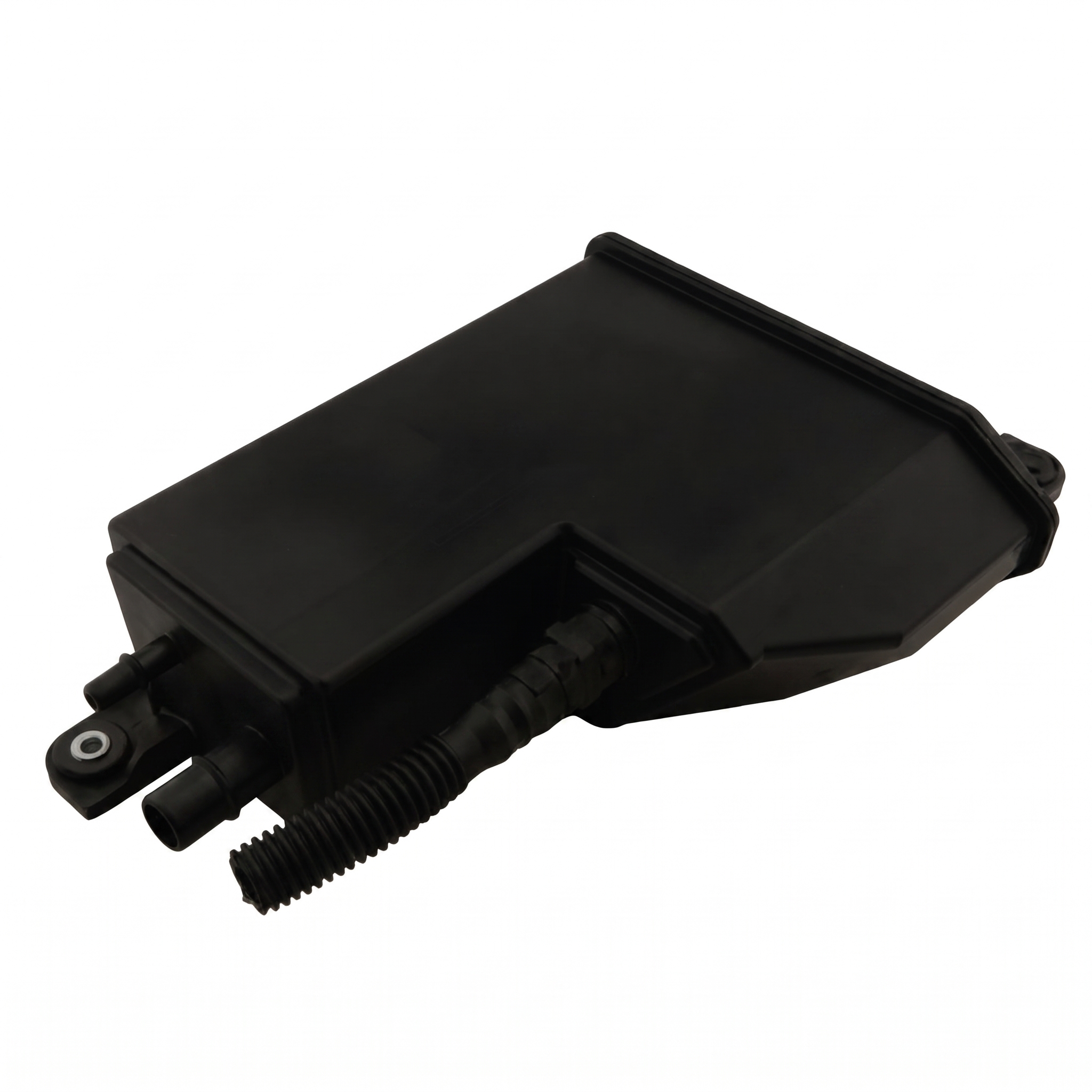
- Leaking Charcoal Canister: The plastic housing of the canister itself can develop cracks over time, leading to a leak. This is usually found with a smoke test.
Diagnosis Steps
- Check the gas cap (2005-2007) or capless filler inlet (2008-2011). Ensure the cap is tight and the seal is good, or that the capless inlet is clean and closes properly. This is the simplest and most common fix.
- Test the canister purge valve. With the engine running, disconnect the hose from the valve and check for vacuum. If suction is present with the electrical connector unplugged, the valve is bad.
- Perform a visual inspection. Carefully look over the fuel filler neck for signs of heavy rust or corrosion, a known weak point on these vehicles. Inspect all visible EVAP hoses for obvious cracks or disconnections.
- If the leak is not yet found, perform a smoke test. This involves feeding low-pressure smoke into the EVAP service port. The leak will be revealed by the point where smoke escapes the system. This is the most reliable way to find tiny leaks in hoses, the charcoal canister, or the filler neck.
Parts You'll Likely Need
- Canister Purge Valve / Solenoid
(OEM #9U5Z-9C915-H (replaces 9U5Z-9C915-A), Motorcraft CX-2240)— This is the most common failure point for P0456 on this platform. It gets stuck open internally, causing a persistent small leak.
Trusted brands: Motorcraft, Dorman, Standard Motor Products
OEM price range: $40-$70
Aftermarket price range: $25-$50 - Fuel Filler Neck — Prone to rusting through, especially in northern climates, creating small leaks that trigger this code.
Trusted brands: Motorcraft, Dorman, Spectra Premium
OEM price range: $150-$250
Aftermarket price range: $80-$150 - Fuel Cap (2005-2007 models only)
(OEM #Motorcraft FC1061)— A worn out or damaged gas cap seal is a simple and common cause. Using an OEM cap is critical for a proper seal.
Trusted brands: Motorcraft
OEM price range: $20-$35
Aftermarket price range: $10-$20
Related Codes That Often Appear With This One
- P1450 — This code means 'Unable to Bleed Up Fuel Tank Vacuum' and on Ford products, it is very commonly caused by the same faulty purge valve that triggers P0456.
- P2196 / P2198 — These codes for 'O2 Sensor Signal Stuck Rich' can appear alongside P0456 when a leaking purge valve allows un-metered fuel vapors into the engine, causing a rich fuel condition.
- P0455 — This indicates a 'Gross EVAP Leak'. While P0456 is a small leak, sometimes a component on the edge of failure can cause either code to appear. On 2009+ models, a bad fuel door seal can cause a P0455.
Technical Service Bulletins (TSBs) & Recalls
- TSB 10-1-3: For 2009 Mariner Hybrid models built on or before 4/6/2009, this TSB addresses DTCs P0442, P0456, or P1450. It points towards a diagnostic procedure update rather than a specific part replacement.
Platform-Specific Known Issues
- Owner Experience: The Purge Valve is the First Place to Look: Numerous owner accounts and mechanic videos for the Mariner and its twin, the Ford Escape, confirm that the canister purge valve is the most likely culprit for a P0456 code. A YouTube video by 'FordTechMakuloco' (a popular Ford technician) is frequently cited in forums, demonstrating the simple vacuum test to confirm a bad valve. The test involves starting the engine, unplugging the valve's electrical connector, and checking for suction on the port with a finger or vacuum gauge. Suction indicates a valve stuck open, confirming the failure.
- Capless System (2008-2011): Don't Forget the Funnel Trick: For later models with the 'Easy Fuel' capless system, debris in the filler neck is a common cause of a poor seal. Before suspecting other parts, use the emergency fuel funnel (usually located with the jack) to cycle the spring-loaded flap open and closed several times. This can dislodge dirt or rust particles preventing a complete seal. A quick spray of a cleaning lubricant like WD-40 can also help free up the mechanism.
Mechanic-Grade Diagnostic Values
- Canister Purge Valve Vacuum — expected: 0 inHg (no vacuum). Failure: Any vacuum reading (e.g., 18-19 inHg) on a vacuum gauge when the valve's electrical connector is unplugged and the engine is running.
- Ford Mode 6, Test ID $07 — expected: The test result should be between the 'leak' and 'no-leak' limits defined by the PCM.. Failure: If the test result exceeds the '.020 leak' criteria during the idle test, the PCM will store a pending P0456 code.
- Fuel Tank Pressure (FTP) Sensor Reading during EVAP Test — expected: The system should pull down to a target vacuum, typically around -7 inches of H2O.. Failure: If the system cannot achieve or hold the target vacuum, a leak is indicated. If the sensor provides an erratic or biased reading, it can falsely trigger a leak code.
Hidden / Shadow Codes Worth Checking
- P1450: Unable to Bleed Up Fuel Tank Vacuum. This code frequently appears with P0456 on this platform. (see via Standard OBD-II scanner. When seen with P0456, it strongly points to a canister purge valve that is stuck open or leaking internally.)
- Mode 6, Test ID $07: This is not a DTC, but the underlying diagnostic test data for the 0.020" (small leak) EVAP monitor. Advanced scan tools can read Mode 6 data to see the raw test values and limits, confirming if the system is passing, failing, or borderline before a code is set. (see via An OBD-II scan tool with Mode 6 diagnostic capabilities.)
Scan Tool Commands That Help
- Ford IDS (or equivalent professional scan tool): EVAP System Test / Output Control — This function allows the technician to command the canister purge valve and vent solenoid on and off to verify their operation. For a tricky P0456, a technician can command the purge valve to cycle on and off multiple times while monitoring vacuum to see if it sticks intermittently, a common failure mode that a single test might miss.
- Professional Scan Tool: Close Vent Solenoid — This command is essential before performing a smoke test. The technician commands the normally-open vent solenoid to close, sealing the EVAP system. This allows the smoke machine to build slight pressure and reveal any leaks.
Wiring & Ground Locations
- Canister Purge Valve — On 2008 models, it is often mounted on the cowl. On 2009-2011 models, it is typically on the engine's intake manifold.. This is the most common electrical component to fail for this code. Knowing its location is key for testing and replacement.
- EVAP Canister Vent Solenoid — Under the vehicle, mounted on or near the charcoal canister, which is located roughly under the left-hand side of the vehicle.. This solenoid must seal correctly for the EVAP test to run. A wiring or connector issue here can cause various EVAP codes.
- G107 — Ground point located at the left rear of the engine compartment.. A poor ground connection for the PCM or related sensors can cause erratic behavior and false codes. This is a primary engine-related ground.
- G202 — Ground point located behind the left end of the dashboard.. Interior grounds can affect the PCM and instrument cluster. While less likely to cause an EVAP code directly, it's part of the overall electrical system integrity.
Real Owner Repair Stories
- YouTube channel 'South Main Auto Repair' (2011 Ford Escape 3.0L (same platform)) — Check Engine Light with code P0456.
❌ Tried (didn't work) A simple smoke test might show no leaks, as the valve failure can be intermittent.
✅ What actually fixed it The canister purge valve was intermittently sticking. The technician connected a vacuum gauge and used a scan tool to cycle the valve's output command. After a few cycles, the valve stuck open, showing full manifold vacuum when it should have been closed. Replacing the purge valve and verifying the new one held zero vacuum when commanded off was the definitive fix. - YouTube channel 'The G Automotive and More' (2011 Ford Escape 2.5L (same platform)) — Check Engine Light with code P0456.
✅ What actually fixed it The canister purge valve was leaking vacuum even when electrically disconnected. The technician demonstrated nearly 19 inHg of vacuum on the bad valve with the engine running. After installing a new valve, the vacuum reading was zero under the same test conditions, confirming the fix. - Fiesta ST Forum (Ford platform vehicle) — Check Engine Light with codes P0456 and P1450.
✅ What actually fixed it The user noted that the P1450 code often appears hand-in-hand with P0456. Replacing the canister purge valve resolved both codes simultaneously. - NHTSA ODI #10524401 (Mercury platform vehicle) — An owner reported that after a diagnostic check for a service engine light, the only code that appeared was P0456, indicating that a valve needed to be replaced.
"I Checked Everything" — The Actual Cause
- On this Ford platform (which uses a Natural Vacuum Leak Detection system for the small leak test), the most common 'smoke test clean' scenario is an intermittently failing canister purge valve. A technician can perform a smoke test and find no visible leaks because the purge valve happens to be sealing correctly at that moment. However, during normal operation, the valve can stick slightly open after being commanded by the PCM. This creates a small leak path directly from the intake manifold, which the system detects during its key-off monitor, setting the P0456. The proper diagnosis is to cycle the purge valve multiple times using a scan tool's bidirectional control while monitoring its port with a vacuum gauge to see if it ever fails to close completely.
Model Year Variations Within This Range
- 2005-2007: Uses a traditional, screw-on gas cap (e.g., Motorcraft FC1061). Diagnostics for the filler area focus on the cap's seal and the filler neck rim.
- 2008-2011: Uses the 'Easy Fuel' capless system. Diagnostics for the filler area focus on debris in the internal flap, the integrity of the flap's seal, and the condition of the seal on the fuel door.
- 2008: Service manual indicates the canister purge valve is mounted on the cowl (firewall).
- 2009-2011: Common repair videos show the canister purge valve is mounted directly on the engine's intake manifold, making it slightly easier to access.
Diagnostic Flowchart
Real Owner Stories
Aggregated from forums and TSBs cited above. Mileages and costs reflect what owners reported in those sources.
2010 Mercury Mariner
Symptoms: Vehicle shutting off on idle occasionally, accompanied by P0455 and P0456 codes.
What fixed it: Unresolved in the report; mechanics were unable to diagnose or fix the EVAP problems.
Source hint: Reddit r/RioGrandeValley
2010 Ford Escape
Symptoms: P0456 code triggered by a suspected leak in the capless fuel system.
What fixed it: Cleaned the internal flapper seal using the emergency funnel and lubricant.
Source hint: Reddit r/MechanicAdvice
Ford Escape
Symptoms: EVAP leak code P0456.
What fixed it: Performed a smoke test which revealed a leak in the rusted fuel filler neck, requiring replacement of the neck assembly.
Source hint: Reddit r/fordescape
Mercury Platform Vehicle
Symptoms: Traction light coming on and resetting, with codes C1277, C1963, P1450, and P0456 present at 117,000 miles.
What fixed it: Reported under NHTSA ODI #11074537; symptoms included electronic stability control issues alongside EVAP codes.
Source hint: NHTSA ODI #11074537
Related OBD-II Codes
Frequently Asked Questions
Does TSB 10-1-3 apply to my Mercury Mariner?
What is the correct replacement gas cap for my 2005-2007 Mariner?
My 2008-2011 Mariner has the capless fuel system. How do I fix a P0456 leak there?
How can I test the canister purge valve on my Mariner?
Why is my Mariner sputtering and hard to start right after getting gas?
Is rust a common cause for P0456 on the Mariner and Escape platform?
Used OEM Parts in Stock

New Aftermarket Parts Available



The information in this article is provided for general reference and educational purposes only. Vehicle specifications, procedures, and part compatibility can vary by production date, trim level, and region. Always consult your vehicle's factory service manual and verify part numbers before purchasing or performing repairs. Safety-critical components such as airbags, seat belts, and braking systems should be installed by a qualified professional.
- Mercury Mariner:
- 🛍️ Shop This Part
- What's Unique About the 2005-2011 Mercury Mariner
- Symptoms You May Notice
- Most Likely Causes
- Rare But Worth Checking
- Diagnosis Steps
- Parts You'll Likely Need
- Related Codes That Often Appear With This One
- Technical Service Bulletins (TSBs) & Recalls
- Platform-Specific Known Issues
- Mechanic-Grade Diagnostic Values
- Hidden / Shadow Codes Worth Checking
- Scan Tool Commands That Help
- Wiring & Ground Locations
- Real Owner Repair Stories
- "I Checked Everything" — The Actual Cause
- Model Year Variations Within This Range
- Diagnostic Flowchart
- Real Owner Stories
- 2010 Mercury Mariner
- 2010 Ford Escape
- Ford Escape
- Mercury Platform Vehicle
- Related OBD-II Codes
- Frequently Asked Questions
- 🎟️ Get 5% Off