

P0456 on 2019-2023 Ford Ranger: Causes and Fixes for Small EVAP Leaks
On a 2019-2023 Ranger, P0456 is most often caused by a dirty capless fuel filler neck or a software glitch. Before buying parts, clean the fuel filler area and check with a dealer about TSB 21-2010, a software update that may be a free fix for 2019-2020 models.
- Before any other action, check with a Ford dealer if TSB 21-2010 (a software update for 2019-2020 models) applies to your truck. It could be a simple, warranty-covered fix.
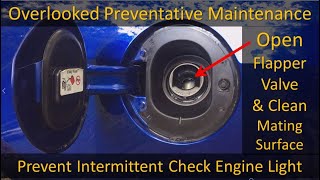
- The most common DIY fix is to thoroughly clean the capless fuel filler neck. Use the vehicle's funnel to work the flap and wipe the seal clean.
- Do not replace the purge valve without testing it first. It's a commonly misdiagnosed part for this code on the Ranger.
- If simple fixes don't work, a professional smoke test is the most reliable and cost-effective way to find the physical leak before replacing more expensive parts.
What's Unique About the 2019-2023 Ford Ranger
For the 2019-2023 Ranger, this code has two very common causes that are specific to the platform and should be checked first. Many owners experience this code due to debris in the capless fuel filler neck, which is a known Ford issue across many models. Forum users on Ranger5G.com report this happening frequently after off-roading or driving in dusty conditions. Additionally, Ford issued Technical Service Bulletin (TSB) 21-2010 because a software error in the PCM of 2019-2020 models can falsely trigger this code, requiring a simple software update from a dealer rather than a physical repair.
Symptoms You May Notice
- Check Engine Light is on
- Remote start may be disabled
- A faint fuel smell near the gas tank is possible, but rare for a very small leak.
- No noticeable change in vehicle performance or drivability.
- Replacing the EVAP canister purge valve without testing it first. Ford issued a specific service message (SSM 50306) warning that this part is often replaced unnecessarily for P0456 on this truck, as returned parts were found to be fully functional.
Most Likely Causes
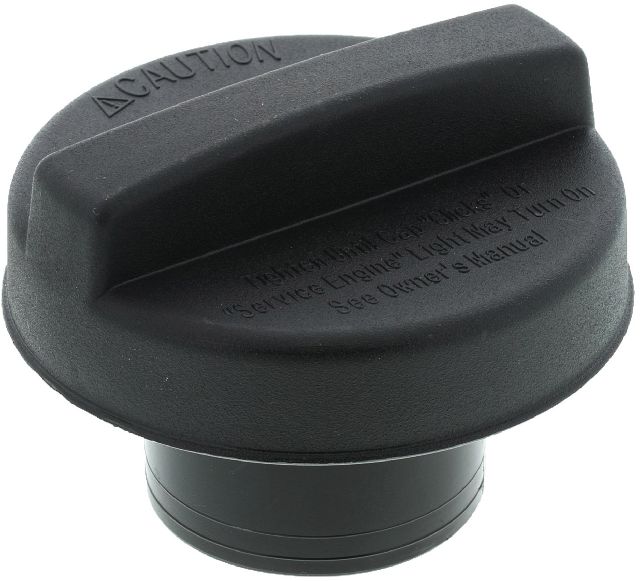
- Dirty or Faulty Capless Fuel Filler Neck 🔴 High Probability The capless system is convenient but susceptible to dirt, dust, or road debris lodging in the seal, preventing it from closing completely and creating a leak. This is a well-documented issue across many Ford models with this feature, and Ranger owners on forums confirm it's a top cause.
How to confirm: Visually inspect the fuel filler opening for any debris. The inner metal flap should be clean and close tightly.
Typical fix: Use the white plastic funnel that came with the vehicle to open and close the flap several times to dislodge debris. Clean the 🎬 Watch: How to properly clean your capless fuel filler neck sealing area carefully with a clean, lint-free cloth, possibly with a small amount of isopropyl alcohol or silicone spray to help clean and lubricate the seal. This often resolves the issue at no cost.
Est. part cost: $0 - Powertrain Control Module (PCM) Software Error 🔴 High Probability Ford identified a software calibration issue in 2019-2020 models that could incorrectly set code P0456 (and P0451).
How to confirm: Contact a Ford dealership with your vehicle's VIN to see if TSB 21-2010 applies and has not been performed yet. This TSB is specific to 2019-2020 Rangers.
Typical fix: A Ford dealer needs to reprogram the PCM with the updated software. This may be covered under the federal emissions warranty (typically 8 years/80,000 miles).
Est. part cost: $0 - $150 - Faulty EVAP Canister Purge Valve 🟡 Medium Probability This valve controls the flow of fuel vapors to the engine. It can fail by sticking slightly open. However, Ford has noted in SSM 50306 that this part is often misdiagnosed and replaced when it is not the actual cause of the leak on this vehicle.
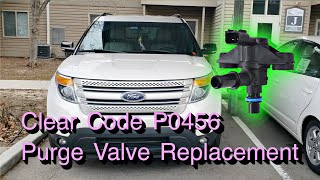
How to confirm: Remove the valve from the engine bay. With the valve disconnected from power, try to blow through it. If any air passes through, the valve is stuck open and has failed. It should be normally closed. 🎬 See this quick DIY guide to testing and replacing the valve
Typical fix: Replace the canister purge valve. This is a relatively simple DIY task.
Est. part cost: $30-$60 - Leaking EVAP Hoses or Lines ⚪ Low Probability
How to confirm: A visual inspection may reveal cracked or disconnected hoses, especially at connection points. However, due to the small size of the leak (0.020"), a smoke test performed by a professional is the most reliable way to find the source.
Typical fix: Replace the damaged hose or reconnect it.
Est. part cost: $10-$50
Rare But Worth Checking
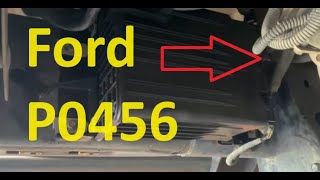
- Faulty EVAP Canister Vent Valve: This valve is part of the system that seals for the pressure test. While less common to fail than the purge valve, it can get stuck or fail electronically, causing a leak. It is typically located near the charcoal canister by the spare tire.
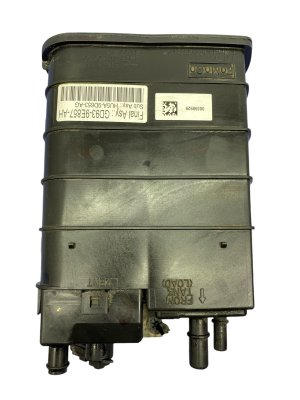
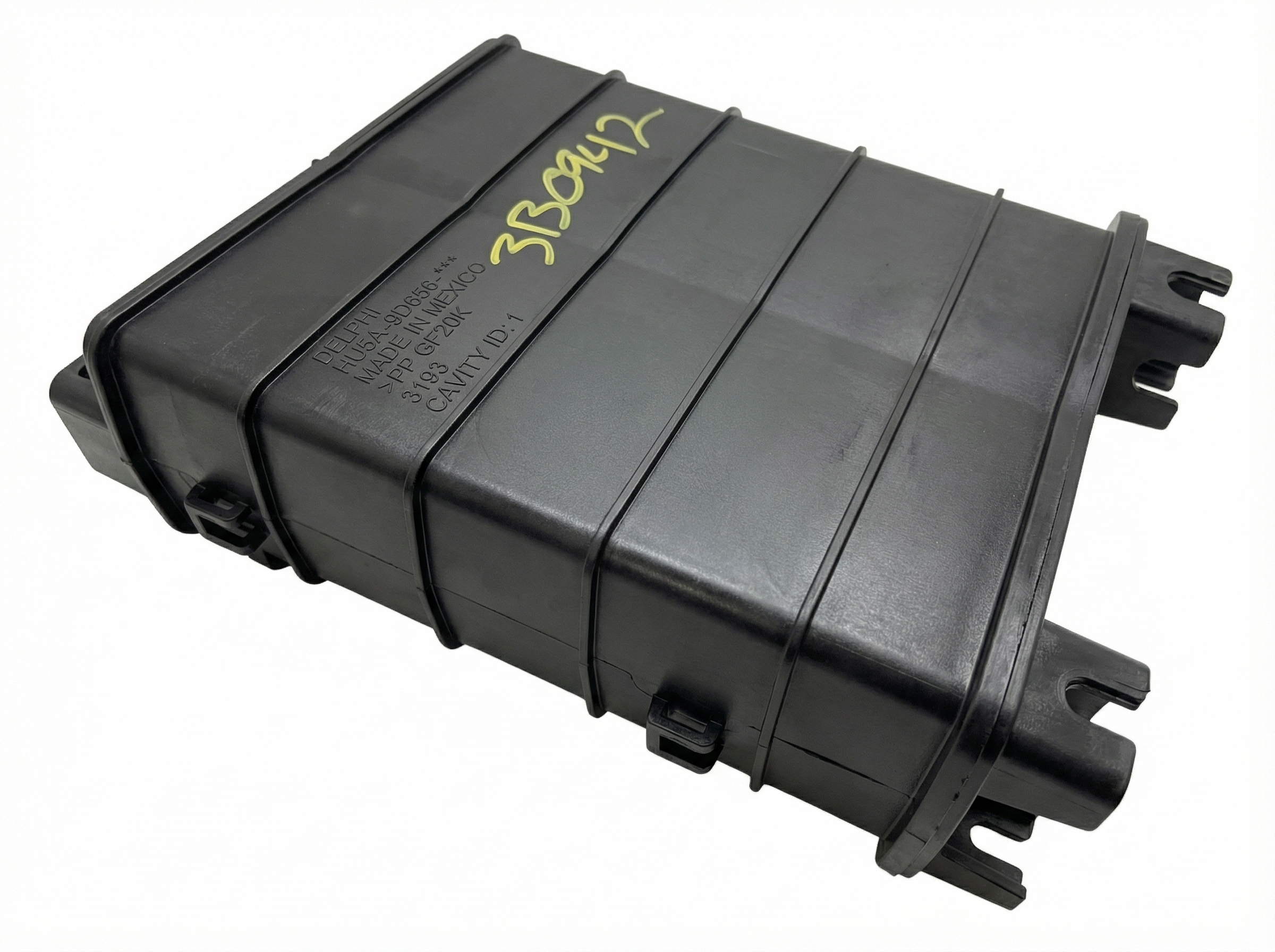
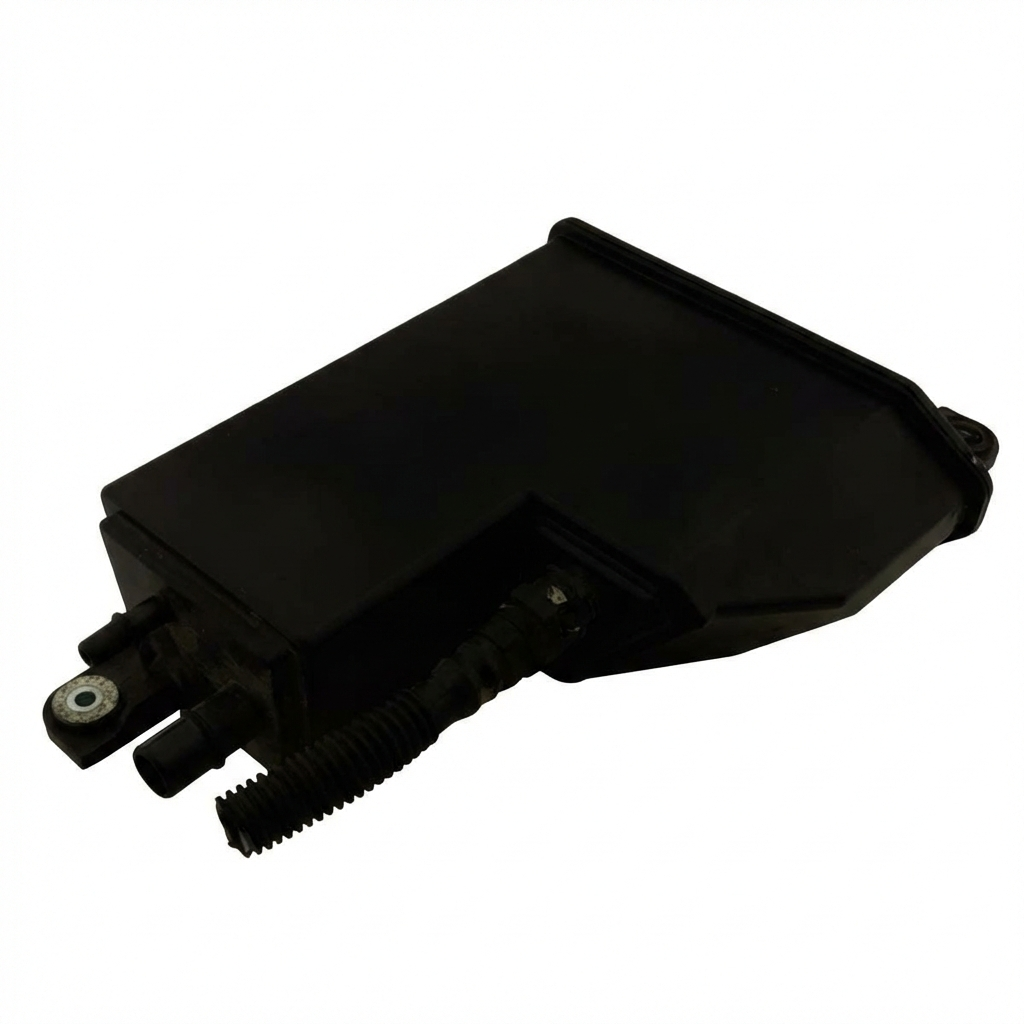
- Cracked Charcoal Canister: The canister holds charcoal to absorb fuel vapors. A crack in the canister housing, often from road debris or impact, will cause a system leak.
- Faulty Fuel Tank Pressure Sensor: This sensor reports the pressure in the EVAP system to the PCM. If it provides an incorrect reading, the PCM may mistakenly believe there is a leak when there isn't one.
Diagnosis Steps
- Read the code with an OBD-II scanner to confirm P0456 is the primary code. Note any other codes.
- Thoroughly inspect and clean the capless fuel filler neck. Use the vehicle's emergency fuel funnel to work the internal flap 10-20 times. Clean the sealing surface with a clean cloth and isopropyl alcohol or silicone spray.
- Clear the code and drive the vehicle for a few days to see if the light returns. The EVAP monitor runs under specific conditions (often with the fuel tank between 1/4 and 3/4 full, after the vehicle has sat overnight), so it may take time to complete its self-test.
- If the light returns and your truck is a 2019-2020 model, contact a Ford dealer with your VIN to check if TSB 21-2010 is applicable and has been performed.
- If the TSB is not applicable or the light returns, locate the EVAP canister purge valve on the engine. Disconnect it and try to blow air through it. If air passes, it is faulty and needs to be replaced.
- If the purge valve is good and the fuel filler is clean, visually inspect all accessible EVAP hoses between the engine, canister, and fuel tank for obvious cracks or disconnections.
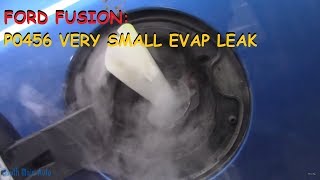
- If no visible issues are found, the most effective next step is a professional smoke test. This involves feeding a harmless, visible smoke into the EVAP system to pinpoint the exact location of the very small leak. 🎬 Watch: A helpful overview of Ford P0456 causes and fixes
Parts You'll Likely Need
- EVAP Canister Purge Valve / Solenoid
(OEM #EU5A-9G866-CE)— Though often misdiagnosed, this is a common failure item in EVAP systems. It can get stuck open, causing a constant small vacuum leak.
Trusted brands: Motorcraft, Bosch, Standard Motor Products, Autotecnica
OEM price range: $40-$70
Aftermarket price range: $25-$50 - Capless Fuel Filler Neck Assembly
(OEM #JL3Z-9034-C (verify with VIN))— If cleaning the seal does not fix the leak, the spring mechanism or seal itself may be damaged or worn, requiring replacement of the entire filler neck assembly.
Trusted brands: Motorcraft
OEM price range: $100-$150
Aftermarket price range: $70-$120
Related Codes That Often Appear With This One
- P0455 — Indicates a large EVAP leak. If the component causing the small leak fails completely (e.g., a valve sticks wide open or a hose disconnects), the system may log a large leak code instead of, or in addition to, the small leak code.
- P1450 — Indicates an inability to bleed up fuel tank vacuum. This code is very common on Fords with a stuck-open purge valve, as constant engine vacuum is applied to the tank when it shouldn't be.
- P0451 — Indicates a fault with the Fuel Tank Pressure Sensor circuit. TSB 21-2010 specifically mentions that the software update addresses both P0456 and P0451, suggesting they can be triggered together by the same software fault.
Technical Service Bulletins (TSBs) & Recalls
- TSB 21-2010: Some 2019-2020 Ranger vehicles may exhibit an illuminated MIL with DTC P0451 and/or P0456 in the PCM. This may be due to the software calibration. Reprogramming the PCM is the prescribed fix.
- SSM 50306: For P0456 on 2019-2021 Rangers, Ford advises against replacing the canister purge valve without performing a full system leak test first, as it is often not the root cause.
Platform-Specific Known Issues
- TSB 21-2010: Some 2019-2020 Rangers may have a PCM software calibration issue that causes a false P0456 and/or P0451 code. The fix is a dealer-performed software update.
- SSM 50306: Ford issued a Special Service Message warning technicians that the canister purge valve is often replaced unnecessarily for this code across many vehicles, including the 2019-2021 Ranger. Ford's analysis of returned parts showed they were fully functional, and proper diagnosis with a scan tool (FDRS) is recommended before replacement.
Mechanic-Grade Diagnostic Values
- Fuel Tank Pressure (FTP) Sensor Voltage at Idle — expected: Approximately 2.5V - 2.7V. Failure: A voltage reading of 0V, 5V, or a value that does not change when the system is tested indicates a potential sensor or wiring fault.
- EVAP Canister Purge Valve Solenoid Resistance — expected: Approximately 30 to 90 ohms (varies by specific part and year).. Failure: A reading of infinite resistance (open circuit) or near-zero resistance (short circuit) indicates a failed solenoid coil.
Hidden / Shadow Codes Worth Checking
- Mode $06, Test ID $82: This is the On-Board Diagnostic Monitor Test Result for the 0.020" leak detection. It provides the raw test data the PCM uses to determine if P0456 should be set. A technician can view this data to see if the system is borderline failing before the MIL is illuminated. (see via Advanced scan tools like Ford's IDS or aftermarket tools with Mode $06 capability (including some FORScan versions).)
Scan Tool Commands That Help
- FORScan: EVAP System Test — This is a bidirectional control function that allows the user to manually command the EVAP system to seal and pull a vacuum, simulating the onboard diagnostic test. It's used to verify the function of the purge and vent solenoids and to check if the system can hold pressure without having to wait for a full drive cycle.
- Ford IDS (Integrated Diagnostic System): Powertrain > EVAP System > EVAP System Leak Test — This is the dealer-level guided routine for diagnosing all EVAP leaks. It walks the technician through a step-by-step process, controlling solenoids and providing target pressure values, making it the most comprehensive way to test the system as a whole.
Wiring & Ground Locations
- Fuse F8 (Underhood Fuse Box) — In the Power Distribution Box located in the engine compartment.. This 20A fuse provides power to the Canister Vent Solenoid and the Canister Purge Valve. A fault with this fuse would disable key components of the EVAP system, potentially causing codes.
- Main Chassis Ground (G104 equivalent) — On the chassis frame rail, just behind the driver's side headlight, where the main negative battery cable attaches.. A poor main ground can cause a host of intermittent electronic issues. While not a direct cause, verifying this ground is clean and tight is a crucial step in diagnosing any electronic fault, including sensor data errors that could falsely trigger P0456.
- Driver's Side Kick Panel Ground — Behind the driver's side kick panel, there is a factory ground stud on the metal frame of the body.. This is a common grounding point for various in-cabin modules. While the PCM ground is typically in the engine bay, a poor body ground here could affect communication or reference voltages for related systems.
Real Owner Repair Stories
- Ranger5G.com Forum Member (2019 Ford Ranger 2.3L EcoBoost) — Check Engine Light with EVAP codes (P04F0, similar system fault)
❌ Tried (didn't work) Initial diagnosis pointed towards standard EVAP components.
✅ What actually fixed it The issue was traced to the EVAP check valve, which is integrated into the purge valve assembly on turbocharged engines. This valve is designed to prevent boost pressure from entering the EVAP system. When it fails, it can create a leak path that is difficult to diagnose with a standard vacuum or smoke test under non-boost conditions. Replacing the entire purge valve assembly (which includes the check valve) resolved the code.
"I Checked Everything" — The Actual Cause
- A smoke test passed because the leak was in the EVAP check valve, which is part of the purge valve assembly on the 2.3L EcoBoost. This valve can fail in a way that only leaks under specific pressure or boost conditions, not during a standard, non-running smoke test. The fix was replacing the entire purge valve assembly.
OEM Part Supersession History
EU5A-9G866-CE→JL3Z-9B325-C, L1MZ-9D653-E (These are related/interchangeable parts, exact supersession can be complex, VIN check is critical)— Part consolidation and potential design revisions across multiple platforms (Explorer, F-150, Ranger all use similar components).
Heads up: While the core solenoid may be the same, the attached hoses and check valves can be specific to the vehicle model and engine. Always verify the full assembly part number with a VIN at a Ford dealer.
Model Year Variations Within This Range
- 2019-2020: These model years are specifically called out in TSB 21-2010 for a PCM software calibration issue that can falsely trigger P0456. Later models (2021-2023) received the updated software from the factory.
- 2024+: While the user's vehicle range is 2019-2023, it's notable that the next generation Ranger (starting 2024) introduced a 2.7L V6 option. However, the base 2.3L EcoBoost engine remains the standard, and the EVAP system architecture is fundamentally similar, meaning these issues will likely persist.
Diagnostic Flowchart
Other Known Issues on This Vehicle
Issues unrelated to this code that are worth knowing about as an owner of this generation:
- 10R80 Transmission Harsh/Erratic Shifting 🟠 Medium — Commonly reported, especially in 2019-2020 models. Can manifest as hard shifts, clunks, lunging, or hesitation. Often occurs at low speeds or when cold. (Ref: Multiple software updates (TSBs) have been issued to improve shift logic. A class-action lawsuit was filed regarding this issue.)
- Driveline Vibration or Shudder 🟡 Low — Some owners report a vibration or shudder at certain speeds, which has been attributed to driveshaft balance or axle issues in some cases.
- Bucking/Surging at Cruising Speed 🟡 Low — A noticeable bucking or surging sensation can occur when cruising at steady speeds (e.g., 30-50 mph) with light throttle. It can feel like a misfire. (Ref: Not a formal TSB, but commonly attributed by technicians to moisture in the DPFE (EGR pressure) sensor.)
- Infotainment System Glitches (SYNC 3) 🟡 Low — Sporadic reports of the screen freezing, becoming unresponsive, or issues with Bluetooth/Apple CarPlay connectivity. (Ref: Software updates are periodically released to address bugs.)
Used vs. New Parts: Buying Guide for This Vehicle
When a used part is the smart pick: For this repair, used parts are generally not recommended for electronic components like sensors or solenoids due to unknown remaining life. However, a used Capless Fuel Filler Neck assembly from a low-mileage, non-damaged donor vehicle could be a cost-effective alternative to a new OEM part if cleaning doesn't solve the issue.
Donor-vehicle mileage cap: roughly under 50000 miles for the part to have meaningful remaining life.
What to inspect on the donor part:
- For a filler neck: Check for the absence of rust, debris, or physical damage to the flap and sealing surfaces.
- For any part: Ensure it comes from a vehicle that was not in a major collision, especially one impacting the rear or side where EVAP components are located.
- Verify the part number on the used component matches the required OEM number for your VIN.
OEM-only on this vehicle (don't cheap out):
- EVAP Canister Purge Valve: Given the known issues and Ford's specific service messages (SSM 50306), using a genuine Motorcraft part is highly recommended to avoid compatibility or premature failure issues that can occur with some aftermarket alternatives.
Aftermarket brands forum-validated for this vehicle:
- Bosch (Often an OEM supplier)
- Standard Motor Products (SMP)
Brands owners have reported issues with on this vehicle:
- Unnamed, no-brand parts from online marketplaces should be avoided as their quality control and material specifications (resistance to fuel vapor) can be highly suspect.
Real Owner Stories
Aggregated from forums and TSBs cited above. Mileages and costs reflect what owners reported in those sources.
2020 Ford Ranger 2.3L EcoBoost — 750 miles
Symptoms: Check engine light came on and FordPass reported an engine system fault. The truck drove fine with no decrease in MPG.
What fixed it: The owner was advised to clean the capless filler neck flap with a damp rag, as debris from off-roading can prevent the seal from closing.
Source hint: ranger5g.com owner_reports and Thread 'Help with P0456'
2021 Ford Ranger Tremor
Symptoms: A long battle with multiple EVAP codes including P0442, P0455, and finally P0456.
What fixed it: The owner attempted cleaning the capless filler with WD-40 and compressed air, and the dealer replaced the purge valve.
Source hint: Ranger5G.com Thread 'EVAP Code Struggles'
2019-2020 Ford Ranger
Symptoms: Illuminated MIL (Check Engine Light) with DTC P0456 or P0451.
What fixed it: Reprogramming the Powertrain Control Module (PCM) with updated software calibration.
Source hint: TSB 21-2010
Related OBD-II Codes
Frequently Asked Questions
Does TSB 21-2010 apply to my 2021 Ford Ranger?
Will the federal emissions warranty cover the PCM software update for P0456?
Can I fix the P0456 code on my Ranger without buying any parts?
Why is my remote start disabled on my 2019-2023 Ranger?
Is the canister purge valve a common failure point for the 2.3L EcoBoost?
Does the Ford Bronco share this P0456 issue with the Ranger?
Helpful Videos
Used OEM Parts in Stock
New Aftermarket Parts Available


The information in this article is provided for general reference and educational purposes only. Vehicle specifications, procedures, and part compatibility can vary by production date, trim level, and region. Always consult your vehicle's factory service manual and verify part numbers before purchasing or performing repairs. Safety-critical components such as airbags, seat belts, and braking systems should be installed by a qualified professional.
- Ford Ranger:
- 🎬 Helpful Videos
- 🛍️ Shop This Part
- What's Unique About the 2019-2023 Ford Ranger
- Symptoms You May Notice
- Most Likely Causes
- Rare But Worth Checking
- Diagnosis Steps
- Parts You'll Likely Need
- Related Codes That Often Appear With This One
- Technical Service Bulletins (TSBs) & Recalls
- Platform-Specific Known Issues
- Mechanic-Grade Diagnostic Values
- Hidden / Shadow Codes Worth Checking
- Scan Tool Commands That Help
- Wiring & Ground Locations
- Real Owner Repair Stories
- "I Checked Everything" — The Actual Cause
- OEM Part Supersession History
- Model Year Variations Within This Range
- Diagnostic Flowchart
- Other Known Issues on This Vehicle
- Used vs. New Parts: Buying Guide for This Vehicle
- Real Owner Stories
- 2020 Ford Ranger 2.3L EcoBoost — 750 miles
- 2021 Ford Ranger Tremor
- 2019-2020 Ford Ranger
- Related OBD-II Codes
- Frequently Asked Questions
- 🎟️ Get 5% Off