

P0456 on 2004-2011 Ford Ranger: Causes and Fixes for Small EVAP Leak
On a 2004-2011 Ford Ranger, P0456 is most often caused by a loose or worn gas cap or a rotted fuel filler neck. Always start by checking the gas cap. If that's not the issue, a rusted filler neck is the next most likely culprit, a well-documented weak point on this truck. The part costs around $50-$150.
- Always start by checking the gas cap. Make sure it's tight and the seal is intact. An OEM Motorcraft cap is a wise, inexpensive first step.
- The fuel filler neck is the second most likely culprit and a known weak point on this truck. Inspect it thoroughly for rust and cracks before buying any other parts.
- A smoke test is the most reliable method to pinpoint the exact source of a small EVAP leak, saving time and money on speculative part replacements.
What's Unique About the 2004-2011 Ford Ranger
While many vehicles get this code from a simple loose gas cap, the 2004-2011 Ford Ranger and its twin, the Mazda B-Series, are particularly known for the fuel filler neck rusting and developing small cracks. This part is exposed to road salt and moisture, making it a very common failure point that leads directly to code P0456. Owners in forums frequently pinpoint this as the cause after ruling out the gas cap.
Symptoms You May Notice
- Check Engine Light is on.
- A faint fuel smell, possibly near the gas cap or rear of the truck (less common with small leaks).
- Hearing a 'whoosh' of air when opening the gas cap may disappear, indicating the system is no longer holding a vacuum.
- Replacing the purge valve or other expensive EVAP components before thoroughly inspecting the gas cap and fuel filler neck. Always start with the simplest and most common fixes first. 🎬 Watch: A quick overview of common P0456 causes and fixes.
Most Likely Causes
- Loose or Worn Gas Cap 🔴 High Probability This is the most common cause on any vehicle. The rubber seal on the cap degrades over time, preventing a proper seal.
How to confirm: Ensure the cap is tightened until it clicks. Inspect the rubber O-ring on the cap for cracks, stiffness, or damage. If it looks worn, it's suspect. A new OEM cap is a cheap and effective first step.
Typical fix: Replace the gas cap. It is highly recommended to use an OEM Motorcraft cap, as aftermarket caps can sometimes fail to seal properly. The Motorcraft part number is often FC-961 or FC-1067, depending on the specific year.
Est. part cost: $15-$35 - Rotted or Cracked Fuel Filler Neck 🔴 High Probability The metal filler neck and its adjoining rubber hoses are highly susceptible to rust and rot from road salt and moisture, a well-documented issue on this Ranger generation and its Mazda B-Series twin.
How to confirm: Visually inspect the entire fuel filler neck from the gas cap down to the tank. Look for rust, flaking metal, and cracks in the metal pipe and any connected rubber hoses. A smoke test is the most definitive way to confirm a leak here. Owners often find the leak is on the smaller vent hose that runs alongside the main neck.
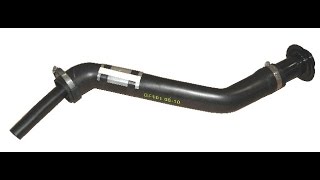
Typical fix: Replacement of the fuel filler neck assembly. This is a common DIY job that involves removing the bed bolts on one side and propping it up for access, rather than dropping the fuel tank. 🎬 See this shortcut for replacing the fuel filler neck hose.
Est. part cost: $50-$150 - Cracked or Disconnected EVAP Hoses 🟡 Medium Probability The vehicle's age means rubber and plastic lines become brittle and can easily crack, especially those running along the frame rail exposed to the elements.
How to confirm: Visually inspect all accessible EVAP system hoses for visible cracks, breaks, or loose connections. Pay close attention to the small rubber elbows and connectors. A smoke test will quickly reveal leaks in the hose network.
Typical fix: Replace the specific section of cracked hose. Ensure connections are secure.
Est. part cost: $5-$25 - Faulty EVAP Canister Purge Valve ⚪ Low Probability While this part can fail, Ford has issued a Special Service Message (SSM 50306) for newer models noting that this valve is often replaced unnecessarily. Diagnosis is key.
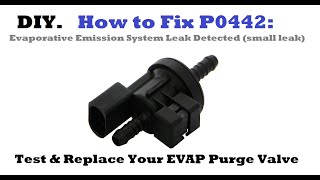
How to confirm: The purge valve is normally closed. Remove the valve (usually in the engine bay) and try to blow through it. If air passes, it's stuck open and needs replacement. A scan tool can also command the valve to open and close to test its function. 🎬 Watch: How to test and replace a faulty EVAP purge valve.
Typical fix: Replace the canister purge valve. A common Motorcraft part number is CP596.
Est. part cost: $30-$60
Rare But Worth Checking
- Faulty EVAP Vent Solenoid: This valve is located near the charcoal canister and is part of the leak test circuit. While less common to fail than the purge valve, it can get stuck and cause this code. A common Motorcraft part number is CX-2776 (9U5Z-9F945-C).
- Cracked EVAP Charcoal Canister: The plastic housing of the canister itself can develop cracks, especially from physical damage or age. This is usually found with a smoke test and is a more expensive repair.
Diagnosis Steps
- Check the Gas Cap: Remove and reinstall the gas cap, ensuring it clicks several times. Clear the code and drive for a few days. If it returns, inspect the cap's seal for cracks and consider replacing it with an OEM Motorcraft cap as a low-cost first step.
- Visual Inspection: Carefully inspect the fuel filler neck for any signs of rust, corrosion, or cracks. A forum favorite is to use a mirror and flashlight to check the back and top sides. Follow the EVAP lines from the tank towards the engine, looking for any obvious damage or disconnected hoses.
- Perform a Smoke Test: This is the most effective way to find a small leak. A smoke machine is connected to the EVAP service port, filling the system with a visible vapor. Smoke will escape from the source of the leak, whether it's a tiny crack in the filler neck, a hose, or a valve.
- Test Solenoids: If no leak is found visually or with smoke, the purge or vent solenoids may be at fault. They can be tested for functionality with a scan tool or manually checked to see if they are stuck open or closed.
Parts You'll Likely Need
- Gas Cap
(OEM #Motorcraft FC-961 or FC-1067)— This is the most frequent and cheapest first step for P0456 due to a worn or damaged seal. Using an OEM cap is critical for a proper seal.
Trusted brands: Motorcraft
OEM price range: $20-$35
Aftermarket price range: $10-$20 - Fuel Filler Neck — A very common failure point on 2004-2011 Rangers due to rust and corrosion, leading to small cracks that cause this code.
Trusted brands: Dorman, Spectra Premium, Ford (OEM)
OEM price range: $150-$250
Aftermarket price range: $50-$150 - EVAP Canister Purge Valve
(OEM #Motorcraft CP596)— Can fail by sticking open, creating a constant small vacuum leak. Often misdiagnosed, so testing before replacement is recommended.
Trusted brands: Motorcraft, Bosch, Standard Motor Products
OEM price range: $40-$70
Aftermarket price range: $25-$50
Related Codes That Often Appear With This One
- P0455 — Indicates a large EVAP leak. If a small leak from a cracked hose or seal worsens, it can eventually be detected as a large leak, triggering P0455 instead of or in addition to P0456.
- P0442 — Indicates a medium-sized EVAP leak. Similar to P0455, this code can appear if the leak size is on the border between classifications. It's very common to see this code for the same root causes.
Technical Service Bulletins (TSBs) & Recalls
- SSM 50306: While for newer models (2019-2021 Ranger included), this service message from Ford warns technicians that EVAP canister purge valves are often returned under warranty and found to be fully functional. It advises performing full system leak tests before replacing the purge valve for codes like P0456, highlighting a pattern of misdiagnosis.
Platform-Specific Known Issues
- The fuel filler neck on this generation of Ford Ranger is highly prone to rusting through, especially in regions that use road salt. This is a primary cause of P0456 that is more common on this truck than on many other vehicles. Forum users on Ranger-Forums.com and other sites consistently report this as the fix after a new gas cap fails to solve the problem.
Mechanic-Grade Diagnostic Values
- Fuel Tank Pressure (FTP) Sensor Voltage — expected: Approximately 2.5V - 2.6V at atmospheric pressure (Key On, Engine Off, gas cap removed).. Failure: A reading significantly different from ~2.5V, or a reading that doesn't change as vacuum/pressure is applied, suggests a faulty sensor or wiring issue. A reading of 5V could indicate a short to the power wire.
- EVAP Canister Purge Valve Resistance — expected: 30 to 38 ohms for a standard valve.. Failure: A reading outside of this range indicates a faulty solenoid coil.
Scan Tool Commands That Help
- Ford IDS (Integrated Diagnostic System) or FORScan: Datalogger - Manual EVAP Test — Allows a technician to manually command the canister purge and vent valves open or closed while monitoring the Fuel Tank Pressure (FTP) sensor. This is used to isolate and test individual components without waiting for the automatic EVAP monitor to run, which has strict temperature and fuel level requirements.
- Ford IDS (Integrated Diagnostic System): Cold Soak Bypass / OBD Drive Cycle — This function allows a technician to force the EVAP monitor to run without the typical multi-hour cold soak period, speeding up verification after a repair has been made.
Wiring & Ground Locations
- EVAP Canister Vent Valve Fuse — In the passenger compartment fuse panel, fuse #41 (15A) for 2004-2006 models protects the EVAP canister vent valve circuit, among other components.. A blown fuse will prevent the vent valve from operating, making it impossible for the system to seal and hold a vacuum for the leak test, which can lead to various EVAP codes.
- FTP Sensor Wiring — The Fuel Tank Pressure (FTP) sensor connector on top of the fuel tank typically has a +5V reference wire (often Red), a ground wire (often Black), and a signal wire (often Blue) that returns to the PCM.. Corrosion or a poorly seated pigtail connector on the frame rail leading to the fuel tank is a known issue that can cause incorrect voltage readings from the FTP sensor, potentially mimicking a leak or causing other EVAP codes like P0453.
- Main Engine/Chassis Grounds — Key grounds include G101 (radiator support), G104 (frame rail), and the engine-to-firewall ground strap.. A poor ground connection for the PCM or related sensors can cause erratic voltage readings and incorrect diagnoses. While not a direct cause of a physical leak, electrical noise from bad grounds can lead the PCM to misinterpret sensor data.
Real Owner Repair Stories
- The Ranger Station forum user (2000 Ford Ranger (similar system)) — Check Engine Light with code P0453 (FTP Sensor High Input), a related EVAP code.
❌ Tried (didn't work) Replaced vapor management valve, Replaced charcoal purge valve
✅ What actually fixed it After pulling the bed for access, the owner found a pigtail connector on the frame leading to the fuel tank that was not fully seated. After cleaning and properly seating the connector with dielectric grease, the voltage readings for the FTP sensor returned to normal and the code was resolved.
"I Checked Everything" — The Actual Cause
- A faulty Fuel Tank Pressure (FTP) sensor can cause a P0456 code even if the system is perfectly sealed. The sensor might provide incorrect data to the PCM, making the computer believe a leak exists when one does not. If a smoke test reveals no leaks, the next step is to test the FTP sensor's voltage output to ensure it is within the specified range (~2.5V at atmospheric pressure) and responds correctly to vacuum.
Model Year Variations Within This Range
- 2004-2011: While the fundamental EVAP system operation is consistent, the physical location and part numbers for components like the FTP sensor can vary. On some models, the FTP sensor is mounted directly on the fuel tank or fuel pump assembly, requiring tank removal or bed lifting for service. On others, it may be located inline along the frame rail, making access easier. Always verify the location for the specific model year and engine before beginning work.
Diagnostic Flowchart
Other Known Issues on This Vehicle
Issues unrelated to this code that are worth knowing about as an owner of this generation:
- 4.0L SOHC V6 Timing Chain Cassette Failure 🔴 High — Very common, especially on 1997-2004 models. The plastic guides for the timing chains wear out or break, often causing a rattling noise ('death rattle') at startup or during idle. Failure to repair can lead to catastrophic engine damage.
- 5R55E Automatic Transmission Failures 🟠 Medium — Commonly reported issues include hard shifting, delayed engagement into Drive or Reverse, and flashing O/D light. Problems can sometimes be traced to the valve body or shift solenoids, but often require a rebuild.
- Frame Rust 🔴 High — Prevalent in regions using road salt. The frame is known to rust severely, particularly around the rear leaf spring hangers and shackles, and near the front control arm mounts. In extreme cases, it can compromise structural integrity. (Ref: While recalls/goodwill programs existed for other Ford trucks, the 2004-2011 Ranger was not typically covered for this issue in the US.)
- Leaking Plastic Thermostat Housing (4.0L V6) 🟡 Low — A very common failure point. The original plastic housing is prone to cracking or warping over time, causing coolant leaks that can lead to overheating if not addressed.
- Broken Rear Leaf Spring Hangers/Shackles 🟠 Medium — Directly related to frame rust, the hangers and shackles that hold the leaf springs to the frame often rust through and break, causing the rear of the truck to sag or become unstable.
Used vs. New Parts: Buying Guide for This Vehicle
When a used part is the smart pick: A used fuel filler neck from a junkyard can be a very smart buy, especially if the donor vehicle is from a dry, salt-free climate (e.g., Arizona, California). This is often a better option than a cheap aftermarket part, as the OEM steel and coatings can be higher quality, provided they are free of rust.
Donor-vehicle mileage cap: roughly under 150000 miles for the part to have meaningful remaining life.
What to inspect on the donor part:
- For a fuel filler neck, check for zero rust, especially at the mounting brackets and where the smaller vent tube is welded to the main pipe.
- Inspect the rubber hose sections for any dry rot or cracking.
- For electronic parts like solenoids, look for clean connectors without corrosion and no visible cracks in the plastic housing.
OEM-only on this vehicle (don't cheap out):
- Gas Cap: This is the most critical part to buy OEM (Motorcraft). Aftermarket gas caps are notoriously problematic and often fail to create the precise seal required by the Ford EVAP system, leading to a repeat P0456 code.
Aftermarket brands forum-validated for this vehicle:
- Dorman and Spectra Premium are common and generally accepted aftermarket brands for the fuel filler neck assembly.
Brands owners have reported issues with on this vehicle:
- Avoid no-name, unbranded gas caps from online marketplaces. Stick with Motorcraft for this specific part to avoid repeat diagnostics.
Real Owner Stories
Aggregated from forums and TSBs cited above. Mileages and costs reflect what owners reported in those sources.
2007 Ford Ranger
Symptoms: Check engine light with code P0456; discussion suggested checking the filler neck and hoses after a lift kit was mentioned.
What fixed it: Inspection of the filler neck and associated hoses, as they are prone to being disturbed or rotting.
Source hint: Ranger-Forums.com - 'code PO456' (https://www.ranger-forums.com/2-9l-3-0l-v6-tech-32/code-po456-51209/)
2004 Ford Ranger
Symptoms: P0456 code present; owner seeking a 'best guess' fix without access to a smoke machine.
What fixed it: The community recommended starting with the gas cap and then performing a visual inspection of the filler neck with a mirror and flashlight.
Source hint: Ford-Trucks.com - 'P0456 code: Suggestions?' (https://www.ford-trucks.com/forums/1539656-p0456-code-suggestions.html)
2011 Ford Ranger 2.3L Duratec
Symptoms: Small leak in EVAP system detected via smoke test at the fuel tank area.
What fixed it: Replacing the fuel filler hose/neck assembly by lifting the bed for access.
Source hint: Ranger-Forums.com - 'SMALL LEAK IN EVAP SYSTEM...' (https://www.ranger-forums.com/dohc-2-3l-duratec-mazda-l-engines-105/small-leak-evap-system-118835/)
Related OBD-II Codes
Frequently Asked Questions
Does Ford SSM 50306 mean I should replace my purge valve to fix P0456?
I have a Mazda B-Series with code P0456; is the fix the same as the Ford Ranger?
Is there a specific gas cap I should buy for my 2004-2011 Ranger?
Why is the fuel filler neck a common issue on this generation of Ranger?
Do I have to drop the fuel tank to fix a leaking filler neck?
Can a suspension lift cause a P0456 code on my Ranger?
Helpful Videos
We Have This Part in Stock


The information in this article is provided for general reference and educational purposes only. Vehicle specifications, procedures, and part compatibility can vary by production date, trim level, and region. Always consult your vehicle's factory service manual and verify part numbers before purchasing or performing repairs. Safety-critical components such as airbags, seat belts, and braking systems should be installed by a qualified professional.
- Ford Ranger:
- 🎬 Helpful Videos
- 🛍️ Shop This Part
- What's Unique About the 2004-2011 Ford Ranger
- Symptoms You May Notice
- Most Likely Causes
- Rare But Worth Checking
- Diagnosis Steps
- Parts You'll Likely Need
- Related Codes That Often Appear With This One
- Technical Service Bulletins (TSBs) & Recalls
- Platform-Specific Known Issues
- Mechanic-Grade Diagnostic Values
- Scan Tool Commands That Help
- Wiring & Ground Locations
- Real Owner Repair Stories
- "I Checked Everything" — The Actual Cause
- Model Year Variations Within This Range
- Diagnostic Flowchart
- Other Known Issues on This Vehicle
- Used vs. New Parts: Buying Guide for This Vehicle
- Real Owner Stories
- 2007 Ford Ranger
- 2004 Ford Ranger
- 2011 Ford Ranger 2.3L Duratec
- Related OBD-II Codes
- Frequently Asked Questions
- 🎟️ Get 5% Off