

P0456 on 2011-2019 Ford Explorer: Causes and Fixes for a Small EVAP Leak
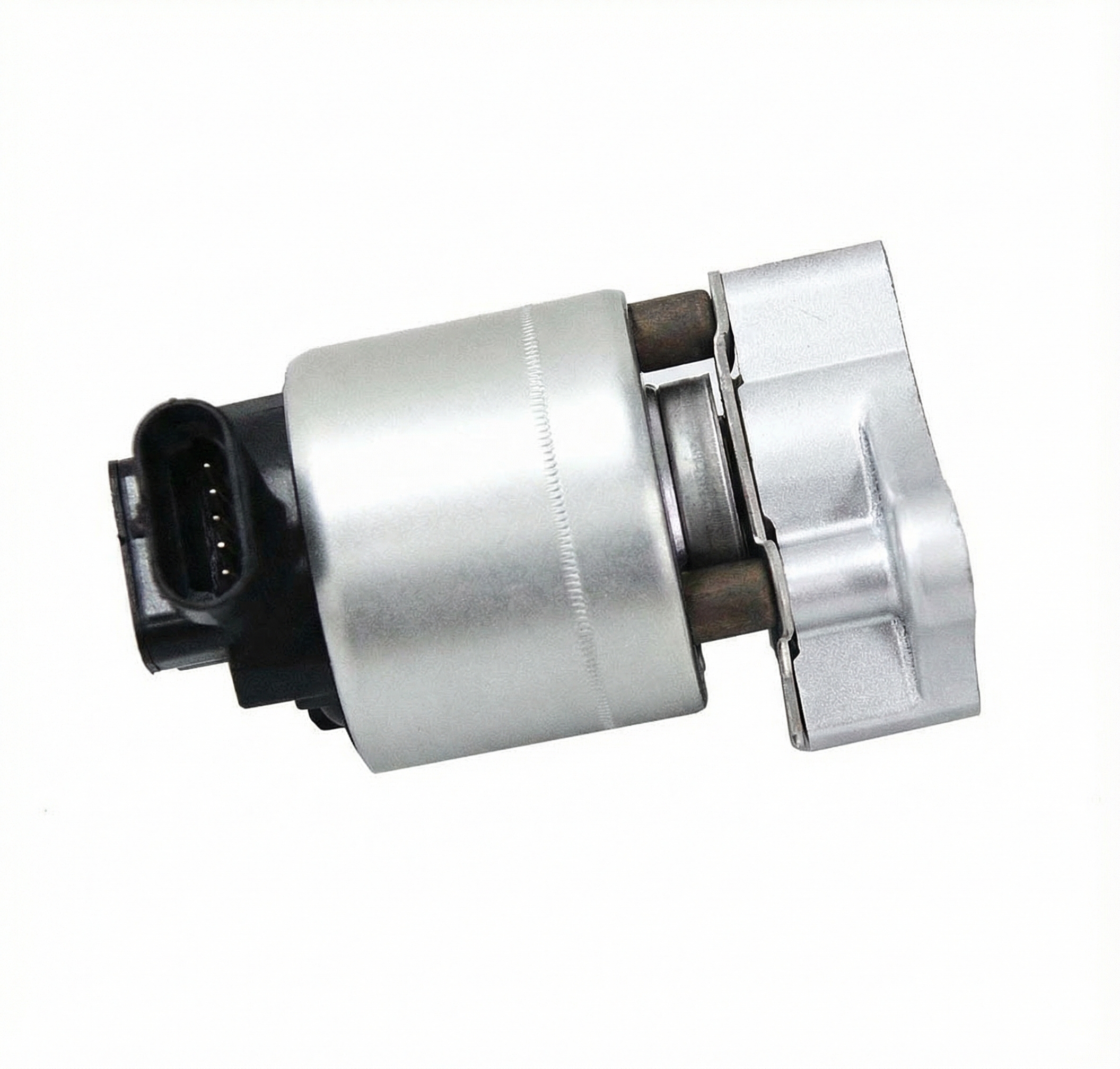
For a 2011-2019 Ford Explorer, the P0456 code is most often caused by a faulty canister purge valve (Part No. AU5Z-9C915-B) located on top of the engine. A dirty capless fuel filler neck is the second most likely cause. Replacing the purge valve is a common DIY fix costing around $35-$60 for the part and can often be diagnosed without tools.
- P0456 on a 2011-2019 Explorer is an emissions code for a very small leak and is safe to drive with.
- Before buying any parts, always start by cleaning the capless fuel filler neck with the vehicle's funnel and a clean cloth.
- The most common part to fail is the canister purge valve on top of the engine. You can test it yourself in minutes by removing it and trying to blow through it.
- If you also have a P1450 code, the canister purge valve is almost certainly the problem.
- This is a highly DIY-friendly repair that can usually be solved for under $60 and in less than an hour.
What's Unique About the 2011-2019 Ford Explorer

On the fifth-generation Ford Explorer (2011-2019), the two most dominant causes for a P0456 code are well-documented by owners and mechanics. The first is the capless fuel filler neck, which can get debris in its seal, and the second is a high failure rate of the canister purge valve. Unlike some vehicles where the cause can be a wide variety of cracked hoses or sensors, diagnosis on the Explorer often starts and ends with these two components, making it a very predictable and often straightforward fix.
Symptoms You May Notice
- Check Engine Light is on.
- Difficulty starting or a rough idle immediately after refueling 🎬 Watch why a bad purge valve causes these starting issues. (points strongly to a bad purge valve stuck open, allowing fuel vapors to flood the intake).
- Remote start may be disabled by the system due to the active Check Engine Light.
- A faint fuel smell near the vehicle (less common).
- On-dash message 'Check Fuel Filler Inlet' may appear on some models.
- Replacing the gas cap. The 2011-2019 Explorer does not have a traditional gas cap; it uses a capless system. The issue lies with the filler neck seal, not a cap.
- Replacing the EVAP Canister Vent Solenoid when the Purge Valve is at fault. The purge valve in the engine bay is the far more common failure point for P0456. The vent solenoid is near the tank.
Most Likely Causes

- Faulty Canister Purge Valve 🔴 High Probability The purge valve on many Ford models, including the Explorer, is known to fail by getting stuck slightly open, creating a permanent small vacuum leak that the PCM detects during its self-test. This is the most common failure for P0456 on this platform.
How to confirm: Remove the valve from the top of the engine. It should be normally closed with no power. Try to blow air through either port. If any air passes through, the valve is faulty and must be replaced. This test is definitive and requires no special tools.
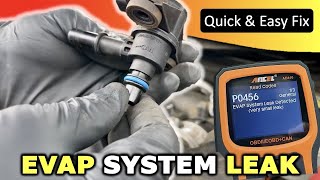
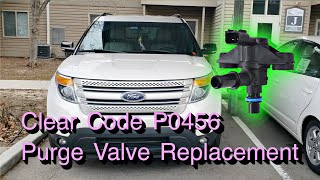
Typical fix: Replace the canister purge valve. It is typically held on by two 8mm bolts and is easily accessible after removing the engine cover. The electrical connector has a simple press-tab, and the main hose has a green quick-disconnect tab. 🎬 Watch this step-by-step guide to replacing the purge valve.
Est. part cost: $35-$60 - Dirty or Debris-filled Capless Fuel Filler Neck 🟡 Medium Probability Ford's capless fuel filler system has a spring-loaded seal that can be prevented from closing properly by small amounts of dirt, dust, or corrosion, especially in regions with road salt. This is a very common secondary cause.
How to confirm: Visually inspect the fuel filler opening for any visible debris. If the Check Engine Light appeared shortly after filling up, this is a likely cause.
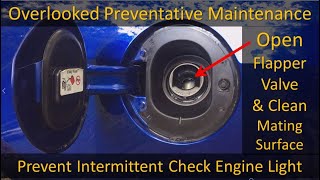
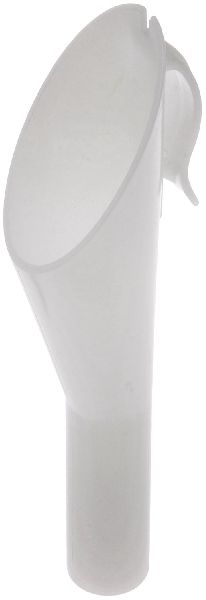
Typical fix: Clean the filler neck opening. Use the white plastic funnel that came with the vehicle, insert and remove it several times to dislodge debris. A rag with a solvent like WD-40 can be used to wipe the seal clean, but avoid spraying excessive amounts into the neck. 🎬 See how to properly clean your capless fuel filler neck.
Est. part cost: $0 - Cracked or Disconnected EVAP Hoses ⚪ Low Probability While less common than the purge valve or filler neck, the plastic and rubber EVAP lines can become brittle and crack over time, especially those exposed to heat in the engine bay or road debris underneath the vehicle.
How to confirm: A visual inspection of all accessible EVAP lines between the engine, charcoal canister, and fuel tank may reveal obvious cracks. However, a definitive diagnosis for a very small leak usually requires a professional smoke test, where a machine fills the EVAP system with visible vapor to pinpoint the source of the leak.
Typical fix: Replace the cracked section of hose or the entire hose assembly.
Est. part cost: $20-$100
Rare But Worth Checking
- Faulty EVAP Canister Vent Valve/Solenoid: This valve is located near the charcoal canister at the rear of the vehicle, underneath the car. It is normally open and closes to allow the system to be tested. While it can fail, it is a much less common cause for P0456 on this platform compared to the engine-bay purge valve. Failure here is more often associated with difficulty refueling or code P0449.
- Leaking Charcoal Canister: The plastic housing of the charcoal canister itself can develop hairline cracks over time, causing a small leak. This is almost always found with a smoke test after all other common causes have been ruled out.
- Damaged Fuel Filler Neck Assembly: If cleaning the capless filler neck does not solve the problem, the internal sealing mechanism may be worn or damaged, requiring replacement of the entire assembly. This has been reported by owners after cleaning fails to resolve the issue.
- Fractured Fuel Tank: In rare instances, a small leak can originate from the tank itself. NHTSA ODI #11173382 describes a case where a P0456 code was located and the dealer determined the fuel tank was fractured, causing a leak from the rear end.
Diagnosis Steps

- Read the code using an OBD-II scanner to confirm P0456 is the primary code present. Note if P1450 is also present, as this strongly suggests a purge valve issue.
- Go to the capless fuel filler neck. Inspect for any dirt or corrosion around the metal flap.
- Use the emergency fuel funnel provided with your vehicle. Insert and remove it 5-10 times to exercise the seal and clear any hidden debris. Wipe the opening with a clean cloth.
- Clear the code with the scanner. Drive the vehicle for a few days to see if the light returns. Note that the EVAP monitor only runs under specific conditions (e.g., stable speed, certain fuel level), so it may take time for the code to reappear or clear permanently.
- If the code returns, locate the canister purge valve on top of the engine. It has an electrical connector and two hoses attached.
- Disconnect the electrical connector and hoses. Remove the two 8mm bolts holding it in place.
- With the valve removed, attempt to blow through either of the ports. If you can pass any air through it, the valve has failed and needs to be replaced. A new valve will not allow any air to pass.
- If the purge valve is good and the filler neck is clean, the next step is a professional smoke test to find the leak in the system's hoses, charcoal canister, or fuel tank.
- Inspect the wiring harness at connector C1198 on the driver's side lower frame area. Manufacturer bulletins SSM 51247 and SSM 50348 note that connection issues here can trigger multiple codes including P0456.
Parts You'll Likely Need

- Canister Purge Valve
(OEM #AU5Z-9C915-B (Motorcraft CX2409))— This is the most frequent point of failure for a P0456 code on this specific vehicle. It fails internally and gets stuck slightly open.
Trusted brands: Motorcraft, Dorman (911-222), Wells, Standard Motor Products
OEM price range: $50-$70
Aftermarket price range: $35-$55 - Fuel Filler Neck Assembly
(OEM #BB5Z-9034-E (example, verify by VIN))— If cleaning the capless filler opening does not fix the leak, the entire assembly with its internal seals may be worn out and require replacement. This is a known, but more expensive, solution.
Trusted brands: Motorcraft, Dorman
OEM price range: $200-$300
Aftermarket price range: $150-$220
Related Codes That Often Appear With This One
- P1450 — Indicates an inability to bleed up fuel tank vacuum. This code is very commonly seen with a failing purge valve on Ford vehicles. A stuck-open purge valve allows constant engine vacuum to be applied to the fuel tank, preventing it from bleeding up (equalizing pressure) as expected during the EVAP test.
- P0455 — Indicates a large EVAP leak. This can appear if the purge valve fails completely and is stuck wide open, or if a hose becomes disconnected. Sometimes both P0455 and P0456 can appear if the leak is intermittent or on the border between small and large.
- P0442 — Indicates a medium-sized EVAP leak. Depending on the severity of the component failure, the computer may log a small, medium, or large leak code. The underlying cause is often the same.
- P0496 — High EVAP flow during a non-purge condition. This code often appears alongside P0456 as noted in manufacturer bulletin SSM 50306, which discusses EVAP system concerns across several Ford models.
Technical Service Bulletins (TSBs) & Recalls
- TSB 19-2207: While specifically for the Lincoln MKZ/Ford Fusion platform, this TSB addresses P0456 and P1450 caused by the 'sealing capability of the canister purge valve'. It directs technicians to replace the valve (AU5Z-9C915-D) and update software, confirming Ford's awareness of this part's failure mode.
- TSB 14-0132: Addresses issues with the Easy Fuel capless system where fuel nozzles can get stuck or fail to insert, but also provides context on replacing the fuel filler neck if it is damaged or not sealing.
- Recall 18S32 / 19S22: While for the Ford Focus, this recall addresses PCM software and canister purge valves causing various EVAP codes, including P0456, showing a known
- TSB 25-2112: Notes that some vehicles may exhibit an illuminated MIL with DTC P0456 due to evaporative emission system concerns and/or the software level of the PCM.
- SSM 50306: A manufacturer service bulletin notes that Ford has tested returned EVAP canister purge valves and found them to be fully functional in some cases, suggesting technicians should inspect the entire system before replacing the valve when P0456 is present.
Platform-Specific Known Issues
- High Failure Rate of Canister Purge Valve: The canister purge valve is the most common point of failure for this code on the 2011-2019 Explorer. A key symptom pointing directly to this part is difficulty starting or a rough idle immediately after refueling. This happens because the stuck-open valve allows un-metered fuel vapor to enter the intake manifold, creating a rich condition that makes starting difficult.
Mechanic-Grade Diagnostic Values
- Fuel Tank Pressure (FTP) Sensor Voltage (KOEO) — expected: 2.4V - 2.6V with the fuel cap removed or system open to atmosphere.. Failure: A reading significantly outside this range indicates a faulty sensor. Voltage below 2.4V indicates vacuum is present, while voltage above 2.6V indicates pressure. A bad sensor can trick the PCM into logging a P0456 code even if no leak exists.
Scan Tool Commands That Help
- FORScan or Ford IDS (Integrated Diagnostic System): EVAP System Leak Test / Small Leak Verification Test — This is a factory-level bidirectional command used to verify the integrity of the EVAP system after a repair. The tool commands the vent valve closed to seal the system and then monitors the FTP sensor for a pressure drop, confirming whether a leak is still present without waiting for the PCM's own monitor to run.
Wiring & Ground Locations
- C3053 — EVAP vent valve harness connector, located under the vehicle beneath the 2nd-row seats on 2011 models.. This connector is exposed to the elements and is a potential point of corrosion or wire damage for the vent valve circuit, which can cause EVAP codes. The control wire is at Pin N and the power wire is at Pin E.
- C213 — Harness connector located behind the driver's side kick panel (near the left foot) on 2011 models.. The vent valve control wire runs through this connector at pin 57. It is a key junction to test the circuit's continuity back to the PCM. The wire color changes from Green/Violet to Green/Blue at this connector.
- PCM Connector C175B — At the Powertrain Control Module (PCM).. Pin 20 is the termination point for the EVAP vent valve control wire. A technician can test for 12V here with the key on to verify circuit integrity back to the valve.
Real Owner Repair Stories
- Explorer ST Forum (Ford Explorer (model year not specified, but symptoms are identical to 2011-2019)) — Rough starting immediately after filling up with gas, accompanied by a P0456 code.
❌ Tried (didn't work) Cleaning the capless fuel filler neck multiple times.
✅ What actually fixed it Replacing the canister purge valve resolved both the starting issue and the P0456 code. - YouTube channel 'NoNonsenseKnowHow' (2010 Ford Explorer 4.0L) — P0456 code.
❌ Tried (didn't work) The video implies that simply cleaning the filler neck might not work if the internal mechanism is broken.
NHTSA ODI #11173382 describes an instance where a fuel smell was noticed through the vents and a P0456 code was found to be caused by a fractured fuel tank.
✅ What actually fixed it A smoke test revealed a major leak from the capless fuel filler neck itself. The internal spring-loaded door was broken and would not seal. The entire fuel filler neck assembly had to be replaced to fix the leak.
"I Checked Everything" — The Actual Cause
- In some cases, the EVAP system can pass a professional smoke test (showing no physical leaks) yet still set a P0456 code. One documented cause for this is a software glitch in the Powertrain Control Module (PCM) that incorrectly flags a leak. The fix in this scenario is a PCM software update (reflash) performed by a Ford dealer.
- A faulty Fuel Tank Pressure (FTP) sensor can also be the cause. If the sensor sends an incorrect voltage signal to the PCM, the computer may interpret this as a leak, even when the system is perfectly sealed. A smoke test would not identify a faulty sensor.
OEM Part Supersession History
AU5Z-9C915-B→AU5Z-9C915-E— Standard part revision and improvement by the manufacturer.
Heads up: The new part number is a direct replacement for the old one. The Motorcraft service part number is CX-2409, and a common aftermarket equivalent is Dorman 911-222.
Model Year Variations Within This Range
- 2011-2015 vs 2016-2019: The Ford Explorer received a significant mid-cycle refresh for the 2016 model year, which included updated styling and engine options. While the primary causes for P0456 on the 3.5L V6 remain consistent, there could be minor differences in EVAP hose routing or wiring harness layouts between the pre-refresh and post-refresh models.
Diagnostic Flowchart

Real Owner Stories
Aggregated from forums and TSBs cited above. Mileages and costs reflect what owners reported in those sources.
2013 Ford Explorer XLT 4WD
Symptoms: Check engine light came on with error code P0456 for a small EVAP leak.
What fixed it: Removed the canister purge valve and blew on it. Heard air moving through it, confirming it was stuck open. Replaced the purge valve.
Source hint: YouTube comment 'Millis Technology'
Ford Explorer
Symptoms: Car is rough starting after filling up with gas, accompanied by a P0456 Very Small leak code.
What fixed it: Cleaning the capless filler neck didn't work, but replacing the canister purge valve solved the issue.
Source hint: explorerstforum.com thread titled 'P0456 Very Small leak' (March 2024)
Ford Explorer
Symptoms: Check engine light on with code P0456.
What fixed it: Dealer found a leak in the fuel filler tube/hose near the gas tank and replaced the hose and seals.
Source hint: explorerstforum.com thread titled 'HELP WITH CODE P0456' (February 2023)
Ford Explorer
Symptoms: P0456 code triggered. Cleaning the capless fuel filler neck failed to resolve the issue.
What fixed it: Tested the purge valve by blowing through it, confirmed it was faulty, and replaced it to clear the code.
Source hint: explorerforum.com thread
Ford Explorer
Symptoms: An owner reported a fuel smell through the vents and a P0456 code was located.
What fixed it: The dealer determined the fuel tank was fractured and leaking from the rear end (NHTSA ODI #11173382).
Related OBD-II Codes
Frequently Asked Questions
Why is my 2011-2019 Explorer hard to start or idling roughly right after getting gas?
Does the 'Check Fuel Filler Inlet' message mean I need to buy a new gas cap?
How can I test the canister purge valve on my Explorer without special tools?
Are there any Ford TSBs or recalls related to the P0456 code?
Why did my remote start stop working when the P0456 code appeared?
If cleaning the capless filler neck doesn't clear the P0456 code, what should I check next?
Helpful Videos

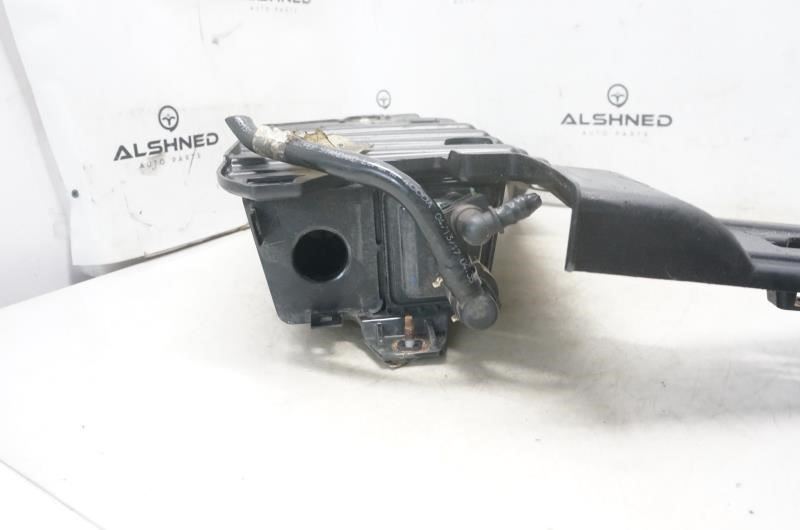
Used OEM Parts in Stock

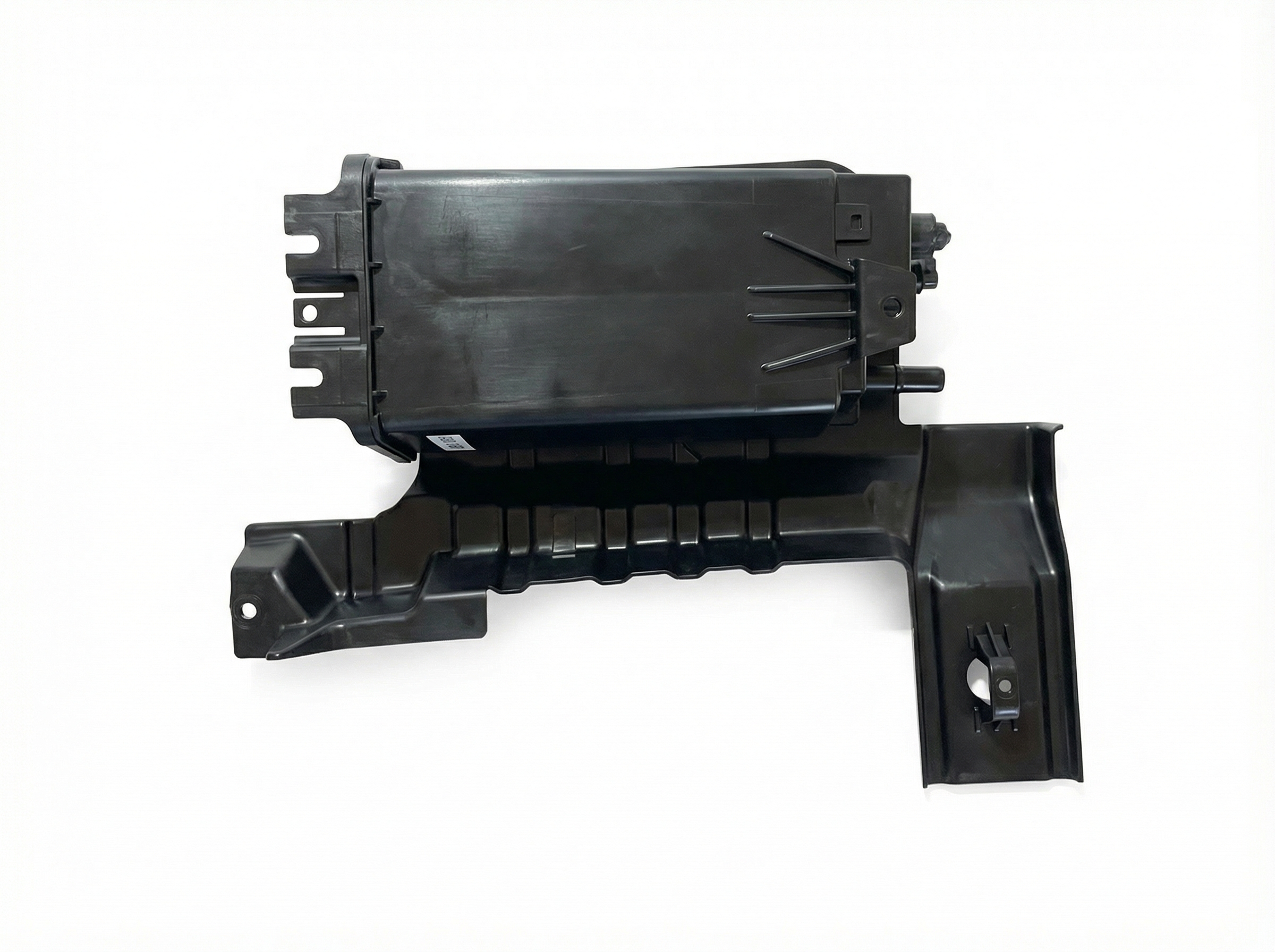
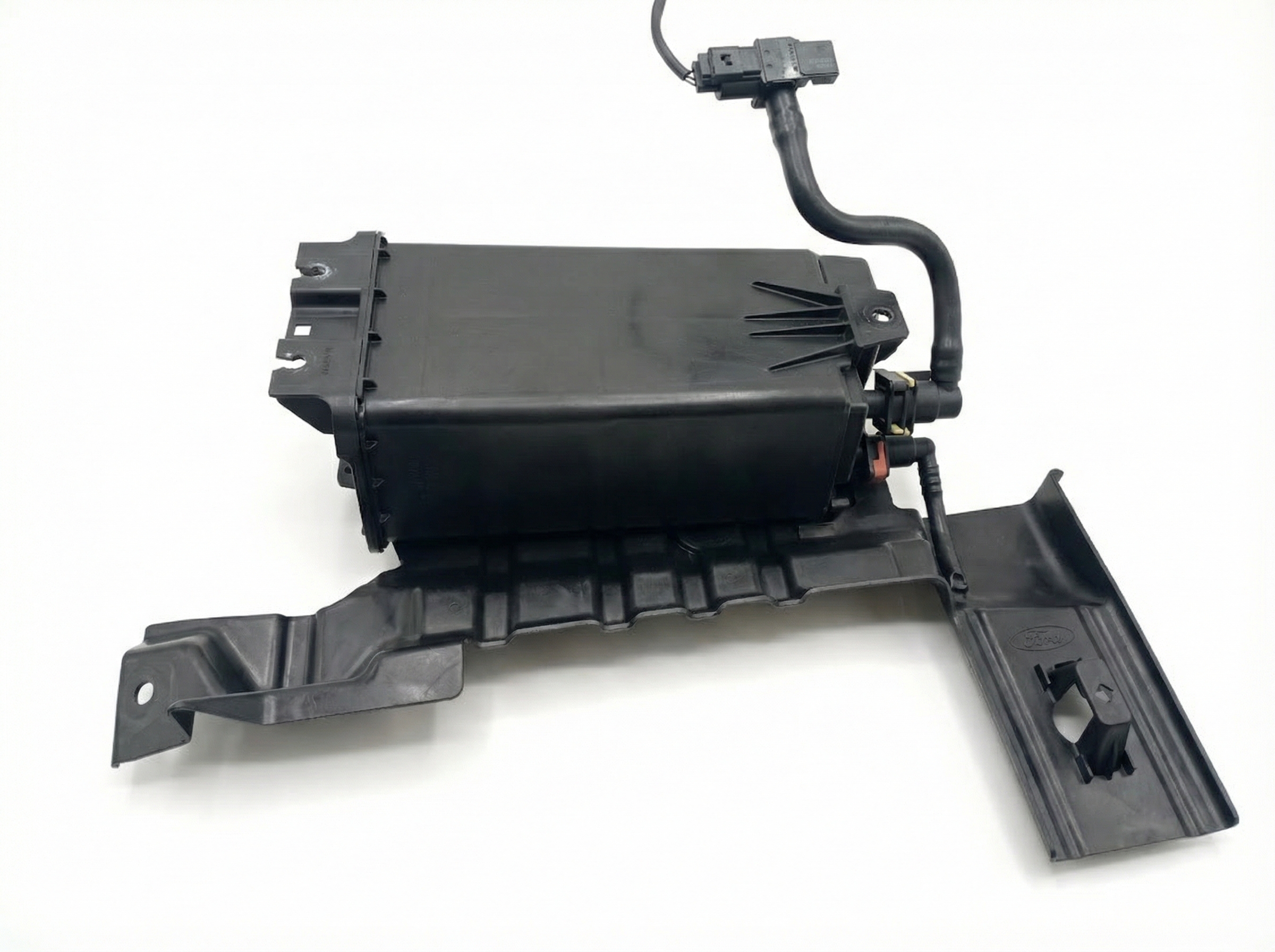
New Aftermarket Parts Available


The information in this article is provided for general reference and educational purposes only. Vehicle specifications, procedures, and part compatibility can vary by production date, trim level, and region. Always consult your vehicle's factory service manual and verify part numbers before purchasing or performing repairs. Safety-critical components such as airbags, seat belts, and braking systems should be installed by a qualified professional.
- Ford Explorer:
- 🎬 Helpful Videos
- 🛍️ Shop This Part
- What's Unique About the 2011-2019 Ford Explorer
- Symptoms You May Notice
- Most Likely Causes
- Rare But Worth Checking
- Diagnosis Steps
- Parts You'll Likely Need
- Related Codes That Often Appear With This One
- Technical Service Bulletins (TSBs) & Recalls
- Platform-Specific Known Issues
- Mechanic-Grade Diagnostic Values
- Scan Tool Commands That Help
- Wiring & Ground Locations
- Real Owner Repair Stories
- "I Checked Everything" — The Actual Cause
- OEM Part Supersession History
- Model Year Variations Within This Range
- Diagnostic Flowchart
- Real Owner Stories
- 2013 Ford Explorer XLT 4WD
- Ford Explorer
- Ford Explorer
- Ford Explorer
- Ford Explorer
- Related OBD-II Codes
- Frequently Asked Questions
- 🎟️ Get 5% Off