

P0456 on 2012-2020 Chevrolet Sonic: EVAP Small Leak Causes and Fixes
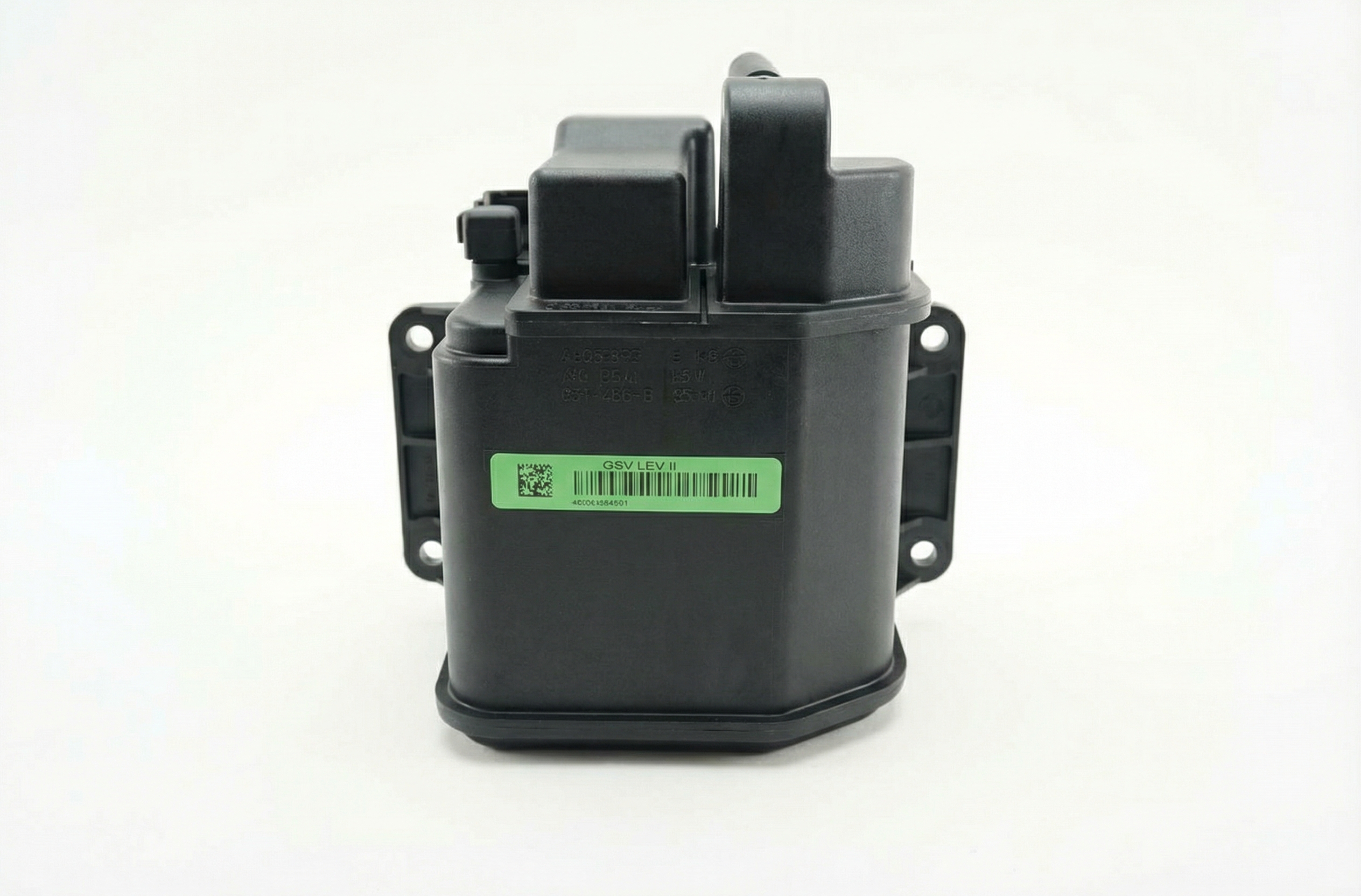
For a 2012-2020 Chevy Sonic, a P0456 code is most often caused by a faulty EVAP purge valve located on the engine, especially on the 1.4L Turbo. First, check that your gas cap is tight. If the light returns, the purge valve is the next likely culprit. The OEM part is ACDelco 214-2317 (GM 55573017), costs around $25-$50, and is a simple DIY fix. A stuck-open purge valve can also cause rough idle or difficulty starting after refueling.
- P0456 on a Chevy Sonic is an emissions-related code for a very small leak and is not an immediate risk to the vehicle's drivability.
- Before buying any parts, ensure your gas cap is tight and its seal is in good condition.
- The most likely part to have failed is the EVAP purge valve on the engine, a common issue for this vehicle.
- You can test the purge valve at home in minutes by removing it and trying to blow through it; it should be completely sealed.
- Owners of 2016-2017 models should check with a GM dealer about potential warranty coverage for the purge valve under Special Coverage N192210240.
What's Unique About the 2012-2020 Chevrolet Sonic
The Chevrolet Sonic, particularly models with the 1.4L turbo engine, shares a common and well-documented failure point with its platform mates like the Chevy Cruze, Trax, and Buick Encore: the EVAP purge valve. This part fails so frequently that General Motors issued Special Coverage N192210240 for it on certain model years, extending the warranty. While a loose gas cap is always the first suspect for any car, on the Sonic, the purge valve is a highly probable cause that owners should investigate early, especially if symptoms like rough idle or trouble starting after fueling are present.
Generation note: The 2012-2020 Chevrolet Sonic is a single generation, although it received a significant facelift for the 2017 model year. The EVAP system components and common issues, particularly the purge valve failure, are consistent across this entire year range for both the 1.4L and 1.8L engines.
Symptoms You May Notice
- Check Engine Light is on.
- Rough idle, hesitation, or stalling, especially at low speeds.
- Difficulty starting the engine immediately after refueling. 🎬 Watch: Why your Sonic won't start after getting gas.
- A faint fuel odor near the rear of the vehicle (less common for small leaks).
- On some GM vehicles, an active Check Engine Light may disable the remote start feature.
- Replacing the gas cap when the purge valve is the actual problem. While the gas cap is a valid first step, on the Sonic, the purge valve is a more probable long-term failure point, especially if drivability symptoms are present.
Most Likely Causes
- Faulty EVAP Purge Valve (Solenoid) 🔴 High Probability This is a widely documented failure point on the 1.4L and 1.8L GM engines used in the Sonic and its platform mates (Cruze, Trax, Encore). The internal diaphragm can fail or the valve can get stuck slightly open, causing a persistent small leak. GM issued Special Coverage N192210240 for this part on 2016-2017 models, extending the warranty to 10 years or 120,000 miles due to the high failure rate.
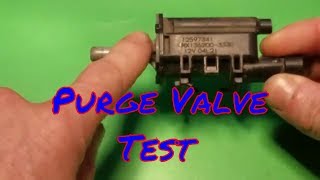
How to confirm: Remove the purge valve from the engine (it's easily accessible on top). With the valve disconnected from power, try to blow through it. It is a normally-closed valve and should be completely sealed. 🎬 See how to bench test the valve for leaks. If any air passes through, it is faulty and must be replaced. A valve stuck open will often cause a P0496 code to appear alongside P0456.
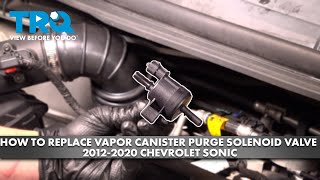
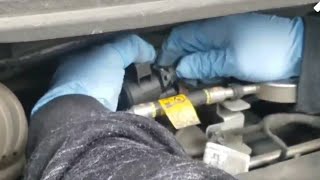
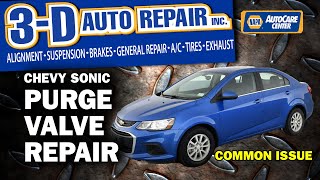
Typical fix: Replacement of the EVAP purge valve. This is a simple repair involving disconnecting two hoses and an electrical connector. The OEM part is ACDelco 214-2317 (GM Part #55573017). 🎬 Watch: Step-by-step guide to replacing your Sonic's purge valve.
Est. part cost: $25-$50 - Loose or Faulty Gas Cap 🟡 Medium Probability This is a common cause on all vehicles. The rubber seal on the cap can degrade and crack over time, or the cap may simply not have been tightened correctly after refueling.
How to confirm: Inspect the gas cap for any visible cracks or damage to the rubber O-ring. Ensure it is tightened until it clicks at least once. If the cap is old or looks worn, replacement is a cheap and easy diagnostic step. Many owners recommend using a genuine OEM cap as some aftermarket caps are known to cause sealing issues.
Typical fix: Tighten or replace the gas cap. The recommended OEM part is ACDelco GT330.
Est. part cost: $15-$30 - Cracked or Disconnected EVAP Hose ⚪ Low Probability The plastic and rubber hoses in the EVAP system can become brittle with age and heat cycles, leading to hairline cracks.
How to confirm: Visually inspect all accessible EVAP lines in the engine bay, especially the lines connected to the purge valve, and around the charcoal canister (located under the car, near the fuel tank) for any cracks, brittleness, or loose connections. A professional smoke test is the most effective way to find a hard-to-see leak in a hose.
Typical fix: Replace the damaged section of the hose or secure the connection.
Est. part cost: $5-$20
Rare But Worth Checking
- Faulty EVAP Vent Valve/Solenoid: This valve is located near the charcoal canister under the car and is part of the system test. It's normally open and closes to allow the system to be pressure tested. It is less likely to fail than the purge valve but can get stuck or fail to seal, causing a leak code.
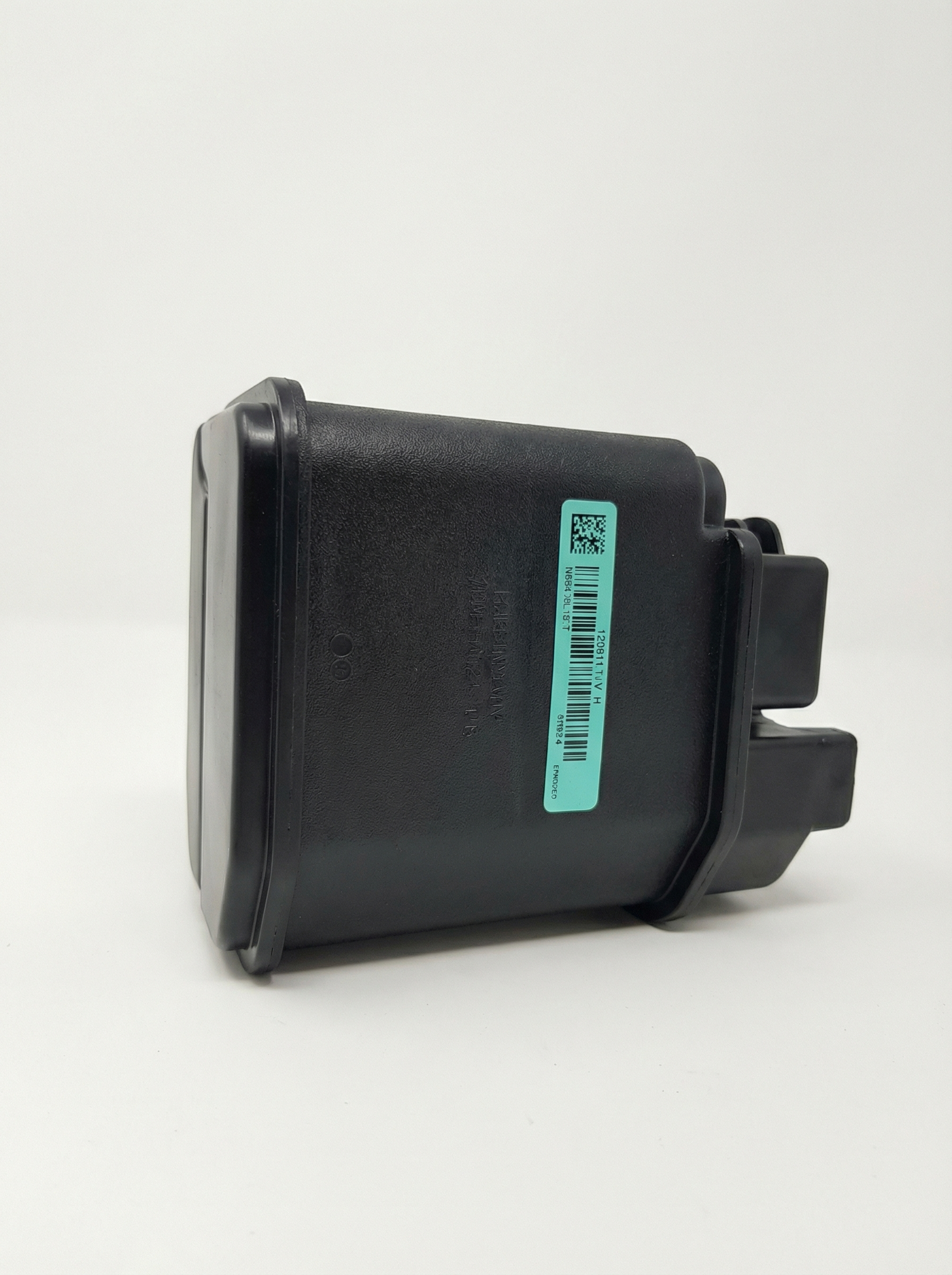
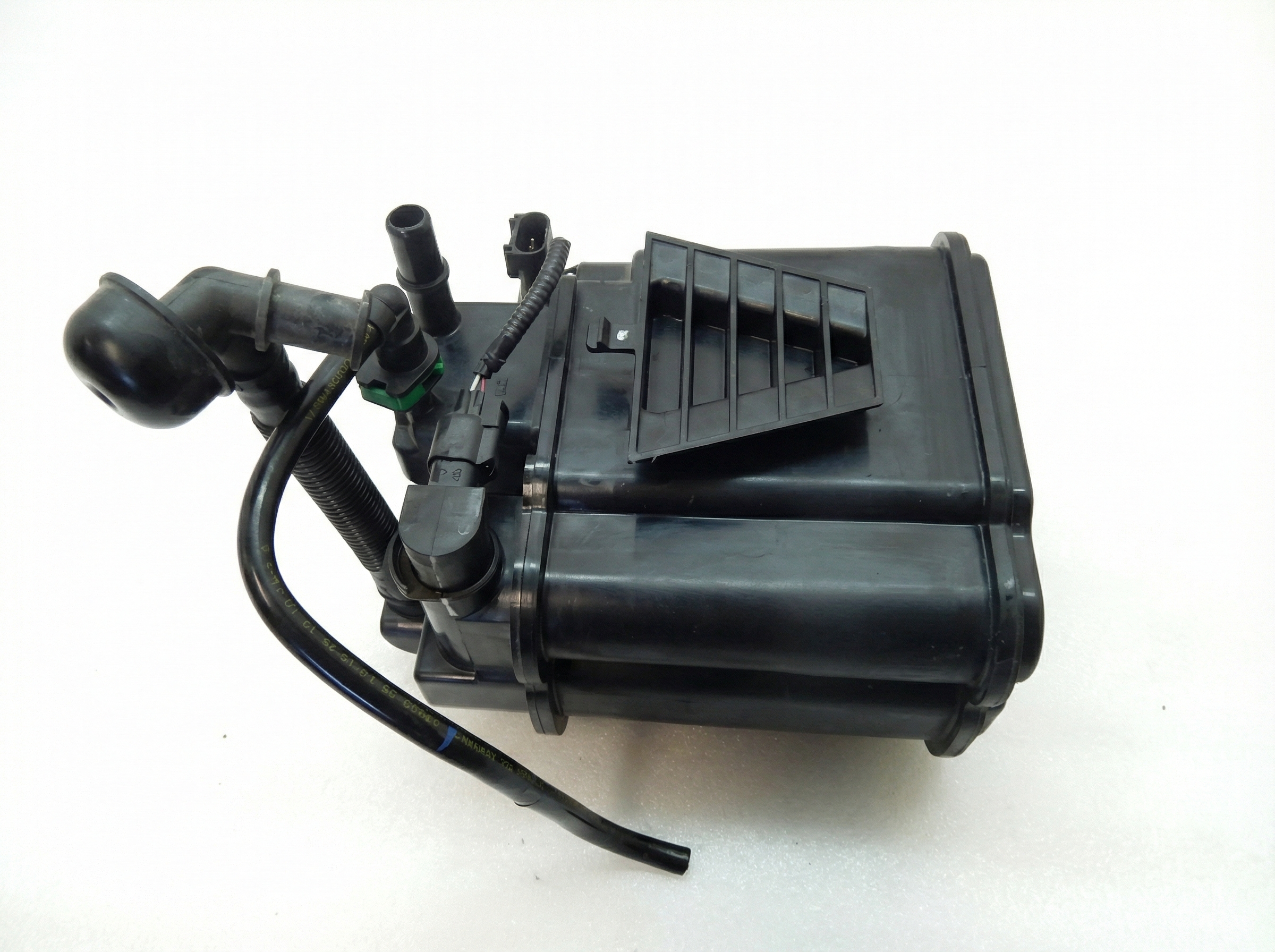
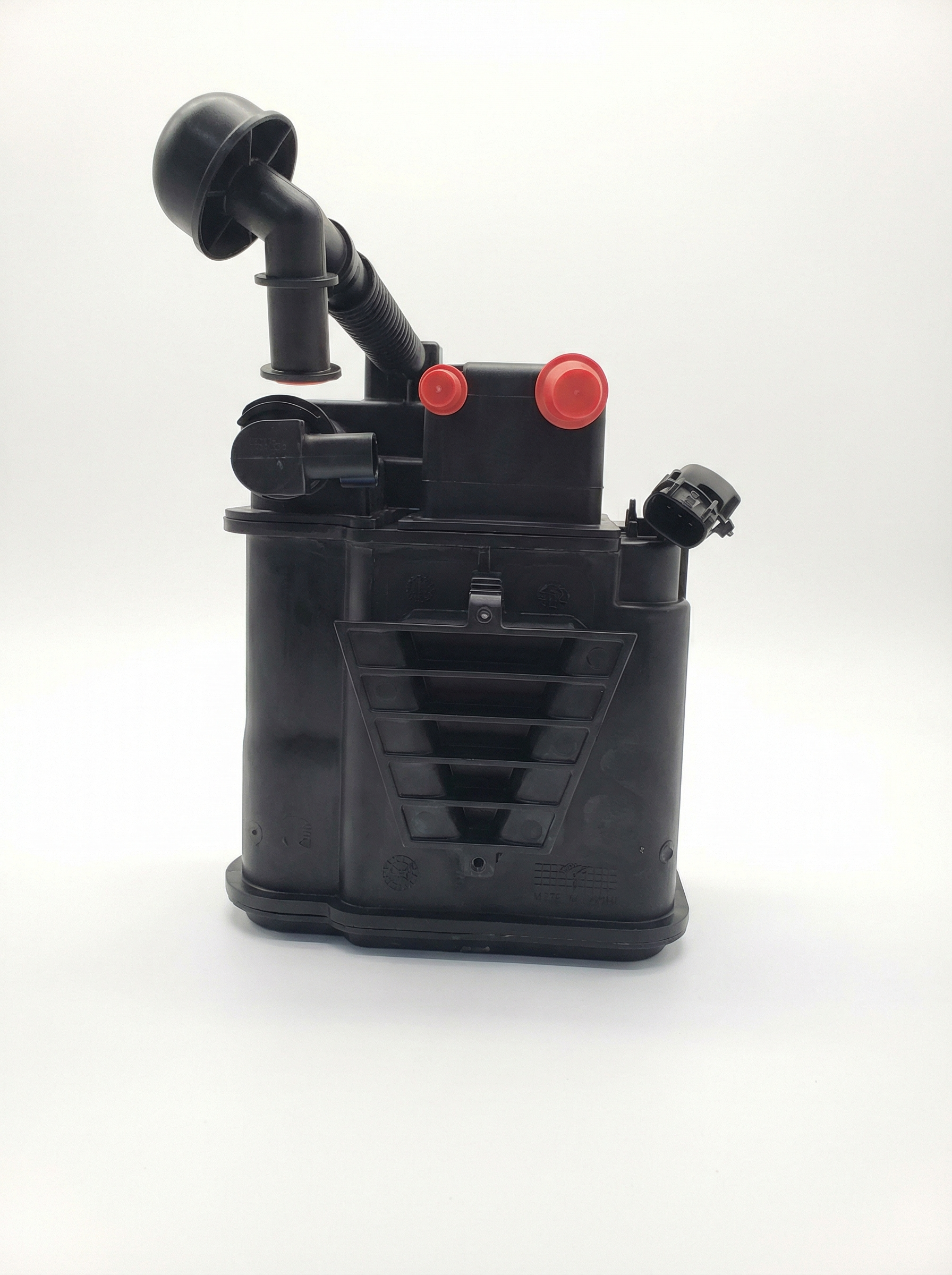
- Cracked Charcoal Canister: Physical damage to the plastic housing of the charcoal canister can cause a leak. This is uncommon unless the vehicle has sustained an underbody impact or damage from road debris.
- Leaking Fuel Filler Neck Hose Clamp (2012 models): A voluntary emissions recall was issued for some 2012 Sonics for an improperly installed clamp on the fuel filler hose, which could cause a leak and trigger the Check Engine Light.
Diagnosis Steps
- Read the code with an OBD-II scanner to confirm P0456 is the primary code present. Note any other codes like P0496 or P0171.
- Inspect the gas cap. Remove it, check the seal for cracks or wear, and reinstall it, making sure it clicks several times.
- Clear the code with the scanner. The EVAP monitor test only runs under specific conditions (e.g., fuel tank between 15-85%, specific ambient temperatures, after a cold soak), so you may need to drive for a few days to see if the light returns.
- If the light returns, locate the EVAP purge valve on the engine. It's a small black solenoid with two hoses and one electrical connector.
- Disconnect the electrical connector and the two hoses from the purge valve.
- Attempt to blow through the valve. If any air passes through, the valve is faulty and needs to be replaced. It should be sealed shut with no power applied.
- If the purge valve tests good, perform a thorough visual inspection of all EVAP hoses and lines for obvious cracks or damage, paying close attention to the connections at the purge valve and charcoal canister.
- If no visible issues are found, the most reliable next step is a professional smoke test to pinpoint the exact location of the small leak.
Parts You'll Likely Need
- EVAP Canister Purge Valve / Solenoid
(OEM #GM 55573017 / ACDelco 214-2317)— This is the most common failure point on the Chevrolet Sonic for code P0456, confirmed by widespread owner reports and a GM Special Coverage program.
Trusted brands: ACDelco, Delphi, Dorman
OEM price range: $35-$50
Aftermarket price range: $20-$40 - Fuel Cap
(OEM #ACDelco GT330)— A worn seal on the gas cap is a common cause for EVAP leaks on any vehicle and is an inexpensive part to replace for diagnosis. Owners often recommend OEM caps for a reliable seal.
Trusted brands: ACDelco
OEM price range: $20-$30
Aftermarket price range: $10-$20
Related Codes That Often Appear With This One
- P0496 — P0496 indicates 'EVAP Flow During a Non-Purge Condition.' This code is very commonly caused by a purge valve that is stuck open. If you see P0456 and P0496 together, it strongly points to a failed purge valve.
- P0442 — P0442 indicates a medium-sized EVAP leak. If the source of the small P0456 leak worsens over time (e.g., a crack in a hose grows), it can eventually trigger the P0442 code.
- P0171 — P0171 indicates 'System Too Lean.' While often related to the PCV system on these cars, a stuck-open purge valve can also create a vacuum leak, allowing unmetered air into the intake and causing a lean condition.
Technical Service Bulletins (TSBs) & Recalls
- N192210240: Special Coverage for faulty evaporative emissions purge valve on 2016-2017 models.
Platform-Specific Known Issues
- GM Special Coverage N192210240: For certain 2016-2017 Sonic models, GM extended the warranty on the EVAP purge valve to 10 years or 120,000 miles. Owners experiencing a failure (symptoms include rough idle, hesitation, stalling, and CEL) on an eligible vehicle may be able to get it repaired at a dealer at no cost.
- 2012 Voluntary Emission Recall: Some early 2012 Sonics were recalled for an improperly secured fuel filler hose clamp, which could cause an EVAP leak.
Mechanic-Grade Diagnostic Values
- EVAP Purge Valve Solenoid Coil Resistance — expected: 15 to 30 Ohms. Failure: A reading significantly higher, lower, or infinite (open circuit) indicates a faulty solenoid coil.
- Fuel Tank Pressure (FTP) Sensor Voltage (Key On, Engine Off, Gas Cap Off) — expected: ~1.5 Volts. Failure: A voltage significantly different from 1.5V at atmospheric pressure suggests a faulty sensor. A reading stuck high (near 5V) or low (near 0V) also indicates a failure.
- EVAP Purge Solenoid Control Circuit Voltage (Key On, Engine Off) — expected: ~12 Volts (Battery Voltage). Failure: Lack of voltage indicates a wiring or fuse issue upstream of the solenoid.
Scan Tool Commands That Help
- GDS2 / Bidirectional Scanner: EVAP Purge Solenoid Valve Control — To manually command the normally-closed purge valve to open by a set percentage (e.g., 20%). While commanded open, a technician can check for changes in engine idle or fuel trims to confirm it is functioning. When commanded closed (0%), no vacuum should be present at the valve's intake port.
- GDS2 / Bidirectional Scanner: EVAP Vent Solenoid Valve Control — To manually command the normally-open vent valve to close ('Not Venting'). This seals the EVAP system from the atmosphere. It is a critical step before performing a smoke test or a system vacuum/pressure test with the scan tool to check for leaks.
- GDS2 / Bidirectional Scanner: EVAP System Test — This automated test sequence commands both the purge and vent valves in a specific order while monitoring the Fuel Tank Pressure (FTP) sensor to verify the system can seal and hold a vacuum or pressure, confirming the integrity of the system after a repair.
Wiring & Ground Locations
- ECM (Engine Control Module) — Located at the right front of the engine compartment, mounted to the side.. The ECM is the brain that controls the EVAP purge and vent valves and monitors the FTP sensor. All related wiring originates or terminates here.
- G104 — Lower right rear of the engine block.. This is a primary engine ground. A TSB (PIC5574A) noted that a loose connection or improper crimp at G104 could cause multiple communication codes and intermittent issues. Poor grounding can affect sensor readings and solenoid operation.
- G105 — Under the battery tray on the frame rail.. This is a key chassis ground. A TSB (PIC5574A) warns to check for weld slag or paint under the ground nut, which can cause a poor connection and lead to various electrical faults.
- EVAP Purge Valve Connector — On the EVAP purge valve itself, located on the intake manifold.. This 2-pin connector provides power and ground control from the ECM. A visual inspection for corrosion or damage is a key diagnostic step. One pin should have battery voltage with the key on, and the other is the ground control from the ECM.
- EVAP Vent Valve Connector — On the EVAP vent valve, located near the charcoal canister under the rear of the vehicle.. Corrosion is common at this under-vehicle connector, which can prevent the vent valve from closing and cause a P0456 or other EVAP codes. Checking for power and the ECM ground signal here is a necessary step if the valve is suspected to be faulty.
Real Owner Repair Stories
- Reddit user post in r/ChevySonic (2015 Chevrolet Sonic 1.4 Turbo Hatchback LTZ) — Car stalled on idle, rough idling, hesitation, lost power at high speeds, Check Engine Light.
❌ Tried (didn't work) Replaced ECM (Check Engine Light returned with code P0035)., Replaced camshaft cover to fix PCV valve (Check Engine Light returned with code P0171).
✅ What actually fixed it Replacing the EVAP purge valve solved the idling and hesitation problems. The user specifically noted that the Duralast PV704 part from AutoZone did NOT fit, and they had to use the ACDelco 55573017 OEM part.
OEM Part Supersession History
GM 55573017→No official supersession found, this remains the current primary OEM part number.— N/A
Heads up: A user on Reddit reported that the Duralast PV704 aftermarket purge valve, despite being listed as compatible by the retailer for a 2015 1.4T model, did not physically fit. The OEM ACDelco part (55573017 / 214-2317) was required for a proper fit. This suggests potential inconsistencies in aftermarket part manufacturing for certain model years or connector types.
Model Year Variations Within This Range
- 2015: A user with a 2015 1.4T Sonic noted that the hose clamps and electrical connector clips on the EVAP purge valve were distinct and more complex than those shown in many online guides, featuring multiple locking tabs. This indicates that while the core part is the same, the physical connections may vary slightly across the production run, requiring more care during removal.
- 2016-2018, 2020: While the purge valve part is the same, GM issued different Special Coverage programs for different years. N192210240 covers 2016-2018 models to 10 years/120k miles, while N232395300 covers certain 2020 models to 15 years/150k miles, indicating a persistent issue that GM continued to address.
Diagnostic Flowchart
Other Known Issues on This Vehicle
Issues unrelated to this code that are worth knowing about as an owner of this generation:
- PCV System Failure (1.4L Turbo) 🔴 High — Very common. The intake manifold check valve can dislodge and the valve cover diaphragm can rupture, causing lean codes (P0171), rough idle, whistling noises, and high oil consumption. (Ref: N192210230 (Special Coverage for 2015-2016 models))
- Cracked Plastic Thermostat Housing 🔴 High — Extremely common on both 1.4L and 1.8L engines. The plastic housing becomes brittle and cracks, causing significant coolant leaks, often dripping onto the transmission.
- Leaking Water Pump (1.4L Turbo) 🟠 Medium — Common failure leading to coolant loss and potential overheating. The leak often originates from the weep hole or shaft seal. (Ref: 14371A / 14371B (Special Coverage for 2012-2014 models, 10yr/150k miles))
- Oil Leaks from Gaskets/Seals 🟠 Medium — Frequently reported from the oil pan gasket and timing cover gasket, particularly on the passenger side of the engine.
Used vs. New Parts: Buying Guide for This Vehicle
When a used part is the smart pick: For this specific P0456 code, buying used parts is generally not recommended. However, if a smoke test confirms a cracked charcoal canister (a rare failure), a used canister from a low-mileage, collision-damaged vehicle could be a cost-effective option, as the part itself has no moving components.
Donor-vehicle mileage cap: roughly under 60000 miles for the part to have meaningful remaining life.
What to inspect on the donor part:
- For a charcoal canister, inspect the plastic housing for any cracks or signs of physical impact.
- Ensure all hose connection nipples are intact and not broken or brittle.
- Avoid any canister that smells strongly of raw fuel, as this indicates it has been saturated and is likely compromised.
OEM-only on this vehicle (don't cheap out):
- Fuel Cap: While aftermarket caps are available, the ACDelco OEM cap is widely recommended by owners for providing a reliable seal and avoiding false EVAP codes.
- EVAP Purge Valve: Given the extremely high failure rate and the low cost of a new OEM part (~$35), installing a used purge valve is strongly discouraged. A Reddit user also reported a specific aftermarket version (Duralast PV704) did not fit their 2015 Sonic, making the ACDelco OEM part the safest choice.
Aftermarket brands forum-validated for this vehicle:
- Standard Motor Products (SMP) is often cited in forums as a reliable alternative to OEM for various sensors and valves.
Brands owners have reported issues with on this vehicle:
- Duralast (AutoZone brand): At least one user reported a direct fitment issue with a purge valve for a 2015 Sonic, even though it was listed as compatible.
Real Owner Stories
Aggregated from forums and TSBs cited above. Mileages and costs reflect what owners reported in those sources.
2016-2017 Chevrolet Sonic — ~110000 miles
Symptoms: Rough idle, hesitation, stalling, and a Check Engine Light. Issues were most common right after filling the gas tank.
What fixed it: Replacement of the EVAP purge valve under Special Coverage N192210240.
Source hint: Reddit r/cruze: Thread titled 'Special Coverage N192210230 & N192210240'
2012 Chevrolet Sonic
Symptoms: EVAP system leak detected.
What fixed it: Securing the fuel filler hose clamp.
Source hint: Sonic Owners Forum: Discussion of a voluntary emission recall for 2012 models related to a fuel filler hose clamp.
Related OBD-II Codes
Frequently Asked Questions
Is there a special warranty for the EVAP purge valve on my 2017 Chevrolet Sonic?
Why does my Sonic have trouble starting only after I fill up the gas tank?
Which specific purge valve part should I buy for my 1.4L or 1.8L Sonic?
Was there a recall for EVAP leaks on the 2012 Sonic?
Will a P0456 code prevent me from using my remote start?
Can a failure in the PCV system cause issues similar to the P0456 code?
Helpful Videos
![How to Fix P0456 Engine Code in 7 Minutes [7 DIY Methods / Only $3.44]](https://img.youtube.com/vi/njt81AALI3U/mqdefault.jpg)
Used OEM Parts in Stock
New Aftermarket Parts Available


The information in this article is provided for general reference and educational purposes only. Vehicle specifications, procedures, and part compatibility can vary by production date, trim level, and region. Always consult your vehicle's factory service manual and verify part numbers before purchasing or performing repairs. Safety-critical components such as airbags, seat belts, and braking systems should be installed by a qualified professional.
- Chevrolet Sonic:
- 🎬 Helpful Videos
- 🛍️ Shop This Part
- What's Unique About the 2012-2020 Chevrolet Sonic
- Symptoms You May Notice
- Most Likely Causes
- Rare But Worth Checking
- Diagnosis Steps
- Parts You'll Likely Need
- Related Codes That Often Appear With This One
- Technical Service Bulletins (TSBs) & Recalls
- Platform-Specific Known Issues
- Mechanic-Grade Diagnostic Values
- Scan Tool Commands That Help
- Wiring & Ground Locations
- Real Owner Repair Stories
- OEM Part Supersession History
- Model Year Variations Within This Range
- Diagnostic Flowchart
- Other Known Issues on This Vehicle
- Used vs. New Parts: Buying Guide for This Vehicle
- Real Owner Stories
- 2016-2017 Chevrolet Sonic — ~110000 miles
- 2012 Chevrolet Sonic
- Related OBD-II Codes
- Frequently Asked Questions
- 🎟️ Get 5% Off