

P0455 on 2012-2019 Volkswagen Passat: EVAP Large Leak Causes and Fixes
For a 2012-2019 VW Passat, code P0455 most often means you have a loose gas cap or a bad EVAP purge valve (N80 valve). Always check the gas cap first—it's a free fix. If that's not it, the purge valve is the next likely culprit, costing around $25-$60 for the part. A cracked hose connected to the purge valve is also a common, overlooked cause.
- Always check your gas cap first. Make sure it's tight and the seal is in good condition. This fixes P0455 more than half the time and costs nothing to check.
- The N80 EVAP Purge Valve is the second most common failure point and a known weakness on this Passat generation. If you have a rough idle or hard starts after refueling, this part is highly suspect.
- If the gas cap and N80 valve check out, do not guess or throw parts at the problem. A professional smoke test is the most efficient way to find the exact location of the leak, saving you time and money.
What's Unique About the 2012-2019 Volkswagen Passat

On this generation of Volkswagen Passat (NMS), while the gas cap is always the first suspect, the EVAP Purge Valve (often called the N80 valve) is a very common failure point that triggers this code. Unlike some cars where the cause is more ambiguous, many Passat owners report that a faulty N80 valve, which gets stuck open, is the root of their P0455 issue. This can also cause noticeable symptoms like a rough idle or difficulty starting immediately after refueling. Additionally, the corrugated plastic hose assembly connected to the N80 valve is known to become brittle from engine heat and crack, causing a leak that is often mistaken for a bad valve.
Generation note: The 2012-2019 North American Passat (NMS) is technically one generation, but it received a major facelift for the 2016 model year. While the function of the EVAP system is the same across these years, specific part numbers for components like the gas cap or purge valve may differ between the 2012-2015 and 2016-2019 models. Always verify parts with your vehicle's VIN.
Symptoms You May Notice
- Check Engine Light is on.
- A noticeable smell of gasoline, especially around the rear of the car or in the garage overnight.
- Rough or unstable engine idle (if the purge valve is stuck open).
- Difficulty starting the engine right after filling up with gas (if the purge valve is stuck open).
- Slight decrease in fuel economy due to escaping fuel vapors.
- A 'Check Gas Cap' message may appear on the instrument cluster.
- Replacing the charcoal canister or other expensive components before performing a smoke test. Many owners replace parts based on guesswork, when a simple smoke test could have identified a cheap, cracked hose or a bad valve.
- Replacing the N80 purge valve without checking the attached corrugated plastic hose, which can also crack and cause the same leak.
Most Likely Causes


- Loose or Faulty Gas Cap 🔴 High Probability This is the most common cause for a P0455 code on any vehicle due to user error (not tightening until it clicks) or the cap's rubber seal degrading over time. It is highly recommended to use an OEM gas cap, as aftermarket caps are known to cause sealing issues.
How to confirm: Remove the gas cap and inspect the rubber O-ring for cracks, stiffness, or damage. Clean the sealing surface on the filler neck. Reinstall it, ensuring you turn it until it clicks at least once. Clear the code and drive for a few days to see if it returns.
Typical fix: Replace the gas cap with a genuine VW part.
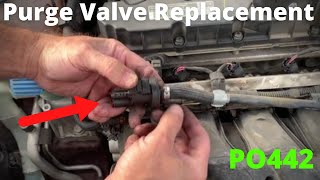
Est. part cost: $20-$45 - Faulty EVAP Purge Valve (N80 Valve) 🔴 High Probability This solenoid valve is a known common failure item on many Volkswagen models, including the Passat's 1.8T, 2.0T, and 2.5L engines. 🎬 Watch: Diagnosing and replacing the N80 valve on a 2.5L engine. It can get stuck open, creating a constant vacuum leak that the ECU interprets as a large system leak.
How to confirm: The valve is located in the engine bay, often under the plastic engine cover. Disconnect it from its hoses. With the engine off, try to blow through it. If air passes through, the valve is stuck open and needs to be replaced. A hand vacuum/pressure pump can also be used to confirm it doesn't hold pressure.
Typical fix: Replace the purge valve solenoid. 🎬 See this step-by-step walkthrough for replacing your Passat's purge valve.
Est. part cost: $25-$70 - Cracked or Disconnected EVAP Hoses 🟡 Medium Probability Over time, the plastic and rubber hoses in the engine bay and underneath the car can become brittle from heat and age, leading to cracks or loose connections. The corrugated hose attached to the N80 purge valve is a frequent culprit.
How to confirm: Visually inspect all accessible EVAP lines running from the engine bay back to the charcoal canister near the fuel tank. A professional smoke test is the most effective way to find a hard-to-see leak.
Typical fix: Replace the cracked section of hose or re-secure the connection. The N80 valve hose assembly is often replaced as a unit.
Est. part cost: $10-$60 - Faulty EVAP Canister Vent Solenoid ⚪ Low Probability
How to confirm: This valve is located near the charcoal canister under the car. It is normally open and closes when the system runs a test. It can be tested with a capable scan tool to command it closed, or by applying voltage to it manually. A smoke test will reveal if it's stuck open, as smoke will exit from it when it should be closed.
Typical fix: Replace the vent valve solenoid.
Est. part cost: $40-$80 - Cracked Charcoal Canister ⚪ Low Probability The canister is located underneath the vehicle, making it susceptible to damage from road debris or corrosion in rust-prone areas. Large cracks can develop, causing a major leak.
How to confirm: Visually inspect the canister (located near the fuel tank) for any physical cracks or damage. A smoke test is the definitive way to confirm a leak in the canister body.
Typical fix: Replace the charcoal canister.
Est. part cost: $150-$250
Rare But Worth Checking
- Cracked Fuel Filler Neck: In areas with heavy road salt use, the metal tube leading to the gas tank can corrode and develop a leak, which will trigger a P0455 code. This may be accompanied by fuel spilling down the rear wheel when filling the tank.
- Faulty Leak Detection Pump (LDP): In some cases, the LDP itself can develop a hairline crack or internal failure, causing a leak that can be difficult to find even with a smoke test. One owner reported replacing the LDP solved their persistent P0455/P0456 codes after other parts failed to fix it.
Diagnosis Steps

- Read the code with an OBD-II scanner to confirm P0455 is present.
- Inspect the gas cap. Ensure it is tight (clicks multiple times). If the seal looks old, cracked, or worn, replace it as a first step, preferably with an OEM part.
- Clear the code and drive for a few days. If the code does not return, the gas cap was the issue.
- If the code returns, locate the EVAP purge valve (N80) in the engine bay, under the plastic engine cover. Inspect the connected corrugated plastic hose for any visible cracks.
- Disconnect the hoses and electrical connector from the N80 valve. Attempt to blow through the valve. It should be closed when no power is applied. If you can blow through it, it is defective and must be replaced. For a more definitive test, use a hand pump to apply light pressure; it should hold steady.
- If the purge valve is good, perform a thorough visual inspection of all EVAP hoses between the engine, purge valve, and the charcoal canister under the rear of the car. Look for obvious cracks, breaks, or loose connections.
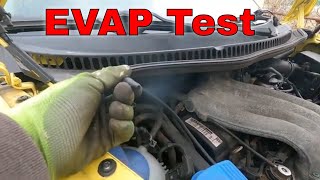
- If no visual faults are found, the most reliable next step is to have a smoke test performed. This test fills the EVAP system with a harmless, visible smoke under low pressure, making even the smallest leaks easy to spot. 🎬 Watch: How to use a smoke detector to find EVAP leaks. This can pinpoint issues with the canister, vent valve, filler neck, or hidden hoses that are otherwise impossible to see.
Parts You'll Likely Need
- Gas Cap
(OEM #561201550D)— This is the most frequent cause of a P0455 code and the easiest part to replace. The seal wears out over time. Using an OEM cap is strongly recommended.
Trusted brands: Genuine VW
OEM price range: $30-$50
Aftermarket price range: $15-$25 - EVAP Canister Purge Valve (N80 Valve)
(OEM #06E906517A)— This is a very common failure point on VWs that gets stuck open, causing a large leak and often drivability issues like rough idle or hard starts after refueling.
Trusted brands: Bosch (OEM), Dorman
OEM price range: $40-$70
Aftermarket price range: $25-$50 - EVAP Purge Valve Hose Assembly
(OEM #06J133781CE)— The corrugated plastic hose connected to the N80 valve often becomes brittle and cracks, creating a vacuum leak. It is often sold as an assembly with new hoses.
Trusted brands: Genuine VW, VNE
OEM price range: $35-$60
Aftermarket price range: $20-$40
Related Codes That Often Appear With This One
- P0441 — P0441 (Incorrect Purge Flow) often appears with P0455 when the purge valve (N80) is failing, as it can both leak (causing P0455) and fail to draw a proper vacuum when commanded (causing P0441).
- P0442 — P0442 indicates a small EVAP leak. Sometimes a problem can start as a small leak and worsen, or the computer may set both codes if it's on the threshold between a small and large leak.
- P0456 — P0456 indicates a very small leak. It can appear alongside P0455 if the system detects multiple leak sizes during different test cycles, or if a component is failing intermittently.
Technical Service Bulletins (TSBs) & Recalls
- VW Tech Tip 01-19-06 (VW TSB 2056714/1): While for a Jetta 1.4T, this TSB addresses testing the N80 Purge Valve for EVAP codes P0441, P0442, P0455, and P0456, indicating VW's recognition of this component as a common issue for these codes. The testing procedure is relevant across similar VW engines.
Platform-Specific Known Issues
- Hard Start After Refueling: A classic symptom of a stuck-open N80 purge valve on this Passat. When you fill the tank, the displaced fuel vapors are forced into the charcoal canister. If the N80 valve is open, these raw fuel vapors are immediately drawn into the engine intake, creating an overly rich mixture that makes the engine hard to start right after you leave the gas station.
- Corroded Fuel Filler Neck: In regions that use road salt in winter (the "rust belt"), the metal fuel filler neck can corrode and develop holes. This creates a large, permanent leak in the EVAP system that will set a P0455 code and may also cause fuel to spill down the rear tire during refueling.
Mechanic-Grade Diagnostic Values
- N80 Purge Valve Resistance — expected: 22 to 30 Ohms. Failure: A reading outside this range, or infinite (open circuit), indicates a faulty valve coil.
- N80 Purge Valve Connector Voltage (Key on, Engine off) — expected: ~9-12 Volts at Pin 1 to ground. Failure: Significantly lower voltage, such as 1.25V, points to a wiring or ECM issue upstream of the valve.
- Fuel Tank Pressure Sensor Live Data (VCDS/Scan Tool) — expected: With the engine off and key on, the pressure should slowly drop from a vacuum state if a leak is present. During a forced EVAP test, the pressure should build and then hold steady.. Failure: A rapid drop in vacuum or failure to hold pressure during a test confirms a leak in the system.
Hidden / Shadow Codes Worth Checking
- 16839: This is the VAG-specific fault code that corresponds to the generic OBD-II code P0455. (see via A VW-specific scan tool like VCDS (VAG-COM) or OBDeleven will display this native code.)
Scan Tool Commands That Help
- VCDS (VAG-COM) or OBDeleven: Basic Settings - Group 071 (EVAP Leak Test) — This command forces the Leak Detection Pump (LDP) to run its full self-test sequence. It allows a technician to check the integrity of the entire system on demand, without needing to perform a drive cycle, to confirm if a leak is present after a repair.
- VCDS (VAG-COM) or OBDeleven: Output Tests - N80 Purge Valve — This function manually cycles the N80 valve on and off, which should produce an audible clicking sound. It's used to confirm that the valve's solenoid is functional and receiving a signal from the ECM. Lack of clicking points to a bad valve or a wiring issue.
Wiring & Ground Locations
- N80 Purge Valve Connector — In the engine bay, attached to the N80 valve, often under the plastic engine cover.. Pin 1 should have battery voltage (~12V) with the key on. Pin 2 is the control wire pulsed to ground by the ECM. Checking for voltage at Pin 1 is a key step to rule out a wiring/fuse issue before replacing the valve.
- Leak Detection Pump (LDP) Connector — Behind the passenger-side rear wheel well liner, attached to the LDP which is mounted to the charcoal canister.. This 4-pin connector and its wiring are exposed to road spray and salt, making them prone to corrosion which can cause various EVAP codes, including P2407, and can sometimes be related to P0455 if the system cannot test properly.
- Engine Bay Ground Points — A primary ground point is on the driver's side frame rail near the strut tower. Another is on the cylinder head.. A poor ground connection can cause erratic voltage and improper operation of EVAP components like the N80 valve, leading to fault codes even if the component itself is good.
Real Owner Repair Stories
- VWVortex Forum User (2013 VW Passat 2.5L) — P0455 code, CEL on.
❌ Tried (didn't work) Replaced gas cap, Replaced N80 purge valve, Smoke tested the system multiple times, no leaks found
✅ What actually fixed it The issue was finally resolved by replacing the Leak Detection Pump (LDP). The pump itself had an internal failure that did not present as a visible leak during a smoke test but prevented the system from holding pressure correctly during the ECU's self-test. - YouTube user comment (2014 VW Passat 1.8T) — P0455 and P0441 codes, rough idle after fueling.
❌ Tried (didn't work) Replaced the N80 purge valve itself.
✅ What actually fixed it The corrugated plastic hose attached to the N80 valve had a hairline crack that was difficult to see. Replacing the entire hose assembly (part number 06J133781CE) fixed the leak and cleared the codes.
"I Checked Everything" — The Actual Cause
- In several documented cases on VW forums, a P0455 code persisted even after a smoke test showed no leaks. The eventual cause was a faulty Leak Detection Pump (LDP), located in the rear wheel well. The LDP's internal diaphragm or valve mechanism can fail in a way that it cannot properly seal or pressurize the system for a test, but does not leak smoke externally. The ECU interprets this failure to hold pressure as a large leak.
- Another reported cause after a clean smoke test was a faulty Fuel Tank Pressure (FTP) sensor. The sensor incorrectly reported a pressure loss to the ECU, triggering the P0455 code, even though the system's physical integrity was fine. Testing the sensor's voltage output against actual pressure is required to diagnose this.
OEM Part Supersession History
6E906517→06E906517A— Improved design or manufacturing process for the N80 Purge Valve.
Heads up: The parts are generally interchangeable, but using the latest revision (06E906517A) is always recommended for reliability.
Model Year Variations Within This Range
- 2012-2019: The EVAP canister, Leak Detection Pump (LDP), and vent solenoid are all located together as an assembly behind the plastic liner of the right-rear (passenger side) wheel well. Access requires removing the wheel and the liner.
Diagnostic Flowchart
Real Owner Stories
Aggregated from forums and TSBs cited above. Mileages and costs reflect what owners reported in those sources.
2013 Volkswagen Passat 2.5L
Symptoms: Experienced a P0455 code along with difficulty starting the engine right after getting gas.
What fixed it: Replaced the N80 purge valve (part # 06E906517A), which completely fixed both the check engine light and the starting issue.
Source hint: VWVortex Forums - "P0455 and hard starts after fueling"
2001 Volkswagen Passat 1.8T
Symptoms: Triggered a P0455 large leak code and noticed fuel leaking down the back wheel when filling up the gas tank.
What fixed it: Diagnosed as a rusted-through fuel filler neck, which is a known issue in rust-prone areas that causes a large EVAP leak.
Source hint: Reddit r/MechanicAdvice - "01' Passat 1.8t Evap code p0455 Large leak"
2012 Volkswagen Passat S
Symptoms: Had persistent EVAP codes (P0456, P0441) even after replacing common parts and sealing visible leaks.
What fixed it: Replaced the gas cap, purge valve, and leak detection pump (LDP), and performed a smoke test to seal visible leaks, highlighting that stubborn leaks can still exist in the system.
Source hint: Car Talk Community - "Vw Passat s 2012 evap"
Related OBD-II Codes
Frequently Asked Questions
Why is my 2012-2019 Passat hard to start right after I fill up with gas?
Does VW have any technical service bulletins (TSBs) regarding the P0455 code?
I smell gas near the rear tire of my Passat and have a P0455 code. What could it be?
Should I buy an aftermarket gas cap to fix the 'Check Gas Cap' message on my Passat?
How can I test the N80 purge valve on my 1.8T or 2.5L engine at home?
I replaced the gas cap and N80 valve on my 2012 Passat but still have EVAP codes. What's next?
Helpful Videos

We Have This Part in Stock


The information in this article is provided for general reference and educational purposes only. Vehicle specifications, procedures, and part compatibility can vary by production date, trim level, and region. Always consult your vehicle's factory service manual and verify part numbers before purchasing or performing repairs. Safety-critical components such as airbags, seat belts, and braking systems should be installed by a qualified professional.
- Volkswagen Passat:
- 🎬 Helpful Videos
- 🛍️ Shop This Part
- What's Unique About the 2012-2019 Volkswagen Passat
- Symptoms You May Notice
- Most Likely Causes
- Rare But Worth Checking
- Diagnosis Steps
- Parts You'll Likely Need
- Related Codes That Often Appear With This One
- Technical Service Bulletins (TSBs) & Recalls
- Platform-Specific Known Issues
- Mechanic-Grade Diagnostic Values
- Hidden / Shadow Codes Worth Checking
- Scan Tool Commands That Help
- Wiring & Ground Locations
- Real Owner Repair Stories
- "I Checked Everything" — The Actual Cause
- OEM Part Supersession History
- Model Year Variations Within This Range
- Diagnostic Flowchart
- Real Owner Stories
- 2013 Volkswagen Passat 2.5L
- 2001 Volkswagen Passat 1.8T
- 2012 Volkswagen Passat S
- Related OBD-II Codes
- Frequently Asked Questions
- 🎟️ Get 5% Off