

P0455 on 2011-2020 Toyota Sienna: EVAP Large Leak Causes and Fixes
For a 2011-2020 Toyota Sienna, code P0455 almost always means you have a loose, worn, or incorrect gas cap. Before buying any parts, tighten the cap until it clicks and inspect its seal. A new OEM gas cap is under $40 and is the most likely fix. If the cap is not the issue, the second most likely culprit is the purge valve solenoid in the engine bay.
- P0455 means your Sienna has a large leak in the emissions vapor system.
- Always check your gas cap first. Make sure it's tight and the seal is intact. This is the most common and cheapest fix.
- If a new gas cap doesn't solve it, the next most likely part to fail is the purge valve (VSV) located on the engine.
- You can safely drive the vehicle with this code, but you will not pass an emissions test until the repair is complete.
What's Unique About the 2011-2020 Toyota Sienna

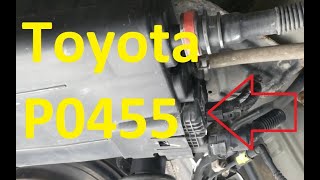
On the third-generation Toyota Sienna (2011-2020), the EVAP system is straightforward and generally reliable, with no unique design flaws that make it fundamentally different from other Toyota models of the era. Owner and technician experiences consistently point to the same few high-probability causes. 🎬 Watch: A breakdown of common P0455 causes and fixes. The most common failure points are parts that wear out over time, such as the gas cap seal and the electromechanical purge valve located on top of the engine. Later models in this generation use a key-off EVAP test system with a leak detection pump, which runs its self-test 5 hours after the vehicle is turned off.
Symptoms You May Notice
- Check Engine Light is on
- A noticeable smell of gasoline, especially around the rear of the vehicle or after refueling.
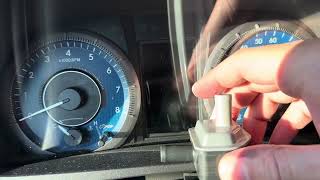
- Difficulty starting the engine immediately after filling the gas tank 🎬 See how a faulty purge solenoid causes starting issues. (if the purge valve is stuck open).
- A whooshing sound when opening the gas cap may be absent, indicating the system is not holding a vacuum.
- Replacing the charcoal canister when the actual problem is a small, inexpensive cracked hose nearby.
- Replacing the fuel tank pressure sensor. This sensor rarely fails and would typically set its own specific trouble code (e.g., P0452).
Most Likely Causes


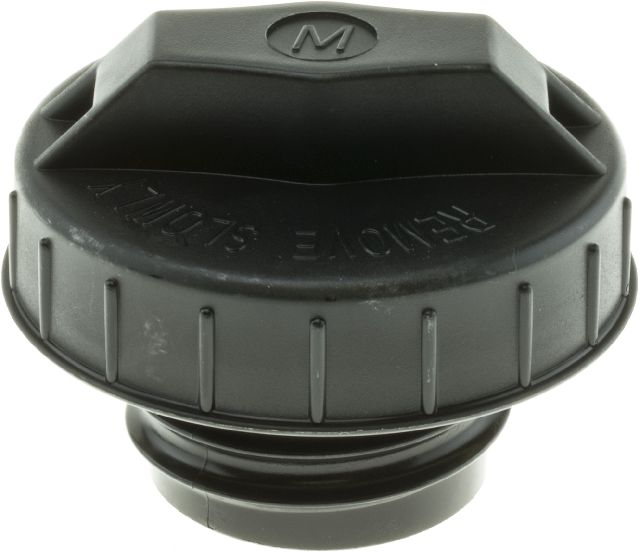
- Loose, Damaged, or Incorrect Gas Cap 🔴 High Probability The gas cap is a frequently handled part, and its rubber O-ring seal can dry out, crack, or get dirty over time, preventing a proper seal. It's also common for it to not be tightened sufficiently after refueling.
How to confirm: Ensure the cap is tightened until it clicks at least once. Remove the cap and inspect the rubber seal for any cracks, stiffness, or debris. An OEM cap is highly recommended as some aftermarket caps do not seal correctly, a fact frequently mentioned by owners in forums. A manufacturer service bulletin, TSB Bulletin #T-SB-0086-16, notes that some Toyota fuel caps may exhibit a "no click" or "no spring return" condition when fully seated, which can trigger P0455.
Typical fix: Clean the seal and filler neck, tighten the cap properly, or replace the gas cap.
Est. part cost: $15-$40 - Faulty Vapor Canister Purge Valve (VSV) 🟡 Medium Probability This solenoid valve is located in the engine bay and cycles frequently. Over time, it can become stuck open, creating a constant vacuum leak that the system interprets as a large leak.
How to confirm: The valve is located on top of the engine, easily accessible after removing the plastic engine cover. With the engine running, you can disconnect the hose coming from the charcoal canister and feel for suction. There should be no vacuum at idle when the valve is commanded closed. A stuck-open valve will have constant suction.
Typical fix: Replace the purge valve solenoid.
Est. part cost: $50-$150 - Cracked or Disconnected EVAP Hoses ⚪ Low Probability Rubber hoses, especially those in the engine bay exposed to heat or under the vehicle exposed to the elements, can become brittle and crack with age.
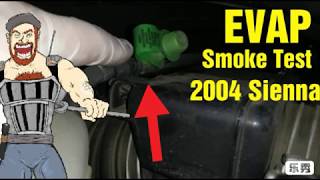
How to confirm: Visually inspect all accessible EVAP lines running from the engine bay to the charcoal canister near the fuel tank. Look for obvious cracks, breaks, or loose connections. A professional smoke test is the most effective way to find a hard-to-see leak. 🎬 Watch: How to perform a professional EVAP smoke test.
Typical fix: Replace the cracked or broken section of hose.
Est. part cost: $10-$50 - Cracked Charcoal Canister or Faulty Vent Valve ⚪ Low Probability The canister is a plastic box located under the vehicle near the fuel tank. It can be damaged by road debris or develop cracks from age. The vent valve, often attached to the canister, can fail and stick open.
How to confirm: Visually inspect the canister for any physical damage or cracks. The vent valve can be tested with a capable scan tool to see if it actuates correctly. A smoke test will show smoke exiting a cracked canister or a stuck-open vent valve.
Typical fix: Replace the charcoal canister assembly, which often includes the vent valve.
Est. part cost: $300-$600
Rare But Worth Checking
- Damaged Fuel Filler Neck: Corrosion or damage to the metal filler neck where the gas cap seals can prevent a proper seal, even with a new cap. This is more common in areas that use road salt. TSB Bulletin #T-SB-0086-16 indicates that in some Toyota vehicles, the fuel filler neck may be out of position, leading to a gross leak condition.
- Spider Webs in Vent Hose: Spiders have been known to build nests inside the EVAP canister's vent hose, creating a blockage. This can prevent the system from breathing properly during the self-test, which the ECU may interpret as a large leak. This is a known, if infrequent, issue across many Toyota models.
- Faulty Fuel Pump: While less common for this code, an owner reported in NHTSA ODI #11331260 that their vehicle exhibited P0455 and P0441 alongside a fuel pump making noises that indicated it was failing.
Diagnosis Steps

- Check the Gas Cap: This is the most common cause. Ensure it is tight and clicks multiple times. Remove it and inspect the seal for cracks or damage. If in doubt, replace it with an OEM part. Clear the code and drive for a few days to see if it returns.
- Visual Inspection: Check the engine bay for the purge valve (VSV) and its connecting hoses. Look for any obvious cracks or disconnected lines.
- Inspect Under the Vehicle: Visually inspect the charcoal canister (near the fuel tank) and all attached hoses for visible damage or cracks.
- Test the Purge Valve: With the engine idling, disconnect the EVAP hose leading into the purge valve from the canister side. There should be no suction. If there is, the valve is stuck open and must be replaced.
- Perform a Smoke Test: If the leak source is not obvious, the most effective diagnostic step is to introduce smoke into the EVAP system using a smoke machine. The smoke will exit from the point of the leak, making it easy to identify cracks in hoses, the canister, or a bad seal.
Parts You'll Likely Need

- Fuel Tank Cap
(OEM #77300-06040)— This is the most frequent cause of P0455. The seal wears out over time, preventing the system from holding pressure. This part number supersedes previous numbers like 77300-52030 and 77300-52040.
Trusted brands: Toyota (OEM), Denso
OEM price range: $25-$40
Aftermarket price range: $15-$30 - Vapor Canister Purge Valve / Solenoid (VSV)
(OEM #90910-12276)— A common failure point that gets stuck open, causing a large, constant leak. It is easily accessible in the engine bay for DIY replacement.
Trusted brands: Toyota (OEM), Denso, Standard Motor Products
OEM price range: $90-$140
Aftermarket price range: $40-$80 - Charcoal Canister Assembly
(OEM #77740-08040)— Though less common, the canister can crack from road debris impact or age, causing a large leak that requires replacement of the entire unit.
Trusted brands: Toyota (OEM), Aisan
OEM price range: $400-$600
Aftermarket price range: $250-$450
Related Codes That Often Appear With This One
- P0441 — This code for 'Incorrect Purge Flow' often appears with P0455 because a stuck-open purge valve can cause both a large leak condition and an incorrect flow rate.
- P0442 — This code for a 'Small EVAP Leak' can sometimes precede or accompany a P0455 if a component is failing intermittently or if there are multiple leaks of different sizes.
- P0456 — Similar to P0442, this code for a 'Very Small EVAP Leak' can be related. A failing component might initially cause a small leak before it worsens into a large one, triggering P0455.
- P0171 — A lean fuel mixture code that an owner reported in NHTSA ODI #11415574 appearing alongside P0455 and P0441.
Technical Service Bulletins (TSBs) & Recalls
- T-SB-0141-18: Details the repair procedure for separated power sliding door cables, a common non-engine-related issue on this platform.
- T-SB-0014-11 Rev: Describes the diagnosis and repair for a torque converter shudder, which involves replacing the torque converter and updating the ECM software.
- T-SB-0086-16: Addresses instances where the fuel cap may not click or return properly, potentially causing P0455 or P0456, and notes that the fuel filler neck may be out of position.
Mechanic-Grade Diagnostic Values
- Purge Valve (VSV) or Vent Valve Solenoid Coil Resistance — expected: 20 - 50 Ohms at room temperature.. Failure: A reading of infinity (Open Loop) or near zero Ohms (short circuit) indicates a failed coil.
- Techstream EVAP Test - Vacuum Decay Monitoring — expected: During the sealed system test phase, the vacuum level (measured in mmHg) should hold steady or decay very slowly.. Failure: A rapid decay of vacuum back towards 0 mmHg indicates a leak in the system. The speed of the decay helps differentiate between large (P0455) and small (P0442/P0456) leaks.
Hidden / Shadow Codes Worth Checking
- Mode $06 Data (TID $81-$84 for newer CAN systems): Toyota uses Mode $06 to store the raw results of the EVAP monitor's self-tests. Instead of a simple pass/fail, it provides the actual pressure decay value measured by the Fuel Tank Pressure sensor during the test. A value far outside the manufacturer's specified minimum/maximum threshold indicates a leak, even if a DTC hasn't been set yet. (see via A professional scan tool capable of displaying Mode $06 test results. The specific Test ID (TID) and Component ID (CID) vary by model year and ECU calibration.)
Scan Tool Commands That Help
- Toyota Techstream: Evaporative System Check (under Engine and ECT -> Utility) — This is a critical bidirectional function to force the EVAP monitor to run without waiting the standard 5-hour 'key-off' period on modern Toyotas. It allows a technician to activate the pump, close the vent valve, and seal the system on command to verify a repair, check for leaks, or test individual component responses by watching live pressure data.
- Professional Scan Tool (e.g., Snap-on, Autel): EVAP System Test / Vent Solenoid Actuation — Used to command the canister vent valve closed during a smoke test. The vent valve is normally open, so smoke will simply exit through it unless it is commanded shut by the scan tool, allowing the rest of the system to be properly pressurized and checked for leaks.
Wiring & Ground Locations
- Purge Valve (VSV) — On top of the engine (3.5L V6), easily visible and accessible after removing the plastic engine cover.. This is a primary failure point. Its location makes it easy for a DIYer to test and replace without lifting the vehicle.
- Charcoal Canister Assembly — Underneath the vehicle, located near the fuel tank, approximately under the driver's seat area. It is often protected by a plastic cover.. This component and its associated hoses are susceptible to road debris damage and corrosion, leading to cracks and large leaks. Knowing its location is essential for visual inspection and smoke testing.
- Vent Valve / Leak Detection Pump Module — Attached directly to the charcoal canister assembly under the vehicle.. The vent valve is responsible for sealing the system for the pressure test. If it fails to close, it will cause a P0455. Its wiring and connector are exposed to the elements and can be a source of failure.
"I Checked Everything" — The Actual Cause
- If a comprehensive smoke test reveals no leaks, the cause may not be a physical leak. A faulty Fuel Tank Pressure (FTP) sensor can send incorrect readings to the ECM, making the computer believe there is a large pressure drop when the system is actually sealed. The ECM triggers P0455 based on this bad data, even though no smoke will be found escaping.
OEM Part Supersession History
Multiple older numbers (e.g., 25860-21090, 25860-37060)→90910-12276 (also listed as 90910-TC001, 136200-7010)— Part consolidation and minor revisions over different Toyota models and years.
Heads up: While many aftermarket versions exist, using a valve that does not have the precise electrical resistance and vacuum tolerance as the OEM part can cause continued issues. It is crucial to match the part number series.
Model Year Variations Within This Range
- Approx. 2016-2020: Later models in this generation are more likely to use a 'key-off' EVAP test system featuring a leak detection pump module attached to the canister. The diagnostic self-test automatically runs approximately 5 hours after the engine is turned off. This differs from older systems that may test while the engine is running. This operational difference is important for diagnosis, as the test cannot be observed without forcing it via a scan tool like Techstream.
Diagnostic Flowchart
Other Known Issues on This Vehicle
Issues unrelated to this code that are worth knowing about as an owner of this generation:
- Power Sliding Door Cable Failure 🔴 High — Very common. The cables that operate the power sliding doors are known to fray and snap, rendering the power function inoperable and sometimes jamming the door. (Ref: T-SB-0141-18 addresses the replacement procedure for separated cables. A recall was also issued for 2011-2016 models for the door latch.)
- Torque Converter Shudder 🟠 Medium — A noticeable issue for some owners, typically occurring under light throttle between 25-50 mph. (Ref: T-SB-0014-11 Rev and a subsequent warranty enhancement program (ZE2) were issued to address this by replacing the torque converter and updating software.)
- Melting or Cracked Dashboard 🟡 Low — Common in Siennas operated in high heat and humidity climates, affecting models up to 2010 but with reports on early 3rd-gen models as well. The dash surface becomes sticky or develops cracks. (Ref: Toyota issued a Warranty Enhancement Program (ZE6) to cover dashboard replacement for this issue on 2004-2010 models.)
- VVT-i Oil Line Rupture 🔴 High — Primarily affects earlier 2GR-FE engines (pre-2013 models) where a rubber section of the VVT-i oil line can burst, leading to rapid oil loss and potential engine seizure. (Ref: A recall was issued to replace the rubber hose with an all-metal line.)
- Broken Fuel Door Hinge 🟡 Low — The upper hinge on the plastic fuel filler door is prone to breaking, causing the door to sit improperly and potentially affecting the 'door open' sensor.
Used vs. New Parts: Buying Guide for This Vehicle
When a used part is the smart pick: For expensive, non-wear components like the charcoal canister assembly, a used OEM part from a reputable salvage yard is a smart, cost-effective choice, especially since quality aftermarket canister assemblies are not widely available for this model.
Donor-vehicle mileage cap: roughly under 100000 miles for the part to have meaningful remaining life.
What to inspect on the donor part:
- Visually inspect the plastic canister housing for any cracks, stress marks, or signs of impact from road debris.
- Check that all hose connection nipples are intact and not broken or brittle.
- If possible, perform a 'blow-through' test on the workbench: low-pressure air blown into the tank-side port should flow freely out the vent-side port.
OEM-only on this vehicle (don't cheap out):
- Fuel Tank Cap: This is the most critical part to buy OEM. Forum and technician consensus is that many aftermarket caps use inferior seals that fail to hold pressure, causing the P0455 code to return shortly after replacement.
Aftermarket brands forum-validated for this vehicle:
- Denso: For the purge valve (VSV), Denso is an original equipment supplier to Toyota and offers OEM quality at a potentially lower price.
Brands owners have reported issues with on this vehicle:
- Generic/unbranded gas caps and electronic sensors (e.g., purge valves, pressure sensors) from online marketplaces are frequently reported to be defective out of the box or fail prematurely.
Real Owner Stories
Aggregated from forums and TSBs cited above. Mileages and costs reflect what owners reported in those sources.
2015 Toyota Sienna
Symptoms: The power sliding door cable snapped, which is a known weak point on this model.
What fixed it: Replacement of the sliding door cable assembly.
Cost: $1200+
Source hint: reddit.com/r/ToyotaSienna
2011-2020 Toyota Sienna
Symptoms: Check engine light on with codes P0441 and P0455.
What fixed it: A smoke test identified leaks from both a faulty gas cap and a stuck-open purge valve (VSV).
Source hint: YouTube - 'Toyota Sienna Evap Codes!Check engine Light(P0441 & P0455 EASY FIX!)'
Documented NHTSA Reports
Toyota Owner Report
Symptoms: An owner reported that their vehicle was not performing properly and a scanner revealed multiple codes including P0455, P0441, P0171, P0505, and P117B. They also noted the fuel pump was making a noise indicating it was bad.
Source: NHTSA ODI #11331260
Toyota Owner Report
Symptoms: A technician hypothesized that a leak was present after replacing the leak detection pump and vapor canister purge solenoid failed to resolve codes P0455, P0441, P1604, P1605, and P0171.
Source: NHTSA ODI #11415574
Toyota Owner Report
Symptoms: After a check engine light appeared with codes P0441 and P0455, a dealership replaced the fuel tank cap assembly, fuel pipe sub-assembly, and vacuum valve assembly.
Source: NHTSA ODI #10525700
Related OBD-II Codes
Frequently Asked Questions
I have a 2015 Toyota Sienna and the sliding door cable just snapped; is there a TSB for this?
My Sienna has a P0455 code and I need a new gas cap. Should I buy one from the local auto parts store?
I'm experiencing a shuddering sensation between 25-50 mph. Is this related to the EVAP system?
Can a faulty purge valve (VSV) cause my Sienna to have trouble starting after I get gas?
Is there a risk of engine failure on my pre-2013 Sienna related to oil leaks?
Where is the charcoal canister located on the 2011-2020 Sienna if I need to inspect it for cracks?
Helpful Videos

Used OEM Parts in Stock

New Aftermarket Parts Available


The information in this article is provided for general reference and educational purposes only. Vehicle specifications, procedures, and part compatibility can vary by production date, trim level, and region. Always consult your vehicle's factory service manual and verify part numbers before purchasing or performing repairs. Safety-critical components such as airbags, seat belts, and braking systems should be installed by a qualified professional.
- Toyota Sienna:
- 🎬 Helpful Videos
- 🛍️ Shop This Part
- What's Unique About the 2011-2020 Toyota Sienna
- Symptoms You May Notice
- Most Likely Causes
- Rare But Worth Checking
- Diagnosis Steps
- Parts You'll Likely Need
- Related Codes That Often Appear With This One
- Technical Service Bulletins (TSBs) & Recalls
- Mechanic-Grade Diagnostic Values
- Hidden / Shadow Codes Worth Checking
- Scan Tool Commands That Help
- Wiring & Ground Locations
- "I Checked Everything" — The Actual Cause
- OEM Part Supersession History
- Model Year Variations Within This Range
- Diagnostic Flowchart
- Other Known Issues on This Vehicle
- Used vs. New Parts: Buying Guide for This Vehicle
- Real Owner Stories
- 2015 Toyota Sienna
- 2011-2020 Toyota Sienna
- Documented NHTSA Reports
- Toyota Owner Report
- Toyota Owner Report
- Toyota Owner Report
- Related OBD-II Codes
- Frequently Asked Questions
- 🎟️ Get 5% Off