

P0455 on 2005-2012 Porsche 911: EVAP Large Leak Causes and Fixes
For a 2005-2012 Porsche 911, a P0455 code is most often caused by a loose or faulty gas cap. Before buying any parts, check that the cap is tight and the seal is not cracked. If the cap is good, the next most likely causes are a cracked fuel pump flange or a faulty purge valve. A smoke test is the best way to find the leak if the gas cap isn't the culprit.
- Always check the gas cap first for a P0455 code. It's the most common and cheapest fix.
- If the gas cap is not the issue, a smoke test is the most reliable way to find the source of the large leak.
- On a 2005-2012 (997) Porsche 911, pay close attention to the fuel pump flange under the battery, as it is a known failure point that causes this specific code.
- Other likely culprits include the fuel tank vent/purge valve in the engine bay and cracked EVAP hoses.
- This code does not affect vehicle performance, but it will cause an emissions test failure and should be addressed to prevent fuel vapors from escaping.
What's Unique About the 2005-2012 Porsche 911

On the 997-generation Porsche 911, the EVAP system components are generally robust, but certain parts are known to fail with age. A notable issue specific to this platform is the plastic fuel pump flange located under the battery becoming brittle and cracking over time, which can cause a large EVAP leak and a fuel smell in the front trunk ('frunk'). This failure is well-documented in owner forums, with some providing detailed DIY repair guides. While the gas cap is the most common culprit across all vehicles, this flange issue is a well-documented secondary cause for 997 owners.
Generation note: This guide covers the Porsche 911 (997) generation, which includes the 997.1 (2005-2008) and the facelifted 997.2 (2009-2012). The EVAP system principles and common failures are largely the same across both versions, as confirmed by owner reports on forums for both .1 and .2 models. The most significant difference is the engine change from M96/M97 in the 997.1 to the DFI MA1 engine in the 997.2, which altered some component locations but not the overall EVAP system design.
Symptoms You May Notice
- Check Engine Light is on
- A noticeable smell of gasoline, particularly around the fuel tank area or in the front trunk (frunk).
- Difficulty starting, rough running, or stalling immediately after refueling. This points strongly towards a faulty purge valve stuck open.
- Replacing the purge valve or other expensive components before checking the gas cap. Always start with the simplest and cheapest fix.
- Assuming a smoke test that finds no leaks means no EVAP problem exists. As seen in some cases, the DMTL pump or other electronic valves can fail internally without an external leak.
Most Likely Causes

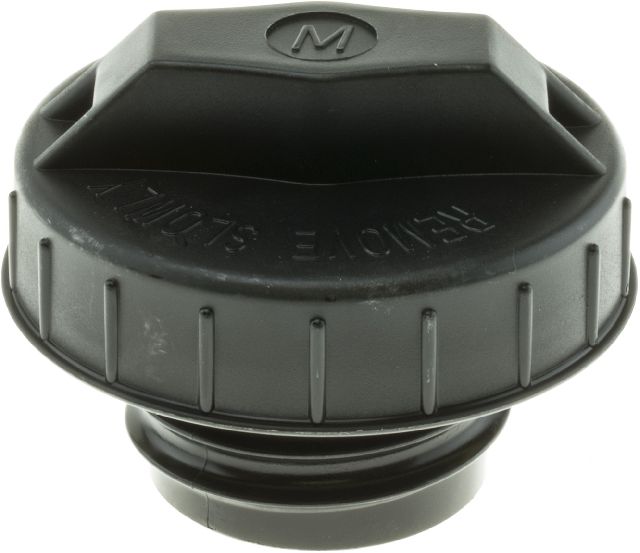
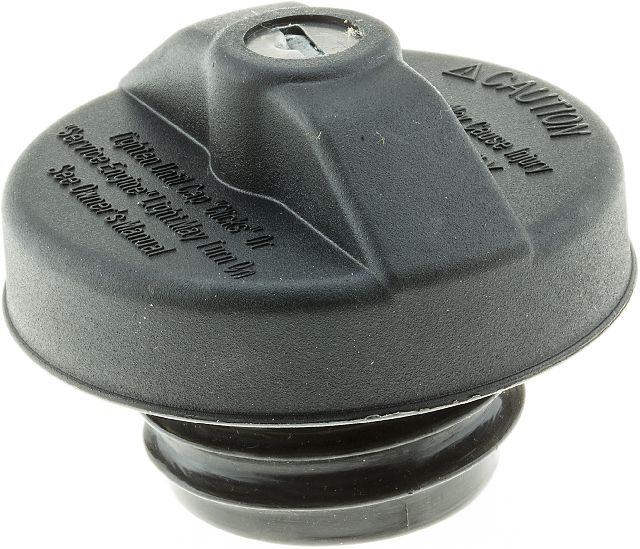
- Loose or Faulty Gas Cap 🔴 High Probability This is the most common cause for a P0455 on any vehicle, including the Porsche 911. The rubber O-ring on the cap can crack, dry out, or become 'gritty' over time, preventing a proper seal. Many owners on Rennlist report fixing the code by simply replacing the cap.
How to confirm: Remove the gas cap and inspect the rubber seal for any cracks, tears, or signs of wear. Ensure it is tightened until it clicks at least once. If the seal looks worn, it's a cheap and easy first replacement. Some owners have temporarily resolved the issue by wiping motor oil on the gasket, confirming the seal was the problem.
Typical fix: Replace the gas cap. Aftermarket brands like Rein are often identical to the OEM part and can be sourced from auto parts stores.
Est. part cost: $20-$40 - Cracked Fuel Pump Flange / Sending Unit Nipple 🟡 Medium Probability The plastic flange on top of the fuel tank, located under the battery, can become brittle with age and develop hairline cracks, leading to a significant vapor leak. This is a well-documented issue on both the 997 and its 987 Boxster/Cayman platform mate.
How to confirm: A smoke test is the definitive way to find this leak. Remove the battery and battery tray to visually inspect the top of the fuel tank. If you smell fuel in this area, the flange is a likely suspect. During a smoke test, smoke will billow from the cracked flange. A detailed Rennlist thread by user 'va997.2' documents this exact failure with photos, showing smoke pouring from the cracks. 🎬 Watch: This video shows the smoke test and flange repair.
Typical fix: The fuel pump flange, O-ring, and lock ring must be replaced. This requires removing the battery and using a special tool (e.g., Schwaben Fuel Pump Lock Ring Tool) to remove the lock ring. The new ring is torqued to 44 ft-lbs.
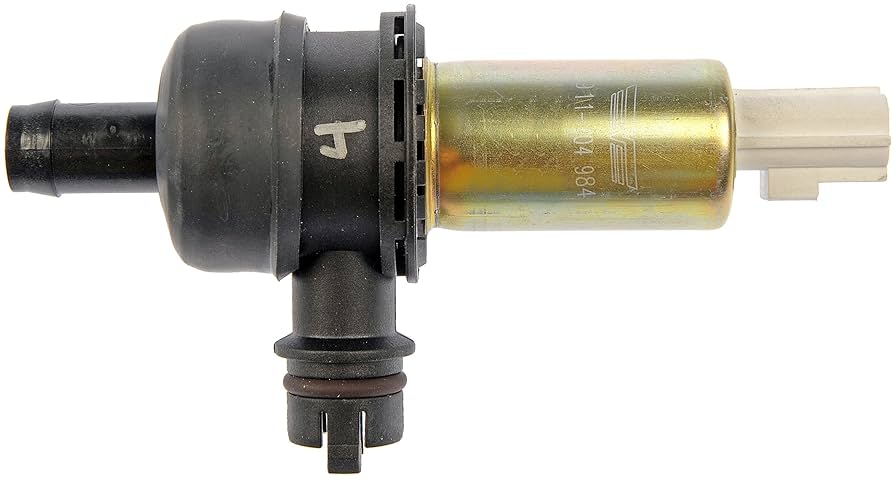
Est. part cost: $50-$100 for the flange and seals - Faulty Fuel Tank Vent Valve (Purge Valve) 🟡 Medium Probability This valve controls the flow of fuel vapors from the charcoal canister to the engine. It can get stuck open or closed, causing various EVAP codes. A stuck-open valve is a common cause of stalling or hard-starting after refueling.
How to confirm: The valve is located in the engine bay. It can be tested by applying voltage (a 9V battery works well) to see if it clicks open and closed. When de-energized, it is normally closed; if you can blow air through it, it is stuck open and needs to be replaced. A Porsche-specific document states the resistance should be 26 ± 4 ohms at 20°C.
Typical fix: Replace the fuel tank vent valve. It is accessible in the engine bay, though it may require some patience to reach the connections. Several YouTube videos and forum posts detail the replacement process. 🎬 See this walkthrough for replacing the purge valve.
Est. part cost: $80-$150 - Cracked or Disconnected EVAP Hoses ⚪ Low Probability Hoses, especially those in the engine bay exposed to heat, can become brittle and crack over time. Connections can also come loose, particularly if other work has been performed in the area.
How to confirm: Visually inspect all accessible EVAP lines in the engine bay and around the charcoal canister in the front fender area. A smoke test is the most effective method to find a small crack or loose connection that isn't obvious.
Typical fix: Replace the cracked hose section or reconnect the loose line.
Est. part cost: $10-$50 for hose material
Rare But Worth Checking
- Faulty Leak Detection Pump (LDP) / DMTL Pump: The Diagnostic Module for Tank Leakage (DMTL) pump is what the car uses to pressurize the system for testing. While failure is less common, a faulty pump can cause a P0455 code. A technician on YouTube diagnosed a P0455 on a 997 Turbo by finding the DMTL pump itself was leaking smoke from its electrical connector. 🎬 Watch: How to diagnose a leaking DMTL pump. He also noted that an alternative Bosch part number (ending in 018 instead of 021) is identical and much cheaper.
- Cracked Charcoal Canister: The charcoal canister itself, located in the front fender area, can develop cracks, leading to a large leak. This is uncommon but possible, especially if the vehicle has sustained any front-end impact. One owner on Reddit reported this was the cause of their P0455 on a Cayman.
- Faulty Change Over Valve: In one documented case on Renntech.org, after a smoke test revealed no leaks, the issue was traced to a faulty 'Change Over valve' (Part # 996.605.123.01). This is a less common failure point but worth considering if all other diagnoses fail.
Diagnosis Steps
- Read the code with an OBD-II scanner to confirm P0455 is present.
- Inspect the gas cap. Remove it, check the seal for cracks or damage, and retighten it until it clicks. Clear the code and drive for a few days to see if it returns. This is the most common fix.
- If the code returns, perform a visual inspection of the EVAP system. Check for any obviously cracked or disconnected hoses in the engine bay and around the charcoal canister (located in the front wheel well area).
- If a fuel smell is present in the front trunk ('frunk'), remove the battery and battery tray to inspect the fuel pump flange on top of the tank for cracks. This is a known 997 weak point.
- Perform a smoke test. This involves injecting smoke into the EVAP system (usually via a port or by disconnecting a line) to see where it escapes. This is the most effective way to find leaks in hoses, the charcoal canister, or the fuel tank flange.
- Test the purge valve. Remove the valve from the engine bay. It is a normally-closed valve. Try to blow through it; if air passes, it is stuck open and must be replaced. You can also test its function by applying 9V from a battery to its electrical contacts to see if it clicks. Check resistance, which should be 26 ± 4 ohms.
- If no leaks are found, the issue may lie with the Leak Detection Pump (DMTL) itself. The pump can be removed and smoke tested directly to check for internal leaks, as shown in at least one repair video.
- If all else fails, consider testing other valves like the change-over valve, which requires more advanced diagnostics, potentially with a Porsche-specific scanner like a PIWIS.
Parts You'll Likely Need

- Fuel Filler Cap
(OEM #99620124103)— This is the most frequent cause. The seal fails over time, preventing the system from holding pressure.
Trusted brands: Porsche (OEM), Rein
OEM price range: $30-$40
Aftermarket price range: $20-$30 - Fuel Tank Vent Valve (Purge Valve)
(OEM #99660520301 (Bosch 0280142308))— A common failure point that can get stuck open, causing a large leak and sometimes stalling after refueling.
Trusted brands: Bosch
OEM price range: $120-$150
Aftermarket price range: $80-$110 - Fuel Pump Sealing Flange
(OEM #99720193300)— A known issue on the 997 platform where the plastic becomes brittle and cracks, causing a large leak and fuel smell.
Trusted brands: Porsche (OEM)
OEM price range: $60-$80
Related Codes That Often Appear With This One
- P0441 — Incorrect Purge Flow. Often appears with P0455 if the purge valve is faulty or there's a blockage in the system.
- P0456 — EVAP System Very Small Leak Detected. If you have both a large and small leak code, it could point to multiple issues or a single, intermittent fault that the DME has interpreted differently on separate tests.
Platform-Specific Known Issues

- The plastic fuel pump sealing flange, located under the battery, is known to degrade and crack over time, causing a P0455 code and a distinct fuel smell in the frunk. This has been documented by multiple owners on enthusiast forums like Rennlist, with one user providing a detailed photo-log of the smoke test and replacement.
Mechanic-Grade Diagnostic Values
- EVAP Canister Purge Valve Resistance — expected: 26 ± 4 ohms at 20°C. Failure: A reading significantly outside this range indicates a faulty valve coil.
- DMTL Pump Current Draw — expected: During the leak test, the current draw should be equal to or higher than the reference measurement taken with a calibrated leak.. Failure: If the current draw during the tank test is lower than the reference measurement, the DME identifies a leak.
Scan Tool Commands That Help
- PIWIS (Porsche Integrated Workshop Information System): Short Test "tank leakage test" — This function manually initiates the DMTL pump sequence to test the EVAP system without having to meet the automatic drive cycle conditions. The ignition must be switched off after the test begins.
- PIWIS: Manual Valve Actuation — A PIWIS scanner can be used to manually command the EVAP canister valve and the purge valve to open or close. This allows a technician to confirm if the valves are responding to electrical signals and to check if they are sealing properly by attempting to blow air through them when commanded closed.
Wiring & Ground Locations
- EVAP Purge Valve Connector — In the engine bay, located between the two intake manifold inlets, behind the alternator on a 997.1. On a 997.2, it's on the left side of the engine.. This connector provides power and the control signal from the DME to the purge valve. A diagnostic procedure involves checking for 0V on pin 2 (trigger wire) with the key on, and battery voltage on pin 1.
- DMTL Pump Connector — The DMTL pump is part of the charcoal canister assembly, located in the front right wheel well area.. A poor connection or corroded pins can cause control circuit faults for the pump (like P2400). In a documented case, the pump itself was leaking from the area around the electrical connector, which would only be found by smoke testing the pump directly.
Real Owner Repair Stories
- Rennlist user 'va997.2' (2009-2012 (997.2) Porsche 911 C2S with 32k miles) — Intermittent P0455 code, faint smell of gas in the frunk.
❌ Tried (didn't work) Replacing the gas cap
✅ What actually fixed it The fuel pump sealing flange (99720193300) under the battery had developed numerous hairline cracks. A smoke test confirmed smoke billowing from the top of the flange. Replacing the flange, O-ring, and lock ring resolved the issue. - RennTech.org user 'rockhouse66' (2008 Porsche 911 Carrera S (997.1)) — P0455 code accompanied by very rough starting immediately after refueling.
❌ Tried (didn't work) Replacing the gas cap, Visual inspection, Smoke test (found no leaks)
✅ What actually fixed it A faulty 'Change Over valve' (Part # 996.605.123.01). A mechanic diagnosed it by manually testing components after the smoke test was clean. - YouTube channel 'Kranken-Wagen European Car Specialist' (2007 Porsche 911 Turbo (997.1)) — P0455 Large Leak code after a different shop replaced the purge valve.
❌ Tried (didn't work) Replacing the purge valve
✅ What actually fixed it The DMTL pump itself was leaking. After a smoke test of the main system passed, the technician removed the DMTL pump and smoke tested it individually, revealing smoke pouring out of the electrical connector housing.
"I Checked Everything" — The Actual Cause
- In a case reported on RennTech.org, a 2008 997.1 had a P0455 and hard starting after fill-ups. A full smoke test revealed no leaks. The final cause was a faulty 'Change Over valve' (PN 996.605.123.01), which was diagnosed through manual component testing. This is missed because a smoke test doesn't typically check the function of electrically-actuated valves under various states.
- A YouTube repair video on a 997 Turbo showed a P0455 where the main system smoke test passed perfectly. The mechanic then isolated and tested the DMTL pump itself, finding it was leaking internally through its own electrical connector. This is missed because the leak is inside a component that is part of the test equipment, not the passive lines.
OEM Part Supersession History
Bosch DMTL Pump ending in ...021→Bosch DMTL Pump ending in ...018— Part update/consolidation.
Heads up: A technician noted that the Bosch part ending in 018 is identical in function and fit to the 021 part specified for the 911 but is often significantly cheaper as it's cataloged for other vehicles.996.605.123.01 (Change Over Valve)→H72031281— Part number update by the manufacturer.
Model Year Variations Within This Range
- 2005-2008 (997.1): Uses the M96/M97 port-injected engine. The purge valve is located in a difficult-to-access position behind the alternator, between the intake runners. These models feature the older PCM 2.1 infotainment system.
- 2009-2012 (997.2): Uses the newer 9A1 Direct Fuel Injection (DFI) engine, which has no IMS bearing. The purge valve and its associated lines are located on the left side of the engine and are considered one assembly for replacement. These models have updated exterior styling (LED lights) and the PCM 3.0 with a touchscreen.
Diagnostic Flowchart
Other Known Issues on This Vehicle
Issues unrelated to this code that are worth knowing about as an owner of this generation:
- IMS Bearing Failure (997.1) 🔴 High — Affects M96/M97 engines in 2005-2008 models. The failure rate is debated (1-8%), but failure is catastrophic to the engine. 2005 models with the smaller single-row bearing are considered higher risk. The issue was eliminated in 997.2 models (2009+). (Ref: No recall, but the subject of a class-action lawsuit. Aftermarket preventative solutions are widely available.)
- Cylinder Bore Scoring (997.1) 🔴 High — A potential issue for all M96/M97 engines (2005-2008), where the cylinder liner is scraped by the piston. Symptoms include a rhythmic ticking noise, increased oil consumption, and a sooty tailpipe on one side (typically the driver's side). More common in cars from colder climates.
- Coolant Pipe Failure (Mezger Engines) 🔴 High — Primarily affects 997.1 Turbo, GT2, and GT3 models with the Mezger engine. The factory-glued coolant pipe fittings can fail, causing a sudden and massive loss of coolant. Proactive 'pinning' or welding of the pipes is a common preventative repair.
- Cracked Ignition Coils 🟡 Low — The plastic bodies of the ignition coils can crack over time due to heat, leading to misfires, especially in damp conditions. This is a common maintenance item, often replaced alongside spark plugs.
- Rear Main Seal (RMS) Leak 🟡 Low — A common oil leak that occurs at the seal between the engine and transmission. It's often a slow drip and not a critical failure. Many owners wait to replace it during a clutch job, as the transmission must be removed for access.
Used vs. New Parts: Buying Guide for This Vehicle
When a used part is the smart pick: For this repair, used parts are generally not recommended due to the nature of the failures. The key culprits (gas cap seal, plastic flange, valve diaphragms) fail due to age, heat, and material degradation. A used part from a donor vehicle of similar age is likely to have the same wear and limited remaining lifespan. The only exception might be a large plastic component like a charcoal canister body if it was damaged by impact and a used one can be visually inspected for cracks.
Donor-vehicle mileage cap: roughly under 15000 miles for the part to have meaningful remaining life.
What to inspect on the donor part:
- For any plastic or rubber part, inspect for brittleness, chalky appearance, or hairline cracks.
- Verify the part is from a low-mileage, recent model year if possible.
- Ask for photos of seals and O-rings; they should be pliable and free of cracks.
OEM-only on this vehicle (don't cheap out):
- Fuel Pump Sealing Flange: This is a known weak point due to material degradation. Using a new OEM part (99720193300) is critical to ensure a long-lasting repair.
Aftermarket brands forum-validated for this vehicle:
- Bosch: Bosch is the original equipment manufacturer for many Porsche electronics, including the purge valve (0280142308) and DMTL pump. Buying the Bosch-branded part is often identical to the Porsche-branded part at a lower cost.
- Rein: The Rein aftermarket gas cap is reported by forum users to be identical to the OEM Porsche part.
Brands owners have reported issues with on this vehicle:
- Unbranded / no-name electronic valves or pumps from online marketplaces. The EVAP system is sensitive, and an out-of-spec valve or pump can fail to seal correctly or have the wrong electrical characteristics, preventing the code from being resolved.
Real Owner Stories
Aggregated from forums and TSBs cited above. Mileages and costs reflect what owners reported in those sources.
2009-2012 Porsche 911 (997.2)
Symptoms: Large EVAP leak code P0455 and a fuel smell in the front trunk area.
What fixed it: Replacement of the fuel pump flange, O-ring, and lock ring after a smoke test showed smoke pouring from cracks in the plastic flange located under the battery.
Source hint: Rennlist.com: '997.2 Fun with P0455 EVAP Issue'
2009-2012 Porsche 911 (997.2)
Symptoms: Check Engine Light with code P0455.
What fixed it: Replacing the gas cap with a new one solved the issue for multiple users.
Source hint: Rennlist.com: '997.2 EVAP code P0455'
2005-2008 Porsche 911 (997.1)
Symptoms: Error code P0455 and trouble starting the vehicle after filling up with fuel.
What fixed it: Replacement of the Change Over valve after a smoke test returned negative results.
Source hint: Renntech.org: 'Error Code P0455, and trouble starting after filling up'
2007 Porsche 911 (997.1)
Symptoms: Large EVAP leak P0455.
What fixed it: Replacement of the Diagnostic Module for Tank Leakage (DMTL) pump, which was found to be leaking internally through its electrical connector.
Source hint: YouTube.com: '2007 Porsche 997 Evap large leak P0455 FIX' by Kranken-Wagen European Specialist
2005-2012 Porsche 911 (997)
Symptoms: P0455 code and engine stalling specifically after refueling.
What fixed it: Replacement of the fuel tank vent valve (purge valve) located in the engine bay.
Source hint: YouTube.com: 'Porsche 997 p0455 / stalling after fuel up fix' by Matt Winters Garage
Related OBD-II Codes
Frequently Asked Questions
I smell gasoline in the front trunk (frunk) of my 997.2. Is this related to the P0455 code?
My 911 stalls immediately after I fill it up with gas. What is the likely cause?
Is there a specific resistance I should look for when testing the purge valve on my Porsche?
Can I use an aftermarket gas cap to fix the P0455 code on my 2005-2012 911?
How do I confirm if the fuel pump flange is cracked without replacing it first?
Does the Porsche Boxster or Cayman share this EVAP issue with the 911?
Helpful Videos
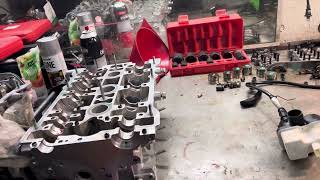

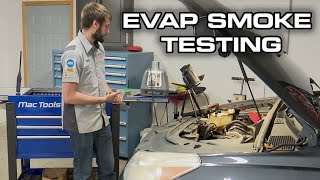
Used OEM Parts in Stock
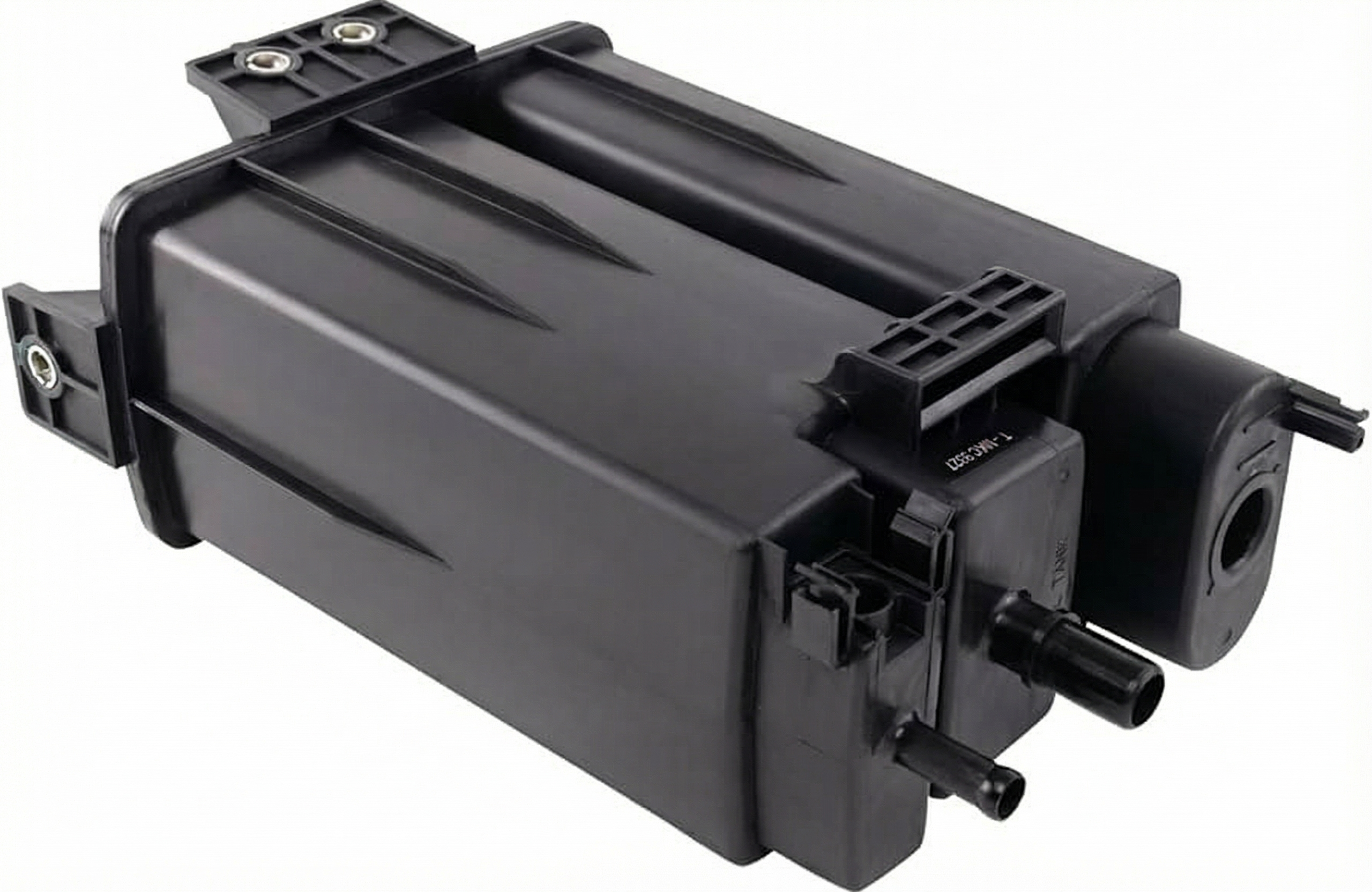


New Aftermarket Parts Available


The information in this article is provided for general reference and educational purposes only. Vehicle specifications, procedures, and part compatibility can vary by production date, trim level, and region. Always consult your vehicle's factory service manual and verify part numbers before purchasing or performing repairs. Safety-critical components such as airbags, seat belts, and braking systems should be installed by a qualified professional.
- Porsche 911:
- 🎬 Helpful Videos
- 🛍️ Shop This Part
- What's Unique About the 2005-2012 Porsche 911
- Symptoms You May Notice
- Most Likely Causes
- Rare But Worth Checking
- Diagnosis Steps
- Parts You'll Likely Need
- Related Codes That Often Appear With This One
- Platform-Specific Known Issues
- Mechanic-Grade Diagnostic Values
- Scan Tool Commands That Help
- Wiring & Ground Locations
- Real Owner Repair Stories
- "I Checked Everything" — The Actual Cause
- OEM Part Supersession History
- Model Year Variations Within This Range
- Diagnostic Flowchart
- Other Known Issues on This Vehicle
- Used vs. New Parts: Buying Guide for This Vehicle
- Real Owner Stories
- 2009-2012 Porsche 911 (997.2)
- 2009-2012 Porsche 911 (997.2)
- 2005-2008 Porsche 911 (997.1)
- 2007 Porsche 911 (997.1)
- 2005-2012 Porsche 911 (997)
- Related OBD-II Codes
- Frequently Asked Questions
- 🎟️ Get 5% Off