

P0455 on 2003-2008 Pontiac Vibe: EVAP Gross Leak Causes and Fixes
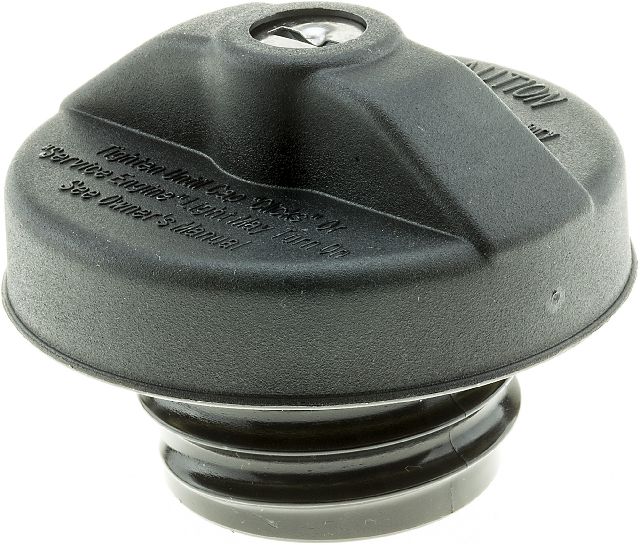
For a 2003-2008 Pontiac Vibe, P0455 is most often caused by a loose or faulty gas cap. If the cap is secure, the next most likely causes are a cracked EVAP hose near the canister or a failed vent or purge valve. A new gas cap is under $30. Since the Vibe is a rebadged Toyota Matrix, Toyota parts are a direct fit.
- P0455 on your Vibe means a large leak in the emissions system, but it won't stop you from driving the car.
- Always check your gas cap first. Make sure it's tight and the seal isn't cracked. This fixes the problem more than 30% of the time.
- If the gas cap isn't the issue, visually inspect the plastic and rubber EVAP hoses near the charcoal canister at the rear of the car; they are known to crack.
- A professional smoke test is the fastest and most accurate way to find the source of the leak if it's not obvious.
- The most commonly replaced parts after the gas cap are the vent solenoid (under the car) and the purge solenoid (in the engine bay).
What's Unique About the 2003-2008 Pontiac Vibe
The 2003-2008 Pontiac Vibe is mechanically identical to the Toyota Matrix. This means its EVAP system components are Toyota-designed, which is relevant when sourcing parts. Owners report that the plastic and rubber EVAP lines, especially the corrugated ones near the rear charcoal canister, can become brittle and crack, leading to this specific code. Some owners have also discovered micro-cracks in the fuel filler neck, often due to rust, which can be very difficult to spot without a smoke test but will cause a P0455 code. A key difference exists within this generation: 2005-2008 models feature a more complex EVAP system with an integrated leak detection pump and fuel tank pressure sensor located on the charcoal canister assembly itself.
Symptoms You May Notice
- Check Engine Light is on
- A faint to strong smell of gasoline, especially around the rear of the vehicle or after refueling.
- Slightly reduced fuel economy.
- Your vehicle will automatically fail a state emissions/smog test.
- Replacing the charcoal canister when only a hose or valve is bad. The canister itself is often durable unless physically damaged or saturated with fuel from overfilling.
- Replacing the fuel tank pressure sensor. While possible, sensor failure is much less common than a physical leak in a hose, cap, or valve for a P0455 code.
- Using a cheap, non-OEM gas cap which fails to seal properly, leading the owner to search for other, more complex leak sources.
Most Likely Causes
- Gas Cap is Loose, Damaged, or Incorrect 🔴 High Probability This is the most common cause for a P0455 code on any vehicle, including the Vibe/Matrix, due to user error (not tightening until it clicks) or a worn-out rubber seal on an old cap.
How to confirm: Ensure the gas cap clicks at least once when tightened. Inspect the rubber O-ring or seal on the cap for cracks, tearing, or signs of dry rot. An OEM cap is strongly recommended as some aftermarket caps do not seal properly.
Typical fix: Tighten the cap. If it is damaged or the seal is worn, replace it with a new OEM or high-quality aftermarket cap. After replacement, the code may need to be cleared with a scanner or will clear itself after several drive cycles.
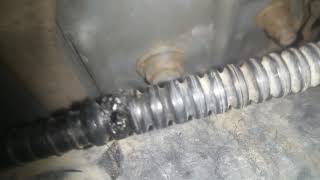
Est. part cost: $15-$40 - Cracked or Disconnected EVAP Hose 🟡 Medium Probability The plastic and rubber hoses, particularly in the rear near the charcoal canister, become brittle with age and exposure to the elements. A video for a 2007 Vibe shows a cracked corrugated hose near the canister as the specific cause of a P0455, 🎬 Watch: How to find and repair a cracked corrugated hose. which was leaking fuel vapor and liquid gasoline.
How to confirm: Visually inspect all accessible EVAP lines from the engine bay to the charcoal canister at the rear of the car. Pay close attention to the corrugated plastic lines near the canister for splits or cracks. A smoke test is the definitive method to find a hard-to-see crack.
Typical fix: Replace the cracked section of hose. In the video example, the owner spliced in a section of gasoline-rated rubber hose with clamps as a durable temporary fix.
Est. part cost: $5-$50 - Failed EVAP Canister Vent Valve/Solenoid 🟡 Medium Probability Located near the charcoal canister under the car, this valve is exposed to road debris, salt, and moisture, causing it to corrode and fail by getting stuck open. This prevents the system from sealing for its pressure test. This component is often integrated into the charcoal canister assembly on this platform.
How to confirm: The valve can be tested by applying 12V to its terminals to see if it clicks and operates. When unpowered, it should be open. A scan tool can also command the valve to close for testing purposes. If it's stuck, it will need replacement.
Typical fix: Replace the canister vent valve or the entire charcoal canister assembly it is part of. It is located at the rear of the vehicle, near the fuel tank.
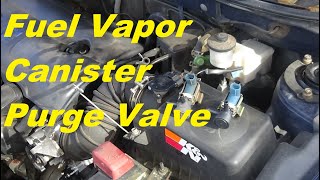
Est. part cost: $40-$100 for the valve, or $450+ for the full canister assembly. - Failed EVAP Purge Valve/Solenoid ⚪ Low Probability This valve is located in the engine bay and is less prone to failure from the elements, but can still get stuck open from age or debris, creating a large leak path directly to the engine intake.
How to confirm: Disconnect the valve and try to blow through it. When unpowered, it should be closed and not allow air to pass. You can also test it by applying vacuum to the engine side port; it should hold vacuum when unpowered. A scan tool can command it to open to verify function.
Typical fix: Replace the purge valve. It is an easy-to-access part in the engine compartment, typically mounted on the intake manifold. 🎬 See this walkthrough for replacing the engine bay purge valve.
Est. part cost: $30-$80
Rare But Worth Checking
- Cracked Fuel Filler Neck: A GenVibe forum user reported that a dealer found a micro-crack in the fuel tank filler pipe, which caused the P0455 code. This is often due to rust forming on the metal pipe, creating pinhole leaks that are very difficult to spot without a smoke test.
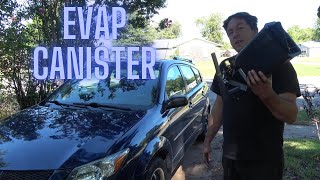
- Cracked Charcoal Canister: Physical damage from road debris or bottoming out the vehicle can crack the plastic housing of the charcoal canister itself, creating a large leak. Inspect the canister for any visible signs of impact or cracks. Overfilling the fuel tank can also saturate the canister with liquid fuel, causing it to fail.
- Damaged Wiring Harness: A user on the GenVibe forums discovered their EVAP codes were caused by a wiring harness leading to the charcoal canister that had been severed, likely by road debris. The fix involved soldering the wires back together.
Diagnosis Steps
- Check the gas cap. Ensure it is tight and clicks several times. Remove it and inspect the seal for cracks or damage. If in doubt, it's the cheapest and most common part to replace first.
- Clear the code with an OBD-II scanner and drive for a few days to see if it returns. Sometimes a loose cap is the only issue.
- If the code returns, perform a thorough visual inspection of all EVAP hoses under the hood and especially under the rear of the car near the charcoal canister. Look for obvious cracks, splits, or disconnected lines.
- Inspect the charcoal canister itself for any signs of physical damage or cracks. Also check the wiring harness going to the canister for damage.
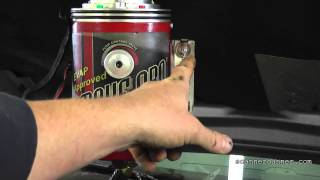
- If no visual faults are found, a smoke test is the most effective next step. A smoke machine forces low-pressure smoke into the EVAP system via the service port. The leak will be visible where the smoke escapes. This is the definitive way to find leaks in hoses, the filler neck, the canister, or valve seals. 🎬 Watch: How to find a hidden leak using a smoke tester.
- If no visual faults are found, test the purge and vent solenoids. The purge valve (engine bay) should be closed with no power. The vent valve (rear, by canister) should be open with no power. Test their function using a multimeter and a 12V power source or a capable scan tool that can command them to change state.
Parts You'll Likely Need
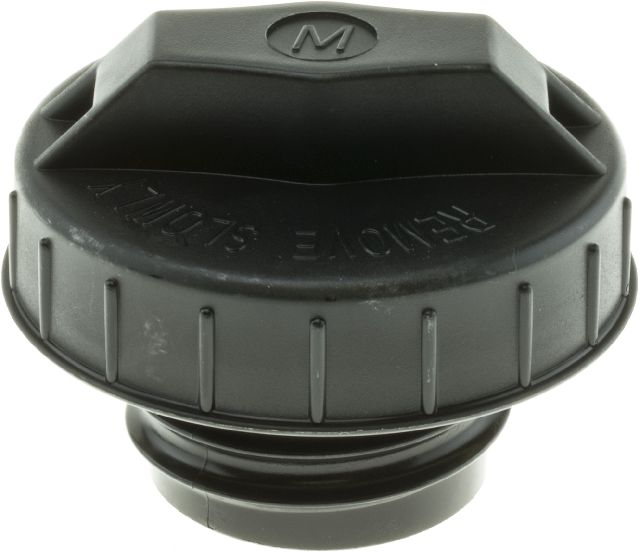
- Gas Cap
(OEM #77300-47010 (Toyota P/N), GM 88974427 (2006-10))— This is the most frequent cause of P0455. The seal wears out over time or the cap is not tightened properly. Using the OEM Toyota part is highly recommended.
Trusted brands: Toyota OE, GM Genuine, Stant, Gates
OEM price range: $25-$40
Aftermarket price range: $15-$30 - EVAP Charcoal Canister Assembly
(OEM #Toyota 77740-02130 or GM 88973481 (FWD Models))— This assembly often contains the vent valve, which is a common failure point. The plastic canister body or attached hoses can also crack with age and exposure.
Trusted brands: Toyota OE, ACDelco, Dorman
OEM price range: $450-$550
Aftermarket price range: $200-$350 - EVAP Canister Purge Valve / Solenoid
(OEM #90910-12271 (Toyota P/N), ACDelco 214-2317)— Located in the engine bay, this valve can get stuck open, allowing un-metered vapor flow and preventing the system from sealing. It's a common failure point and easy to replace.
Trusted brands: Denso (OEM for Toyota), Standard Motor Products (SMP), Dorman
OEM price range: $60-$90
Aftermarket price range: $30-$70
Related Codes That Often Appear With This One
- P0441 — P0441 (Incorrect Purge Flow) often appears with P0455. The large leak from P0455 can disrupt the vacuum flow that the purge system relies on, triggering the P0441 code. A video specific to a 2007 Vibe showed both codes were caused by a single cracked hose.
- P0442 — This code is for a small EVAP leak. While less common to see with a large leak code, it could appear if there are multiple leak points or if a failing component is intermittently creating different-sized leaks.
- P0446 — This code relates to a fault in the EVAP vent control circuit. It can appear alongside P0455 if the vent valve is stuck open or if there's an electrical issue with the valve, which is a common cause for the large leak itself.
Technical Service Bulletins (TSBs) & Recalls
- S-SB-0030-09 Rev1 (Toyota): While for the 2005-2010 Scion tC, this TSB addresses P0455 combined with P0441/P0456. It provides a diagnostic flow using Toyota's Techstream software to run an automatic EVAP system check and points toward inspecting the fuel cap and filler pipe sealing area as a primary step. This logic is applicable to the Vibe.
- 21-NA-124: A general GM bulletin for P0442 and P0455, while not specific to the Vibe, provides a logical diagnostic flow, emphasizing checking connections and testing vent/purge valves.
Platform-Specific Known Issues
- Owner Experience: A 2007 Vibe owner with P0455 and P0441 found a split in a corrugated EVAP hose directly above the rear axle, which was leaking both vapor and liquid fuel. The owner spliced in a new section of rubber fuel hose as a repair.
Mechanic-Grade Diagnostic Values
- EVAP Canister Purge Solenoid Resistance — expected: 30 - 36 Ohms at ~60°F (15.5°C).. Failure: An open circuit (infinite resistance) or a reading significantly outside the expected range indicates a failed coil.
- EVAP Canister Vent Valve Solenoid Resistance — expected: 20 - 30 Ohms.. Failure: A reading outside this range suggests the solenoid winding is damaged.
- Fuel Tank Pressure (FTP) Sensor Voltage (2005-2008 models) — expected: 5V reference on Pin 3 of the 10-pin canister connector with key on, engine off.. Failure: If the 5V reference is present but the sensor signal is erratic or incorrect, the sensor (part of the leak detection pump) may be bad. If the 5V reference is missing, there is a wiring or ECM issue.
- EVAP Leak Detection Pump Harness Ground (2005-2008 models) — expected: Continuity (less than 1 Ohm) between Pin 2 of the 10-pin canister connector and chassis ground.. Failure: No continuity indicates a bad ground wire, which will prevent the pump and sensor from operating correctly.
Hidden / Shadow Codes Worth Checking
- Mode 6 Data: While not a specific 'shadow code,' Toyota's diagnostic logic provides detailed test results through Mode 6 on a capable scanner. For the EVAP system, this includes Test IDs ($80+) that show pressure values from the last self-test. A large discrepancy between the starting and ending pressure values can confirm a leak even before the monitor completes its full cycle and sets a code. (see via A professional scan tool like Toyota Techstream or a high-end OBD-II scanner with Mode 6 capability.)
Scan Tool Commands That Help
- Toyota Techstream (or equivalent professional scanner): Evaporative System Check (Automatic Mode) — This is a 'cold soak bypass' test used to force the EVAP monitor to run without waiting the typical 5+ hours. It automatically seals the system, activates the vent valve and vacuum pump, and records pressure changes to confirm a leak or verify a repair in about 10-15 minutes.
- Toyota Techstream (or equivalent professional scanner): Active Test: Control the Purge VSV — This command allows a technician to manually open and close the purge valve in the engine bay. This is used to check if the valve is physically sticking. With the valve commanded closed, a technician can apply vacuum to see if it holds, confirming it's not stuck open.
- Toyota Techstream (or equivalent professional scanner): Active Test: Control the Vent Valve / CCV — This command manually closes the normally-open vent valve. This is essential for performing a smoke test, as it seals the system. If smoke escapes from the vent filter with the valve commanded closed, the valve is faulty.
Wiring & Ground Locations
- EVAP Canister Connector (2005-2008) — Above the rear axle, plugged into the charcoal canister/leak detection pump assembly. It is a 10-pin rectangular connector.. This single connector provides power and ground for the leak detection pump, vent valve, and the fuel tank pressure sensor. Corrosion or damage here can cause P0455 and other related codes.
- G104 / G105 — G104 is on the left side of the cylinder head; G105 is on the rear of the cylinder head.. These are primary engine grounds. A poor connection at these points can cause erratic behavior in various engine sensors and solenoids, including the EVAP purge valve.
- Harness Chafe Point — In the channel under the spare tire, near the driver's side rear strut tower.. A real-world owner found a severed wiring harness in this location leading to the rear charcoal canister. This is a hidden failure point that would not be found by a smoke test and requires removing interior trim to inspect.
- Purge Valve Location — In the engine bay, on the left side, often mounted to the air cleaner assembly or intake manifold.. This is the physical location of the purge valve/solenoid, which is a common failure point that can get stuck open.
Real Owner Repair Stories
- GenVibe forums user 'adamh' (2005 Pontiac Vibe (Base, manual FWD)) — Check Engine Light with EVAP code P0453 (Fuel Tank Pressure Sensor High Input), but diagnostic path is relevant to the system.
❌ Tried (didn't work) Testing the purge valve in the engine bay (clicked with 9V battery)., Verifying 12V at the purge valve connector., Testing the leak detection pump (ran with 9V battery)., Checking voltages at the canister connector.
✅ What actually fixed it Found a damaged wiring harness located under the spare tire, by the left rear strut. The wires were severed and had to be soldered back together. - YouTube channel 'Blaine Nojiri' (Unknown year car, but common P0455 scenario) — Failed smog test due to P0455 (EVAP Gross Leak).
❌ Tried (didn't work) Initial diagnosis pointed to a system leak.
✅ What actually fixed it The EVAP purge valve was getting stuck open and not actuating properly. Replacing the purge valve, which was demonstrated to click properly when tested, resolved the code and allowed the car to pass the smog test.
Model Year Variations Within This Range
- 2005-2008: The EVAP system was updated for the 2005 model year refresh. These later models use a charcoal canister assembly that includes an integrated leak detection pump and fuel tank pressure sensor. This is different from the 2003-2004 system. Diagnosis for 2005+ models must account for testing the pump and its specific 10-pin connector.
- 2003-2004: These early models use a more traditional EVAP setup without the integrated leak detection pump found on 2005+ models. They also use a mechanical throttle cable, whereas 2005+ models are drive-by-wire.
Diagnostic Flowchart
Real Owner Stories
Aggregated from forums and TSBs cited above. Mileages and costs reflect what owners reported in those sources.
2007 Pontiac Vibe
Symptoms: Check engine light (codes P0455 and P0441), strong fuel smell near the rear of the vehicle, slight drop in gas mileage, visible fuel leak/residue on a line near the tank.
What fixed it: Temporarily fixed by splicing the cut fuel line with a gasoline-rated hose from an auto parts store.
Source hint: YouTube (WrenchTheory501) - 'Evap emissions leak P0455 P0441 check engine fixed 2007 Pontiac vibe'
Pontiac Vibe
Symptoms: Check engine light with codes P0455 and P0441.
What fixed it: The issue was traced by a dealer to a micro-crack on the fuel tank filler pipe.
Source hint: GenVibe.com - 'CEL CODES PO455 & PO441 My Bro needs help with his vibe'
2005 Pontiac Vibe
Symptoms: EVAP codes present.
What fixed it: Discovered the cause was a completely severed wiring harness leading to the charcoal canister assembly and repaired the wiring.
Source hint: GenVibe.com - 'EVAP issues solved'
Related OBD-II Codes
Frequently Asked Questions
Is the Pontiac Vibe prone to any specific EVAP hose failures that cause a P0455?
Does Toyota TSB S-SB-0030-09 Rev1 apply to my Pontiac Vibe?
I have a P0455 code on my 2005 Vibe, but the hoses look fine. What else should I check near the rear of the car?
Can a bad gas cap really cause a P0455 on my Vibe, and should I buy an aftermarket replacement?
Are the EVAP components on my Vibe the same as the Toyota Matrix?
Could a cracked fuel filler pipe cause a P0455 on this platform?
Helpful Videos
Used OEM Parts in Stock

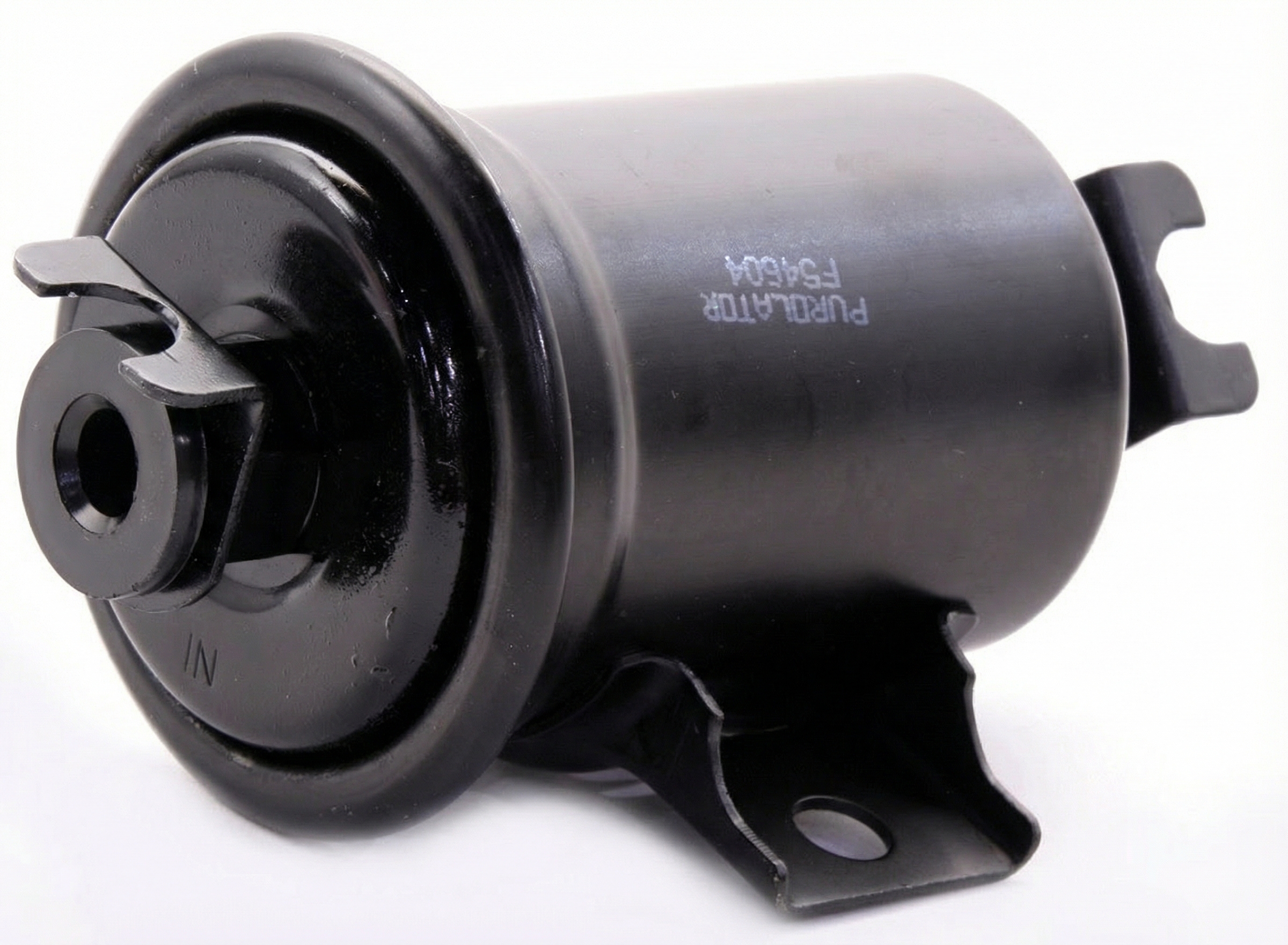
New Aftermarket Parts Available


The information in this article is provided for general reference and educational purposes only. Vehicle specifications, procedures, and part compatibility can vary by production date, trim level, and region. Always consult your vehicle's factory service manual and verify part numbers before purchasing or performing repairs. Safety-critical components such as airbags, seat belts, and braking systems should be installed by a qualified professional.
- Pontiac Vibe:
- 🎬 Helpful Videos
- 🛍️ Shop This Part
- What's Unique About the 2003-2008 Pontiac Vibe
- Symptoms You May Notice
- Most Likely Causes
- Rare But Worth Checking
- Diagnosis Steps
- Parts You'll Likely Need
- Related Codes That Often Appear With This One
- Technical Service Bulletins (TSBs) & Recalls
- Platform-Specific Known Issues
- Mechanic-Grade Diagnostic Values
- Hidden / Shadow Codes Worth Checking
- Scan Tool Commands That Help
- Wiring & Ground Locations
- Real Owner Repair Stories
- Model Year Variations Within This Range
- Diagnostic Flowchart
- Real Owner Stories
- 2007 Pontiac Vibe
- Pontiac Vibe
- 2005 Pontiac Vibe
- Related OBD-II Codes
- Frequently Asked Questions
- 🎟️ Get 5% Off