

P0455 on 2003-2009 Mercedes-Benz E-Class: EVAP Large Leak Causes and Fixes
For a 2003-2009 E-Class, code P0455 is most often caused by a loose gas cap or a failed charcoal canister shut-off valve located in the rear passenger-side wheel well. Start by checking the gas cap; if that doesn't fix it, the shut-off valve is the next likely culprit, costing around $100-$160 for the part.
- Don't panic at the red 'Check Gas Cap' warning; start by checking that your gas cap is tight.
- If a new gas cap doesn't fix the P0455 code, the next most likely culprit on a W211 E-Class is the charcoal canister shut-off valve in the rear passenger wheel well.
- A smoke test is the most reliable way to find the leak if it's not the gas cap or a visibly obvious component.
- This code will not leave you stranded, but it will cause an automatic failure on an emissions test.
What's Unique About the 2003-2009 Mercedes-Benz E-Class
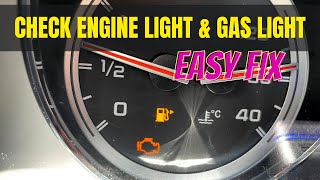
On the W211 generation E-Class, a P0455 code is frequently accompanied by a prominent red "Check Gas Cap" warning message and a flashing fuel pump icon in the instrument cluster, which can be alarming. While a loose gas cap is a common cause on any car, the W211 is particularly known for failure of the charcoal canister shut-off valve, located in the rear passenger wheel well. This specific valve is a frequent point of failure and a top suspect after the gas cap has been ruled out.
Symptoms You May Notice
- Check Engine Light is on
- Red "Check Gas Cap" warning message in the instrument cluster.
- Flashing fuel pump icon on the dashboard.
- A noticeable smell of fuel, especially around the rear of the car or in the engine bay.
- Slight decrease in fuel economy (rare).
- Replacing the fuel tank pressure sensor. While it's part of the system, it's not a common failure point for this code on the W211 and is often replaced unnecessarily. Some owners have replaced it with no resolution.
Most Likely Causes
- Loose or Faulty Gas Cap 🔴 High Probability This is the most common cause for a P0455 code on any vehicle. The rubber seal on the cap can degrade over time, preventing a proper seal.
How to confirm: Ensure the gas cap is tightened until it clicks at least once. Inspect the rubber O-ring on the cap for cracks, stiffness, or damage. If the seal is compromised, the cap needs replacement.
Typical fix: Tighten or replace the gas cap. After replacement, the code may need to be cleared with a scan tool, or it may clear on its own after several drive cycles.
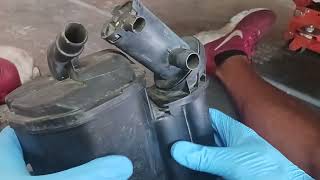
Est. part cost: $20-$50 - Faulty Charcoal Canister Shut-Off Valve 🔴 High Probability This valve is a very common failure point on the W211 platform. It can get stuck open or its seal can fail, creating a large leak. Its plastic construction near the hot exhaust makes it prone to failure.
How to confirm: The valve is located on the charcoal canister, behind the passenger-side rear wheel well liner. It can be tested with a capable scan tool to see if it actuates. A smoke test is the most effective way to confirm it's leaking; smoke will be seen exiting the valve body.
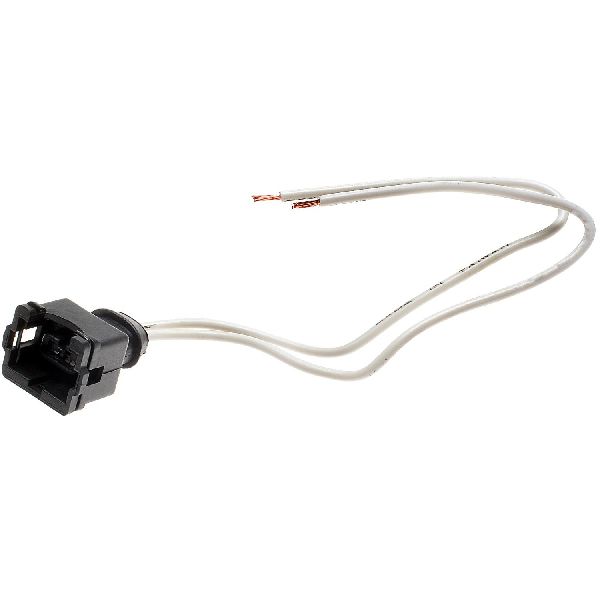
Typical fix: Replace the shut-off valve. The part twists to lock into the canister. 🎬 See this walkthrough for removing the canister and vent solenoid. Some replacement valves may require a new wiring harness adapter (pigtail), part number A2114400134.
Est. part cost: $100-$165 - Faulty EVAP Purge Valve 🟡 Medium Probability The purge valve, located in the engine bay, can become stuck open, creating a constant vacuum leak into the intake and flagging a system leak.
How to confirm: The valve is normally closed. With the engine off, remove the valve and try to blow through it. If air passes through, it is stuck open and faulty. You can also listen for a clicking sound when it's actuated by a scan tool.
Typical fix: Replace the purge valve. It is typically mounted on the driver's side of the engine bay and connected with two hoses and an electrical connector. 🎬 Watch: How to replace the purge valve to clear the light.
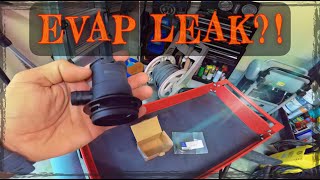
Est. part cost: $50-$90 - Cracked EVAP Hoses or Lines ⚪ Low Probability Over time, rubber and plastic hoses can become brittle and crack. A small plastic damper canister (Part #211-470-01-16) near the purge valve has been reported by owners to have its nipples break off, creating a large leak.
How to confirm: A thorough visual inspection of all accessible EVAP lines is the first step. A smoke test is the definitive method to locate a cracked hose that isn't obvious visually.
Typical fix: Replace the specific section of cracked hose or the failed component. This can range from simple hose replacement to replacing a specific damper or connector.
Rare But Worth Checking
- Cracked Fuel Filler Neck: While not as common as valve failures, the metal or plastic neck where you insert the fuel nozzle can develop cracks, especially at the seam where it meets the tank, causing a large leak. This is best diagnosed with a smoke test.
- Leaking Fuel Tank Sending Unit Seals: The fuel pump and sending units are accessed from under the rear seat. If the large O-ring seals for these units are not seated correctly or have failed, fuel vapor will leak from the top of the tank. This was subject to a 15-year extended warranty from Mercedes-Benz and often causes a strong fuel smell inside the cabin.
- Cracked Charcoal Canister: The canister body itself can crack due to physical damage or age from heat cycles, as it's located near the exhaust. If the shut-off valve has been replaced and a smoke test shows a leak from the canister body, the canister itself is the source.
Diagnosis Steps
- Check the gas cap. Remove it, inspect the seal for cracks or damage, and reinstall it, ensuring it clicks several times. Clear the code and see if it returns.
- If the code returns, purchase a new OEM gas cap. This is an inexpensive and very common fix.
- If a new gas cap does not resolve the issue, perform a visual inspection of the EVAP purge valve and its associated hoses in the engine bay. Specifically check the small plastic damper canister (Part #211-470-01-16) for broken nipples.
- The next step is to inspect the charcoal canister shut-off valve. Safely raise the vehicle and remove the rear passenger-side wheel and fender liner to access the charcoal canister and valve. Check for visible damage.
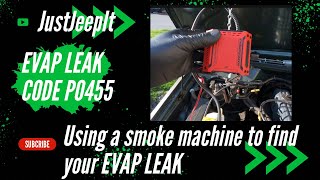
- If no visual faults are found, a smoke test is the most effective diagnostic procedure. This involves introducing low-pressure smoke into the EVAP system (often through the purge valve line) and looking for where it escapes. 🎬 Watch: How to use a smoke tester to find the leak. This will pinpoint the exact location of the leak, whether it's a hose, valve, filler neck, or the tank itself.
Parts You'll Likely Need
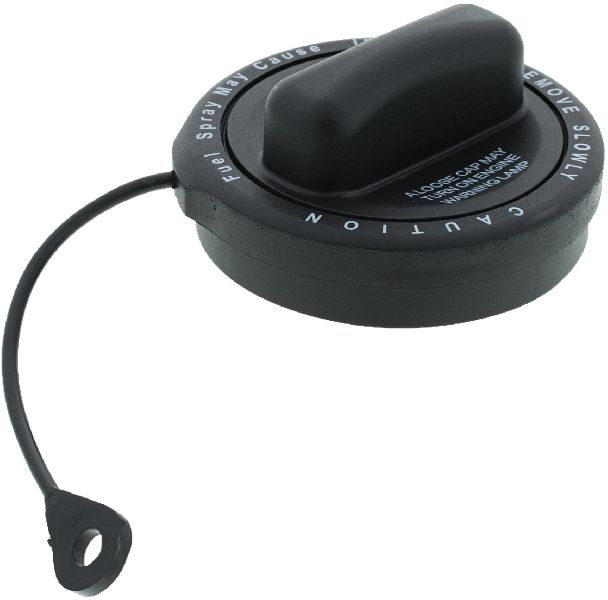
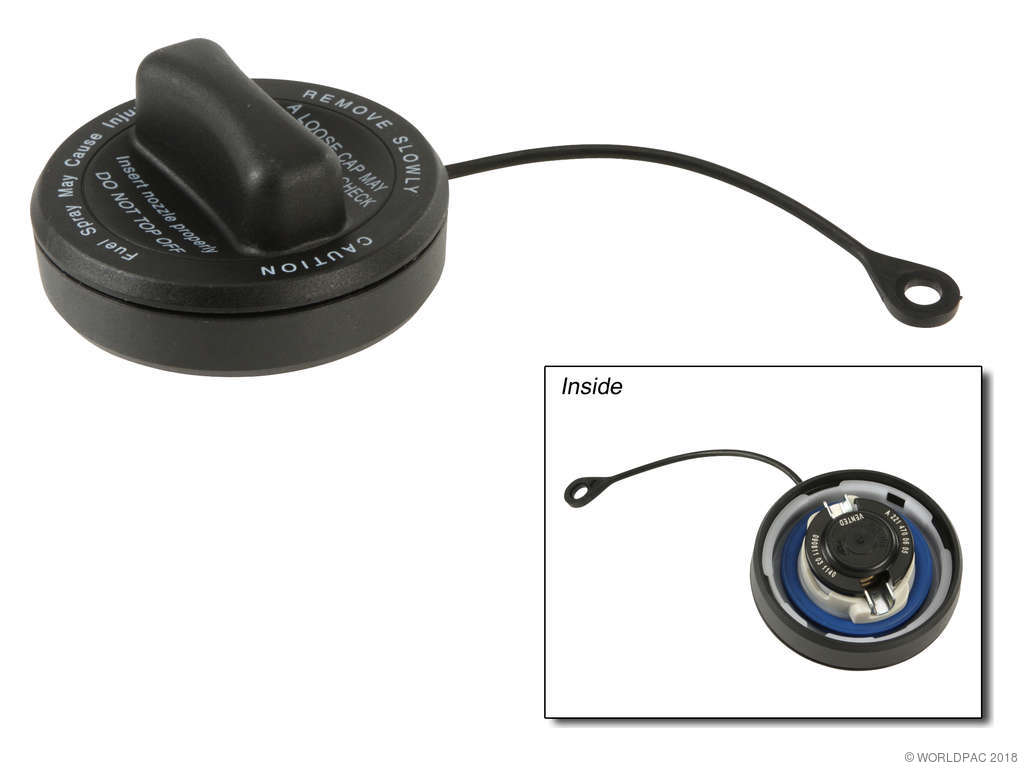
- Gas Cap
(OEM #2214700605)— The most frequent and simplest cause of a P0455 code is a worn-out gas cap seal.
Trusted brands: Genuine Mercedes-Benz
OEM price range: $30-$50
Aftermarket price range: $15-$30 - Vapor Canister Shut-Off Valve
(OEM #0004707193)— This is a very common failure point on the W211 platform, often getting stuck open.
Trusted brands: Genuine Mercedes-Benz, Bosch, URO Parts
OEM price range: $140-$165
Aftermarket price range: $80-$120 - EVAP Purge Valve
(OEM #0004708893)— Located in the engine bay, this valve can stick open, causing a leak code. It's less common than the shut-off valve but still a regular culprit. This part number supersedes several previous versions including 0004705593, 0004703593, and 0004701593.
Trusted brands: Genuine Mercedes-Benz, Bosch
OEM price range: $70-$90
Aftermarket price range: $40-$60 - Shut-Off Valve Wiring Harness Adapter
(OEM #2114400134)— Often required when replacing the original shut-off valve with an updated part, as the electrical connector may be different.
Trusted brands: Genuine Mercedes-Benz
OEM price range: $20-$30
Aftermarket price range: $15-$25
Related Codes That Often Appear With This One
- P0442 — This code indicates a small EVAP leak. You might see it alongside P0455 if there are multiple leaks of different sizes, or if a large leak is intermittent.
- P0456 — This code indicates a very small EVAP leak. Similar to P0442, it can appear if the system has multiple leak points.
Platform-Specific Known Issues
- source — A user on MBWorld.org forums described a frustrating experience where a shop replaced the shut-off valve, but the P0455 code returned almost immediately. A subsequent smoke test revealed no leaks, highlighting how the issue can sometimes be intermittent or difficult to diagnose even for professionals. The community suggested re-checking all hose clamps and considering the fuel tank pressure sensor, though the latter is a less common cause.
- Owner Experience: Broken Damper Canister Nipple: An owner on MBWorld.org traced their P0455 code to a small, plastic 'cage canister damper' (Part #211-470-01-16) located near the purge valve in the engine bay. A nipple on the canister had broken off, creating the large leak. This is a specific and easily overlooked failure point unique to this platform.
Mechanic-Grade Diagnostic Values
- Fuel Tank Pressure Sensor (B4/3) Voltage Supply — expected: 4.7 - 5.3 Volts. Failure: Voltage outside this range indicates a wiring or ME-SFI control module issue.
- EVAP Purge Valve (Y58/1) Resistance — expected: Typically 15 - 30 Ohms, but varies by specific part. A very low reading (near 0 Ohms) indicates a short, while a very high reading indicates an open circuit.. Failure: A reading far outside the expected range for the specific part number installed.
- Charcoal Canister Shut-Off Valve (Y58/4) Resistance — expected: A healthy valve should have a specific resistance. One user measured a failed valve at only 1 Ohm, indicating a near-short circuit which drew excessive current.. Failure: A resistance reading of only a few ohms is indicative of a failed coil in the solenoid.
Hidden / Shadow Codes Worth Checking
- Y58/4 (Activated charcoal canister shut-off valve) mechanical defect: This is a Mercedes-specific fault description from the STAR/XENTRY diagnostic system that points directly to a problem with the shut-off valve, rather than a generic leak code. (see via Mercedes-Benz STAR/XENTRY or a high-end professional scanner like Autel that can read manufacturer-specific codes.)
- Y58/1 (Purge control valve) permanently open: Another Mercedes-specific fault pointing directly to a stuck-open purge valve in the engine bay. (see via Mercedes-Benz STAR/XENTRY or a high-end professional scanner.)
Scan Tool Commands That Help
- Mercedes STAR/XENTRY, Autel: Actuate component Y58/4 (Activated charcoal canister shut-off valve) — This bidirectional command allows a technician to manually close the shut-off valve during a smoke test to isolate leaks. If smoke pours out of the valve's vent with the command active, the valve is confirmed to be faulty.
- Mercedes STAR/XENTRY, Autel: Actuate component Y58/1 (Purge control valve) — This command allows a technician to cycle the purge valve on and off. A clicking sound should be heard, confirming mechanical operation. This is used to test if the valve is stuck.
- Mercedes STAR/XENTRY: EVAP System Leak Test — This is an automated test sequence run by the dealer-level tool that seals the system and uses the fuel tank pressure sensor to monitor for a pressure drop, confirming if a leak is present before initiating a smoke test.
Wiring & Ground Locations
- Rear SAM (Signal Acquisition Module) — Located in the left side of the trunk, behind a panel. It looks like a fuse box but is a computer module that controls various rear-body electronic functions.. The Rear SAM provides power to the charcoal canister shut-off valve (Y58/4). While not a common failure point for P0455, a corroded or faulty SAM could theoretically cause electrical issues with the valve, though the valve itself is far more likely to fail.
Real Owner Repair Stories
- MBWorld.org user (2004 W211 Wagon) — Persistent P0455 code, 'fuel cap' warning, and Check Engine Light, especially after highway driving and then sitting in traffic.
❌ Tried (didn't work) Replaced the rear shut-off valve (twice)., Performed a full smoke test which found no leaks.
✅ What actually fixed it The user's problem was not resolved in the thread, highlighting a key diagnostic challenge: even when a professional shop replaces the most common part and a smoke test is clean, the problem can persist. This points toward an intermittent electrical issue, a faulty fuel tank pressure sensor giving false readings, or a hairline crack that only opens under specific temperature conditions. - YouTube channel DCF Garage (2003 E320 (W211)) — Check Engine Light with Mercedes-specific code Y58/4 for a shut-off valve mechanical defect.
❌ Tried (didn't work) Tested the purge valve (Y58/1) with a scan tool and confirmed it was pulsing correctly., Had previously replaced a fuel sending unit which temporarily resolved a leak.
✅ What actually fixed it The problem was fixed by replacing the charcoal canister shut-off valve (Y58/4) located in the rear passenger wheel well. The code was cleared after running bidirectional tests on the new shut-off valve and the existing purge valve with an Autel scanner, forcing the system to re-test and pass.
"I Checked Everything" — The Actual Cause
- In one documented case, a certified emissions repair center replaced the shut-off valve and then performed a smoke test which came back completely clean, yet the P0455 code returned within miles. This indicates the leak may be intermittent, temperature-dependent, or the issue is not a physical leak but a sensor providing incorrect data to the ECU, such as the Fuel Tank Pressure Sensor.
OEM Part Supersession History
0004701593, 0004702093, 0004703393, 0004703593, 0004705593→0004708893— Standard part evolution for improved reliability and material composition.
Heads up: This is for the EVAP Purge Valve (in engine bay). No known incompatibilities, the latest number is the correct replacement for all previous versions.
Diagnostic Flowchart
Other Known Issues on This Vehicle
Issues unrelated to this code that are worth knowing about as an owner of this generation:
- Sensotronic Brake Control (SBC) Pump Failure 🔴 High — The pump has a pre-programmed service life based on brake pedal actuations. Failure is inevitable, typically occurring between 60,000 and 100,000 miles. A red 'Brake - Visit Workshop' message appears. (Ref: Mercedes-Benz extended the warranty on the SBC unit to 25 years with unlimited mileage, and owners can often get full reimbursement for repairs done at independent shops.)
- Airmatic Suspension Failure 🔴 High — Very common issue. Rear air springs are the most frequent failure point, often starting around 100,000 miles. Front struts and the compressor are also common failures. Symptoms include the car sagging overnight or a 'Stop, car too low' warning.
- Valeo Radiator Glycol Contamination (2003 models) 🔴 High — Affects early production (primarily 2003) models equipped with a Valeo brand radiator. An internal failure allows engine coolant (glycol) to mix with the automatic transmission fluid, destroying the torque converter and transmission clutches. (Ref: No official recall, but it is a widely documented issue. Most affected vehicles have likely either failed or had the radiator replaced with a safer Behr unit by now.)
- Engine Oil Leaks (M112/M113 V6/V8) 🟠 Medium — Valve cover gaskets and oil cooler seals are common leak points as the vehicle ages, leading to oil drips and a burning oil smell.
- CDI Injector Seals 'Black Death' (Diesel Models) 🟠 Medium — The copper seals on the diesel injectors can fail, causing combustion gases to leak into the engine bay, forming a hard, black, tar-like substance around the injectors.
Used vs. New Parts: Buying Guide for This Vehicle
When a used part is the smart pick: For this repair, used parts are generally not recommended for electronic components or seals. The only exception might be a large, non-electronic part like a fuel filler neck if it is confirmed to be in excellent condition with no rust or cracks. Given the low cost of new aftermarket valves and hoses, the labor involved in replacing a used part that might fail soon makes it a poor value.
Donor-vehicle mileage cap: roughly under 60000 miles for the part to have meaningful remaining life.
What to inspect on the donor part:
- For a fuel filler neck: check for any signs of rust, especially at the seams and mounting points.
- For any hose: ensure the rubber is still pliable and not brittle, hard, or cracked.
- For electronic valves: it is impossible to know the remaining life, so buying used is a significant gamble.
OEM-only on this vehicle (don't cheap out):
- Gas Cap: While aftermarket caps exist, the OEM Mercedes-Benz cap is known to provide the most reliable seal. Many forum users report that cheap aftermarket caps fail to solve the problem.
- Fuel Tank Sending Unit Seals: Given the fire risk and difficulty of access, only OEM seals should be used to ensure a proper, long-lasting fit.
Aftermarket brands forum-validated for this vehicle:
- Bosch: Bosch is an OEM supplier for Mercedes-Benz for many components, and their version of the purge and shut-off valves are considered a reliable alternative to Genuine Mercedes parts.
- URO Parts: Offers a more budget-friendly option for the shut-off valve and wiring adapter, with some owners reporting success.
Brands owners have reported issues with on this vehicle:
- Unbranded, no-name electronic valves from online marketplaces. These often have high failure rates, incorrect electrical resistance, and can cause more diagnostic confusion.
Real Owner Stories
Aggregated from forums and TSBs cited above. Mileages and costs reflect what owners reported in those sources.
2003-2009 Mercedes-Benz E-Class
Symptoms: Dreaded and feared P0455 Large emissions leak. After playing the game of 'swaptronics', I finally fixed my issue.
What fixed it: Replacement of the charcoal canister and shut-off valve.
Source hint: youtube_comment from KRT LYFE in owner_reports
2003-2009 Mercedes-Benz E-Class
Symptoms: P0455 code; shop replaced the shut-off valve but the code returned almost immediately. A subsequent smoke test revealed no leaks.
What fixed it: The issue was intermittent and difficult to diagnose; community suggested checking all hose clamps and the fuel tank pressure sensor.
Source hint: MBWorld.org - 'unsolvable (?) P0455 error': https://mbworld.org/forums/e-class-w211/788870-unsolvable-p0455-error-help-needed-desperately.html
2003-2009 Mercedes-Benz E-Class
Symptoms: P0455 code traced to a large leak in the engine bay.
What fixed it: Replacement of the 'cage canister damper' (Part #211-470-01-16) after a nipple had broken off.
Source hint: MBWorld.org forum post described in vehicle_specific_issues
Related OBD-II Codes
Frequently Asked Questions
I see a red 'Check Gas Cap' message on my W211 dashboard; is this the same as a P0455 code?
Where is the charcoal canister shut-off valve located on the E-Class, and is it a common failure?
Do I need a special wiring harness to replace the shut-off valve on my Mercedes?
Is there a specific part in the engine bay besides the purge valve that causes P0455?
Can I test the EVAP purge valve myself without a scan tool?
Does the CLS-Class (C219) suffer from the same P0455 issues as the E-Class?
Helpful Videos

Used OEM Parts in Stock


New Aftermarket Parts Available


The information in this article is provided for general reference and educational purposes only. Vehicle specifications, procedures, and part compatibility can vary by production date, trim level, and region. Always consult your vehicle's factory service manual and verify part numbers before purchasing or performing repairs. Safety-critical components such as airbags, seat belts, and braking systems should be installed by a qualified professional.
- Mercedes-Benz E-Class:
- 🎬 Helpful Videos
- 🛍️ Shop This Part
- What's Unique About the 2003-2009 Mercedes-Benz E-Class
- Symptoms You May Notice
- Most Likely Causes
- Rare But Worth Checking
- Diagnosis Steps
- Parts You'll Likely Need
- Related Codes That Often Appear With This One
- Platform-Specific Known Issues
- Mechanic-Grade Diagnostic Values
- Hidden / Shadow Codes Worth Checking
- Scan Tool Commands That Help
- Wiring & Ground Locations
- Real Owner Repair Stories
- "I Checked Everything" — The Actual Cause
- OEM Part Supersession History
- Diagnostic Flowchart
- Other Known Issues on This Vehicle
- Used vs. New Parts: Buying Guide for This Vehicle
- Real Owner Stories
- 2003-2009 Mercedes-Benz E-Class
- 2003-2009 Mercedes-Benz E-Class
- 2003-2009 Mercedes-Benz E-Class
- Related OBD-II Codes
- Frequently Asked Questions
- 🎟️ Get 5% Off