

P0455 on 2011-2019 Ford Explorer: EVAP Gross Leak Causes and Fixes
For a 2011-2019 Ford Explorer, code P0455 is most often caused by a failed canister purge valve located on top of the engine. A hard start after refueling is a key symptom. Replacing this valve, OEM part number AU5Z-9C915-B, is a common DIY fix costing between $40 and $100.
- P0455 on a 2011-2019 Explorer is most likely a bad canister purge valve, especially if you have trouble starting the engine right after getting gas.
- Before buying any parts, test the purge valve by removing it and trying to blow through it. If air passes, it's bad. This test is free and takes minutes.
- Always inspect and clean the capless fuel filler neck for debris, as this is another common cause of an improper seal.
- If the purge valve and filler neck are good, a smoke test is the best way to find the physical leak in a hose or another component.
- Do not immediately assume the charcoal canister is bad; it is an expensive part and less likely to fail than the purge valve or a simple hose.
What's Unique About the 2011-2019 Ford Explorer

The 2011-2019 Ford Explorer uses a capless fuel filler system, which eliminates a common failure point (a loose gas cap) but introduces its own (a faulty sealing flap). More significantly, this generation of Explorer is well-known for failures of the canister purge valve. This part fails so frequently that a hard start immediately after filling the gas tank is a classic symptom pointing directly to a stuck-open purge valve that is flooding the engine with fuel vapors.
Symptoms You May Notice
- Check Engine Light is on
- A faint to strong smell of fuel around the vehicle.
- A 'Check Fuel Fill Inlet' message on the dashboard.
- Difficulty starting the engine right after refueling (strong indicator of a bad purge valve).
- Gas pump nozzle clicks off repeatedly when trying to refuel.
- Replacing the charcoal canister or vent valve when the much more common and accessible purge valve is the actual problem.
- Assuming a smoke test that finds no leaks means there is no problem. In this case, the issue could be electronic, such as a faulty Fuel Tank Pressure (FTP) sensor.
- Replacing the purge valve without first cleaning the capless fuel filler neck, which is a simpler and cheaper diagnostic step.
Most Likely Causes

- Failed Canister Purge Valve (Vapor Management Valve) 🔴 High Probability This is a very common failure item on the fifth-generation Explorer. The internal valve mechanism wears out and gets stuck in the open position, allowing unmetered fuel vapor into the intake manifold.
How to confirm: Remove the valve from the top of the engine. With no power applied, try to blow through either port. If any air passes through, the valve is stuck open and is faulty.
Typical fix: Replace the canister purge valve. It is located on top of the engine and held by two 8mm bolts, making it an easy DIY replacement. 🎬 See this walkthrough on common causes and fixes for P0455 The Motorcraft part number is AU5Z-9C915-B (which superseded BL3Z-9C915-A).
Est. part cost: $40-$100 - Debris or Damage in Capless Fuel Filler Neck 🟡 Medium Probability The spring-loaded door of the capless system must create a perfect seal. Dirt, fuel residue, or physical damage can prevent it from closing properly, creating a large leak.
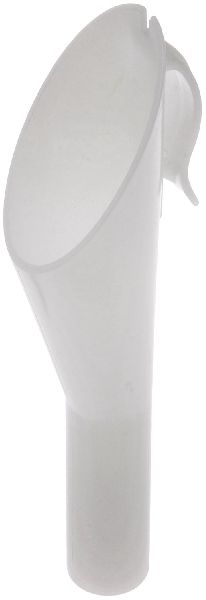
How to confirm: Visually inspect the metal flap inside the fuel filler neck. Check for any debris, rust, or damage that would prevent it from sealing. Use the white plastic funnel that came with the vehicle to open and close the flap to test its movement and help dislodge debris.
Typical fix: Thoroughly clean the filler neck opening and flap with a rag and a solvent like isopropyl alcohol. Use the emergency funnel to work the mechanism back and forth while cleaning. If the flap is damaged or the seal is compromised, the entire fuel filler neck assembly must be replaced.
Est. part cost: $5-$150 - Cracked or Disconnected EVAP Hoses/Lines 🟡 Medium Probability
How to confirm: A smoke test is the most effective method. A technician injects pressurized smoke (at a very low pressure, max 1 PSI) into the EVAP system via the service port and looks for where the smoke escapes. A visual inspection may also reveal obvious cracks, especially on older, higher-mileage vehicles.
Typical fix: Replace the damaged section of hose or reconnect the loose fitting. One owner found the leak was in the service port line itself.
Est. part cost: $10-$50 - Failed EVAP Vent Solenoid ⚪ Low Probability
How to confirm: This valve is normally open and closes when commanded by the ECM during a system test. A smoke test will show smoke exiting the vent valve if it is stuck open or not closing properly. It can also be removed and tested with a 12V power source to confirm it actuates.
Typical fix: Replace the vent solenoid. It is typically located near the charcoal canister at the rear of the vehicle, above the spare tire area.
Est. part cost: $40-$150
Rare But Worth Checking
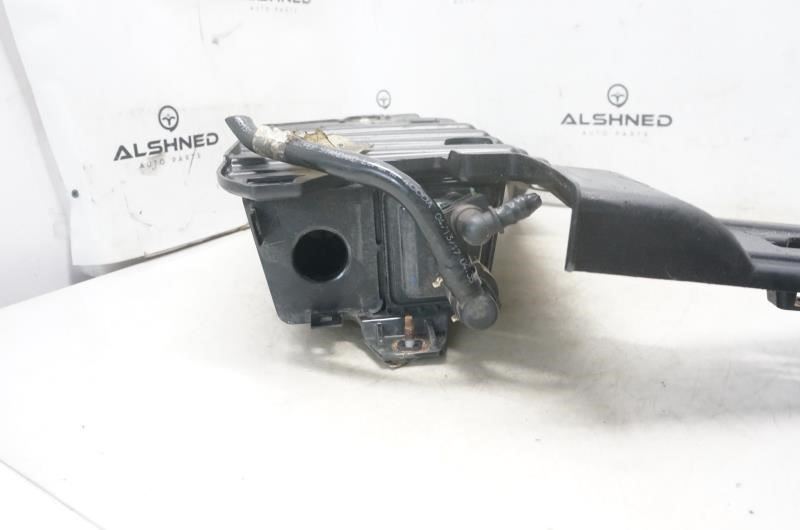
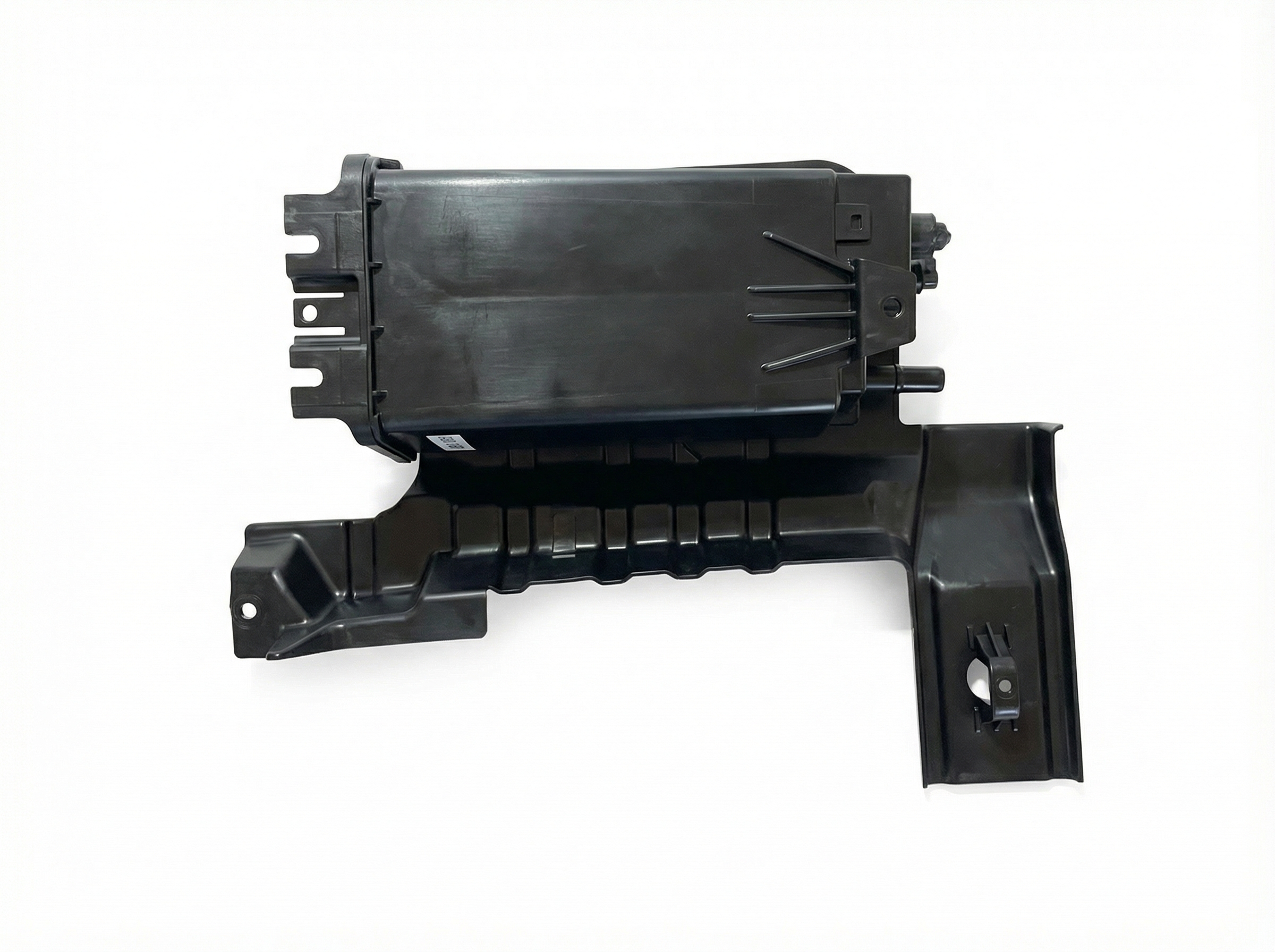
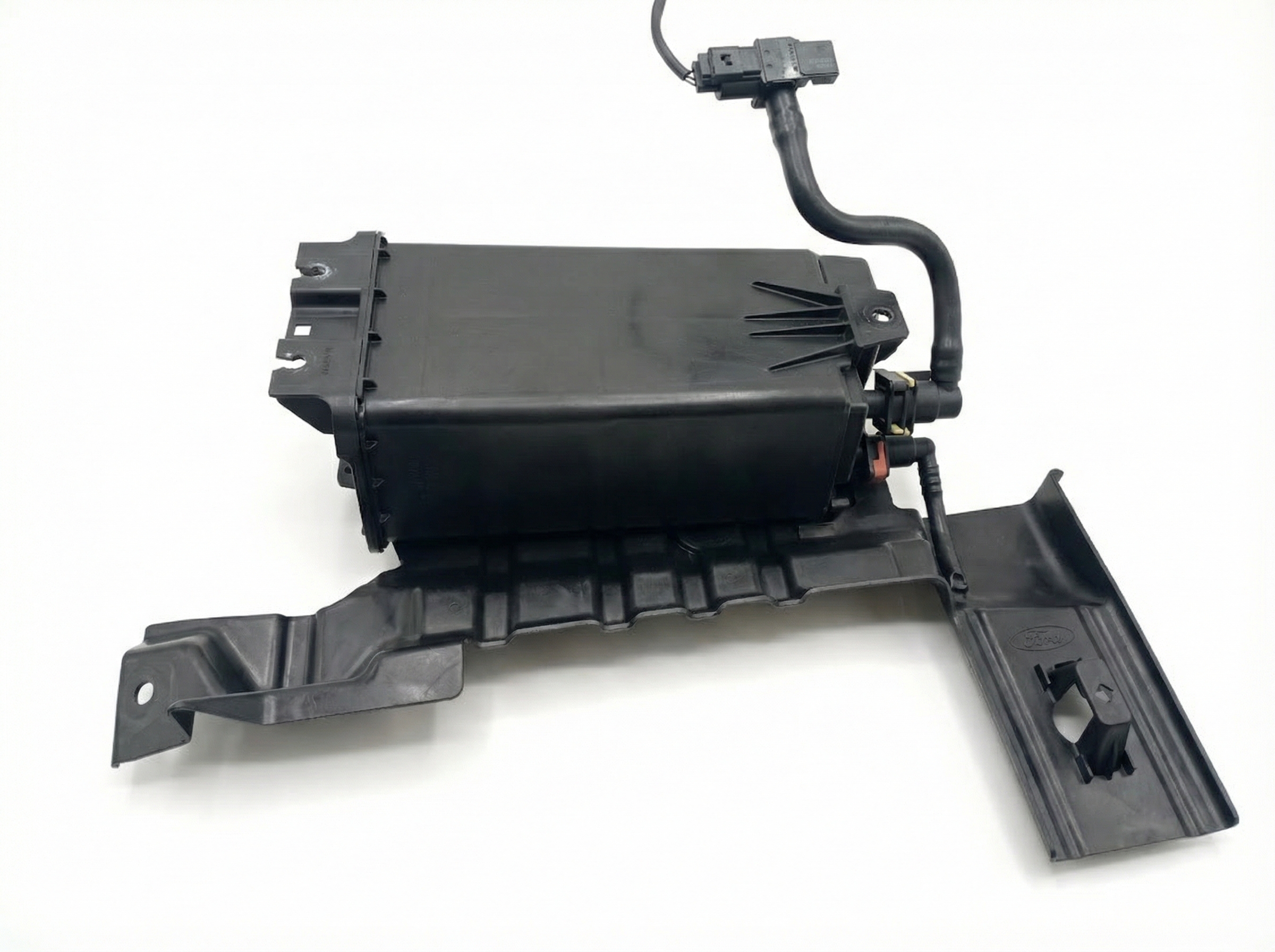
- Cracked Charcoal Canister: The canister is a plastic box located underneath the vehicle, near the fuel tank. While durable, it can be cracked by road debris or impact, causing a large leak. This would be visible during a smoke test or visual inspection.
- Faulty Fuel Tank Pressure (FTP) Sensor: The sensor can fail and send incorrect readings to the computer, tricking it into setting a P0455 code even if no physical leak exists. This is usually diagnosed after a smoke test finds no leaks.
- Wiring Harness Connection Issues: Manufacturer service bulletins SSM 51247 and SSM 50348 note that an illuminated MIL with P0455 and other codes may be due to the wiring harness connection at connector C1198, located on the driver's side lower frame area.
Diagnosis Steps


- Read the Codes: Use an OBD-II scanner to confirm P0455 is present and check for any other related codes like P1450 or P0496, which strongly point to the purge valve.
- Inspect and Clean the Fuel Filler Inlet: Before buying parts, carefully inspect the capless fuel filler neck for dirt or debris. Use the vehicle's emergency funnel and a clean cloth with isopropyl alcohol to clean the flap and sealing surface thoroughly.
- Test the Canister Purge Valve: This is the most likely culprit. Locate the valve on top of the engine. Disconnect it and try to blow through it. If any air passes, it has failed and must be replaced. This simple test can save a lot of time and money.
- Perform a Smoke Test: If the purge valve is good and the filler neck is clean, a smoke test is the next step. Inject smoke into the EVAP service port (often a green cap in the engine bay). 🎬 Watch: How to find an EVAP leak with a smoke tester Watch for smoke leaking from any hoses, the charcoal canister, the vent valve near the tank, or the fuel filler area.
- Inspect Vent Valve: If smoke pours out of the vent valve assembly near the rear of the vehicle, the vent solenoid may be stuck open. It should be closed during the test.
- Check FTP Sensor Data: If no smoke leaks are found, use an advanced scan tool to monitor the Fuel Tank Pressure (FTP) sensor readings to see if they are erratic or illogical, suggesting a faulty sensor.
Parts You'll Likely Need
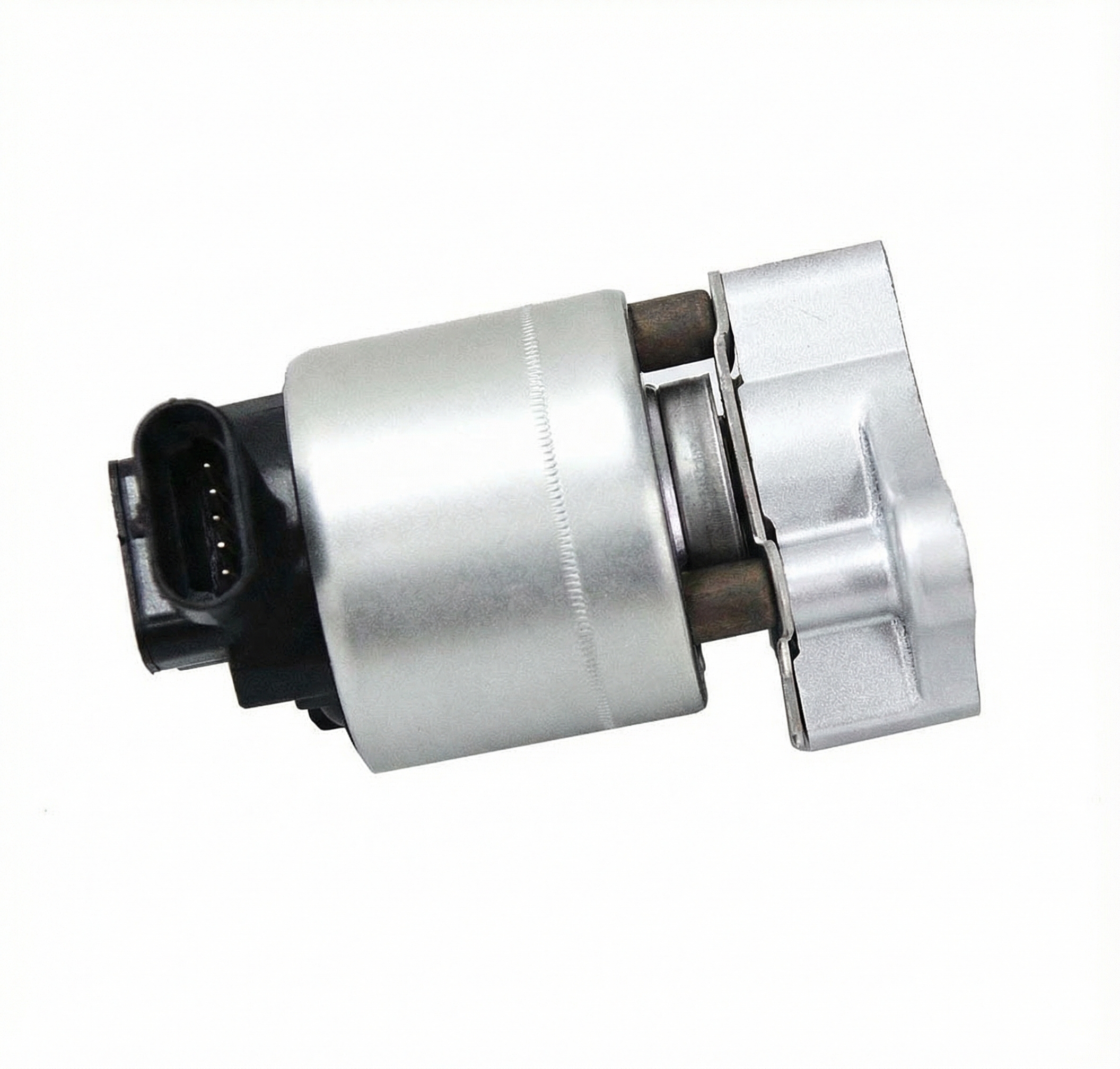
- Canister Purge Valve / Solenoid
(OEM #AU5Z-9C915-B (Motorcraft CX2407))— This is the most frequent cause of P0455 on this Explorer generation, often causing a hard-start-after-refueling symptom.
Trusted brands: Motorcraft, Bosch, Dorman
OEM price range: $60-$100
Aftermarket price range: $40-$70 - Fuel Filler Neck
(OEM #W0133-2115830 (Varies by specific model year))— The seal on the capless system can fail or be damaged, requiring the replacement of the entire filler neck assembly to fix the leak.
Trusted brands: Motorcraft, Spectra Premium, Dorman
OEM price range: $190-$250
Aftermarket price range: $110-$180 - EVAP Vent Solenoid — If the valve near the charcoal canister fails to close during testing, it will create a large leak. This is a less common but still possible failure point.
Trusted brands: Motorcraft, Dorman
OEM price range: $70-$120
Aftermarket price range: $40-$80
Related Codes That Often Appear With This One
- P1450 — This code means 'Unable to Bleed Up Fuel Tank Vacuum' and is very commonly caused by a purge valve that is stuck open, the same primary cause of P0455 on this vehicle. A stuck-open purge valve creates a constant vacuum on the tank that the system cannot overcome.
- P0456 — This code indicates a 'Small EVAP Leak'. Sometimes a failing component can cause intermittent or varying leak sizes, leading the computer to store both small and large leak codes at different times. A user on Reddit reported their Explorer toggled between P0455 and P0456. 🎬 Watch: How to fix P0455 and P0456 codes on your Explorer
- P0496 — This code means 'EVAP Flow During a Non-Purge Condition' and directly points to a purge valve that is stuck open or leaking, as it detects vapor flow when the valve should be commanded closed.
Technical Service Bulletins (TSBs) & Recalls
- SSM 50306: While for 2020-2022 models, this TSB is relevant as it notes that Ford has tested many returned EVAP canister purge valves and found them to be fully functional, suggesting the part is often misdiagnosed. It advises performing full system leak tests before replacing the purge valve. This reinforces the need to test the old part before simply replacing it.
- SSM 51247: A manufacturer service bulletin notes that vehicles may exhibit an illuminated MIL with multiple diagnostic trouble codes including P0455, P0456, and P0496, which may be due to the wiring harness connection at connector C1198 on the driver's side lower frame area.
- SSM 50348: This bulletin advises technicians to inspect the wiring harness connection at connector C1198 prior to replacement of any components when codes P0455, P0456, or P0496 are present.
Platform-Specific Known Issues
- Extremely Common Purge Valve Failure: The canister purge valve on the 3.5L V6 engine used in the 2011-2019 Explorer is a known high-failure part. The symptom of stalling or rough starting immediately after refueling is a near-certain indicator of this specific part's failure, often accompanied by codes P0455 and P1450.
Mechanic-Grade Diagnostic Values
- EVAP Canister Purge Valve Solenoid Resistance — expected: 30 to 38 ohms. Failure: A reading significantly outside this range, or an open/short circuit, indicates a faulty solenoid coil.
- EVAP Canister Vent Solenoid Resistance — expected: 48 to 65 ohms. Failure: A reading outside this range indicates a faulty solenoid coil.
- Fuel Tank Pressure (FTP) Sensor Voltage (Key On, Engine Off) — expected: 2.5V - 3.0V at atmospheric pressure. Failure: A reading near 0V or 5V suggests a sensor or wiring fault. The voltage should decrease as vacuum is applied.
- EVAP System Fuse (Underhood Fuse Box) — expected: Fuse F86 (7.5A). Failure: A blown fuse will disable the EVAP system components.
Scan Tool Commands That Help
- Ford IDS (or FORScan): EVAP System Leak Test — This is a key bidirectional control used to command the EVAP system to seal itself (by closing the vent solenoid) and monitor pressure decay, which is the primary method the PCM uses to detect leaks. A technician can manually trigger this test to verify the system's integrity without waiting for a full drive cycle.
- Ford IDS (or equivalent advanced scanner): Canister Purge Valve Duty Cycle Control — Allows a technician to command the purge valve to open at varying percentages (duty cycles) while the engine is running. This is used to verify the valve's mechanical operation and check its effect on fuel trims and tank pressure, confirming if it's stuck or responding correctly to PCM commands.
Wiring & Ground Locations
- G103 — Left front corner of the engine compartment.. This is a primary ground point for various components in the engine bay. A corroded or loose G103 ground can cause erratic behavior or failure of engine sensors and solenoids, including those in the EVAP system, leading to false codes or intermittent operation.
- Engine Fuse Box — Located on the driver's side of the engine bay, next to the battery.. This box contains fuses for the EVAP system, specifically fuse F86 (7.5A), which provides power to system components. A blown fuse here would render the system inoperative.
Real Owner Repair Stories
- YouTube user 'Shane's Getting Handy' (Ford Explorer (generation-correct)) — Check Engine Light with P0455.
❌ Tried (didn't work) Tested the canister vent solenoid, which was found to be working correctly (continuity of ~60 ohms and actuated with 12V power)., Blowing into the hose leading to the fuel tank held pressure., Blowing into the hose leading to the purge valve allowed air to pass, indicating a leak somewhere between the rear of the vehicle and the engine.
✅ What actually fixed it The leak was found in the EVAP service port line itself, located in the engine bay. The plastic line for the service port had developed two small holes. The owner repaired the line with heat shrink tubing instead of replacing the entire assembly, which resolved the P0455 code. - NHTSA ODI #10395615 — An owner reported thousands of dollars in repairs for a vehicle showing trouble codes P0455 or P0457, or both simultaneously, noting that this appears to be a common issue discussed in enthusiast forums.
"I Checked Everything" — The Actual Cause
- A 2013 Explorer owner on Reddit reported that both their independent mechanic and a Ford dealer performed smoke tests that came back negative for leaks. Despite replacing the purge valve (twice) and the vent solenoid, the P0455/P0456 codes kept returning. The owner noted the light would turn off at half a tank of gas and come back on after a fill-up, leading them to suspect the fuel filler neck seal was the actual, intermittent cause that the smoke test failed to identify.
OEM Part Supersession History
AU5Z-9C915-A→AU5Z-9C915-B— Standard part revision and improvement by the manufacturer.AU5Z-9C915-B→AU5Z-9C915-E— Standard part revision and improvement by the manufacturer.BL3Z-9C915-A→AU5Z-9C915-B— The Pass 2 data mentioned this supersession. This indicates a consolidation of part numbers across different platforms (BL3Z is often associated with F-150s, but the part is functionally identical).
Diagnostic Flowchart
Real Owner Stories
Aggregated from forums and TSBs cited above. Mileages and costs reflect what owners reported in those sources.
2013 Ford Explorer V6 Limited
Symptoms: Gas pump kept 'clunking' back as if the tank was full; Check engine light on with codes P0456 and P0455; CEL turns off at half a tank and comes back on after filling up.
What fixed it: No confirmed fix reported by the owner, but they suspected the fuel filler neck was the issue after replacing the purge valve twice, the vent solenoid, and cleaning the fuel tank.
Source hint: Reddit r/FordExplorer - 'Help troubleshooting a P0455 evap leak'
2013 Ford Explorer
Symptoms: Vehicle had a P0455 and P0457 code.
What fixed it: Cleared debris away from the gas cap-less / easy-fuel feature.
Source hint: YouTube comment 'Fix It Now'
Related OBD-II Codes
Frequently Asked Questions
Is there a specific part number for the canister purge valve on my 2011-2019 Explorer?
My Explorer is hard to start right after I get gas and has a P0455 code. What does this mean?
Does Ford have any TSBs regarding the P0455 code and the purge valve?
Why does the gas pump nozzle keep clicking off when I try to refuel my Explorer?
How do I clean the capless fuel filler neck on my Explorer to fix a P0455?
Are other Ford vehicles prone to this same P0455 issue?
Helpful Videos
Used OEM Parts in Stock

New Aftermarket Parts Available


The information in this article is provided for general reference and educational purposes only. Vehicle specifications, procedures, and part compatibility can vary by production date, trim level, and region. Always consult your vehicle's factory service manual and verify part numbers before purchasing or performing repairs. Safety-critical components such as airbags, seat belts, and braking systems should be installed by a qualified professional.
- Ford Explorer:
- 🎬 Helpful Videos
- 🛍️ Shop This Part
- What's Unique About the 2011-2019 Ford Explorer
- Symptoms You May Notice
- Most Likely Causes
- Rare But Worth Checking
- Diagnosis Steps
- Parts You'll Likely Need
- Related Codes That Often Appear With This One
- Technical Service Bulletins (TSBs) & Recalls
- Platform-Specific Known Issues
- Mechanic-Grade Diagnostic Values
- Scan Tool Commands That Help
- Wiring & Ground Locations
- Real Owner Repair Stories
- "I Checked Everything" — The Actual Cause
- OEM Part Supersession History
- Diagnostic Flowchart
- Real Owner Stories
- 2013 Ford Explorer V6 Limited
- 2013 Ford Explorer
- Related OBD-II Codes
- Frequently Asked Questions
- 🎟️ Get 5% Off