

P0449 on 2007-2009 Pontiac G5: EVAP Vent Circuit Malfunction Causes and Fixes
On a 2007-2009 Pontiac G5, code P0449 is almost always caused by a failed EVAP vent solenoid located near the gas tank, or a broken wire leading to it. Replacing the solenoid is a common DIY fix, with the part costing around $25-$50. Many aftermarket replacement solenoids come with a wiring adapter harness due to a different connector design.
- P0449 on your Pontiac G5 points to an electrical problem with the EVAP vent solenoid, not a gas cap leak.
- The most likely cause is a failed vent solenoid itself, located near the gas tank.
- Before buying parts, thoroughly inspect the wiring harness near the solenoid for any broken or corroded wires, as this is a common and cheap fix.
- The correct replacement part is the vent solenoid (ACDelco 214-2149), not the purge solenoid in the engine bay. Be aware you may need a wiring adapter.
- This is a very manageable DIY repair for those with basic tools and can save significant money over a shop visit.
What's Unique About the 2007-2009 Pontiac G5
The Pontiac G5 shares its GM Delta platform and many components with the Chevrolet Cobalt, Saturn Ion, and Chevrolet HHR. Repair information and parts for one are often directly applicable to the others. For these cars, the P0449 code is exceptionally common and frequently traced back to the vent solenoid's exposed location under the car, just forward of the rear axle, where it is highly susceptible to road salt, moisture, and physical damage to its wiring. A YouTube video by 'KurtzyTube' on a Pontiac G5 specifically shows a broken wire right at the connector as the cause. GM issued Technical Service Bulletin (TSB) 09-06-04-028D for related issues on similar platforms, addressing water and dust intrusion affecting the vent valve.
Symptoms You May Notice
- Check Engine Light is on
- Difficulty refueling (fuel nozzle clicks off repeatedly)
- Slight fuel odor near the rear of the vehicle
- Vehicle will fail an emissions test.
- Replacing the gas cap. A bad gas cap typically causes a leak-related code (like P0442, P0455, or P0457), not a circuit malfunction code like P0449.
- Replacing the EVAP Purge Solenoid. The purge solenoid is located in the engine bay and sets different codes (like P0496 or P0443). P0449 specifically refers to the vent solenoid circuit at the rear of the vehicle, near the fuel tank.
Most Likely Causes
- Failed EVAP Vent Solenoid 🔴 High Probability The solenoid is located under the car near the rear axle, where it's exposed to water, salt, and road debris, leading to internal corrosion and electrical failure. It is mounted directly to the charcoal canister.
How to confirm: Using a bidirectional scan tool, command the vent solenoid to open and close while listening for an audible click. If there is no click, the solenoid is likely bad. You can also apply 12V directly to the solenoid terminals to test for operation; if it doesn't click, it has failed. The solenoid is normally open, so without power, you should be able to blow through it. When 12V is applied, it should close and block airflow. A good solenoid should have a resistance between 20 and 30 ohms.
Typical fix: Replace the EVAP vent solenoid. It typically twists a quarter-turn to lock and unlock from the charcoal canister. Many aftermarket parts have a different connector and will come with a pigtail adapter harness that must be used.
Est. part cost: $25-$50 - Broken or Corroded Wiring 🟡 Medium Probability The wiring harness leading to the vent solenoid is also exposed to the elements. Wires can become brittle and break, often right at the connector where moisture collects. The ground wire bundle bolted to the transmission near the starter is another known corrosion point on these vehicles that can cause various electrical issues.
How to confirm: Visually inspect the two wires leading to the vent solenoid connector for breaks, chafing, or green/white corrosion. Use a multimeter to check for ~12V power on the power wire (often red/white or pink) with the key on. Then, check the continuity of the control wire (often white) back to the ECM. A user on a Saturn forum with the same P0449 issue found a rodent had chewed through one of the wires.
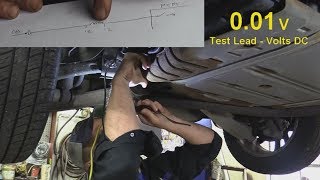
Typical fix: Repair the broken wire, typically by splicing in a new section of wire and using heat-shrink tubing to seal it from moisture. If the connector is corroded, it may need to be replaced with a pigtail connector kit. 🎬 See how to test and repair damaged vent solenoid wiring
Est. part cost: $5-$20 - Blown Fuse ⚪ Low Probability
How to confirm: Check the fuse box for a blown fuse related to the emissions system. On some GM vehicles, this may be labeled 'EMIS' or similar. A misplaced or incorrect amperage fuse has also been documented as a cause.
Typical fix: Replace the blown fuse with one of the correct amperage.
Est. part cost: $1-$5
Rare But Worth Checking
- Faulty Charcoal Canister: While not a direct cause of the electrical P0449 code, a physically damaged or internally clogged canister could damage the integrated vent solenoid or its wiring. This is usually a result of impact or contamination.
- Faulty Engine Control Module (ECM): This is extremely rare. The ECM's internal driver for the vent solenoid circuit could fail, but all other possibilities, especially wiring and the solenoid itself, should be exhausted before considering ECM replacement.
Diagnosis Steps
- Read the code with an OBD-II scanner to confirm P0449 is present and no other EVAP codes are active.
- Visually inspect the EVAP vent solenoid and its two-wire harness, located on the charcoal canister in front of the rear axle, usually on the driver's side. Look for obvious signs of damage, such as broken wires, a cracked connector, or heavy corrosion.
- Check the emissions-related fuses in the under-hood fuse box. Ensure the correct amperage fuse is installed.
- If you have a bidirectional scanner, command the vent solenoid 'ON' and 'OFF'. Listen for a clicking sound from the solenoid. No click suggests a problem with the solenoid or its circuit.
- If the solenoid does not activate, disconnect the electrical connector. Use a multimeter or test light to verify that one pin (typically the pink or red/white wire) receives ~12V with the key in the 'ON' position.
- If power is present, the issue is likely the solenoid itself or the ground-side control wire. Test the solenoid by applying 12V and a ground directly to its pins; if it doesn't click, it has failed. You can also test the solenoid's coil resistance with a multimeter; a good reading is typically between 20-30 ohms.
- If the solenoid works when tested directly, the problem lies in the wiring between the solenoid and the ECM or a poor ground connection. Check continuity on the control wire (often white) back to the ECM.
- After replacing any parts, clear the code with the scanner and drive the vehicle through a full drive cycle to ensure the Check Engine Light does not return.
Parts You'll Likely Need
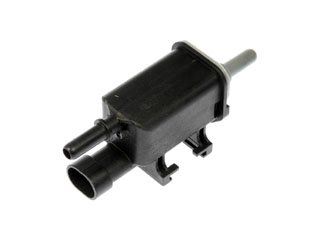
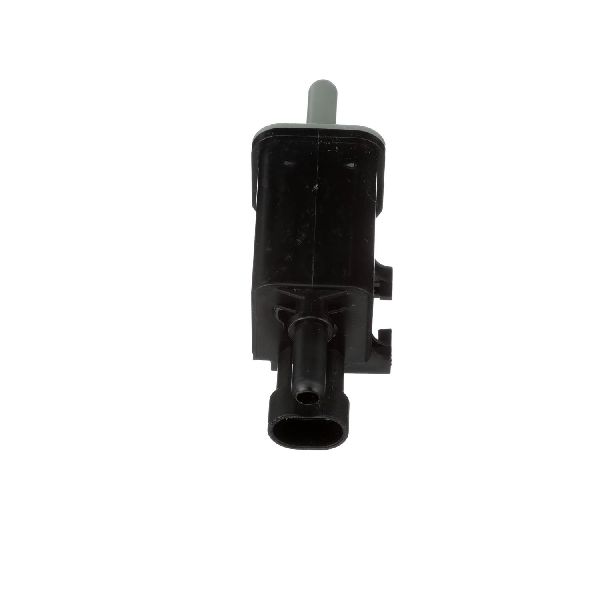
- Vapor Canister Vent Solenoid
(OEM #25932571)— This is the most common component to fail, causing the P0449 code due to its exposed location and electrical function. The original GM part number is 25932571, which is often superseded by ACDelco part number 214-2149.
Trusted brands: ACDelco, Dorman (e.g., 911-030), Standard Motor Products, Duralast
OEM price range: $40-$60
Aftermarket price range: $25-$45 - Vent Solenoid Connector Pigtail — Needed if the original connector is corroded or damaged. Many aftermarket solenoids include this adapter because they use a different connector style than the OEM part.
Trusted brands: Dorman, ACDelco
OEM price range: $15-$25
Aftermarket price range: $10-$20
Technical Service Bulletins (TSBs) & Recalls
- TSB 09-06-04-028D: While not directly for the G5, it addresses the root cause of P0449 on many GM vehicles: water/dust intrusion into the EVAP canister vent solenoid. The prescribed fix is to replace the valve and install a revised filter box assembly in a more protected location.
Platform-Specific Known Issues
- GM issued Technical Service Bulletin (TSB) 09-06-04-028D for related EVAP codes (P0442, P0446, P0455, P0449) on similar truck/SUV platforms. The cause was identified as water and debris entering the vent. While the TSB doesn't explicitly list the G5, the failure mode is identical. The fix involves a new vent valve with a hose and filter box that relocates the fresh air intake to a cleaner, more protected location.
- Corrosion of the main ground wire bundle near the starter is a known issue on Cobalts and G5s that can cause a wide range of seemingly unrelated electrical problems, including communication issues with modules that could potentially trigger fault codes.
Mechanic-Grade Diagnostic Values
- EVAP Canister Vent Solenoid Coil Resistance — expected: 20 to 30 Ohms. Failure: An open circuit (infinite resistance) or a reading significantly outside the 20-30 Ohm range indicates a failed solenoid coil.
- Voltage at Vent Solenoid Connector (Power Wire) — expected: ~12V (Battery Voltage) with key on, engine off.. Failure: A reading of 0V indicates a problem with the power supply from the fuse box (blown fuse or broken wire). The power wire is typically pink or red/white.
- Voltage at Vent Solenoid Connector (Control Wire) — expected: ~12V with key on, solenoid commanded OFF. 0V (or near 0V) when the ECM commands the solenoid ON (grounded).. Failure: A reading of 0V when the solenoid is commanded OFF points to an open solenoid coil or an open in the power feed wire. If the voltage does not drop to 0V when commanded ON, it indicates a break in the control wire to the ECM or a faulty ECM driver.
Hidden / Shadow Codes Worth Checking
- EVAP Vent Solenoid Circuit Status (Live Data PID): Some GM scan tools (like Tech2 or high-end bidirectional tools) display a specific data PID for the circuit status. When the circuit is healthy but inactive, it should read 'OK' or 'Inactive'. When the P0449 fault is active, this PID may read 'Short to Ground or Open'. This provides a real-time view of what the ECM is seeing, confirming an electrical fault without needing a multimeter initially. (see via Tech2, GDS2, or advanced bidirectional scan tool with GM-specific software.)
Scan Tool Commands That Help
- Tech2 / GDS2 / Bidirectional Scanner: EVAP Vent Solenoid ON/OFF Command — This is the primary bidirectional command for diagnosing P0449. It allows the technician to manually command the solenoid on and off to listen for an audible click, confirming mechanical operation. It's also used while monitoring voltage on the control wire to verify the ECM driver and wiring integrity.
Wiring & Ground Locations
- G401 / G402 — Located in the trunk, at the center of the rear shelf, near the speakers.. These are the primary ground points for the rear body harness, which includes wiring for the fuel tank and EVAP system components. A corroded or loose connection at G401 or G402 could cause an intermittent or faulty ground for the EVAP vent solenoid circuit, even if the solenoid and its direct wiring appear fine.
- Vent Solenoid Connector — On the EVAP canister, located under the vehicle, typically just forward of the rear axle on the driver's side.. This 2-pin connector is the most common point of failure. Pin A (typically a Pink wire) is the 12V+ power feed from the EMIS fuse. Pin B (typically a White wire) is the control wire that the ECM grounds to activate the solenoid. Checking for voltage, ground, and physical integrity at these specific pins is crucial.
"I Checked Everything" — The Actual Cause
- P0449 is an electrical circuit code ('...Vent Solenoid Control Circuit Malfunction'), not a leak code. Running a smoke test for P0449 is a common misdiagnosis. The test will almost always come back clean because the fault lies in the solenoid's coil, the wiring, the fuse, or the ECM driver, none of which are tested by smoke. Technicians who find no leaks with a smoke test must pivot to electrical diagnosis, starting with checking for 12V at the solenoid connector.
OEM Part Supersession History
10382105, 15750484→25932571— Part consolidation and design updates by GM.
Heads up: Part number 25932571 has itself been subject to redesigns. Some GM parts vendors warn that this part may not be correct for all original applications and advise verifying with a VIN. The most common replacement is now ACDelco 214-2149, which often requires an adapter harness (included with many aftermarket kits) due to a different connector design from the original factory part.19177699 (Federal Emissions)→19259320 (Federal Emissions)— Part update.
Heads up: Crucially, vehicles were built with either Federal (FE1) or California (NE1) emissions systems. The vapor canisters and their integrated vent valves are NOT interchangeable. Using a Federal canister on a California-spec car (or vice-versa) will result in persistent codes.
Model Year Variations Within This Range
- 2007-2008: The base model used a 148-hp 2.2L engine, while the GT model used a 173-hp (171-hp in 2008) 2.4L engine. The EVAP system components are largely the same.
- 2009: For 2009, the 2.4L engine was dropped. Both the base and GT models used an updated 2.2L engine that produced 155 hp. While the EVAP system function remained the same, wiring or part numbers could have minor revisions.
Diagnostic Flowchart
Other Known Issues on This Vehicle
Issues unrelated to this code that are worth knowing about as an owner of this generation:
- Electric Power Steering (EPS) Failure 🔴 High — Very common. Can occur at any mileage but tends to develop over time. A 'POWER STEERING' message appears on the dash. (Ref: Recall 10V073000 / GM Recall N100023. GM recalled 1.3 million vehicles, including the 2007-2010 G5, to replace the electric power steering motor.)
- Ignition Switch Failure 🔴 High — Widespread across many GM models. The weight of a heavy keychain could cause the ignition to switch out of the 'Run' position while driving, disabling the engine and airbags. (Ref: Recall 14V047000 / GM Recall 13454. Part of a massive GM recall to replace the ignition switch.)
- Fuel Leaks 🔴 High — Common enough to trigger recalls, especially in warm-weather states. Leaks can originate from a cracked plastic port on the fuel pump module or from corroded fuel lines near the rear wheel. (Ref: Recall 12V459000 / 09V419000. Recalls were issued for certain model years/regions due to a crack on the fuel pump module's plastic port, which could leak fuel and pose a fire risk.)
- Timing Chain Tensioner/Guide Failure (2.2L Ecotec) 🟠 Medium — More common on pre-2005 Ecotec engines, but can still occur on later models with poor maintenance. Onset can be around 100,000-150,000 miles. Symptoms include rattling noises from the engine. (Ref: No specific recall, but GM updated the tensioner design multiple times to improve oiling.)
- Ignition Key Stuck in Ignition 🟡 Low — A common complaint where the key cannot be removed after placing the car in Park. Often caused by a failed shifter assembly or a related solenoid. (Ref: Recall 09V073000 addresses a related issue where the shift cable clip may not be engaged, allowing key removal when not in Park.)
Used vs. New Parts: Buying Guide for This Vehicle
When a used part is the smart pick: A used vapor canister assembly from a junkyard can be a cost-effective option, especially if the failure is the integrated vent solenoid. Since the canister itself (the charcoal box) rarely fails unless physically damaged or fuel-saturated, a used part is a reasonable gamble.
Donor-vehicle mileage cap: roughly under 80000 miles for the part to have meaningful remaining life.
What to inspect on the donor part:
- Check the plastic housing for cracks or signs of impact.
- Inspect the electrical connector on the vent solenoid for corrosion or broken pins.
- If possible, ask about the donor car's history. Avoid parts from vehicles that were in rear-end collisions.
- Ensure the part comes from a vehicle with the same emissions specification (Federal FE1 vs. California NE1).
Aftermarket brands forum-validated for this vehicle:
- ACDelco (Professional line)
- Dorman
- Standard Motor Products (SMP)
Brands owners have reported issues with on this vehicle:
- Unbranded, no-name parts from online marketplaces should be avoided, as their internal coil windings and valve seals may not meet OEM durability standards, leading to a repeat failure.
Real Owner Stories
Aggregated from forums and TSBs cited above. Mileages and costs reflect what owners reported in those sources.
Pontiac G5
Symptoms: Check Engine Light was on for code P0449. After replacing multiple parts without success, the root cause was found.
What fixed it: The owner discovered a single broken wire right at the vent solenoid connector. Repairing this wire resolved the code.
Source hint: YouTube - KurtzyTube - 'Project G5 - Fixing my Engine Light! - P0449 Evap Leak'
Pontiac G5 / Saturn Ion
Symptoms: Check Engine Light on with a P0449 code.
What fixed it: A common fix reported by owners involves inspecting the wiring under the rear of the car and finding a broken or rodent-chewed wire leading to the vent solenoid.
Source hint: g5club.org / Reddit r/Saturn_Cars
Saturn Ion
Symptoms: Vehicle presented with a P0449 fault code.
What fixed it: The cause was traced to a rodent having chewed through one of the wires in the vent solenoid harness.
Source hint: Saturn forum user report cited in 'Common Causes'
Related OBD-II Codes
Frequently Asked Questions
Where is the EVAP vent solenoid located on my 2008 Pontiac G5?
My replacement vent solenoid for my G5 came with an adapter harness. Is this the wrong part?
I'm having trouble filling my gas tank; it keeps clicking off. Is this related to the P0449 code?
What resistance reading should I get from a good EVAP vent solenoid on this car?
I saw a GM TSB about relocating the EVAP vent filter. Does this apply to the Pontiac G5?
Besides the solenoid itself, what is another common electrical failure point for P0449 on the G5?
Helpful Videos
Used OEM Parts in Stock
New Aftermarket Parts Available


The information in this article is provided for general reference and educational purposes only. Vehicle specifications, procedures, and part compatibility can vary by production date, trim level, and region. Always consult your vehicle's factory service manual and verify part numbers before purchasing or performing repairs. Safety-critical components such as airbags, seat belts, and braking systems should be installed by a qualified professional.
- Pontiac G5:
- 🎬 Helpful Videos
- 🛍️ Shop This Part
- What's Unique About the 2007-2009 Pontiac G5
- Symptoms You May Notice
- Most Likely Causes
- Rare But Worth Checking
- Diagnosis Steps
- Parts You'll Likely Need
- Technical Service Bulletins (TSBs) & Recalls
- Platform-Specific Known Issues
- Mechanic-Grade Diagnostic Values
- Hidden / Shadow Codes Worth Checking
- Scan Tool Commands That Help
- Wiring & Ground Locations
- "I Checked Everything" — The Actual Cause
- OEM Part Supersession History
- Model Year Variations Within This Range
- Diagnostic Flowchart
- Other Known Issues on This Vehicle
- Used vs. New Parts: Buying Guide for This Vehicle
- Real Owner Stories
- Pontiac G5
- Pontiac G5 / Saturn Ion
- Saturn Ion
- Related OBD-II Codes
- Frequently Asked Questions
- 🎟️ Get 5% Off