

P0446 on 2007-2016 GMC Acadia 3.6L: EVAP Vent System Causes and Fixes
On a 2007-2016 GMC Acadia, code P0446 is almost always caused by a faulty EVAP vent solenoid valve located near the fuel tank. Due to its location on top of the fuel tank on most of these models, replacement is a labor-intensive job requiring the tank to be lowered. The part itself is relatively inexpensive.
- P0446 on your Acadia points directly to a problem with the EVAP vent system, not a loose gas cap.
- The most likely cause is a failed EVAP vent solenoid valve located on top of the fuel tank.
- Be prepared for a difficult repair. On all first-generation Acadias, the fuel tank must be lowered to access and replace the vent valve, making it a 3-4 hour job.
- Before replacing parts, try to test the solenoid's function using a scan tool. If it doesn't click, the solenoid or its wiring is the problem.
- Do not confuse the vent valve (by the tank) with the purge valve (in the engine bay), as they serve different functions and set different codes.
What's Unique About the 2007-2016 GMC Acadia
The GMC Acadia from this generation shares its Lambda platform with the Chevrolet Traverse, Buick Enclave, and Saturn Outlook. A significant issue for these vehicles is the location of the EVAP vent valve. On the majority of these models, the valve is mounted on top of the fuel tank, requiring the tank to be lowered for access. This turns a simple part replacement into a much more involved and labor-intensive job compared to vehicles where the valve is easily accessible underneath the chassis near the canister.
Symptoms You May Notice
- Check Engine Light is on.
- Difficulty refueling (the fuel pump nozzle clicks off before the tank is full).
- A faint fuel odor near the rear of the vehicle (less common).
- A 'whoosh' sound when opening the gas cap, indicating pressure or vacuum buildup (if the valve is stuck closed).
- Replacing the gas cap. A loose or faulty gas cap typically causes a large leak code like P0455, not a vent circuit/performance code like P0446.
- Replacing the EVAP Purge Solenoid/Valve. The purge valve is located in the engine bay and controls vapor flow to the engine. While it can fail, it usually sets different codes (like P0496) and has different symptoms, such as a rough idle after refueling. 🎬 See how to replace the purge valve if you have these symptoms.
Most Likely Causes
- Faulty EVAP Vent Solenoid Valve 🔴 High Probability The valve is an electromechanical part that is commanded to open and close frequently. Over time, it can fail mechanically (get stuck open or closed) or electrically. Its location on top of the fuel tank exposes it to road debris and moisture, contributing to failure.
How to confirm: Use a capable scan tool to command the vent valve to open and close; a functional valve should produce an audible click. You can also remove the valve and apply 12V power and ground directly to the valve's pins to test for activation. The valve is normally open, so if removed, you should be able to blow through it. When 12V is applied, it should close and block airflow.
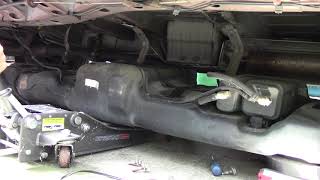
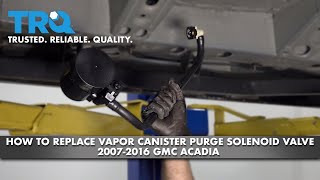
Typical fix: Replace the EVAP vent solenoid valve. On the Acadia and its platform mates, this requires partially or fully lowering the fuel tank to access the valve mounted on top. 🎬 Watch: This walkthrough shows how to lower the tank and replace the valve.
Est. part cost: $25-$75 - Clogged EVAP Canister or Vent Hose 🟡 Medium Probability Dust, dirt, and even spider webs can clog the vent hose or the charcoal canister itself, restricting airflow and triggering a vent performance code. GM has issued service bulletins for other trucks and SUVs (like TSB 09-06-04-028D) for P0446 caused by water and debris intrusion into the EVAP system, indicating this is a known issue for the brand. The fix often involves relocating the vent filter to a less exposed area.
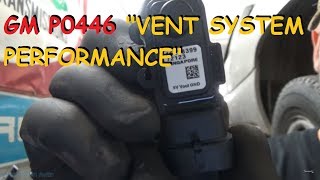
How to confirm: Visually inspect the vent hoses for kinks or blockages. Disconnect the hose from the canister and attempt to blow through it. A smoke test is the most definitive way to identify a restriction 🎬 Watch: A mechanic explains how to diagnose P0446 vent performance issues. within the canister or lines.
Typical fix: Clean the blockage from the hose or replace the hose. If the charcoal canister is saturated with fuel or clogged internally with charcoal pellets, it must be replaced. Some aftermarket kits include a filter relocation hose to prevent recurrence.
Est. part cost: $15-$40 for a hose, $150-$300 for a canister - Damaged Wiring or Connector ⚪ Low Probability
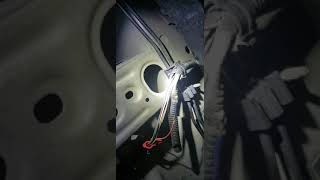
How to confirm: Visually inspect the wiring harness leading to the vent solenoid for breaks, corrosion, or loose pins. The connector is on top of the fuel tank, making it difficult to access without lowering the tank. Use a multimeter to check for 12V power on one pin and for continuity to the ECM on the other with the key on.
Typical fix: Repair the damaged section of the wiring harness or replace the connector pigtail. This is often done at the same time as a solenoid replacement due to the labor involved in accessing the area.
Est. part cost: $10-$30
Rare But Worth Checking
- Faulty Fuel Tank Pressure (FTP) Sensor: This is uncommon for P0446 alone and usually sets other codes (like P0451, P0452). However, if the sensor provides incorrect data to the ECM during the EVAP test, it can lead to a misdiagnosis of the vent valve's performance. On these vehicles, the FTP sensor is also located on top of the fuel tank as part of the fuel pump module, requiring a tank drop to replace.
Diagnosis Steps
- Read the code with an OBD-II scanner and confirm P0446 is the primary code. Check for any other pending or active codes.
- Inspect the easily accessible parts of the EVAP system. Check the vent hose outlet (often near the filler neck) for blockages like mud, ice, or spider webs.
- Use a scan tool with bidirectional controls to command the vent solenoid to close. Listen for an audible click from the rear of the vehicle, near the tank. No click strongly suggests a failed solenoid or a wiring issue.
- If you suspect the solenoid is the issue, prepare to lower the fuel tank for access. It is highly recommended to do this when the tank is as empty as possible.
- Once the tank is lowered and you have access to the vent solenoid, inspect its electrical connector and wiring for corrosion, chafing, or damage.
- Use a multimeter to verify that the solenoid connector is receiving ~12V power with the key in the 'On' position.
- If power is present, remove the solenoid and bench-test it by applying 12V and ground directly to its terminals to confirm it actuates.
- If the solenoid clicks but the code persists, the issue is likely a blockage. Disconnect the vent hoses and check for obstructions. A smoke test may be required to find a restriction in the canister or lines.
- If the solenoid and wiring test good and there are no blockages, the Fuel Tank Pressure (FTP) sensor could be faulty, though this is rare for a solitary P0446 code.
Parts You'll Likely Need
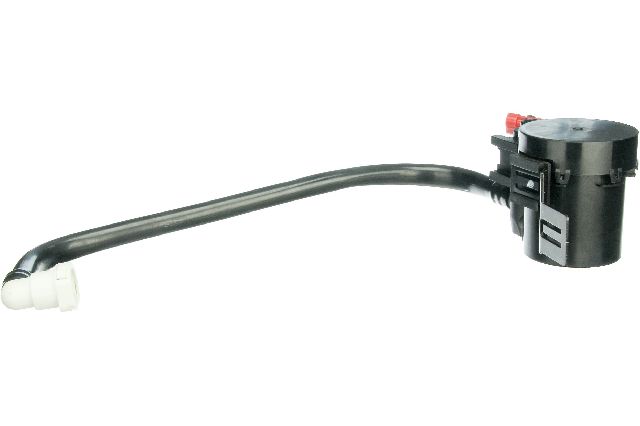
- Vapor Canister Vent Solenoid Valve
(OEM #23481275)— This is the most frequent failure point for code P0446. It is an electromechanical valve that gets stuck or fails electrically. The original part number has been superseded multiple times, with 23481275 being a common replacement.
Trusted brands: ACDelco (GM Genuine), Dorman (e.g., 911-070), Standard Motor Products (e.g., CVS10)
OEM price range: $45-$70
Aftermarket price range: $25-$50
Technical Service Bulletins (TSBs) & Recalls
- TSB 09-06-04-028D: While officially for GM trucks and larger SUVs like the Tahoe/Suburban, this bulletin is highly relevant. It addresses P0446 caused by water and dust intrusion into the EVAP vent solenoid and filter, often from wheel spray. The prescribed fix includes replacing the vent valve and installing a revised filter box/conduit in a more protected location, a strategy that can also be applied to the Acadia.
- Bulletin #PIE0528: This engineering informational bulletin notes that technicians may find P0446 and related codes set due to evaporative emission canister performance issues, and requests information on warranty parts for complete canister assemblies.
- Bulletin #23-NA-073: Although issued for other GM models like the Sierra 3500, this bulletin provides relevant repair information for correcting P0446 caused by dust intrusion into the evaporative canister.
Platform-Specific Known Issues
- The primary issue for this platform is the placement of the vent valve on top of the fuel tank, which significantly increases labor time and cost for what is otherwise a simple part replacement. This is a consistent design feature across the 2007-2016 model years.
- Forum users on acadiaforum.net and traverseforum.com frequently discuss the frustration of having to drop the fuel tank for this repair, confirming it's not a simple job for a DIYer without a lift and proper equipment.
Mechanic-Grade Diagnostic Values
- EVAP Vent Solenoid Coil Resistance — expected: 14-30 Ohms (GM Specification). Failure: A reading of infinite resistance (Open Loop) or zero resistance (shorted) indicates a failed solenoid coil. A 2007 Acadia owner with a related P0449 code measured an open circuit on the failed original part.
- EVAP Vent Solenoid Connector Voltage — expected: With the ignition ON, one pin should have battery voltage (~12V). The other pin is the control circuit, which the ECM grounds to activate the solenoid.. Failure: No voltage on the power feed pin indicates a problem with the fuse or wiring from the fuse block. If power is present but the solenoid doesn't activate with a scan tool command, the control wire or ECM driver may be at fault.
- Fuel Tank Pressure (FTP) Sensor Voltage (Key On, Gas Cap Off) — expected: Approximately 1.5 Volts.. Failure: A voltage that is stuck high (e.g., 4.8V) or low (e.g., 0.2V) and does not change when the gas cap is removed suggests a faulty sensor.
Scan Tool Commands That Help
- GM Tech2 / GDS2 or equivalent professional scanner: EVAP System Test / Vent Solenoid ON/OFF Command — This bidirectional command is used to manually close (energize) the normally open vent solenoid. While commanding it closed, the technician should listen for an audible 'click' from the solenoid. This confirms the solenoid is receiving the command and is mechanically attempting to actuate. It is the primary step to determine if the fault is with the solenoid itself or its circuit.
Wiring & Ground Locations
- EVAP Vent Solenoid Connector — On top of the fuel tank, plugged into the vent solenoid valve.. This 2-pin connector provides power and ground control to the solenoid. Pin A is typically the ignition voltage supply (often a Pink wire on GM vehicles), and Pin B is the control circuit (ground) from the ECM. Verifying power at Pin A and checking the integrity of Pin B's circuit back to the ECM is critical for diagnosis.
- Chassis Ground — The specific ground point for the EVAP system is not consistently documented, but common chassis grounds on the Acadia are located near the base of the B and D pillars (G302, G303, G401) and in the engine compartment (G102, G110).. A corroded or loose ground connection for the ECM or related components can cause erratic behavior and false codes. While not a primary cause for a solitary P0446, it should be considered if circuit tests are inconclusive.
Real Owner Repair Stories
- YouTube video by a 2007 GMC Acadia owner (2007 GMC Acadia, mileage not specified) — Check Engine Light with code P0449 (EVAP Vent Solenoid Control Circuit). This code is functionally identical to P0446 for diagnostic purposes.
❌ Tried (didn't work) The owner proceeded directly to testing the component after confirming the code.
✅ What actually fixed it The owner dropped the fuel tank to access the vent solenoid. Using a multimeter, he tested the resistance across the two pins of the old solenoid and found it was an open circuit (infinite resistance). This confirmed the solenoid's internal coil was broken. Replacing the vent solenoid resolved the issue.
OEM Part Supersession History
Multiple, including 10382080, 15893884, 25932566, 25966403→23481275— GM regularly updates service parts to integrate new materials or design improvements for durability.
Heads up: Some updated solenoids (like 23481275) may require a new wiring harness connector pigtail if the original connector style is different. Always verify the connector shape before finalizing the repair. The Dorman part 911-070 is often incorrectly listed for this vehicle; it is for other GM models. The correct Dorman equivalent is typically 911-082.
Model Year Variations Within This Range
- 2007-2016 (First Generation): The difficult repair procedure of dropping the fuel tank is specific to this generation. The second-generation Acadia (2017+) relocated the vent solenoid to a much more accessible location on the side of the vapor canister, which is mounted under the vehicle below the driver's area.
Diagnostic Flowchart
Other Known Issues on This Vehicle
Issues unrelated to this code that are worth knowing about as an owner of this generation:
- Premature Timing Chain Stretch 🔴 High — Very common on 2007-2012 models with LY7 and LLT engines, typically appearing between 70,000 and 120,000 miles. Less common on the 2013+ LFX engine but still possible. (Ref: TSB #12-06-01-009F; Special Coverage Adjustment #11340C extended warranty to 10 years/120,000 miles for this issue on many 2007-2009 models.)
- Cracked 3-5-R Transmission Wave Plate 🔴 High — Widespread on 2007-2009 models with the 6T70/6T75 transmission, often failing before 100,000 miles and causing a sudden loss of 3rd, 5th, and Reverse gears. (Ref: Special Coverage Adjustment #14404B extended warranty to 10 years/120,000 miles for affected vehicles.)
- Power Steering Pump/Rack Leaks 🟠 Medium — Common across the generation, owners report whining noises and fluid leaks from the power steering pump or high-pressure lines, which can lead to rack and pinion damage if not addressed.
- Water Leaks into Cabin 🟠 Medium — Frequent reports on 2007-2012 models of water leaking from clogged sunroof drains or a leaking evaporator case, potentially damaging the fuse block, blower motor, and interior electronics.
- Stretched/Worn Throttle Body 🟡 Low — Can occur at higher mileage, causing a 'Service Stabilitrak' and 'Reduced Engine Power' message. The internal gears wear out, requiring replacement of the throttle body.
Used vs. New Parts: Buying Guide for This Vehicle
When a used part is the smart pick: Due to the extremely high labor cost (2.5-4.5 hours) to access the vent solenoid, using a part from a salvage yard is NOT recommended. The risk of a used part failing prematurely far outweighs the small savings on the part itself. This repair should be done once with a reliable part.
What to inspect on the donor part:
- Not applicable, as used parts are not advised for this specific repair.
OEM-only on this vehicle (don't cheap out):
- While not strictly 'OEM-only', using a GM Genuine (ACDelco) part is the safest choice to ensure compatibility and longevity, minimizing the chance of having to perform the labor-intensive tank drop a second time.
Aftermarket brands forum-validated for this vehicle:
- Standard Motor Products (SMP) is a reputable aftermarket brand that is often considered a reliable alternative to OEM for electrical components like solenoids.
Brands owners have reported issues with on this vehicle:
- Generic, unbranded parts from online marketplaces should be avoided. While Dorman is a major aftermarket brand, some users report mixed reliability on their electronic parts; given the high labor involved, it represents a higher risk than OEM or SMP.
Real Owner Stories
Aggregated from forums and TSBs cited above. Mileages and costs reflect what owners reported in those sources.
2008 GMC Acadia 3.6L V6
Symptoms: Check engine light on and difficulty refueling where the fuel pump nozzle clicks off before the tank is full.
What fixed it: Replacement of the EVAP vent solenoid valve located on top of the fuel tank.
Cost: $600+
Source hint: acadiaforum.net - Thread 'P0446 Code'
2009-2016 Chevrolet Traverse 3.6L V6
Symptoms: Hard to fill the gas tank and a P0446 EVAP Vent Solenoid code.
What fixed it: Replacing the vent solenoid, which required dropping the fuel tank.
Source hint: traverseforum.com - Thread 'P0446 EVAP Vent Solenoid'
2007-2016 GMC Acadia 3.6L V6
Symptoms: P0446 code triggered with no obvious driving symptoms; PCM detected the vent valve was not releasing vacuum quickly enough.
What fixed it: Diagnosed as a restriction in the vent system preventing the release of vacuum.
Source hint: gmtnation.com - Thread 'P0446, with no symptoms'
Related OBD-II Codes
Frequently Asked Questions
Does TSB 09-06-04-028D apply to my GMC Acadia if I have code P0446?
Why is the labor cost so high for a simple vent solenoid replacement on the 2007-2016 Acadia?
Can I fix the P0446 code on my Acadia by just replacing the gas cap?
Is there a specific kit to prevent the P0446 code from coming back on my GMC Acadia?
Will my Acadia's extended warranty for timing chains or transmission wave plates cover the P0446 repair?
Helpful Videos
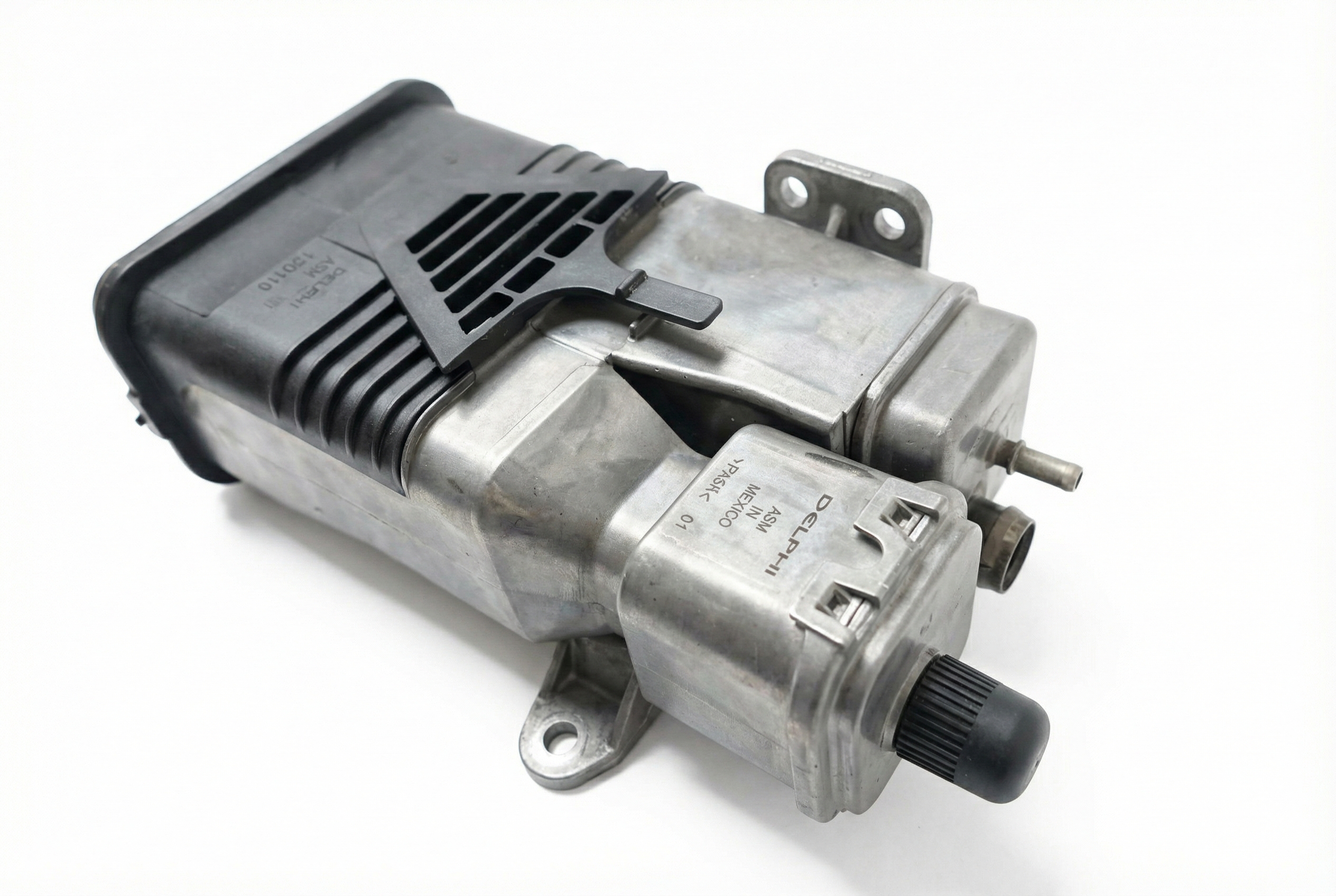
Used OEM Parts in Stock

New Aftermarket Parts Available

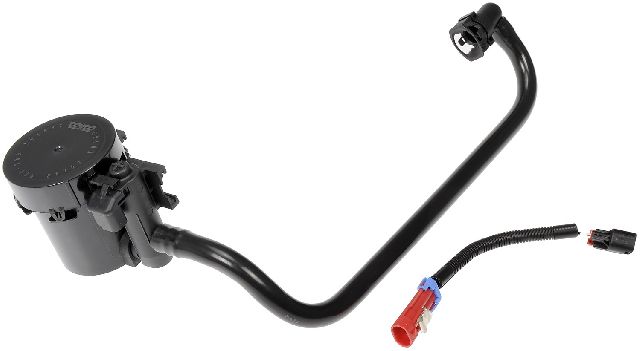

The information in this article is provided for general reference and educational purposes only. Vehicle specifications, procedures, and part compatibility can vary by production date, trim level, and region. Always consult your vehicle's factory service manual and verify part numbers before purchasing or performing repairs. Safety-critical components such as airbags, seat belts, and braking systems should be installed by a qualified professional.
- GMC Acadia:
- 🎬 Helpful Videos
- 🛍️ Shop This Part
- What's Unique About the 2007-2016 GMC Acadia
- Symptoms You May Notice
- Most Likely Causes
- Rare But Worth Checking
- Diagnosis Steps
- Parts You'll Likely Need
- Technical Service Bulletins (TSBs) & Recalls
- Platform-Specific Known Issues
- Mechanic-Grade Diagnostic Values
- Scan Tool Commands That Help
- Wiring & Ground Locations
- Real Owner Repair Stories
- OEM Part Supersession History
- Model Year Variations Within This Range
- Diagnostic Flowchart
- Other Known Issues on This Vehicle
- Used vs. New Parts: Buying Guide for This Vehicle
- Real Owner Stories
- 2008 GMC Acadia 3.6L V6
- 2009-2016 Chevrolet Traverse 3.6L V6
- 2007-2016 GMC Acadia 3.6L V6
- Related OBD-II Codes
- Frequently Asked Questions
- 🎟️ Get 5% Off