

P0446 on 2008-2020 Dodge Grand Caravan: EVAP Vent Circuit Causes and Fixes
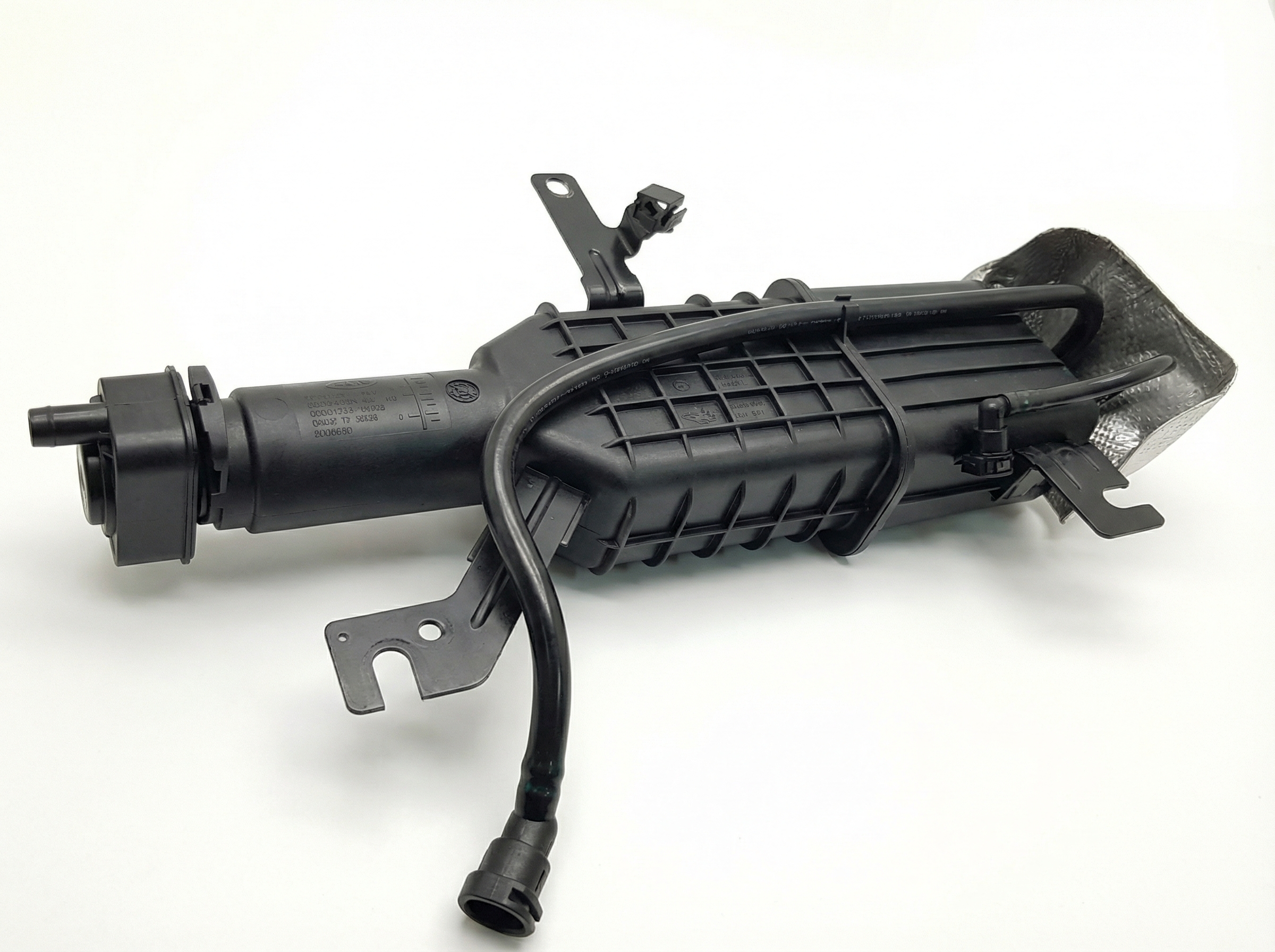
On a 2008-2020 Grand Caravan, P0446 is almost always caused by a faulty Evaporative System Integrity Module (ESIM), also known as a leak detection pump. The most common fix is to replace the entire charcoal canister assembly, which includes a new ESIM, for about $175-$350 in parts.
- P0446 on a Grand Caravan points to a problem with the vent-side of the EVAP system, specifically the ESIM (Evaporative System Integrity Module).
- A major symptom, besides the Check Engine Light, is the fuel pump nozzle clicking off repeatedly when you try to fill the gas tank.
- Don't waste money on a new gas cap first; it's almost never the cause for this specific code.
- The most reliable and common repair is to replace the entire charcoal canister assembly, which comes with a new ESIM already attached. This is a DIY-friendly job that takes 1-2 hours.
What's Unique About the 2008-2020 Dodge Grand Caravan
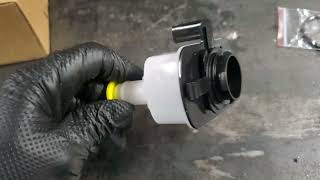
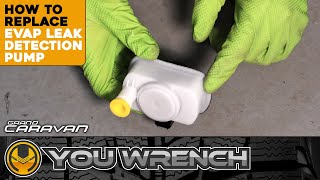
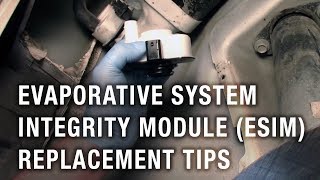
Unlike many vehicles that use a simple electronic vent solenoid, Chrysler products like the Grand Caravan use an Evaporative System Integrity Module (ESIM). The ESIM is a more complex mechanical device with internal weights, a diaphragm, and a switch to detect pressure changes. Because of this design, P0446 on this van is less likely to be a simple wiring short and more often points to a mechanical failure within the ESIM itself, 🎬 Watch: How to replace the ESIM leak detection pump which is located on the charcoal canister near the fuel tank.
Generation note: The 2008-2020 year range covers the entire fifth generation (RT) of the Dodge Grand Caravan. While the engine was updated from the 3.3L/3.8L/4.0L V6s to the 3.6L Pentastar V6 in 2011, the EVAP system design using the ESIM on the charcoal canister remained consistent across these model years.
Symptoms You May Notice
- Check Engine Light is on.
- Difficulty refueling (gas pump nozzle shuts off frequently before the tank is full).
- A 'gascap' message may appear on the dash, even if the cap is tight.
- Possible faint fuel odor near the rear of the vehicle.
- Inability to pass a state emissions inspection.
- Replacing the gas cap. A loose or faulty gas cap will almost always cause a leak code (P0455, P0456, P0457), not a vent circuit malfunction code like P0446.
Most Likely Causes
- Faulty Evaporative System Integrity Module (ESIM) / Leak Detection Pump 🔴 High Probability The ESIM has internal moving parts, including a diaphragm, weights, and a switch, that can wear out or get stuck over time, leading to a failure to seal the EVAP system for testing. Dust and debris from under the vehicle can also contaminate the module, causing it to fail.
How to confirm: Visually inspect the ESIM on the charcoal canister for damage. Test for power and ground at the connector with the ignition on. A scan tool with bidirectional controls can command the circuit to check for a response. Given its mechanical nature, a failure is often internal and not visible. A common DIY test is to shake the removed ESIM; if it rattles, it is considered defective.
Typical fix: The ESIM is typically replaced as part of the entire charcoal canister assembly. Some aftermarket brands sell the ESIM separately, but replacing the whole unit is often easier and prevents future leaks 🎬 See this step-by-step vapor canister replacement walkthrough from the canister itself.
Est. part cost: $175-$350 - Clogged or Saturated Charcoal Canister 🟡 Medium Probability Consistently over-filling the fuel tank (topping off after the pump clicks) can force liquid gasoline into the charcoal canister, saturating the carbon pellets and causing a blockage. This prevents proper venting and can trigger a fault.
How to confirm: If the canister feels unusually heavy, smells strongly of raw fuel, or if you can see liquid fuel in the vent lines, it is likely saturated. A smoke test may show no flow through the canister.
Typical fix: Replace the charcoal canister assembly, which includes a new ESIM.
Est. part cost: $175-$350 - Blocked EVAP Vent Hose ⚪ Low Probability The fresh air inlet hose for the EVAP system is located under the vehicle, making it susceptible to blockage from spider webs, mud dauber nests, or other road debris. This is a known issue on many vehicles.
How to confirm: Disconnect the vent hose from the canister/ESIM and inspect it for blockages. Attempt to blow compressed air through it to check for flow.
Typical fix: Clear the blockage from the hose or replace the hose if it is damaged or brittle.
Est. part cost: $10-$50 - Damaged Wiring or Connector to ESIM ⚪ Low Probability
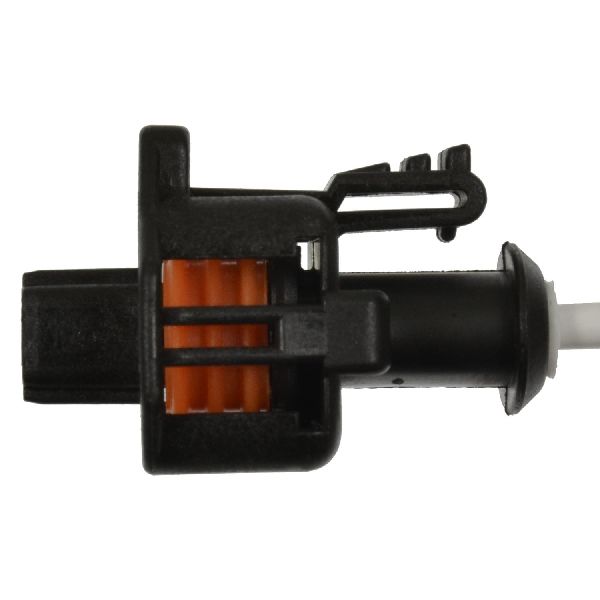
How to confirm: Visually inspect the wiring harness and connector going to the ESIM for signs of corrosion, chafing, or breaks. Use a multimeter to check for continuity and proper voltage/ground at the connector with the key on.
Typical fix: Repair the damaged section of the wiring harness or replace the connector pigtail.
Est. part cost: $20-$100
Rare But Worth Checking
- Faulty Purge Valve/Solenoid: This is located in the engine bay. While it can cause EVAP issues, it usually triggers other codes like P0443 or P0441. It's less likely to be the sole cause of P0446.
- Faulty Fuel Tank Pressure Sensor: If this sensor provides incorrect data to the PCM, it could lead to a misdiagnosis. However, a faulty sensor typically sets its own specific codes (e.g., P0452).
Diagnosis Steps
- Read the code with an OBD-II scanner and confirm P0446 is present. Note any other codes, especially P0456 or P0457.
- Inspect the gas cap to ensure it is tight and the seal is not cracked, though this is rarely the cause for P0446.
- Raise the vehicle and locate the charcoal canister and ESIM, typically mounted near the fuel tank on the driver's side, forward of the rear wheel.
- Visually inspect the canister, ESIM, and all attached hoses for cracks, damage, or obvious blockages. Pay close attention to the fresh air inlet hose for insect nests or debris.
- Inspect the electrical connector and wiring going to the ESIM for corrosion, damage, or loose connections.
- With the ignition key in the 'ON' position, use a multimeter to check for battery voltage and a good ground at the ESIM connector.
- If wiring and hoses are good, the ESIM is the most likely culprit. Given the difficulty of testing the ESIM's mechanical function without specialized tools, and its integration with the canister, replacement of the entire canister assembly is the most straightforward and reliable repair.
Parts You'll Likely Need
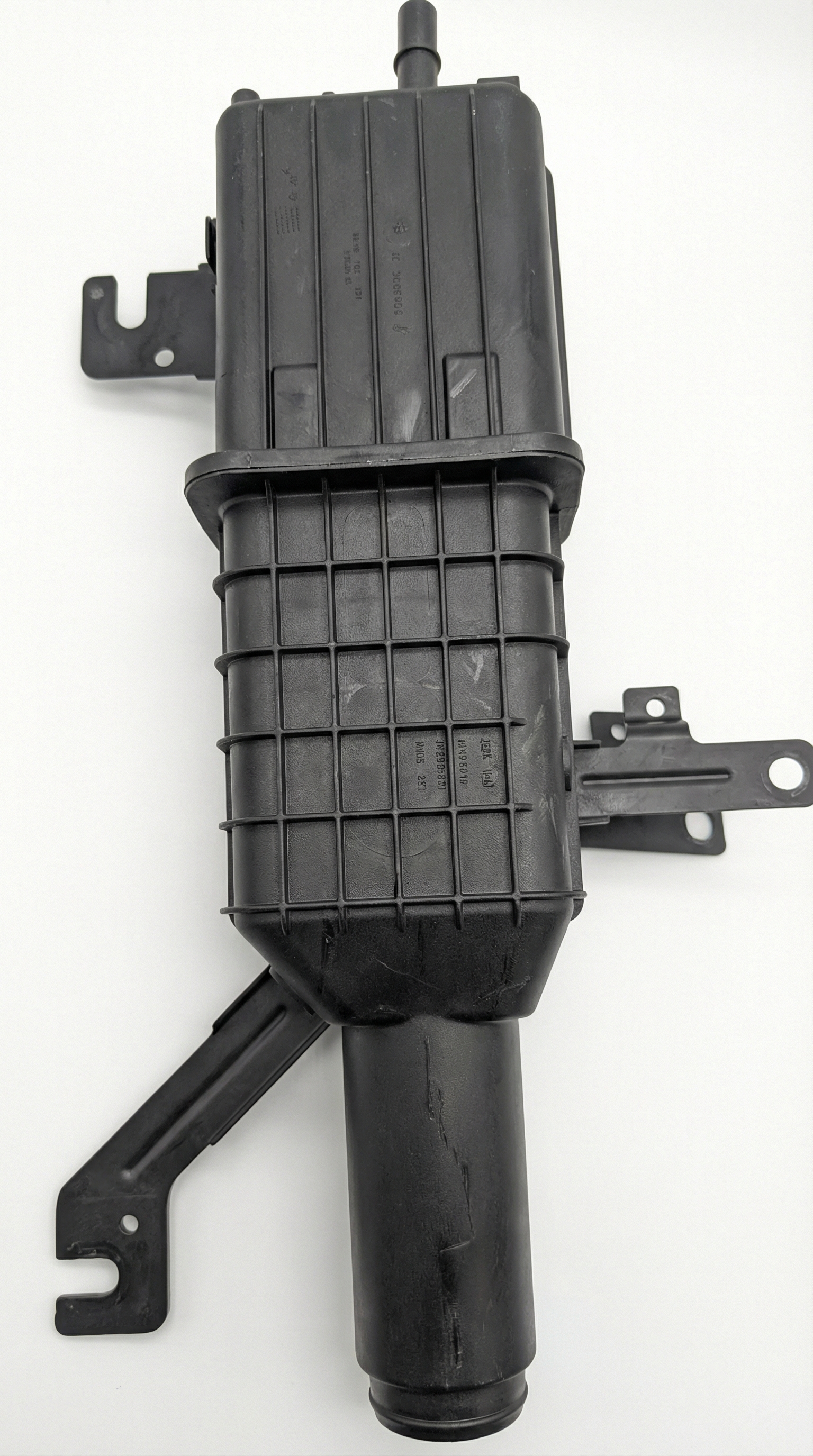
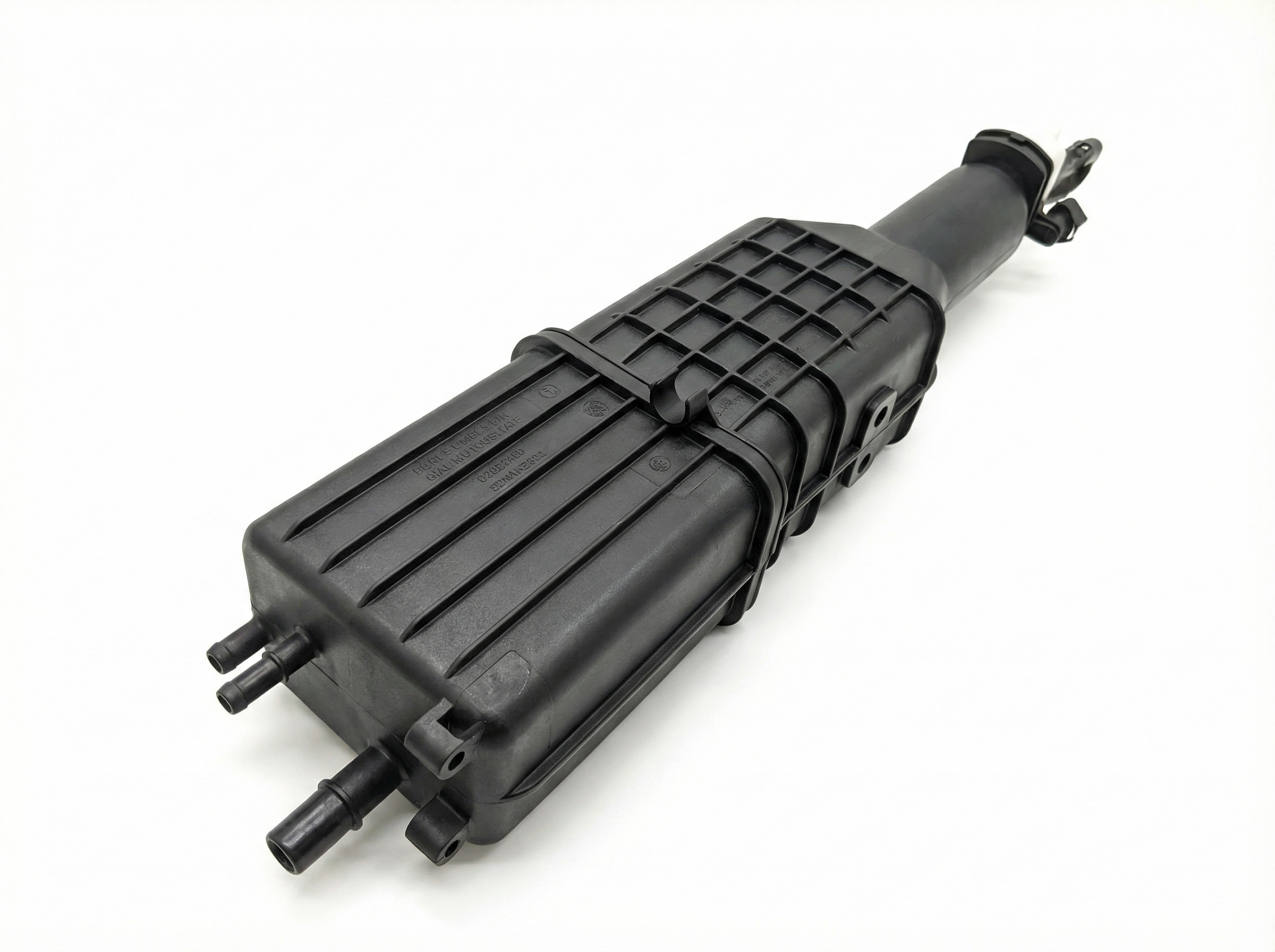
- Vapor Canister / Charcoal Canister Assembly
(OEM #5147384AL (latest Mopar number, may vary by specific year))— This is the most common fix because it replaces both the charcoal canister and the integrated ESIM (Leak Detection Pump), which are the two highest-probability failure points for code P0446 on this vehicle.
Trusted brands: Mopar, Dorman (P/N: 911-379), Standard Motor Products (P/N: CP3238), API, Wells
OEM price range: $290-$360
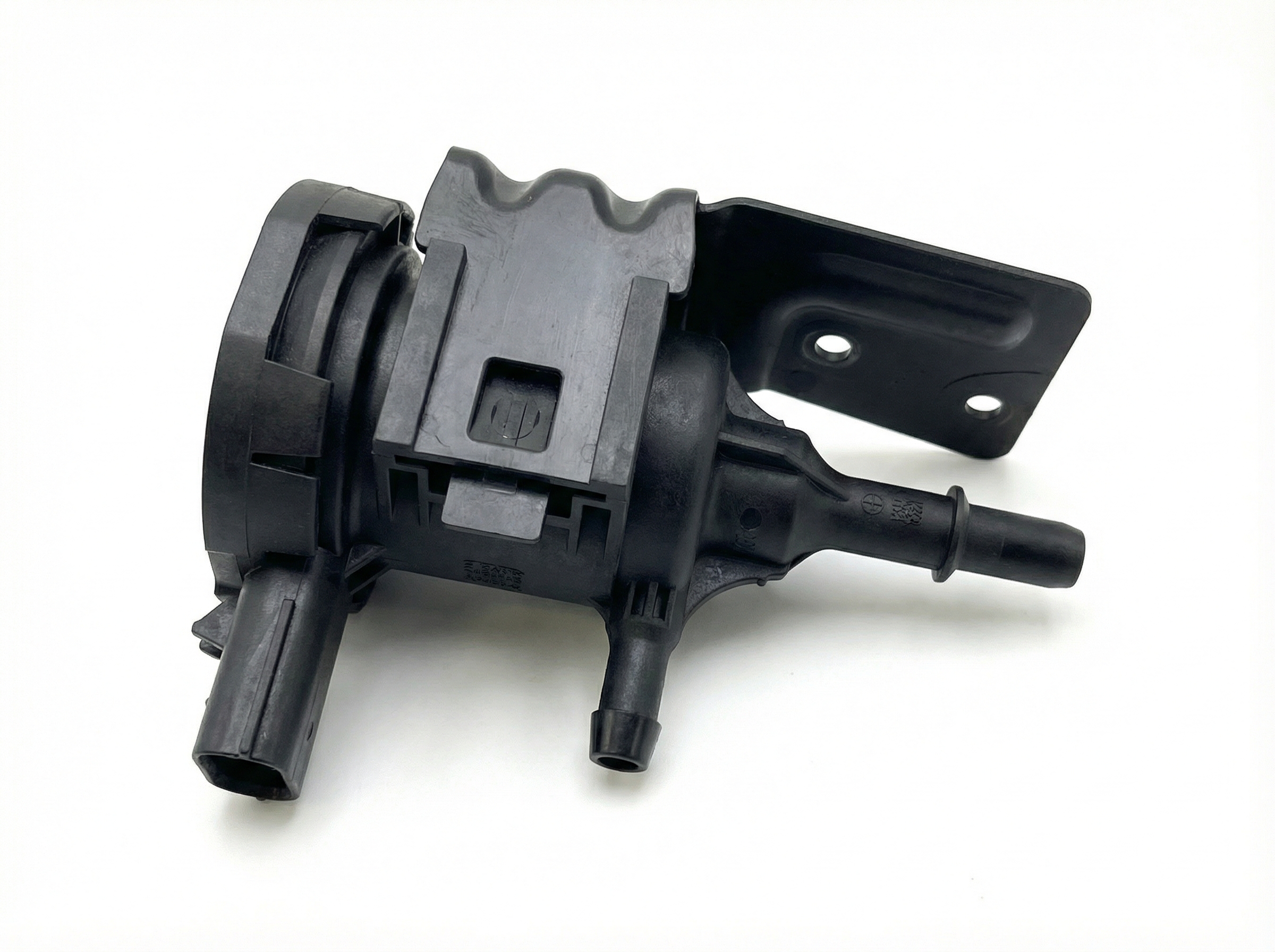
Aftermarket price range: $175-$250 - Evaporative System Integrity Module (ESIM) / Leak Detection Pump
(OEM #04861962AD (supersedes 4861962AA, 4861962AB, 4861962AC, 4891685AA, 4891685AB))— If you are certain the canister itself is not saturated or damaged, you can sometimes replace just the ESIM module. This part is widely used across many Chrysler, Dodge, and Jeep vehicles.
Trusted brands: Mopar, Dorman, Standard Motor Products
OEM price range: $40-$70
Aftermarket price range: $25-$50
Related Codes That Often Appear With This One
- P0456 — A failing ESIM may intermittently fail to seal, causing the system to log both a circuit fault (P0446) and a small leak (P0456).
- P0457 — This code for a leak due to a loose fuel cap can sometimes be falsely triggered by a failing ESIM, causing a 'gascap' light on the dash.
Technical Service Bulletins (TSBs) & Recalls
- GM TSB #02-06-04-037H: While for General Motors vehicles, this TSB is highly relevant as it describes the exact condition that can cause P0446 on the Grand Caravan: dust and debris intrusion into the EVAP vent system, causing a blockage. It recommends installing a filter on the vent inlet in dusty environments, a principle that applies here.
Platform-Specific Known Issues
- A common repair story involves a 2011 Grand Caravan throwing P0456 (small leak) and P0455 (large leak) codes. After replacing the gas cap with no success, the owner replaced the entire vapor canister assembly. The issue was resolved, confirming that the internal ESIM was the root cause of the leak codes. This highlights how a faulty ESIM often manifests as leak codes 🎬 Watch: Fixing common P0456 leak codes on a Grand Caravan rather than just the P0446 circuit code.
Mechanic-Grade Diagnostic Values
- ESIM Switch Bench Test — expected: With ground supplied to one pin, the other pin should show ground (continuity) ONLY when pressure is applied to the large port or vacuum is applied to the small port.. Failure: If the switch shows no continuity when pressure/vacuum is applied, or if it shows continuity at all times, the internal switch is bad.
- ESIM Connector Voltage — expected: One pin should have a constant ground supplied from the chassis. The other pin is the signal wire to the PCM. The PCM monitors this circuit for changes based on the ESIM's internal switch state.. Failure: Absence of a solid ground on the ground pin points to a wiring issue, not a faulty ESIM.
Scan Tool Commands That Help
- wiTECH or advanced aftermarket scanner: EVAP Monitor Test / System Test — This is a forced self-test that commands the PCM to run the entire EVAP leak detection sequence. It can take up to 20 minutes. It's used to verify a repair is successful or to confirm an intermittent fault is currently present without waiting for the monitor to run naturally over several drive cycles.
- Advanced aftermarket scanner: Vent Valve/Solenoid Command (On/Off) — While the ESIM is not a simple solenoid, some scan tools may offer a command to cycle the circuit. This can be used to verify the PCM is attempting to control the circuit and to check for a response in voltage at the connector.
Wiring & Ground Locations
- ESIM Installation Orientation — On the charcoal canister, where the ESIM module twists into place.. The ESIM is a mechanical, gravity-fed device. It MUST be installed with the electrical connector oriented at the 3 o'clock position. Installing it in any other orientation (e.g., 6 or 12 o'clock) will cause the internal weights to bind, preventing it from operating correctly and leading to a P0446 or other EVAP codes even with a brand new part.
- G302 / G303 — Typically located in the left rear quarter panel area, near the fuel filler neck or behind the trim panel.. This is a likely primary ground point for rear-body components, including the EVAP system. A corroded or loose ground at this location could cause a variety of difficult-to-diagnose electrical faults in the EVAP system, including a P0446.
"I Checked Everything" — The Actual Cause
- A very common scenario for Chrysler/Dodge vehicles is setting EVAP leak codes (like P0455/P0456) or a P0446 circuit code, performing a smoke test, and finding no leaks. In many of these cases, the root cause is a mechanically failed, but not leaking, Evaporative System Integrity Module (ESIM). The internal switch fails to report the correct state to the PCM during the self-test, causing the test to fail and a code to be set, even though the system is perfectly sealed.
OEM Part Supersession History
Multiple, including 5147384AB, 68000382AD→05147384AL— Standard part evolution and minor revisions by the manufacturer.
Heads up: The latest part number, 05147384AL, is specified for the entire 2008-2020 model range and is compatible with all engines offered (3.3L, 3.8L, 4.0L, 3.6L), indicating full backward compatibility.
Diagnostic Flowchart
Other Known Issues on This Vehicle
Issues unrelated to this code that are worth knowing about as an owner of this generation:
- Leaking Oil Filter/Cooler Housing (3.6L Pentastar) 🔴 High — Extremely common, often occurs between 50,000 and 100,000 miles. The plastic housing warps from heat cycles, causing oil to pool in the engine valley and leak down the back of the engine.
- Faulty Totally Integrated Power Module (TIPM) 🔴 High — Common across many 2008-2016 Chrysler products. Can cause a wide range of electrical issues, including no-start conditions, fuel pump staying on, horn or wipers activating randomly, and battery drain. (Ref: While no formal recall covered all issues, it's a widely documented failure.)
- 62TE Automatic Transmission Failures 🟠 Medium — Prone to issues like harsh shifting, torque converter problems, and solenoid pack failure. Regular fluid and filter changes (every 60,000 miles) are critical to longevity. Symptoms include shuddering, delayed engagement, and slipping.
- Premature Brake Wear 🟡 Low — Owners of earlier models (especially around 2008 and 2011) reported needing to replace brake pads and rotors more frequently than expected.
- Water Pump Failure 🟠 Medium — A notable failure point on both the earlier V6 engines and the 3.6L Pentastar. Symptoms include coolant leaks from the 'weep hole' on the passenger side of the engine, overheating, and whining noises from the pulley bearing.
Used vs. New Parts: Buying Guide for This Vehicle
When a used part is the smart pick: A used vapor canister assembly is generally NOT recommended for this repair. The primary failure point, the ESIM, has a high failure rate and its remaining lifespan is unknown. Furthermore, the canister itself can be saturated with fuel if the donor vehicle's owner frequently 'topped off' the tank, a condition that is impossible to assess visually.
Donor-vehicle mileage cap: roughly under 50000 miles for the part to have meaningful remaining life.
What to inspect on the donor part:
- Ask the recycler if they can confirm the donor vehicle did not have EVAP-related codes.
- Inspect the part for any physical cracks or damage.
- If possible, remove the ESIM from the used canister and shake it. If it rattles, it is likely bad.
- Ensure all hose connection ports are clean and free of debris.
Aftermarket brands forum-validated for this vehicle:
- Dorman (P/N: 911-379) is a widely available and commonly used aftermarket replacement for the entire canister assembly.
- Standard Motor Products (SMP)
Brands owners have reported issues with on this vehicle:
- Avoid no-name, unbranded parts from online marketplaces, as the quality of the charcoal and the internal ESIM components can be highly variable.
Real Owner Stories
Aggregated from forums and TSBs cited above. Mileages and costs reflect what owners reported in those sources.
2011 Dodge Grand Caravan
Symptoms: The vehicle was throwing P0456 (small leak) and P0455 (large leak) codes. The owner tried replacing the gas cap first, but the light stayed on.
What fixed it: Replacing the entire vapor canister assembly (which includes the ESIM) resolved the issue.
Source hint: vehicle_specific_issues
2011 Chrysler Town & Country
Symptoms: Persistent P0456 code indicating an EVAP leak.
What fixed it: Replacing the vapor canister.
Source hint: https://forum.chryslerminivan.net/threads/2011-t-c-p0456-code-evap-leak.171781/
Dodge Dart
Symptoms: P0446 and P0456 EVAP codes appearing together.
What fixed it: The owner traced the failure to a faulty ESIM.
Source hint: https://www.dodge-dart.org/threads/p0446-and-p0456-evap-codes.69896/
Related OBD-II Codes
Frequently Asked Questions
Why does my 2008-2020 Dodge Grand Caravan have trouble at the gas pump when the P0446 code is active?
My dash says 'gascap' but the cap is tight. Is this related to P0446?
Does GM TSB #02-06-04-037H apply to my Dodge Grand Caravan?
Can I just replace the ESIM, or do I need the whole canister assembly?
Where is the ESIM and charcoal canister located on my Grand Caravan?
Is there a simple DIY test to see if my ESIM has failed?
Helpful Videos
Used OEM Parts in Stock

New Aftermarket Parts Available


The information in this article is provided for general reference and educational purposes only. Vehicle specifications, procedures, and part compatibility can vary by production date, trim level, and region. Always consult your vehicle's factory service manual and verify part numbers before purchasing or performing repairs. Safety-critical components such as airbags, seat belts, and braking systems should be installed by a qualified professional.
- Dodge Grand Caravan:
- 🎬 Helpful Videos
- 🛍️ Shop This Part
- What's Unique About the 2008-2020 Dodge Grand Caravan
- Symptoms You May Notice
- Most Likely Causes
- Rare But Worth Checking
- Diagnosis Steps
- Parts You'll Likely Need
- Related Codes That Often Appear With This One
- Technical Service Bulletins (TSBs) & Recalls
- Platform-Specific Known Issues
- Mechanic-Grade Diagnostic Values
- Scan Tool Commands That Help
- Wiring & Ground Locations
- "I Checked Everything" — The Actual Cause
- OEM Part Supersession History
- Diagnostic Flowchart
- Other Known Issues on This Vehicle
- Used vs. New Parts: Buying Guide for This Vehicle
- Real Owner Stories
- 2011 Dodge Grand Caravan
- 2011 Chrysler Town & Country
- Dodge Dart
- Related OBD-II Codes
- Frequently Asked Questions
- 🎟️ Get 5% Off