

P0442 on 2003-2008 Subaru Forester: EVAP Small Leak Causes and Fixes
For a 2003-2008 Subaru Forester, P0442 is most often caused by a loose or faulty gas cap, or a rusted fuel filler neck. Start by checking the gas cap for a good seal. If that doesn't fix it, the filler neck is the next most likely culprit, especially on cars from rust-belt states. A smoke test is the best way to confirm the leak's location.
- Always check the gas cap first. Ensure it's tight and the seal is in good condition. An OEM replacement is best.
- If the gas cap isn't the problem, the most likely cause on a 2003-2008 Forester is a rusted fuel filler neck.
- A visual inspection of the filler neck (behind the right rear wheel) is the next logical step.
- A professional smoke test is the fastest way to pinpoint the exact location of a leak if it's not obvious.
- Driving with P0442 is safe, but it will prevent you from passing an emissions test.
What's Unique About the 2003-2008 Subaru Forester
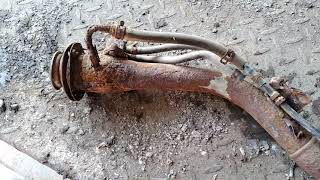
While a loose gas cap is a common cause for P0442 on any vehicle, the second-generation (SG) Subaru Forester is particularly susceptible to a rusted fuel filler neck. This metal pipe, which connects the gas cap to the fuel tank, is exposed to road salt and moisture behind the right rear wheel. It corrodes and develops small pinholes that trigger the P0442 code. This issue is so prevalent that many owners and technicians on forums consider it the primary suspect after the gas cap has been ruled out.
Generation note: This range covers the entire second generation (SG) of the Subaru Forester. A facelift occurred for the 2006 model year, but the fundamental EVAP system design and the common causes for P0442 remained consistent throughout the 2003-2008 period.
Symptoms You May Notice
- Check Engine Light is on
- A faint smell of fuel, especially after refueling or when parked in a garage
- Difficulty starting the engine immediately after getting gas (this points more towards a faulty purge valve)
- Immediately replacing the purge valve or charcoal canister without first checking the gas cap and filler neck.
- Replacing the gas cap with a cheap aftermarket one that doesn't seal properly, leading to the code returning.
Most Likely Causes
- Loose or Faulty Gas Cap 🔴 High Probability This is the most common cause for any vehicle. The rubber O-ring on the cap can crack, harden, or get dirty over time, preventing a proper seal.
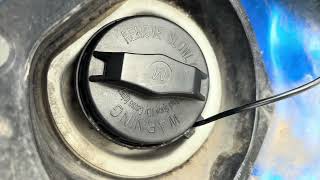
How to confirm: Ensure the cap is tightened until it clicks several times. Inspect the rubber seal for any cracks, stiffness, or debris. Clean the sealing surface on the filler neck, which can also get rusty and prevent a seal.
Typical fix: If tightening doesn't work, replace the gas cap. It is highly recommended to use an OEM (Original Equipment Manufacturer) cap from Subaru, as some aftermarket caps may not seal correctly.
Est. part cost: $25-$40 - Rusted or Cracked Fuel Filler Neck 🔴 High Probability The filler neck on this generation of Forester is made of steel and is highly susceptible to rusting from road salt and moisture, creating small pinhole leaks. The rust often forms on the main pipe or the smaller vent pipe that runs alongside it.
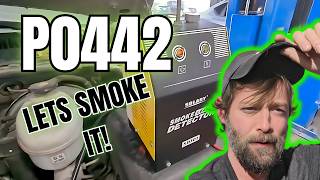
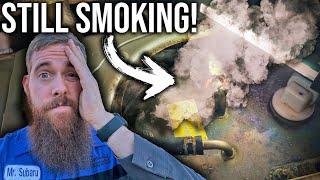
How to confirm: A visual inspection is required. Remove the right rear wheel and the plastic splash guard to get a clear view of the filler neck. Look for rust, flaking metal, and small holes. A smoke test is the definitive way to confirm the leak location. Smoke will visibly pour out of the rusted sections. 🎬 See how a smoke test quickly identifies these hidden leaks.
Typical fix: The rusted filler neck must be replaced. 🎬 Watch: Step-by-step guide to replacing your rusted fuel filler neck. This involves disconnecting it from the fuel tank and the body of the car. It is often recommended to replace the small shutoff valve/vent valve attached to the neck at the same time.
Est. part cost: $100-$250 - Cracked or Disconnected EVAP Hoses 🟡 Medium Probability Rubber hoses become brittle and crack with age and exposure to engine heat and the elements. A common failure point is a short hose running from the intake manifold to the purge solenoid. Connections can also become loose.
How to confirm: Visually inspect all accessible EVAP hoses running from the charcoal canister (near the rear of the car) to the purge valve in the engine bay. Bend the hoses slightly to reveal small cracks. A smoke test is the most effective way to find hard-to-see leaks.
Typical fix: Replace the cracked section of hose or the entire hose if it's extensively damaged. Ensure all connections are secure.
Est. part cost: $10-$30 - Faulty Purge Control Solenoid Valve ⚪ Low Probability The valve can get stuck partially open, creating a small leak in the system. This can sometimes cause difficulty starting after refueling, as fuel vapors flood the engine.
How to confirm: The purge valve is typically located in the engine bay, under the intake manifold. It can be tested by applying 12V power to see if it clicks open and closed. A more definitive test is to remove it and try to blow through it; when de-energized, it should be closed and not allow air to pass. A failure here often, but not always, triggers other codes like P0441.
Typical fix: Replace the purge control solenoid valve. 🎬 Watch: How to swap out a faulty purge solenoid valve.
Est. part cost: $50-$100
Rare But Worth Checking
- Faulty EVAP Vent Valve: This component is located near the charcoal canister at the rear of the vehicle. It's more likely to fail due to rust and trigger a P0446 code, but it can also fail in a way that causes a small leak.
- Cracked Charcoal Canister: The plastic housing of the canister can develop cracks from age or impact, leading to a leak. Sometimes the internal material can break down and clog lines, causing other issues.
- Leak on Top of Fuel Tank: Plastic fittings or the fuel pump module seal on top of the fuel tank can fail, but this is rare and very difficult to diagnose and repair as it requires dropping the entire fuel tank assembly.
Diagnosis Steps
- Check the gas cap. Remove it, inspect the seal for cracks or damage, and clean the mating surface on the filler neck. Reinstall it and ensure it clicks multiple times. Clear the code and drive for a few days to see if it returns.
- If the code returns, purchase an OEM Subaru gas cap and install it. Clear the code and drive again.
- If the code persists, perform a thorough visual inspection of the fuel filler neck. You will need to remove the right rear wheel and plastic splash shield for a clear view. Look for signs of heavy rust, flaking, and pinholes on both the main pipe and the smaller breather tube.
- Inspect all visible EVAP system hoses for cracks, especially at connection points and bends. Pay close attention to the short hoses under the intake manifold.
- If no obvious cause is found, the most effective next step is a professional smoke test. A machine fills the EVAP system with a harmless, visible smoke, which will escape from any leak point, making it easy to identify.
- Based on the smoke test results, replace the leaking component, which could be the filler neck, a hose, the purge valve, the vent valve, or the charcoal canister.
Parts You'll Likely Need
- Fuel Cap
(OEM #42031FE000 (for 2003-2005 models), 42031SA010 (for 2006-2008 models))— This is the most frequent and easiest fix. The seal wears out over time. Using an OEM cap is strongly recommended for a proper seal.
Trusted brands: Subaru (OEM), Stant
OEM price range: $25-$40
Aftermarket price range: $15-$30 - Fuel Filler Neck
(OEM #42066SA020 (for 2003-2005 models), 42075SA150 (for 2006-2008 models) - Note: Part numbers can vary, always verify with VIN.)— A very common failure point on this specific vehicle due to rust, causing pinhole leaks. Aftermarket versions are available and often used.
Trusted brands: Subaru (OEM), Spectra Premium, Dorman
OEM price range: $180-$250
Aftermarket price range: $100-$160 - EVAP Purge Control Solenoid Valve — A less common but possible cause, especially if experiencing hard starts after refueling.
Trusted brands: Subaru (OEM), Denso, Dorman
OEM price range: $80-$120
Aftermarket price range: $40-$80
Related Codes That Often Appear With This One
- P0457 — This code specifically indicates a leak detected due to a loose or missing fuel cap. It often shares the same root causes as P0442, like a bad cap seal or a rusted filler neck preventing the cap from sealing.
- P0455 — Indicates a large EVAP leak. A small crack in a hose or filler neck that triggers P0442 can worsen over time and become a large leak, triggering P0455.
- P0456 — Indicates a very small EVAP leak. The same failing components can sometimes be detected as different-sized leaks by the system on different tests.
Platform-Specific Known Issues
- The fuel filler neck is highly prone to corrosion in states that use road salt, making it the most likely cause of P0442 after the gas cap is ruled out.
- The area behind the right rear wheel well where the filler neck is located can trap moisture and debris, accelerating the rusting process.
Mechanic-Grade Diagnostic Values
- Purge Control Solenoid Valve Coil Resistance — expected: 26 - 33 Ohms. Failure: A reading significantly outside this range, or an open/short circuit, indicates a failed solenoid coil.
- EVAP Vent Valve / Drain Valve Solenoid Coil Resistance — expected: 30 - 50 Ohms. Failure: A reading outside this range, especially a low reading around 26 Ohms or an open circuit, suggests a failing solenoid even if it still clicks.
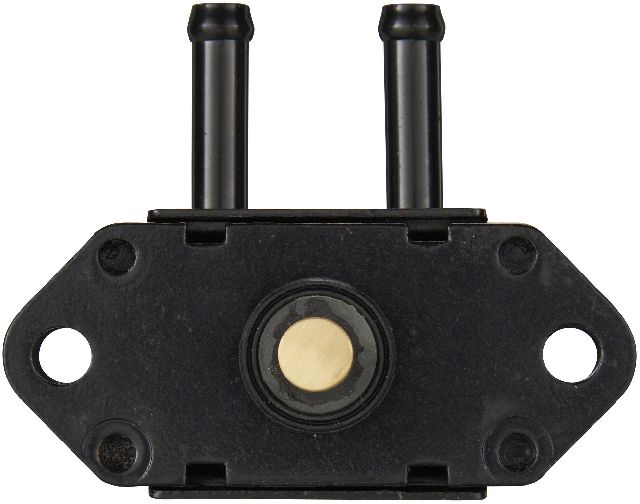
- Fuel Tank Pressure (FTP) Sensor Voltage (Key ON, Engine OFF, Gas Cap OFF) — expected: ~1.5V (acceptable range 1.3V - 1.7V). Failure: A reading stuck near 0V or 5V indicates a faulty sensor or wiring issue.
Scan Tool Commands That Help
- Subaru Select Monitor (SSM) or Manual Connection: Green Connector 'Test Mode' — Connecting the two green, single-pin connectors under the driver's side dash and turning the key to 'ON' (engine off) puts the vehicle into a diagnostic test mode. This cycles all relays and solenoids, including the EVAP purge and vent valves, at approximately one-second intervals. This is a low-tech way to physically listen for the clicking of each solenoid to confirm it is mechanically actuating, without needing a scan tool.
- Subaru Select Monitor (SSMIII / SSM4): On-Board System Test / Forced EVAP Self-Test — For vehicles in this range with an Evaporative Leak Check Module (ELCM), this function commands the system to perform its leak detection test on demand. This allows a technician to monitor the EVAP system pressure sensor data in real-time to diagnose if and when the system is losing pressure.
- Professional Scan Tool: Close Vent Valve / Solenoid — This command is essential before performing a smoke test. The vent valve is normally open, so it must be commanded shut to seal the system and allow the smoke to build pressure, revealing leaks.
Wiring & Ground Locations
- Purge Control Solenoid Valve Connector — In the engine bay, typically under the intake manifold.. This connector and its wiring are exposed to engine heat, which can make them brittle over time. A poor connection here can prevent the purge valve from operating correctly, potentially causing a leak or other EVAP codes.
- EVAP Vent Valve / Drain Valve Connector — At the rear of the vehicle, on or near the charcoal canister, which is located behind the rear passenger-side wheel.. This connector is highly susceptible to corrosion from road salt and moisture due to its exposed location. A corroded connector or broken wire is a common cause of vent valve circuit codes (like P0446) and can also contribute to small leak codes.
- GE (Ground-Engine) — A wiring diagram for a 2005 model shows a primary engine ground point on the rear of the engine.. While not specific to one component, a poor engine ground can cause a variety of unpredictable electrical issues with sensors and solenoids, including those in the EVAP system.
- Fuel Tank Pressure Sensor Connector — On top of the fuel tank, accessible by removing the fuel pump access panel under the rear seat or by dropping the tank.. A bad connection or damaged wire at the FTP sensor will cause the ECM to receive incorrect data, potentially leading it to misdiagnose a leak and set a P0442 code.
Real Owner Repair Stories
- Reddit user, r/subaru (2004 Subaru Forester, 75k miles) — Check Engine Light with code P0442.
❌ Tried (didn't work) The owner was told it was not the gas cap.
✅ What actually fixed it A smoke test revealed a leak from the top of the gas tank, which the shop diagnosed as a malfunctioning fuel pressure valve (part # 42084AE050). The fix required accessing the top of the fuel tank. - Reddit user, r/subaru (2001 Subaru Forester L) — Recurring P0442 code.
❌ Tried (didn't work) Replacing the knock sensor for a different code., Replacing the gas cap with a new OEM Subaru cap.
✅ What actually fixed it The confirmed cause was a rusted-out fuel filler neck. A technician on the forum correctly predicted this, advising the owner to remove the right rear wheel and the plastic cover to inspect the metal pipes for rust holes. - NHTSA ODI #11535637 — An owner reported a strong gas smell and gasoline leaking when the vehicle was driven on an incline. Upon checking the fault, the vehicle threw a P0442 code for a small EVAP leak. The owner noted that steel tanks on these vehicles appear to rust where the seam of the tank is located.
OEM Part Supersession History
42031FE000→N/A - Still valid for specified years— Fuel Cap for 2003-2005 models.
Heads up: This cap is for pre-facelift models. The 2006-2008 facelift models use a different cap, PN 42031SA010.42066SA020→N/A - Still valid for specified years— Fuel Filler Neck for 2003-2005 models.
Heads up: This filler neck is for pre-facelift models. The 2006-2008 facelift models use a different neck, PN 42075SA150.42084FA120→N/A— This part number is listed as the Vent Valve (or Purge Solenoid, depending on catalog) for 2003-2004 models.
Heads up: Part catalogs can be confusing for this component. It's often called a vent valve, drain valve, or sometimes incorrectly a purge solenoid. Always verify the part's location (on canister at rear) before ordering.
Model Year Variations Within This Range
- 2003-2005 vs 2006-2008: The 2006 model year facelift introduced changes to several parts, including the fuel cap and fuel filler neck. The part numbers are different between the pre-facelift (03-05) and post-facelift (06-08) models, and they are not interchangeable. The charcoal canister assembly may also differ, with part number 42035SA000 listed for 2004-2008 non-turbo models.
Diagnostic Flowchart
Other Known Issues on This Vehicle
Issues unrelated to this code that are worth knowing about as an owner of this generation:
- Head Gasket Failure (Naturally Aspirated EJ25 Engine) 🔴 High — Very common, typically between 100,000 and 150,000 miles. Affects non-turbo models most. The failure can be external (oil/coolant leaks) or internal.
- Leaking Oil Pressure Switch/Sensor 🟠 Medium — A very common and frequent source of oil leaks on the EJ25 engine, often misdiagnosed as a valve cover or head gasket leak. The leak drips onto the exhaust manifold, causing a burning oil smell.
- Rear Wheel Bearing Failure 🟠 Medium — Common failure item, leading to a loud humming or roaring noise from the rear of the vehicle that increases with speed. It is a wear item, but failure rates are noted to be higher than average by some technicians.
- Wind Noise from Window Gussets 🟡 Low — The triangular gussets at the front of the front door windows can deform or loosen over time, creating a loud whistling or wind rushing noise at highway speeds.
Used vs. New Parts: Buying Guide for This Vehicle
When a used part is the smart pick: A used fuel filler neck can be a smart purchase if the donor vehicle is from a dry, non-rust-belt state. This is often cheaper than a new OEM part and potentially better quality than a budget aftermarket replacement. A complete used charcoal canister assembly can also be cost-effective, as the failure is often one of the attached valves, not the canister itself.
Donor-vehicle mileage cap: roughly under 150000 miles for the part to have meaningful remaining life.
What to inspect on the donor part:
- For a filler neck, demand clear photos showing zero rust, especially around the mounting brackets, the main tube, and the smaller breather tube.
- For a charcoal canister assembly, inspect photos for rust on the metal body and electrical connector of the attached vent/drain valve. A part from a southern or western state is highly preferable.
- Verify the donor vehicle's model year to ensure compatibility, especially with the 2006 facelift changeover.
OEM-only on this vehicle (don't cheap out):
- Fuel Cap: It is almost universally recommended on forums to use an OEM Subaru gas cap. Many owners report that even reputable aftermarket caps fail to seal correctly, causing the P0442 code to return.
Aftermarket brands forum-validated for this vehicle:
- Spectra Premium: Often cited as a quality replacement for fuel filler necks and other fuel system components. Their filler necks are typically dual-coated for corrosion resistance.
- Denso: As an original equipment supplier for many Japanese vehicles, Denso is a trusted brand for sensors and solenoids like the purge valve.
Brands owners have reported issues with on this vehicle:
- Dorman: While widely available, some forum discussions suggest potential quality control or fitment issues with Dorman fuel tanks and other parts compared to Spectra or OEM, though they are often cheaper.
Real Owner Stories
Aggregated from forums and TSBs cited above. Mileages and costs reflect what owners reported in those sources.
2007 Subaru Forester — 61000 miles
Symptoms: The check engine light has come on several times over the past several months. A dealership smoke test found liquid fuel in the charcoal canister from topping off the gas tank.
What fixed it: The dealership recommended replacing the charcoal canister and then re-testing for further leaks.
Cost: $481.85
Source hint: Car Talk Community owner report
2007 Subaru Forester
Symptoms: Check engine code P0442 combined with the car not starting up after getting gas.
What fixed it: Replacing the purge valve.
Source hint: reddit.com/r/SubaruForester - '07 Forester Code P0442 and Not starting up after getting gas'
2003-2008 Subaru Forester
Symptoms: Small EVAP leak code P0442; common knowledge for this platform in rust-prone areas.
What fixed it: Replacing the rusted fuel filler neck.
Source hint: reddit.com/r/subaru - 'rusted filler neck'
Related OBD-II Codes
Frequently Asked Questions
Why does my 2003-2008 Forester have trouble starting only after I fill up the gas tank?
I live in a state that uses road salt; why is my Forester more prone to P0442?
Should I buy an aftermarket gas cap to fix the P0442 code on my Subaru?
How can I definitively find the leak if a visual inspection of the hoses and filler neck shows nothing?
Where is the most common place for EVAP hoses to crack on this model?
Is the P0442 code related to the common head gasket issues on the EJ25 engine?
Helpful Videos
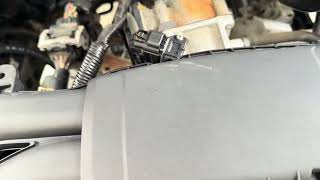
Used OEM Parts in Stock
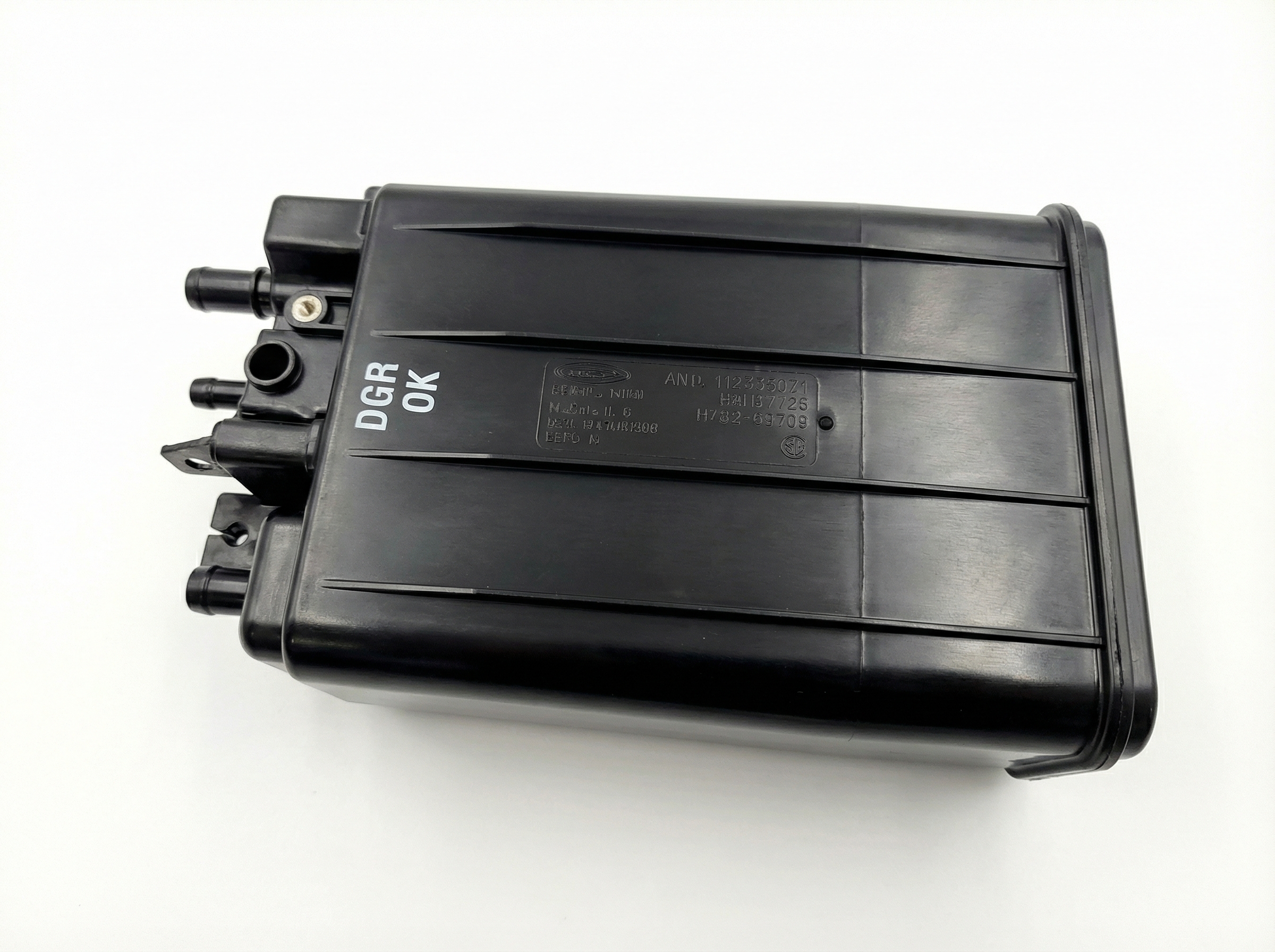
New Aftermarket Parts Available


The information in this article is provided for general reference and educational purposes only. Vehicle specifications, procedures, and part compatibility can vary by production date, trim level, and region. Always consult your vehicle's factory service manual and verify part numbers before purchasing or performing repairs. Safety-critical components such as airbags, seat belts, and braking systems should be installed by a qualified professional.
- Subaru Forester:
- 🎬 Helpful Videos
- 🛍️ Shop This Part
- What's Unique About the 2003-2008 Subaru Forester
- Symptoms You May Notice
- Most Likely Causes
- Rare But Worth Checking
- Diagnosis Steps
- Parts You'll Likely Need
- Related Codes That Often Appear With This One
- Platform-Specific Known Issues
- Mechanic-Grade Diagnostic Values
- Scan Tool Commands That Help
- Wiring & Ground Locations
- Real Owner Repair Stories
- OEM Part Supersession History
- Model Year Variations Within This Range
- Diagnostic Flowchart
- Other Known Issues on This Vehicle
- Used vs. New Parts: Buying Guide for This Vehicle
- Real Owner Stories
- 2007 Subaru Forester — 61000 miles
- 2007 Subaru Forester
- 2003-2008 Subaru Forester
- Related OBD-II Codes
- Frequently Asked Questions
- 🎟️ Get 5% Off