

P0441 on 2003-2010 Porsche Cayenne: EVAP Incorrect Purge Flow Causes and Fixes
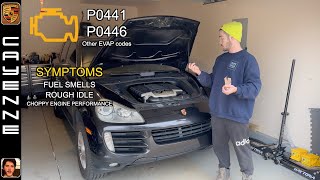
This code is most often caused by a faulty EVAP purge valve. A failing valve can also cause hard starting after refueling. Replacing the valve costs between $70-$150 for the part and is a common DIY fix.
- P0441 on a 2003-2010 Cayenne almost always points to a bad EVAP purge valve.
- If your Cayenne is hard to start after getting gas, the purge valve is the likely culprit.
- Always verify the correct part number for your specific engine (V6 vs. V8) and model year (955 vs. 957) before ordering parts.
- The repair is manageable for a DIYer, but access is tight, especially on V8 models.
- Before replacing parts, always check that the gas cap is tight and inspect for obvious cracked hoses.
What's Unique About the 2003-2010 Porsche Cayenne

On the first-generation Cayenne, the P0441 code is a very common issue as the vehicles age. While the cause can be a simple vacuum leak, the EVAP purge valve (often called the N80 valve or tank vent valve) is a frequent failure point. Owners often first notice a problem when the vehicle is difficult to start immediately after filling the gas tank, a classic symptom of a purge valve stuck open on this platform. This happens because raw fuel vapor floods the intake manifold, creating an overly rich mixture that is difficult to ignite. The replacement procedure differs significantly between the V6 and V8 engines due to the valve's location.
Generation note: The 2003-2010 range covers the entire first generation of the Porsche Cayenne, which includes the pre-facelift 955 (2003-2006) and the facelifted 957 (2008-2010). While the EVAP system's function is the same, the specific part numbers for the purge valve and its location vary depending on whether you have a V6 or V8 engine. The V8 engines also changed from a 4.5L in the 955 to a 4.8L in the 957, contributing to the different part numbers.
Symptoms You May Notice
- Check Engine Light is on
- Difficulty starting the engine, especially right after refueling.
- Rough or unstable idle, particularly after a cold start or after refueling.
- Extended crank time, even when not refueling.
- Audible humming or buzzing from the rear of the car near the fuel tank.
- Fuel smell around the vehicle.
- Replacing the oxygen sensors. O2 sensors may report a rich or lean condition as a result of the incorrect purge flow, but they are not the root cause.
- Replacing the mass air flow (MAF) sensor. A vacuum leak from a bad purge valve can cause symptoms similar to a faulty MAF, but the P0441 code points specifically to the EVAP system.
Most Likely Causes


- Faulty EVAP Purge Valve (N80 Valve) 🔴 High Probability The internal diaphragm or solenoid in the Bosch-made valve can fail over time, causing it to stick open or closed. This is a very common failure item on many German vehicles of this era, including its platform mates, the VW Touareg and Audi Q7.
How to confirm: With the engine off, disconnect the valve and try to blow through it; it should be closed and allow no air to pass. If air passes, it's stuck open and faulty. You can also use a scan tool to command the valve to open and close, listening for a click. 🎬 Watch: How to test if your purge valve is good or bad. A hand vacuum pump can be used to confirm it holds vacuum when de-energized. If you feel suction from the vacuum port on a cold engine, the valve is stuck open.
Typical fix: Replace the purge valve. On V6 models, it's at the back of the engine near the firewall, under the cowl. It can be accessed without major disassembly, though a stepladder may be helpful. 🎬 See this walkthrough for replacing the valve on V6 models. On V8 models (955/957), it is located on the driver's side of the engine, under the decorative cover. Replacement often requires removing the secondary air pump and disconnecting fuel injector connectors to gain access to the valve and its hard plastic line that runs under the fuel rail. 🎬 Watch: Step-by-step purge valve replacement for the V8 Cayenne S. Many owners recommend replacing the entire line assembly rather than just the valve, as the old plastic hoses become brittle and difficult to separate without breaking.
Est. part cost: $70 - $150 - Cracked or Disconnected EVAP/Vacuum Hoses 🟡 Medium Probability The plastic and rubber hoses in the engine bay become brittle with age and heat cycles, leading to cracks and vacuum leaks. This is especially true for the PCV hoses which are often disturbed during other repairs.
How to confirm: Visually inspect all accessible EVAP lines running from the purge valve to the intake manifold and back towards the charcoal canister. A smoke test is the most effective way to find small, hard-to-see leaks.
Typical fix: Replace the cracked or broken hose section. Sometimes the entire line assembly must be replaced if the break is near a molded fitting.
Est. part cost: $20 - $100 - Loose or Faulty Gas Cap ⚪ Low Probability The gas cap seal can degrade over time, preventing the EVAP system from sealing properly. While more likely to cause a 'small leak' code like P0456, it's a simple and free check that should always be performed first.
How to confirm: Ensure the gas cap is tightened until it clicks multiple times. Inspect the rubber O-ring on the cap for cracks, stiffness, or damage.
Typical fix: Replace the gas cap if the seal is visibly damaged or if tightening it does not resolve the code after a few drive cycles. An OEM cap is recommended.
Est. part cost: $25 - $50
Rare But Worth Checking
- Failing Charcoal Canister: Consistently overfilling the fuel tank (i.e., continuing to pump after the first click) can saturate the charcoal canister with liquid fuel, causing it to fail. The canister can also break down internally, sending small black charcoal pellets into the EVAP lines. These pellets can travel to the purge valve and hold it open, triggering the P0441 code. If you find black granules when you disconnect the purge valve lines, the canister and the lines must be replaced.
- Faulty Leak Detection Pump (LDP): The LDP is used by the system to pressurize and test for leaks. While failure is less common for a P0441 'incorrect flow' code compared to a leak code like P0456, it is part of the overall system and its malfunction can sometimes contribute to diagnosis issues.
Diagnosis Steps

- Read the Code: Confirm P0441 is the primary code stored. Note any other codes present, such as lean codes (P2187/P2189) or leak codes (P0456).
- Check the Gas Cap: Remove the gas cap, inspect the seal for damage, and reinstall it, ensuring it clicks at least three times. Clear the codes and drive to see if the light returns.
- Visual Inspection: Remove the engine covers. Visually inspect all accessible vacuum and EVAP hoses for obvious cracks, breaks, or loose connections, especially around the purge valve and intake manifold.
- Test the Purge Valve: Locate the purge valve. With the engine off, disconnect the vacuum lines. Try to blow through the valve; it should be closed and not allow air to pass. If it's open, it has failed and needs replacement. Check the lines for any black charcoal granules, which would indicate a failed charcoal canister.
- (Optional) Functional Test: If the valve is closed at rest, you can test its operation. Use a 9V battery or a power probe to apply power to the valve's electrical pins. It should make an audible click. When energized, it should open and allow air to pass through.
- (Advanced) Smoke Test: If the purge valve tests good and no visible leaks are found, the next step is to perform a smoke test. This involves injecting low-pressure smoke into the EVAP system (usually via the service port) and looking for where it escapes, revealing the location of any leaks.
- Repair and Clear: Once the faulty component is identified and replaced, clear the trouble codes with a scan tool and perform a drive cycle to allow the EVAP monitor to run and confirm the fix.
Parts You'll Likely Need
- EVAP Canister Purge Valve (V6 Models)
(OEM #95560551700)— This is the most common failure part for P0441 on the 3.2L and 3.6L VR6 engines. The Bosch equivalent is a common, less expensive alternative.
Trusted brands: Bosch (P/N: 0280142353), Porsche (OE)
OEM price range: $120-$160
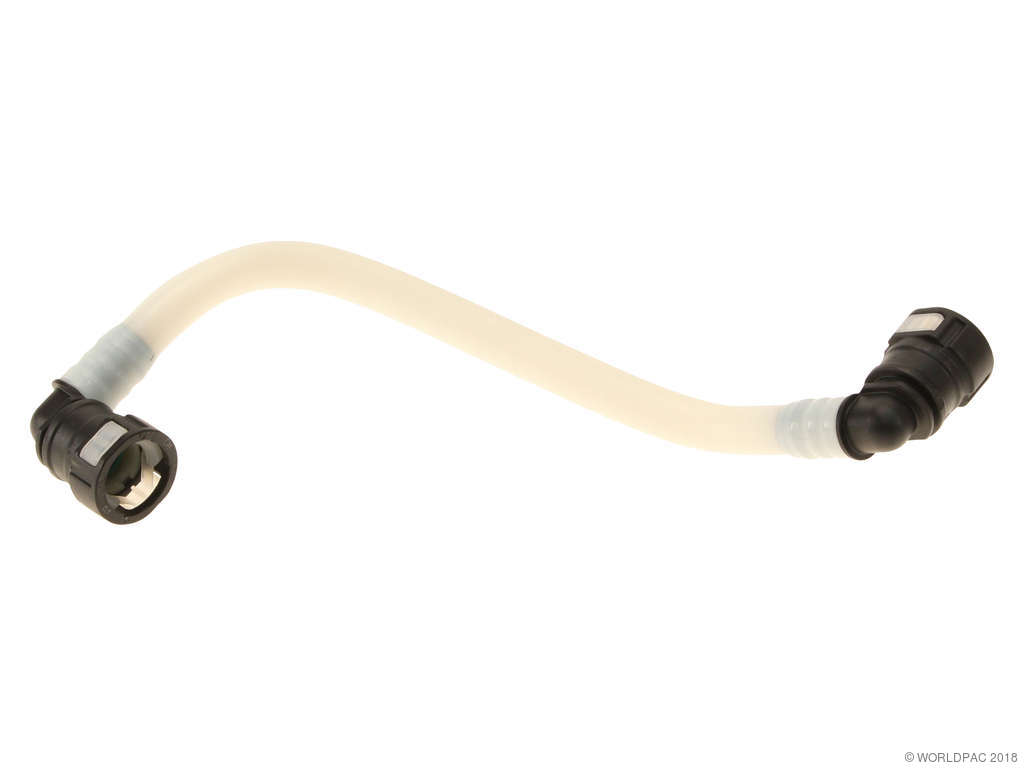
Aftermarket price range: $70-$100 - EVAP Canister Purge Valve / Line (V8 S/Turbo 955 Models)
(OEM #94811020203)— This is the purge valve and line assembly for the 4.5L V8 engines in the 2003-2006 Cayenne S and Turbo. It is often sold as a complete line as the plastic becomes brittle. It supersedes part number 94811020201.
Trusted brands: Bosch, Porsche (OE), URO Parts
OEM price range: $150-$200
Aftermarket price range: $90-$130 - EVAP Canister Purge Valve / Line (V8 S/GTS 957 Models)
(OEM #94811002003)— This is the purge valve and line assembly for the 4.8L V8 engines in the 2008-2010 Cayenne S and GTS.
Trusted brands: Bosch, Porsche (OE)
OEM price range: $150-$200
Aftermarket price range: $90-$130
Related Codes That Often Appear With This One
- P0456 — A 'Very Small Leak Detected' code can appear alongside P0441 if the incorrect flow is caused by a small crack in an EVAP hose.
- P2187 / P2189 — 'System Too Lean at Idle' codes can be triggered if the purge valve is stuck open, creating a vacuum leak that allows un-metered air into the intake manifold.
Platform-Specific Known Issues
- On V8 models, the purge valve and its associated hard plastic line run underneath the driver's side fuel rail, making replacement more involved than on the V6 models. A YouTube guide by user Kamal Akeel shows the process, which involves removing the secondary air pump and carefully maneuvering around the fuel rail.
- The symptom of difficult starting after filling the fuel tank is a very strong indicator that the purge valve has failed in the open position, flooding the engine with fuel vapors.
- For the V6 engine, a detailed DIY guide on Rennlist shows the valve is located at the back of the engine near the firewall and can be accessed by removing the upper plastic cowls.
Mechanic-Grade Diagnostic Values
- EVAP Purge Valve (N80) Solenoid Resistance — expected: 15 to 35 Ohms. Failure: A reading of infinite resistance (open circuit) or zero resistance (short circuit) indicates a failed solenoid coil.
- Voltage at Purge Valve Connector (Key On, Engine Off) — expected: ~9V to Battery Voltage (approx. 12V) on one pin. Failure: Significantly low voltage (e.g., 1.25V) suggests a problem in the supply circuit or a wiring issue.
Scan Tool Commands That Help
- Porsche PIWIS Tester / Durametric: EVAP System Test / Purge Valve Activation — After replacing a component, a technician can use the Porsche PIWIS or System2 tester to perform a 'short test' on the EVAP system to verify the repair without waiting for a full drive cycle. Advanced scanners can also be used to command the purge valve to open and close on demand, allowing a technician to listen for the valve's 'ticking' sound to confirm electrical operation.
Wiring & Ground Locations
- Purge Valve Connector — Directly on the EVAP Purge Valve (N80 Valve).. The valve uses a two-pin connector. One pin receives switched power, and the other is a ground controlled by the engine computer (DME) to activate the solenoid. Checking for power and ground at this connector is a key diagnostic step. A poor connection or damaged wire here will prevent the valve from operating correctly, triggering P0441.
Real Owner Repair Stories
- RennTech.org user 'spooltime' (Porsche Cayenne S, 7.5 years old, 72,000 miles) — Check Engine Light with code P0441.
❌ Tried (didn't work) Clearing the code; it returned on the next drive.
✅ What actually fixed it Replacing the tank vent valve (purge valve) and its attached line. The user noted that cutting the old line made removal easier and that care must be taken to route the new line correctly under a small hard plastic vacuum line at the rear of the engine block. - Rennlist user 'Tjap' (2004 Cayenne 955 Turbo) — P0441, high fuel consumption, lean/rich codes, failed emissions test.
❌ Tried (didn't work) Visual inspection for leaks, which found none.
✅ What actually fixed it The user identified the purge valve as the culprit. Before replacing, he removed and cleaned it with WD-40, and black dirt came out. After cleaning, the valve started ticking and temporarily passed an emissions test. It failed again the next day, confirming the valve was intermittently sticking and required replacement. This confirmed the diagnosis without buying a part first.
OEM Part Supersession History
94811020201→94811020203— Standard part revision by Porsche.
Heads up: This is a direct supersession; the new part is a compatible replacement for the old one.
Model Year Variations Within This Range
- 2003-2006 (955): Base models used a 3.2L VR6 engine. V8 models (S, Turbo) used a port-injected 4.5L V8.
- 2008-2010 (957): The 957 was a facelift with significant engine updates. Base models moved to a 3.6L VR6. V8 models (S, GTS, Turbo) moved to a direct-injected 4.8L V8. These engine changes are the primary reason for different purge valve part numbers between the 955 and 957 generations.
Diagnostic Flowchart
Real Owner Stories
Aggregated from forums and TSBs cited above. Mileages and costs reflect what owners reported in those sources.
2005 Porsche Cayenne Base (V6)
Symptoms: Experienced a hard start immediately after filling the vehicle with fuel.
What fixed it: Confirmed the issue was linked directly to the P0441 code and replaced the purge valve.
Source hint: Rennlist thread titled '2005 Cayenne Base P0441 Hard start after fueling'
2006 Porsche Cayenne S (955 V8)
Symptoms: Triggered a P0441 code.
What fixed it: Replaced the purge valve and line assembly by removing the secondary air pump and carefully maneuvering around the fuel rail.
Source hint: YouTube video 'Porsche Cayenne Purge Valve Replacement [P0441] by Kamal Akeel'
2006 Porsche Cayenne Turbo S
Symptoms: Vehicle threw a P0441 code.
What fixed it: Replaced the purge valve located on the driver's side intake manifold, noting it was approximately a 30-minute job.
Source hint: 6speedonline thread 'P0441 06 Cayenne Turbo S and a headlight issue.'
Porsche Cayenne (V8 models)
Symptoms: Multiple owners experienced hard starting specifically after refueling.
What fixed it: Replaced the 'tank line vent valve' (purge valve) as a straightforward DIY fix.
Source hint: Rennlist thread 'Hard Start, after refueling?'
Related OBD-II Codes
Frequently Asked Questions
Why is my 2003-2010 Cayenne so hard to start right after I fill up the gas tank?
Where is the purge valve located on my V8 Cayenne (955/957)?
Where is the purge valve located on the V6 Cayenne?
Should I replace just the purge valve or the whole line assembly on my Cayenne?
Can a loose gas cap cause the P0441 code on this vehicle?
Do other vehicles share this exact P0441 purge valve issue?
Helpful Videos
![Porsche Cayenne Purge Valve Replacement [P0441]](https://img.youtube.com/vi/lSobAOp3j6Q/mqdefault.jpg)
![2006 Porsche Cayenne S (955) Purge Valve Replacement [P0441]](https://img.youtube.com/vi/UUkoYhUKsxY/mqdefault.jpg)
We Have This Part in Stock




The information in this article is provided for general reference and educational purposes only. Vehicle specifications, procedures, and part compatibility can vary by production date, trim level, and region. Always consult your vehicle's factory service manual and verify part numbers before purchasing or performing repairs. Safety-critical components such as airbags, seat belts, and braking systems should be installed by a qualified professional.
- Porsche Cayenne:
- 🎬 Helpful Videos
- 🛍️ Shop This Part
- What's Unique About the 2003-2010 Porsche Cayenne
- Symptoms You May Notice
- Most Likely Causes
- Rare But Worth Checking
- Diagnosis Steps
- Parts You'll Likely Need
- Related Codes That Often Appear With This One
- Platform-Specific Known Issues
- Mechanic-Grade Diagnostic Values
- Scan Tool Commands That Help
- Wiring & Ground Locations
- Real Owner Repair Stories
- OEM Part Supersession History
- Model Year Variations Within This Range
- Diagnostic Flowchart
- Real Owner Stories
- 2005 Porsche Cayenne Base (V6)
- 2006 Porsche Cayenne S (955 V8)
- 2006 Porsche Cayenne Turbo S
- Porsche Cayenne (V8 models)
- Related OBD-II Codes
- Frequently Asked Questions
- 🎟️ Get 5% Off