

P0441 on 2011-2016 Hyundai Elantra: Incorrect Purge Flow Causes and Fixes
On a 2011-2016 Elantra, code P0441 is almost always caused by a faulty canister purge valve located on the engine. A common symptom is difficulty starting after getting gas. It's an inexpensive part (around $30-$70) and is very easy to replace for most DIYers. Some mechanics strongly recommend using the OEM part.
- P0441 on your Elantra almost always means you need a new canister purge valve.
- If your car struggles to start right after you get gas, the purge valve is very likely stuck open.
- This is a great DIY repair: the part is cheap, easy to access on the side of the engine, and requires no special tools.
- Always check the simple things first: make sure your gas cap is tight and its seal isn't cracked.
- Don't confuse this with other Hyundai models; there is no known software update to fix this code on the 2011-2016 Elantra, so a part replacement is necessary.
- Consider using an OEM part, as some mechanics report issues with aftermarket purge valves on Hyundai vehicles.
What's Unique About the 2011-2016 Hyundai Elantra

For the 2011-2016 (MD/UD generation) Elantra with the 1.8L engine, the P0441 code points overwhelmingly to a failed canister purge valve. Unlike some other Hyundai models from the same era (like the 2016 Accent and Veloster with the 1.6L GDI engine), there is no known Technical Service Bulletin (TSB) to fix this code with a simple software update for the Elantra. TSB 17-01-019 confirms an ECM update for P0441 is only for the 1.6L GDI, reinforcing that the 1.8L Elantra requires a physical part replacement.
Symptoms You May Notice

- Check Engine Light is on
- Difficulty starting the engine, or a long cranking time, immediately after refueling. This is the most definitive symptom.
- Slightly rough idle in some cases, as the un-metered vapor can affect the air-fuel mixture.
- Fuel odor (less common).
- Decreased fuel economy; as noted in NHTSA ODI #11449571, an incorrect purge flow can "eat away at your gas mileage."
- Replacing the charcoal canister before thoroughly testing the purge valve. The canister is more expensive and fails less frequently than the purge valve.
- Replacing the gas cap repeatedly when the symptom of 'hard start after refueling' is present, which almost exclusively points to a stuck-open purge valve.
Most Likely Causes

- Faulty Canister Purge Valve (Purge Control Solenoid Valve) 🔴 High Probability The purge valve is a small electronic solenoid that cycles thousands of times and is a common failure point across many Hyundai/Kia models. It tends to get stuck open or closed due to wear or contamination.
How to confirm: With the engine off, disconnect the hose on the intake manifold side of the purge valve. If you can blow through the valve, it is stuck open and faulty. For a more definitive test, use a hand-held vacuum pump on the valve's port; it should hold vacuum when not energized. If the vacuum bleeds down, the valve is leaking internally and must be replaced. Conversely, with the engine running at idle when cold, there should be no vacuum felt at the port leading to the canister; if there is, the valve is stuck open.
Typical fix: Replace the canister purge valve. It is located on the side of the 1.8L engine and is easily accessible after removing the plastic engine cover. 🎬 Watch: Step-by-step 1.8L Elantra purge valve replacement walkthrough.
Est. part cost: $30-$90 - Loose or Faulty Gas Cap ⚪ Low Probability
How to confirm: Ensure the gas cap is tightened until it clicks several times. Inspect the cap's O-ring seal for cracks, hardening, or damage. A loose gas cap is more likely to cause a P0455 or P0456 (leak) code, but it's a simple first check.
Typical fix: Tighten or replace the gas cap.
Est. part cost: $10-$25
Rare But Worth Checking
- Cracked or Disconnected EVAP Hose: The rubber hoses in the EVAP system can become brittle and crack over time, creating a vacuum leak that can disrupt the purge flow test. Check the hoses connected directly to the purge valve first.
- Clogged or Failed Charcoal Canister: This can happen if the fuel tank is consistently overfilled, which forces liquid gasoline into the canister designed only for vapor. This can also cause charcoal pellets to break loose and clog the EVAP lines or the purge valve itself.
- Faulty Canister Vent Valve/Solenoid: The vent valve, typically located near the charcoal canister under the car, works with the purge valve to test the system. If it fails to close when commanded, it can cause the purge flow test to fail.
- Faulty Fuel Tank Pressure Sensor (FTPS): A faulty FTPS can send incorrect data to the computer, making it think there is a flow problem when there isn't one. If other components test good, the FTPS may be the culprit.
Diagnosis Steps

- Read the code with an OBD-II scanner to confirm P0441 is present.
- Inspect the gas cap. Ensure it is tight and the seal is not cracked or damaged. If in doubt, it's an inexpensive part to replace.
- Locate the canister purge valve on the side of the engine, attached to the intake manifold. Visually inspect the electrical connector and the attached rubber hoses for cracks or loose connections.
- Test the purge valve. With the engine off, remove the valve. It should be normally closed. Try to blow air through it; if air passes through, the valve is stuck open and must be replaced. For a better test, use a vacuum pump to see if it holds vacuum when de-energized.
- If the purge valve tests good, the next step is to check for blockages or leaks in the EVAP lines between the purge valve and the charcoal canister using a smoke machine.
- If no leaks are found, inspect the canister vent valve (near the fuel tank) for proper operation and the charcoal canister for fuel saturation or damage.
Parts You'll Likely Need
- Canister Purge Valve / Purge Control Solenoid Valve
(OEM #28910-2E000)— This is the most common failure item for code P0441 on this vehicle. It gets stuck open or closed, causing the incorrect flow reading. Some mechanics report issues with aftermarket brands and recommend using the genuine Hyundai/Kia part.
Trusted brands: Hyundai (OEM), Kia (OEM), Dorman, Standard Motor Products (SMP), SKP
OEM price range: $35-$50
Aftermarket price range: $20-$70
Related Codes That Often Appear With This One
- P0455 — A stuck-open purge valve creates a constant vacuum leak into the EVAP system, which the ECM can interpret as a large leak, triggering P0455 (Evaporative Emission System Leak Detected - Gross Leak).
- P0456 — If a hose is cracked or the gas cap is loose, the system may also log a small leak code alongside the incorrect flow code.
- P0507 — As seen in NHTSA ODI #11434136, P0441 can appear with P0507 (Idle air control system Rpm higher than expected), likely due to the un-metered air entering through a faulty purge valve.
- P0300 — NHTSA ODI #11468646 notes P0441 appearing alongside misfire codes like P0300 and P0301.
Technical Service Bulletins (TSBs) & Recalls
- TSB 17-01-019: Confirms an ECM software update for P0441 exists, but only for 2016 Accent (RB) and Veloster (FS) with the 1.6L GDI engine. This is important because it confirms that no such software fix exists for the 1.8L Elantra, making a hardware fault much more likely.
- Bulletin #5NP-S5Y6V-04: A manufacturer service bulletin for the Veloster notes that while an ECM software update is available for P0441, there is often no vehicle performance concern associated with the condition in those specific models, contrasting with the hard-start issues seen in the Elantra.
Platform-Specific Known Issues
- Real-World Repair Story: A user on a Hyundai forum with a 2011 Elantra Touring reported the classic P0441 symptoms: 'The engine light has been on for a few months now... Strange thing is after I get gas the car turns over for about 5 seconds before it starts. Then it works great until I get gas again.' This is a textbook description of a stuck-open purge valve flooding the engine with vapor after refueling. 🎬 See why your car won't start after getting gas.
- Aftermarket Part Warning: A mechanic on YouTube specifically advises getting the purge solenoid from the dealer for Hyundai vehicles. He states, 'previously in the past I have replaced it with like an aftermarket like a Dorman and it has not worked properly i'm always having problems with it.'
Mechanic-Grade Diagnostic Values
- Canister Purge Solenoid Valve (PCSV) Coil Resistance — expected: 22.0 - 26.0 Ohms at 20°C (68°F). Failure: A reading outside of this range indicates a faulty coil in the solenoid.
- PCSV Connector Voltage — expected: Pin 1 should have Battery Voltage (B+) from the main relay with the key on. Pin 2 is the control circuit, which is ground-side switched by the ECM.. Failure: No voltage at Pin 1 indicates a power supply issue (e.g., fuse, relay). An open or short on Pin 2 will prevent the ECM from controlling the valve.
Scan Tool Commands That Help
- Hyundai GDS (or equivalent professional scanner): Evap. Leakage Test — This is a guided, automated test that commands the purge and vent valves to operate while monitoring the fuel tank pressure sensor. It can be used to confirm the function of the entire EVAP system after a part has been replaced or if the initial manual checks do not reveal the fault.
Wiring & Ground Locations
- PCSV Connector — On the Canister Purge Solenoid Valve, located on the driver's side of the engine near the intake manifold.. This 2-pin connector provides power and control to the valve. Pin 1 is battery power, and Pin 2 is the control line to the ECM. Checking for voltage and continuity here is a critical step if a new valve doesn't fix the code, as it points to a wiring or ECM issue.
Real Owner Repair Stories
- YouTube video (2008 Hyundai Elantra (similar generation and common part)) — Check Engine Light with code P0441.
❌ Tried (didn't work) Cleaning the original purge valve with carburetor cleaner and compressed air. The valve seemed to seal correctly after cleaning, but the P0441 code returned after about 40 miles of driving.
✅ What actually fixed it Replacing the purge valve with a new part permanently resolved the P0441 code. - Hyundai-Forums.com (2011 Elantra Touring) — P0441 code and a long crank (5 seconds) only after refueling. The car would start and run normally at all other times.
❌ Tried (didn't work) The user was initially unsure of the cause.
✅ What actually fixed it Forum members correctly diagnosed the symptoms as a classic case of a stuck-open purge valve, which allows excess fuel vapors to flood the intake manifold after the tank is filled. The implied fix is replacing the purge valve. - NHTSA ODI #10394376 — An owner reported that whenever they added gas to the tank, the car would experience a "hard start and continually stall," specifically citing the purge control as the issue.
OEM Part Supersession History
28910-2E000→28910-2E000— No supersession found. This part number appears to be consistent for the entire 2011-2016 model range and beyond.
Diagnostic Flowchart
Real Owner Stories
Aggregated from forums and TSBs cited above. Mileages and costs reflect what owners reported in those sources.
2014 Hyundai Elantra
Symptoms: check engine light with p0441 code.
What fixed it: Owner did not report the final solution. The consensus in comments was that the evap purge valve was the likely culprit.
Source hint: Reddit r/MechanicAdvice (Thread: '2014 Hyundai Elantra p0441 check engine light')
2011 Elantra Touring
Symptoms: Check engine light is on with code PO441 and after getting gas the car turns over for about 5 seconds before it starts.
What fixed it: The owner did not report back with the confirmed fix. Other forum members suggested common causes are a faulty purge valve, vent valve, or a clogged charcoal canister.
Source hint: hyundai-forums.com (Thread: 'PO441 Error Code')
2013 Hyundai Elantra
Symptoms: P0441 code and hard starting issue.
What fixed it: Replacing the purge valve (part # 28910-2E000), noting it was a '10 minute fix'.
Source hint: ElantraClub.com (Thread: 'P0441 - Evap incorrect purge flow')
2015 Hyundai Elantra
Symptoms: P0441 code.
What fixed it: OEM part 28910-2E000 fixed their P0441 code.
Cost: Under $25
Source hint: WhatYouNeedToKnowAbout.com
Documented NHTSA Reports
NHTSA ODI #11468646
Symptoms: A vehicle was towed to a dealer where mechanics retrieved fault codes P0014, P0300, P0301, and P0441. The contact was informed that the engine needed replacement.
NHTSA ODI #11434136
Symptoms: An owner reported multiple codes including P0507 (Idle air control system RPM higher than expected), P0441 (Evaporator emissions incorrect purge flow), and P0420 (Catalyst system below threshold).
Related OBD-II Codes
Frequently Asked Questions
Does TSB 17-01-019 apply to my 2011-2016 Hyundai Elantra 1.8L?
Why does my Elantra take a long time to start right after I get gas?
Should I buy an aftermarket purge valve like Dorman for my Elantra?
Where is the purge valve located on the 1.8L Elantra engine?
Can a loose gas cap cause the P0441 code on my Elantra?
Is the purge valve part number the same for other Kia and Hyundai models?
Helpful Videos

Used OEM Parts in Stock

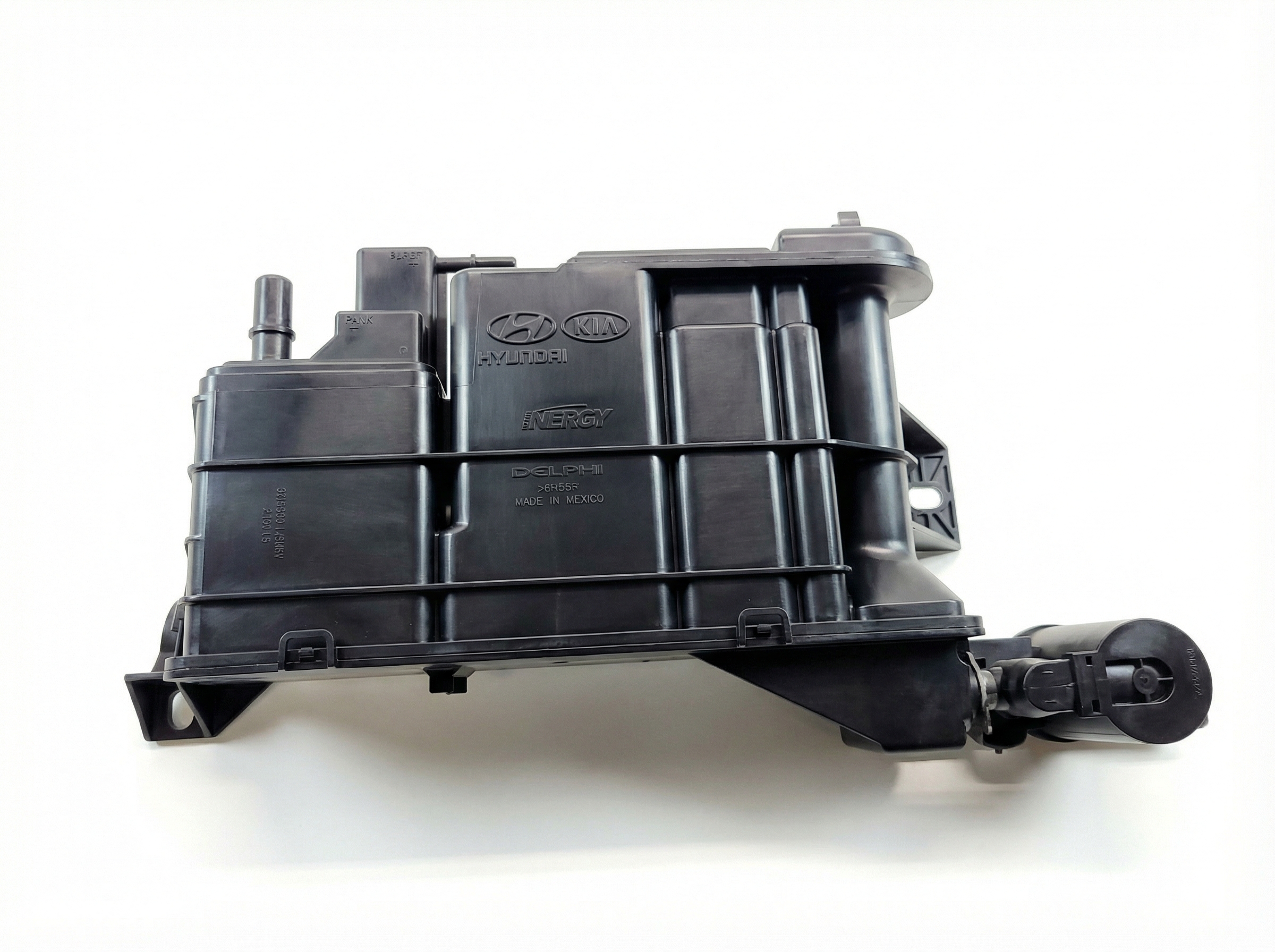
New Aftermarket Parts Available


The information in this article is provided for general reference and educational purposes only. Vehicle specifications, procedures, and part compatibility can vary by production date, trim level, and region. Always consult your vehicle's factory service manual and verify part numbers before purchasing or performing repairs. Safety-critical components such as airbags, seat belts, and braking systems should be installed by a qualified professional.
- Hyundai Elantra:
- 🎬 Helpful Videos
- 🛍️ Shop This Part
- What's Unique About the 2011-2016 Hyundai Elantra
- Symptoms You May Notice
- Most Likely Causes
- Rare But Worth Checking
- Diagnosis Steps
- Parts You'll Likely Need
- Related Codes That Often Appear With This One
- Technical Service Bulletins (TSBs) & Recalls
- Platform-Specific Known Issues
- Mechanic-Grade Diagnostic Values
- Scan Tool Commands That Help
- Wiring & Ground Locations
- Real Owner Repair Stories
- OEM Part Supersession History
- Diagnostic Flowchart
- Real Owner Stories
- 2014 Hyundai Elantra
- 2011 Elantra Touring
- 2013 Hyundai Elantra
- 2015 Hyundai Elantra
- Documented NHTSA Reports
- NHTSA ODI #11468646
- NHTSA ODI #11434136
- Related OBD-II Codes
- Frequently Asked Questions
- 🎟️ Get 5% Off