

P0441 on 2003-2007 Honda Accord: EVAP Incorrect Purge Flow Causes and Fixes
For the 2003-2007 Honda Accord, code P0441 is most often caused by a faulty EVAP canister purge valve that is stuck open or closed. This is a well-documented, high-probability failure for this generation. Replacing this valve is a common DIY fix, with parts costing between $70 for an aftermarket version and $200 for an OEM part.
- P0441 on a 2003-2007 Accord almost always points to a bad EVAP purge valve.
- Before buying parts, first check that your gas cap is tight and its seal is intact. Use an OEM cap if a replacement is needed.
- Verify whether you have a 4-cylinder or V6 engine, as the purge valve part number is different for each.
- A symptom of difficulty starting after refueling strongly points to a purge valve stuck open.
- Replacing the purge valve is a beginner-friendly DIY job that can be done with basic hand tools in under an hour.
- Do not replace other expensive EVAP components like the canister or pressure sensor unless the purge valve replacement fails to solve the code and further diagnosis (like a smoke test or persistent fuel smell) points elsewhere.
What's Unique About the 2003-2007 Honda Accord

The 2003-2007 Honda Accord (7th generation) has a well-documented history with this code, and the cause is very frequently the canister purge valve located in the engine bay. Unlike some vehicles where this code points to complex leaks, on this Accord, the purge valve is a common failure point that gets stuck over time. It's important to note that the part number for this valve is different for the 4-cylinder and V6 engines, so verifying the correct part is crucial.
Symptoms You May Notice
- Check Engine Light is on
- Slightly rough idle, especially after refueling or when the valve is stuck open.
- Difficulty starting the engine immediately after filling the gas tank.
- Minor decrease in fuel economy.
- Possible fuel smell, especially near the rear of the car by the charcoal canister if it has become saturated.
- An "Emissions System Error" message may appear on some Honda models, as noted in NHTSA ODI #11552804, which can be accompanied by increased fuel consumption.
- Replacing the fuel tank pressure sensor. While part of the EVAP system, this sensor failing will typically set its own specific codes (like P0451, P0452, or P0453) and is not a common cause for an isolated P0441.
Most Likely Causes

- Faulty EVAP Canister Purge Valve/Solenoid 🔴 High Probability This valve is a known common failure item on this generation of Accord. It can get stuck open or closed due to age and wear, preventing correct vapor flow. Forums are filled with owners who resolved P0441 by replacing this part. A manufacturer service bulletin for other Honda models, TSB Bulletin #A23-091, notes that due to variations in the purge control solenoid valve spring, the valve can wear unevenly and intermittently stick, resulting in DTC P0441.
How to confirm: With the engine off, disconnect the hose from the intake manifold side of the valve. Try to blow through it; it should be closed (no air passes). You can also apply 12V power to the valve's electrical connector; it should click open, allowing air to pass. A failure in either test indicates a bad valve. 🎬 Watch: How to diagnose and fix incorrect purge flow. A valve stuck open may also cause a rough idle.
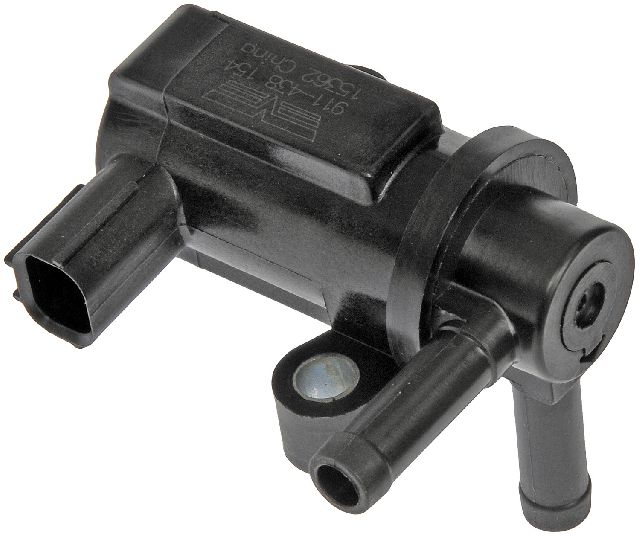
Typical fix: Replace the EVAP canister purge valve. It is typically located in the engine bay, connected to the intake manifold.
Est. part cost: $70-$200 - Loose or Faulty Gas Cap 🟡 Medium Probability While more likely to cause a P0455 or P0457 (large leak) code, a gas cap that is not sealing properly can sometimes contribute to incorrect flow readings. It's the first, easiest, and cheapest thing to check. Using non-OEM gas caps can cause EVAP issues.
How to confirm: Inspect the gas cap for cracks in the plastic or a dried-out, brittle rubber seal. Ensure it clicks at least once when tightened. If the seal is damaged or it doesn't tighten properly, it's suspect.
Typical fix: Tighten the gas cap correctly. If the seal is bad, replace the gas cap with a new OEM part for best results.
Est. part cost: $20-$40 - Cracked or Disconnected EVAP Hoses ⚪ Low Probability The rubber vacuum and vapor hoses in the engine bay can become brittle and crack over time due to heat and age, creating a vacuum leak that affects purge flow. NHTSA ODI #11474249 describes a technician performing a visual inspection of purge hoses for damage when troubleshooting P0441 and P04F1.
How to confirm: Visually inspect all EVAP hoses connected to the purge valve and intake manifold for visible cracks, breaks, or loose connections. A smoke test is the most effective way to find hard-to-see leaks.
Typical fix: Replace the cracked or broken section of hose.
Est. part cost: $10-$30 - Clogged or Failed Charcoal Canister ⚪ Low Probability Consistently overfilling the fuel tank ('topping off') can force liquid gasoline into the charcoal canister, saturating the charcoal pellets and causing a blockage or damage. This can lead to a strong fuel smell from the rear of the vehicle.
How to confirm: Diagnosis is more complex. A mechanic may test for blockages in the lines leading to and from the canister. Sometimes charcoal pellets can be found in the EVAP lines, which is a sure sign of canister failure. A strong fuel odor from under the car, not in the engine bay, can also point to a saturated canister.
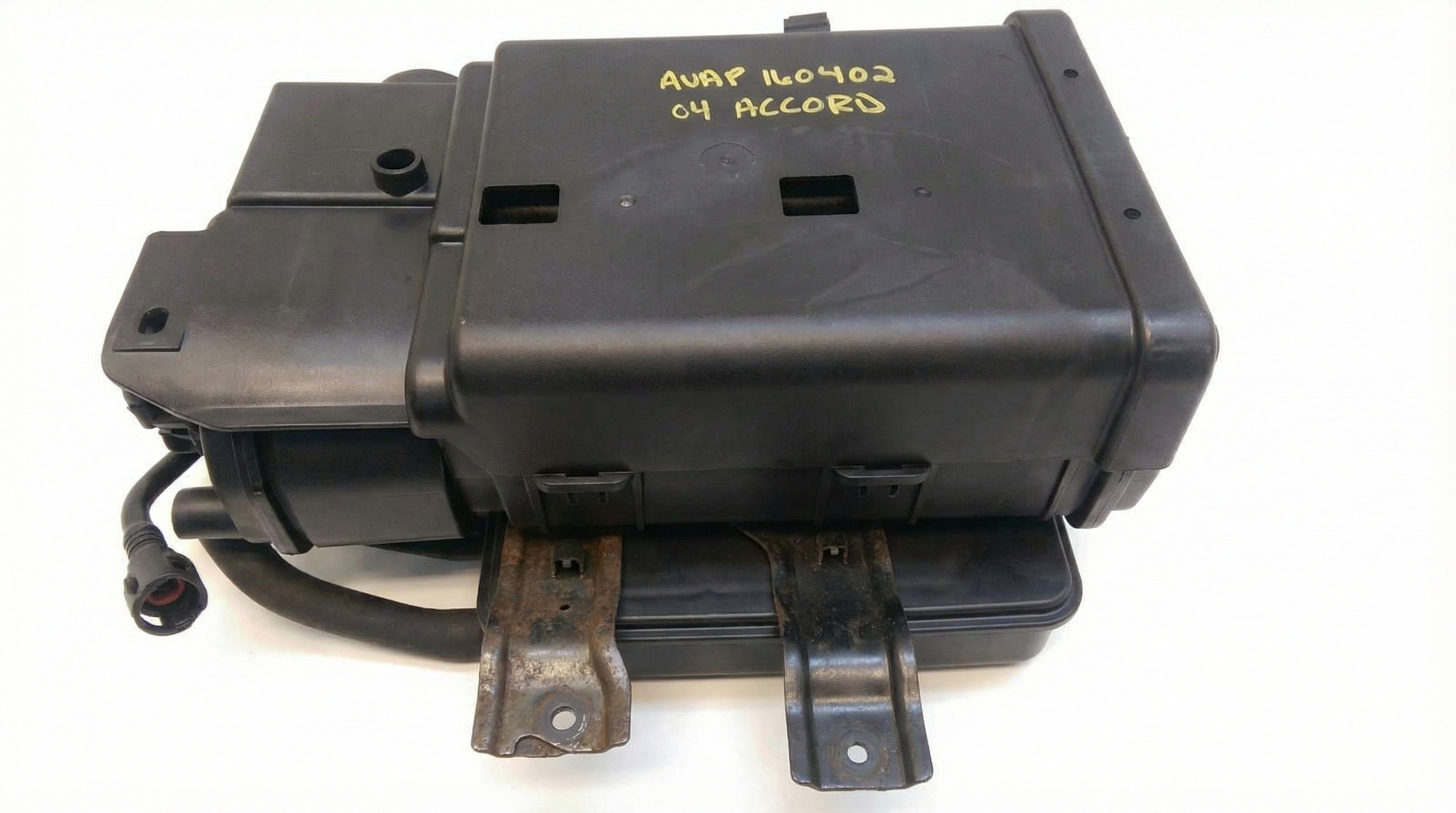
Typical fix: Replace the charcoal canister assembly, which is located near the fuel tank.
Est. part cost: $180-$300
Rare But Worth Checking
- Wiring Harness Issue:
Diagnosis Steps

- Read the code with an OBD-II scanner to confirm P0441 is the only code present. Note that P0441 often appears alongside P04F1, as documented in NHTSA ODI #11563010.
- Inspect the gas cap. Ensure it is tight and the seal is in good condition. If in doubt, replace it with an OEM cap.
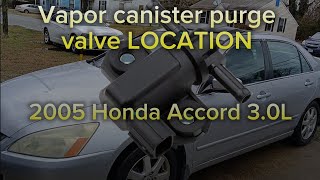
- Locate the EVAP canister purge valve in the engine bay. On the 4-cylinder, it's under a small cover near the intake manifold. On the V6, it's often closer to the firewall. 🎬 See this video to locate the V6 purge valve.
- Visually inspect the vacuum hoses connected to and surrounding the purge valve for any obvious cracks or disconnections.
- Test the purge valve. Disconnect it and try to blow through it; it should be closed. Apply 12V and it should open. If it fails either test, it needs replacement.
- If the valve and hoses appear good, the next step is a professional smoke test to check the entire EVAP system for small leaks.
- If no leaks are found and a fuel smell is present, suspect a saturated or clogged charcoal canister, especially if the gas tank is frequently 'topped off'.
Parts You'll Likely Need

- EVAP Canister Purge Valve (V6 Engine)
(OEM #36162-RDV-J01)— This is the most frequent failure point for code P0441 on the V6 model of the 7th generation Accord.
Trusted brands: Honda (OEM), Dorman, Standard Motor Products
OEM price range: $190-$270
Aftermarket price range: $70-$150 - EVAP Canister Purge Valve (4-Cylinder Engine)
(OEM #36162-RAA-A01 or 36162-RRA-A01)— This is the most common fix for P0441 on the 4-cylinder models. Part number 36162-RAA-A01 is listed for 2003-2007 models. The part was later superseded by 36162-RRA-A01 for some applications, which also fits later Accords and Civics. VIN verification with a dealer is the best way to ensure the correct part.
Trusted brands: Honda (OEM), Dorman, Standard Motor Products
OEM price range: $200-$295
Aftermarket price range: $70-$160
Technical Service Bulletins (TSBs) & Recalls
- TSB Bulletin #A23-091: Although issued for the Odyssey, this bulletin highlights a known Honda issue where variations in the purge control solenoid valve spring cause uneven wear and intermittent sticking, leading to P0441.
- TSB 21-081: While for a newer generation of vehicle (2018-2022), this TSB addresses P0441 and P04F1 caused by radio wave interference. It shows a history of Honda's sensitivity in the EVAP monitoring system, though the root cause is different from the common mechanical failure on the 7th gen.
Platform-Specific Known Issues
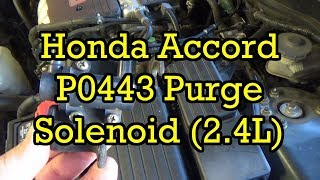
- On the 4-cylinder (K24) engine, the purge valve is relatively easy to access, mounted near the throttle body. 🎬 Watch: Tips and tricks for the 2.4L purge solenoid. A DIY replacement is straightforward.
- On the V6 (J30) engine, the purge valve can be slightly more difficult to access as it is mounted further back on the intake manifold, closer to the firewall.
Mechanic-Grade Diagnostic Values
- EVAP Canister Purge Valve Solenoid Resistance — expected: 25 to 55 Ohms. Failure: A reading significantly outside this range, such as in the kilo-ohm (kΩ) range, indicates a failed solenoid coil.
- EVAP Canister Purge Valve Connector Voltage (Key On, Engine Off) — expected: One pin should have battery voltage (approx. 12V), the other is the PCM control wire and will also show voltage until grounded by the PCM.. Failure: No voltage on the power feed pin indicates a wiring or fuse issue. The control wire voltage should drop to near 0V when the PCM commands the valve open.
Scan Tool Commands That Help
- Honda HDS (Honda Diagnostic System) or equivalent bidirectional scanner: EVAP System Functional Test / Purge Valve On-Off — This command allows a technician to manually open and close the EVAP purge valve while the engine is running or off. It is used to confirm if the PCM can control the valve and if the valve responds mechanically (an audible click should be heard). When activated, you can also check for vacuum at the valve's inlet port to confirm it opened.
Wiring & Ground Locations
- EVAP Canister Purge Valve Connector — On the EVAP purge valve itself, located in the engine bay near the intake manifold.. This 2-pin connector provides power and ground control from the PCM to the valve. One pin is power (often Yellow/Black), and the other is the control signal from the PCM. Testing for voltage and ground pulse here is a key diagnostic step.
- G101 — On the 2.4L engine, this primary ground is on the top middle of the engine. On the 3.0L V6, it is on the left side of the engine.. This is a primary engine and PCM ground point. While not a common cause for an isolated P0441, a poor connection at G101 can cause a wide range of erratic engine control issues, including incorrect solenoid operation. It should be clean and tight.
Real Owner Repair Stories
- NHTSA ODI #11563010 — An owner reported that the MIL came on with DTCs P0441 and P04F1. They attempted to resolve the issue by replacing the purge flow valve.
- Reddit user on r/AskMechanics (2005 Honda Accord 2.4L) — Difficulty starting and a weird noise immediately after refueling.
❌ Tried (didn't work) The user was asking for advice before attempting a fix.
✅ What actually fixed it The symptoms described (hard start after refueling) are a classic sign of an EVAP purge valve stuck open, which floods the intake with fuel vapors. The community confirmed this is the most likely cause, pointing to purge valve replacement as the fix.
OEM Part Supersession History
36162-RAA-A01→36162-RRA-A01— Part consolidation and minor design updates.
Heads up: For the 7th gen Accord, both parts are generally considered interchangeable. However, it is always best practice to confirm the exact part number required for a specific VIN with a Honda dealer, as running changes can occur.
Model Year Variations Within This Range
- 2006-2007: The 2006 model year introduced a mid-cycle refresh for the 7th generation Accord, which included revised styling (front and rear fascias, taillights) and some minor interior updates. However, the core powertrain and EVAP system components, including the location and function of the purge valve, remained fundamentally the same as the 2003-2005 models. Therefore, the diagnosis for P0441 is consistent across the entire 2003-2007 range.
Diagnostic Flowchart
Other Known Issues on This Vehicle
Issues unrelated to this code that are worth knowing about as an owner of this generation:
- Automatic Transmission Failure (especially 2003-2004 V6) 🔴 High — Very common on 2003-2004 models, particularly V6, often failing before 100,000 miles. Less frequent but still a concern on later years and 4-cylinder models. (Ref: NHTSA Recall #04V176000 (for 2003-2004 models) addressed insufficient fluid flow causing heat buildup and potential gear failure.)
- Power Steering Whine / Leaks 🟠 Medium — Common across all model years. A whining noise on turning is often the first symptom, usually caused by air entering the system via a failed O-ring on the power steering pump inlet.
- Excessive Oil Consumption (K24 4-Cylinder) 🟠 Medium — A known trait of the K24 engine, becoming more noticeable at higher mileage. Owners must check oil levels regularly.
- Failing Clear Coat and Peeling Paint 🟡 Low — Widespread issue, especially on dark-colored vehicles, where the factory clear coat fails and peels off in sheets.
- Stereo/Climate Control Backlight Failure 🟡 Low — Extremely common problem where the backlight for the radio and climate control unit burns out, making it unreadable at night.
- Faulty Door Lock Actuators 🟠 Medium — Common for one or more door lock actuators to fail, resulting in the door not locking or unlocking with the power lock switch or key fob.
Used vs. New Parts: Buying Guide for This Vehicle
When a used part is the smart pick: A used EVAP purge valve is generally not recommended. It is a common failure item with a finite lifespan, and a used part from a junkyard may have significant wear or be close to failing. The low cost of a new aftermarket part makes it a much smarter investment.
Donor-vehicle mileage cap: roughly under 50000 miles for the part to have meaningful remaining life.
What to inspect on the donor part:
- If considering a used valve, visually inspect for cracks in the plastic housing.
- Check that the electrical connector pins are clean and free of corrosion.
- Attempt to blow through the valve; if any air passes, it is already faulty (stuck open).
OEM-only on this vehicle (don't cheap out):
- Gas Cap - Aftermarket gas caps are a frequent source of EVAP system problems on Hondas. It is strongly recommended to use a genuine Honda OEM gas cap (Part # 17670-SDA-A02 or superseding number) to ensure a proper seal.
Aftermarket brands forum-validated for this vehicle:
- Standard Motor Products (SMP)
- Denso
- Dorman (often cited as a reliable and cost-effective option for this specific part)
Brands owners have reported issues with on this vehicle:
- Unbranded, no-name parts from online marketplaces should be avoided, as their internal solenoid quality and durability are highly questionable.
Real Owner Stories
Aggregated from forums and TSBs cited above. Mileages and costs reflect what owners reported in those sources.
2004 Honda Accord
Symptoms: Check engine light with scan code P0441.
What fixed it: The owner was advised that a bad purge valve is a common cause for this emissions-related code.
Source hint: honda-tech.com thread titled 'help w/ scan code - P0441'
2003-2007 Honda Accord
Symptoms: P0441 code accompanied by a strong fuel odor.
What fixed it: The community suggested a smoke test and pointed to a potentially saturated charcoal canister as the source of the odor.
Source hint: honda-accord-forum.com thread 'P0441 with fuel odor'
2003-2004 Honda Accord V6 — ~95000 miles
Symptoms: Potential gear failure due to heat buildup and insufficient fluid flow.
What fixed it: NHTSA Recall #04V176000 was issued to address the transmission fluid flow issue.
Source hint: NHTSA Recall #04V176000
Documented NHTSA Reports

Honda Pilot (Cross-Manufacturer Reference)
Symptoms: The MIL comes on with DTCs P0441 (EVAP System Purge Flow Malfunction) and P04F1 (EVAP System Low Purge Flow Detected).
What fixed it: The owner replaced the purge flow valve to address the malfunction.
Source hint: NHTSA ODI #11563010
Honda CR-V (Cross-Manufacturer Reference)
Symptoms: An "Emissions System Error" appeared, which was related to a canister purge valve malfunction (P0441).
What fixed it: Diagnosis confirmed the P0441 code, which can lead to increased fuel consumption and failing emissions standards.
Source hint: NHTSA ODI #11552804
Related OBD-II Codes
Frequently Asked Questions
Does TSB 21-081 apply to my 2003-2007 Honda Accord?
Where is the purge valve located on my 4-cylinder (K24) Accord?
Is the purge valve harder to replace on the V6 (J30) model?
Can 'topping off' my gas tank really cause a P0441 code on this car?
Should I use an aftermarket gas cap if mine is failing?
Is there a recall for the transmission on my 2003-2004 Accord?
Helpful Videos

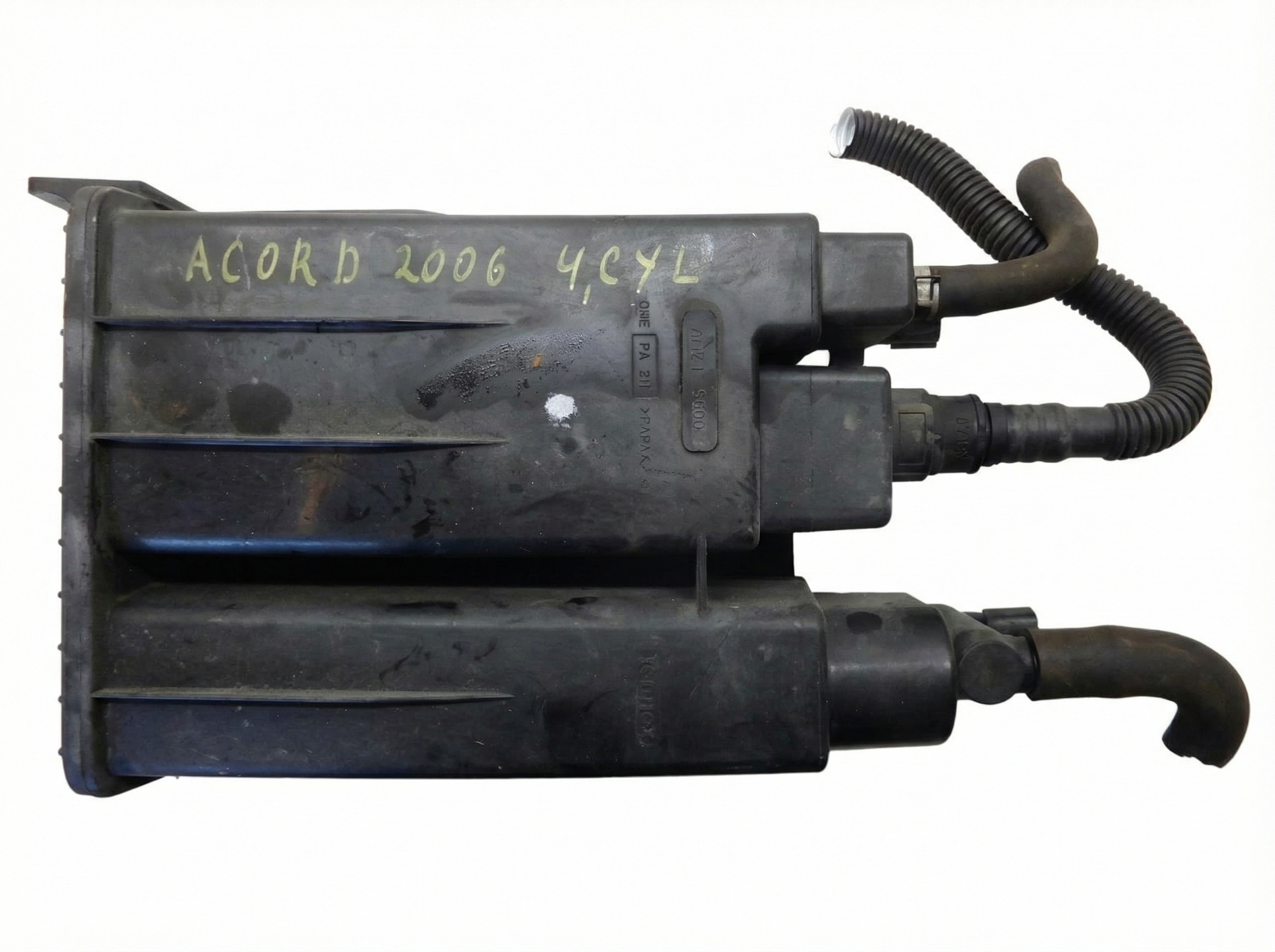
Used OEM Parts in Stock
New Aftermarket Parts Available

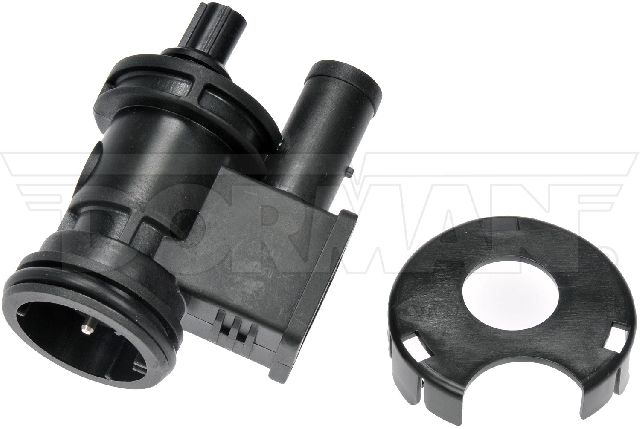

The information in this article is provided for general reference and educational purposes only. Vehicle specifications, procedures, and part compatibility can vary by production date, trim level, and region. Always consult your vehicle's factory service manual and verify part numbers before purchasing or performing repairs. Safety-critical components such as airbags, seat belts, and braking systems should be installed by a qualified professional.
- Honda Accord:
- 🎬 Helpful Videos
- 🛍️ Shop This Part
- What's Unique About the 2003-2007 Honda Accord
- Symptoms You May Notice
- Most Likely Causes
- Rare But Worth Checking
- Diagnosis Steps
- Parts You'll Likely Need
- Technical Service Bulletins (TSBs) & Recalls
- Platform-Specific Known Issues
- Mechanic-Grade Diagnostic Values
- Scan Tool Commands That Help
- Wiring & Ground Locations
- Real Owner Repair Stories
- OEM Part Supersession History
- Model Year Variations Within This Range
- Diagnostic Flowchart
- Other Known Issues on This Vehicle
- Used vs. New Parts: Buying Guide for This Vehicle
- Real Owner Stories
- 2004 Honda Accord
- 2003-2007 Honda Accord
- 2003-2004 Honda Accord V6 — ~95000 miles
- Documented NHTSA Reports
- Honda Pilot (Cross-Manufacturer Reference)
- Honda CR-V (Cross-Manufacturer Reference)
- Related OBD-II Codes
- Frequently Asked Questions
- 🎟️ Get 5% Off