

P0440 on 2003-2008 Toyota Corolla: EVAP System Malfunction Causes and Fixes
For a 2003-2008 Toyota Corolla, the P0440 code is most often caused by a loose or worn-out gas cap. Before buying any parts, tighten the cap until it clicks and clear the code. If it returns, a new OEM gas cap is the next logical step, costing around $25-$40. If that doesn't work, a smoke test is the best next step to find the leak, which could be a simple cracked hose.
- Start with the simplest fix: check that your gas cap is tight. If the light comes back, buy a new OEM gas cap.
- Do not replace expensive parts like the charcoal canister without confirming the leak source via a smoke test.
- Brittle, cracked vacuum hoses are a very common cause on a vehicle of this age.
- The P0440 code will not affect how your car drives, but it will cause an automatic failure on an emissions test.
- Avoid overfilling your gas tank after the pump clicks off, as this can damage the charcoal canister over time.
What's Unique About the 2003-2008 Toyota Corolla

The 9th generation Corolla (2003-2008) is known for its reliability, but its EVAP system components are susceptible to age-related failures like any other vehicle. The most common culprits are simple and inexpensive, like the gas cap and rubber hoses, which can become brittle and crack after 15+ years. While more complex components like the charcoal canister can fail, it's less frequent. Owners often report chasing this code by replacing multiple parts, so a systematic diagnosis starting with the cheapest and most likely fixes is crucial. The key components, like the purge valve (VSV), are located in the engine bay, while the charcoal canister and vent valve are located near the fuel tank at the rear of the vehicle. NHTSA ODI #10354544 notes that failures represented by codes like P0440, P0441, and P0442 have been reported across various Toyota models built through the early to mid-2000s.
Symptoms You May Notice
- Check Engine Light is on
- A faint smell of gasoline, particularly around the rear of the car or in the cabin.
- Inability to pass a state emissions inspection.
- Difficulty refueling (gas pump clicks off prematurely), although this is less common for P0440 alone.
- Replacing the charcoal canister before performing a smoke test. The canister is an expensive part and is less likely to be the cause than a simple hose leak or bad gas cap.
- Replacing the O2 sensor. The P0440 code is unrelated to the oxygen sensors, though other codes may appear alongside it.
Most Likely Causes


- Loose, Damaged, or Incorrect Gas Cap 🔴 High Probability The gas cap seal (a simple O-ring) degrades over time, losing its ability to maintain a perfect seal. This is the most common failure point for any EVAP system and is often the first and cheapest fix.
How to confirm: Check that the cap is tightened until it clicks. Inspect the rubber gasket on the cap for cracks, stiffness, or debris. Ensure it is an OEM or OEM-equivalent cap, as aftermarket caps are a known source of issues.
Typical fix: Tighten the cap or replace it with a new one. An OEM cap from Toyota/Denso is highly recommended over aftermarket options to ensure a proper seal. After replacing, clear the codes and drive for a few days to see if the light returns.
Est. part cost: $25-$40 - Cracked or Disconnected EVAP Hoses 🟡 Medium Probability After 15+ years, the rubber and plastic hoses in the engine bay and near the fuel tank become brittle and can easily crack or break, creating a vacuum leak. This is especially true for the small vacuum lines connected to the purge valve in the engine bay.
How to confirm: Visually inspect all accessible EVAP hoses, especially at connection points to the purge valve and charcoal canister. A smoke test is the most effective way to find a leak that isn't visually obvious.
Typical fix: Replace the cracked section of hose or the entire hose assembly. Standard vacuum hose can often be used for repairs.
Est. part cost: $10-$50 - Faulty Charcoal Canister Assembly ⚪ Low Probability The plastic canister body can develop cracks from age or road debris. More commonly, the integrated valves (like the vent valve) on the canister fail. Consistently overfilling the fuel tank can saturate the charcoal with liquid fuel, causing it to fail prematurely.
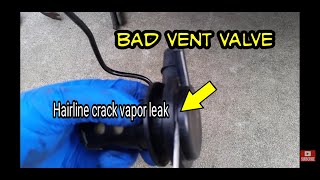
How to confirm: A smoke test will show smoke exiting from a crack in the canister body or from a stuck-open vent valve. Sometimes a hairline crack on the canister's valve assembly is the culprit and can be hard to spot without a smoke test. Shaking the canister might produce a rattling sound, indicating broken internal charcoal.
Typical fix: Replacement of the entire charcoal canister assembly. This part is located at the rear of the vehicle, near the fuel tank, and may require dropping the tank for access. 🎬 See this step-by-step charcoal canister replacement walkthrough
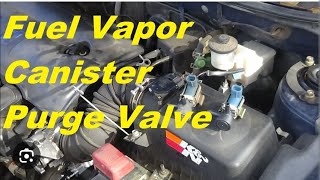
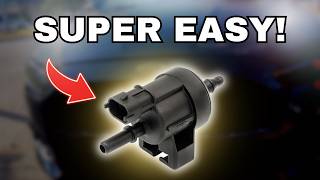
Est. part cost: $200-$350 - Faulty Purge Valve (VSV) ⚪ Low Probability The purge valve (or Vapor Switching Valve - VSV), typically located in the engine bay, can get stuck open or closed, preventing the EVAP system from functioning correctly.
How to confirm: With the engine off, try to blow through the valve; it should be closed. A hand-held vacuum pump can be used to test if it holds vacuum. You can also apply 12V power to see if the solenoid clicks and opens. Check wiring for damage.
Typical fix: Replace the purge valve. It is usually an easy repair with simple hand tools, located on or near the intake manifold.
Est. part cost: $40-$90
Rare But Worth Checking
- Cracked Fuel Tank Filler Neck: Rust can perforate the metal filler neck where the gas cap seals, making a proper seal impossible. This is more common in regions that use road salt and can be a frustrating cause of the code after other parts have been replaced. A TSB (EG051-06) was issued for this issue on 2003-2004 models. Manufacturer bulletin EG022-06, cited in NHTSA ODI #10276828 for other Toyota models, also highlights a fuel filler tube improvement to address the MIL "ON" condition for P0440.
- Leaking Fuel Tank or Overfill Check Valve: While very rare, a crack or rust perforation in the fuel tank itself will cause a large EVAP leak. A more specific, known (but still rare) failure point on some Toyotas is a cracked Overfill Check Valve on the fuel tank itself, which requires dropping the tank to replace.
- Faulty Fuel Tank Pressure Sensor: The sensor that detects the leak could itself be faulty, sending incorrect information to the car's computer. This is uncommon and should be considered after all leak sources have been ruled out.
Diagnosis Steps

- Check the Gas Cap: Ensure the gas cap is tight and clicks when secured. Remove it and inspect the seal for any cracks, dirt, or damage. If in doubt, an OEM replacement is the cheapest part to replace first.
- Clear Codes and Drive: After checking the cap, clear the trouble codes with an OBD-II scanner and drive the vehicle for a few days. The EVAP monitor only runs under specific conditions (e.g., fuel level between 1/4 and 3/4 full), so it may take time for the light to return.
- Visual Inspection: If the code returns, perform a thorough visual inspection of all EVAP hoses in the engine bay and around the charcoal canister at the rear of the car. Look for obvious cracks, loose connections, or deterioration.
- Test the Purge Valve (VSV): Locate the purge valve in the engine bay. Disconnect it and test if it's stuck open or closed using a hand vacuum pump or by trying to blow through it.
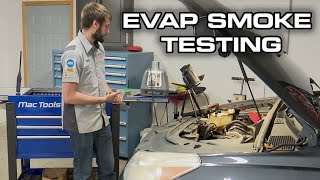
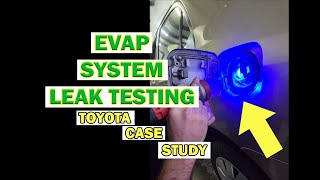
- Perform a Smoke Test: This is the most definitive way to find a leak. A smoke machine forces low-pressure, UV-dyed smoke into the EVAP system via a service port. Smoke will escape from any leak, making it easy to pinpoint the source, whether it's a hose, canister, or filler neck. 🎬 Watch: How to perform a professional EVAP smoke test
- Inspect Charcoal Canister and Vent Valve: During the smoke test, pay close attention to the charcoal canister and its associated vent valve for any signs of smoke, indicating a crack or a faulty valve.
Parts You'll Likely Need

- Fuel Tank Cap
(OEM #77300-52030 (superseded by 77300-06041))— This is the most frequent cause. The seal wears out over time, causing a leak that the system detects. Using an OEM cap is critical for a proper seal.
Trusted brands: Denso, Toyota OE
OEM price range: $25-$40
Aftermarket price range: $15-$25 - Vapor Canister Purge Solenoid / Valve (VSV)
(OEM #90910-12276 (may be superseded by 90910-TC001))— A common failure point that can get stuck open or closed, causing a system malfunction. Located in the engine bay for easy access.
Trusted brands: Denso, Toyota OE
OEM price range: $70-$110
Aftermarket price range: $30-$60 - Charcoal Canister Assembly
(OEM #77740-02130)— Can crack with age or become saturated from over-filling the fuel tank. Often replaced when the integrated vent valve fails. This is an expensive part and should only be replaced after a definitive diagnosis (like a smoke test).
Trusted brands: Toyota OE
OEM price range: $250-$350
Aftermarket price range: $150-$250
Related Codes That Often Appear With This One
- P0441 — Incorrect Purge Flow. This often points more directly to a faulty purge valve or a blockage in the system. NHTSA ODI #10735783 describes a vehicle failing emissions with a combination of P0440, P0441, and P0446.
- P0442 — Small EVAP Leak Detected. This is a more specific version of P0440. If both appear, it confirms a leak is present, just of a small size.
- P0446 — EVAP Vent Control Circuit Malfunction. This points more specifically to an issue with the vent valve or its wiring, which is often part of the charcoal canister assembly on these models.
Technical Service Bulletins (TSBs) & Recalls
- TSB EG045-07: While not directly for P0440, this TSB addresses lean codes (P0171) and misfires in sub-freezing temperatures due to a faulty intake manifold gasket on the 1ZZ-FE engine. A significant vacuum leak here could potentially affect the EVAP system's ability to maintain pressure, though it's not the primary cause.
Platform-Specific Known Issues
- Filler Neck Rust: In areas with road salt, the fuel filler neck is prone to rusting through, creating an EVAP leak that a new gas cap cannot fix. A visual inspection of the neck where the cap seals is important.
Mechanic-Grade Diagnostic Values
- Fuel Tank Pressure (FTP) Sensor Voltage — expected: 0.5V to 4.5V, varying with tank pressure. A baseline reading with the gas cap off (atmospheric pressure) should be between 3.0V and 3.6V.. Failure: A sensor that is stuck reading high (e.g., always near 4.5V) or low, or does not change when pressure/vacuum is applied, is faulty.
- Purge Valve (VSV) Solenoid Resistance — expected: No specific value was found in the search, but a typical Toyota VSV from this era would be in the range of 20-40 Ohms. An open circuit (infinite resistance) or short circuit (zero resistance) indicates failure.. Failure: Resistance reading is outside the expected range, or infinite/zero.
Hidden / Shadow Codes Worth Checking
- Mode 6, Test ID $80: This is not a code but a test monitor in the OBD-II system. For Toyota, Test ID $80 often relates to the EVAP system leak check. Monitoring the test values (TIDs) and component IDs (CIDs) within this test can show if the system is passing or failing the self-test, sometimes before a DTC is set. (see via A professional scan tool with Mode 6 data capabilities, such as Toyota Techstream or high-end consumer scanners.)
Scan Tool Commands That Help
- Toyota Techstream: Evaporative System Check (Utility) — This is a powerful bidirectional function that allows a technician to force the vehicle to run its internal EVAP leak test on command, without waiting for the normal drive cycle conditions or a 5-hour cold soak. It manually seals the system by closing the vent valve and operates the purge valve to create a vacuum, then monitors pressure decay. This is invaluable for verifying a fix is complete or for isolating which part of the system (tank vs. canister) has a leak.
- Toyota Techstream: Active Test: Control the Purge VSV — This allows you to manually command the purge valve open and closed while the engine is running. You can use this to confirm the valve is not stuck by listening for a click and feeling for vacuum on the canister-side port when it's commanded open.
- Toyota Techstream: Active Test: Control the Vent Valve / CCV — This command manually closes the normally-open vent valve. It is essential for performing a smoke test, as it seals the system and allows it to be pressurized with smoke to find leaks.
Wiring & Ground Locations
- Ground Point IE — Located behind the right-hand kick panel in the passenger footwell.. This is a major ground distribution point for various components controlled by the Engine Control Module (ECM). A corroded or loose ground here could potentially cause erratic behavior in EVAP system solenoids or sensors.
- Ground Point IG — Located behind the left-hand (driver's side) kick panel.. Similar to ground point IE, this is another critical body ground. Verifying the integrity of main body grounds is a good step when electrical faults are suspected for EVAP codes.
- Engine Room R/B (Relay Block) — In the engine compartment on the left side.. This block contains fuses and relays essential for engine operation, including potentially the EFI (Electronic Fuel Injection) fuse which powers the ECM and its related sensors and actuators for the EVAP system.
Real Owner Repair Stories
- YouTube user TONE DUBB (Older Toyota (model appears to be a 9th or 10th gen Corolla)) — Persistent P0440 Check Engine Light.
❌ Tried (didn't work) Replaced the gas cap., Inspected hoses in the engine bay., Replaced some electronic components from a salvage yard.
✅ What actually fixed it The final cause was a hairline crack on the fuel tank vent valve, which is part of the charcoal canister assembly. The crack was only visible after dropping the fuel tank and closely inspecting the valve assembly. Replacing the vent valve (and in his case, the whole used canister assembly) resolved the code. - NHTSA ODI #11171743 — An owner reported receiving codes P0440 and P0446 on a vehicle with 118,244 miles. They noted that the check engine light came on accompanied by a slight smell of gasoline.
"I Checked Everything" — The Actual Cause
- A smoke test may show no leaks if the failure is not a physical leak but an electrical one. For example, if the Fuel Tank Pressure (FTP) sensor is faulty and sending an incorrect voltage signal to the ECM, the computer may interpret this as a leak and set P0440 even though the system is perfectly sealed.
- If the purge valve (VSV) is mechanically stuck open, it may not be detected during a smoke test if the test is performed with the engine off, as it's supposed to be closed anyway. A functional test (applying voltage or using a scan tool's active test) is needed to confirm its operation.
OEM Part Supersession History
77300-52030→77300-06040, 77300-52040— Standard part evolution and consolidation by Toyota. The newer part numbers are the current replacements.
Heads up: The newer part numbers are direct replacements and fully compatible. Using a genuine Toyota/Denso cap is highly recommended as aftermarket caps are a frequent cause of EVAP codes even when new.
Model Year Variations Within This Range
- 2003-2004: These earlier models of the 9th generation are specifically called out in Toyota Technical Service Bulletin (TSB) EG051-06 for potential corrosion on the fuel filler neck's sealing surface, which can prevent a good seal with the gas cap and cause EVAP codes.
Diagnostic Flowchart
Other Known Issues on This Vehicle
Issues unrelated to this code that are worth knowing about as an owner of this generation:
- Excessive Oil Consumption (1ZZ-FE Engine) 🔴 High — Common in 2003-2005 models, less so in 2006-2008 after Toyota updated piston ring design. Often becomes noticeable after 60,000-100,000 miles. (Ref: No recall, but the issue is widely documented. The cause is often attributed to clogged piston oil return holes.)
- Intake Manifold Gasket Failure in Cold Weather 🟠 Medium — Affects vehicles operated in sub-freezing temperatures, causing a vacuum leak on cold starts. (Ref: Toyota TSB EG045-07 addresses this, causing lean codes (P0171) and misfires. The fix is an improved, orange-colored gasket (P/N 17171-22060).)
- Automatic Transmission Failure (2003 model year) 🔴 High — Primarily reported in the 2003 model year, with symptoms like slipping, hesitation, or complete failure.
- Stripped Cylinder Head Bolt Threads 🔴 High — A known potential issue with the 1ZZ-FE engine block where the head bolt threads can pull out during a head gasket repair, requiring a time-sert or helicoil repair. This is a risk during major engine work, not a spontaneous failure.
- Starter Failure 🟡 Low — Some owners report starter or starter solenoid failure around or after 100,000 miles, resulting in a no-crank condition.
Used vs. New Parts: Buying Guide for This Vehicle
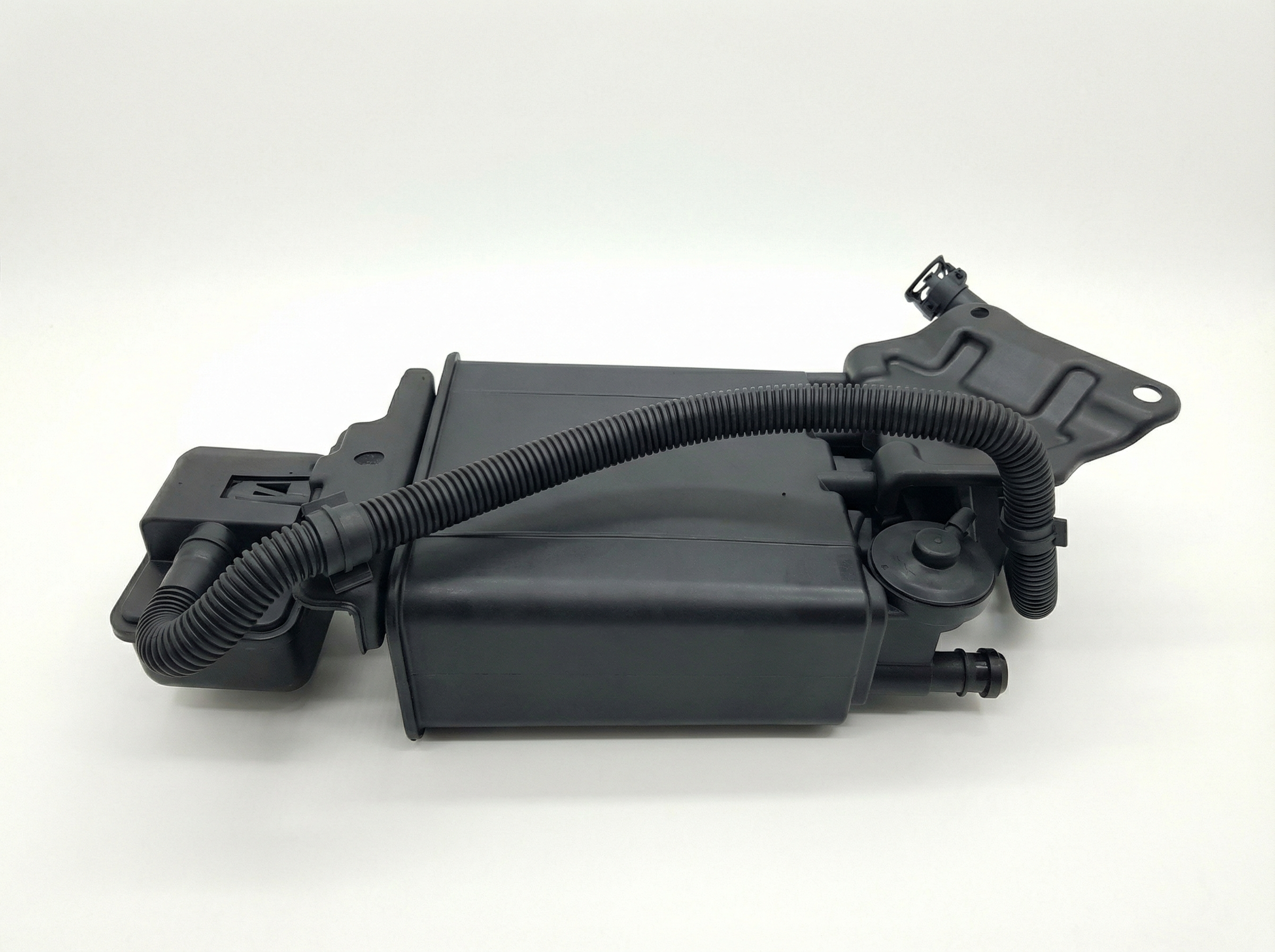
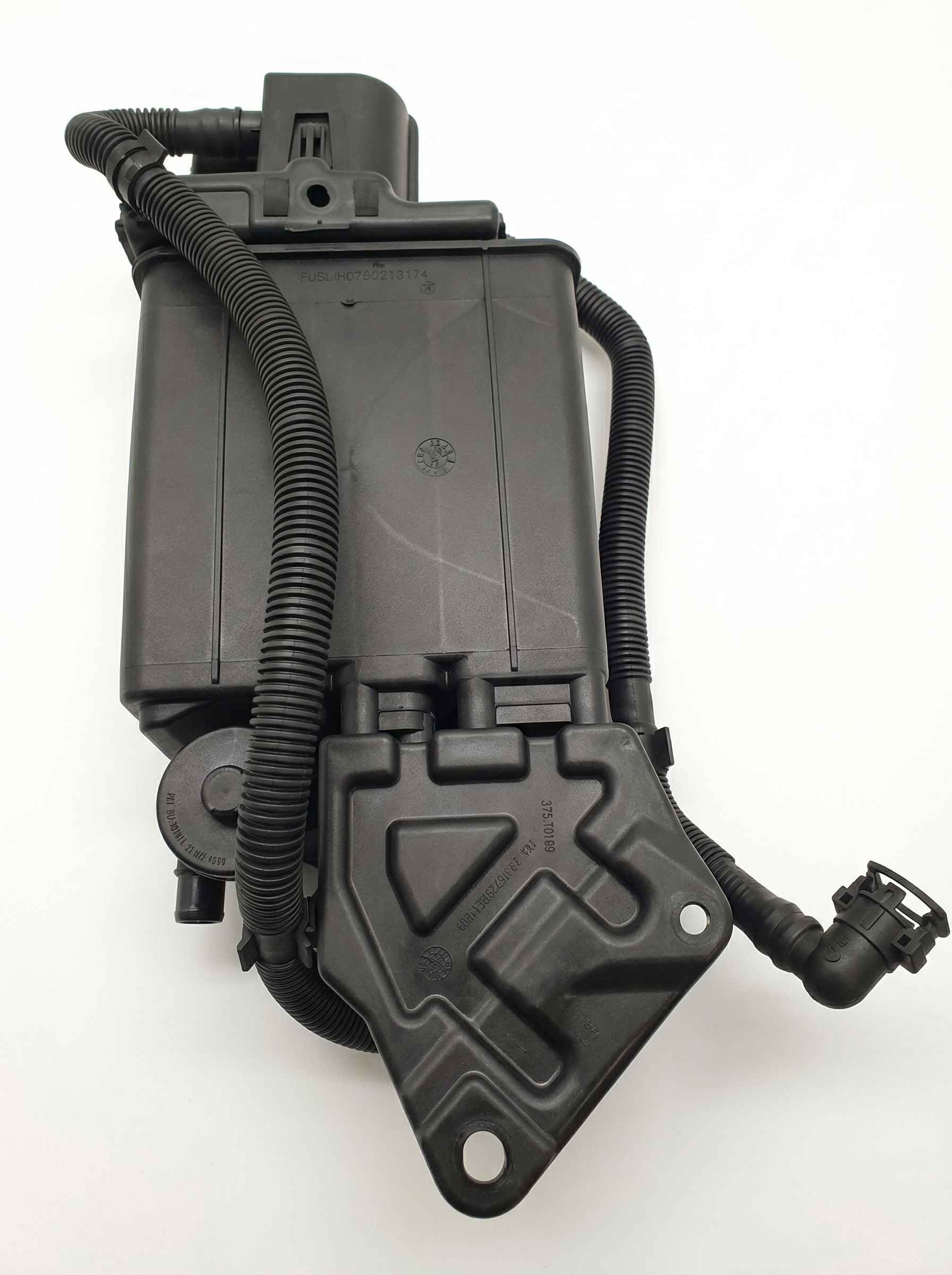
When a used part is the smart pick: For the charcoal canister assembly, a used part from a low-mileage, rust-free donor vehicle can be a cost-effective option, as a new OEM unit is expensive. Since it's primarily a plastic box with charcoal and valves, physical damage is the main concern.
Donor-vehicle mileage cap: roughly under 100000 miles for the part to have meaningful remaining life.
What to inspect on the donor part:
- Visually inspect the plastic canister housing for any cracks, especially around the valve ports and mounting tabs.
- Check that all hose nipples are intact and not broken or brittle.
- If possible, test the integrated valves (vent solenoid) with a 12V power source to ensure they click.
- Avoid parts from vehicles in the rust belt, as corrosion can affect the metal components and fasteners.
OEM-only on this vehicle (don't cheap out):
- Fuel Tank Cap: This is the most critical part to buy OEM (Toyota or Denso). Aftermarket caps are notoriously unreliable and a common cause of recurring P0440 codes due to improper sealing.
Aftermarket brands forum-validated for this vehicle:
- Denso: Denso is an OEM supplier for Toyota, so their parts are generally identical to Toyota-branded parts and are a trusted alternative.
Brands owners have reported issues with on this vehicle:
- Generic, unbranded gas caps or purge valves from online marketplaces are frequently cited by owners as failing quickly or not working out of the box.
Real Owner Stories
Aggregated from forums and TSBs cited above. Mileages and costs reflect what owners reported in those sources.
2003 Toyota Corolla
Symptoms: The owner experienced a persistent Check Engine Light with codes P0440 and P0442.
What fixed it: The owner attempted to replace the gas cap, charcoal canister, and filler neck, but the code returned, illustrating that a smoke test is often necessary to find the actual leak source.
Source hint: Toyota Corolla Forum: '2003 P0440 and P0442' - URL: https://www.toyotanation.com/threads/2003-p0440-and-p0442.413831/
2003 Pontiac Vibe (Base)
Symptoms: Check Engine Light was on with code P0440.
What fixed it: The owner re-tightened the gas cap and allowed the car's computer to complete its self-check cycle over several days.
Source hint: GenVibe Forums: 'CEL code P0440' - URL: https://forums.genvibe.com/phpBB3/viewtopic.php?t=25506
2003 Pontiac Vibe (Base)
Symptoms: The vehicle had four different codes showing simultaneously: P0440, P0441, and P0446.
What fixed it: Forum members identified that this combination points to a single failure in the vent control circuit or the charcoal canister assembly.
Source hint: GenVibe Forums: 'CEL Problem....4 different codes showing' - URL: https://forums.genvibe.com/phpBB3/viewtopic.php?t=35179
Related OBD-II Codes
Frequently Asked Questions
Does TSB EG045-07 apply to my 2003-2008 Corolla's P0440 code?
Is there a specific gas cap I should use for my Corolla to fix this code?
Where is the charcoal canister located on the 2003-2008 Corolla?
Can road salt in my area cause a P0440 code on my Corolla?
Why does my Corolla have difficulty refueling or the gas pump clicks off early?
I have a 2003 Corolla with P0440; could this be related to my transmission issues?
Helpful Videos
Used OEM Parts in Stock
New Aftermarket Parts Available


The information in this article is provided for general reference and educational purposes only. Vehicle specifications, procedures, and part compatibility can vary by production date, trim level, and region. Always consult your vehicle's factory service manual and verify part numbers before purchasing or performing repairs. Safety-critical components such as airbags, seat belts, and braking systems should be installed by a qualified professional.
- Toyota Corolla:
- 🎬 Helpful Videos
- 🛍️ Shop This Part
- What's Unique About the 2003-2008 Toyota Corolla
- Symptoms You May Notice
- Most Likely Causes
- Rare But Worth Checking
- Diagnosis Steps
- Parts You'll Likely Need
- Related Codes That Often Appear With This One
- Technical Service Bulletins (TSBs) & Recalls
- Platform-Specific Known Issues
- Mechanic-Grade Diagnostic Values
- Hidden / Shadow Codes Worth Checking
- Scan Tool Commands That Help
- Wiring & Ground Locations
- Real Owner Repair Stories
- "I Checked Everything" — The Actual Cause
- OEM Part Supersession History
- Model Year Variations Within This Range
- Diagnostic Flowchart
- Other Known Issues on This Vehicle
- Used vs. New Parts: Buying Guide for This Vehicle
- Real Owner Stories
- 2003 Toyota Corolla
- 2003 Pontiac Vibe (Base)
- 2003 Pontiac Vibe (Base)
- Related OBD-II Codes
- Frequently Asked Questions
- 🎟️ Get 5% Off