

P0440 on 2002-2009 GMC Envoy: EVAP System Malfunction Causes and Fixes
For a 2002-2009 GMC Envoy, P0440 almost always means you have a faulty gas cap or a bad EVAP solenoid. Start by replacing the gas cap for about $25. If the light returns, the next most likely culprits are the EVAP vent solenoid near the gas tank or the purge solenoid on the engine, each costing around $30-$70. A rusted fuel filler neck is also a very common cause in rust-belt states.
- Always start by checking or replacing the gas cap with a quality OEM part; it's the most likely and cheapest fix.
- If the code persists, the EVAP vent solenoid (by the gas tank) and purge solenoid (on the engine) are the next most common points of failure.
- Do not forget to inspect the fuel filler neck for rust, as this can prevent a good seal even with a new gas cap.
- Driving with P0440 is safe for the engine, but you will not pass an emissions inspection until it is fixed.
- For leaks that aren't obvious, a professional smoke test is the fastest way to find the source of the problem.
What's Unique About the 2002-2009 GMC Envoy
On the GMT360 platform, which includes the 2002-2009 Envoy and its siblings like the Chevy Trailblazer, the P0440 code is frequently caused by components failing due to their location. The EVAP vent solenoid is mounted under the truck near the spare tire, where it is highly exposed to road dirt, moisture, and salt, leading to premature failure. Due to this common failure, some aftermarket manufacturers offer relocation kits to move the solenoid to a more protected area. Additionally, the steel fuel filler neck is prone to rusting over time, which prevents even a new gas cap from creating a proper seal, making this a common and often overlooked cause after a cap replacement.
Symptoms You May Notice
- Check Engine Light is on
- A faint smell of fuel, especially around the rear of the vehicle or near the driver's side rear door.
- Difficulty filling the gas tank (the fuel nozzle clicks off repeatedly before the tank is full), which can be a sign of a stuck-closed vent solenoid or a blockage.
- A 'whoosh' sound when opening the gas cap may be absent if there is a constant leak.
- Replacing the purge valve or vent valve without first checking the gas cap and filler neck for a proper seal.
- Assuming a solenoid is good just because it 'clicks' when power is applied. The internal valve can still be leaking or not sealing completely.
- Replacing parts randomly without performing a smoke test, which is 🎬 Watch: A complete diagnostic walkthrough for the P0440 code. the most definitive way to locate a physical leak in the system.
Most Likely Causes
- Loose or Faulty Gas Cap 🔴 High Probability The rubber O-ring on the gas cap hardens and cracks over time, preventing a proper seal. This is a very common wear item and the first thing to check.
How to confirm: Inspect the gas cap to ensure it's tight (clicked at least once). Remove it and check the rubber seal for any cracks, tearing, or hardening. If the seal is not pliable and smooth, it's likely bad. Also, check the plastic threads on the cap for wear.
Typical fix: Replace the gas cap. It is highly recommended to use an OEM part from a dealer (ACDelco) as some aftermarket caps do not seal correctly, leading to repeat codes.
Est. part cost: $15-$35 - Failed EVAP Vent Solenoid 🔴 High Probability The vent solenoid is located under the vehicle near the charcoal canister and spare tire, where it is exposed to road debris, water, and salt, causing it to corrode and fail. The valve can get stuck open or closed with dirt.
How to confirm: The valve can be tested with a capable scan tool that can command it to open and close. A DIY method is to remove the solenoid, apply 12V to its two electrical pins, and listen for a click. It should be normally open (allowing air to pass) and close when 12V is applied. Even if it clicks, the valve can still leak, so a smoke test is the most definitive confirmation.
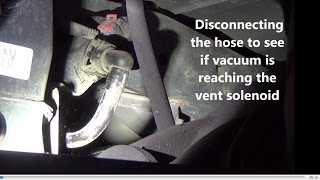
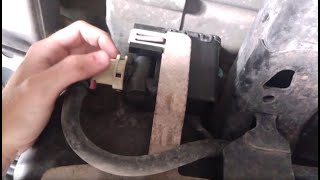
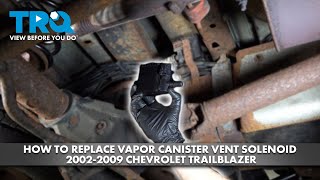
Typical fix: Replace the EVAP vent solenoid. It is located at the rear of the vehicle by the EVAP canister. 🎬 See how to replace the vent solenoid yourself. Due to corrosion, the wiring connector may also need to be replaced.
Est. part cost: $30-$70 - Failed EVAP Purge Solenoid/Valve 🟡 Medium Probability This valve cycles frequently during engine operation and can wear out or get stuck open or closed over time. It's a common failure point on many GM vehicles of this era.
How to confirm: With the engine off, remove the valve (located on the driver's side of the intake manifold) and try to blow through it; it should be closed and not allow air to pass. If air passes, it's stuck open and needs replacement. A scan tool can also command it to cycle for testing.
Typical fix: Replace the purge solenoid. It is located on the driver's side of the 4.2L engine, mounted to the intake manifold.
Est. part cost: $25-$60 - Rusted Fuel Filler Neck 🟡 Medium Probability Common in regions that use road salt (the 'Rust Belt'), the metal filler neck where the gas cap seals can rust, bubble, and become pitted, preventing a proper seal even with a new cap.
How to confirm: After removing the gas cap, visually and physically inspect the rim of the filler neck for rust, bubbling paint, or pitting. Run your finger along the sealing surface; it should be perfectly smooth.
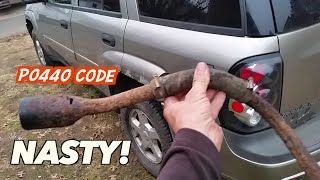
Typical fix: The filler neck must be replaced. Sanding it down is usually a temporary fix at best as the rust will return. Replacement involves disconnecting the hoses at the tank and the three bolts behind the fuel door. 🎬 Watch: Step-by-step guide to replacing a rusted filler neck.
Est. part cost: $70-$150 - Cracked or Disconnected EVAP Hoses ⚪ Low Probability Engine heat and age can make the plastic and rubber EVAP lines brittle, leading to cracks, especially at connection points to the solenoids and canister.
How to confirm: Visually inspect all accessible EVAP lines, especially at connection points to the solenoids and canister. A smoke test is the most effective way to find a small crack.
Typical fix: Replace the cracked section of hose or the entire line assembly if necessary.
Est. part cost: $10-$50
Rare But Worth Checking
- Faulty Fuel Tank Pressure (FTP) Sensor: This sensor tells the computer the pressure within the EVAP system. If it fails, it can report a leak when there isn't one. Corrosion on the sensor's electrical connector pins can also cause this issue. It is located on top of the fuel pump module inside the gas tank.
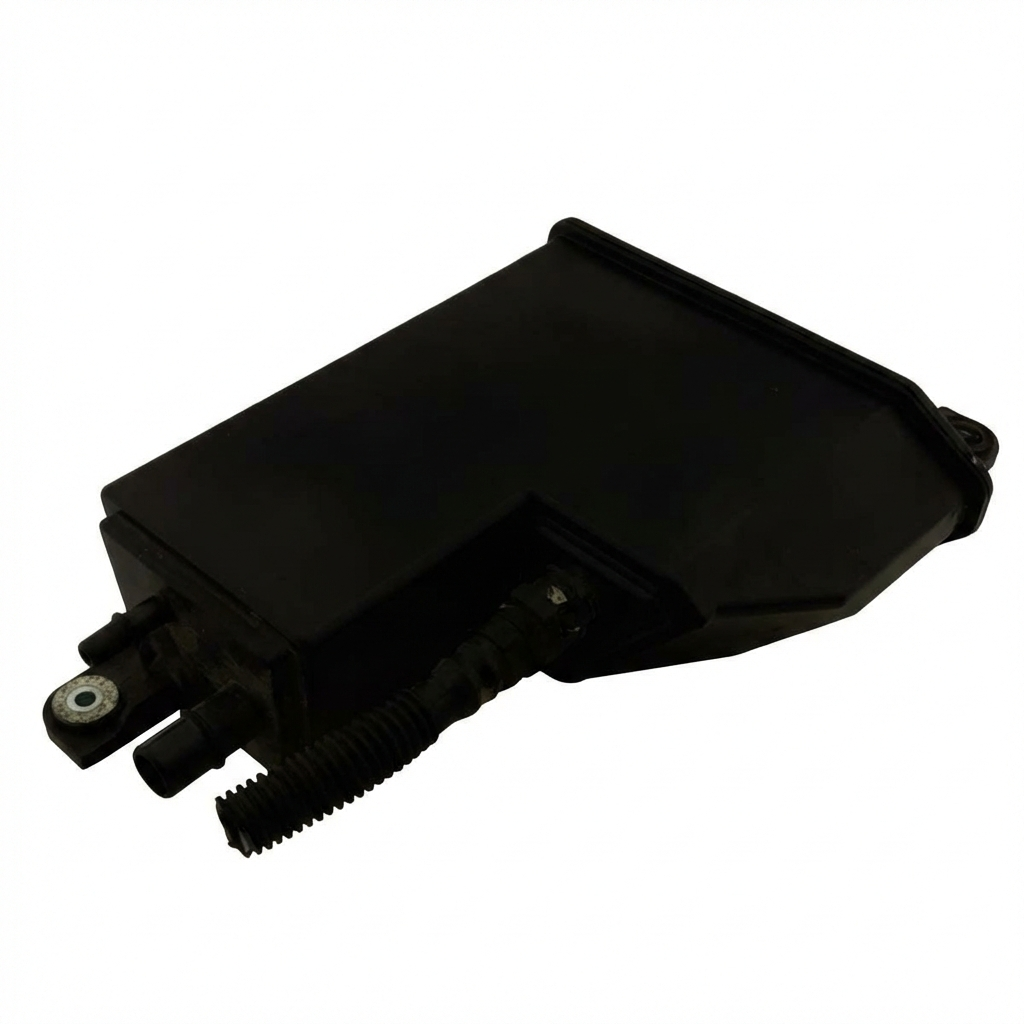
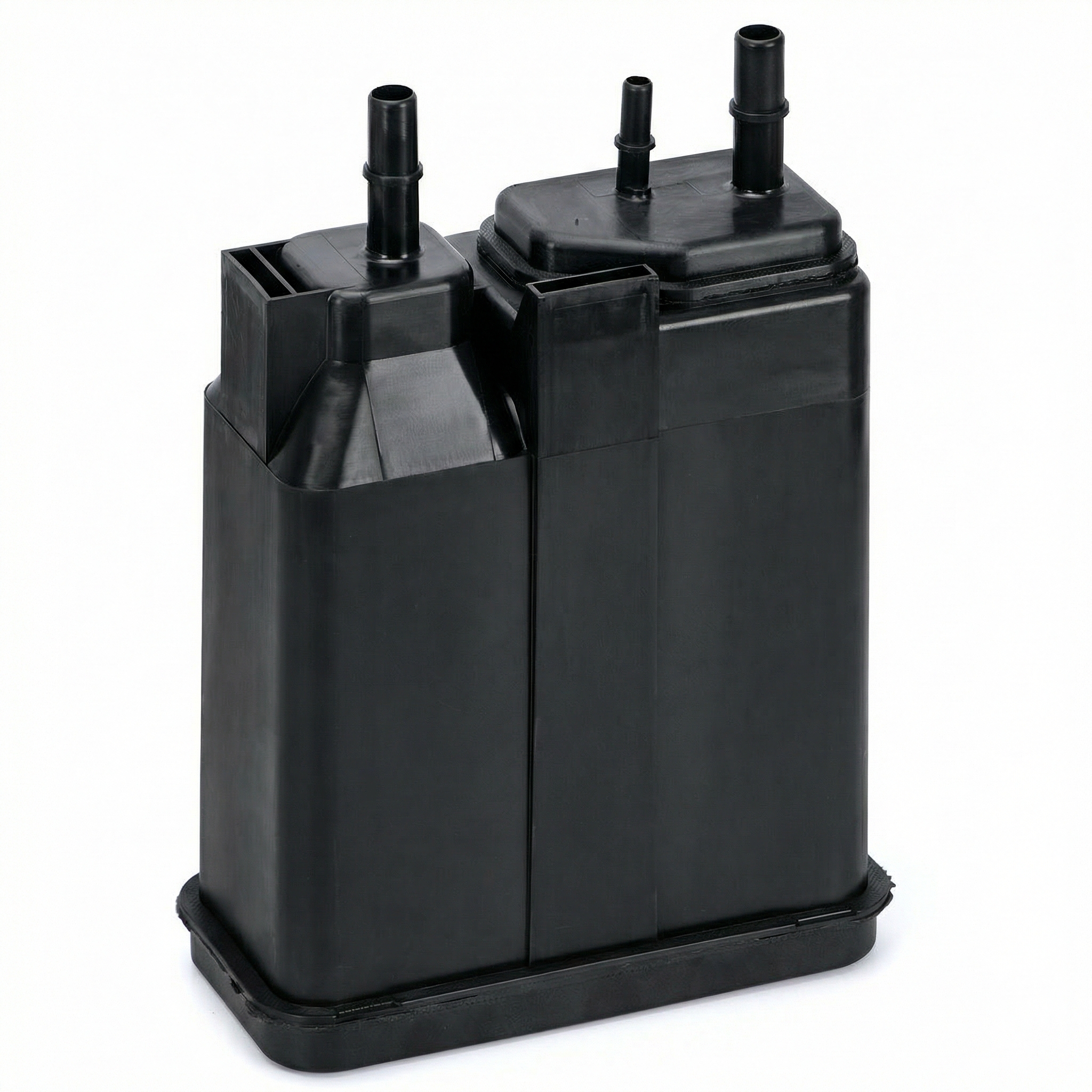
- Cracked EVAP Charcoal Canister: While the canister itself is durable, it can be damaged by road debris or develop cracks over time, causing a leak. This is more likely if the vehicle has been used off-road.
Diagnosis Steps
- Read the code with an OBD-II scanner and check for any other related EVAP codes (P0442, P0455, P0449, etc.).
- Inspect the gas cap. Ensure it is tightened until it clicks at least once. Remove it and check the rubber seal for cracks or damage. If in doubt, replace it with an OEM cap, clear the code, and drive for a few days.
- If the code returns, thoroughly inspect the fuel filler neck for any rust, pits, or corrosion that could prevent the cap from sealing.
- Visually inspect the EVAP purge solenoid on the engine and the vent solenoid near the gas tank, along with their hoses, for any obvious cracks or disconnections.
- If a scan tool is available, command the vent solenoid and purge solenoid on and off to check for operation. Listen for an audible click. Check for 12V power at the solenoids with the key on.
- Test the purge solenoid: remove it and try to blow through it with the vehicle off. No air should pass.
- If no obvious faults are found, a smoke test is the most effective next step. This involves feeding low-pressure smoke into the EVAP system's service port (often a green cap near the purge solenoid) and looking for where the smoke escapes. This will pinpoint the exact location of the leak.
Parts You'll Likely Need
- Gas Cap
(OEM #ACDelco GT261)— This is the most common cause. The seal fails over time, and it's the cheapest and easiest part to replace first.
Trusted brands: ACDelco
OEM price range: $20-$35
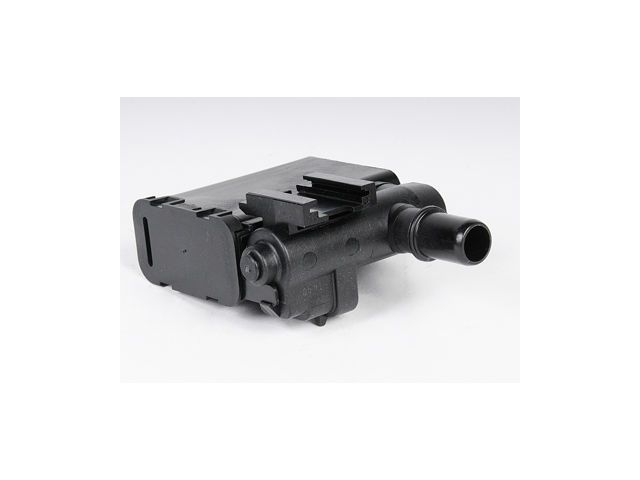
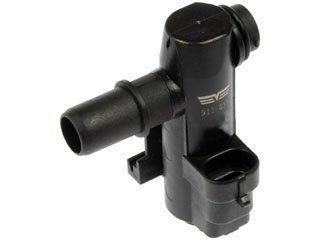
Aftermarket price range: $15-$25 - EVAP Vent Solenoid Valve
(OEM #ACDelco 214-2149 (supercedes 25950499))— This part is highly prone to failure on the Envoy due to its exposed location under the truck, leading to corrosion and dirt ingress.
Trusted brands: ACDelco, Dorman (911-070), Standard Motor Products (CVS80)
OEM price range: $50-$80
Aftermarket price range: $30-$60 - EVAP Purge Solenoid Valve
(OEM #ACDelco 214-1680 (supercedes 12597341))— Located on the engine, this valve can get stuck open or closed from normal wear and tear, creating a leak in the EVAP system.
Trusted brands: ACDelco, Dorman (911-032), Bosch
OEM price range: $40-$70
Aftermarket price range: $25-$50
Related Codes That Often Appear With This One
- P0442 — P0442 indicates a small EVAP leak. A component that is beginning to fail might first set a P0442 before the leak worsens and triggers a general P0440.
- P0455 — P0455 indicates a large EVAP leak. This often appears with P0440 if the gas cap is left off completely or a hose has become disconnected.
- P0449 — This code specifically points to a fault in the EVAP vent solenoid valve control circuit. If you see P0449 with P0440, the vent solenoid or its wiring is almost certainly the problem.
Technical Service Bulletins (TSBs) & Recalls
- GM Special Coverage 07001 / TSB 06-06-04-053: This addressed the cracked fuel tank filler neck inlet on 2002-2004 Trailblazer EXT and Envoy XL models, extending warranty coverage for this specific repair to 10 years or 150,000 miles. This has now expired but confirms the known issue.
Platform-Specific Known Issues
- Cracked Fuel Tank Filler Neck Inlet: On some early models, particularly the extended XL/EXT versions, the plastic inlet on the fuel tank where the filler neck hose attaches can crack, causing a fuel leak and an EVAP code. This is often misdiagnosed as a bad filler neck or gas cap.
Mechanic-Grade Diagnostic Values
- EVAP Vent Solenoid Coil Resistance — expected: 20 to 30 Ohms. Failure: A reading of infinite ohms (open circuit) or near-zero ohms (short circuit) indicates a failed solenoid.
- EVAP Purge Solenoid Coil Resistance — expected: Roughly 15 to 30 Ohms. Failure: A reading significantly outside this range suggests a damaged internal circuit.
- Voltage at EVAP Vent Solenoid Connector (Pink/Black or Orange wire) — expected: 12V (Battery Voltage) with ignition on. Failure: No voltage points to a blown fuse (e.g., ENG 1 fuse) or a break in the power wire.
- Fuel Tank Pressure (FTP) Sensor Voltage — expected: Approximately 1.5V with the gas cap off (atmospheric pressure). Voltage should decrease as vacuum is applied.. Failure: Voltage that is stuck high (e.g., 5V) or low, or does not change when pressure/vacuum changes, indicates a faulty sensor.
Scan Tool Commands That Help
- Tech 2: EVAP Service Bay Test — This function allows a technician to manually command the EVAP system to run its self-test without needing to perform a full drive cycle. It will close the vent solenoid, open the purge solenoid to create a vacuum, and then seal the system to monitor for vacuum decay, confirming if a leak is present.
- Tech 2 / High-End OBD-II Scanner: EVAP Purge/Seal — This bidirectional control allows the user to individually command the purge solenoid ON/OFF and the vent solenoid OPEN/CLOSED. This is crucial for isolating a faulty component. For example, you can command the vent solenoid closed and then use a smoke machine to see if the valve is leaking internally.
Wiring & Ground Locations
- EVAP Canister Vent Solenoid Connector — At the rear of the vehicle, near the spare tire, connected to the vent solenoid on the EVAP canister.. This connector and its wiring are exposed to road salt and debris, making them a common point of failure due to corrosion or physical damage, which can cause P0440 or P0449.
- EVAP Canister Purge Solenoid Connector — On the driver's side of the 4.2L engine, mounted to the intake manifold.. A poor connection here can prevent the purge solenoid from operating, leading to a failed EVAP test and a P0440 code.
- G107 / G108 / G109 — On the lower left side of the engine block.. These are primary engine grounds. A loose or corroded ground here can cause a variety of issues, including erratic behavior or failure of emissions components controlled by the PCM.
- G305 — On the outside of the left frame rail, near the fuel tank.. This is a key ground point for rear-of-vehicle components. A bad ground here could potentially affect the EVAP vent solenoid operation, as it's in the same vicinity.
Real Owner Repair Stories
- Reddit user in r/gmc (2003 GMC Envoy XL with 23,100 miles) — Check Engine Light with code P0440, returned after clearing.
❌ Tried (didn't work) Resetting the code, Replacing the gas cap
✅ What actually fixed it A 'rather small fuel line repair.' This indicates that even on a low-mileage vehicle, age can cause fuel/vapor lines to crack and leak, which is often found with a smoke test. - GMTNation.com forum user (2002 GMC Envoy SLT with 131,000 miles) — P0440 code returned one month after replacing the gas cap.
❌ Tried (didn't work) Replacing the gas cap with an OEM part.
✅ What actually fixed it The user was advised that the next most likely culprits are the vent or purge solenoids, the EVAP canister, or the fuel tank pressure sensor, and that a smoke test is the best diagnostic step. This highlights the common diagnostic path after a gas cap replacement fails to solve the issue.
"I Checked Everything" — The Actual Cause
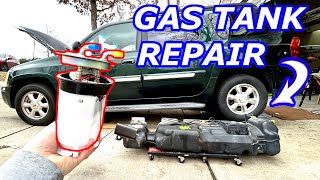
- A cracked fuel pump module. The plastic top of the fuel pump assembly (which includes the fuel tank pressure sensor) can develop hairline cracks. These cracks may not show up during a standard low-pressure smoke test but can open up under vacuum during the EVAP monitor test, causing a P0440 code. The fix is to replace the entire fuel pump module.
OEM Part Supersession History
25950499, 25932571→ACDelco 214-2149— Part consolidation and design update by GM.
Heads up: ACDelco 214-2149 is the current service replacement for a wide range of GM trucks and SUVs from this era, including the Envoy. It is a direct fit.12597341→ACDelco 214-1680— Part consolidation and design update.
Heads up: ACDelco 214-1680 is the current OEM replacement for the purge solenoid and is a direct fit.
Model Year Variations Within This Range
- 2002-2005 (SWB vs LWB): On short-wheelbase (SWB) models, the EVAP canister vent solenoid is located on top of the fuel tank. On long-wheelbase (LWB) models (XL/EXT), it is located at the rear of the fuel tank, which is a slightly more accessible location.
- 2006-2009: For later models, the vent solenoid was more consistently located at the rear of the fuel tank near the spare tire across different wheelbases, making it easier to access for service.
Diagnostic Flowchart
Other Known Issues on This Vehicle
Issues unrelated to this code that are worth knowing about as an owner of this generation:
- Instrument Cluster Stepper Motor Failure 🟠 Medium — Extremely common. Gauges (speedometer, tach, fuel, etc.) become erratic, get stuck, or stop working entirely. Usually occurs after 50,000 miles. (Ref: GM issued a special policy for some vehicles, but it has long expired. Repair involves replacing the individual stepper motors on the circuit board.)
- Failed Fan Clutch 🟠 Medium — Very common. The electronically controlled engine fan clutch fails, causing a loud 'jet engine' or 'roaring' noise from the engine bay, loss of power, and poor fuel economy. Can also set codes like P0495.
- Faulty 4WD Actuator / Switch 🟡 Low — Common. The front axle disconnect actuator can fail, causing the 'Service 4WD' light to illuminate and preventing engagement of 4WD. The dash switch for selecting 2WD/4WD also fails frequently.
- HVAC Mode/Temperature Door Actuator Failure 🟡 Low — Common. Actuators that control airflow direction (defrost, vent, floor) or temperature blending fail, resulting in a clicking noise from the dash and/or air only blowing from one location or at one temperature.
- Cracked Cylinder Liner (2002-early 2003 4.2L) 🔴 High — Uncommon, but catastrophic. Early production 4.2L I6 engines had an issue with cylinder #4 liner cracking, leading to coolant consumption and eventual engine failure. Mostly affected 2002 models.
- Fuel Level Sensor Failure 🟠 Medium — Very common. The fuel level sensor (part of the fuel pump module) fails, causing an erratic or inaccurate fuel gauge reading. The gauge may read empty when full, or vice-versa.
Used vs. New Parts: Buying Guide for This Vehicle
When a used part is the smart pick: A used fuel filler neck from a rust-free donor vehicle is an excellent choice, as a new one can be expensive and the part is non-mechanical. A complete used charcoal canister assembly (including the vent solenoid) can also be cost-effective if it comes from a low-mileage, non-corroded vehicle, as new canisters can be pricey.
Donor-vehicle mileage cap: roughly under 100000 miles for the part to have meaningful remaining life.
What to inspect on the donor part:
- For filler necks, inspect the sealing surface for any signs of rust, bubbling, or pitting. It must be perfectly smooth.
- For EVAP canisters/solenoids, look for a donor vehicle from a dry, non-rust-belt state.
- Check the plastic hose connectors and electrical pins for any cracks, brittleness, or corrosion.
- Avoid parts that are covered in mud or show signs of heavy off-road use, as dust is a primary cause of solenoid failure.
OEM-only on this vehicle (don't cheap out):
- Gas Cap: Aftermarket gas caps are a notorious source of repeat P0440 codes. Strongly recommend using an ACDelco OEM cap to ensure a proper seal.
Aftermarket brands forum-validated for this vehicle:
- Standard Motor Products (SMP): Often considered a premium aftermarket brand for emissions components like solenoids and sensors.
- Dorman: Offers widely available and cost-effective replacements for the vent and purge solenoids. Their 911-070 vent solenoid is a common replacement.
Brands owners have reported issues with on this vehicle:
- No-name, unbranded solenoids and gas caps from online marketplaces should be avoided as their quality control and sealing ability are often poor, leading to repeat failures.
Real Owner Stories
Aggregated from forums and TSBs cited above. Mileages and costs reflect what owners reported in those sources.
2002-2004 GMC Envoy XL — ~150000 miles
Symptoms: Fuel leak and an EVAP code; the plastic inlet on the fuel tank where the filler neck hose attaches was cracked.
What fixed it: Replacement of the fuel tank (originally covered under GM Special Coverage 07001).
Source hint: GM Special Coverage 07001 / TSB 06-06-04-053
2002-2009 GMC Envoy
Symptoms: P0440 code; visual inspection revealed a completely rusted-out fuel filler tube.
What fixed it: Replacement of the fuel filler neck/tube assembly.
Source hint: Fixing With Passion (YouTube) - 'Trailblazer Gas filler tube replacement. P0440 Code.'
2002-2009 GMC Envoy
Symptoms: P0440 code returned even after the dealer replaced the fuel tank under warranty.
What fixed it: Further diagnostics required as multiple failure points (like solenoids or the gas cap) can exist simultaneously.
Source hint: GMTNation.com - Thread 'NEED HELP - P0440 code popped up again'
2002-2009 GMC Envoy
Symptoms: P0440 code; owner initially replaced the gas cap but found a botched previous repair on the filler neck connection at the tank.
What fixed it: Repairing the filler neck connection at the tank, which is a known weak point.
Source hint: GMTNation.com - Thread 'p0440'
Related OBD-II Codes
Frequently Asked Questions
Is there a specific warranty extension for the fuel tank leak on my 2002-2004 GMC Envoy XL?
Why does the gas pump nozzle keep clicking off when I try to fill my Envoy?
Can I use any gas cap to fix the P0440 code on my Envoy?
Where is the EVAP vent solenoid located on the 2002-2009 GMC Envoy?
I live in the 'Rust Belt'; could my filler neck be the problem?
Where is the purge solenoid located on the 4.2L engine?
Helpful Videos

Used OEM Parts in Stock
New Aftermarket Parts Available


The information in this article is provided for general reference and educational purposes only. Vehicle specifications, procedures, and part compatibility can vary by production date, trim level, and region. Always consult your vehicle's factory service manual and verify part numbers before purchasing or performing repairs. Safety-critical components such as airbags, seat belts, and braking systems should be installed by a qualified professional.
- GMC Envoy:
- 🎬 Helpful Videos
- 🛍️ Shop This Part
- What's Unique About the 2002-2009 GMC Envoy
- Symptoms You May Notice
- Most Likely Causes
- Rare But Worth Checking
- Diagnosis Steps
- Parts You'll Likely Need
- Related Codes That Often Appear With This One
- Technical Service Bulletins (TSBs) & Recalls
- Platform-Specific Known Issues
- Mechanic-Grade Diagnostic Values
- Scan Tool Commands That Help
- Wiring & Ground Locations
- Real Owner Repair Stories
- "I Checked Everything" — The Actual Cause
- OEM Part Supersession History
- Model Year Variations Within This Range
- Diagnostic Flowchart
- Other Known Issues on This Vehicle
- Used vs. New Parts: Buying Guide for This Vehicle
- Real Owner Stories
- 2002-2004 GMC Envoy XL — ~150000 miles
- 2002-2009 GMC Envoy
- 2002-2009 GMC Envoy
- 2002-2009 GMC Envoy
- Related OBD-II Codes
- Frequently Asked Questions
- 🎟️ Get 5% Off