

P0440 on 1999-2006 BMW X5: EVAP System Malfunction Causes and Fixes
For a 1999-2006 BMW X5 (E53), the P0440 code is most often caused by a simple loose or worn-out gas cap. If a new gas cap doesn't fix it, the next most likely culprit is a failed Leak Diagnosis Pump (DMTL), a common failure item on this platform. A new OEM-spec cap costs about $30-$60, while a Bosch (OEM supplier) DMTL pump is around $90-$150.
- Always start by checking that your gas cap is tight. If it's old, replace it first; it's cheap and often the solution.
- If a new gas cap doesn't fix the P0440 code, the Leak Diagnosis Pump (DMTL) behind the driver's side rear wheel is the next most likely failure.
- The vehicle is safe to drive with this code, but you will not be able to pass an emissions test.
- A smoke test is the most effective way to find the leak if it's not one of the common components like the cap or DMTL pump.
What's Unique About the 1999-2006 BMW X5
On the E53 X5, like many BMWs from this era, the EVAP system uses a component called a Leak Diagnosis Pump (DMTL or LDP) to pressurize the system for testing, rather than using engine vacuum. This pump is a very common failure point and a frequent cause of the P0440 code, second only to the gas cap. Owners often find themselves replacing either the gas cap, the DMTL pump, or the fuel tank breather valve to resolve this code. The DMTL pump is located behind the driver's side rear wheel well liner, making it a straightforward but sometimes messy DIY job.
Symptoms You May Notice
- Check Engine Light is on
- A faint fuel smell, particularly around the rear of the vehicle or near the gas cap
- Failure to pass an emissions/smog test
- Hearing a buzzing or humming noise from the rear driver's side wheel well area when the car is off (this can be the DMTL pump running its test cycle)
- Replacing the oxygen sensors. O2 sensors are not related to the EVAP system.
- Replacing the catalytic converter. This is an exhaust component and is unrelated to fuel vapor leaks.
- Assuming a smoke test on the intake manifold for vacuum leaks will find an EVAP leak. The EVAP system is a separate, sealed system and must be tested independently.
Most Likely Causes
- Loose or Faulty Gas Cap 🔴 High Probability The rubber o-ring seal on the gas cap dries out, cracks, and loses its ability to seal over time. This is the most common and easiest fix for any EVAP leak code. Owners on forums consistently recommend this as the first step.
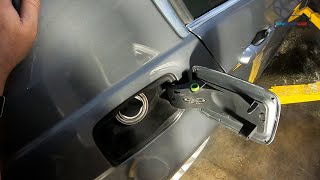
How to confirm: Ensure the cap is tightened until it clicks several times. Inspect the green or black rubber seal for cracks, stiffness, or debris. If the seal is compromised or the cap is old, replacement is the best confirmation. Many owners warn against cheap aftermarket caps, recommending OEM or a reputable equivalent.
Typical fix: Replace the gas cap. Ensure you purchase a quality OEM or equivalent part to guarantee a proper seal.
Est. part cost: $30-$60 - Failed Leak Diagnosis Pump (DMTL) 🔴 High Probability The DMTL pump is a known high-failure item on BMWs of this vintage. Its location in the wheel well exposes it to moisture and road debris, leading to electrical or mechanical failure of the internal motor or cracking of the plastic housing.
How to confirm: The DMTL pump is located behind the driver's side rear wheel well liner on the E53 X5. A BMW-specific scan tool can command the pump to run; if it makes no noise or a grinding sound, it has likely failed. You can also check for power and ground at the pump's electrical connector with a multimeter. A healthy pump makes a low hum when active.
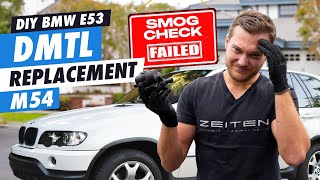
Typical fix: Replace the DMTL pump. This involves removing the driver's side rear wheel and liner to access the pump. It is held by three T20 Torx screws to its bracket. 🎬 Watch: Step-by-step guide to replacing your DMTL pump. Bosch is the original equipment manufacturer, and their part is identical to the Genuine BMW part at a lower cost.
Est. part cost: $90-$150 - Faulty Fuel Tank Breather Valve (Purge Valve) 🟡 Medium Probability This solenoid valve, located in the engine bay, can become stuck open or closed due to age and carbon buildup, creating a leak in the EVAP system.
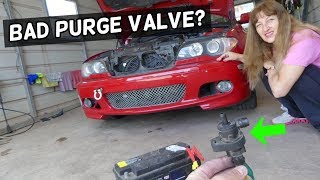
How to confirm: With the engine running, you can sometimes feel for vacuum at the valve's ports or listen for a clicking sound (a healthy valve clicks). A more definitive test is to apply 12V power to its terminals and listen for a click, confirming the solenoid is actuating. When not energized, it should be closed and not allow air to pass through. 🎬 See how to test your purge valve for leaks.
Typical fix: Replace the fuel tank breather valve. It is typically mounted on or near the intake manifold 🎬 Watch: How to replace the fuel tank breather valve. and held in a rubber bracket.
Est. part cost: $50-$100 - Cracked or Disconnected EVAP Hoses ⚪ Low Probability The plastic and rubber hoses become brittle with age and exposure to engine heat, leading to cracks and leaks, especially at connection points near the purge valve or charcoal canister.
How to confirm: A visual inspection may reveal obvious cracks, especially at connection points. The most reliable method is to have a smoke test performed, which injects pressurized smoke into the EVAP system, making any leaks visible. This is the definitive way to find a leak if the common parts are not the cause.
Typical fix: Replace the specific section of hose that is found to be leaking.
Est. part cost: $20-$80
Rare But Worth Checking
- Cracked Charcoal Canister: The canister itself can develop cracks from road debris or age, creating a significant leak. This is usually found during a smoke test. It is located near the DMTL pump in the rear driver's side wheel well.
- Leaking Fuel Pump or Sender Gasket: The large o-ring gaskets that seal the fuel pump and fuel level sender units under the rear seat can fail, causing both a fuel smell inside the car and an EVAP code. A forum user discovered a melted electrical connector on the fuel pump assembly was the true source of their leak, which was initially diagnosed as a bad DMTL pump.
- Rusted Fuel Filler Neck: In regions where road salt is used, the metal fuel filler neck can rust through, creating a leak that will trigger a P0440 code. This would be easily visible during a smoke test.
Diagnosis Steps
- Check the Gas Cap: Ensure it is tight. Remove it and inspect the rubber seal for any cracks or damage. If it looks old or worn, replace it with an OEM or high-quality equivalent. This is the cheapest and most common fix.
- Clear Codes and Drive: After tightening or replacing the cap, clear the code with a scanner and drive for a few days. The EVAP monitor requires specific drive cycle conditions (e.g., multiple starts, fuel tank between 1/4 and 3/4 full) to run its self-test.
- Visual Inspection: Inspect the EVAP hoses in the engine bay, particularly around the fuel tank breather (purge) valve, for any obvious cracks or loose connections.
- Test the Fuel Tank Breather (Purge) Valve: Locate the valve in the engine bay. With the engine off, try to blow through it; it should be closed. Apply 12V to the connector pins; it should click open and allow air to pass. If it's stuck open or doesn't open with power, it's faulty.
- Inspect the DMTL Pump: Access the DMTL pump behind the driver's side rear wheel well liner. Check its electrical connector for corrosion or damage. If you have a capable scan tool (like INPA/ISTA for BMWs), command the pump to run and listen for its motor.
- Perform a Smoke Test: If the above steps do not reveal the cause, the most effective next step is a smoke test. This involves injecting pressurized, vaporous smoke into the EVAP system's service port (often near the purge valve or on the charcoal canister). Smoke will exit from any cracks or leaks, pinpointing the exact location of the fault.
Parts You'll Likely Need
- Fuel Cap
(OEM #16116767740)— This is the most frequent cause of P0440. The seal wears out, preventing the system from holding pressure. Owners strongly recommend OEM to avoid issues.
Trusted brands: Genuine BMW, URO Parts
OEM price range: $50-$70
Aftermarket price range: $25-$40 - Leak Diagnosis Pump (DMTL)
(OEM #16137193479)— This is the second most common failure point on the E53 X5 for this code. The pump motor fails or the housing cracks. Bosch is the OEM supplier.
Trusted brands: Bosch (OEM), Genuine BMW
OEM price range: $120-$180
Aftermarket price range: $80-$110 - Fuel Tank Breather Valve (Purge Valve)
(OEM #13901744150)— This valve can get stuck open or closed, causing a leak or a blockage in the EVAP system. Part number can vary by engine (M54 vs M62/N62).
Trusted brands: Bosch, Febi, Genuine BMW
OEM price range: $70-$110
Aftermarket price range: $40-$80
Related Codes That Often Appear With This One
- P0442 — P0442 indicates a 'small leak' while P0440 is a general malfunction. They often appear together as the system may detect different leak severities during its self-tests.
- P0443 — This code indicates a 'Purge Control Valve Circuit Malfunction'. If you see this with P0440, it points strongly to an electrical issue with the purge valve or its wiring, rather than a simple leak.
Platform-Specific Known Issues
- DMTL Pump Location: On the E53 X5, the DMTL pump is located in the rear driver's side wheel well. On the next generation (E70) X5, it was moved to the passenger side. Knowing the correct location is key for diagnosis and replacement.
- Fuel Pump Gasket/Connector Failure: A rare but documented failure is the electrical connector on the top of the fuel pump assembly melting, creating a hole that allows fuel vapor to escape. This can trigger a P0440 and is often found after common parts have been replaced.
Mechanic-Grade Diagnostic Values
- Fuel Tank Breather (Purge) Valve Resistance — expected: Approximately 26-29 Ohms.. Failure: A significantly higher reading (e.g., 190 Ohms) or an open circuit indicates a failed valve coil. A reading far outside the 26-29 Ohm range, even if the valve clicks with 12V, can still be faulty and cause codes.
- DMTL Pump Amperage Draw (via Scan Tool) — expected: The DME monitors the pump's current draw during its test cycle. It first measures a reference amperage by pumping air through a known orifice (e.g., 0.5mm or 1.0mm).. Failure: If the amperage draw does not change or is not seen when the system is sealed, it indicates a large leak (P0440). If the amperage draw is the same as the reference value, it indicates a small leak. If the amperage draw is higher than the reference, it indicates no leak.
Hidden / Shadow Codes Worth Checking
- P1447: DMTL pump current too high during solenoid test. This is a BMW-specific code that points more directly to a failure within the DMTL pump assembly itself, rather than a general system leak. (see via BMW-specific diagnostic tools like INPA, ISTA, or higher-end professional scanners.)
- 2A17: DMTL module fault. This hex code indicates the entire DMTL system is not working and was unable to start its test routine, often pointing directly to a failed pump. (see via BMW-specific diagnostic tools like INPA or ISTA.)
- 2A15 / 2A16: Minor leak detected. These hex codes are the BMW-specific equivalents for small EVAP leaks (like P0442) and can accompany a P0440. (see via BMW-specific diagnostic tools like INPA or ISTA.)
Scan Tool Commands That Help
- ISTA (Integrated Service Technical Application): EVAP System Test Plan / Tank Leakage Test — This is the dealership-level guided diagnostic function. It will automatically command the DMTL pump through its reference measurement and system pressurization phases, then report back whether a large leak, small leak, or no leak is present. It is the most definitive way to test the system's integrity electronically.
- INPA (BMW Factory Diagnostic Software) / Foxwell Scanners: Activate DMTL Pump / Activate Purge Valve — This is a bidirectional command to manually turn on the DMTL pump or pulse the purge valve. It's used to confirm the components are receiving a signal and are mechanically functioning (e.g., you can hear the pump hum or the valve click). This is useful for isolating a dead component from a wiring issue.
Wiring & Ground Locations
- Engine Ground Strap — Runs from the lower passenger side of the engine block to the frame rail, often near the AC compressor bolt.. A poor engine ground can cause a variety of electrical issues and fault codes. While not a direct cause for P0440, ensuring it's clean and tight is a fundamental step in any electrical diagnosis.
- DME / Controls Ground — Located on the firewall, next to the electronics box (E-box) where the DME is housed.. The DME controls and monitors the entire EVAP system, including the purge valve and DMTL pump. A faulty ground here can lead to incorrect readings and false codes.
- DMTL Pump Connector — Behind the driver's side rear wheel well liner, connected directly to the DMTL pump.. This connector is exposed to road spray and debris. Corrosion on its pins is a common cause of DMTL pump communication or power issues, leading to P0440 or related codes.
Real Owner Repair Stories
- Xoutpost.com user 'oldskewel' (2001 BMW X5 3.0i) — P0444 code (Purge Control Valve Circuit Malfunction), which is often related to P0440.
❌ Tried (didn't work) Thoroughly tested the original purge valve. It clicked with 12V, resistance measured a perfect 27.8 Ohms, and it held/released air correctly when tested manually and with a Foxwell scanner.
✅ What actually fixed it Replacing the seemingly perfect purge valve with a new, Genuine BMW part fixed the code. The user noted that many forum members advised that for this specific part, only the Genuine BMW version would work, suggesting some aftermarket versions have tolerance or electronic issues that the DME can detect. - Xoutpost.com user 'syncrocrick' (2003 BMW X5 4.4i M62) — P0440 and P0442 codes that came back immediately after clearing.
❌ Tried (didn't work) New OEM gas cap, New evap/purge valve, Smoke test did not reveal any visible leaks.
✅ What actually fixed it The user found a small, disconnected hose on the charcoal canister. After reconnecting it and securing it with tape, the code was resolved long enough to pass a smog check. This highlights that small, hard-to-see hose connections can be the culprit even when a smoke test doesn't show an obvious plume.
"I Checked Everything" — The Actual Cause
- In one documented case on Xoutpost.com, a user with P0440/P0442 performed a smoke test but could not see any leaks. The eventual fix was discovering a small, disconnected hose on the charcoal canister itself, which was not easily visible and may not have produced a large enough smoke plume to be noticed initially.
When the Usual Fixes Don't Work
- While the gas cap and DMTL pump are the most common causes, there are numerous documented cases where the actual fix was the fuel tank breather (purge) valve, even when the valve seemed to pass basic electrical tests. One owner on Xoutpost forums went through extensive testing on his purge valve, which showed correct resistance and function, but the code was only resolved by replacing it with a Genuine BMW part, suggesting aftermarket parts can be problematic.
OEM Part Supersession History
16136752551, 16136764191→16137193479— Component revision and consolidation by BMW over the years.
Diagnostic Flowchart
Other Known Issues on This Vehicle
Issues unrelated to this code that are worth knowing about as an owner of this generation:
- Cooling System Failure (Expansion Tank, Hoses, Water Pump) 🔴 High — Very common. Brittle plastic components often fail between 60,000 and 100,000 miles, potentially causing overheating and engine damage.
- Timing Chain Guide Failure (V8 M62/N62 Engines) 🔴 High — Common on V8 models over 100,000 miles. Plastic guides become brittle and break, leading to a rattling noise on startup and potentially catastrophic engine failure if ignored.
- Oil Leaks (Valve Cover Gasket, Oil Filter Housing Gasket) 🟠 Medium — Extremely common across all engines. Gaskets harden and leak oil onto exhaust components, causing a burning smell. Typically occurs after 60,000 miles.
- Rear Air Suspension Failure 🟠 Medium — Common on models equipped with self-leveling suspension. Air bags develop leaks, causing the rear to sag and burning out the compressor. Often occurs after 80,000 miles.
- Transfer Case Actuator Motor Gear Failure 🟠 Medium — Common failure item. A plastic gear inside the actuator motor strips, causing 4x4, ABS, and Brake warning lights. Usually happens around 100,000 miles.
- Window Regulator Failure 🟡 Low — Very common. The plastic clips holding the window glass break, causing the window to fall into the door. Can happen at any mileage.
Used vs. New Parts: Buying Guide for This Vehicle
When a used part is the smart pick: For this repair, using used parts is generally not recommended for the electronic components. The primary failure items (DMTL pump, purge valve, gas cap) are wear-and-tear items with a finite lifespan. A used electronic part may have limited life remaining or could be the reason the donor car was in the junkyard. Structural parts like the charcoal canister or filler neck could be sourced used if they are in excellent physical condition.
Donor-vehicle mileage cap: roughly under 75000 miles for the part to have meaningful remaining life.
What to inspect on the donor part:
- For a charcoal canister, inspect for any cracks, especially around the hose fittings.
- For a fuel filler neck, check for any signs of rust, particularly on the inside and at the mounting points. Avoid parts from salt-belt regions.
- For any used part, check that plastic is not brittle and rubber hoses are not cracked or stiff.
OEM-only on this vehicle (don't cheap out):
- Fuel Tank Breather Valve (Purge Valve): Multiple owner reports indicate that aftermarket versions can fail to resolve the code, even when they appear to function correctly. Using a Genuine BMW or OEM Bosch part is strongly advised.
- Gas Cap: While cheaper aftermarket caps exist, many owners report they fail to seal properly. An OEM or OEM-supplier cap is the safest bet to eliminate it as a variable.
Aftermarket brands forum-validated for this vehicle:
- Bosch: Bosch is the Original Equipment Manufacturer (OEM) for the DMTL pump and the purge valve. Buying a Bosch-branded part is equivalent to getting the Genuine BMW part without the dealership markup.
Brands owners have reported issues with on this vehicle:
- Unbranded / 'White-box' eBay/Amazon parts: For critical electronic components like the purge valve and DMTL pump, these often have high failure rates or incorrect internal specifications that will not satisfy the DME's checks.
Real Owner Stories
Aggregated from forums and TSBs cited above. Mileages and costs reflect what owners reported in those sources.
BMW X5 (E53)
Symptoms: The owner experienced a P0440 code that persisted even after replacing the DMTL pump.
What fixed it: Inspection revealed the electrical connector on the top of the fuel pump assembly had melted, creating a hole that allowed fuel vapor to escape.
Source hint: xoutpost.com: Multiple threads confirm the diagnostic flow of gas cap -> purge valve -> DMTL pump -> smoke test. One user details finding a melted fuel pump connector as the root cause after replacing the DMTL pump didn't fix the issue.
BMW X5 (E53)
Symptoms: Check engine light with EVAP-related codes; discussion regarding the high failure rate of the leak detection pump due to its exposed location.
What fixed it: Replacement of the DTML (DMTL) pump, which is a known high-failure item on BMWs of this vintage due to moisture and road debris.
Source hint: bimmerpost.com: Provides insight into the function of the DTML (DMTL) pump as a common failure point on BMWs for EVAP codes, corroborating its role in pressure testing the system.
BMW X5 (E53)
Symptoms: P0440 code and failure to pass emissions; the owner was advised to start with the simplest possible fix.
What fixed it: Replacing the gas cap with a Genuine BMW part to ensure the rubber o-ring seal was sufficient.
Source hint: bimmerfest.com: Numerous owner experiences echo the common causes, with many advising to only use a Genuine BMW gas cap to ensure a proper seal.
Related OBD-II Codes
Frequently Asked Questions
Where is the DMTL pump located on my 1999-2006 BMW X5 (E53)?
Can I use an aftermarket gas cap to fix the P0440 code on my X5?
I hear a buzzing noise from the rear driver's side wheel well when the car is off. Is this normal?
How many drive cycles are needed to clear the P0440 code after a repair?
Is there a cheaper alternative to the Genuine BMW DMTL pump?
What size tools do I need to replace the DMTL pump on my E53?
Helpful Videos
We Have This Part in Stock


The information in this article is provided for general reference and educational purposes only. Vehicle specifications, procedures, and part compatibility can vary by production date, trim level, and region. Always consult your vehicle's factory service manual and verify part numbers before purchasing or performing repairs. Safety-critical components such as airbags, seat belts, and braking systems should be installed by a qualified professional.
- BMW X5:
- 🎬 Helpful Videos
- 🛍️ Shop This Part
- What's Unique About the 1999-2006 BMW X5
- Symptoms You May Notice
- Most Likely Causes
- Rare But Worth Checking
- Diagnosis Steps
- Parts You'll Likely Need
- Related Codes That Often Appear With This One
- Platform-Specific Known Issues
- Mechanic-Grade Diagnostic Values
- Hidden / Shadow Codes Worth Checking
- Scan Tool Commands That Help
- Wiring & Ground Locations
- Real Owner Repair Stories
- "I Checked Everything" — The Actual Cause
- When the Usual Fixes Don't Work
- OEM Part Supersession History
- Diagnostic Flowchart
- Other Known Issues on This Vehicle
- Used vs. New Parts: Buying Guide for This Vehicle
- Real Owner Stories
- BMW X5 (E53)
- BMW X5 (E53)
- BMW X5 (E53)
- Related OBD-II Codes
- Frequently Asked Questions
- 🎟️ Get 5% Off