

P0430 on 2015-2017 Ford Expedition 3.5L EcoBoost: Catalyst Efficiency Causes and Fixes
P0430 on your Expedition means the driver's side (Bank 2) catalytic converter is inefficient. The most common causes are a failing catalytic converter or a bad downstream oxygen sensor. Before replacing the expensive converter, inspect for exhaust leaks and consider replacing the downstream O2 sensor first (approx. $50-$100). Many owners have fixed the code with just a sensor replacement.
- P0430 points to an issue with the driver's side catalytic converter's efficiency.
- Before replacing the expensive catalytic converter, always check for other codes (especially misfires), inspect for exhaust leaks, and test or replace the downstream O2 sensor.
- If you have recently had misfires, it is highly likely they have damaged the catalytic converter. You must fix the cause of the misfire (e.g., new spark plugs/coils) before replacing the converter.
- When replacing sensors, using OEM Motorcraft parts is often recommended by owners to ensure compatibility and avoid repeat issues.
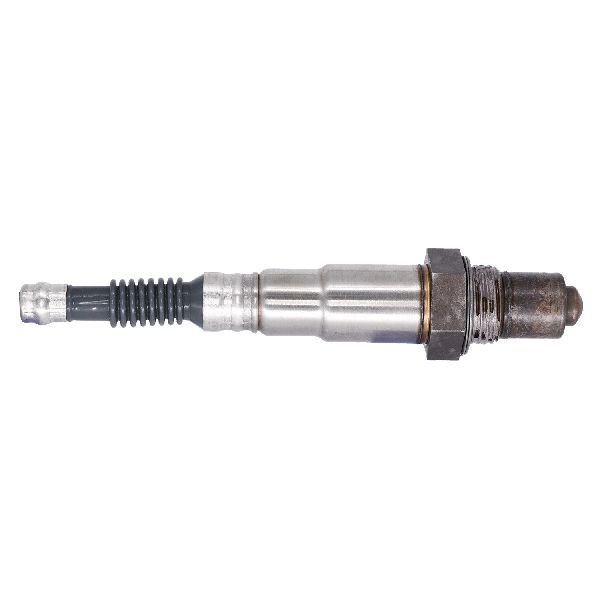
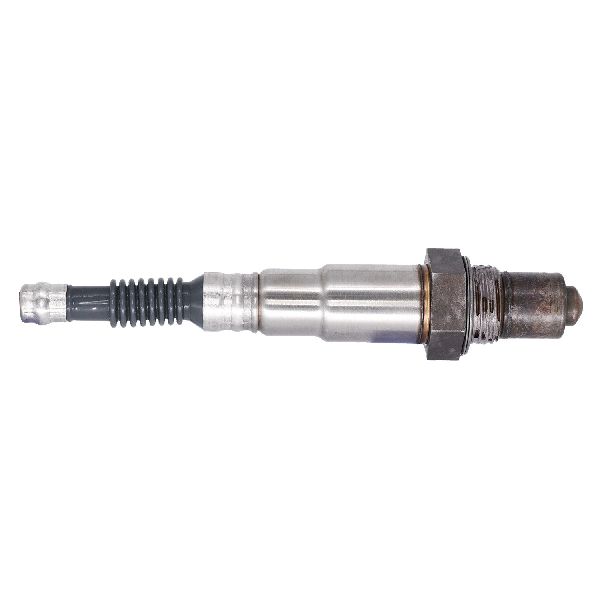
- The Bank 2 downstream O2 sensor is Motorcraft part DY-1289 (Ford P/N: FL1Z-9G444-A).
What's Unique About the 2015-2017 Ford Expedition

For the 3.5L EcoBoost engine in the Expedition, the P0430 code is a common issue often discussed in tandem with its sibling, the F-150. The high-stress, turbocharged nature of this engine can be tough on catalytic converters, especially if maintenance like spark plug changes is neglected, leading to misfires that can damage the converters with unburnt fuel. While the converter itself is a frequent culprit, many owners on forums like Ford Expedition Forum have successfully fixed the code by replacing only the downstream oxygen sensor, making it a critical first diagnostic step to avoid a costly and unnecessary converter replacement. A TSB for older F-150s (13-8-1) also links P0430 directly to misfire conditions caused by moisture in the intercooler, instructing technicians to replace the catalytic converter if the code is present alongside specific misfire codes. Some owners have even resorted to using an O2 sensor spacer or 'defouler' as a temporary, low-cost way to trick the sensor and keep the light off, though this does not fix the underlying emissions issue.
🎬 See these 3 DIY methods to address the P0430 code.Symptoms You May Notice
- Check Engine Light is on.
- Failing an emissions test.
- Reduced engine power or sluggish acceleration (if the converter is severely clogged).
- A sulfur or 'rotten egg' smell from the exhaust (less common).
- A humming or whining sound from the exhaust during acceleration, which can indicate backpressure from a clogged converter.
- Intermittent nature of the code; some owners report the light turns on and off on its own, particularly with changes in driving style (e.g., city vs. highway driving).
- Immediately replacing the catalytic converter without testing the oxygen sensors first. A faulty O2 sensor is a common cause and a much cheaper repair.
- Replacing the upstream (pre-cat) O2 sensor when the downstream (post-cat) sensor is the one that monitors converter efficiency for this code.
- Replacing the converter when the actual root cause is an unaddressed engine misfire, which will quickly destroy the new converter.
Most Likely Causes

- Failing or aging catalytic converter 🔴 High Probability Catalytic converters are wear items that degrade over time. Engine issues common to the EcoBoost, like misfires from worn spark plugs or failing ignition coils, can send unburnt fuel into the exhaust, overheating and destroying the converter's internal structure.
How to confirm: Use a scan tool to watch live O2 sensor data; if the downstream sensor voltage graph mimics the upstream sensor's rapid fluctuations, the converter is not working. Alternatively, use an infrared thermometer to measure the temperature of the pipe before and after the converter after a 20-minute drive; the outlet should be at least 100°F hotter than the inlet. A temperature that is the same or cooler indicates a dead converter.
Typical fix: Replace the Bank 2 (driver's side) catalytic converter assembly.
Est. part cost: $400-$1200 - Faulty downstream oxygen (O2) sensor 🟡 Medium Probability O2 sensors age and can become 'lazy' or contaminated, sending slow or inaccurate signals to the PCM that mimic a bad catalytic converter. This is a very common point of failure and a frequent misdiagnosis for P0430, as confirmed by many owner experiences on Reddit and Expedition forums.
How to confirm: The best way is to swap the downstream O2 sensors from Bank 1 and Bank 2. Clear the codes and drive. If the code returns as P0420 (for Bank 1), the sensor is bad. 🎬 Watch: How to easily diagnose and fix P0420/P0430 codes. You can also graph the sensor's voltage; a healthy downstream sensor should show a relatively steady voltage (e.g., around 0.6-0.8V) on a warm engine at a steady RPM, not rapid switching like the upstream sensor.
Typical fix: Replace the Bank 2 (driver's side) downstream oxygen sensor.
Est. part cost: $50-$100 - Exhaust system leak ⚪ Low Probability Rust and vibration can cause leaks at gaskets (especially exhaust manifold gaskets) or cracks in the exhaust pipes upstream of or between the O2 sensors. These leaks can draw in outside air, skewing O2 sensor readings and falsely triggering the code.
How to confirm: Perform a visual inspection for rust, cracks, or black soot marks around exhaust connections. A smoke test, where smoke is forced into the exhaust system, is the most effective way to find small leaks. Some owners report hearing a ticking or squeaking noise on acceleration that accompanies the code.
Typical fix: Repair the leak by replacing the gasket or the damaged section of the exhaust.
Est. part cost: $20-$300 - Engine misfires or rich fuel condition ⚪ Low Probability The 3.5L EcoBoost is sensitive to spark plug and ignition coil condition. Worn plugs or failing ignition coils can cause misfires, which will destroy a new catalytic converter quickly by dumping raw fuel into it. Always address misfire codes (P0300-P0306) before replacing a converter.
How to confirm: Check for other trouble codes, specifically misfire codes (P0300, P0301-P0306) or fuel trim codes. Address these codes FIRST before replacing any emissions components.
Typical fix: Replace spark plugs and/or ignition coils. Diagnose and fix the root cause of any fuel system issues.
Est. part cost: $100-$400
Rare But Worth Checking
- High Sulfur Content in Fuel: A manufacturer service bulletin, TSB Bulletin #TSB 22-2137, notes that some vehicles may exhibit an illuminated MIL with P0430 due to high sulfur content in the fuel.
Diagnosis Steps

- Check for other DTCs. If any misfire (P030x), fuel system, or throttle body (P2112) codes are present, fix those problems first as they are likely the root cause.
- Perform a thorough visual inspection of the exhaust system from the engine to the tailpipe. Look for any signs of leaks, such as black soot, cracks, or broken hangers, especially around the exhaust manifold and converter flanges.
- Use a scan tool to observe the live data from the upstream and downstream O2 sensors for Bank 2. At a steady 2500 RPM, the upstream sensor (O2S12) voltage should fluctuate rapidly between ~0.1V and ~0.9V. The downstream sensor (O2S22) voltage should remain relatively stable and high (e.g., >0.6V). If the downstream sensor voltage is fluctuating similarly to the upstream sensor, the converter has likely failed.
- As a simple diagnostic test, swap the downstream O2 sensors between Bank 1 and Bank 2. They are typically the same part. Clear the codes and drive the vehicle. If the code changes to P0420 (Bank 1), the O2 sensor is faulty and needs to be replaced. If P0430 returns, the issue is likely the converter or an exhaust leak on Bank 2.
- If a leak is suspected, perform a smoke test on the exhaust system to pinpoint its location.
- If all other tests pass and the P0430 code returns, the catalytic converter is the most likely culprit.
Parts You'll Likely Need

- Bank 2 Downstream Oxygen Sensor
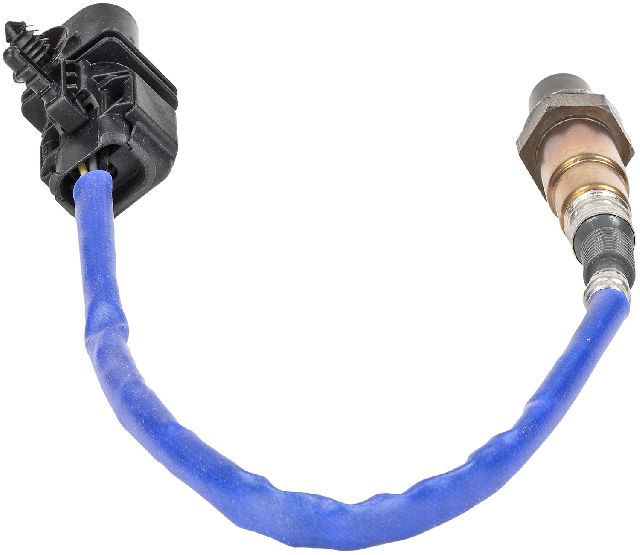
(OEM #FL1Z-9G444-A (Motorcraft DY-1289))— This sensor is responsible for monitoring the efficiency of the Bank 2 catalytic converter. It's a common failure point and can trigger a P0430 code even if the converter is still good. It's a recommended first part to replace due to its lower cost.
Trusted brands: Motorcraft (DY-1289), Bosch (18176), Denso (234-4944), NGK/NTK
OEM price range: $70-$110
Aftermarket price range: $40-$80 - Bank 2 Catalytic Converter Assembly
(OEM #FL1Z-5E212-D (Driver Side))— If the oxygen sensor is confirmed to be good and there are no exhaust leaks, the catalytic converter itself has lost its efficiency and must be replaced to fix the code and pass emissions. The passenger side (Bank 1) is part number FL1Z-5E212-C.
Trusted brands: Ford (OEM), MagnaFlow, Walker, AP Exhaust
OEM price range: $850-$1100
Aftermarket price range: $400-$800
Related Codes That Often Appear With This One
- P0420 — This is the same efficiency code but for Bank 1 (passenger side). Seeing both codes at once can point to a systemic issue like contaminated fuel, old age affecting both converters, or a common exhaust leak.
- P0300, P0301-P0306 — These are misfire codes. A misfire is a root cause of catalytic converter failure, as it allows raw fuel to enter the exhaust and burn inside the converter, melting its internal structure.
Technical Service Bulletins (TSBs) & Recalls
- TSB 22-2260: Discusses P0420/P0430 codes on 2020-2021 models caused by high sulfur fuel and provides a de-sulfation procedure.
- TSB 16-0139: Addresses electronic throttle body failures causing limp mode and various codes, including P2112, on 3.5L EcoBoost engines.
- TSB Bulletin #TSB 22-2137: Notes that certain Expedition vehicles may exhibit an illuminated MIL with DTCs P0420 and/or P0430 due to high sulfur content in the fuel.
Platform-Specific Known Issues
- While the official recall (24E13) and TSB (22-2260) for false P0430 codes due to PCM software or fuel sulfur apply to later models (2018+), they indicate a history of sensitivity in Ford's catalyst monitoring system that could still be relevant.
- Owners of the mechanically similar F-150 with the 3.5L EcoBoost frequently report that failing to follow the 60,000-mile spark plug change interval is a direct cause of misfires that lead to converter failure.
- Some owners on forums report the code appearing and disappearing intermittently, suggesting the converter is on the edge of the PCM's acceptable threshold.
Mechanic-Grade Diagnostic Values
- Downstream O2 Sensor (HO2S22) Voltage — expected: Relatively steady voltage between 0.6V and 0.9V on a fully warm engine at steady RPM.. Failure: Voltage fluctuates rapidly, mirroring the upstream sensor, or is stuck low (e.g., below 0.2V).
- O2 Sensor Heater Circuit Resistance — expected: Between 3 and 30 Ohms when measured across the two heater pins on the sensor connector.. Failure: An open circuit (infinite resistance/OL) or a direct short (near zero resistance) indicates the internal heater has failed.
- Catalytic Converter Temperature Differential — expected: The outlet pipe should be at least 100°F hotter than the inlet pipe after the engine is fully warmed up.. Failure: The outlet temperature is the same as or cooler than the inlet temperature, indicating no chemical reaction is occurring.
Hidden / Shadow Codes Worth Checking
- Mode $06 Data: This is not a specific code, but a diagnostic mode that provides access to the results of the PCM's self-tests for various components, including the catalyst and oxygen sensors. A technician can see the raw test values and compare them to the manufacturer's allowable limits. A component might be close to failing its test (and triggering a DTC) even if no code is currently set. (see via Requires a professional-grade scan tool or software like FORScan that can access and interpret Mode $06 Test IDs (TIDs) and Component IDs (CIDs).)
Scan Tool Commands That Help
- Ford IDS (Integrated Diagnostic System): Catalyst Efficiency Monitor Test — This is a guided diagnostic function that runs the vehicle through the specific drive cycle conditions required to test the catalytic converter's efficiency. It can be used to confirm a P0430 failure after a repair or to verify if the monitor is ready for an emissions test.
- Ford IDS (Integrated Diagnostic System): PCM Reprogram — For some models/years, Ford has issued TSBs or recalls for overly sensitive catalyst monitor logic. For example, recall 24E13 for 2018-2021 models addresses false P0430 codes. If a TSB applies, reprogramming the PCM to the latest calibration is a required step, sometimes as the sole fix.
Wiring & Ground Locations
- G103 / G104 — Primary engine grounds. G103 is often on the left front of the engine compartment, while G104 is on the rear of the right cylinder head.. The PCM and its sensors, including the O2 sensors, rely on a solid ground reference. A corroded or loose engine ground can introduce electrical noise and voltage offsets, potentially causing incorrect sensor readings that could mimic a catalyst or sensor fault.
- Bank 2 Downstream O2 Sensor Connector — Follow the wire from the O2 sensor (located on the driver's side exhaust pipe, after the catalytic converter) up to the transmission area. The connector is typically clipped to a bracket on the top/rear of the transmission bellhousing.. This is the primary point for electrical testing of the Bank 2 downstream sensor and its harness. It is also a potential point of failure due to moisture or corrosion, especially if splash shields are missing.
- C139 Connector — A large inline connector located at the front of the engine.. On some F-150s with the same engine, wiring for both downstream O2 sensors passes through this connector. A user on a forum identified it as a potential source for codes on both banks appearing simultaneously, especially if moisture gets in.
Real Owner Repair Stories
- Ford F150 Forum user (2015 Ford F-150 3.5L EcoBoost) — P0430 code appeared, then P0420 appeared as well, especially after it rained.
❌ Tried (didn't work) Clearing the codes.
✅ What actually fixed it The user found that the issue was likely water getting into the electrical connectors for the downstream O2 sensors. The final recommendation was to clean the connectors, check for corrosion, and apply dielectric grease to seal them from moisture. Another user pointed to connector C139 at the front of the engine as a common point for both sensor circuits to be affected by moisture. - YouTube video by 'Easy Fix' (2017 Ford F-150 3.5L EcoBoost, 127,000 miles) — P0430 code, owner wanted to pass inspection without replacing the expensive catalytic converter.
❌ Tried (didn't work) N/A - went straight for a workaround.
✅ What actually fixed it The mechanic installed a spark plug non-fouler as a spacer for the downstream O2 sensor. This pulls the sensor tip slightly out of the direct exhaust stream, tricking the PCM into seeing a cleaner reading and preventing the P0430 code. This is noted as a low-cost workaround, not a true repair of the emissions system. - NHTSA ODI #11689464 — An owner experienced serious powertrain problems where diagnostic testing identified catalyst efficiency codes (P0430), resulting in a repair estimate for catalytic converter replacement.
"I Checked Everything" — The Actual Cause
- In a case on an F-150 forum, a user with both P0420 and P0430 codes that appeared after rain suspected an exhaust leak but found the actual cause to be water intrusion into the O2 sensor electrical connectors. Cleaning the connectors and applying dielectric grease was the suggested fix, indicating that electrical issues can mimic exhaust leaks.
OEM Part Supersession History
FL1Z-5E212-D→GL7Z-5E212-B— Part number update or revision by Ford.
Heads up: The new part number is the correct service replacement for the original.
Model Year Variations Within This Range
- 2015-2017: While the core engine and emissions components are the same, there can be minor differences in PCM calibration from the factory. Later model Expeditions (2018-2021) were subject to Emission Recall 24E13 for a PCM software update to correct overly sensitive logic that could falsely trigger a P0430 code. While this recall doesn't cover 2015-2017 models, it highlights that PCM logic is a known factor and ensuring the vehicle has the latest available calibration from Ford is a valid diagnostic step.
Diagnostic Flowchart
Other Known Issues on This Vehicle
Issues unrelated to this code that are worth knowing about as an owner of this generation:
- Timing Chain Stretch and Cam Phaser Rattle 🔴 High — Common, especially over 100,000 miles or with infrequent oil changes. A rattle during a cold start is the primary symptom. (Ref: While TSBs exist for other model years, the underlying cause is often attributed to the long chain design and oil contamination. The primary diagnostic code is P0016.)
- Electronic Throttle Body Failure 🟠 Medium — A known issue where the vehicle can suddenly enter a 'limp mode' or reduced power state, often accompanied by codes P2111 or P2112. It can be intermittent and is often caused by oil contamination inside the electronic components. (Ref: Ford TSB 16-0139 addresses this issue across multiple models with the 3.5L engine.)
- Turbocharger Coolant Line Leaks 🟠 Medium — The 'jiffy-tite' connectors on the turbocharger coolant lines are known to degrade and leak over time, leading to coolant loss and potential overheating.
- Cracked or Warped Exhaust Manifolds 🟡 Low — The cast iron exhaust manifolds can be susceptible to cracking or warping, causing an exhaust leak that can sometimes be misdiagnosed or contribute to emissions codes.
Used vs. New Parts: Buying Guide for This Vehicle
When a used part is the smart pick: A used part is generally not recommended for this repair. Oxygen sensors are wear items and a used one has unknown life remaining. Catalytic converters from junkyards are a major gamble; they may already be degraded, clogged, or from a vehicle that had the same issues (misfires) that destroyed them in the first place.
Donor-vehicle mileage cap: roughly under 50000 miles for the part to have meaningful remaining life.
What to inspect on the donor part:
- For a catalytic converter, inspect the donor vehicle for signs of a major collision, which could crack the converter's internal substrate.
- Check the donor vehicle's tailpipe for heavy black soot, which could indicate an oil-burning or rich-running engine that may have contaminated the converter.
- Avoid parts from regions with heavy road salt usage, as the converter body and flanges will be heavily corroded.
- Ask for the VIN of the donor vehicle to check its history for related issues if possible.
OEM-only on this vehicle (don't cheap out):
- Catalytic Converter: Many forum users and mechanics report that aftermarket catalytic converters, especially cheaper ones, often fail to meet the PCM's strict efficiency monitoring standards on modern Fords, leading to the P0420/P0430 codes returning. While premium aftermarket brands exist, OEM (FoMoCo) offers the highest chance of a one-time fix.
Aftermarket brands forum-validated for this vehicle:
- Oxygen Sensors: NTK, Denso, Bosch are widely accepted OE-quality suppliers.
- Catalytic Converters: MagnaFlow (specifically their 'OEM Grade' or CARB-compliant series) and Walker are reputable aftermarket brands that are more likely to perform correctly than generic, unbranded units.
Brands owners have reported issues with on this vehicle:
- Unbranded, low-cost catalytic converters sold on platforms like eBay or Amazon. One F-150 owner reported spending a weekend trying and failing to get a cheap aftermarket downpipe/converter assembly to seal properly against the turbo manifolds without leaking.
Real Owner Stories
Aggregated from forums and TSBs cited above. Mileages and costs reflect what owners reported in those sources.
2016 Ford F-150 3.5L EcoBoost
Symptoms: The owner experienced a P0430 code on the driver's side bank of their EcoBoost engine.
What fixed it: The issue was discussed in the context of the 3.5L EcoBoost platform where failing to follow 60,000-mile spark plug intervals led to misfires that damaged the converter.
Source hint: f150forum.com thread titled 'p0430-code-2016-3-5ecoboost-554215/'
2015-2017 Ford Expedition 3.5L EcoBoost
Symptoms: A humming or whining sound from the exhaust during acceleration.
What fixed it: Replacement of the clogged catalytic converter which was causing excessive backpressure.
Source hint: Article Context Symptoms
2018 Ford Expedition
Symptoms: The Check Engine Light for P0430 was intermittent, appearing and disappearing on its own.
What fixed it: The context suggests this is often due to the converter being on the edge of the PCM's acceptable threshold or related to changes in driving style (city vs. highway).
Source hint: Reddit r/MechanicAdvice 'p0430_intermittent_on_2018_ford_expedition/'
Related OBD-II Codes
Frequently Asked Questions
Does TSB 22-2260 regarding high sulfur fuel apply to my 2015-2017 Ford Expedition?
I have a P0430 code and a P2112 code; which should I fix first on my 3.5L EcoBoost?
Is there a way to test if my Bank 2 catalytic converter is actually dead without buying parts?
Could my spark plugs be causing the P0430 code on my Expedition?
I hear a ticking noise when I accelerate along with the Check Engine Light. What does that mean?
Helpful Videos
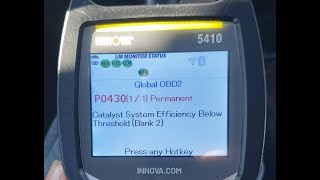
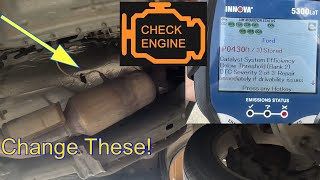
![How to Fix FORD P0430 Engine Code in 3 Minutes [3 DIY Methods / Only $4.97]](https://img.youtube.com/vi/iyJ5M8mryuk/mqdefault.jpg)
We Have This Part in Stock



The information in this article is provided for general reference and educational purposes only. Vehicle specifications, procedures, and part compatibility can vary by production date, trim level, and region. Always consult your vehicle's factory service manual and verify part numbers before purchasing or performing repairs. Safety-critical components such as airbags, seat belts, and braking systems should be installed by a qualified professional.
- Ford Expedition:
- 🎬 Helpful Videos
- 🛍️ Shop This Part
- What's Unique About the 2015-2017 Ford Expedition
- Symptoms You May Notice
- Most Likely Causes
- Rare But Worth Checking
- Diagnosis Steps
- Parts You'll Likely Need
- Related Codes That Often Appear With This One
- Technical Service Bulletins (TSBs) & Recalls
- Platform-Specific Known Issues
- Mechanic-Grade Diagnostic Values
- Hidden / Shadow Codes Worth Checking
- Scan Tool Commands That Help
- Wiring & Ground Locations
- Real Owner Repair Stories
- "I Checked Everything" — The Actual Cause
- OEM Part Supersession History
- Model Year Variations Within This Range
- Diagnostic Flowchart
- Other Known Issues on This Vehicle
- Used vs. New Parts: Buying Guide for This Vehicle
- Real Owner Stories
- 2016 Ford F-150 3.5L EcoBoost
- 2015-2017 Ford Expedition 3.5L EcoBoost
- 2018 Ford Expedition
- Related OBD-II Codes
- Frequently Asked Questions
- 🎟️ Get 5% Off