

P0420 on 2017-2024 Mazda CX-5: Catalyst Efficiency Causes and Fixes
On a 2017-2024 Mazda CX-5, P0420 often points to a failing catalytic converter, but a faulty downstream oxygen (O2) sensor or an exhaust leak are very common and cheaper alternative causes. Always diagnose O2 sensors and check for leaks before replacing the expensive converter, which is covered under the 8-year/80,000-mile federal emissions warranty. On this platform, underlying issues like unaddressed misfires from recalls or carbon buildup are also key suspects.
- Do not immediately assume you need a new catalytic converter. A faulty downstream O2 sensor or an exhaust leak are common, cheaper causes.
- If your CX-5 is a 2018-2019 model, verify that recalls 3719F (PCM software) and 5321K (fuel pump) have been performed, as they address potential root causes.
- The catalytic converter is covered by a federal emissions warranty for 8 years or 80,000 miles. Check your vehicle's age and mileage before paying for a replacement.
- Proper diagnosis involves using a scan tool to graph O2 sensor data. The downstream sensor's voltage should be stable, not fluctuating like the upstream sensor.
- Replacing the catalytic converter on this vehicle is a major repair that involves lowering the front subframe and is best left to a professional or experienced DIYer.
What's Unique About the 2017-2024 Mazda CX-5
The Skyactiv-G engine in your CX-5 uses a complex 4-2-1 exhaust manifold designed for efficiency, which integrates the primary catalytic converter. While the P0420 code itself is generic, on this platform it's critical to rule out software issues and underlying engine problems first. Mazda has issued recalls for PCM software on 2018-2019 models that could cause misfires (Recall 3719F), a primary killer of catalytic converters, and TSBs for other models with overly sensitive catalyst monitoring logic (P0421). Additionally, as a direct-injection engine, the Skyactiv-G is prone to carbon buildup on intake valves, which can affect combustion and indirectly lead to converter damage over time.
Generation note: This covers the second generation (KF) of the Mazda CX-5, which began in 2017. Notably, 2018-2019 models with the 2.5L engine were subject to recall 3719F (NHTSA 19V497) for PCM software that could cause misfires due to improper cylinder deactivation logic. Many 2018-2019 models were also part of recall 5321K (NHTSA 21V875) for a faulty low-pressure fuel pump that could cause stalling or rough operation. Both of these recall-related issues can lead to conditions that damage the catalytic converter.
Symptoms You May Notice
- Check Engine Light is on
- Reduced engine power or sluggish acceleration (if converter is clogged)
- Vehicle struggles to go over 30-40 mph (in severe cases of clogging)
- A 'rotten egg' or sulfur smell from the exhaust
- Intermittent code, especially during steady highway cruising in cold weather, as reported by some owners.
- Immediately replacing the catalytic converter without first testing the oxygen sensors or checking for exhaust leaks. This is the most common and expensive mistake.
- Replacing the catalytic converter when the root cause is an unaddressed engine issue (like a misfire or fuel problem) that will destroy the new converter as well.
Most Likely Causes
- Failing Catalytic Converter 🔴 High Probability Often fails due to contamination from other issues like misfires (potentially from recall 3719F) or rich fuel conditions. The federal emissions warranty covers this part for 8 years or 80,000 miles, which many owners have successfully used.
How to confirm: After confirming O2 sensors and the exhaust system are good, use a scan tool to see if downstream O2 sensor readings mirror the upstream sensor. An infrared thermometer can also be used; the converter's outlet temperature should be significantly hotter (at least 100°F) than the inlet on a fully warmed engine.
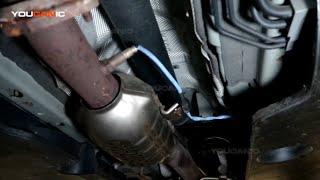
Typical fix: Replace the catalytic converter. On the CX-5, this is the front converter integrated with the exhaust manifold, making it a complex job that may require lowering the subframe for access. 🎬 Watch: A complete walkthrough of the CX-5 catalytic converter replacement.
Est. part cost: $800-$2000+ - Faulty Downstream Oxygen (O2) Sensor 🟡 Medium Probability O2 sensors degrade over time and a 'lazy' or failed sensor can send incorrect data to the PCM, falsely triggering a P0420 code. It's a common point of failure and much cheaper to replace than the converter.
How to confirm: Use a scan tool to graph the sensor's voltage. A healthy downstream sensor should show a relatively stable, steady voltage (around 0.45V), not rapid fluctuations like the upstream sensor. A sensor that is stuck or slow to respond needs replacement.
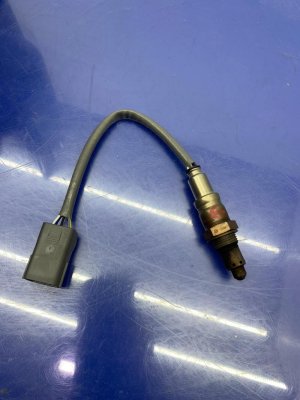
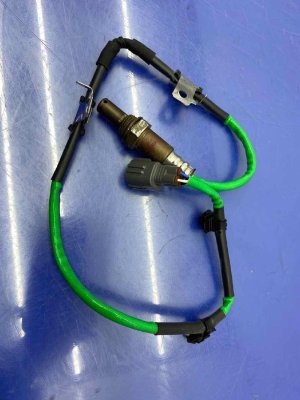
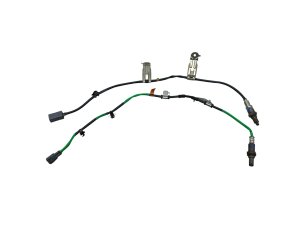
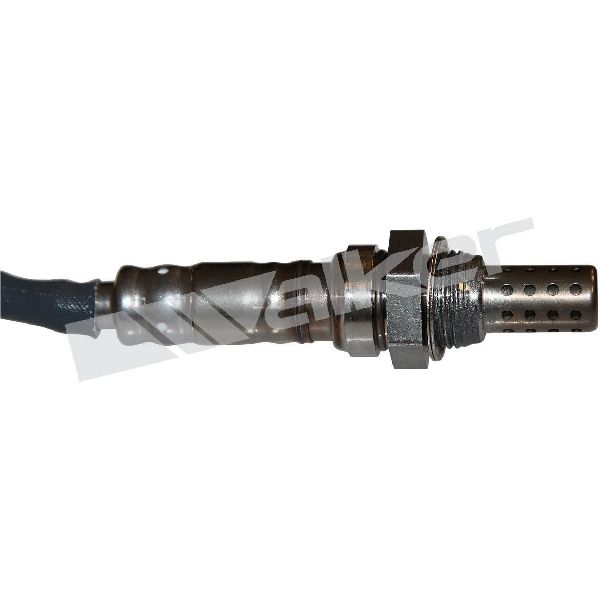
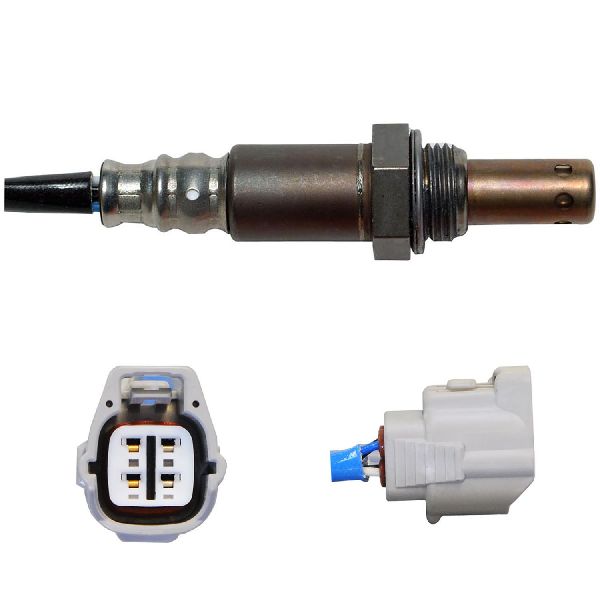
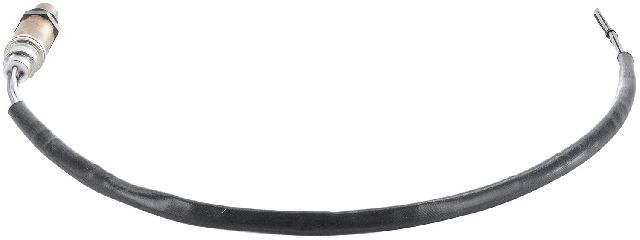
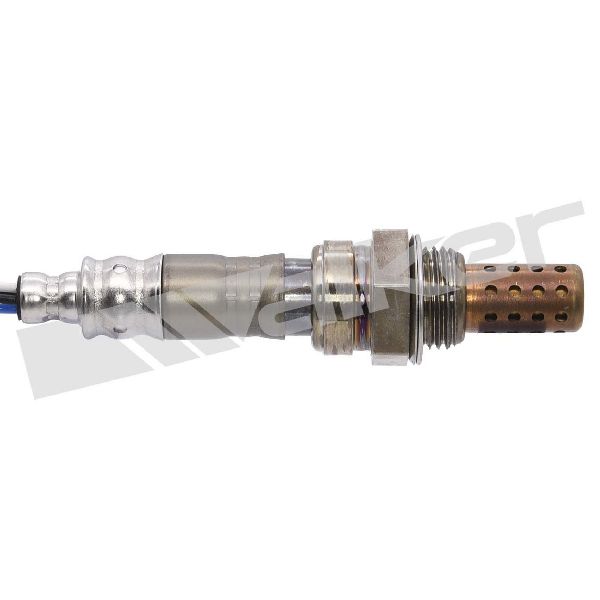
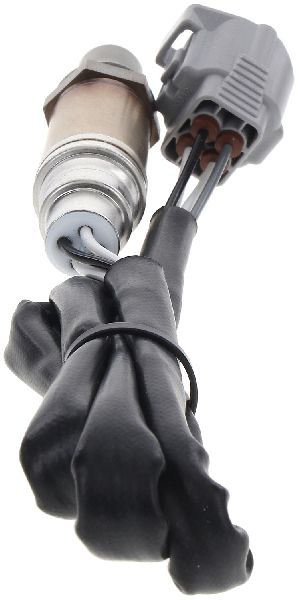
Typical fix: Replace the downstream (Bank 1, Sensor 2) oxygen sensor. OEM part numbers vary by year and engine, but a common one for the 2.5L is PE5R-18-861B. 🎬 See how to replace the downstream oxygen sensor yourself.
Est. part cost: $80-$200 - Exhaust System Leak 🟡 Medium Probability Leaks in the exhaust manifold, gaskets, or flex pipe before the downstream O2 sensor allow outside oxygen into the exhaust. This unmetered oxygen tricks the downstream sensor into reading lean, making the PCM think the converter isn't working. On some CX-5 models, a cracked flex pipe is a known issue.
How to confirm: Perform a visual inspection for cracks or soot trails at gaskets and welds, especially around the manifold. A smoke test is the most effective way to pinpoint hard-to-see leaks.
Typical fix: Repair the leak by replacing the gasket or welding the cracked component. A missing manifold nut was enough to cause the code on a similar Mazda platform.
Est. part cost: $20-$300 - Engine Misfire or Poor Ignition Health ⚪ Low Probability Worn spark plugs or failing ignition coils can cause incomplete combustion, sending unburned fuel into the exhaust which superheats and melts the catalytic converter's internal structure. One owner on Reddit reported P0420/P0421 appearing after an improperly seated ignition coil caused a misfire.
How to confirm: Check for other diagnostic trouble codes, specifically misfire codes (P0300-P0304). Inspect spark plugs and ignition coils for wear or damage. Mazda recommends specific OEM spark plugs, as aftermarket ones can sometimes cause issues.
Typical fix: Perform a tune-up, replacing spark plugs and any faulty ignition coils.
Est. part cost: $100-$400
Rare But Worth Checking
- PCM Software Logic: On some Mazda models, the PCM's monitoring parameters have been found to be too sensitive, causing a false P0421 (a closely related code). Mazda has issued TSBs for this, such as R084/22 for some older models. It's worth asking a dealer if any software updates (reflashes) are available for your vehicle's PCM before performing expensive repairs.
- Leaking Fuel Injectors: A leaking fuel injector can cause a rich fuel condition, which over time can contaminate and damage the catalytic converter. This would typically be accompanied by other codes, poor fuel economy, or a fuel smell.
- Intake Valve Carbon Buildup: As a direct-injection (GDI) engine, the Skyactiv-G is susceptible to carbon deposits on the intake valves, as fuel doesn't wash over them. Severe buildup can affect airflow and combustion, potentially leading to conditions that harm the catalytic converter over the long term. Walnut blasting is the typical cleaning procedure.
Diagnosis Steps
- Scan for any other codes. Address any misfire (P030x), fuel system, or oxygen sensor circuit codes (P0137, P0138) first.
- Check for Recalls and TSBs. Specifically, verify if your VIN was affected by recalls 3719F (PCM software) or 5321K (fuel pump) and if the work was completed. Check for any PCM software updates related to catalyst monitoring.
- Visually inspect the exhaust system from the engine to the tailpipe for any signs of leaks, such as cracks, rust holes, or black soot at joints. A smoke test is the definitive method.
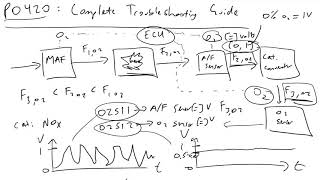
- Use a scan tool with live data graphing. With the engine fully warmed up and at a steady 2,000-2,500 RPM, observe the voltage signals from the upstream (Sensor 1) and downstream (Sensor 2) O2 sensors.
- Analyze the graphs: The upstream sensor should switch rapidly between ~0.2V and ~0.8V. The downstream sensor should show a much steadier, flatter voltage (ideally around 0.45V-0.7V).
- If the downstream sensor's graph mimics the upstream sensor's rapid switching, the catalytic converter is likely not functioning correctly. Proceed to the next step.
- If the downstream sensor's signal is flatlined, stuck high, or stuck low, the sensor itself is likely faulty and should be replaced.
- If no exhaust leaks are found and the O2 sensors test good, check for underlying engine problems. Review freeze-frame data. Check long-term fuel trims for signs of a vacuum leak or fuel delivery problem. Normal long-term fuel trim values should be within +/- 5%.
- As a final confirmation, use an infrared thermometer to measure the temperature of the exhaust pipe before and after the catalytic converter. A working converter should be at least 100°F hotter at the outlet than the inlet.
- If all other possibilities are ruled out, the catalytic converter is the most likely culprit.
Parts You'll Likely Need
- Downstream Oxygen Sensor (Bank 1 Sensor 2)
(OEM #PE5R-18-861B (2.5L, verify by VIN))— This sensor is responsible for monitoring the converter's efficiency. It can fail or become 'lazy' with age, sending incorrect signals that falsely trigger the P0420 code. It is a common point of failure and much cheaper to replace than the converter.
Trusted brands: Denso, Bosch, NTK
Related Codes That Often Appear With This One
- P0300-P0304 — Misfire codes. An engine misfire is a root cause of catalytic converter failure, as it sends raw fuel into the exhaust. This is especially relevant given the 2018-2019 cylinder deactivation recall (3719F).
- P0137, P0138 — These codes point directly to a fault in the downstream O2 sensor circuit (low or high voltage), which must be fixed before diagnosing P0420.
- P0421 — This code for 'Warm Up Catalyst Efficiency' is very similar and often has the same causes. Mazda has issued TSBs for P0421 related to overly sensitive PCM logic. One owner reported getting P0420, then P0421 after attempting a fix.
Technical Service Bulletins (TSBs) & Recalls
- Recall 3719F / NHTSA 19V497: PCM software update to correct improper logic for cylinder deactivation on 2018-2019 models, which could cause misfires and engine damage.
- Recall 5321K / NHTSA 21V875: Replacement of a faulty low-pressure fuel pump impeller on 2018-2019 models that could cause stalling or rough running.
- TSB 01-013/21: Addresses coolant leaks from cracked cylinder heads on 2.5T engines, a potential long-term issue that can contaminate and destroy the catalytic converter.
- TSB R084/22: PCM software update for some older models to correct overly sensitive P0421 catalyst monitoring logic.
Platform-Specific Known Issues
- Recall 3719F (NHTSA 19V505000) was issued for 2018-2019 CX-5s for PCM software that could cause engine misfires, which can directly lead to catalytic converter failure.
- Recall 5321K (NHTSA 22V431000) was issued for 2018-2019 CX-5s for a faulty low-pressure fuel pump that could cause stalling and affect the fuel system, another potential root cause of catalyst damage.
- Replacement of the catalytic converter is a labor-intensive job that requires lowering the vehicle's front subframe to gain access for removal.
Mechanic-Grade Diagnostic Values
- Long/Short Term Fuel Trim — expected: -5% to +5% at idle and steady cruise. Failure: Consistently high positive values (> +10%) can indicate a vacuum or exhaust leak pre-O2 sensor. Consistently high negative values (< -10%) can indicate leaking injectors or other issues causing a rich condition.
- Downstream O2 Sensor (Sensor 2) Voltage — expected: Relatively stable voltage, typically between 0.45V and 0.7V on a warm, running engine at steady RPM.. Failure: Voltage rapidly switching between low (<0.2V) and high (>0.8V), mimicking the upstream sensor, indicates poor catalyst efficiency. Voltage stuck at one level (e.g., 0.1V or 0.9V) indicates a faulty sensor.
Wiring & Ground Locations
- G03 — Located on the left front of the engine compartment.. This is a primary engine ground point. A poor connection here can affect the PCM and various sensors, potentially causing erratic readings that could contribute to a false P0420 code.
- PCM Ground — The Powertrain Control Module (PCM) has multiple ground pins in its main connector. A wiring diagram for the specific model year is needed to test continuity for each ground pin.. A faulty PCM ground can cause a wide range of issues, including incorrect processing of O2 sensor signals, leading to misdiagnosis of the catalytic converter.
- Data Link Connector (DLC) Ground — Pin 4 and Pin 5 of the OBD-II port under the dashboard are ground connections.. While not a direct cause of the code, a bad ground at the DLC can cause communication issues with scan tools, making diagnosis difficult.
Real Owner Repair Stories
- Reddit user on r/CX5 (2019 CX-5 non-turbo, ~50,000 miles) — Intermittent P0420 code appearing during highway cruising in cold, below-freezing weather. No noticeable drivability issues.
❌ Tried (didn't work) Using fuel cleaner and changing gas stations.
✅ What actually fixed it The user had recently had a faulty coolant temperature sensor fixed. The discussion suggests that the engine not reaching proper operating temperature due to the faulty sensor may have contributed to conditions that triggered the P0420 code. The final resolution was not explicitly stated, but the context points towards the importance of resolving other engine faults first. - Medium article by a Volvo owner (general P0420 advice) (Volvo S60 (not a Mazda, but the fix is relevant)) — Persistent P0420 code.
❌ Tried (didn't work) Using a fuel additive (CLEANTEC)., Using a catalytic converter cleaner (OXICAT), which worked temporarily but the code returned.
✅ What actually fixed it Replacing the downstream oxygen (O2) sensor with a new OEM (Denso) part finally and permanently resolved the P0420 code after cleaning attempts failed.
Model Year Variations Within This Range
- 2022-2024: The 2022 model year introduced a mid-cycle refresh for the CX-5. Changes included revised front and rear styling (headlights, taillights, grille), redesigned seats, and reworked suspension for improved comfort. While the core Skyactiv-G engines remained the same, i-Activ AWD became standard across all trims. Some exhaust components or mounting points may differ slightly from pre-refresh (2017-2021) models, though the fundamental causes of P0420 remain the same.
- 2018-present (2.5L NA): The 2.5L naturally aspirated engine gained cylinder deactivation technology starting in the 2018 model year to improve fuel economy. A recall (3719F) was issued for 2018-2019 models due to improper PCM logic for this system, which could cause misfires—a direct cause of catalytic converter damage.
Diagnostic Flowchart
Other Known Issues on This Vehicle
Issues unrelated to this code that are worth knowing about as an owner of this generation:
- Cracked Cylinder Head (2.5L w/ Cylinder Deactivation & 2.5T) 🔴 High — Reported in a minority of vehicles but is a known pattern. Can occur under 100k miles. Affects 2018+ 2.5L NA with CD and 2.5T engines. (Ref: TSB 01-013/21 (for 2.5T), MSP65 (for 2.5L NA))
- Intake Valve Carbon Buildup 🟠 Medium — Common to all Skyactiv-G direct injection engines. Becomes noticeable after 60,000-80,000 miles, potentially causing misfires or reduced performance.
- Cylinder Deactivation (CD) Software Flaw 🔴 High — Specific to 2018-2019 models with the 2.5L engine. A software error could cause a rocker arm to dislodge, leading to misfires or engine stall. (Ref: Recall 3719F / NHTSA 19V497)
- Failing Low-Pressure Fuel Pump 🔴 High — Affected certain 2018-2019 models, leading to rough running or stalling. (Ref: Recall 5321K / NHTSA 21V875)
- Thin Paint 🟡 Low — Common complaint across the generation; paint is susceptible to chipping, especially on the hood and front pillars.
Used vs. New Parts: Buying Guide for This Vehicle
When a used part is the smart pick: For the catalytic converter, a used OEM part from a low-mileage, verified donor vehicle is often a superior choice to a new, non-CARB compliant aftermarket part. OEM converters have a higher concentration of precious metals and are built to the exact specifications the vehicle's computer expects.
Donor-vehicle mileage cap: roughly under 70000 miles for the part to have meaningful remaining life.
What to inspect on the donor part:
- Check the VECI label on the donor vehicle's hood to ensure it matches your car's emissions certification (Federal or CARB/50-State).
- Inspect the converter for any physical damage, cracks, or signs of melting (discoloration).
- Look at the honeycomb structure through the O2 sensor bung or inlet/outlet; it should be intact and not clogged or melted.
- If possible, get the VIN of the donor car to check its history for accidents or engine problems that could have damaged the converter.
OEM-only on this vehicle (don't cheap out):
- Catalytic Converter: Many aftermarket converters, especially cheaper ones, lack the necessary precious metal loading to satisfy the Mazda PCM's sensitive monitoring, leading to the P0420 code returning. If you live in a CARB state (CA, NY, CO, ME, etc.), you are legally required to use a CARB-compliant converter.
Aftermarket brands forum-validated for this vehicle:
- O2 Sensors: Denso and NTK (part of NGK) are the primary OEM suppliers for Mazda and are highly recommended for replacement sensors. Using these brands ensures the sensor performs exactly as the PCM expects.
- Catalytic Converters: MagnaFlow is a well-known brand that produces aftermarket converters, but you must ensure you purchase the correct model (Federal vs. CARB) for your vehicle and location. Even with a quality brand, success is not guaranteed on all platforms.
Brands owners have reported issues with on this vehicle:
- Unbranded or generic 'eBay' catalytic converters. These parts frequently use the bare minimum of catalyst materials and are known to fail within a short period, causing the P0420 code to reappear.
Real Owner Stories
Aggregated from forums and TSBs cited above. Mileages and costs reflect what owners reported in those sources.
2019 Mazda CX-5 — 50000 miles
Symptoms: Intermittent P0420 code appearing during steady highway cruising in cold weather.
What fixed it: The owner suspected an O2 sensor before the catalytic converter.
Source hint: Reddit r/CX5 - 'Intermittent P0420'
2018-2019 Mazda CX-5
Symptoms: Engine misfires and potential engine damage due to improper logic for cylinder deactivation.
What fixed it: PCM software update to correct improper logic (Recall 3719F).
Source hint: Recall 3719F / NHTSA 19V497
2018-2019 Mazda CX-5
Symptoms: Stalling or rough running caused by a faulty low-pressure fuel pump impeller.
What fixed it: Replacement of the low-pressure fuel pump (Recall 5321K).
Source hint: Recall 5321K / NHTSA 21V875
Related OBD-II Codes
Frequently Asked Questions
Is the catalytic converter on my 2017-2024 Mazda CX-5 covered under warranty?
Could a software issue be causing my P0420 code?
I have a 2019 CX-5 and the P0420 code only appears during cold weather on the highway. Is this common?
Can a fuel pump issue lead to a P0420 code on the CX-5?
What is the specific downstream O2 sensor part number for the 2.5L engine?
Is it true that replacing the catalytic converter on the CX-5 requires moving the subframe?
Helpful Videos
Used OEM Parts in Stock

New Aftermarket Parts Available

The information in this article is provided for general reference and educational purposes only. Vehicle specifications, procedures, and part compatibility can vary by production date, trim level, and region. Always consult your vehicle's factory service manual and verify part numbers before purchasing or performing repairs. Safety-critical components such as airbags, seat belts, and braking systems should be installed by a qualified professional.
- Mazda CX-5:
- 🎬 Helpful Videos
- 🛍️ Shop This Part
- What's Unique About the 2017-2024 Mazda CX-5
- Symptoms You May Notice
- Most Likely Causes
- Rare But Worth Checking
- Diagnosis Steps
- Parts You'll Likely Need
- Related Codes That Often Appear With This One
- Technical Service Bulletins (TSBs) & Recalls
- Platform-Specific Known Issues
- Mechanic-Grade Diagnostic Values
- Wiring & Ground Locations
- Real Owner Repair Stories
- Model Year Variations Within This Range
- Diagnostic Flowchart
- Other Known Issues on This Vehicle
- Used vs. New Parts: Buying Guide for This Vehicle
- Real Owner Stories
- 2019 Mazda CX-5 — 50000 miles
- 2018-2019 Mazda CX-5
- 2018-2019 Mazda CX-5
- Related OBD-II Codes
- Frequently Asked Questions
- 🎟️ Get 5% Off