

P0420 on 2007-2012 Lexus ES350: Catalyst Efficiency Fixes & Causes
P0420 on the ES350 usually means the Bank 1 catalytic converter is failing. Before replacing this expensive part, thoroughly check for exhaust leaks (especially at the Y-pipe gaskets) and consider replacing the downstream O2 sensor first, as these are common, cheaper, and often misdiagnosed causes.
- P0420 on your ES350 means the Bank 1 (firewall side) catalytic converter is not working efficiently.
- Before spending money, thoroughly check for exhaust leaks, as they are a common cause of this code on this car.
- Consider replacing the downstream (post-converter) oxygen sensor as a relatively inexpensive diagnostic step before condemning the catalytic converter.
- A definitive diagnosis involves checking live sensor data with a scanner and verifying converter temperature with an infrared thermometer.
- If the converter must be replaced, expect a costly repair, but aftermarket options are available for significantly less than OEM.
What's Unique About the 2007-2012 Lexus ES350

On the 2GR-FE engine used in the ES350 and its platform mates, the P0420 code is very common and often points directly to a degraded catalytic converter, especially on vehicles with over 100,000 miles. However, owners and technicians on forums like ClubLexus frequently report that exhaust leaks, particularly at the Y-pipe gaskets, can introduce oxygen into the exhaust stream and trick the sensors into generating a false P0420 code. A Reddit user with an '08 ES350 experiencing P0420/P0430 and an exhaust smell received conflicting advice from two different shops—one blaming the converters, the other the O2 sensors—highlighting the common diagnostic challenge. Due to the high cost of the converter, a thorough diagnosis to rule out cheaper possibilities is critical.
Symptoms You May Notice
- Check Engine Light is on
- Vehicle will fail an emissions test
- Slightly reduced fuel economy
- A sulfur ('rotten egg') smell from the exhaust, especially on hard acceleration, which indicates unburned fuel is being cooked in an inefficient converter.
- In cases of a clogged converter, reduced engine power, hesitation, or a rough idle.
- Immediately replacing the catalytic converter without first performing a smoke test for exhaust leaks. A leak before the downstream O2 sensor is a very common and much cheaper fix to investigate first.
Most Likely Causes

- Failing Bank 1 Catalytic Converter 🔴 High Probability Catalytic converters are wear items that degrade from heat and mileage. After 100,000+ miles, the precious metals inside lose their effectiveness. This is the most common definitive cause for a legitimate P0420 code after ruling out other factors.
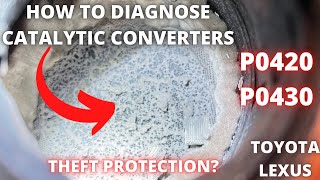
How to confirm: After ruling out other causes, a professional can use a 5-gas analyzer. A DIY method involves using an infrared thermometer to check the converter's inlet and outlet temperatures; the outlet should be significantly hotter (by at least 100°F or ~50°C) than the inlet on a fully warmed-up engine. If the temperatures are similar or the outlet is cooler, the catalyst is not working. 🎬 Watch: How to diagnose a bad catalytic converter on a Lexus.
Typical fix: Replace the Bank 1 catalytic converter, which is the manifold converter located at the firewall side of the engine.
Est. part cost: $400-$800 for aftermarket, $1500+ for OEM. - Exhaust System Leak 🟡 Medium Probability Leaks in the exhaust system, especially between the engine and the downstream O2 sensor, are a very common cause of false P0420 codes. On the ES350, the gaskets on the Y-pipe are a frequent failure point. Road salt in northern climates accelerates corrosion of exhaust components, making leaks more likely.
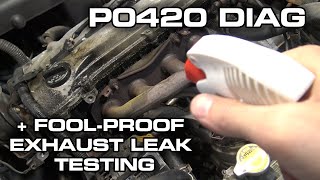
How to confirm: Perform a visual inspection of the exhaust system for rust, holes, or broken hangers. Listen for hissing or ticking sounds, especially when the engine is cold. A smoke test is the most effective way to find small, hard-to-see leaks. 🎬 See this guide on testing for exhaust leaks and P0420 codes.
Typical fix: Repair the leak. This often involves replacing a failed gasket (like the Y-pipe donut gasket) or patching/welding a hole in the pipe. One owner on ClubLexus fixed both P0420 and P0430 codes by replacing a badly leaking exhaust system.
Est. part cost: $10-$150 for gaskets or minor repairs. - Failing Downstream Oxygen (O2) Sensor (Bank 1, Sensor 2) 🟡 Medium Probability The downstream O2 sensor's job is to report the converter's health. A lazy or failing sensor can send incorrect data, tricking the ECM into thinking the converter is bad when it isn't. Given its lower cost compared to a converter, it's often replaced as a diagnostic step.
How to confirm: Use an OBD-II scanner with live data graphing. On a healthy, warm converter, the downstream O2 sensor (B1S2) voltage should be relatively stable and high (e.g., ~0.7-0.8V). If it's fluctuating rapidly between ~0.1V and ~0.9V, mirroring the upstream sensor (B1S1), it indicates the converter is inefficient. If the signal is flatlined, stuck, or slow to respond, the sensor itself is likely faulty.
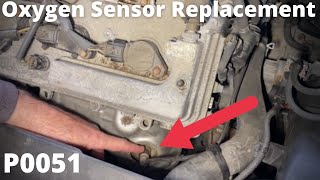
Typical fix: Replace the Bank 1, Sensor 2 (downstream, firewall side) oxygen sensor. 🎬 Watch: How to replace the oxygen sensor on your ES350.
Est. part cost: $60-$150 for a quality aftermarket part (e.g., Denso).
Rare But Worth Checking
- Failing Upstream Air/Fuel Ratio Sensor (Bank 1, Sensor 1): While less common, a faulty upstream A/F sensor can cause an improper air/fuel mixture. A rich condition can overheat and damage the catalytic converter over time, leading to a real P0420 code. An erratic A/F sensor can also confuse the ECM's efficiency calculation.
- Engine Misfires or Fuel System Issues: Unburned fuel from persistent engine misfires (due to bad spark plugs, ignition coils) or leaking fuel injectors will enter the exhaust and act like a blowtorch on the converter's internal structure, causing it to fail prematurely. These issues will almost always be accompanied by other codes (e.g., P030x for misfires, or fuel trim codes like P0171/P0174).
- Faulty Upstream Sensor Causing Downstream Code (TSB Related): Lexus issued a TSB for some 2007-2010 models where high voltage codes for the downstream sensors (P0138/P0158) could actually be caused by a failing upstream A/F sensor. While P0420 is a different code, this indicates a known relationship where a bad upstream sensor can cause misleading downstream codes on this platform.
Diagnosis Steps

- Read the code with an OBD-II scanner. Check for any other pending or active codes, especially misfire (P030x) or fuel trim (P017x) codes. Address these first.
- Inspect the entire exhaust system for leaks. Pay close attention to the manifold gaskets and the Y-pipe flanges/gaskets. A smoke test is the most reliable method to find hairline cracks or bad gaskets that aren't audible.
- Use a scanner to view live data. Warm the engine to operating temperature. Observe the voltage graphs for the upstream (A/F Sensor B1S1) and downstream (O2 Sensor B1S2) sensors.
- On a healthy, warm converter, the upstream sensor should fluctuate rapidly. The downstream sensor should remain relatively stable and steady (typically above 0.6V). If the downstream sensor is mirroring the upstream sensor's rapid fluctuations, the converter is likely inefficient.
- If the downstream sensor's signal is flat, stuck, or very slow, the sensor itself may be the problem. Consider swapping the Bank 1 and Bank 2 downstream sensors (if they are the same part) and see if the code follows the sensor to Bank 2 (triggering a P0430).
- If sensors and exhaust leaks are ruled out, test the catalytic converter directly. Use an infrared temperature gun to measure the inlet and outlet pipes. The outlet should be at least 100°F (50°C) hotter than the inlet. If not, the catalytic converter has failed and needs replacement.
Parts You'll Likely Need
- Bank 1 Catalytic Converter (Firewall Side Manifold)
(OEM #17140-0P220 (replaces 17140-31720))— This is the most common definitive fix for a confirmed P0420 code after other possibilities have been eliminated. Bank 1 is the rear manifold converter.
Trusted brands: Walker Exhaust, MagnaFlow, Dorman, Lexus (OEM)
OEM price range: $1500+
Aftermarket price range: $400-$800 - Bank 1 Sensor 2 Downstream Oxygen Sensor
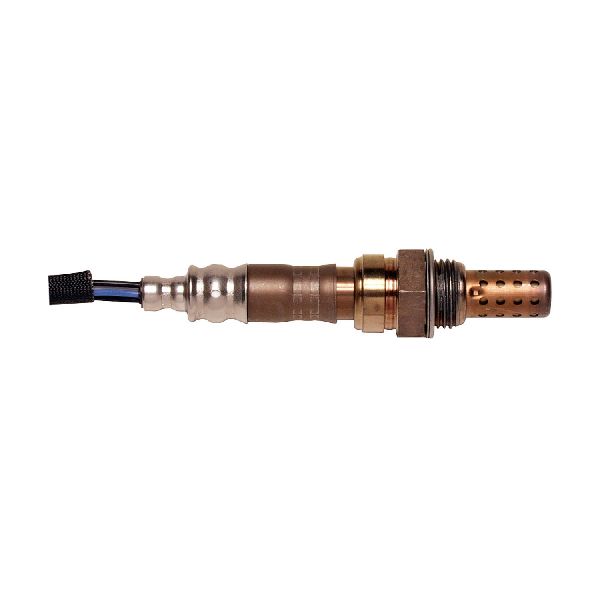
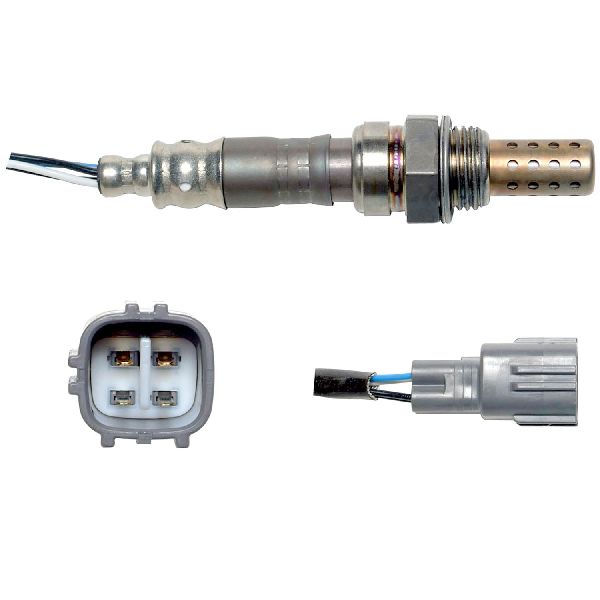
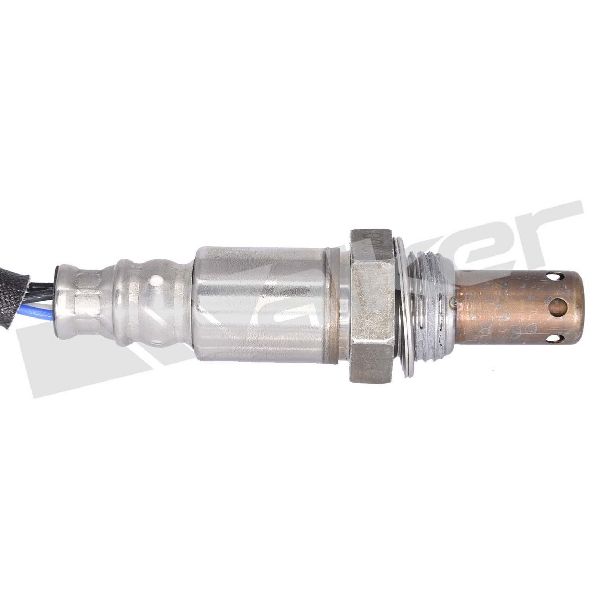
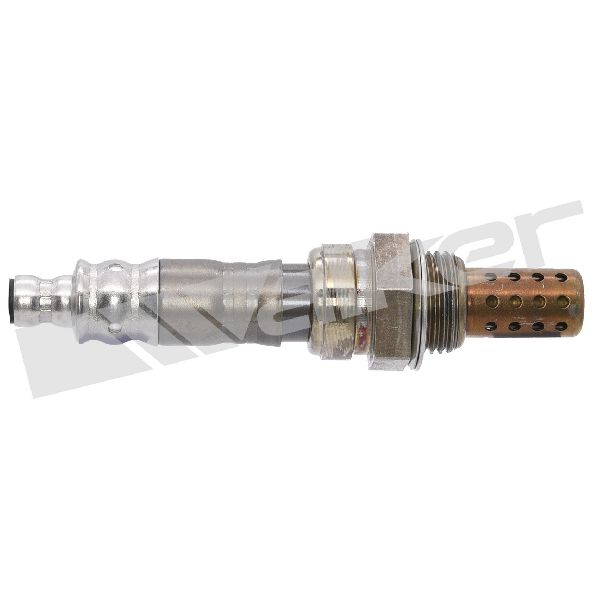
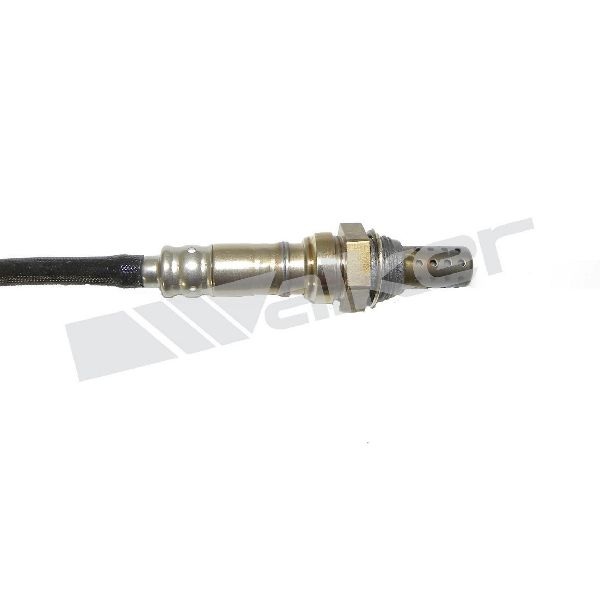
(OEM #89465-06070, 89465-07080, 89465-33370)— This sensor reports catalyst efficiency. It's a common failure point and a wise part to replace before condemning the expensive converter. Denso is the OEM supplier.
Trusted brands: Denso (P/N: 234-4064), NGK/NTK, Bosch
OEM price range: $180-$250
Aftermarket price range: $60-$150 - Exhaust Gaskets — Should always be replaced when any exhaust component is removed to prevent leaks. Y-pipe and manifold gaskets are common culprits for causing false P0420 codes.
Trusted brands: Fel-Pro, Bosal, Denso
OEM price range: $15-$30
Aftermarket price range: $5-$15
Related Codes That Often Appear With This One
- P0430 — This is the identical 'Catalyst Efficiency' code but for Bank 2 (the radiator side). If both P0420 and P0430 appear together, it strongly suggests a systemic issue like a major exhaust leak affecting both banks (e.g., at the Y-pipe), contaminated fuel, or simply that both converters have aged out simultaneously.
Technical Service Bulletins (TSBs) & Recalls
- While there is no widely-known TSB specifically for P0420 on the 2007-2012 ES350, a related bulletin for 2007-2010 models exists. It notes that downstream sensor high voltage codes (P0138/P0158) can be caused by a failing upstream A/F sensor, highlighting the potential for misdiagnosis between sensors.
Platform-Specific Known Issues
- Y-Pipe Gasket Leaks: A very common failure point on the ES350 and its platform mates is the gasket at the Y-pipe connection. A leak here allows oxygen to enter the exhaust stream, which can fool the downstream O2 sensors and trigger P0420 and/or P0430 codes even with perfectly good catalytic converters.
Mechanic-Grade Diagnostic Values

- Upstream Air/Fuel (A/F) Sensor Heater Resistance — expected: 1.8 to 3.4 Ω at 20°C (68°F). Failure: Resistance outside this range (open or shorted) will trigger heater circuit codes (e.g., P0031, P0032) and can affect sensor performance, indirectly leading to P0420.
- Downstream Heated Oxygen (HO2) Sensor Heater Resistance — expected: Service manuals indicate a standard resistance but do not consistently provide a specific ohm range across all documents; testing for continuity (not an open circuit) is the primary check.. Failure: An open circuit (infinite resistance) indicates a failed heater element.
- Mode $06 Catalyst Monitor Test (Bank 1) — expected: TID $01, CID $01. The test value should be below the maximum threshold specified by the ECU. For example, a test value of 1.345 with a minimum of 1.299 and a maximum of 9.993 indicates a pass, but close to the lower limit.. Failure: A test value that exceeds the maximum limit indicates the catalyst monitor has failed the test, confirming the P0420 fault.
Hidden / Shadow Codes Worth Checking
- Mode $06, TID $01, CID $01: This is not a DTC but a raw data monitor for Bank 1 Catalyst Efficiency. It shows the measured efficiency value from the last test cycle. Technicians use this to see how close the converter is to the failure threshold before a code is set. (see via A professional scan tool capable of displaying Mode $06 data, such as Toyota Techstream.)
Scan Tool Commands That Help
- Toyota Techstream: Active Test: 'A/F Control' — This function allows a technician to manually force the air/fuel ratio rich (+25%) and lean (-12.5%). By observing the reaction of the upstream A/F sensor and the downstream O2 sensor on a graph, you can confirm if the sensors are responding correctly and if the catalytic converter is able to store oxygen. A good converter will show a delayed, slow response from the downstream sensor, while a bad one will show the downstream sensor mimicking the upstream sensor's rapid changes.
Wiring & Ground Locations
- Engine Ground Points — The 2GR-FE engine has several critical ground points. One is located on the left side of the engine compartment on the frame. Another important ground strap connects from the chassis to each cylinder head; a loose or corroded ground on the Bank 1 (rear) cylinder head could potentially cause erratic sensor readings.. A poor ground connection for the ECM or the sensors can introduce electrical noise and voltage offsets, leading to incorrect readings from the A/F and O2 sensors, which could falsely trigger a P0420 code.
- ECM (Engine Control Module) — The ECM is located behind the glove box in the passenger compartment.. All sensor signals are sent to the ECM for analysis. While rare, corrosion at the ECM connectors or internal ECM faults can cause a P0420 code. The ECM is the final point of diagnosis after all wiring, sensors, and the converter itself have been checked.
- Body Electronic Control Unit (BECU) — Located under the driver's dash, attached to the back of the dash fuse box.. The BECU manages various body-related electrical systems. While not directly involved in catalyst monitoring, it is part of the vehicle's complex data network, and issues here can sometimes cause unexpected communication errors or codes.
Real Owner Repair Stories
- ClubLexus Forum User (Lexus with 2GR-FE engine (specific model not ES350, but same engine and issue)) — P0420 code, misfires on cylinders 5 and 7.
❌ Tried (didn't work) Initial diagnosis pointed towards O2 sensor or catalytic converter.
✅ What actually fixed it The root cause was found to be oil fouling the spark plugs. The user had cracked spark plug tube seals, which allowed oil to leak into the spark plug wells. This oil contamination caused misfires and fouled the downstream components, leading to the P0420 code. Replacing the spark plugs and tube seals resolved the issue. - Lexus Owner (NHTSA ODI #10381931) — An owner reported that after a Bank 1 Sensor 1 oxygen sensor shorted out and was replaced, subsequent diagnostics showed code P0420 (Catalyst System Below Threshold on Bank 1), necessitating a catalytic converter replacement.
"I Checked Everything" — The Actual Cause
- In some cases, a P0420 code can be triggered by issues unrelated to exhaust leaks. One documented case on a similar Lexus platform involved oil from leaking spark plug tube seals fouling the spark plugs. This led to incomplete combustion, which in turn contaminated the catalytic converter and sensors, triggering a P0420 code even though the exhaust system itself had no leaks.
OEM Part Supersession History
17140-31720→17140-0P220— Standard part revision and update by the manufacturer.17140-31120→Unknown, but this is an earlier part number for the same component on related 2GR-FE platforms.— This part number is listed for earlier production years (e.g., to 09/2006) on other Lexus models with the 2GR-FE engine, like the IS350 and GS350.
Heads up: Using an incorrect revision of the manifold/converter assembly may result in fitment issues or improper alignment with other exhaust components.
Model Year Variations Within This Range
- 2007-2010 vs 2011-2012: For the 2011 model year, Lexus retuned the 2GR-FE engine to run on regular (87 octane) fuel instead of premium (91+ octane). This resulted in a slight decrease in rated horsepower from 272 hp to 268 hp. While the core engine and emissions components are the same, running the wrong fuel grade consistently (e.g., regular in a 2007-2010 model) could potentially lead to long-term deposit buildup and affect catalyst efficiency.
- 2010-2012: The ES350 received a mid-cycle refresh for the 2010 model year, which included revised taillights, fog lamps, and making Bluetooth standard. These changes are primarily cosmetic and electronic and are not known to affect the P0420 diagnosis.
Diagnostic Flowchart
Real Owner Stories
Aggregated from forums and TSBs cited above. Mileages and costs reflect what owners reported in those sources.
2008 Lexus ES350 — 180000 miles
Symptoms: Check engine light with codes P0420 and P0430, strong exhaust fume smell near the front of the car and sometimes inside the cabin. Car drives normally.
What fixed it: Unresolved in thread; owner received conflicting diagnoses from two different shops (one said catalytic converters, one said O2 sensors), illustrating the common confusion in diagnosing this issue.
Source hint: Reddit.com/r/MechanicAdvice - Thread 'P0420/p0430 code and Need an idea exactly where to start…'
Lexus V6 (2GR-FE)
Symptoms: Triggered both P0420 and P0430 codes simultaneously.
What fixed it: Replacing the entire exhaust system due to a severe leak resolved the issue, proving a leak was the root cause, not the catalytic converters.
Source hint: ClubLexus.com - Thread 'Replacing my exhaust fixed P0420 and P0430'
Toyota/Lexus V6
Symptoms: P0420 code present.
What fixed it: Advised that an exhaust leak near the Y-pipe is the most common cause for this code on Toyota/Lexus V6 engines, and should be checked and repaired before replacing any parts.
Source hint: ClubLexus.com - Thread 'Code P0420 - Catalytic Converter'
Lexus ES Series
Symptoms: Diagnostics showed code P0420 (Catalyst System Below Threshold on Bank 1) following a previous repair for a shorted Bank 1 Sensor 1 oxygen sensor.
What fixed it: The diagnostic check confirmed the need to replace the catalytic converter after the sensor failure. (NHTSA ODI #10381931)
Source hint: NHTSA ODI #10381931
Related OBD-II Codes
Frequently Asked Questions
Is there a specific TSB for the P0420 code on my 2007-2012 Lexus ES350?
I have both P0420 and P0430 codes on my ES350. What is the most common cause for both banks throwing a code?
How much does it cost to replace the Bank 1 catalytic converter on the 3.5L 2GR-FE engine?
Can an exhaust leak cause a P0420 on my Lexus ES350?
How can I test if the Bank 1 Sensor 2 (downstream O2 sensor) is causing the P0420 on my ES350?
Does the P0420 code affect other Toyota/Lexus models with the 3.5L V6?
Helpful Videos
We Have This Part in Stock

The information in this article is provided for general reference and educational purposes only. Vehicle specifications, procedures, and part compatibility can vary by production date, trim level, and region. Always consult your vehicle's factory service manual and verify part numbers before purchasing or performing repairs. Safety-critical components such as airbags, seat belts, and braking systems should be installed by a qualified professional.
- Lexus ES350:
- 🎬 Helpful Videos
- 🛍️ Shop This Part
- What's Unique About the 2007-2012 Lexus ES350
- Symptoms You May Notice
- Most Likely Causes
- Rare But Worth Checking
- Diagnosis Steps
- Parts You'll Likely Need
- Related Codes That Often Appear With This One
- Technical Service Bulletins (TSBs) & Recalls
- Platform-Specific Known Issues
- Mechanic-Grade Diagnostic Values
- Hidden / Shadow Codes Worth Checking
- Scan Tool Commands That Help
- Wiring & Ground Locations
- Real Owner Repair Stories
- "I Checked Everything" — The Actual Cause
- OEM Part Supersession History
- Model Year Variations Within This Range
- Diagnostic Flowchart
- Real Owner Stories
- 2008 Lexus ES350 — 180000 miles
- Lexus V6 (2GR-FE)
- Toyota/Lexus V6
- Lexus ES Series
- Related OBD-II Codes
- Frequently Asked Questions
- 🎟️ Get 5% Off