

P0420 on 2011-2016 Chevrolet Cruze 1.4L Turbo: Catalyst Efficiency Causes and Fixes
On the 2011-2016 Cruze 1.4L Turbo, code P0420 often means the catalytic converter has failed due to underlying engine issues. The most common culprits are a bad PCV valve in the valve cover causing oil consumption, or a failing turbocharger leaking oil. Always fix the root cause before replacing the expensive converter. In some cases, the code can be triggered by overly sensitive ECM software that requires a dealer update per TSB PI1505.
- Before replacing any parts for P0420, check if your Cruze needs the GM ECM software update (Campaign #14801).
- The most likely root cause is NOT the catalytic converter itself, but a failed PCV system (in the valve cover) or a leaking turbocharger.
- Fix the source of oil consumption or fuel mixture problems BEFORE you replace the catalytic converter, or the new one will also fail.
- Many owners report that cheaper aftermarket catalytic converters do not last on this engine; using an OEM or high-quality aftermarket part is recommended.
What's Unique About the 2011-2016 Chevrolet Cruze

The 1.4L Turbo engine in the first-generation Cruze is notorious for several issues that directly lead to catalytic converter failure and a P0420 code. Unlike many cars where the converter simply wears out, on the Cruze it's often killed by another component. The most frequent underlying causes are a failed PCV system integrated into the valve cover, which causes high oil consumption, and turbocharger seal failures, both of which contaminate the catalyst with oil. Ignoring these root causes will lead to repeated failure of new catalytic converters. Additionally, GM released software updates because the original programming was too sensitive and could falsely trigger the P0420 code.
Symptoms You May Notice
- Check Engine Light is on
- Reduced engine power and poor acceleration, especially under load
- Decreased fuel efficiency
- A rotten egg or sulfur smell from the exhaust
- In severe cases, a whistling noise at idle if the PCV valve has failed
- Rattling noises from underneath the car if the catalyst substrate has broken apart.
- Replacing only the catalytic converter without diagnosing the root cause. If the PCV system is bad or the turbo is leaking oil, the new converter will fail again quickly.
- Replacing the oxygen sensors when the catalytic converter is actually bad. While O2 sensors can be the cause, a proper scan tool diagnosis is needed to differentiate.
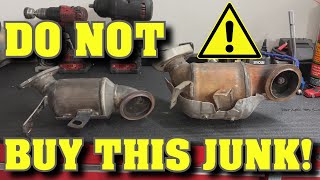
- Using a cheap, low-quality aftermarket catalytic converter. Many owners report these parts do not have enough precious metals to satisfy the ECM's monitoring, causing the P0420 code to return. 🎬 Watch: Why cheap aftermarket converters often fail on the Cruze.
Most Likely Causes


- Failed Catalytic Converter 🔴 High Probability The converter itself is often the victim of other engine problems, not the original cause. Oil contamination from PCV or turbo issues, or unburned fuel from misfires, will destroy the converter. Many owners report that cheap aftermarket converters fail quickly or don't meet the ECM's efficiency standards, causing the code to return. NHTSA ODI #11465189 confirms this common failure, where a vehicle was tested and issued the P0420 code due to a faulty catalytic converter.
How to confirm: Use a scan tool to watch O2 sensor data. A healthy downstream O2 sensor should show a steady, flat voltage (around 0.6-0.8V) when the engine is warm and at a steady RPM. If it fluctuates rapidly, mimicking the upstream sensor, the converter is not working.
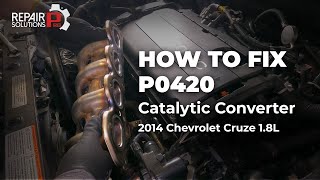
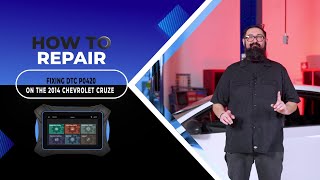
Typical fix: Replace the catalytic converter assembly, but ONLY after confirming and fixing the root cause of its failure. Using an OEM or high-quality aftermarket converter is strongly recommended. 🎬 See this step-by-step catalytic converter replacement walkthrough.
Est. part cost: $300-$800 (Aftermarket), $1000-$1800 (OEM) - Failed PCV System / Valve Cover 🔴 High Probability The PCV check valve and diaphragm are integrated into the valve cover and are known to fail. A torn diaphragm creates a massive vacuum leak, while a failed check valve in the intake manifold allows the turbo to pressurize the crankcase, forcing oil into the intake and combustion chamber, which then poisons the catalytic converter.
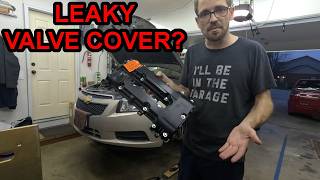
How to confirm: With the engine running, check for a strong vacuum or whistling sound at the small hole on top of the PCV valve assembly on the valve cover. Removing the oil cap while the engine is running will cause a dramatic change in idle and a strong suction force if the diaphragm is torn. A failed check valve can be tested by removing the PCV hose from the intake manifold and visually inspecting for the presence of the small, orange check valve nipple inside the port. 🎬 Watch: How to diagnose and solve common 1.4L PCV issues.
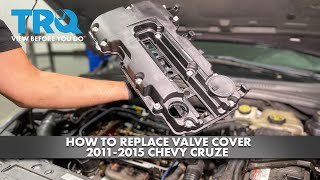
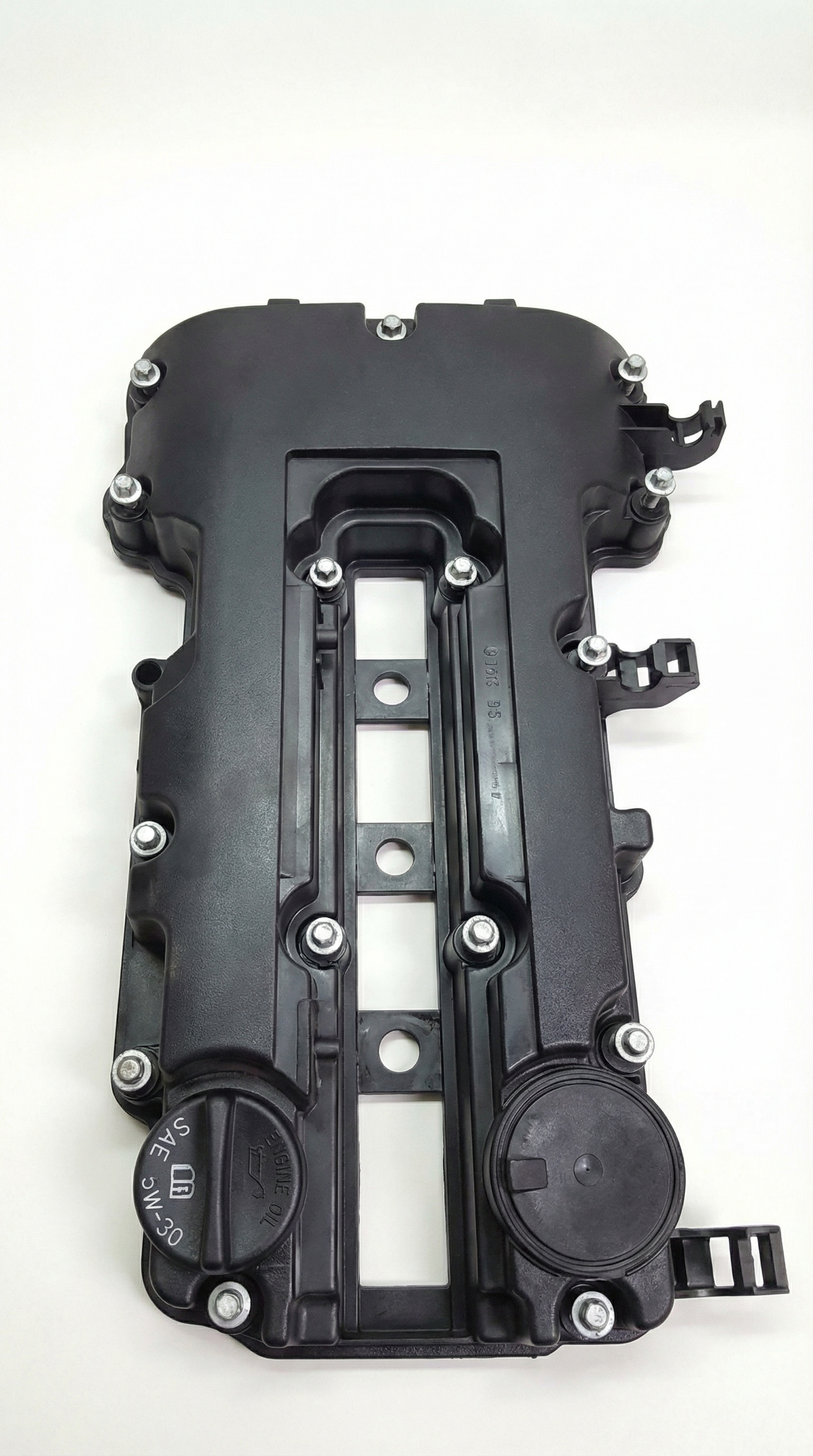
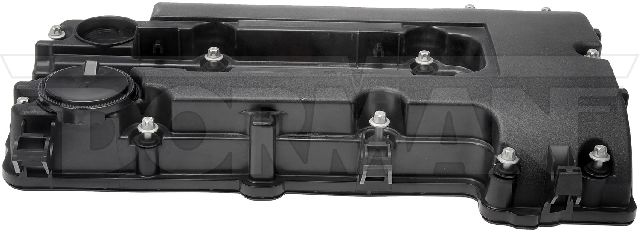
Typical fix: Replace the entire valve cover assembly (OEM Part #25198874 is a common replacement). The PCV components are not serviced separately. If the intake manifold check valve is missing, either replace the intake manifold or install an aftermarket external PCV check valve kit.
Est. part cost: $50-$150 - Failing or Leaking Turbocharger 🟡 Medium Probability The turbo seals can fail, especially with age and mileage, leaking oil directly into the exhaust system. This oil coats the catalytic converter's internal surfaces, rendering it useless and triggering P0420. You may also see oil in the intercooler piping.
How to confirm: Inspect the turbocharger housing and the charge pipes for excessive oil. Blue or white smoke from the exhaust, especially under acceleration, is a strong indicator of turbo seal failure.
Typical fix: Replace the turbocharger assembly.
Est. part cost: $400-$1200 - Faulty Oxygen (O2) Sensors 🟡 Medium Probability A lazy or failing downstream (post-cat) O2 sensor can send incorrect data to the ECM, falsely triggering a P0420 code. An incorrect reading from the upstream (pre-cat) sensor can cause fuel mixture problems that damage the converter over time. Oil and fuel contamination from other engine issues can also foul the sensors, causing them to fail.
How to confirm: Test the sensors using a scan tool with live data graphing. The upstream sensor should switch rapidly, while the downstream should be steady. If the downstream sensor is stuck or slow to respond, it may be faulty. Some owners report replacing the downstream O2 sensor fixed the code after a new converter did not.
Typical fix: Replace the faulty oxygen sensor. It is often recommended to replace them in pairs. The downstream sensor is GM part #55572216.
Est. part cost: $40-$100 per sensor - Exhaust Leaks ⚪ Low Probability The flex pipe located after the catalytic converter is a common point for cracks and leaks due to rust and stress. A leak between the upstream and downstream O2 sensors can draw in outside air, fooling the downstream sensor into thinking the catalyst isn't working, triggering a false P0420.
How to confirm: Visually inspect the exhaust system for cracks, rust, or black soot marks, especially around the flex pipe and manifold gaskets. A smoke test is the most definitive way to find small leaks. Some owners have fixed the code simply by wrapping a leaking flex pipe.
Typical fix: Repair the leak, which may involve welding a new flex pipe section or replacing a gasket.
Est. part cost: $20-$200
Rare But Worth Checking
- Outdated ECM Software: GM released a service campaign (#14801) and a later TSB (PI1505) to reprogram the ECM because the original software was too sensitive and could trigger a false P0420. It is critical to verify this has been performed before replacing parts. Bulletin #PI1505 provides specific diagnostic and repair information to correct concerns where the MIL is illuminated with DTC P0420.
- Engine Misfires: Worn or loose spark plugs or a failing ignition coil can cause misfires, dumping unburned fuel into the exhaust and rapidly overheating and melting the catalytic converter. Loose spark plugs have been noted as a specific issue on this engine, causing a chirping noise.
Diagnosis Steps

- Check for other DTCs. Address any misfire (P030x), fuel system (P0171), or turbo (P0299) codes first, as they are likely the root cause.
- Contact a GM dealer with your VIN to check if emissions campaign #14801 or TSB PI1505 has been performed. If not, an ECM reprogram may be the fix.
- Inspect for vacuum leaks, especially from the PCV system in the valve cover. Listen for whistling noises or check for strong suction at the PCV orifice with the engine running. A simple test is to remove the oil cap at idle; a major change in engine sound and strong vacuum indicates a failed diaphragm.
- Inspect for oil leaks around the turbocharger and check for blue smoke from the exhaust, indicating turbo seal failure. Check intercooler pipes for oil residue.
- Using a scan tool, graph the upstream (Bank 1, Sensor 1) and downstream (Bank 1, Sensor 2) oxygen sensors with the engine fully warmed up. The upstream sensor should fluctuate rapidly between ~0.1V and ~0.9V. The downstream sensor should hold a steady voltage, typically above 0.5V.
- If the downstream O2 sensor's voltage mirrors the upstream sensor's fluctuations, the catalytic converter has likely failed.
- If the downstream O2 sensor's voltage is flat but low (e.g., <0.2V) or stuck, the sensor itself may be faulty or fouled.
- Visually inspect the exhaust system for any leaks between the two oxygen sensors, paying close attention to the exhaust manifold gasket and the front flex pipe. A smoke test is the most reliable method.
Parts You'll Likely Need

- Catalytic Converter
- Valve Cover Assembly
- Downstream Oxygen Sensor
- Upstream Oxygen Sensor
- Turbocharger Assembly
Related Codes That Often Appear With This One
- P0171 — System Too Lean. This often appears with P0420 when the PCV diaphragm in the valve cover has ruptured, creating a large vacuum leak.
- P0299 — Turbocharger Underboost. This can occur alongside P0420 if there are issues with the turbo system, such as a cracked wastegate or leaks that also contribute to catalyst failure.
- P0300-P0304 — Engine Misfire. Misfires are a direct cause of catalytic converter destruction, as they allow raw fuel to enter the exhaust.
- P2097 — Post Catalyst Fuel Trim System Too Rich. This code can appear with P0420 when there is an exhaust leak or a failing downstream O2 sensor.
Technical Service Bulletins (TSBs) & Recalls
- PI1505: Diagnostic Tips for DTC P0420. Instructs technicians to first verify that campaign #14801 has been performed. If it has, proceed with normal diagnostics. If not, reprogram the ECM. Bulletin #PI1505 was specifically issued to address customer concerns regarding the Malfunction Indicator Lamp and DTC P0420.
- Campaign #14801: Product Emission - Reprogram Engine Control Module. An ECM software update to correct an overly sensitive monitor for the P0420 code.
- 18-NA-331 / 19-NA-057: Similar ECM reprogramming campaigns for platform mates (Trax, Encore) that address false P0420 codes, highlighting the known software sensitivity issue.
Platform-Specific Known Issues
- The PCV system integrated into the valve cover is a well-documented failure point, leading to high oil consumption and subsequent catalyst failure.
- Turbocharger oil seal failures are common, leaking oil into the exhaust and poisoning the catalytic converter.
- GM issued campaign #14801 and TSB PI1505 to address overly sensitive ECM software that could falsely trigger P0420.
- Owners report that many aftermarket catalytic converters do not work well with the Cruze's sensitive emissions monitoring and can cause the P0420 code to return.
Mechanic-Grade Diagnostic Values
- Upstream O2 Sensor (B1S1) Voltage — expected: Fluctuating rapidly between 0.1V and 0.9V on a warm engine.. Failure: Slow or non-responsive sensor, or voltage stuck at a specific value.
- Downstream O2 Sensor (B1S2) Voltage (Good Converter) — expected: Relatively stable voltage between 0.5V and 0.8V on a warm engine at steady RPM.. Failure: Voltage fluctuates rapidly, mimicking the upstream sensor, indicating a failed converter. Voltage stuck high (>0.9V) or low (<0.2V) can indicate a faulty sensor.
- Low-Side Fuel Pressure (Pump Primed, Engine Off) — expected: 50 - 94 PSI. Failure: Pressure below 50 PSI can indicate a weak fuel pump or clogged filter, which can affect air/fuel ratio and catalyst operation.
- Downstream O2 Sensor Heater Resistance — expected: Between 5 and 6 ohms at 20°C (68°F).. Failure: A reading outside this range indicates a faulty heater circuit within the sensor, which can cause incorrect readings during warm-up.
Hidden / Shadow Codes Worth Checking
- Mode $06, Test ID $21: This is the onboard diagnostic monitor for the catalyst system. A scan tool capable of reading Mode $06 data can show the raw test results from the ECM's last catalyst efficiency test. (see via A professional scan tool (like Launch, Autel) or GM's GDS2 software. Look for Catalyst Monitor Bank 1. A failing value, even before the P0420 code sets, can indicate a marginal converter.)
Scan Tool Commands That Help
- GDS2 (or high-end bidirectional scanner): Fuel Trim Reset — After replacing a component that caused a vacuum leak (like the valve cover), this function clears the learned long-term fuel trim values, allowing the ECM to relearn the new baseline faster and avoid running too rich or lean, which can impact the catalyst.
- GDS2 (or high-end bidirectional scanner): Catalyst System Test — Some advanced scan tools can initiate the catalyst monitor test on demand (under specific operating conditions). This is used to verify a repair is successful without having to complete a full, lengthy drive cycle.
Wiring & Ground Locations
- G103 — On the left front shock tower in the engine compartment.. This is a primary ground for the Engine Control Module (ECM). A poor or corroded connection here can cause erratic sensor readings, including from the O2 sensors, potentially leading to a false P0420 code or misdiagnosis.
- G105 — Located at the left front corner of the engine compartment, often near the underhood fuse block.. This is another critical ground point for the engine harness and ECM. Ensuring it is clean and tight is a fundamental step when diagnosing any electronic engine management code.
- Downstream O2 Sensor Connector (B1S2) — On the back side of the engine, accessible from above or below the vehicle. The harness routes up toward the top of the engine.. Damage to the connector or wiring harness for the downstream O2 sensor can cause incorrect voltage readings, leading directly to a P0420 code or other O2 sensor codes. The harness has a black wire.
Real Owner Repair Stories
- YouTube channel 'Advanced Auto Clinic' (2014 Chevrolet Cruze 1.4L Turbo) — Check Engine Light with P0420 code.
❌ Tried (didn't work) The catalytic converter had already been replaced with a cheap aftermarket unit, but the P0420 code returned.
✅ What actually fixed it The technician diagnosed the aftermarket converter as inefficient. After installing a second, different aftermarket converter (as the OEM part was unavailable), the O2 sensor data looked correct and the monitors were able to be completed. This highlights the pickiness of the Cruze's ECM and the high failure rate of non-compliant aftermarket converters. - YouTube channel 'Pine Hollow Auto Diagnostics' (2014 Chevrolet Cruze 1.4L Turbo) — P0420 code, customer had already replaced the catalytic converter and both O2 sensors.
❌ Tried (didn't work) Replacing catalytic converter, Replacing upstream O2 sensor, Replacing downstream O2 sensor
✅ What actually fixed it The technician diagnosed an exhaust leak at the flexible pipe, located after the catalytic converter. Even though the leak was downstream of the second O2 sensor, the turbulence was believed to be affecting sensor readings. Repairing the flex pipe leak resolved the P0420 code. - NHTSA ODI #11297101 — An owner reported that after their check engine light came on with code P0420, they failed emissions and had the catalytic converter replaced, only for the check engine light to come back on again just two days after picking up the car.
- NHTSA ODI #11506601 — One owner described a recurring P0420 code where the catalytic converter was replaced once, but the light returned along with a persistent coolant leak.
"I Checked Everything" — The Actual Cause
- A common scenario is replacing the valve cover for a P0171 (lean code) and then having a P0420 appear. The root cause is often the missing check valve in the intake manifold. Before the valve cover was fixed, the massive vacuum leak skewed other readings. After fixing the vacuum leak, the system can now correctly identify the boost pressure entering the crankcase (due to the missing check valve), which forces oil into the intake, contaminating the catalyst and O2 sensors, ultimately triggering the P0420. The fix is to address the missing intake check valve.
When the Usual Fixes Don't Work
- In many forum threads, owners report chasing the P0420 code by replacing the downstream O2 sensor, then the upstream, and then finally the catalytic converter, only for the code to return. The final fix is often addressing the underlying PCV system defect: the missing check valve in the intake manifold, which was the root cause of the oil consumption that destroyed the original converter and sensors. An aftermarket PCV fix kit that adds an external check valve is a common permanent solution reported by owners. According to NHTSA ODI #11462481, one owner noted the P0420 code appeared after a broken thermostat was replaced, and they subsequently investigated GM recall #16186.
OEM Part Supersession History
55573746→25198874, then 25198877, then 25209141— Revisions to the integrated PCV diaphragm within the valve cover to improve durability and prevent premature failure.
Heads up: It is critical to use the latest available part number for the valve cover to ensure the most durable design. Older stock or aftermarket versions based on the original PN are prone to the same failure.Downstream O2 Sensor: 55569903→55572216— Standard part revision.
Model Year Variations Within This Range
- 2011-2016: The engine codes LUZ and LUV were used during this period, but for the purposes of P0420 diagnosis, they share the same fundamental PCV system design, turbocharger layout, and emissions components. There are no significant year-to-year variations that change the diagnostic approach for this code.
- 2013: GM TSB PI1505 specifically calls out the 2013 model year for potential false P0420 codes that can be fixed with an ECM reprogram, referencing campaign #14801. While the issue may affect other years, the 2013 model is explicitly mentioned in this bulletin.
Diagnostic Flowchart
Other Known Issues on This Vehicle
Issues unrelated to this code that are worth knowing about as an owner of this generation:
- Coolant System Leaks (Water Pump & Outlet Housing) 🔴 High — Extremely common, often occurs after 60,000 miles. The plastic water outlet housing is a primary failure point, along with the water pump itself. (Ref: Special Coverage 14371 extended the warranty on the water pump to 10 years/150,000 miles.)
- Faulty Negative Battery Cable 🟠 Medium — Common across 2011-2015 models. An insufficient crimp on the terminal causes high resistance, leading to a wide range of bizarre electrical issues, flickering displays, and potential stalling. (Ref: Special Coverage 14311B extended the warranty to 10 years/120,000 miles for this repair.)
- PCV System / Valve Cover Failure 🔴 High — Very common. The diaphragm in the valve cover tears, causing vacuum leaks, high oil consumption, and rough idle. This is a direct contributor to P0420 but is also a standalone chronic issue.
- Cracked Plastic Thermostat Housing 🟠 Medium — Common failure item leading to coolant leaks. The plastic becomes brittle from heat cycles and cracks. Many owners upgrade to an aluminum aftermarket part.
- Oil Leaks (Crankshaft Seal, Oil Cooler Lines) 🟠 Medium — Often reported as the vehicle ages. The front crankshaft seal and the oil cooler lines are frequent leak points.
Used vs. New Parts: Buying Guide for This Vehicle
When a used part is the smart pick: For this specific P0420 repair, used parts are generally not recommended for the primary failure components. A used catalytic converter has unknown life and may not meet efficiency standards. A used valve cover carries a high risk of having the same PCV defect. A used turbocharger is a gamble due to potential seal wear. Used parts may be considered for ancillary components like brackets or heat shields.
Donor-vehicle mileage cap: roughly under 50000 miles for the part to have meaningful remaining life.
What to inspect on the donor part:
- For a turbocharger: Check for zero shaft play (in/out or side-to-side) and no signs of oil residue in the inlet or outlet.
- For an intake manifold: Must have the orange PCV check valve visibly intact in its port.
- Verify the donor vehicle did not have a P0420 or oil consumption issues if records are available.
OEM-only on this vehicle (don't cheap out):
- Catalytic Converter: The Cruze ECM is notoriously sensitive, and many owners report that aftermarket converters (even from known brands) fail to meet the required efficiency thresholds, causing the P0420 to return. An OEM or OEM-grade converter is highly recommended to ensure a permanent fix.
- Valve Cover Assembly: While aftermarket options exist, the OEM part has gone through multiple revisions. Using the latest GM part number (e.g., 25209141) ensures you get the most updated design to prevent repeat PCV failures.
Aftermarket brands forum-validated for this vehicle:
- O2 Sensors: NTK, Denso, and Bosch are widely trusted OEM suppliers and their aftermarket sensors are considered reliable replacements.
- Catalytic Converters (with caution): MagnaFlow and Walker are reputable brands, but select their 'OEM Grade' or 'CARB Compliant' versions if available, as their basic federal/EPA compliant models may not be sufficient for the Cruze.
- PCV Fix Kits: CruzeKits and Bad News Racing offer well-regarded aftermarket kits to install an external check valve, permanently fixing the issue of the missing internal check valve in the intake manifold.
Brands owners have reported issues with on this vehicle:
- Unbranded, low-cost 'eBay' or 'Amazon' catalytic converters. These almost universally lack the precious metal loading required to satisfy the Cruze's catalyst monitor and will likely cause the code to return quickly.
Real Owner Stories
Aggregated from forums and TSBs cited above. Mileages and costs reflect what owners reported in those sources.
2011-2016 Chevrolet Cruze 1.4L Turbo
Symptoms: The Check Engine Light kept coming on with code P0420 even after the catalytic converter was replaced.
What fixed it: Replacing the downstream O2 sensor after two previous converter replacements failed to solve the issue.
Source hint: Reddit r/cruze - "Engine light keeps coming on with code P0420"
2011-2016 Chevrolet Cruze 1.4L Turbo
Symptoms: P0420 code present; owner was advised by a former GM tech that the code is rarely just a bad sensor on this engine.
What fixed it: Fixing a vacuum leak from the PCV system.
Source hint: Reddit r/ChevySonic - "Catalytic P0420 code"
Related OBD-II Codes
Frequently Asked Questions
Is there a software update for the P0420 code on my Chevrolet Cruze?
Can a bad valve cover cause a catalytic converter code on the 1.4L Turbo engine?
Why did my P0420 code come back after I installed a cheap aftermarket converter?
What is the 'orange nipple' I should look for when diagnosing this code?
Can an exhaust leak at the flex pipe cause a P0420 code?
Which oxygen sensor should I replace for a P0420 code on my Cruze?
Helpful Videos
Used OEM Parts in Stock
New Aftermarket Parts Available


The information in this article is provided for general reference and educational purposes only. Vehicle specifications, procedures, and part compatibility can vary by production date, trim level, and region. Always consult your vehicle's factory service manual and verify part numbers before purchasing or performing repairs. Safety-critical components such as airbags, seat belts, and braking systems should be installed by a qualified professional.
- Chevrolet Cruze:
- 🎬 Helpful Videos
- 🛍️ Shop This Part
- What's Unique About the 2011-2016 Chevrolet Cruze
- Symptoms You May Notice
- Most Likely Causes
- Rare But Worth Checking
- Diagnosis Steps
- Parts You'll Likely Need
- Related Codes That Often Appear With This One
- Technical Service Bulletins (TSBs) & Recalls
- Platform-Specific Known Issues
- Mechanic-Grade Diagnostic Values
- Hidden / Shadow Codes Worth Checking
- Scan Tool Commands That Help
- Wiring & Ground Locations
- Real Owner Repair Stories
- "I Checked Everything" — The Actual Cause
- When the Usual Fixes Don't Work
- OEM Part Supersession History
- Model Year Variations Within This Range
- Diagnostic Flowchart
- Other Known Issues on This Vehicle
- Used vs. New Parts: Buying Guide for This Vehicle
- Real Owner Stories
- 2011-2016 Chevrolet Cruze 1.4L Turbo
- 2011-2016 Chevrolet Cruze 1.4L Turbo
- Related OBD-II Codes
- Frequently Asked Questions
- 🎟️ Get 5% Off