

P0420 on 2013-2015 Buick Encore: Causes for Catalyst Efficiency Code and Fixes
On a 2013-2015 Buick Encore, code P0420 often points to a simple software issue that requires a dealer-installed update per TSB #19-NA-057. Before replacing the expensive catalytic converter, check for this update and test the oxygen sensors, which are more common and cheaper failure points. Also, investigate underlying issues common to the 1.4L engine, like PCV system failure, which can cause oil contamination and ruin a new converter.
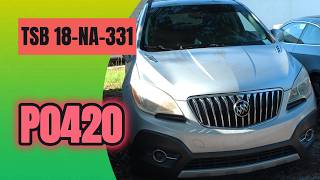
- Always check for an ECM software update first. TSBs #18NA331 and #19NA057 confirm a simple reprogram can fix the P0420 code on this specific Encore model.
- Do not automatically replace the catalytic converter. A faulty downstream oxygen sensor is a common, less expensive cause.
- Exhaust leaks and underlying engine problems like oil consumption can also trigger this code, so a thorough diagnosis is essential to avoid repeat failures.
- If you do need a new catalytic converter, aftermarket options are significantly cheaper than OEM parts.
What's Unique About the 2013-2015 Buick ENCORE

For the 2013-2015 Encore with the 1.4L engine, the P0420 code has a very specific and well-documented cause that is not a hardware failure. General Motors issued Technical Service Bulletins (TSBs) stating that a "software anomaly" or "calibration error" in the Engine Control Module (ECM) can falsely trigger this code. This makes it one of the few vehicles where the most important first step in diagnosis is checking the software version, not immediately suspecting the catalytic converter. The TSB also applies to the Encore's platform mate, the Chevrolet Trax.
Diagnostic Flowchart

Tap your situation to follow the diagnostic path that matches what you're seeing on this vehicle.
Symptoms You May Notice

- Check Engine Light is on
- Reduced engine power and sluggish acceleration
- Lower fuel economy
- Rotten egg (sulfur) smell from the exhaust
- Failing an emissions test
- Rattling noises from under the car if the catalyst substrate is broken
- Replacing the catalytic converter without first checking for software updates per TSB #19-NA-057. 🎬 Watch: Why you shouldn't replace the catalytic converter first. Many owners have likely spent over $1,000 on a new converter when a simple ECM reprogram was the correct fix.
- Replacing the catalytic converter when the actual fault is a less expensive downstream oxygen sensor or an exhaust leak.
- Installing a cheap aftermarket catalytic converter. Many forum users report that non-OEM converters lack sufficient catalyst materials and fail to resolve the P0420 code, requiring an eventual replacement with a genuine GM part.
Most Likely Causes

- Outdated Engine Control Module (ECM) Software 🔴 High Probability GM has issued specific TSBs (#18NA331 and its replacement #19-NA-057) for this exact issue on 2013-2015 Encore and Trax models, stating a 'calibration error' can cause a false P0420.
How to confirm: A GM dealer or a qualified shop with a GM Tech 2 or MDI scan tool can check the current software calibration number against the latest version specified in the TSB.
Typical fix: Reprogramming the ECM and the Transmission Control Module (TCM) simultaneously to the latest software version as per the TSB instructions.
Est. part cost: $0 - Failing Downstream Oxygen (O2) Sensor 🟡 Medium Probability The downstream O2 sensor is what determines catalyst efficiency. If it becomes lazy, biased, or contaminated, it can send incorrect data that mimics a bad catalytic converter. This is a common failure point on many vehicles and a logical next step if the software is up to date.
How to confirm: Use a scan tool to graph the voltage of the upstream and downstream O2 sensors. The downstream sensor should show a relatively steady, flat voltage (typically above 0.6V) on a healthy system. If it's fluctuating rapidly like the upstream sensor (which swings between ~0.1V and ~0.9V), the converter may be bad. If the sensor's readings are stuck or erratic, the sensor itself is likely faulty.
Typical fix: Replace the downstream (Bank 1, Sensor 2) oxygen sensor. 🎬 See this walkthrough on replacing the downstream oxygen sensor. An owner on a Reddit forum confirmed this fixed their P0420 issue after driving 250+ miles.
Est. part cost: $25-$70 - Failed Catalytic Converter 🟡 Medium Probability Contamination from engine issues is a major cause. The 1.4L LUV engine is known for PCV system failures (often requiring a new valve cover) and turbocharger oil leaks that push oil into the exhaust, fouling the catalyst. Persistent engine misfires can also overheat and melt the converter's internal structure.
How to confirm: This is typically diagnosed after all other possibilities (software, O2 sensors, exhaust leaks) have been ruled out. A temperature check with an infrared thermometer (inlet should be cooler than the outlet) or an exhaust backpressure test can also help confirm a clogged converter. A rattling sound when tapped indicates a broken internal substrate.
Typical fix: Replace the catalytic converter assembly, which is an integrated unit with the exhaust manifold on this engine. It is crucial to fix the root cause (e.g., oil leak) first, or the new converter will also fail. One owner on a forum had to replace an aftermarket converter multiple times before switching to an OEM part to resolve the code.
Est. part cost: $200-$975 - Exhaust System Leak ⚪ Low Probability Leaks in the exhaust manifold or, more commonly, the flex pipe between the two oxygen sensors can allow outside oxygen to enter the exhaust stream. This extra oxygen fools the downstream O2 sensor into sending readings that suggest the converter isn't working, falsely triggering a P0420 code.
How to confirm: Perform a visual inspection for soot trails or cracks, especially around gaskets and the flexible pipe section. A smoke test is the most effective way to pinpoint small leaks. A technician on Reddit fixed a P0420 on a Chevy Trax by replacing a leaking flex pipe. 🎬 Watch: Diagnosing a P0420 code on the 1.4L turbo engine.
Typical fix: Replace the leaking gasket or exhaust component (e.g., the front pipe with integrated flex section).
Est. part cost: $20-$150
Rare But Worth Checking
- Engine Misfires or Fuel System Issues: Unburned fuel from persistent misfires (bad spark plugs, ignition coils) can enter the exhaust and overheat the catalytic converter, causing permanent damage. While the misfire itself might throw other codes, it's the root cause of the P0420. A rich or lean fuel condition can also lead to catalyst failure.
- Internal Oil or Coolant Leaks (PCV/Turbo/Head Gasket): A failing turbocharger or a bad PCV system (often integrated into the valve cover on the 1.4L engine) can leak oil into the exhaust, contaminating the catalytic converter and O2 sensors. Similarly, a bad head gasket can leak coolant, which also poisons the catalyst. These are known failure points on the 1.4L LUV engine and must be addressed before replacing the converter.
Diagnosis Steps
- Scan for other DTCs. Address any misfire (P030x), fuel system (P0171), or other sensor codes before diagnosing P0420. A P0171 code, in particular, suggests a vacuum leak from the PCV system that should be fixed first.
- Crucial Step for this Vehicle: Check for Technical Service Bulletins. Specifically, ask a dealer or qualified shop if TSB #19-NA-057 applies to your VIN. If an ECM software update is available, this is the most likely and cheapest fix.
- Inspect the exhaust system for leaks. Use a smoke machine for best results. Pay close attention to the exhaust manifold gasket and the flex pipe located before the downstream O2 sensor.
- Analyze O2 sensor data. Use a scan tool with live data graphing. At operating temperature and steady RPM, observe the voltage patterns. The upstream sensor (Sensor 1) should fluctuate rapidly between 0.1 and 0.9 volts. A good converter will result in a steady, flat voltage from the downstream sensor (Sensor 2), typically above 0.6 volts. If the downstream sensor mirrors the upstream, the converter is likely not working.
- Test the O2 sensors. If the downstream sensor's signal is stuck, slow to respond, or does not read as expected, it may be faulty and should be tested or replaced.
- Investigate Root Causes. Before condemning the converter, check for common 1.4L engine issues like oil consumption from a bad PCV valve/valve cover or a failing turbo.
- If all other steps check out, the catalytic converter is the most likely culprit.
Parts You'll Likely Need
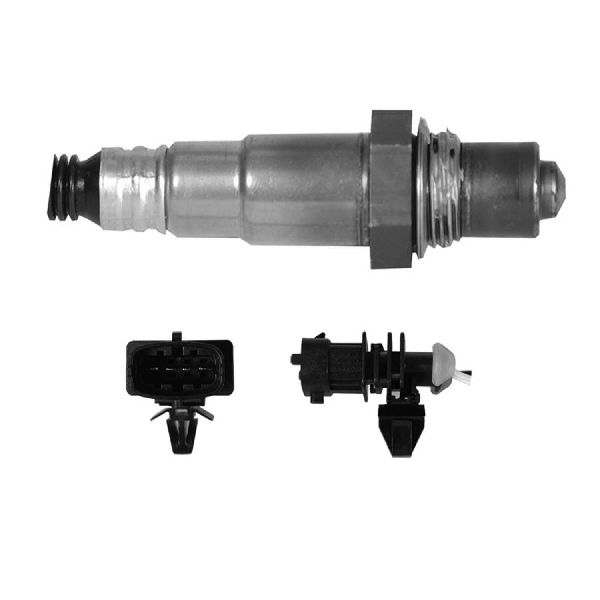
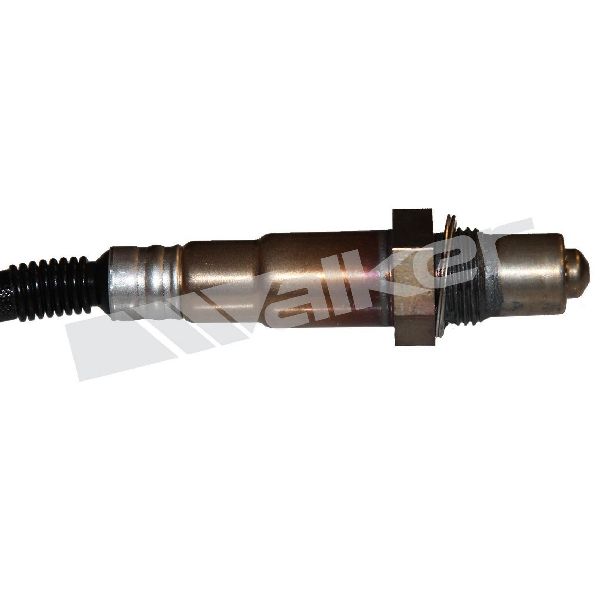
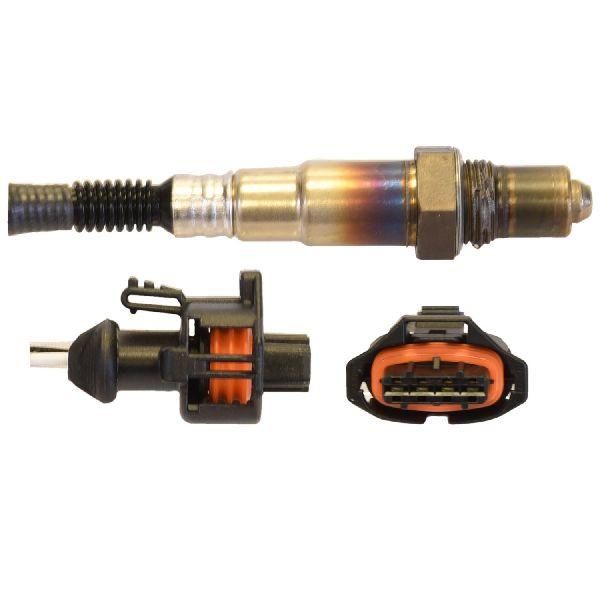
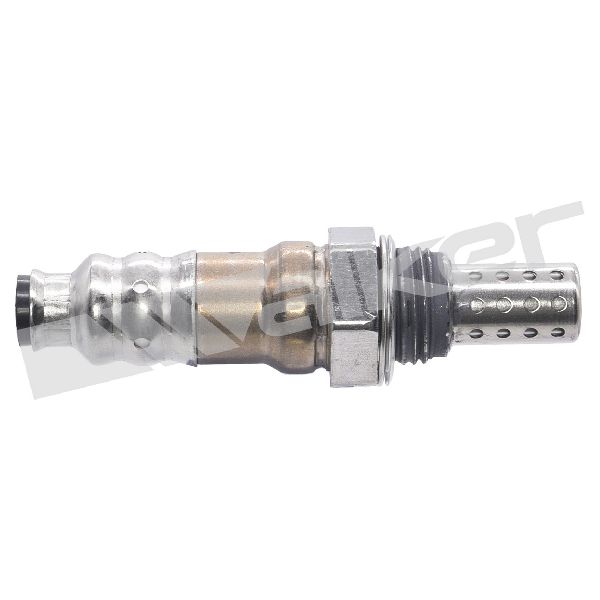
- Downstream Oxygen Sensor (Bank 1, Sensor 2)
(OEM #55572216)— This sensor provides the reading that triggers the P0420 code. It can fail and give a false reading, making it a common and relatively inexpensive part to replace before suspecting the converter.
Trusted brands: ACDelco (GM Original Equipment), Bosch, Denso, NTK
OEM price range: $60-$100
Aftermarket price range: $25-$70 - Catalytic Converter
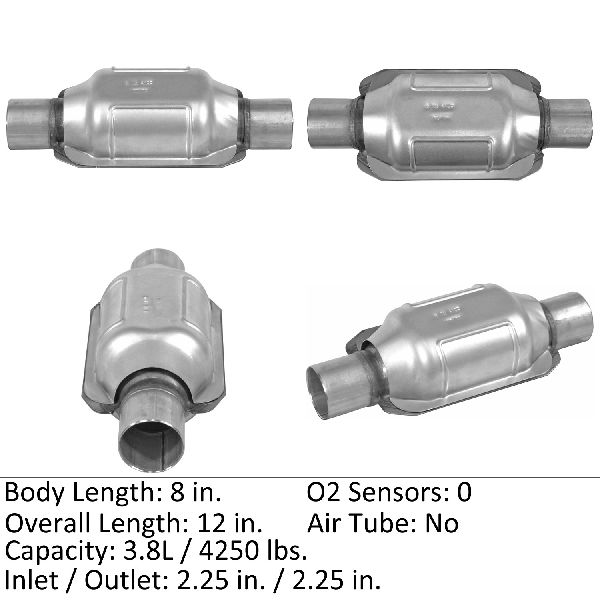
(OEM #25196720)— If software and sensor issues are ruled out, the catalytic converter itself has failed. This is the direct component indicated by the code. On the 1.4L LUV engine, this part is an assembly that includes the exhaust manifold.
Trusted brands: GM Genuine Parts, Walker Exhaust, MagnaFlow, Dorman
OEM price range: $800-$975
Aftermarket price range: $200-$500 - Upstream Oxygen Sensor (Bank 1, Sensor 1)
(OEM #213-4764 (ACDelco))— While less likely to directly cause P0420, a failing upstream sensor can cause incorrect fuel mixture, which can damage the catalytic converter over time. It's often replaced as a pair with the downstream sensor.
Related Codes That Often Appear With This One
- P0171 (System Too Lean) - Often points to a vacuum leak, which on the 1.4L engine is commonly caused by a failed PCV valve in the valve cover. This vacuum leak is a root cause that can lead to catalyst damage over time.
Technical Service Bulletins (TSBs) & Recalls
- 19-NA-057: Provides a procedure to correct a P0420 code, which may be caused by a calibration error, by reprogramming the ECM and TCM. This bulletin replaces #18-NA-331 and applies to 2013-2015 Encore and Chevrolet Trax models.
- 18-NA-331: The original bulletin providing a procedure to reprogram the ECM to correct a P0420 code caused by a software anomaly. This has been superseded by 19-NA-057.
Platform-Specific Known Issues
- A known software calibration error can cause a false P0420 code. TSB #19-NA-057 instructs dealers to reprogram the ECM and TCM to correct this.
- The 1.4L Turbo engine is prone to failure of the PCV valve, which is integrated into the valve cover. A bad PCV system causes excessive crankcase pressure, leading to oil leaks and oil consumption, which contaminates and prematurely fails the catalytic converter.
- Oil leaks from the turbocharger seals are another common issue that can send oil directly into the exhaust, destroying the catalytic converter.
Mechanic-Grade Diagnostic Values
- Downstream O2 Sensor (Sensor 2) Voltage — expected: Relatively steady and flat voltage, typically between 0.4V and 0.8V at steady cruise.. Failure: Voltage fluctuates rapidly, mimicking the pattern of the upstream (Sensor 1) O2 sensor.
- Upstream O2 Sensor (Sensor 1) Voltage — expected: Constantly fluctuating between approximately 0.1V and 0.9V as the ECM adjusts the air-fuel ratio.. Failure: A flat or slow-to-respond signal indicates a faulty sensor.
- Long Term and Short Term Fuel Trim — expected: Within a range of -5% to +5%.. Failure: Values consistently outside of -10% to +10% suggest an underlying fuel mixture problem (e.g., vacuum leak, injector issue) that could be the root cause of catalyst damage.
Hidden / Shadow Codes Worth Checking
- N/A (Calibration ID): There are no specific 'hidden' fault codes, but the crucial data is the ECM's software calibration ID. TSB #18-NA-331 and #19-NA-057 address a 'software anomaly' where an outdated calibration falsely triggers P0420. A GM scan tool can view the current calibration ID to see if it's an old version (e.g., '288') that needs updating. (see via GM MDI or Tech 2 scan tool with Service Programming System (SPS) software.)
Scan Tool Commands That Help
- GM GDS2/SPS: Replace and Reprogram ECU — This is the specific function required to apply the software update from TSB #19-NA-057. It flashes the Engine Control Module (and sometimes the TCM) with the new calibration designed to correct the false P0420 code.
- Any Graphing Scan Tool: Live Data Graphing - O2 Sensors — Used to visually compare the upstream (B1S1) and downstream (B1S2) oxygen sensor voltage patterns. This is the primary method to determine if the catalytic converter is functioning or if a sensor is faulty.
Wiring & Ground Locations
- G102 — Located at the left rear of the engine.. Grounds the ignition coils. A poor ground here can contribute to weak spark or misfires, which can lead to unburned fuel damaging the catalytic converter.
- G103 — Located on the cowl in the engine compartment, above the brake booster.. Provides a ground for the Body Control Module (BCM) and the Data Link Connector (DLC). A fault here could cause various communication issues.
- G105 / G106 — Located at the front of the engine compartment, near the frame cross rail and cooling fans.. This ground point serves the Engine Control Module (ECM) and Transmission Control Module (TCM). A poor ECM ground can cause erratic sensor readings and false codes, including P0420.
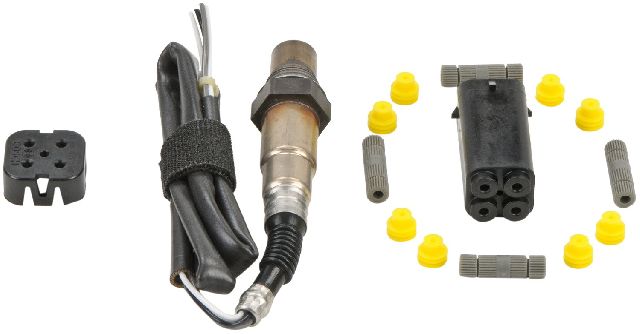
- O2 Sensor Wires — On the 4-wire heated O2 sensors used in this vehicle.. Typically includes two wires for the heater circuit (often same color), one signal wire to the ECM, and one ground wire. Damage or corrosion to any of these, especially the signal and ground, can cause incorrect readings that trigger P0420.
Real Owner Repair Stories
- Buick Forums user (2015 Buick Encore) — Persistent P0420 code returning shortly after being cleared.
❌ Tried (didn't work) Replacing the intake manifold, Replacing the PCV valve and valve cover gasket, Replacing both upstream and downstream O2 sensors, Replacing the flex pipe, Replacing the catalytic converter with an aftermarket part
✅ What actually fixed it The advice given by another user, based on dealership experience, was that aftermarket catalytic converters frequently lack the necessary precious metals and fail to resolve the code. The final solution is to install a genuine GM OEM catalytic converter after all other root causes are ruled out. - Reddit user in r/MechanicAdvice (2014 Buick Encore) — P0420 code and rough idle.
❌ Tried (didn't work) Replacing the catalytic converter with an OEM part for $2300. The code returned after a month., Shop clearing the codes and claiming carbon buildup would 'clean itself'., Shop 'resetting the computer' for $147, which did not fix the code.
✅ What actually fixed it The story was unresolved, but serves as a critical cautionary tale that replacing the catalytic converter, even with an expensive OEM part, will not fix the code if the true root cause (like the TSB software issue or a PCV system failure) is not addressed first.
"I Checked Everything" — The Actual Cause
- The most significant example for this vehicle is not a physical leak but a software error. A technician could perform a smoke test and find no exhaust leaks, test the O2 sensors and find they are responding, yet the P0420 code persists. The actual cause, as identified in GM TSB #19-NA-057, is a software calibration error in the ECM that incorrectly interprets sensor data. This is a classic case where standard diagnostic procedures point to a hardware failure (the converter) while the real root cause is in the vehicle's software.
When the Usual Fixes Don't Work
- Multiple owner accounts reinforce that simply replacing the catalytic converter is not a guaranteed fix. One owner replaced an aftermarket converter multiple times with no success, indicating that these parts may not meet the required efficiency standards for the ECM's monitoring. Another owner had an expensive OEM converter installed, only for the code to return, proving that if an underlying issue like the software glitch, a PCV system oil leak, or a faulty sensor is the true cause, a new converter will not solve the problem and may be damaged itself over time.
OEM Part Supersession History
55562206→55572216— Standard part revision/update by the manufacturer.
Heads up: The new part number (55572216) is the correct replacement for the downstream (Bank 1, Sensor 2) oxygen sensor. Using old stock or the original part number is not advised.
Model Year Variations Within This Range
- 2013-2015: The primary cause of a 'false' P0420 code due to a software calibration error is specific to this model year range, as detailed in TSB #19-NA-057 and #18-NA-331. For Encore models outside this range (e.g., 2016+), a P0420 code is more likely to indicate a genuine hardware failure (converter, sensor, leak) rather than a software issue.
Real Owner Stories
Aggregated from forums and TSBs cited above. Mileages and costs reflect what owners reported in those sources.
2015 Buick Encore
Symptoms: Check engine light for code P0420 comes on after about an hour of driving, but the car runs great.
What fixed it: Installing a genuine GM Parts catalytic converter, as aftermarket converters were not effective enough to keep the code away.
Source hint: Buick Forum
Buick Encore
Symptoms: Persistent P0420 code.
What fixed it: Replaced the downstream (Bank 1, Sensor 2) oxygen sensor, which kept the code away after driving 250+ miles.
Source hint: Reddit forum
Chevy Trax
Symptoms: P0420 code triggered by outside oxygen entering the exhaust stream.
What fixed it: Replacing a leaking flex pipe located between the two oxygen sensors.
Source hint: Reddit
Related OBD-II Codes
Frequently Asked Questions
Is there a software update that fixes the P0420 code on my 2013-2015 Buick Encore?
Why does my 1.4L Turbo engine keep ruining catalytic converters?
I replaced my catalytic converter with an aftermarket one, but the P0420 code came back. What's wrong?
Can an exhaust leak cause a P0420 on my Encore?
Should I replace my oxygen sensors before the catalytic converter?
What other codes should I look out for before diagnosing P0420?
Helpful Videos
We Have This Part in Stock

The information in this article is provided for general reference and educational purposes only. Vehicle specifications, procedures, and part compatibility can vary by production date, trim level, and region. Always consult your vehicle's factory service manual and verify part numbers before purchasing or performing repairs. Safety-critical components such as airbags, seat belts, and braking systems should be installed by a qualified professional.
- Buick ENCORE:
- 🎬 Helpful Videos
- 🛍️ Shop This Part
- What's Unique About the 2013-2015 Buick ENCORE
- Diagnostic Flowchart
- Symptoms You May Notice
- Most Likely Causes
- Rare But Worth Checking
- Diagnosis Steps
- Parts You'll Likely Need
- Related Codes That Often Appear With This One
- Technical Service Bulletins (TSBs) & Recalls
- Platform-Specific Known Issues
- Mechanic-Grade Diagnostic Values
- Hidden / Shadow Codes Worth Checking
- Scan Tool Commands That Help
- Wiring & Ground Locations
- Real Owner Repair Stories
- "I Checked Everything" — The Actual Cause
- When the Usual Fixes Don't Work
- OEM Part Supersession History
- Model Year Variations Within This Range
- Real Owner Stories
- 2015 Buick Encore
- Buick Encore
- Chevy Trax
- Related OBD-II Codes
- Frequently Asked Questions
- 🎟️ Get 5% Off